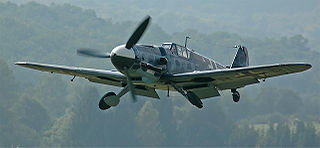
Len Deighton’s bestselling history of the Battle of Britain is generally regarded as the finest there is.
“Brilliant analysis . . . provides a detailed account, fuller than any previously written.”–A.J.P. Taylor
Len Deighton’s skill as a novelist is used to show how the human factor influenced every twist and turn of this close-fought battle. His encyclopedic knowledge of technology makes clear how machines played a vital role in the fight for Britain’s survival. Here is the intensely vivid story of the men who developed radar, designed the high-speed monoplanes, fought each other in the skies and those who simply engaged in vicious vendetta.
Deighton was born in Marylebone, London, in 1929. His father was a chauffeur and mechanic, and his mother was a part-time cook. After leaving school, Deighton worked as a railway clerk before performing his National Service, which he spent as a photographer for the Royal Air Force's Special Investigation Branch. After discharge from the RAF, he studied at St Martin's School of Art in London in 1949, and in 1952 won a scholarship to the Royal College of Art, graduating in 1955.
Deighton worked as an airline steward with BOAC. Before he began his writing career he worked as an illustrator in New York and, in 1960, as an art director in a London advertising agency. He is credited with creating the first British cover for Jack Kerouac's On the Road. He has since used his drawing skills to illustrate a number of his own military history books.
Following the success of his first novels, Deighton became The Observer's cookery writer and produced illustrated cookbooks. In September 1967 he wrote an article in the Sunday Times Magazine about Operation Snowdrop - an SAS attack on Benghazi during World War II. The following year David Stirling would be awarded substantial damages in libel from the article.
He also wrote travel guides and became travel editor of Playboy, before becoming a film producer. After producing a film adaption of his 1968 novel Only When I Larf, Deighton and photographer Brian Duffy bought the film rights to Joan Littlewood and Theatre Workshop's stage musical Oh, What a Lovely War! He had his name removed from the credits of the film, however, which was a move that he later described as "stupid and infantile." That was his last involvement with the cinema.
Deighton left England in 1969. He briefly resided in Blackrock, County Louth in Ireland. He has not returned to England apart from some personal visits and very few media appearances, his last one since 1985 being a 2006 interview which formed part of a "Len Deighton Night" on BBC Four. He and his wife Ysabele divide their time between homes in Portugal and Guernsey.
This book has the kind of writing I wish all war-books had. Fascinating descriptions of the planes, the weapons, and the people involved. Very fair to both the RAF and the Luftwaffe...I don't know if I've ever seen such an even-handed approach. One of the few military histories I would recommend to a friend.
Fighter is a serviceable account of the Battle of Britain, written by a novelist rather than a historian. Deighton devotes roughly half the book to background, and another half to a day-by-day diary of the action.
Against a rising tide of fascism in Europe, two Dowding and Goring would put the airpower theories of the interwar period to the test in a wholly new kind of defensive battle. Goring's Luftwaffe was experienced, but it's Bf-109 fighters lacked the range to escort strikes over England for more than a few minutes, and was hampered by notably inefficient and unanalytic command structures. Britain had the advantage of defense, and the sophisticated radar command-and-control network of Chain Home, but it's pilots were basically untested. The Luftwaffe's aims were more incoherent, ranging from creating the conditions for Operation Sea Lion, to independently bringing about British defeat via morale collapse. Whatever the details, the one objective was the neutralization of the RAF. The goal for the RAF was simply to survive until summer ended and cross-channel invasion became unfeasible.
Deighton has an eye for the scandalous. The Nazis had plenty of scandal, ranging Goring's deep-rooted mommy issues (his mother kept a Jewish lover in their house), his scheming subordinate Milch's weirder mommy issues (Milch's biological father was his uncle), or third Air Marshall Udet's better aptitude as a caricaturist than strategist, before his post-battle suicide. The British had their own issues. Air Marshall Dowding never got the support he needed from above or below, and he and Section 11 Leader Park, who's area bore the brunt of the attacks, were unceremoniously dismissed after their victory. Section 12 leader Leigh-Mallory and ace Douglas Bader (notable for losing his legs in a plane crash, and returning to service as an excellent pilot) sabotaged their commander over tactical arguments about the 'Big Wing' versus Dowding's careful Fabian commitment of fighters to the battle, which grew into personal arguments that saw Sector 12 planes refusing to cover Sector 11 airbases.
Britain's defense was perilously thin, based around the soft targets of radar stations, plotting huts, and aircraft factories. Faulty Nazi intelligence prevent them from focusing on these targets, and so the Luftwaffe never gained air dominance of the kind the Allies held after 1944. While British aircraft production was a miracle, pilot training was a mess that saw rookies with 10 hours in Spitfires who'd never fired their guns tossed into brutal dogfights with Nazi experten. Both sides consistently overclaimed kills, which is more ridiculous for the British since a daily kill count five or six times larger than airframes recovered is clearly in error. Yet, propaganda meant that records were not important.
Deighton tosses in some neat technical facts about the aircraft involved, such as the Bf-109's weak wings, or the last-minute addition of constant speed propellers to the British fighters, which brought them to parity, and has some pilot accounts. Yet the historical analysis is far behind Korda's With Wings Like Eagles, and if you wanted a novelistic flair to the reporting, this is not it.
A fine book, but definitely the least of the four book I've read recently on the Battle of Britain.
An extremely objective and dispassionate account of the Battle of Britain. Deighton shares with Corelli Barnett the distinction of puncturing the balloon of British self importance and the Second World War. Deighton's descriptions of the RAF senior staff in-fighting is masterly, and helps to explain a lot of the oversights that cost pilots their lives. A truly masterful history.
"Fighter" is a quite credible work of WWII history by a fine novelist, Len Deighton. The book focuses on the Battle of Britain, the 1940 air war between Germany and Britain that was fought over the British homeland in the Summer and Fall of 1940. It was initiated by the Germans as a necessary first step to a possible invasion of England, Operation Sea Lion. The British radar system and the thoughtfully organized information structure devised to keep British pilots advised on the incoming enemy aircraft enabled the Royal Air Force to fight off the invaders. In a close run campaign, and assisted by a German shift to bombing London rather than the fighter bases on the Southeast Coast, the RAF denied the Germans air superiority and the opportunity to attempt landing an invasion force.
Deighton's skill as a novelist provides a very readable narrative voice to this account. His presence as historian, however, is a bit less compelling. While he provides much in the way of information about the equipment, personalities, and events of the campaign, he sometimes does not provide the little bit of extra detail that provides relevant context. For instance, he writes of the opposition of the Canadian Prime Minister to a Commonwealth aviator training program, but doesn't tell why he was opposed or what was the result of this non-cooperation. Deighton does challenge the views of unnamed historians on various details, such as their overemphasis on the role of codebreaking on the campaign, and on the merits of different aircraft variants.
There were strong personalities in each of the warring camps. Deighton describes how on each side there was intense, long-lasting conflict among parties. Personal advancement, power, and simple vanity set the stage for contests that affected policy determinations on both sides of the English Channel. Herman Goring, Erhard Milch, and Ernst Udet, for instance jockeyed for influence in the German Air Ministry. Within the RAF there was conflict between commanders of different air defense groups. Hugh Dowding, who had charge of the SE Coast air bases, and Trafford Leigh-Mallory who commanded the more interior bases. had bitter differences on strategy and air operations.
Technology played a key role in the air battles at both the tactical and strategic levels. Deighton's analysis of this complex element of the war is clear. That technology also caused internal conflicts tied to personalities, particularly on the German side. These involved such famous aviation names as Messerschmitt, Dornier, and Junker.
One added negative on this book is not the author's fault. The small paperback version does not allow proper presentation of the otherwise useful maps and illustrations Deighton provides. Readers would do well to seek a full size, hardcover copy of the book to enjoy the full benefit it contains.
Fighter - Thre True Story of the Battle of Britain
Recommended. As its title obviously implies, this book is about the Battle of Britain. It is a general overview of the battle as seen from both side of the Channel and makes for an interesting introductory reading. Those who have a thorough knowledge of the battle will find it brings an interesting perspective and a good read, but not much "new" informations per see.
The book is made of five parts:
1- Strategy 2- Air Chief Sir Hugh Dowding, Commander in Chief Fighter Command 3- Weapons: The Metal Monoplane and Radar 4- Tactics 5- The results
It aslo includes a short selected bibliography.
The author is a good writer, and the pace of the story keeps you into it all along. The book goes into the most important elements of the battle, from RAF and Luftwaffe high command problems, intents and ambitions, its technical side, to the way it's been fought, up to its results. As with most books on the BoB, the misfortune of Dowding is ever-present, and one can safely assume Deighton is rather sanguine about this (and so Leigh-Mallory and Bader each get 'sort of' a beating).
It does have a few shortcomings though. The most important is the lack of footnotes/endnotes. It's not possible to know where Deighton got his information, and as such, it cannot be considered a "true" histroical work. This is especially true when Deighton write about the role of Ultra intercepts during the battle, refering to "Nonsenses" that have been written about this, without saying just what he refers to (My guess is Anthony Cave Brown's "Bodyguard of Lies"). Deighton, for example, refering to the infamous Coventry bombing during the night of the 14-15 November, dismiss the idea that Churchill was aware - through Ultra - of its impending occurence, explaining the horrific efficiency of the raid through a failed british attempt to jam the X-Gerät guiding device that actually helped the German formations instead of confusing them. That may well be the case, but good historian practice requires one to actually offer arguments to counter previous thesis. Sneering hardly cuts it.
This also leads to the second irritating aspect of the book: Deighton write as if he was the first to do so, without mentionning previous work on the matter. This would have help put his own book in perspective, but as stated above, the book, being aimed at a large audience, is really more a vulgarisation.
All in all, I definitely recommend this book as a quick, interesting read on the Battle of Britain.
I have read this book now 3 times, and each time I read it I like it less.
When I was younger and more easily impressed I enjoyed the quick style and the matchbook sketches of the main players in what was later called the Battle of Britain. Now... I find them painfully underdeveloped and shallow. They are caricatures of the people, almost, rather then a true examination of (for example) Goering's reasoning and strategy for the engagement. This is true for pretty much everyone in the book except for Hugh Dowding, and even his biography is little more than you could find on Wikipedia.
The technical aspects also leave me cold. What seemed fascinating in 1985 now seems a bit under investigated and in some places even incorrect.
All in all I cannot recommend this book as a serious history, and barely recommend it as an enjoyable afternoon of reading.
This was one of a projected series of twelve factual books I believe, that Deighton intended to write about the history of WW 2. As he now appears to have retired from writing we are left with just some.
One of the problems of reviewing non fiction works is whether you rate on accuracy, or as a good read, or both. On the basis of ' both ' I based my rating. Again his capabilities for research into his subject shows through, excellent.
This book offers one of the finest analyses of the Battle of Britain I've ever read. Len Deighton has a well-deserved reputation for the thoroughness of research and study he applies to his subject and for both the clarity and quality of his writing. I unreservedly recommend this book for any student of the Second World War, as well as any military aviation enthusiast.
This is without doubt the best book on this subject I have ever read. It is not only impeccably researched but it also explodes many myths that have grown out of propaganda and are widely regarded as truths.
I am re-reading this yet again for research purposes mainly
Um detalhado e minucioso relato dos dias da batalha de Inglaterra. A pesquisa é rigorosa, apontado os factos históricos, as estratégias, as causas e os movimentos. Não nos poupa à violência, e detalha os erros de ambas as partes que pioraram os combates. Mostra a dureza desses dias, sem puxar a linha do heroísmo, mostrando como o estado de constante combate aéreo desgastou os pilotos de ambas as forças, levando-os aos seus limites. Esta batalha é um dos pontos marcantes da II Guerra, onde a hubris nazi enfrentou a resolução britânica, e este livro mostra-nos momentos em que esta esteve prestes a quebrar, debaixo da pressão constante. Mas mostra também como as vaidades dos comandantes nazis, a sua crença numa suposta superioridade, foram um dos factores que permitiram a vitória britânica.
Dias negros, em que como disse Churchill, nunca tantos deveram tanto a tão poucos. Mas se geralmente se fala dos pilotos, este livro também nos leva a olhar para os restantes participantes, o imenso pessoal de apoio, os mecânicos que mantinham as aeronaves no ar, os operadores de radar, os observadores em terra, os operários que manufacturavam os aviões, e as populações afetadas pelos ataques alemães.
Fantastic, succinct and fulsome account of the Battle. My first Deighton book (certainly not last). He says more in a page than most authors say in two or three. Repeatedly demolishes myths that have sprung up since the summer of 1940. Particularly good on the personalities behind the battle, eg Dowding, Park, Mallory on the British side and Goring, Kesselring and to a lesser extent Hitler. Highly recommend.
Len Deighton takes away the vail of mysticism surrounding the famous event and gives us a fair, impartial and very facts and figures heavy understand of the Battle Of Britain. There's no space for the deep and emotional side in this book, so be warned if you're looking for that. Overall a solid entry into my non-fiction shelf and will be tempted to read his spy thrillers in future
Leighton is a master of contrary clarity, having no truck with RAF cultism. He digs into the material and finds the inner Deighton drama in every crisis and turning point.
Well researched, informative and concise, this book sums up the Battle of Britain with a readability seldom found in military histories. You can complain all you like that the characters aren't developed, but to do so would have doubled the length or more and probably added nothing to our understanding of events. As it stands the character sketches are a good summation of the traits that affected the titular conflict. One thing comes through and it's true for both sides: while there are cases af heroism and ingenuity there are equally cases of blind stupidity and political backstabbing. It shows that in some ways wars are not won but are lost by the side that manages to out-stupid the other.
This is a non-fiction book about the Battle of Britain, and the first half beats anything else I have read. The book is written by Len Deighton who is most known for his thrillers but despite that, it is a proper historical non-fiction book. It is well researched, and it is written with the skepticism of a proper historian. There is a lot of information, about technology, people, organizations and events, but experienced author Deighton makes it all very readable.
I would say that there are three themes in the book:
1. The technology building up to the clash. This is the book's strong area and it covers details that other books do not cover as well. I wish there was more of it.
2. A day by day narrative of the fighting, almost always concluding that the kill numbers given at the time were intentionally misleading. British pilots often double counted or worse, and the war ministry was happy to report the exaggerated numbers to the public, knowing very well they were not accurate. This part is rather terse and other books are better at retelling the battle day by day.
3. The internal politics on both the British and German side. On the British side Trafford Leigh-Mallory out-maneuvered Hugh Dowding and Keith Park, the people that, according the author, made sure that Britain won the air war. On the German side, old WW1 aces and newer bureaucrats clamored for power, with Göring as the one holding all the strings. Some of this was new information to me, and it was clear the author was upset on others behalf.
Some of the main conclusions by the author:
The Battle for Britain was never as important for the Germans as it was for the British. It intended to soften up the British in advance for a landing, but there was never any realistic chance at landing at the British shore, despite what the British thought at the time. For the Germans it was more of a failed prestige project, or failed proof-of-concept for Göring.
The author also notice that the British started terror bombings of civilians before the Germans followed suit. (My comment: Good for the British that they won the war or Bomber Harris might not have survived the aftermath). The book mentions a theory that the British prime minister did it intentionally to relieve the pressure on the fighter airbases but if so, everyone who knew about it took that knowledge to their graves.
Finally, the main conclusion by the author is that Britain treated Dowding and Park dishonourable and Leigh-Mallory should never have been given the promotions he got. This might very well be true, but I miss concrete information about how and why the war ministry choose to dismiss Dowding and Park. It's hard to say they made a mistake when you don't know what their reasoning was.
The Battle of Britain remains the most compelling story of warfare. it was one of the decisive battles of the Second World War. It was the first significant defeat of Nazi Germany.
I read the whole book carefully. The most telling passage was on page 338: "Inevitably the war grew larger and larger. Before it ended, the Luftwaffe was to lose, in one day's combat, the same number of planes that it lost in the whole summer of 1940." The German high command did not take the Battle of Britain seriously, for them it was a case of heads we win, tails it doesn't matter. They were wrong. Five years later Germany was pounded into submission, its armies destroyed, its cities in ruins. Hermann Goring was the worst. From page 341 "Galland described the log cabin made of huge tree trunks, with a thatched roof jutting far over the eaves. Goring came out of the house to meet me, wearing a green suede hunting jacket over a silk blouse with long, puffed sleeves, high hunting boots, and in his belt a hunting knife in the shape of an old Germanic sword. That night no mention was made either of the war in general or the Battle of Britain in particular." For the man in charge, Goring just wasn't that interested. The Third Reich seemed to raise up petty and vindictive men such as Erhard Milch who persecuted his mentor Professor Hugo Junkers. The German high command collectively bear responsibility for the German defeat. In agreeing to the Battle in the first place, for failing to take it seriously and ordering that the development of the jet engine be stopped. It was Milch who ordered that the production of the Messerschmitt 109 proceed at full speed even thought the Focke-Wulf FW 190 was superior.
In contrast the British commanders did take their job seriously. Notably Hugh Dowding and Keith Park. Both had a vision for defending Britain and did so at the cost of their careers. Astonishingly they were both sacked at the conclusion of the Battle of Britain.
A personal note: when I first started at Agriculture Canada the Director of the Land Division Pete Clarke made a singularly brilliant decision to acquire ESRI's Arc/Info software. The software was the basis of my career for the next 20 years and was widely adopted throughout the Department. Astonishingly like Dowding and Park, Pete Clarke was dismissed from his post once the software was acquired.
This is an excellent, meticulous account of how and why the Luftwaffe failed to subdue the RAF in the summer and early autumn of 1940. Such a book could never be written again. In the early 1970s, most of the participants who had survived the war were still alive (except for a few senior ones who had either died of old age or else been executed after the war). Deighton met many of the pilots and senior officers of both sides who played important roles in the Battle of Britain. In addition, I fancy that documents that still existed then would probably not have survived to today had Deighton not found them. Despite being now about 45 years old, the essential points that Deighton makes have not been altered by time. The Germans paid the price of not planning thoroughly for the battle, not having a clear and consistent strategy, not having the right aircraft for the job and not fighting in the most effective way. Worst of all, they under-estimated radar, never understood the British fighter control system, and failed to provide their key weapon, the Bf109E, with drop tanks to extend its range. Equally, the unpleasant politics on the British side are shameful. Leigh-Mallory emerges as the worst kind of careerist bureaucrat on the make, who consistently let down both Park and Dowding during the battle and then after the battle ensured both victors were treated disgracefully. There are a few places where subsequent history has reached a different verdict than Deighton, such as the effectiveness of RAF bombing of Germany and the atomic bombings of Japan, but these are not germane to his analysis and were common errors of the time (and still are).
This book apparently took the author seven years to research and write. It was published in 1977 almost thirty years ago, so it is itself now part of the history of the Second World War. Len Deighton was able to interview some of the people who had actually participated in the Battle of Britain on both sides and there is a picture of him with one of the German fighter aces amongst the photographs. The biographies of the participants are a revelation, as is the rivalry not only between the Germans and the British, but also between participants on the same side. Errors on both sides are highlighted as are their successes. I was surprised to learn that even in the 1970s the numbers of aircraft shot down by whom and when on both sides were still in dispute.
It could be that the whole battle which took place during the summer of 1940 was futile, since it was based on an outside possibility that there might be going to be an invasion of Britain, for which the other German forces were not prepared, particularly the navy which had suffered considerable losses by this time.
It is a very informative read, whether you are a student of WWII or just interested, although the edition I read had a limited number of photographs in it. I was familiar with the Spitfire, the Hurricane and the Gloster Gladiator on the British side, but was unfamiliar with the German fighters which were not well illustrated so it would have been an advantage had I trawled through the internet for photos of the Messerschmitt BF 109, 110 etc. before starting the book.
A fascinating book, published in 1977 - well researched and extremely well written. Deighton covers the summer of 1940, the famous Battle of Britain. The book is in separate sections, covering the strategy, people, weapons, tactics in a thorough manner. Also the development of the aircraft, organization of the air forces, and the advance of radar and other technologies. Here Deighton does a good job of providing the background to the Battle also comparing the aircraft involved and the personalities of those involved at the top level No room for romanticism, he covers factually how the Battle of Britain was won and lost and exposes the blunders and incompetence that led to victory. One downside in the paperback version, the detailed maps were too small to get a sense of the operational scale. Not quite as unbiased as Deighton wound want the reader to believe, he clearly wasn't a fan of Churchill, Leigh-Mallory or Keith Park. What did shine through was the unfathomable bravery of the pilots and crew on both sides, many of the RAF pilots with very limited flying experience, rushed into service. Many astonishing first hand accounts, from both sides, are included in the book. I remember watching the 1969 film and am now struck, after reading Deighton's research, on how accurate it actually was.
contrary to the GR listing, published 1977. possibly to some degree a 3 star is warranted, a notch off Beevor or Atkinson in war writing (although the latter two are writing several decades later), certainly better than Deighton's fiction.
very detailed, complex account of battle of britain that clearly eliminates the simplistic "british had better octane fuel" "germany should have attacked factories" explanations. point by point, the twists and turns of the battle of the BMW Messerschmitt 109s and 110s vs. Hurricanes and Spitfires. the familiar aspects of the air-war, "the race to build more fighters;" the relative failure of the 110s heavy-fighter concept (too heavy to dogfight, too light to bomb), the mixed-reception of the hurricanes themselves (all kills attributed by German casualties to spitfires as matter of pride) are covered, as the minute decisions of Fighter Command and Goering.
for the military buff; for the aviation specialist; for the ww2 reader.
This is a thorough history of the Battle of Britain which takes the reader from the transition from biplane to monoplane fighters through what happened to key leaders in both the Luftwaffe and the RAF after the Battle of Britain. The author sets the scene well by tracing the rise of the Luftwaffe, technological developments in aircraft design and radar and the internal politics in both the Luftwaffe and the RAF.
The descriptions of the daily events during the Battle of Britain are a surprisingly small portion of this book. But because of the author's engaging style, he'll keep your interest and you'll learn a lot.
One criticism of the paperback edition I read is that it's hard to read a lot of the details in the legends of several of the maps. This probably isn't a problem in the hardcover edition. An amusing inclusion are several caricatures of key Luftwaffe leaders by one of their own, Ernst Udet.
If you're only going to read one book about the Battle of Britain this would be a good choice.
This is the second time around for me and this classic by Len Deighton. It's not that I've become forgetful, but I enjoyed it so much the first time that I thought I would read it again. Deighton's grasp of detail with this book, as well as his other aircraft classic 'Bomber', puts him in a class apart from most other authors. He also unveils a few secrets about blunders that were covered up on both sides (including Churchill's of which there were plenty) although I think the Germans made more blunders that cost them plenty. In the early days of the war the Germans were very cocky and their easy victories had lulled them into a false sense of security. This was marked by keeping the Me109 fighter in production throughout the war in preference to the Fw190, while putting the best fighter of the war, the Me262 on the backburner until it was too late in the war for it to make a difference. To someone like me who was born in 1938 and has been fascinated with World War 2 for his entire life, I could be ready for a third read of Fighter in a few years time.
Len Deighton has an interesting style. I find he often brings up points or individuals that no one else has ever mentioned, and then stresses their importance with hyperbole. In this work, he largely contains that tendency though he ranges far-and-wide topically. Covering, as an example, the evolution of the airplane itself. During which he mentions the man who built the Wright brother's engine and makes the claim that he "was more important as a pioneer of powered flight than were the Wright brothers." (p56)
That tendency aside, I appreciated Deighton's coverage of the numerous technologies and tactics employed by both sides in the conflict. His comparisons of the aircraft involved and coverage of the personalities on both sides of the Channel was excellent as well. Finally, the book has great illustrations throughout.
Bottom line, this is an approachable, engaging, and informative book on the Battle of Britain.
First published in 1977, 'Fighter - The true story of the Battle of Britain' is a fine and concise account of the famous air battle of 1940. It has been said that it puts paid to many of the myths of the battle, but this is only partly true. There are certainly examples of myths being questioned, without any conclusions being reached. In my opinion, the real strength of the account is in its coverage of the politics of the campaign, and the counter-productive effects that this had on both sides. The details of the events surrounding Trafford Leigh-Mallory, Keith Park and Hugh Dowding are covered better than many accounts which tend to skip over these details. And the brief and disastrous Italian contribution is ignored altogether, perhaps because it was seen by the writer as irrelevant. The account makes no use of annotated references that many modern histories contain - unfortunate as it makes some of the more contentious statements impossible to corroborate.
This is quite a fascinating book - meticulously researched and, in Deighton's tradition, extremely well written. He covers the summer (June through September) of 1940, the Battle of Britain.In separate sections, he covers the strategy, people, weapons, tactics and results in an unbiased and thorough manner. He shows why and how this battle was won and lost (as all battles are) and exposes some of the blunders and incompetence and incompetents that led to victory and defeat and some of the implications for the further aspects of the war. He also explodes some myths, for example that the British allowed the Coventry raid in order to protect their decoding of Ultra messages - not so, it was a technical blunder associated with the jamming of the German radio guidance beams. Highly recommended to anyone with an interest in WW2 or in how personalities shaped a historic conflict.
I reread this after a few years having just finished Stephen Bungay's The Most Dangerous Enemy. Deighton is very good on the technical aspects of the battle: machines,technical details and tactics. He gives you a very clear idea of the state of the two sides but doesn't address as clearly as Bungay the bigger picture. One quibble is that Deighton believes the RAF were closer to losing the battle than Bungay. It's always going to be a point of argument and to some extent it doesn't matter. The RAF by surviving prevented Hitler from getting into a position where he could either invade (unlikely) or force peace terms if the Germans did gain air superiority. He also illustrates the shocking treatment given to Dowding and Park aftere the battle was won. Another example of British establishment stupidity.
This is the big brother to The Battle of Britian, the book I just read by Deighton and Max Hastings. Plenty of photos and diagrams in this book, but not the sort of quick-reference visuals that are in the other.
I know there are more recent histories of the Battle of Britain, but Fighter is the one I owned, so this is the one I read. Plenty of myth-busting information included. The arrangement and the writing are clear and easy to read. I don't feel the need to seek out another history.
Also own the Alex Kershaw account of the BofB called The Few, which really is a "group memoir" of Americans who fought with the RAF in 1940. It's written in the typical Alex Kershaw style (this will be the fourth book by AK I've read) and seems to be factual but not to the extent of Fighter. Will write a review of that one when I finish it.