Direct sales edition comic book published by DC Comics under their Vertigo imprint. An influential horror comic that stars John Constantine, a man at war with infernal powers. The basis for the movie Constantine.
Jamie Delano aka A. William James began writing comics professionally in the early 1980s. Latterly he has been writing prose fiction with "BOOK THIRTEEN" published by his own LEPUS BOOKS imprint (http://www.lepusbooks.co.uk) in 2012, "Leepus | DIZZY" in April 2014, and "Leepus | THE RIVER" in 2017.
Jamie lives in semi-rural Northamptonshire with his partner, Sue. They have three adult children and a considerable distraction of grandchildren.
Such a masterful creation. The origin story of the family man was really sad. Who is the sinner? The original sinner? Or the ones that kept the sin going? This story put me in a weird mood, but the show must go on.
"Executioners are always volunteers. They do it because they want to."
Of all the story arcs featured in Delano's run of Hellblazer so far, I think the Family Man had the most solid conclusion and most probably because it stayed true to its core; a grounded psychological drama that explored our main character's ongoing struggle towards forces beyond comprehension, let alone his control, and his conflict with a monster in human form: a serial killer who had committed heinous crimes that spanned for decades which could be interpreted as merely a tragic result of the most common (and often underestimated) suffering of all: a childhood under neglectful and emotionally absent parents.
That's not to say that this is enough to excuse and exonerate Samuel Morris for the family massacres, for all the devastation he had inflicted towards unsuspecting fathers, mothers and children. It is fucking not, and Delano drives that point home by subtly contrasting him with John Constantine, who had the same type of upbringing in a sense (his father Thomas had believed that John is responsible for his mother's death all because she died during childbirth; we also get hints here and there that John chose to spend most of his childhood discovering the paranormal and occult just to get away from the loneliness of his youth), but he did not become a sadistic killer hellbent on committing atrocities against his fellowmen like Samuel Morris--though he easily could have been, and I think that's what this story arc wants to tackle.
Human nature is an inexplicable thing that might only be defined by the choices we make, as much as the choices we can't make. And the Hellblazer series does a good portraying the significance and burden of an individual's agency, and the consequences he or she will reap depending on how they decide for themselves which also affect other people.
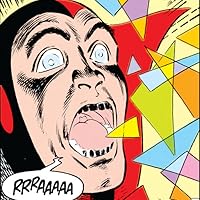
The old argument of nature vs. nurture definitely plays a vital role in the narrative for this last issue of the Family Man arc entitled Fatality. Here we get the climactic confrontation between Constantine and Morris and it was every bit as thrilling, dangerous and heart-pounding as I thought it would be. The collision was both meaningful and absurd, an ill-fated meeting between two men who have been consumed and tortured by their own inner demons for a long time--but only one of them survives the encounter. Understandably, it's John because he is the titular hero of this series, but the victory is not sweet or worth relishing at all. It was yet another rude awakening for Constantine as he eventually embraces the futility of it all.
It's been hinting towards that end, actually, since the very first issue of this arc, that John is going to have to murder Samuel Morris (I mean, just look at the goddamn issue cover so me stating this is not a spoiler) because it was the only scenario that could possibly play out where John will get away with his life. But John, in spite of his often reckless and arrogant ways that cost some of his friends' lives, is inherently a good man who cannot imagine taking another human being's life with his own hands. This display of vulnerability makes him more relatable, to be honest.
But as I predicted earlier on, I've always known that John Constantine will pull the trigger out of self-preservation which he has plenty of. It had taken a toll on him, however, given the last pages where he bemoans how the world just manages to go on even after a man kills another man. It spells out the possibly microscopic impact of our actions in the grand scheme of the universe. Fractured and feeling as if he was marked like the biblical Cain, John Constantine quickly flees the scene of the crime, keenly aware that somewhere, someone must be judging him. I put down the issue and felt a sense of strange completion after reading. As a story and speaking about it objectively, it was predictable yet it did not make the finale act any less powerful and thought-provoking at all. Under the right conditions, anyone can kill another human being. There is a strength to it so brutal and brittle all at once--to be able to make that haste decision that it's either you or that person who must live. It made me think about how I will act in a similar situation and whether I will choose to kill or be killed.
In context of all the events that have happened in John's life as I follow him diligently in this series, I think this could be considered a game-changer but one that is on a more intimate level where the pressure will solely rest on John's psyche, and it could determine his succeeding actions in the next cases he will take on. I'm glad that Delano approached this sort of story with sensitivity and a deep understanding of the weight it carries. He could have easily wrote a story where killing people is something badass and casual that heroes do, as most action-oriented comics would portray. He didn't completely discard the social and moral impact of such an act, thankfully, which only further elevated the Family Man story arc in my eyes. I think this would be the highest compliment I could give him for his run of Hellblazer because it is the first time that I've read something of his work in this series that does not always have to be a grand spectacle like his Fear Machine arc. He should write more stories like this, and put John in compromising situations that will force his character to grow and evolve.
In a nutshell, the four-issued The Family Man arc is extraordinary and even liberating, and definitely my most favorite of Delano's stories.
Oops, I spent a long time between reading #29 (part 3 of 4) and this. I don't think I've forgotten anything vital, though?
I do know I left this arc on an unenthusiastic note (though not in protest), and it's feeling pretty mechanical to me in picking it back up. It just doesn't have the flavor or perspective that I think one can reasonably expect from the series.
I don't know what to say about it, other than it feels like it's at least doubly uncharacteristic for the series, to my mind. Constantine just seems like a different character than before, and the action is... I frankly think it's kind of confused, but it's also so mundane. But not in the way that I've enjoyed how grounded (if full of occult stuff) the series has been; it's just... I dunno, guy kills people and is trying to get killed by a guy maybe.
It just doesn't work for me and it feels like it doesn't serve the character very well.
Wow. A rollercoaster of emotions, a whirlwind of action and reaction and plots and plans, all of it to end at a single gunshot. That old adage is proved true once again: If a gun appears in a story, it has to be used.