

What do you think?

Penguin Press Iron and Blood A Military History of the German-speaking Peoples Since 1500.
German military history is typically viewed as an inexorable march to the rise of Prussia and the two world wars, the road paved by militarism and the result a specifically German way of war. Peter Wilson challenges this narrative. Looking beyond Prussia to German-speaking Europe across the last five centuries, Wilson finds little unique or preordained in German militarism or warfighting.
Iron and Blood takes as its starting point the consolidation of the Holy Roman Empire, which created new mechanisms for raising troops but also for resolving disputes diplomatically. The primary aggressor in Central Europe was not Prussia but the Austrian Habsburg monarchy, yet Austria's strength owed much to its ability to secure allies. Prussia, meanwhile, invested in militarization but maintained a part-time army well into the nineteenth century. Alongside Switzerland, which relied on traditional militia, both states exemplify the longstanding civilian element within German military power.
Only after Prussia's unexpected victory over France in 1871 did Germans and outsiders come to believe in a German gift for warfare. It took two world wars to expose the fallacy of German military genius. Yet even today, Wilson argues, Germany's strategic position is misunderstood.
Iron and Blood takes as its starting point the consolidation of the Holy Roman Empire, which created new mechanisms for raising troops but also for resolving disputes diplomatically. The primary aggressor in Central Europe was not Prussia but the Austrian Habsburg monarchy, yet Austria's strength owed much to its ability to secure allies. Prussia, meanwhile, invested in militarization but maintained a part-time army well into the nineteenth century. Alongside Switzerland, which relied on traditional militia, both states exemplify the longstanding civilian element within German military power.
Only after Prussia's unexpected victory over France in 1871 did Germans and outsiders come to believe in a German gift for warfare. It took two world wars to expose the fallacy of German military genius. Yet even today, Wilson argues, Germany's strategic position is misunderstood.
913 pages, Paperback
First published October 6, 2022
About the author
Peter H. Wilson
34 books168 followersPeter Hamish Wilson is a British historian. Since 2015, he has held the Chichele Professor of the History of War chair at All Souls College, University of Oxford.
Ratings & Reviews
Friends & Following
Create a free account to discover what your friends think of this book!
Community Reviews
Displaying 1 - 30 of 57 reviews

Read
February 13, 2023This is an immensely readable, though academic, work on the evolution of German army structure. Military buffs ought to be aware that this work doesn't focus on battles, operational details, or military nuts and bolts. Instead, Wilson gives reasons why modern English-written works especially comb over well-trodden ground with respect to the history of military Prussia, while giving scarce attention to the leviathan that was the Holy Roman Empire during the 1500s-1700s.
Wilson's focus examines the development of weapons, and the logistical evolution that supports the growth of standing armies through this period. That's not to say that there is no coverage of important aspects of military history--we get an excellent section on the design of warships, for example--but while battles are referred to, they are not detailed as in purely military histories.
I found it especially worthwhile in tracing the path from the mass levies of medieval times through the hiring of mercenary armies to the idea of a standing army. And as I said above, there is at last equal attention given to Austrian development: I've only found good looks at equivalent developing of the Holy Roman Empire's military in books written in German. This goes for the Swiss military evolution as well--their soldiers once admired as the epitome of the warrior.
The writing is smooth and interesting, and the background research formidable. This is a book well worth having for anyone looking for reasons for military evolution through the middle of Europe before and during the Early Modern Period, which informs the shape of European interaction in the 20th Century.
Wilson's focus examines the development of weapons, and the logistical evolution that supports the growth of standing armies through this period. That's not to say that there is no coverage of important aspects of military history--we get an excellent section on the design of warships, for example--but while battles are referred to, they are not detailed as in purely military histories.
I found it especially worthwhile in tracing the path from the mass levies of medieval times through the hiring of mercenary armies to the idea of a standing army. And as I said above, there is at last equal attention given to Austrian development: I've only found good looks at equivalent developing of the Holy Roman Empire's military in books written in German. This goes for the Swiss military evolution as well--their soldiers once admired as the epitome of the warrior.
The writing is smooth and interesting, and the background research formidable. This is a book well worth having for anyone looking for reasons for military evolution through the middle of Europe before and during the Early Modern Period, which informs the shape of European interaction in the 20th Century.

March 1, 2023
This is very comprehensive but as with his 100 Years War book, Wilson has trouble not getting swamped in his narrative by including every historical event or detail. A more syncretic, interpretive account, summarizing the narrative in broad strokes, of maybe half the length, would have foregrounded Wilson’s interesting critique of the cliches about Prussian militarism - instead the details make it very hard to track of what the point is. I’m also not sure that including the Swiss (because they were German speakers) really works, rather it adds to the loss of focus.
April 14, 2023
(Audiobook) Settle in, for this is a long work. Wilson attempts to give a one-volume treatment to the military history of the German states/Germany, covering over 500 years. He captures a lot, but he can’t get everything. Wilson looks to dispel the myth that the German military really is based on the Prussian model and that it was at its peak in the 2 World Wars. There is far more to the story, as shown here.
The introduction is robust and helps set the stage for the trend of analysis. Each section gets an overview of the geo-political situation, followed by more in-depth analysis of the military, from the leaders, to organization and equipment. It is not a consistent breakout. Granted, air power is not a factor before the 20th century, but sometimes, the in-depth breakouts aren’t consistent. We can learn all the intimate details of weaponry from the Thirty Years War or the Franco-Prussian War, but discussions of weaponry for Fredrick the Great aren’t there.
Surprisingly, there is not wrap-up conclusion, which would have helped caged the analysis of the German military here. Maybe there is no overarching theory about the Germanic military, other than describing how it evolved, but if such a robust intro, a conclusion seems called for, which didn’t happen. Maybe better as a hard-copy work to reference.
The introduction is robust and helps set the stage for the trend of analysis. Each section gets an overview of the geo-political situation, followed by more in-depth analysis of the military, from the leaders, to organization and equipment. It is not a consistent breakout. Granted, air power is not a factor before the 20th century, but sometimes, the in-depth breakouts aren’t consistent. We can learn all the intimate details of weaponry from the Thirty Years War or the Franco-Prussian War, but discussions of weaponry for Fredrick the Great aren’t there.
Surprisingly, there is not wrap-up conclusion, which would have helped caged the analysis of the German military here. Maybe there is no overarching theory about the Germanic military, other than describing how it evolved, but if such a robust intro, a conclusion seems called for, which didn’t happen. Maybe better as a hard-copy work to reference.
October 21, 2023
Another book, in English, which puts further nails in the coffin of the idea of Germany's Sonderweg (special path); that it is still necessary at the end of the first quarter of the 21st century to say this shows the persistence of popular, and comforting, myths in popular history. It is also, I think, a way for many in the UK to cling onto the comforting illusions that helped sweeten the pill of post WWII decline. 'Our' history had gone the right way (France was allowed to have followed, erratically, a similarly 'right' path). Germany of course took the wrong path thanks to 'Prussian' militarism which we had to destroy, twice. Of course this reading of history was bollocks and this, as well as Peter Wilson's other books on the Holy Roman Empire and Thirty Years War, are a reminder that history should never be written 'after the fact'. Just because we know what happened next doesn't mean that this could be seen with any certainty at the time.
The book deserves all the plaudits heaped upon it is important and fascinating, the centrality and importance it gives to the Holy Roman empire between 1400 and 1700 and also Hapsburg/Holy Roman Empire/Swiss relations will probably be a revelation to most English language readers as will the continuities over the centuries and the role of the Austrian/Austro-Hungarian empire within the story.
I can't pretend that looking at 'German' speaking people doesn't make for a complex and large history but it avoids the anachronisms that writing a 'nation' based history involves. The book's
strengths and weaknesses are inseparable from its very bulk and like his history of the Holy Roman Empire it is thematic rather than narrative. Nor can I pretend that I have read all of this book - I have tried twice and have abandoned it not through any other reason than lack of time and also a failure to become as engaged with its subject as I had with his earlier books. I would never suggest that this is a book not worth reading but it is not one I felt that I had to read.
The book deserves all the plaudits heaped upon it is important and fascinating, the centrality and importance it gives to the Holy Roman empire between 1400 and 1700 and also Hapsburg/Holy Roman Empire/Swiss relations will probably be a revelation to most English language readers as will the continuities over the centuries and the role of the Austrian/Austro-Hungarian empire within the story.
I can't pretend that looking at 'German' speaking people doesn't make for a complex and large history but it avoids the anachronisms that writing a 'nation' based history involves. The book's
strengths and weaknesses are inseparable from its very bulk and like his history of the Holy Roman Empire it is thematic rather than narrative. Nor can I pretend that I have read all of this book - I have tried twice and have abandoned it not through any other reason than lack of time and also a failure to become as engaged with its subject as I had with his earlier books. I would never suggest that this is a book not worth reading but it is not one I felt that I had to read.

May 21, 2023
The Big Read of Spring 2023. (There. Is. Another.) Extremely interesting, trying to cover 600 years of history – and successfully rewrites the conventional wisdom about German-speaking nations supposed "innate militarism". Especially the early parts of the book are true eye-openers, e.g. how Switzerland as we know it came to be, or how the Holy Roman Empire's amoeba X-volved into another imperial amoeba, the Austro-Hungarian.
Even the last 100+ years get an interesting and compelling rewrite. The key lesson is to NOT take the teleological view, reading all past events as if somehow (almost by destiny) culminating in the string of wars of 1866 + 1870-1871 + 1914-1918 + 1939-1945 and leading to the great reset, of "Zero Hour" in 1945 (followed by a new chapter). Therein lies a key tenet that focusing on the popular and unquestioned explanation of "Prussian militarism" makes for a crappy understanding of German-speaking peoples' history and military history.
"History should not be read backwards" & "we (the present) differ from them ("the past") in one crucial way — they didn't know at the time how it would play out" are just a few of the classic phrases that pop up in your mind while going through the events that unfolded.
The whole book, at 900+ pages, serves as a massive and clear counterpoint to received wisdom — that there is no special "German way" (Sonderweg) — and that the historical analogies that remain are, as the saying goes, both convincing in their simplicity and completely wrong. It also shows you plenty of crappy leadership, leading to a narrow battlefield-only focus for fighting wars without thinking of the bigger picture and the odds therein, which were almost always stacked against; the almost completely unchanging idea & practice of a citizen-soldier; and more.
However massive the book is, I would have liked to see another 100 pages for this time period, as the analysis could have gone deeper into WWI and, to an extent, WWII as well. The comparison of the BW v. NVA v. Austria v. Switzerland post-1945 was extremely interesting, if shorter than I would have wanted. The book finishes with a look at re-unified Germany, leading to the events of the day, and even here the author keeps his eye on the ball. BTW, the book finishes (and was finished) before large-scale land war again rose its head in Europe.
A true giant of a book. Highly recommended.
Even the last 100+ years get an interesting and compelling rewrite. The key lesson is to NOT take the teleological view, reading all past events as if somehow (almost by destiny) culminating in the string of wars of 1866 + 1870-1871 + 1914-1918 + 1939-1945 and leading to the great reset, of "Zero Hour" in 1945 (followed by a new chapter). Therein lies a key tenet that focusing on the popular and unquestioned explanation of "Prussian militarism" makes for a crappy understanding of German-speaking peoples' history and military history.
"History should not be read backwards" & "we (the present) differ from them ("the past") in one crucial way — they didn't know at the time how it would play out" are just a few of the classic phrases that pop up in your mind while going through the events that unfolded.
The whole book, at 900+ pages, serves as a massive and clear counterpoint to received wisdom — that there is no special "German way" (Sonderweg) — and that the historical analogies that remain are, as the saying goes, both convincing in their simplicity and completely wrong. It also shows you plenty of crappy leadership, leading to a narrow battlefield-only focus for fighting wars without thinking of the bigger picture and the odds therein, which were almost always stacked against; the almost completely unchanging idea & practice of a citizen-soldier; and more.
However massive the book is, I would have liked to see another 100 pages for this time period, as the analysis could have gone deeper into WWI and, to an extent, WWII as well. The comparison of the BW v. NVA v. Austria v. Switzerland post-1945 was extremely interesting, if shorter than I would have wanted. The book finishes with a look at re-unified Germany, leading to the events of the day, and even here the author keeps his eye on the ball. BTW, the book finishes (and was finished) before large-scale land war again rose its head in Europe.
A true giant of a book. Highly recommended.

June 24, 2023
It’s 5 stars if you want extreme detail of everything from belt buckles to leader whims in a generalized broad summary of the time and region covered. The book fails to capture the blood part of German history except for neat very short summaries which do not capture both the pain and consequences beyond border or leadership changes. If you have very little knowledge of German history then it gives you a basic outline. However if you’re looking to experience the history, the people and compile a working understanding of the interwoven strands then look elsewhere. Strands that both liberate and incriminate all who are involved.

August 10, 2025
Es un ensayo demasiado generalista para mi gusto, que abarca la historia militar alemana desde el siglo XV hasta la actualidad. No recomiendo su lectura si se busca un conocimiento profundo sobre algún periodo en concreto. En todo caso ha sido una lectura útil que me ha proporcionado ciertos conocimientos que ignoraba acerca de la historia de Alemania.
Von Tirpiz: "Es más honroso combatir por el objetivo más honorable y perecer con honor que aceptar un futuro sin gloria".
Von Tirpiz: "Es más honroso combatir por el objetivo más honorable y perecer con honor que aceptar un futuro sin gloria".

January 30, 2024
If there ever was a book that lacks focus, this is it. Peter Wilson has attempted to create a definitive and comprehensive volume on the military history of the “German Speaking Peoples since 1500”. I found this book extremely difficult to get through. I personally wasn’t a fan of the way he decided to organize the chapters, with each period given three chapters to talk about three different aspects of the given time period. Because of this there was an immense amount of repetition. It felt like you were progressing through history, only to be brought back at the start of the next chapter.
I also am not a fan of his writing style. Many paragraphs simply felt like data dumps with limited context, with excessive amount of numbers, percentages, and seemingly irrelevant comparisons. All this did was bog down the flow, and personally left me rereading several paragraphs over and over trying to denote what point Wilson is trying to make.
There were also times where it felt like Wilson was making the assumption the reader already had a basic knowledge of the subject matter, and then glossing over or even alluding to certain events without explaining any sort of context. I found this extremely frustrating as my knowledge of pre 18th century military history is very limited. I actually found myself going outside the book to research certain things just so I had an understanding of what Wilson was even talking about.
On top of all of this, there are several inaccuracies within subjects that I do have a good working knowledge of. Just off the top of my head, Wilson makes the claim that Hitler gave up on invading Britain in July, 1940 and decided to concentrate on the Soviet Union. This would have been before the Battle of Britain, and hence his claim is completely nonsensical. He also says the allied invasion of Italy was in October (it was in September). Although this doesn’t largely detract from the overall book, it is rather frustrating and calls into question what other aspects is he getting wrong?
In closing, perhaps this book simply wasn’t for me. I found its lack of focus, confusing writing style, and bad organization extremely frustrating. However, given other very glowing 5 star reviews of this book, perhaps I am part of a minority.
I also am not a fan of his writing style. Many paragraphs simply felt like data dumps with limited context, with excessive amount of numbers, percentages, and seemingly irrelevant comparisons. All this did was bog down the flow, and personally left me rereading several paragraphs over and over trying to denote what point Wilson is trying to make.
There were also times where it felt like Wilson was making the assumption the reader already had a basic knowledge of the subject matter, and then glossing over or even alluding to certain events without explaining any sort of context. I found this extremely frustrating as my knowledge of pre 18th century military history is very limited. I actually found myself going outside the book to research certain things just so I had an understanding of what Wilson was even talking about.
On top of all of this, there are several inaccuracies within subjects that I do have a good working knowledge of. Just off the top of my head, Wilson makes the claim that Hitler gave up on invading Britain in July, 1940 and decided to concentrate on the Soviet Union. This would have been before the Battle of Britain, and hence his claim is completely nonsensical. He also says the allied invasion of Italy was in October (it was in September). Although this doesn’t largely detract from the overall book, it is rather frustrating and calls into question what other aspects is he getting wrong?
In closing, perhaps this book simply wasn’t for me. I found its lack of focus, confusing writing style, and bad organization extremely frustrating. However, given other very glowing 5 star reviews of this book, perhaps I am part of a minority.

January 20, 2023
A good book but not exactly an easy read. This is what I would describe as “hardcore” military history, covering off areas as diverse as logistics, the rights of soldiers to marry and how armies were funded. It covers from circa 1500 to the present day and includes Germany, Switzerland, Austria and those countries that were within their imperial realms. It is long and comprehensive but never boring.

January 8, 2026
German militarism has been blamed for the catastrophes of the two world wars. This is often projected back, to the idea that Germany is somehow uniquely militaristic and has a particular method of war. The other well known periods of German military history; the wars of unification and Frederick the Great of Prussia seem to confirm the view, but how true is it really? Looking to answer that question over a long period is the task Peter H Wilson sets himself in Iron and Blood A Military History of the German-speaking Peoples since 1500.
Pros
A brilliant overview of the German militaries over 500 years
Slays myths
Handles the diversity of German military history well
Cons
Sketchy on individual wars
Iron and Blood is a chunky book with some big goals. It seeks to go about this by providing a long view of history since 1500 through to the present day. Given the sometimes starry eyed view of the German military the intent is also to show the failures, where particularly Prussia either collapsed (Napoleonic Wars) or narrowly escaped disaster (Seven Years War), and problems with the German machine. There is a narrative history here but that is not the only way the argument is set out. The book is split into five sections, which are roughly a century each; Balancing War and Peace; Accepting War as Permanent; Professionalising War; Nationalising War; Democratising war. Within each there are three chapters; only one provides the narrative, the other two are on the organisation of the military, and the economic/societal aspects.
The case Wilson is making is not stretched and sometimes a comparison is not taken across time periods when it might perhaps be to emphasise the point about how things have changed, or not. An example of this might be where statistics on the world wars are being given (p733-4) where proportions of populations might have been more useful than raw figures, and then a comparison to say the Thirty Years War covered much earlier in the book. Since Wilson’s point is that it was different in scale this could then be considered as to what it works out like per year. That said one of the benefits of a book like this is to be able to see how the military, its organisation, and its culture changes over time, in this case over a very long period. This allows the reader to grasp how armies evolved and developed organically each reform building on the last and Wilson is good at emphasising this, both within and between chapters.
Wilson does not satisfy himself with just slaying the big myths but also takes on smaller ones in the individual sections, this is also to be commended. Most who read the book won't be familiar with all the time periods so may have some misconceptions. Though I do think he perhaps occasionally resorts to straw men such as when contesting the pre-Napoleonic 18th century wars as being “neither as limited nor as bloodless as often portrayed” (p352). My understanding had always been that the contention here was that they were limited in the political sense of no one wanting to overturn the system or eliminate another power, not in the military sense. Given that battles in the Seven Years War regularly caused 30-40% casualties it is difficult to see how anyone could see this as limited in a military sense.
A major goal of Iron and Blood is to show the diversity of Germany’s military history. Through most of history this is diversity over space. Austria and later Prussia as the bigger states are by necessity different from the ‘third Germany’ of the minor states and Switzerland that take different methods of defence. This is something that Wilson handles very well, particularly through the Early Modern period - perhaps something that would be expected as Wilson has written a book ‘German Armies’ specifically on the diverse militaries of this period. Once we get to the last section however there is also diversity across time, with the section containing WWI, interwar period and rearmament, WWII, Cold War and post cold war. In my view this is the least successful element of the book as there is so much different it is difficult to keep the section coherent and the format means we keep jumping between the different sub-periods.
Perhaps the biggest downside comes from the book’s broad scope. With narrative history only a third of the book, and stretched over 500 years, nothing can be given more than passing attention. The bonus here is that the narrative is quick and fast flowing. No sooner is a war declared then it is finished! The downside is that there is little detail on even the most interesting conflicts. The thematic elements will sometimes balance this a bit by diving a little more into contentious issues in a war. However this can't really be seen as too much of an issue as that is not what Iron and Blood is for; if you want to know more about a specific war then there are books about individual wars to do that, and Wilson provides extensive footnotes and bibliography that can help you find one.
I very much hope, and believe this should appeal to those interested in the German military in WWI or WWII but who would not read about earlier conflicts - so providing a gateway to those more neglected periods of military history.
Pros
A brilliant overview of the German militaries over 500 years
Slays myths
Handles the diversity of German military history well
Cons
Sketchy on individual wars
Iron and Blood is a chunky book with some big goals. It seeks to go about this by providing a long view of history since 1500 through to the present day. Given the sometimes starry eyed view of the German military the intent is also to show the failures, where particularly Prussia either collapsed (Napoleonic Wars) or narrowly escaped disaster (Seven Years War), and problems with the German machine. There is a narrative history here but that is not the only way the argument is set out. The book is split into five sections, which are roughly a century each; Balancing War and Peace; Accepting War as Permanent; Professionalising War; Nationalising War; Democratising war. Within each there are three chapters; only one provides the narrative, the other two are on the organisation of the military, and the economic/societal aspects.
The case Wilson is making is not stretched and sometimes a comparison is not taken across time periods when it might perhaps be to emphasise the point about how things have changed, or not. An example of this might be where statistics on the world wars are being given (p733-4) where proportions of populations might have been more useful than raw figures, and then a comparison to say the Thirty Years War covered much earlier in the book. Since Wilson’s point is that it was different in scale this could then be considered as to what it works out like per year. That said one of the benefits of a book like this is to be able to see how the military, its organisation, and its culture changes over time, in this case over a very long period. This allows the reader to grasp how armies evolved and developed organically each reform building on the last and Wilson is good at emphasising this, both within and between chapters.
Wilson does not satisfy himself with just slaying the big myths but also takes on smaller ones in the individual sections, this is also to be commended. Most who read the book won't be familiar with all the time periods so may have some misconceptions. Though I do think he perhaps occasionally resorts to straw men such as when contesting the pre-Napoleonic 18th century wars as being “neither as limited nor as bloodless as often portrayed” (p352). My understanding had always been that the contention here was that they were limited in the political sense of no one wanting to overturn the system or eliminate another power, not in the military sense. Given that battles in the Seven Years War regularly caused 30-40% casualties it is difficult to see how anyone could see this as limited in a military sense.
A major goal of Iron and Blood is to show the diversity of Germany’s military history. Through most of history this is diversity over space. Austria and later Prussia as the bigger states are by necessity different from the ‘third Germany’ of the minor states and Switzerland that take different methods of defence. This is something that Wilson handles very well, particularly through the Early Modern period - perhaps something that would be expected as Wilson has written a book ‘German Armies’ specifically on the diverse militaries of this period. Once we get to the last section however there is also diversity across time, with the section containing WWI, interwar period and rearmament, WWII, Cold War and post cold war. In my view this is the least successful element of the book as there is so much different it is difficult to keep the section coherent and the format means we keep jumping between the different sub-periods.
Perhaps the biggest downside comes from the book’s broad scope. With narrative history only a third of the book, and stretched over 500 years, nothing can be given more than passing attention. The bonus here is that the narrative is quick and fast flowing. No sooner is a war declared then it is finished! The downside is that there is little detail on even the most interesting conflicts. The thematic elements will sometimes balance this a bit by diving a little more into contentious issues in a war. However this can't really be seen as too much of an issue as that is not what Iron and Blood is for; if you want to know more about a specific war then there are books about individual wars to do that, and Wilson provides extensive footnotes and bibliography that can help you find one.
I very much hope, and believe this should appeal to those interested in the German military in WWI or WWII but who would not read about earlier conflicts - so providing a gateway to those more neglected periods of military history.

July 19, 2023
Iron and Blood is a monumental and comprehensive exploration of the German-speaking world from the early modern period to modern times. The book delves deep into the intricate tapestry of history, politics, culture, and society, providing readers with a captivating and thought-provoking journey through centuries of German history. Spanning over 600 pages, Wilson's scholarly work is an authoritative testament to his meticulous research and rich expertise in the field. The title, "Iron and Blood," aptly captures the essence of the German experience, encapsulating the indomitable spirit and tumultuous history that have shaped the German-speaking peoples. A strength of the book lies in Wilson's ability to strike a balance between academic rigor and engaging storytelling. The book is approachable for both scholars and general readers with an interest in history. The narrative unfolds chronologically, guiding the reader through the transformative events and key figures that have left an indelible mark on the German-speaking world. It begins with the early modern period, a time of great political fragmentation and religious upheaval. Wilson masterfully navigates through the complex web of the Holy Roman Empire and the Thirty Years' War, shedding light on the divergent paths taken by the various German-speaking states. He captures the essence of these tumultuous times, where the German people struggled for identity and unity amidst external pressures and internal strife. Throughout the book, Wilson emphasizes the interplay of power and governance, highlighting the rise and fall of great empires and the emergence of a unified German nation-state. He delves into the machinations of power politics, diplomacy, and the role of charismatic leaders, demonstrating how they profoundly impacted the destiny of the German-speaking peoples. A unique aspect of the book is the attention paid to cultural and societal aspects. Wilson delves into literature, art, and philosophy, exploring how these expressions of German identity evolved over time. From the Enlightenment and Romanticism to the cultural boom of the Weimar Republic, the author captures the vibrancy and complexity of German cultural contributions. Moreover, Wilson's treatment of the two world wars and the subsequent division and reunification of Germany is particularly praiseworthy. He provides a nuanced and balanced perspective, avoiding simplistic explanations while shedding light on the profound consequences of these events on the German psyche and global politics. And yet, Iron and Blood is not without its flaws, albeit minor ones. Some readers might find the vast amount of information overwhelming, and at times, the narrative might meander into minute details that could have been condensed. Nevertheless, these are minor drawbacks that do not detract significantly from the overall quality of the work.

April 23, 2023
Peter Wilson doesn't write many books, but the few that he does write are very long and very German. Iron and Blood follows his epic history of the Thirty Years War and his even more epic history of the Holy Roman Empire. There is inevitably a degree of overlap over these three topics, although Iron and Blood takes a wide ranging, rather than forensic approach to 500 years of German military history.
At the outset Wilson states his thesis. German people and culture are not inherently more militaristic than other European nations, even if the years 1865-1945 might suggest otherwise. As with all history, what with hindsight seems inevitable, at the time is the result of chance, mistakes and Clausewitz's famous fog of war. Prussian could have been wiped from the face of the earth in the 1750s and the fact that it wasn't is only partly down to a flash of Frederick the Great's genius (a recklessness that got him into trouble in the first place).
What Frederick the Great's ultimate, and only partial, success in the Seven Years War did go to show was that a quick and decisive victory, achieved through pre-emptive strike, was the pattern by which Prussian (and later German) armies could expect to win against a coalition of enemies to their east and west. This doctrine was proved blindingly successful in Bismarck's 1870 war against France, but was devastatingly wrong in 1914. In 1939 the German General Staff chose not to learn from the mistakes of the First World War, still looking back to the decisive victory against France seventy years earlier. As Wilson points out, the Germans were so obsessed with logistics that they ignored strategy. There was no long-term plan for how to wage war if the initial strike did not achieve immediate victory.
Iron and Blood is readable and as comprehensive as a 750 page book can be covering 500 years. Each century is covered in one part, with each part divided into three sections: chronological history, strategic, logistic and tactical development, and the experience of warfare. This is a sensible division which means that the reader is not bogged down in history - and importantly not overcome by descriptions of battle plans. The last section on the Twentieth Century is by far the longest, but even so feels slightly rushed and cursory. Given that other centuries saw guns develop from matchlock to flintlock whereas the twentieth century saw the invention of aircraft, tanks and dreadnoughts, this is understandable.
At the outset Wilson states his thesis. German people and culture are not inherently more militaristic than other European nations, even if the years 1865-1945 might suggest otherwise. As with all history, what with hindsight seems inevitable, at the time is the result of chance, mistakes and Clausewitz's famous fog of war. Prussian could have been wiped from the face of the earth in the 1750s and the fact that it wasn't is only partly down to a flash of Frederick the Great's genius (a recklessness that got him into trouble in the first place).
What Frederick the Great's ultimate, and only partial, success in the Seven Years War did go to show was that a quick and decisive victory, achieved through pre-emptive strike, was the pattern by which Prussian (and later German) armies could expect to win against a coalition of enemies to their east and west. This doctrine was proved blindingly successful in Bismarck's 1870 war against France, but was devastatingly wrong in 1914. In 1939 the German General Staff chose not to learn from the mistakes of the First World War, still looking back to the decisive victory against France seventy years earlier. As Wilson points out, the Germans were so obsessed with logistics that they ignored strategy. There was no long-term plan for how to wage war if the initial strike did not achieve immediate victory.
Iron and Blood is readable and as comprehensive as a 750 page book can be covering 500 years. Each century is covered in one part, with each part divided into three sections: chronological history, strategic, logistic and tactical development, and the experience of warfare. This is a sensible division which means that the reader is not bogged down in history - and importantly not overcome by descriptions of battle plans. The last section on the Twentieth Century is by far the longest, but even so feels slightly rushed and cursory. Given that other centuries saw guns develop from matchlock to flintlock whereas the twentieth century saw the invention of aircraft, tanks and dreadnoughts, this is understandable.

April 25, 2024
Für kurzweilige Abhandlungen ist der Oxford-Historiker und Deutschlandkenner Peter H. Wilson wahrlich nicht bekannt, denn nach seiner 1300-Seitigen Studie zum Dreißigjährigen Krieg sowie seinem 1000-Seiten-Starken Werk zum Heiligen Römischen Reich ist im vergangenen Herbst nun seine Gesamtdarstellung der deutschen Militärgeschichte erschienen, die immerhin noch auf rund 900 Seiten kommt.
Unter dem Titel „Eisen & Blut“, welcher sich auf die berühmten Schlagworte Bismarcks während des preußischen Verfassungskonfliktes bezieht, unternimmt Wilson eine Reise durch die Geschichte der deutschsprachigen Länder, also einschließlich Österreich und der Schweiz, die im Jahr 1500 beginnt und bis zur Gegenwart reicht. Im Fokus von „Eisen & Blut“ steht die Militärgeschichte dieser Länder, wobei sich die Darstellung weniger auf die zahlreichen Kriege dieser Zeitspanne bezieht, sondern vielmehr Fragen der Militärorganisation, des waffentechnischen Fortschritts sowie des Sanitätswesens in den Vordergrund stellt. Hierbei legt Wilson bisweilen einen absurden Detailgrad an den Tag. Ein entsprechendes Interesse an jenen Fragestellungen sollte von Seiten des interessierten Lesers also zwingend gegeben sein.
Für mich, dem das Interesse in dieser Tiefe fehlte, war „Eisen & Blut“ deswegen ein eher mittelmäßiger read. Das lag auch an dem fehlenden roten Faden, der bei einem Buch dieser Länge meines Erachtens zwingend notwendig gewesen wäre. Zwar haben die Oberkapitel zu den einzelnen Zeitabschnitten eine einheitliche Kapitelstruktur, allerdings wird kapitelübergreifend keine Kernthese entwickelt und es wird zudem auf Zwischenfazits verzichtet. In Kombination mit dem bereits genannten Detailgrad war es für mich somit recht schwierig, die Fülle an Informationen aufzunehmen und zu verarbeiten, wodurch der Erkenntnisgewinn niedriger ausfiel als möglich.
Militärhistorische Nerds können meiner Bewertung aber gerne mindestens einen halben Notenpunkt zuschlagen, denn zu diesem Themenfeld dürfte es derzeit wohl keine fundiertere und detaillierte Darstellung am Büchermarkt geben als „Eisen & Blut“.
Review bei Instagram: https://www.instagram.com/p/C6LS7pJi_3o/
Unter dem Titel „Eisen & Blut“, welcher sich auf die berühmten Schlagworte Bismarcks während des preußischen Verfassungskonfliktes bezieht, unternimmt Wilson eine Reise durch die Geschichte der deutschsprachigen Länder, also einschließlich Österreich und der Schweiz, die im Jahr 1500 beginnt und bis zur Gegenwart reicht. Im Fokus von „Eisen & Blut“ steht die Militärgeschichte dieser Länder, wobei sich die Darstellung weniger auf die zahlreichen Kriege dieser Zeitspanne bezieht, sondern vielmehr Fragen der Militärorganisation, des waffentechnischen Fortschritts sowie des Sanitätswesens in den Vordergrund stellt. Hierbei legt Wilson bisweilen einen absurden Detailgrad an den Tag. Ein entsprechendes Interesse an jenen Fragestellungen sollte von Seiten des interessierten Lesers also zwingend gegeben sein.
Für mich, dem das Interesse in dieser Tiefe fehlte, war „Eisen & Blut“ deswegen ein eher mittelmäßiger read. Das lag auch an dem fehlenden roten Faden, der bei einem Buch dieser Länge meines Erachtens zwingend notwendig gewesen wäre. Zwar haben die Oberkapitel zu den einzelnen Zeitabschnitten eine einheitliche Kapitelstruktur, allerdings wird kapitelübergreifend keine Kernthese entwickelt und es wird zudem auf Zwischenfazits verzichtet. In Kombination mit dem bereits genannten Detailgrad war es für mich somit recht schwierig, die Fülle an Informationen aufzunehmen und zu verarbeiten, wodurch der Erkenntnisgewinn niedriger ausfiel als möglich.
Militärhistorische Nerds können meiner Bewertung aber gerne mindestens einen halben Notenpunkt zuschlagen, denn zu diesem Themenfeld dürfte es derzeit wohl keine fundiertere und detaillierte Darstellung am Büchermarkt geben als „Eisen & Blut“.
Review bei Instagram: https://www.instagram.com/p/C6LS7pJi_3o/

April 14, 2023
If one reads a lot of modern history, the need for this book is clear. It is nearly impossible to consider German military history and the history of the German Army without being immediately sucked into a focused and detailed look at the German Army in WW1 and WW2 under Hitler and the Third Reich. Those two lines of research have been thoroughly investigated but there is surprisingly little that places 20th century German military history in the broader context of what came before - prior to and following the formation of modern Germany - and what came after - during the Cold War and following German reunification. Context is often crucial and it is quite possible that some broad stories have not been told linking military history in German to military history in the broader European context. This does not even mention issues of how military history is tied to economic and social history in modernizing Europe.
Don’t get me wrong, I have loved reading all I can get my hands on regarding WW1 and WW2, and the German military figures large in both. I just keep thinking there is more to say - although such stories might be much more involved.
Peter Wilson is an Oxford historian who has produced such a history. His book - “Iron and Blood” is a history of all things military for German-speaking peoples since 1500. It focuses on what principalities eventually became Germany and Austria, along with others, especially Switzerland, Belgium, and Luxembourg. Military, political, economic, social, and religious matters are all fair game. The focus is on the consciousness of the German people now citizens about their military past, present, and future.
Take a deep breath when starting this book. There is a lot of history going on and I frequently had to check on what or who something was and when something occurred. This is a long book and Professor Wilson knows what he is presenting and has thought deeply about it. It is an impressive work that I will need some time to process.
In the meantime, I highly recommend the book.
Don’t get me wrong, I have loved reading all I can get my hands on regarding WW1 and WW2, and the German military figures large in both. I just keep thinking there is more to say - although such stories might be much more involved.
Peter Wilson is an Oxford historian who has produced such a history. His book - “Iron and Blood” is a history of all things military for German-speaking peoples since 1500. It focuses on what principalities eventually became Germany and Austria, along with others, especially Switzerland, Belgium, and Luxembourg. Military, political, economic, social, and religious matters are all fair game. The focus is on the consciousness of the German people now citizens about their military past, present, and future.
Take a deep breath when starting this book. There is a lot of history going on and I frequently had to check on what or who something was and when something occurred. This is a long book and Professor Wilson knows what he is presenting and has thought deeply about it. It is an impressive work that I will need some time to process.
In the meantime, I highly recommend the book.

February 5, 2023
I have just spent a very satisfying period of time studying an ARC of Professor Peter H. Wilson's magisterial tome entitled "Iron and Blood: A Military History of the German-Speaking Peoples Since 1500" (to be published by Harvard University Press).. While the book was weighty (976 pages in hardcover), I found it oddly hard to put down. For anyone even remotely interested in this subject matter, time spent in the perusal of this book is time well spent, It is thoroughly researched, and Professor Wilson has a deft touch and obvious command of the language which makes for a read the ease of which belies its length. I should also note that the title might be a bit misleading in the sense that this is not an operational military history. While many conflicts and specific battles are referenced in passing here, the author's themes are far grander in design. From weapons technology to bureaucratic and logistical concerns of the evolving military (for example in the design of warships and the casting of canon) as well as the growth of professional mass armies and their evolution from very different militia based feudal levies, the author marshals a formidable array of facts to support a very different perspective on his subject. I have never read a better background to the development of modern Switzerland with its unique military history, nor have I ever seen a work, even amongst those purporting to focus on the Hapsburg Empire(s), that more clearly highlighted their enormously underrated influence on the developing German way of war. Keep in mind that most books examining the evolution of German military thought and practice virtually ignore Switzerland and give equally short shrift to the Holy Roman Empire. Professor Wilson's work suggests very convincingly that this leads to a kind of myopic focus on Prussia to the detriment of the much bigger historical forces in play. Bravo Professor Wilson!

June 22, 2023
A very comprehensive tour of German military history from the Middle Ages to modern times (including GWOT). The author has clearly mastered the subject matter, but sometimes seems to have trouble organizing his thoughts. There are chapters that seem like data dumps with tons of details and numbers thrown the reader's way with only a sprinkle of context. I think the book could've been edited down a lot with the stats moved to the footnotes since they didn't necessarily clarify the main points the author was making. By the time the author got to the Cold War and modern times, he had run out of steam, I think, because the chapters just glossed over most of that period. The concluding chapter didn't really bring the tome's major themes together and seemed an abrupt ending. But nonetheless I enjoyed reading through some of the trivia, especially around the late medieval and early modern eras, as well as the longstanding German obsession in the 20th century with a quick victory to stave off an extended two-front war.
If there's a second edition ever, I hope the author delves a bit more into explaining why the otherwise professional German armed forces were inclined to wage such brutal wars in the 20th century and to eventually support the genocidal Nazi regime.
If there's a second edition ever, I hope the author delves a bit more into explaining why the otherwise professional German armed forces were inclined to wage such brutal wars in the 20th century and to eventually support the genocidal Nazi regime.

October 14, 2024
Expanded well beyond the traditional coverage of the German state from unification to the end of the Third Reich, Historian Peter Wilson's Iron and Blood offers an impressively detailed history of the German people militarily for over 5 centuries.
Arranged both thematically and chronologically, the book as a whole shows many different key facets of European history. Technologically fueled change in weaponry, health/medicine and tactics, the decline of monarchy and the rise of nations or more generally public discourse and morale. While it is centered on modern Germany, Wilson expanded coverage to also include Austria and Switzerland.
Iron and Blood is more than just descriptions of battles and key leaders and events, and explores with more depth and nuance that challenges the commonly held narrative that Prussia was a highly effective and militaristic society. Instead readers will come away with the understanding that much of that praise and perspective derives from German victory in the Franco-Prussian war and led to severe errors and over estimation of German capabilities, particularly by internal leaders.
Recommended to readers of military history, modern European History, or the two world wars.
I received a free digital version of this book via NetGalley thanks to the publisher.
Arranged both thematically and chronologically, the book as a whole shows many different key facets of European history. Technologically fueled change in weaponry, health/medicine and tactics, the decline of monarchy and the rise of nations or more generally public discourse and morale. While it is centered on modern Germany, Wilson expanded coverage to also include Austria and Switzerland.
Iron and Blood is more than just descriptions of battles and key leaders and events, and explores with more depth and nuance that challenges the commonly held narrative that Prussia was a highly effective and militaristic society. Instead readers will come away with the understanding that much of that praise and perspective derives from German victory in the Franco-Prussian war and led to severe errors and over estimation of German capabilities, particularly by internal leaders.
Recommended to readers of military history, modern European History, or the two world wars.
I received a free digital version of this book via NetGalley thanks to the publisher.

April 7, 2023
A thorough/detailed book indeed, but I've felt the balance of details was a bit off, some numbers could be omitted, as well as enumeration of certain facts. Overall, liked the book a lot and the title of the book lives up to its name.
Starting in 1500 with the Holy Roman Empire describing the relationship between the electors and empire and between each other, reasons when the war was deemed as permissible, means to wage the war, day to day of the army, relationship between the army and the civilian, advances in weaponry and strategy and how those changed the face of war. All this and more is in the book, each theme having its own subdivision.
Lastly, the final parts about both WWs are clearing up a few misconceptions, at least those I had.
The detailed description of weaponry, tactics and strategy of warfare and the dissemination of knowledge among the German-speaking people but also Europe through time is in itself highly interesting and worthwhile reading if one wants to understand how we went from having hundreds of thousands dead in a conflict spanning multiple decades to millions dead within just couple of years...
Starting in 1500 with the Holy Roman Empire describing the relationship between the electors and empire and between each other, reasons when the war was deemed as permissible, means to wage the war, day to day of the army, relationship between the army and the civilian, advances in weaponry and strategy and how those changed the face of war. All this and more is in the book, each theme having its own subdivision.
Lastly, the final parts about both WWs are clearing up a few misconceptions, at least those I had.
The detailed description of weaponry, tactics and strategy of warfare and the dissemination of knowledge among the German-speaking people but also Europe through time is in itself highly interesting and worthwhile reading if one wants to understand how we went from having hundreds of thousands dead in a conflict spanning multiple decades to millions dead within just couple of years...

November 16, 2024
This is literally what the subtitle says it is with the understanding that by Military History, we are talking about the history of the armies and not that of the wars and battles they fought in. We start with the Holy Roman Empire in the 16th century and finish with the German, Austrian, and Swiss armies of the 21st century, the story focusing on the leadership, recruitment, financing, , politics, weaponry and the strategies of the military organizations. I read this having read Wilson's books on the HRE and the 30 Years War and particularly enjoyed the sections of this book that relate to those subjects but Wilson also does a great job of debunking some of the canards about German militarism including on the one hand the notion that Prussia was somehow an advanced military society and on the other hand that the Wehrmacht bore no responsibility for WW II and the holocaust.

November 21, 2024
I had started reading the book with the expectation that it would give novel insights into Germany's (and Prussia's more specifically) relationship with its military. Is there really some German exceptionalism? Was the army really a state in the state? What built the specific ethos of the German officer corps and its general staff in particular?
Well, the book does deal with these issues, but almost as a side dish after hundreds of pages on wartfare in the 16th and the 17th century, including an extremely detailed account of the Thirty Years War. It is almost an encyclopedia of every single plot twist of this period, but I am not sure how this helps us developing a better understanding of Germany during the two world wars.
Well, the book does deal with these issues, but almost as a side dish after hundreds of pages on wartfare in the 16th and the 17th century, including an extremely detailed account of the Thirty Years War. It is almost an encyclopedia of every single plot twist of this period, but I am not sure how this helps us developing a better understanding of Germany during the two world wars.

January 10, 2025
On the one hand, I learned a lot.
On the other, I'm not at all convinced that the focus on 'German' military histories over such a long time span actually works. It seems like the author first decided that since Austria, Germany and Switzerland all came out of the same chunk of Europe, they must therefore have common military histories, and then threw a whole lot of information at the manuscript in the hope that something would stick. And I've been left with the dreaded 'so what?' feeling that sometimes means I've missed something major due to insufficient background knowledge/mental framework and therefore need to reread when I'm older and wiser, but can also mean it simply wasn't a great book.
On the other, I'm not at all convinced that the focus on 'German' military histories over such a long time span actually works. It seems like the author first decided that since Austria, Germany and Switzerland all came out of the same chunk of Europe, they must therefore have common military histories, and then threw a whole lot of information at the manuscript in the hope that something would stick. And I've been left with the dreaded 'so what?' feeling that sometimes means I've missed something major due to insufficient background knowledge/mental framework and therefore need to reread when I'm older and wiser, but can also mean it simply wasn't a great book.
February 14, 2025
A comprehensive overview of not only the history of conflict on continental Europe from the perspective of the Germanic peoples, but also of how such conflict related to the shifting and evolving political institutions at the time. From an American’s perspective, I was able to learn about conflicts prior to the Franco-Prussian war that I was hitherto not privy to. This book has provided a more comprehensive understanding of not only how Europe existed in the past, but also of why Europe is how it is today. Anyone who is a fan of military history should give this a read. Anyone who wants to read about 20th century conflicts should go elsewhere, as the two world wars were only addressed in approximately 50 of the 750 pages.

April 25, 2025
This is a thorough and fair analysis of solely the military aspects of the German-speaking peoples since 1500. Germany, Prussia, Austria, Switzerland, and the smaller German-speaking nations are considered which was enlightening and interesting. While some side tangents are explored, this is almost entirely just about the military so don’t expect in-depth coverage or intense biographical information. I listened to this on audio and the narrator was appropriate but monotone the whole 35 hours. I do recommend a prior familiarity with subject or reading supplementary information. I had read Blood and Iron by Katja Hoyer beforehand so I was flying blind and forgetting much until 1871 and forward was discussed.

March 18, 2026
This is a mighty book from an expert in the history of conflict. As the title implies, it is a deeply researched and comprehensive study of the militaries of the German-speaking nations, notably the Germans, Austrians and Swiss. It offers a narrative of events and the main conflicts in which those nations were engaged. But it goes well beyond to discuss how the armies were structured, organised, resourced and supported. It takes us to the present day with the post-war armies of the different states. It is a lengthy book but very readable and conveniently broken up into clear sections. Take the time and the effort to read and absorb this book and you will understand so much about the complexities of the military experiences of the German-speaking nations.
April 18, 2024
The lack of historical narrative in this ponderous history is the final straw for me as I have tried to read through it on three separate occasions. I am not averse to reading technical history, but this one is beyond my capacity for enjoyment. I have too many other books to read to keep up the slog through this one. I am terribly disappointed as I was looking for a comprehensive look at various German military encounters through the modern period. It is odd that I found this kind of history book displayed at a bookstore chain with other popular narrative history books. This book is obviously intended for a niche audience of military history enthusiasts.
June 9, 2025
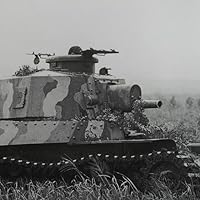
Honestly, when I picked this book up I was hoping to get a better understanding of the German military. How the battles were fought and the various tactics employed by the generals of the time. However, the book is a definitive history on military technology rather than the wars fought. It talks about the halberds, the pikes and the weapons used. Even how the wars were funded and these technical aspects become the main focus of the book.
In conclusion, I would not recommend this book to someone who is looking to start studying the military history of the German-speaking people as it is really just too technical for the average student.
In conclusion, I would not recommend this book to someone who is looking to start studying the military history of the German-speaking people as it is really just too technical for the average student.

June 5, 2023
A general overview of war focusing on soldiers, generals and politics.
Why I started this book: Interesting approach to German military history, by including all German speakers from 1500 to the present.
Why I finished it: This book was a chonker, and Wilson did an excellent job of keeping the pace, interest and details clear and consistent throughout the entire book. Not for the faint of heart, but great book for those looking for a broad overlook of military history and culture as it interacted and reacted to political currents and whims.
Why I started this book: Interesting approach to German military history, by including all German speakers from 1500 to the present.
Why I finished it: This book was a chonker, and Wilson did an excellent job of keeping the pace, interest and details clear and consistent throughout the entire book. Not for the faint of heart, but great book for those looking for a broad overlook of military history and culture as it interacted and reacted to political currents and whims.

July 31, 2024
This is definitely a book for military history hobbyists. Like his Thirty Years War, he gives you a deep and wide look at all the German military history. He built histories on themes such as weapons, recruitment, transport, etc. so that I enjoyed many new intriguing insights into the holistic complexities of German military history… including a greater appreciation for the complicated emergence of the German states. I highly recommend this for my patient, serious, military history reading friends.

May 15, 2023
Another great book on the German people by Peter H Wilson. The structure of this book is really one of its strengths. Broken down into five sequential eras of military history, Wilson introduces the era, supplies extensive details embedded in a general telling of the history, and then closes the section by examining themes previously introduced along with analysis. I recommend this book to anyone interested in European history.

October 1, 2023
Lots of information but there are no central characters to follow so it gets very boring. The chapters are somewhat short and only describe a very defined sub-topic and period. Wasn't engaging at all. Also very little information about how soldiers fought or what there lives were like. Lots of info about land transfer, population figures, and tax. I had very high hopes for this book (especially after just finishing Napoleon the Great) but it really disappointed.
Displaying 1 - 30 of 57 reviews