From the author of the award-winning GraceLand comes a searing, dazzlingly written novel of a tarnished City of Angels Praised as “singular” (The Philadelphia Inquirer) and “extraordinary” (The New York Times Book Review), GraceLand stunned critics and instantly established Chris Abani as an exciting new voice in fiction. In his second novel, set against the uncompromising landscape of East L.A., Abani follows a struggling artist named Black, whose life and friendships reveal a world far removed from the mainstream. Through Black’s journey of self- discovery, Abani raises essential questions about poverty, religion, and ethnicity in America today. The Virgin of Flames, a marvelous and gritty novel filled with indelible images and unforgettable characters, confirms Chris Abani as an immensely talented writer.
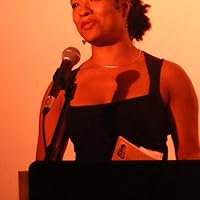
Christopher Abani (or Chris Abani) is a Nigerian author.
He was a political prisoner in Nigeria at various times during 1985 and 1991. At times he was held in solitary confinement and he was held on death row for some time after being sentenced to death for treason.
He is a Professor at the University of California, Riverside and the recipient of the PEN USA Freedom-to-Write Award, the 2001 Prince Claus Awards, a Lannan Literary Fellowship, a California Book Award, a Hurston-Wright Legacy Award and the Hemingway Foundation/PEN Award. Selections of his poetry appear in the online journal Blackbird.
This novel by Chris Abani is the literary equivalent of a Diane Arbus photograph—unsettling, terrible, grotesque, yet artistic. In the strange underbelly of the City of Angels Abani finds a kind of hope that describes something in human nature. His dreams, his attempts to “attend his ghosts,” are difficult to look at, but of all the people we might choose to illuminate the depths of human natures, Abani is among the most courageous and compassionate.
Ambiguous sexuality and race, death and desire, religiosity and uncertain faith are themes Abani returns to again and again in his writing. His main character, Black, is conflicted about his desires, and his confusion leads him to seek out those who have made unconventional choices, in hopes they will illuminate the path.
Black is an artist, a painter, but not for money. He paints murals on the sides of buildings, a type of large-scale graffiti requiring long hours hanging from pulleys and ropes. One of the more significant artworks Black had created is a huge mural of graffiti copied from the walls of men’s washrooms around the country. Entitled “American Gothic—The Remix,” the sexist, racist, religionist trash etched into bathroom stalls convey a particular wasteland of the psyche. Those phrases are interspersed with lines from renowned poets, shocking in their clarity and beauty when paired with filth.
In the City of Angels, Black is plagued by the Archangel Gabriel, who sometimes appears as a huge human figure, or otherwise as a pigeon. The appearance of the Archangel Gabriel and the Christian iconography and ideography shouldn’t surprise us: Abani was educated in a seminary in his youth, and thought he might want to be a priest. However, the Christian themes are dislocating in the context of a searching sexuality and Black’s painting of a fifty-foot veiled Muslim Virgin [Mary] on a building near a train tracks. Abani is reminding us that Islamic texts have recorded the Angel Gabriel appearing to prophets conveying news of the Annunciation or the incarnation of Christ, just as in early Jewish and Christian texts, showing commonalities these religions once enjoyed.
Many comments, observations, and philosophies expounded by the characters in this novel are in the record of Abani’s interviews. His background as a half-white Nigerian who initially moved to London and then to the United States has made him uniquely able to describe the experience of Black, as “going through several identities, taking on different ethnic and national affiliations as though they were seasonal changes in wardrobe, and discarding them just as easily.” Black’s friend, the “butcher-boy” from Rwanda called Bomboy, also seeks new identities, new documents, new names—furtively, on street corners out of sight of the police, in the no-man’s-land of east L.A., where the cops and emergency services rarely respond to calls for help.
When Black discovers that men can “become” women with some genital fiddling, his sexual liberation is complete. Whiteface and a blond wig allow him to escape his race. In a stolen wedding dress drenched in blood and turpentine, Black accidentally becomes an emblem—a horrible and disgraceful emblem—of desire, of a perverted hope. The finale of the book is classic L.A.:
i am blown away by this fantastic book. i tried to read it a few years ago but i wasn't in the right space and i found it too difficult. some of it is prose poetry. many passages are stunning. i am tempted to copy the whole rosary gloss here but it's long. read it. find it and read it. amazing stuff.
black is a grown man who's spiraling downward while gripped by conflicting powerful forces, among them an uncontrollable creative drive (he paints murals), torturous childhood memories, apparitions of supernatural creatures in the catholic tradition (mostly the archangel gabriel, but also the virgin), an obsession with a female transexual stripper, truckloads of self-loathing, and desperate suicidality.
it's a lot to handle in one slim novel but abani does it so gorgeously, so compellingly, the book is almost tactile. abani and black love los angeles as much as i do and the depictions of the city, which dominate the book, are stunning. quite apart from the obvious connection between the city of the angels and black's apparitions, black and los angeles are metaphors for each other, faces of the same phenomenon, which is: rootlessness, exploitation, trauma. they are both a gash on the human/civilization continuum. there is a passage toward the end in which iggy, black's friend and a veritable human guardian angel, a saving grace, waxes prophetic about los angeles. whatever. if you have lived in the city, you know that los angeles is a cry of pain and a cry of beauty.
in a heart-rending scene black sits by the river (always by the river, this man-made creation that is also the hidden gold thread of this strange city) with a group of dying dogs. owners use a particular bridge to throw over their no-longer-wanted dogs. black spends the night with the dying and dead dogs. he strokes them and ministers to them. one of the dog dies with its bloodied head in black's lap.
but black is not as good with humans. humans terrify him. the narrative of his childhood trauma is powerful. memories keep intruding. horrendous abuse emerges. black is the product of an nigerian father dead in vietnam and a latina mother crazed by loss and poverty.
iggy, who represents the voice of sanity, is not all that compassionate toward black's childhood trauma. i don't think i like that. you can't just get over trauma like that. and god knows, black tries. he tries through his impermanent art, he tries by going to very dark places in hope of discovery. he keeps not understanding, not knowing. and when he eventually does understand, well, he can't take it.
i think i know the los angeles described in this book because i had a wonderful guide into it, a friend who, fittingly and tragically, died when she was 39 (this book is for you, f.), and because i sought it out. it's dangerous but it's also beautiful. it's ruthless. when i lived there, simon and i kept saying, this is the end of the frontier, you go any farther you're in the ocean. whatever those who pursued the frontier were seeking, they didn't find it in los angeles. los angeles is a mess. in a way, it's a tremendous failure. in another, it wears the sores of humanity on its sleeve. if you want to love humanity at its most abject, los angeles is as good a place as any.
gender and sexuality are dealt with beautifully in this strange poetic novel. black's desire, by which he is repelled to the point of madness, is presented as possibly connected with childhood abuse. of course there is no evidence at all that sexuality in the sense of sexual orientation is connected with childhood trauma, but it's also difficult to deny that desire is formed through all sorts of strange channels, and that one is left to live with it, however distorted and aberrant one may perceive it to be, for the duration.* so in a way this is also an investigation into the origins of desire -- as sexual desire, as fantasies, as artistic inspiration, as life-giving force.
i cannot say i don't understand people who wrote such negative reviews of this book. it's not an easy book to read. the language in itself is a bit challenging, but what's most challenging is the raw collision of so many forces -- the evil we do each other, the pain that ensues, the desire in which this pain gets transformed. tough stuff. gorgeous stuff.
* no desire is distorted, aberrant, bad, evil, yucky, or icky. learn to love your desires. if you can't, find someone who'll help you.
This is a novel which, lamentably, is too often mistaken for a representation of "real life" (whatever that is) for queer and trans people of color (and/or sex workers) in Los Angeles. Abani's said it himself before (look up his TED Talks online-- they're great)-- that a gendered or raced person is inevitably read for his identity rather than his imagination.
If you're going to read this novel, the worst thing you could do is put on the anthropologist's khaki hat, walk in with your legal pad, and wait to be "informed" about queer urban subculture. You're also doomed if, as many of these reviews do, you write off Black as a whining, too-egregiously-symbolically-named, financially insolvent artist merely playing out the plight-of-the-impoverished-painter in a modern-day setting. And, likewise, if you enter the novel as a queer, trans person, or sex worker braced to bristle about yet another violent mis-representation of "your" community.
Get these points straight: this novel is not speaking for anybody. It is not missionizing in the name of the radical left. It is not exploiting sex workers. It is telling a story that is meant to make you feel uncomfortable, angry, turned on, ashamed, and/or disoriented all in the name of learning more about resilience from the stories of people who are affected in such miserable ways.
After all, isn't Sweet Girl the heroine who successfully defends herself in the end? Isn't Black the benighted visionary who never quite succeeds and pointedly fails, quite literally, in having a future? And isn't that failure all the result of his own phobia, prejudice, shame, self-abhorrence, etc.? Aren't those ugly things that everyone has felt at some point in time?
You've got to approach this one literarily: think of sex work as a hyperbolic metaphor, not a political choice or unfair occupation. Think of transgenderism as a source of crisis and conflict, not only an identity per se. Think of Black as a protagonist who never gets to play the hero-- and consider why there might be a reason for that, instead of just writing off the novel as "another boring story about a poor, black queermo who sucks at life."
There are two ways for me to think about The Virgin of Flames. A.) it is a typical (and overdone) coming of age novel from a liberal UC professor focused on gender, sexuality and ethnicity. Or, B.) it's a probing study of East and Downtown LA from a global citizen who is at once native and guest of Lagos, London, and Los Angeles. Obviously, I prefer sticking with B. For anyone who has waited hours in LA's Union Station or who has bought a piñata on Olympic, Abani's descriptions ring truer and clearer than our own memories. It's obvious that he walked almost every block of East LA while writing it. I know that behind this novel there is a real Ugly Store, a real Black, and a real Sweet Girl. They are who make Los Angeles such a special place.
Fans of Middlesex will surely like The Virgin of Flames. The synopsis (a street artist who's obsessed with a transexual) had me unsure that it would be my kind of book, despite having loved Abani's last book, Graceland. Abani picks up where he left off with the strange eroticism that his last character got out of putting on makeup as an Elvis impersonator, and takes it to the next level...hell, he takes it ten levels beyond that, into a gritty, beautiful, story of a muralist in L.A. which is also everyone's story, in that it's partially about the guilt and abuse we all share: the torture that religion is for some, disappointment with science as a be-all/ end-all, the horrors of Rwanda...
It's not the L.A. we like to idolize. It's the other L.A., poor Latin American L.A. (L.A.L.A. if you will) solarized and blown up to idol-worthy proportions. It's Wassup Rockers, but Wassup Transvestite. It's The Painter of Battles, but The Painter of Battles Between Religion Guilt and Free Sexual Expression. It's It's A Wonderful Life (an allusions used within the book) for the non-white, not-straight George Bailey (/George Lopez). It's the next best thing in magical-realism-meets-gay-lit since A Visitation of Spirits.
Okay, so this book's a mind-grabber. It has a lot more going for it than just a transexual love story...and let's be honest, it's not like that's the story you read every day to begin with.
TVOF doesn't ride on preposterous situations of subcultural characters, ala Coupeland or Palanhiuk.
I'm definitley a big fan of stories in which an ordinary guy gets boosted to the status of a religious figure (Palanhiuk has been there before with Survivor). My last read was The Highest Tide, another case where people want so badly to believe that they won't even take the scientific testimony of the person responsible for the hoax. Abani writes, "You're a good man, Black." "No. I'm not." "Hush. Let me believe it."
In an odd way, The Virgin of Flames (though not for children) may be to L.A. what The Highest Tide is to the South Puget Sound, in that it captures a regional spirit as well. According to Abani's main character Black, L.A. is unique among cities because... -There is no "L.A. State of Mind." It's like a tickle in the back of your throat before you sneeze. You can become the person that you want to be in an instant...or not (paraphrased) -L.A. is a city full of truth, even if it does have a fake plastic mastodon pretending to drown in a tar pit. ("). -"This city wasn't a city. And if it was, it was a hidden city. There were several cities within it, and you had to yield to it, before it revealed an of its magic to you. It was a slow realization...it forced you to find the city with you. In that way, it was a grown up city."
You can tell that Chris Abani is a poet as well. The one line that summed up his book as an endeavor: "carrying the darkness like a perverted torch."
Carry on, Abani, carry on. It was a great book to read the day after Pride Parade in Providence. It will keep you questioning your preconceptions about gender. Now I have this big rolly polly giant of a writer marching around in my mind...March on you big stud...wait, did I just say that?:)
I feel bad. I certainly do not have the street cred to *not* love this book by a gay, politically oppressed Nigerian. And I have to say that at least I was able to finish this one -- unlike Graceland, which I have checked out and returned about a million times. I just... I just don't want to hear that much about penises.
I get that it is a valid topic to write about. I even imagine that, five years ago, I could have written a fabulously self-indulgent paper on Black and his penis and his experience of being raped, having sex with a transgendered person, getting painful erections and half-erections and no erections. But it's like -- what is the story here? What happens between the beginning and end of this book? He gets raped, but that's treated as incidental. He hooks up with Sweet Girl, but then he beats her up. His friend dies, but I don't even really recall the guy's name.
There are these moments; there is this mood. I thought about the book a lot while I was reading it. Truthfully, I think he has some of the same limitations that I did, as a writer -- he's so caught up in the inexpressible aspects of experience that he's lost interest in a conventional narrative. He doesn't think he has to tell as story, or he thinks he is telling a story, but I can't follow it, as a reader.
But the dogs, though. There is this singular image of these dogs, and it makes me think I missed the entire book. Because there are moments in Virgin that are transcendent. There's just so much shifting-through that has to happen, first. So I finish the book and I'm just thinking about that one moment, with these dying dogs, and of Black's penis.
A violent and visceral take on the abstract experience of being multi-racial in the United States. Abani physicalizes what can often be a very nebulous and ephemeral existence, and stabs onto the page the confusion, the shape-shifting, and liminal consciousness of mixed race identities. Set in the City of Angels, he brilliantly captures what often defies language.
Black, a 36-year-old (the age of Christ) half-Nigerian half-Salvadorean mural artist spends his time being chased around East LA by the archangel Gabriel while he obsesses over a transexual stripper and his own desire to dress in women's clothes, as he paints a fifty-foot tall mural of the Virgin of Fatima. Sounds crazy, but it is told so well that I believe it. I loved the dirty city imagery and the casual drug use portrayed.
Very good characters, Black, Ziggy and Bomboy are all interesting, and somewhat dark. Abani develops them just slowly enough to givethe reader familiarity, while keeping them mysterious. The motivations of the characters are believable, even at the very end when Black deviates from his calm, passive demeaner into a woman(ish)-beating man. This is also a good example of a writer developing the setting as character, both East LA and the LA river are presented more as characters with personalities than as places.
This story was handled very well by Abani. He overlays the absurdity of LA and the American version of celebrity onto the down and dirty lives of a trio of marginalized characters, two of which are very successful, one in a third-world entrepreneurial way, the other in an only-in-LA way. The poetic prose is worth reading, I would have enjoyed just the city desriptions even if there was no plot.
Los Angeles, California. Black is a busy man. By day he collects racist and sexist jokes from toilets for his mural (one from Buckingham Palace via Sharon Osborne), while being stalked by Archangel Gabriel, and obsessing over transvestite stripper, Sweet Girl. By night he stands atop his spaceship in Iggy the psychic tattooist’s wedding dress, letting devotees believe he is the Virgin Mary.
It’s so self-consciously edgy, it’s painful. Maybe I’m a cynical conventionalist, but I’m not sold on his cast of self-obsessed artistes, expecting you to be as enamoured of their nonsensical ramblings as they are while they babble on about "changing the psychic landscape" of LA by painting it without the religious buildings.
I did learn something: transvestite strippers hide their genitalia through careful manipulation and strategically placed surgical tape. Should you want to know how it feels, Black’s “bliss, breathlessness and the onset of terror” probably cover most eventualities.
It's rare that an author with so much depth can still manage to be so cool. This book travels as fluidly through the lives of its downtrodden Los Angeles protagonists as the river that so frequently haunts its imagery. Jazz-like poetry saturates every line without pretense as Abani sneaks up behind the ghost of disenfranchisement, pulls the sheet off, and shows us all the face we share. If you haven't read this book (or his previous novel, Graceland) I highly recommend it.
The characters in the book are fable like and the story takes place in East LA. The beautiful, gritty prose elegantly capture an essence of a city known as the City of Angels. I will continue to read passages from this book because of the writing. Mr Abani's chapters click off like photographs, and like a photograph can privately and intimately draw you into that world.
You should read this book if you enjoy hearing other people bitch and moan about how hard their lives are in a painful fashion that lacks wit and clever design.
This book is astoundingly beautiful and devastating. It is dark and funny and really gets at the confusion of cities, gender, masculinity, and child hood. It is also irreverent and experimental.
Chris Abani's The Virgin of Flames comes close to being a great novel, and certainly one of the best recent novels written about Los Angeles. The only problem is the author does not know what to do with his main character, Black. Throughout the book, he fiddles around painting murals, and being torn between Sweet Girl -- who is actually a transsexual stripper -- and his landlady Iggy.
Abani's strength is his vision of Los Angeles, mostly as seen from East L.A. There are fully half a dozen places where he describes the city in a quotable way. Too bad he doesn't seem to live here any more, unless he commutes from here to Northwestern University, which is highly doubtful.
Even after finishing this I don’t know what actually happens in it, it was just weird and confusing. However, it wasn’t all bad, the language flows beautifully and Iggy is a character worth remembering.
According to my kindle I'm 22% in on this book... I like the characters. However I feel like it's just dragging out at a snails pace and it doesn't keep my attention.
You may not be familiar with the people in Chris Abani’s The Virgin of Flames, but they are the sort of personalities you would love to gossip about. Instead of figuring what this novel is all about, you may be better off marveling at the oddities of the characters.
The novel follows its protagonist, Black, around Los Angeles as he tries to come to terms with his hauntingly ugly childhood through his art. He is a 30-something muralist on a quest to find himself in the vibrant city. He is introduced to the reader while trying on face paint, doing things with his face and basically being odd because he is An Artiste and a true weirdo. And nothing validates a weirdo more than a set of equally strange friends. He is surrounded by so much weirdness, sometimes you wish this were about them instead.
Black, to some readers, may seem too weird and foreign. He is a multiracial artist who likes a transsexual stripper, likes his Johnny Walker, and in his spare time dresses like the Virgin Mary. Is he gay? Is he a conventional weirdo? Two-hundred odd pages on and you still may not have figured him out. He keeps building the mystery. Towards the end of the novel, he even tries to learn how to tuck his penis in his butt the way a transvestite does—a real treat for guy readers. But if this were about his quest to discover his true sexuality, it may have been over in the first hundred pages. Besides, those who are not in the habit of wearing tanga to make a living would attest that dick-tucking is something you do exclusively for fun. Clearly, Black should make for an interesting read. But maybe you’d rather hang out with his penis or the sidekicks.
Bomboy Dickens is the primary sidekick. He spouts the novel’s most interesting bits of dialogue, but he’s sadly relegated to the role of comic relief. If it crosses your mind that The Brief and Wondrous Life of Oscar Wao is getting a worthy successor, it is due to the snappy retorts of Bomboy and his conversations with Black. Alas, Abani’s aim is not to appeal to your funny bones.
Also there is Iggy, Black’s landlady. She’s bald and she keeps a tattoo parlor and bar called The Ugly Store that has a mural filled with racist, politically-incorrect inscriptions. She keeps a midget servant who loves to quote Raymond Chandler. Iggy, she is also not like you and me.
Black’s penis, on the other hand, does not speak; nor does it have idiosyncrasies like Bomboy and Iggy. Its appearance is infrequent but its presence is major. It’s also sort of a plot-mover. Sometimes it alone drives him forward and mostly towards Sweet Girl, the immigrant Thai transsexual he’s inexplicably drawn to. Inexplicably because Black, who gives off a strong heterosexual vibe, is aware that the person he finds hopelessly alluring is also a man. Yet he persists. He is mightily attracted to Sweet Girl the lap-dancer, and that’s going to be the way it is. The intensity of Black junior’s erections dictates where this attraction is supposed to go. But this is not a love story, and Abani is resolute about not having any resolution.
Our hero obviously has Big Issues That Need Addressing rooted in his childhood traumas. If he hasn’t tired you out yet, maybe the flashbacks to his childhood will spring you back to life. His AIDS-afflicted mother is vicious—she makes the young Black perform self-flagellation in front of an altar, while his father is a confounding, ghostly presence—there, not quite there and finally, not there at all. Suddenly you think you know what this freak’s real issue is. You think you can finally feel satisfied with Black’s coming to terms with his misfortunes because he’s dealing with his feelings at last and working toward straightening out his life! But no.
If you’re exactly the kind of person who enjoys sneering at artist types, being unable to relate to them, this book may serve as an eye-opener or an entertainment featuring a gallery of freaks. You may not find anything to relate to, but its strangeness is a thing to behold. I don’t think I could trust anyone else to describe for me the rituals of strip-dancing and the art of tucking balls and shaft in one’s butt other than the seemingly demented Chris Abani.
The Virgin of Flames is a different kind of tale of self-discovery, one that doesn’t care much about reaching any discernible discovery. If you’re tired of tales of ditzy young girls and boys trying to find their luck in Hollywood, New York, or some other glamorous city, try this and have a balls-clutching experience. If you’re exasperated with small-town persons finding their way in the big, mean city, you may find a trip to Black’s lap-dance and alcohol-addled junction wildly entertaining. If anything, you’ll learn how to tuck your balls in your butt should the need for that ever arise in your boring life.
Its a strange novel. There is no hero. How can Black be a hero in the traditional sense. The whole novel is not traditional except mainly in form.
Black, uber-confused. He doesn’t think he is gay. And his history. He is a messed person, because of his past and his family. He has no structural founding that comes from knowing one’s family background. That is why Bomboy and Iggy tell him he has not started his journey yet, and that he cannot become; because in the novel’s philosophy, to become or becoming first involves being something else then a metamorphose. The novel and Black cannot account for the paradox of becoming from nothing. So the question of the miracle comes up, how can something come from nothing- How is it that the Virgin appears on the rooftop, the angel, or Sweet-girl’s genitals. Black and the novel are ‘drawn’ (as Black says his attraction to Sweet-girl is for him, something/someone he is ‘drawn’ to, like Fatima.) Novel focuses an underlying need for knowing oneself. This involves identity. Its an issue I am deeply interested in. Bomboy states that Black is simply African, Iggy sees a more complex range of factors to Black’s identity. Not only does location describe identity but relationships as well.
The last scenes are disturbing, and I’m not referring to Sweet-girl revealing her genitals, or even the cross-dressing. I wonder why Black starts beating on Sweet-girl, it seems part of his confusion over his identity, maybe he thought that if his mother didn’t mess him up so much and his father had stayed he would have been normal and wouldn’t have had to have relationships with Bomboy, Iggy, and Sweet-girl. And maybe that is why he beats her up. Because he has felt, unconsciously at least that he has been wronged and that he doesn’t belong with these people, but that he is trapped, Sweet-girl, and now his crossdressing, all his final acquiescing, too an identity that is part of him, part of his body, is him, that he doesn’t want to recognize. He is definitely running and avoiding everything. He can’t accept himself, yet he would never accept being what he probably unconsciously thinks is normal. Perhaps then the only reason he is not misanthropic is because he is needy, wounded and needs some love. If not for that than he would probably care for no one. He also uses Bomboy.
Another thing I cannot explain is the attraction to the dogs. Maybe, the only ones Black can really identify with are those stray or unwanted dogs, ugly, dirty, dying, mutts without knowledge of parents or lineage, abused by those that don’t want to care for them but could. Does it matter whether Black dies or not in the end, the novel does explain, maybe it doesn’t if Black is like these dogs, all of them also forgotten except some only as brief memories to a few. Black is the forgotten, like the indian before the conquest, the African before the violence of outside nations. They are ghosts wandering the streets of Los Angeles.
Finally what can I say about the message or theme of the novel. It seems only to raise questions, as it further peels a skin of the onion, more questions without solutions causing confusion. Truth in the novel is understood by Bomboy and Iggy as a delusion that people hold to. There is no concern for truth for them, it is meaningless even to Black.
This entire review has been hidden because of spoilers.
screw this book, if i read one more story about a "tragic" person with "abuse, race and gender issues" i am going to start ripping out pages. why do authors insist on burning up the best parts of us multigendered into their wierd ass fantasies and dramas. i am no longer a fan of this abani person. i appreciated his other book graceland. but i would like to ask him a question "mister abani why do you feature sex workers who are turned on by violence? it is not reality. yes, trans women like sweet girl very likely will encounter violence, but they are not the damaged dolls you insist upon. and a person who is abused by their mother's colonial cross religion does not have to burn in flames. he/she can go on and fall in love, find a nice set of fake tits, and actually enjoy her/his life and body." imagine that.
This is one of the most powerful novels I have read in a long while – it reads like a vivid dream and is infused with complex, interwoven themes stemming from literary tradition, popular culture, Igbo heritage, sexual identities, notions of performance (reading in tandem with Judith Butler = a great idea), Christianity, etc. This novel paints Los Angeles as gritty-but-redemptive (through elements of magical realism) and maintains an enthralling pace. It is courageous and unapologetic, and in order to engage with it wholeheartedly, it demands that you relinquish yourself to the ambiguity of 'reality' and allow it to swallow you up. Absorbing, glowing, and replete with little thrills of epiphany – highly recommend!
Okay, so it's not his second novel, and it's weird to read the NYT review as where they write as if he's a new author. No, he's just new to the States. He wrote in Nigeria before and then in England in exile.
Anyway, this is not my favorite of his books to read, I felt oddly detached from the main character and it wasn't until I finished reading it that I realized I was supposed to. As I think about it since, the book is kind of unfolding itself and shifting in my mind, becoming more of a concrete space. Like his other books, poetry and novels, it is intensely concerned with place. Now that he's been living in Chicago for a while I'm curious (and hopeful) to see if Chicago is the setting for his next novel.
Despite the three stars, this was not really a mediocre read. I really enjoyed the writing in the first half, especially the descriptions of Los Angeles. The characters were also intriguing, yet emotionally realistic ... not just quirky in that usual paper thin, formulaic way. I seriously considered buying and reading all his books. But for some reason the prose reads a little more purple in the second half, and the momentum of the story sort of peters out. What's making me ambivalent is that there were so many high points in the book, including the ending. I guess my problem is that I didn't like this book as much as some of the books I've already given four stars to.
I just finished reading this book five minutes ago and I have goosebumps. This is a BEAUTIFULLY written novel by Abani, taking me to a journey of a city that I grew up in, but in an area where I have the luxury to put one foot in and one foot out. This book should not only be focused on its references on the subjects of dysfunctional family, rape, identity issues, rape and sexual identity, it is a visually poetic story of a lost soul living in the opposite end of celebrated Los Angels, being shased by people who care about him and want to help him find his way before it's too late.
I couldn't finish the book. In fact, I couldn't read past the first 1/4 of it. The book had some shining moments of imagery; Black's inability to find sexual release during one prostitute/stripper bender stands out as a vivid scene. However, there was absolutely NOTHING, in my opinion, moving the narrative forward. What is at stake for the character? I didn't really understand why I should care about him, and the details of his art were so "out there" that I couldn't fully imagine it or take it seriously.
I read this after Bolano's 2666. So I think I was kind of in withdrawl and didn't really get excited about the writing or story until about half way through. I liked the book. I wonder how much is autobiographical or otherwise true. I will probably be going to the Ugly Store next time I'm in LA at least to get a cup of coffee. LA is really the main charecter. I want to Read Becoming Abigail to compare his treatment of London.
This is an interesting book (in the good sense of the word). Abani throws open a lot of doors and mixes existentialist angst with gender exploration, dual heritage, tradition, religion, gritty inner city realities... I liked it a lot, I just think the protagonist has a little too much testosterone-driven self-absorption to really root for him. In the end I cared a little more for the issues explored, rather than the story (main character).