

What do you think?
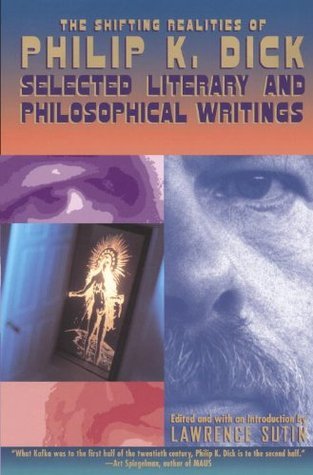
The Shifting Realities of Philip K. Dick: Selected Literary and Philosophical Writings
s/t: Selected Literary and Philosophical Writings
A collection of largely unpublished or out-of-print essays, journals, speeches, and interviews on issues from the merging of physics and metaphysics to the potential influences and consequences of virtual reality by the Hugo Award-winning author of The Man in the High Castle. Non-fiction.
A collection of largely unpublished or out-of-print essays, journals, speeches, and interviews on issues from the merging of physics and metaphysics to the potential influences and consequences of virtual reality by the Hugo Award-winning author of The Man in the High Castle. Non-fiction.
384 pages, Paperback
First published January 1, 1995
About the author
Philip K. Dick
1,948 books23.3k followersPhilip Kindred Dick was a prolific American science fiction author whose work has had a lasting impact on literature, cinema, and popular culture. Known for his imaginative narratives and profound philosophical themes, Dick explored the nature of reality, the boundaries of human identity, and the impact of technology and authoritarianism on society. His stories often blurred the line between the real and the artificial, challenging readers to question their perceptions and beliefs.
Raised in California, Dick began writing professionally in the early 1950s, publishing short stories in various science fiction magazines. He quickly developed a distinctive voice within the genre, marked by a fusion of science fiction concepts with deep existential and psychological inquiry. Over his career, he authored 44 novels and more than 100 short stories, many of which have become classics in the field.
Recurring themes in Dick's work include alternate realities, simulations, corporate and government control, mental illness, and the nature of consciousness. His protagonists are frequently everyday individuals—often paranoid, uncertain, or troubled—caught in surreal and often dangerous circumstances that force them to question their environment and themselves. Works such as Ubik, The Three Stigmata of Palmer Eldritch, and A Scanner Darkly reflect his fascination with perception and altered states of consciousness, often drawing from his own experiences with mental health struggles and drug use.
One of Dick's most influential novels is Do Androids Dream of Electric Sheep?, which served as the basis for Ridley Scott's iconic film Blade Runner. The novel deals with the distinction between humans and artificial beings and asks profound questions about empathy, identity, and what it means to be alive. Other adaptations of his work include Total Recall, Minority Report, A Scanner Darkly, and The Man in the High Castle, each reflecting key elements of his storytelling—uncertain realities, oppressive systems, and the search for truth. These adaptations have introduced his complex ideas to audiences well beyond the traditional readership of science fiction.
In the 1970s, Dick underwent a series of visionary and mystical experiences that had a significant influence on his later writings. He described receiving profound knowledge from an external, possibly divine, source and documented these events extensively in what became known as The Exegesis, a massive and often fragmented journal. These experiences inspired his later novels, most notably the VALIS trilogy, which mixes autobiography, theology, and metaphysics in a narrative that defies conventional structure and genre boundaries.
Throughout his life, Dick faced financial instability, health issues, and periods of personal turmoil, yet he remained a dedicated and relentless writer. Despite limited commercial success during his lifetime, his reputation grew steadily, and he came to be regarded as one of the most original voices in speculative fiction. His work has been celebrated for its ability to fuse philosophical depth with gripping storytelling and has influenced not only science fiction writers but also philosophers, filmmakers, and futurists.
Dick's legacy continues to thrive in both literary and cinematic spheres. The themes he explored remain urgently relevant in the modern world, particularly as technology increasingly intersects with human identity and governance. The Philip K. Dick Award, named in his honor, is presented annually to distinguished works of science fiction published in paperback original form in the United States. His writings have also inspired television series, academic studies, and countless homages across media.
Through his vivid imagination and unflinching inquiry into the nature of existence, Philip K. Dick redefined what science fiction could achieve. His wor
Raised in California, Dick began writing professionally in the early 1950s, publishing short stories in various science fiction magazines. He quickly developed a distinctive voice within the genre, marked by a fusion of science fiction concepts with deep existential and psychological inquiry. Over his career, he authored 44 novels and more than 100 short stories, many of which have become classics in the field.
Recurring themes in Dick's work include alternate realities, simulations, corporate and government control, mental illness, and the nature of consciousness. His protagonists are frequently everyday individuals—often paranoid, uncertain, or troubled—caught in surreal and often dangerous circumstances that force them to question their environment and themselves. Works such as Ubik, The Three Stigmata of Palmer Eldritch, and A Scanner Darkly reflect his fascination with perception and altered states of consciousness, often drawing from his own experiences with mental health struggles and drug use.
One of Dick's most influential novels is Do Androids Dream of Electric Sheep?, which served as the basis for Ridley Scott's iconic film Blade Runner. The novel deals with the distinction between humans and artificial beings and asks profound questions about empathy, identity, and what it means to be alive. Other adaptations of his work include Total Recall, Minority Report, A Scanner Darkly, and The Man in the High Castle, each reflecting key elements of his storytelling—uncertain realities, oppressive systems, and the search for truth. These adaptations have introduced his complex ideas to audiences well beyond the traditional readership of science fiction.
In the 1970s, Dick underwent a series of visionary and mystical experiences that had a significant influence on his later writings. He described receiving profound knowledge from an external, possibly divine, source and documented these events extensively in what became known as The Exegesis, a massive and often fragmented journal. These experiences inspired his later novels, most notably the VALIS trilogy, which mixes autobiography, theology, and metaphysics in a narrative that defies conventional structure and genre boundaries.
Throughout his life, Dick faced financial instability, health issues, and periods of personal turmoil, yet he remained a dedicated and relentless writer. Despite limited commercial success during his lifetime, his reputation grew steadily, and he came to be regarded as one of the most original voices in speculative fiction. His work has been celebrated for its ability to fuse philosophical depth with gripping storytelling and has influenced not only science fiction writers but also philosophers, filmmakers, and futurists.
Dick's legacy continues to thrive in both literary and cinematic spheres. The themes he explored remain urgently relevant in the modern world, particularly as technology increasingly intersects with human identity and governance. The Philip K. Dick Award, named in his honor, is presented annually to distinguished works of science fiction published in paperback original form in the United States. His writings have also inspired television series, academic studies, and countless homages across media.
Through his vivid imagination and unflinching inquiry into the nature of existence, Philip K. Dick redefined what science fiction could achieve. His wor
Ratings & Reviews
Friends & Following
Create a free account to discover what your friends think of this book!
Community Reviews
Displaying 1 - 30 of 64 reviews

January 19, 2024
Lawrence Sutin is a well-known biographer of Philip K. Dick, specifically for his book Divine Invasions: A Life of Philip K. Dick. In these Shifting Realities of Philip K. Dick, Sutin has compiled interviews, speeches, essays, and excerpts spanning Dick’s entire career—an invaluable collection for understanding Dick’s major literary and philosophical preoccupations.
Throughout these texts, Dick explores what defines humanity: does it come down to feelings? empathy? free will? He contrasts this with his concept of the “android”, a simulation mimicking human traits (including, but not limited to, robots, A.I., and so on). In “How to Build a Universe That Doesn’t Fall Apart Two Days Later” (1978, 1985), Dick asks, “What constitutes the authentic human being?” and argues that these boundaries are blurring: we may one day encounter entities that “weep and bleed” yet have inorganic metal and circuitry instead of a heart. This ambiguity is a recurring theme in his novels (vide Do Androids Dream of Electric Sheep?), reflecting his fascination with the nature of humanity and morality.
The next fundamental question in this anthology is, “What is reality?” Dick’s stories explore ontological uncertainties, from clandestine alternate universes behind our reality in The Man in the High Castle (where the Nazi regime is a sort of android-producing machine) to machinations distorting time and causal order itself in Ubik. These bizarre concepts are often woven into pretty eccentric plots—which later influenced the cyberpunk movement.
On the whole, Dick’s profoundly spiritual preoccupations were shaped by a significant mystical event he calls “2-3-74”, during which he had intense and revelatory hallucinations (possibly induced by a drug intoxication), including a sense of communing within the “honeycombed Corpus Christi” (Exegesis, fragment c. 1976). He pondered the possibility “that a hidden group or organization processes this guarded knowledge” of an invisible but authentic reality behind appearances (“Cosmogony and Cosmology”, 1978). He also claimed that, beyond our counterfeit reality, there is an alternate universe where the early Christian Church of the 1st century AD eternally opposes the oppression of the Roman Empire. In short, his “2-3-74” experience, as insane as it may sound, shaped his conceptions of God, ontology, time, ethics, and his later novels.
At any rate, the texts in this collection demonstrate abundantly that Philip K. Dick was obsessed with the idea of discovering the true nature of reality. From contemplating the Platonic concept of anamnesis to his idea of VALIS, or “Vast Active Living Intelligence System,” he believed that a metaphysical entity—possibly arising from human evolution—was responsible for the authentic substratum of reality. In his view, everyone was like “cells, forming a Great Brain. Bees in a hive. Rising now to consciousness”—similar to Teilhard de Chardin’s concept of the “Point Omega,” a sort of divine attractor at the end of time.
Dick’s theories drew from a wide range of sources, including Christian theology, Buddhism, Plato, Hinduism, quantum physics, Jungian psychology, ancient Gnosticism, Empedocles... In his later years, he developed an unorthodox concept of God, influenced by Zoroastrian and Gnostic ideas. In the Exegesis passages included in this volume, he argued that “the creator of this world is demented” and that “the world is not as it appears”. He compared the creator to the gnostic Demiurge, or “the artifact” (sic.), which concealed the actual reality. He further explored the concepts of circular/orthogonal time, escape from deterministic traps, and the acquisition of godlike powers.
Despite all these fringe speculations, Dick’s persistent goal remained the same: to distinguish delusion from essence and to discover what was truly authentic. His writing process was a way to explore these questions, often leading him way off the beaten track. Still, while his ideas can sometimes be difficult to follow, his wit, dark humour, and humanity shine through in his work. All in all, this volume is a must-read for anyone interested in the complexities of the human mind, the nature of reality, the history of science fiction, as well as (obviously) Philip K. Dick’s own stories and novels.
Throughout these texts, Dick explores what defines humanity: does it come down to feelings? empathy? free will? He contrasts this with his concept of the “android”, a simulation mimicking human traits (including, but not limited to, robots, A.I., and so on). In “How to Build a Universe That Doesn’t Fall Apart Two Days Later” (1978, 1985), Dick asks, “What constitutes the authentic human being?” and argues that these boundaries are blurring: we may one day encounter entities that “weep and bleed” yet have inorganic metal and circuitry instead of a heart. This ambiguity is a recurring theme in his novels (vide Do Androids Dream of Electric Sheep?), reflecting his fascination with the nature of humanity and morality.
The next fundamental question in this anthology is, “What is reality?” Dick’s stories explore ontological uncertainties, from clandestine alternate universes behind our reality in The Man in the High Castle (where the Nazi regime is a sort of android-producing machine) to machinations distorting time and causal order itself in Ubik. These bizarre concepts are often woven into pretty eccentric plots—which later influenced the cyberpunk movement.
On the whole, Dick’s profoundly spiritual preoccupations were shaped by a significant mystical event he calls “2-3-74”, during which he had intense and revelatory hallucinations (possibly induced by a drug intoxication), including a sense of communing within the “honeycombed Corpus Christi” (Exegesis, fragment c. 1976). He pondered the possibility “that a hidden group or organization processes this guarded knowledge” of an invisible but authentic reality behind appearances (“Cosmogony and Cosmology”, 1978). He also claimed that, beyond our counterfeit reality, there is an alternate universe where the early Christian Church of the 1st century AD eternally opposes the oppression of the Roman Empire. In short, his “2-3-74” experience, as insane as it may sound, shaped his conceptions of God, ontology, time, ethics, and his later novels.
At any rate, the texts in this collection demonstrate abundantly that Philip K. Dick was obsessed with the idea of discovering the true nature of reality. From contemplating the Platonic concept of anamnesis to his idea of VALIS, or “Vast Active Living Intelligence System,” he believed that a metaphysical entity—possibly arising from human evolution—was responsible for the authentic substratum of reality. In his view, everyone was like “cells, forming a Great Brain. Bees in a hive. Rising now to consciousness”—similar to Teilhard de Chardin’s concept of the “Point Omega,” a sort of divine attractor at the end of time.
Dick’s theories drew from a wide range of sources, including Christian theology, Buddhism, Plato, Hinduism, quantum physics, Jungian psychology, ancient Gnosticism, Empedocles... In his later years, he developed an unorthodox concept of God, influenced by Zoroastrian and Gnostic ideas. In the Exegesis passages included in this volume, he argued that “the creator of this world is demented” and that “the world is not as it appears”. He compared the creator to the gnostic Demiurge, or “the artifact” (sic.), which concealed the actual reality. He further explored the concepts of circular/orthogonal time, escape from deterministic traps, and the acquisition of godlike powers.
Despite all these fringe speculations, Dick’s persistent goal remained the same: to distinguish delusion from essence and to discover what was truly authentic. His writing process was a way to explore these questions, often leading him way off the beaten track. Still, while his ideas can sometimes be difficult to follow, his wit, dark humour, and humanity shine through in his work. All in all, this volume is a must-read for anyone interested in the complexities of the human mind, the nature of reality, the history of science fiction, as well as (obviously) Philip K. Dick’s own stories and novels.

April 23, 2012
As a Dick fan, I picked up this book at an obscure book shop that stocks only rarities and valuable first editions. I'm not quite sure whether this was a rarity or a valuable first edition, but I'm much more certain that I'm glad I bought it.
This book collects most of Dick's important writings other than his published novels, including assorted essays and speeches as well as some scraps from his unpublished work. For a man whose body of work is so legendary and also so strange, this collection really helps to fill in the gaps and let us better understand the man himself. Only through hearing him tell stories other than the ones he made up can we come to hear the voice behind the words.
I would not say this is one of my favourites, or even a very informative book in the educational sense. Instead, its value comes in its ability to help me understand Dick. I think attempting to read VALIS without having first read this would have been impossible. Dick is a complicated figure, both for his own strange experiences and his own strange way of dealing with them. His writing is both fascinating and gripping. It is interesting to see the ways in which this is still true when he is not writing "in his element," so to speak.
Within this book there is much repetition, especially in the section on Dick's views of science fiction literature. However, I cannot fault Sutin for that, as his collection is well-edited. It gives us what is needed and no more or less (perhaps just a little less). I cannot even really blame Dick, as many of these are actually delivered speeches or published articles. Hearing him talk about his own experiences with poverty, I definitely do not blame him for not always putting in his all. Even an author has to get paid. Make it rain, y'all.
This book is a good resource for anyone fascinated by Dick, the man. Fans of his novels will not find much of the same here, nor will fans of science fiction in general. Dick, however, has much to say and much worth saying (it does well not to confuse the two). This book should adorn the shelves of any scholar on his life and work. Its absence would be quite improper.
This book collects most of Dick's important writings other than his published novels, including assorted essays and speeches as well as some scraps from his unpublished work. For a man whose body of work is so legendary and also so strange, this collection really helps to fill in the gaps and let us better understand the man himself. Only through hearing him tell stories other than the ones he made up can we come to hear the voice behind the words.
I would not say this is one of my favourites, or even a very informative book in the educational sense. Instead, its value comes in its ability to help me understand Dick. I think attempting to read VALIS without having first read this would have been impossible. Dick is a complicated figure, both for his own strange experiences and his own strange way of dealing with them. His writing is both fascinating and gripping. It is interesting to see the ways in which this is still true when he is not writing "in his element," so to speak.
Within this book there is much repetition, especially in the section on Dick's views of science fiction literature. However, I cannot fault Sutin for that, as his collection is well-edited. It gives us what is needed and no more or less (perhaps just a little less). I cannot even really blame Dick, as many of these are actually delivered speeches or published articles. Hearing him talk about his own experiences with poverty, I definitely do not blame him for not always putting in his all. Even an author has to get paid. Make it rain, y'all.
This book is a good resource for anyone fascinated by Dick, the man. Fans of his novels will not find much of the same here, nor will fans of science fiction in general. Dick, however, has much to say and much worth saying (it does well not to confuse the two). This book should adorn the shelves of any scholar on his life and work. Its absence would be quite improper.

September 23, 2008
I doubt that many reading this book will be unfamiliar with Dick's major works. Although the essays at the beginning of the book are general enough to be accessible to a general audience, in the later sections of the book there are passages for which some of Dick's novels (in particular Ubik, Do Androids Dream of Electric Sheep? and VALIS) are required reading. The essays with which the book ends are especially dense, and it would be useful when reading these to know something of Dick's autobiography, and in particular details of his "2-3-74" experiences (described in Lawrence Sutin's Divine Invasions: A Life of Philip K. Dick and in Emmanuel Carrère's I Am Alive and You Are Dead: The Strange Life and Times of Philip K. Dick).
It is interesting how this book shifts from being a reflection of Dick's thoughts on philosophical matters to a kind of autobiographical work in which Dick employs philosophical ideas to make sense of his experiences. He writes lucidly, with a good knowledge of pre-Socratic philosophy and early Gnostic writings, so whether he's analyzing philosophy or interpreting his own dreams, it's an intriguing reading experience.
Of all the books I read in 2008, this was the one I enjoyed the most.
Acquired Sept 22, 2008
Powell's City of Books, Portland, OR
It is interesting how this book shifts from being a reflection of Dick's thoughts on philosophical matters to a kind of autobiographical work in which Dick employs philosophical ideas to make sense of his experiences. He writes lucidly, with a good knowledge of pre-Socratic philosophy and early Gnostic writings, so whether he's analyzing philosophy or interpreting his own dreams, it's an intriguing reading experience.
Of all the books I read in 2008, this was the one I enjoyed the most.
Acquired Sept 22, 2008
Powell's City of Books, Portland, OR

August 2, 2008
I didn’t know about the genius of Philip K. Dick until I read this book. I wonder what I’ll think of this book after I have read more of his fiction. After some time passes. I love this collection of biographical reflections, essays, and preparatory notes and excerpts. Dick is an ambassador and advocate for science fiction. He is an interrogator of reality. He presents sci fi as an opportunity to explore the possibilities this universe presents. Then in a few essays in the conclusion of the book, he pushes the cosmological limits surpassing the bounds of the universe to ponder about teleology and ultimate existence. Throughout he distinguishes between sci fi and fantasy, and demands that sci fi be not escapism but a creation that leaps forth from the foundation of what the world presents us. For PKD sci fi is a form of social commentary for introverts.
See what you can get when you watch random movies that co-workers suggest (Thanks ,Tracy, for A Scanner Darkly) and then go wandering in used book stores. Can’t wait to read The Man in the High Castle and others.
See what you can get when you watch random movies that co-workers suggest (Thanks ,Tracy, for A Scanner Darkly) and then go wandering in used book stores. Can’t wait to read The Man in the High Castle and others.

Read
September 27, 2008I havent read this from cover-to-cover yet, but Ive read the majority of it. Usually I read it in between books when Im not quite ready to "go to another world just yet" (i.e. still digesting the last book I read).
I love anything to do with Philip K Dick (he is my idol) so of course I love this.
I love anything to do with Philip K Dick (he is my idol) so of course I love this.
January 18, 2016
"Philip K. Dick is 'our own homegrown Borges'." ~ Ursula K. Le Guin
Philip K. Dick, perhaps best referred to as PKD in our immature times, was a fascinating and many-layered writer. Other artists might challenge your personal viewpoints of what is real, and whether or not you’re right. PKD would challenge your view of reality itself.
He made this work by not being just a dry conceptual thinker. His conceptual brilliance was married with a deep desire to understand what this all could mean for humanity - a humanity that he deeply loved, warts and all.
PKD is currently most well known for movies made from his writings - the most famous ones are “Total Recall” and “Blade Runner” (as his novel this had the surreal title “Do Android Dream of Electric Sheep”). There was also Richard Linklater’s amazing and underrated “A Scanner Darkly”, which somehow escaped much notice despite having a cast of Keanu Reeves, Woody Harrelson, Winona Ryder and Robert Downey Jr. Most recently there is a TV series based on one of his novels - Amazon Prime’s “The Man in the High Castle.” The most acclaimed show they’ve had to date, it is unusually true to his vision - a brilliant imagining of a 1960s America if the Axis powers had won. In the story, the characters struggling with their everyday concerns find out about our universe where the Axis powers lost - which changes their understanding of not just their world but their lives.
That’s the kind of twists that PKD excelled at - twists that mattered, because they come from a real imagining of human characters just like us. People with messy lives who find themselves in deep strangeness that they can and must figure out, just like we do.
PKD also had a rather large body of work. At one point in his life he wrote 20 novels in 2 years - and sold every single one. For those who aren’t already a fan, *and* for those who want to dive deeper, I highly recommend this collection. It offers a both impressive and accessible overview of the wide range of worlds through which PKD wielded his art. This includes 3 chapters of a sequel to the aforementioned “Man in the High Castle”, a mind-blowing spec outline for a possible “Mission: Impossible” script that was never sold, and a brilliant outline for a new light-hearted caper series involving heaven and earth which is simply too challenging for television to this day.
But perhaps the piece of this collection which best represents both the pessimism, the optimism and the deep-hearted insight that PKD brought to bear is the transcript of a lecture he gave back in 1972 - “The Android and the Human” (pp. 193-194).
...The absolutely horrible technological society -- that was our dream, our vision of the future. We could foresee nothing equipped with enough power, guile, or whatever, to impede the coming of that dreadful, nightmare society. It never occurred to us that the delinquent kids might abort it out of the sheer perverse malice of their little individual souls, God bless them. Here, as a case in point, are two excerpts from the media; the first, quoted in that epitome of the nauseating, Time, is -- so help me -- what Time calls "the ultimate dream in telephone service" as described by Harold S. Osborne, former chief engineer of AT&T:
"Whenever a baby is born anywhere in the world, he is given at birth a telephone number for life. As soon as he can talk, he is given a watch-like device with ten little buttons on one side and a screen on the other. When he wishes to talk with anyone in the world, he will pull out the device and punch on the keys the number. Then, turning the device over, he will hear the voice of his friend and see his face on the screen, in color and in three dimensions. If he does not see him and hear him, he will know that his friend is dead."
I don't know; I really don't find this funny. It is really sad. It is heartbreaking. Anyhow; it is not going to happen. The kids have already seen to that. "Phone freaks," they are called, these particular kids. This is what the L.A. Times says, in an article dated earlier this year:
"They (the phone freaks) all arrived carrying customized MF'ers -- multi-frequency tone signals -- the phone freak term for a blue box. The homemade MF'ers varied in size and design. One was a sophisticated pocket transistor built by a PhD in engineering, another the size of a cigar box with an actual coupler attaching to the phone receiver. So far, these phone freaks had devised 22 ways to make a free call without using credit cards. In case of a slipup, the phone freaks also know how to detect 'supervision,' phone company jargon for a nearly inaudible tone which comes on the line before anyone answers to register calling charges. As soon as phone freaks detect the dreaded 'supervision,' they hang up fast.
"Captain Crunch was still in the phone booth pulling the red switches on his fancy computerized box. He got his name from the whistle found in the Cap'n Crunch breakfast cereal box. Crunch discovered that the whistle has a frequency of 2600 cycles per second, the exact frequency the telephone company uses to indicate that a line is idle, and of course, the first frequency phone freaks learn how to whistle to get 'disconnect,' which allows them to pass from one circuit to another. Crunch, intent, hunched over his box to read a list of country code numbers. He impersonated to the overseas operator, and called Italy. In less than a minute he reached a professor of classical Greek writings at the University of Florence."
This is how the future has actually come out. None of us science fiction writers foresaw phone freaks. Fortunately, neither did the phone company, which otherwise would have taken over by now. But this is the difference between dire myth and warm, merry reality. And it is the kids, unique, wonderful, unhampered by scruples in any traditional sense, that have made the difference.
As PKD foresaw, these phone phreakers were early versions of what became hacker culture. They figured out the codes for public and private telephones and would use them to call each other and in other ways infiltrate institutional technology and play with it for their advantage and just for fun. And everything that has followed has played out as PKD suspected. These kids have not only grown on to become engineers and CEOs. Hackers have also stolen passwords, cracked digital rights management and security, sometimes stealing credit cards and worse out of immaturity and simple spite. And also, justifying PKD’s wise faith and love for the perversity of humanity in all it’s messy beauty, consistently undermining and even rendering irrelevant the power of the governmental and corporate security estates at every turn.
He goes on to say:
Speaking in science fiction terms, I now foresee an anarchistic totalitarian state ahead. Ten years from now a TV street reporter will ask some kid who is president of the United States, and the kid will admit that he doesn't know. "But the President can have you executed," the reporter will protest. "Or beaten or thrown into prison or all your rights taken away, all your property -- everything." And the boy will reply, "Yeah, so could my father up to last month when he had his fatal coronary. He used to say the same thing." End of interview. And when the reporter goes to gather up his equipment he will find that one his color 3-D stereo microphone-vidlens systems is missing; the kid has swiped it from him while the reporter was blabbing on.
This was all in an aside from a larger discussion on the nature and purpose of consciousness itself - an aside that both fit in seamlessly, and is well worth exploring in it’s own right.
This is the nature of riches available to those who delve into Philip K. Dick. I think this particular volume is a great exploration point.
Philip K. Dick, perhaps best referred to as PKD in our immature times, was a fascinating and many-layered writer. Other artists might challenge your personal viewpoints of what is real, and whether or not you’re right. PKD would challenge your view of reality itself.
He made this work by not being just a dry conceptual thinker. His conceptual brilliance was married with a deep desire to understand what this all could mean for humanity - a humanity that he deeply loved, warts and all.
PKD is currently most well known for movies made from his writings - the most famous ones are “Total Recall” and “Blade Runner” (as his novel this had the surreal title “Do Android Dream of Electric Sheep”). There was also Richard Linklater’s amazing and underrated “A Scanner Darkly”, which somehow escaped much notice despite having a cast of Keanu Reeves, Woody Harrelson, Winona Ryder and Robert Downey Jr. Most recently there is a TV series based on one of his novels - Amazon Prime’s “The Man in the High Castle.” The most acclaimed show they’ve had to date, it is unusually true to his vision - a brilliant imagining of a 1960s America if the Axis powers had won. In the story, the characters struggling with their everyday concerns find out about our universe where the Axis powers lost - which changes their understanding of not just their world but their lives.
That’s the kind of twists that PKD excelled at - twists that mattered, because they come from a real imagining of human characters just like us. People with messy lives who find themselves in deep strangeness that they can and must figure out, just like we do.
PKD also had a rather large body of work. At one point in his life he wrote 20 novels in 2 years - and sold every single one. For those who aren’t already a fan, *and* for those who want to dive deeper, I highly recommend this collection. It offers a both impressive and accessible overview of the wide range of worlds through which PKD wielded his art. This includes 3 chapters of a sequel to the aforementioned “Man in the High Castle”, a mind-blowing spec outline for a possible “Mission: Impossible” script that was never sold, and a brilliant outline for a new light-hearted caper series involving heaven and earth which is simply too challenging for television to this day.
But perhaps the piece of this collection which best represents both the pessimism, the optimism and the deep-hearted insight that PKD brought to bear is the transcript of a lecture he gave back in 1972 - “The Android and the Human” (pp. 193-194).
...The absolutely horrible technological society -- that was our dream, our vision of the future. We could foresee nothing equipped with enough power, guile, or whatever, to impede the coming of that dreadful, nightmare society. It never occurred to us that the delinquent kids might abort it out of the sheer perverse malice of their little individual souls, God bless them. Here, as a case in point, are two excerpts from the media; the first, quoted in that epitome of the nauseating, Time, is -- so help me -- what Time calls "the ultimate dream in telephone service" as described by Harold S. Osborne, former chief engineer of AT&T:
"Whenever a baby is born anywhere in the world, he is given at birth a telephone number for life. As soon as he can talk, he is given a watch-like device with ten little buttons on one side and a screen on the other. When he wishes to talk with anyone in the world, he will pull out the device and punch on the keys the number. Then, turning the device over, he will hear the voice of his friend and see his face on the screen, in color and in three dimensions. If he does not see him and hear him, he will know that his friend is dead."
I don't know; I really don't find this funny. It is really sad. It is heartbreaking. Anyhow; it is not going to happen. The kids have already seen to that. "Phone freaks," they are called, these particular kids. This is what the L.A. Times says, in an article dated earlier this year:
"They (the phone freaks) all arrived carrying customized MF'ers -- multi-frequency tone signals -- the phone freak term for a blue box. The homemade MF'ers varied in size and design. One was a sophisticated pocket transistor built by a PhD in engineering, another the size of a cigar box with an actual coupler attaching to the phone receiver. So far, these phone freaks had devised 22 ways to make a free call without using credit cards. In case of a slipup, the phone freaks also know how to detect 'supervision,' phone company jargon for a nearly inaudible tone which comes on the line before anyone answers to register calling charges. As soon as phone freaks detect the dreaded 'supervision,' they hang up fast.
"Captain Crunch was still in the phone booth pulling the red switches on his fancy computerized box. He got his name from the whistle found in the Cap'n Crunch breakfast cereal box. Crunch discovered that the whistle has a frequency of 2600 cycles per second, the exact frequency the telephone company uses to indicate that a line is idle, and of course, the first frequency phone freaks learn how to whistle to get 'disconnect,' which allows them to pass from one circuit to another. Crunch, intent, hunched over his box to read a list of country code numbers. He impersonated to the overseas operator, and called Italy. In less than a minute he reached a professor of classical Greek writings at the University of Florence."
This is how the future has actually come out. None of us science fiction writers foresaw phone freaks. Fortunately, neither did the phone company, which otherwise would have taken over by now. But this is the difference between dire myth and warm, merry reality. And it is the kids, unique, wonderful, unhampered by scruples in any traditional sense, that have made the difference.
As PKD foresaw, these phone phreakers were early versions of what became hacker culture. They figured out the codes for public and private telephones and would use them to call each other and in other ways infiltrate institutional technology and play with it for their advantage and just for fun. And everything that has followed has played out as PKD suspected. These kids have not only grown on to become engineers and CEOs. Hackers have also stolen passwords, cracked digital rights management and security, sometimes stealing credit cards and worse out of immaturity and simple spite. And also, justifying PKD’s wise faith and love for the perversity of humanity in all it’s messy beauty, consistently undermining and even rendering irrelevant the power of the governmental and corporate security estates at every turn.
He goes on to say:
Speaking in science fiction terms, I now foresee an anarchistic totalitarian state ahead. Ten years from now a TV street reporter will ask some kid who is president of the United States, and the kid will admit that he doesn't know. "But the President can have you executed," the reporter will protest. "Or beaten or thrown into prison or all your rights taken away, all your property -- everything." And the boy will reply, "Yeah, so could my father up to last month when he had his fatal coronary. He used to say the same thing." End of interview. And when the reporter goes to gather up his equipment he will find that one his color 3-D stereo microphone-vidlens systems is missing; the kid has swiped it from him while the reporter was blabbing on.
This was all in an aside from a larger discussion on the nature and purpose of consciousness itself - an aside that both fit in seamlessly, and is well worth exploring in it’s own right.
This is the nature of riches available to those who delve into Philip K. Dick. I think this particular volume is a great exploration point.

January 2, 2015
When i enjoy an authors work i ponder about the author, their motivations and inspirations for their body of work. And this is quite a treat, a collection of the authors biographical story:early, middle, late, and later, general musings, thoughts of scifi, talks on scientification, his writings samples, and his thoughts on wide ranges of subjects from philosophy, religion, mental health, and the plight of the starving scifi writer. Okay, the last part about the starving writer got old, underpaid and unappreciated in terms of monetary compensation, i get that, but he does overdo that. It was surprising to hear Philip and others categorize himself as somewhat of an agoraphobic, self confessed cat lover, he's someone who had some mental scarring from the period of time at the end of the depression, he was a teenager at the time of WW2 inspiring some of his works.
One day i may take the time to fill this review in with some of his quotes, but for now lets just say that i was thoroughly entertained by the selected stories about Philip, collected interviews, his non-fiction, and some samples of his writing, his writing outtakes, and his pitches.
http://www.gregorybenford.com/uncateg...
I had previously read some of his playful battering of his publishers and editors, this was a more hiliarious arrangement, some of that tirade was more akin to something i read by Poe. I had a glimpse into his inspirations for his stories. I have to laugh off some things like his attempt at writing for tv and movies coming from a man who could write so well and tell a story, i mean here's a very creative man who can't sell his own work, okay, i kind of get that, but then he he pitches it with dull and rigid descriptions and he was seemingly a little ahead of the sensors for tv at that time. If only Rod Serling who was coasting down at that time, if they and had intersected things would have been different. Yeah Star Trek dabbled on those 60's consciousnes, but in a "lite" approach. There was a quote about pitching Do Androids Dream Of Electric Sheep(later movie title BLADE RUNNER - title that was purchased from William S. Burroughs) that Gregory Peck would make a great Rick Deckard and that Dean Stockwell should play Isidore, not a bad pick for 1968, that will come to mind. But then i wonder who he would have picked for Total Recall or The World Jones Made, the later is yet to be put on film to my knowledge. Some other recurring discussions of interest include his interactions and thoughts on authors around his time such as Bradbury, Vonnegut, Heinlen, and Sturgeon. He loses me at his lose thoughts when he dabbles somewhere around religion, but at least he is entertaining.
One day i may take the time to fill this review in with some of his quotes, but for now lets just say that i was thoroughly entertained by the selected stories about Philip, collected interviews, his non-fiction, and some samples of his writing, his writing outtakes, and his pitches.
http://www.gregorybenford.com/uncateg...
I had previously read some of his playful battering of his publishers and editors, this was a more hiliarious arrangement, some of that tirade was more akin to something i read by Poe. I had a glimpse into his inspirations for his stories. I have to laugh off some things like his attempt at writing for tv and movies coming from a man who could write so well and tell a story, i mean here's a very creative man who can't sell his own work, okay, i kind of get that, but then he he pitches it with dull and rigid descriptions and he was seemingly a little ahead of the sensors for tv at that time. If only Rod Serling who was coasting down at that time, if they and had intersected things would have been different. Yeah Star Trek dabbled on those 60's consciousnes, but in a "lite" approach. There was a quote about pitching Do Androids Dream Of Electric Sheep(later movie title BLADE RUNNER - title that was purchased from William S. Burroughs) that Gregory Peck would make a great Rick Deckard and that Dean Stockwell should play Isidore, not a bad pick for 1968, that will come to mind. But then i wonder who he would have picked for Total Recall or The World Jones Made, the later is yet to be put on film to my knowledge. Some other recurring discussions of interest include his interactions and thoughts on authors around his time such as Bradbury, Vonnegut, Heinlen, and Sturgeon. He loses me at his lose thoughts when he dabbles somewhere around religion, but at least he is entertaining.

November 8, 2014
There's a lot of good material here. I've read parts of it in biographical works about Dick, but it's valuable to be able to read the original, complete articles, essays, etc.
Particularly interesting to me was the text of Dick's notorious speech given at the International Science Fiction Festival in Metz, France. The audience found this speech so bizarre that most of them either concluded he had gone insane, or that it was some sort of elaborate joke. (The fact that the English to French translator could not adequately translate Dick's complex theological and philosophical vocabulary did not help). Dick spent the rest of the convention trying to "play it cool," acting as if the speech had been a joke. However, in reading the text and considering the context of the rest of his life, one sees that he was dead serious. That particular speech is one of Dick's best summations of his thoughts about his mystical "Valis" experiences of 1974. The last section of the book contains multiple samples of Dick's writing on the same topic (including extracts from The Exegesis). This material tends to be overly long, complicated, and repetitious. Without much formal philosophy education, I was able to understand the basic outlines of his thought, but many of the complicated philosophical references went over my head. I can see a man trying to explain something he couldn't believe, but nonetheless thought was real. He desperately thrashes about as he does so, while obsessive-compulsively trying to write his way out of the paradox.
In comparison, I enjoyed the earlier sections of the book a great deal. The essays Dick wrote for fanzines give a glimpse of the man himself, written in a more casual, conversational style. His TV series pitch is completely bonkers. The chapters from the never completed sequel to The Man in the High Castle are quite remarkable. While I usually cringe at the idea of an author writing a sequel to his or her masterpiece, in this case I fervently wish it had been completed. It could have been a worthy companion to High Castle.
Particularly interesting to me was the text of Dick's notorious speech given at the International Science Fiction Festival in Metz, France. The audience found this speech so bizarre that most of them either concluded he had gone insane, or that it was some sort of elaborate joke. (The fact that the English to French translator could not adequately translate Dick's complex theological and philosophical vocabulary did not help). Dick spent the rest of the convention trying to "play it cool," acting as if the speech had been a joke. However, in reading the text and considering the context of the rest of his life, one sees that he was dead serious. That particular speech is one of Dick's best summations of his thoughts about his mystical "Valis" experiences of 1974. The last section of the book contains multiple samples of Dick's writing on the same topic (including extracts from The Exegesis). This material tends to be overly long, complicated, and repetitious. Without much formal philosophy education, I was able to understand the basic outlines of his thought, but many of the complicated philosophical references went over my head. I can see a man trying to explain something he couldn't believe, but nonetheless thought was real. He desperately thrashes about as he does so, while obsessive-compulsively trying to write his way out of the paradox.
In comparison, I enjoyed the earlier sections of the book a great deal. The essays Dick wrote for fanzines give a glimpse of the man himself, written in a more casual, conversational style. His TV series pitch is completely bonkers. The chapters from the never completed sequel to The Man in the High Castle are quite remarkable. While I usually cringe at the idea of an author writing a sequel to his or her masterpiece, in this case I fervently wish it had been completed. It could have been a worthy companion to High Castle.

September 9, 2011
Phillip K. Dick definitely had some strange ideas. I guess the same thing that made him one of the great science fiction authors is what makes him positively weird. Imaginative!! But weird.
The last section of the book is where things really heat up. You get to hear his ever-expanding beliefs, each one truer than the last. I kept wondering to myself, if I heard this speech in person, what would I think? How would it be received by an audience? Would you think you were listening to a genius, or a madman?
That said, parts of it were fascinating to read. He's about a thousand miles away from conventional religious belief, and he hit escape velocity a long time ago. Still, if I had an unexplained mystical experience like he did, would I be any different? (well, yes, probably.) But I like that he keeps probing, even there is no explanation. He just keeps going, never mind where he ends up.
The discussions on sci fi were also interesting, and I would have liked to read more about them, but I think this book was focused more on his unpublished interviews.
I'd say this is a book for sci fi fans who want to learn more about one of the great authors of the genre. It's also for religious mystics, I suppose, though I dare you to try to believe as many things as he did! And finally, it's great for corporate drones, like myself. Try reading this while wearing a suit on the bus every day to and from work! The juxtaposition alone will blow your mind. If it doesn't get you out of your work-mind funk, nothing will.
The last section of the book is where things really heat up. You get to hear his ever-expanding beliefs, each one truer than the last. I kept wondering to myself, if I heard this speech in person, what would I think? How would it be received by an audience? Would you think you were listening to a genius, or a madman?
That said, parts of it were fascinating to read. He's about a thousand miles away from conventional religious belief, and he hit escape velocity a long time ago. Still, if I had an unexplained mystical experience like he did, would I be any different? (well, yes, probably.) But I like that he keeps probing, even there is no explanation. He just keeps going, never mind where he ends up.
The discussions on sci fi were also interesting, and I would have liked to read more about them, but I think this book was focused more on his unpublished interviews.
I'd say this is a book for sci fi fans who want to learn more about one of the great authors of the genre. It's also for religious mystics, I suppose, though I dare you to try to believe as many things as he did! And finally, it's great for corporate drones, like myself. Try reading this while wearing a suit on the bus every day to and from work! The juxtaposition alone will blow your mind. If it doesn't get you out of your work-mind funk, nothing will.
December 25, 2012
This was an interesting book to read and should be for any PKD fan. It's nonfiction of his over the years -- writings, interviews, speeches, essays, etc. A lot of it's repetitive, but still proves interesting. However, I enjoyed the first four sections much more than I did the last two. These include "Autobiographical Writings," "Writings on Science Fiction and Related Ideas," "Works Related to The Man in the High Castle and Its Proposed Sequel," and "Plot Proposals and Outlines." Really good stuff here and it gives you an insight into his mind over the years. What I didn't like as much, and what most people apparently did like, were the last two sections -- "Essays and Speeches" and "Selections From the Exegesis." These centered around his VALIS-inspired philosophy and religious thoughts and this topic has always bored me. VALIS is perhaps one of my least favorite Dick works. Still, if you can wade through the essays, you can pick up some gems, like the fact that he believed that the world of Flow My Tears was an actual alternate world, etc. Yes, he was a little crazy, but he was a genius. Recommended for PKD fans.

November 12, 2021
(My review looks at selected essays from this great collection. You can read the full review at SciFi Mind.)
Philip K. Dick was a great writer who knew what it was like to have the electricity cut off for non-payment of a monthly bill. In his essay “Notes Made Late at Night by a Weary SF Writer” (1968,1972), he spells out how little money a writer in this genre at the time, even one as renowned as he was in his forties, could expect to make. There was more than one time when he couldn’t pay his bills while waiting for a meager check to arrive.
I think his frequent lack of money gave a hardscrabble quality to a lot of his writing. Underlying his humor, satire and brilliant ideas, there is always a sense of tough reality. Just think of the beginning of Ubik, where his main character can’t open his front door because he doesn’t have a coin to his name. There was real experience behind that vision of a world where everything had to be paid for all the time.
......
In “What Is an SF Writer?” (1974), he comes back to the intensity of involvement in writing by way of comparing science fiction writers to scientists and political activists. SF writers, he says, share the curiosity about the nature of things of scientists but can’t dwell only on what is. Their restless imaginations push them into ideas about what could come next, not out of a sense of predicting the future, but from the need to locate their imaginings in a world different from this one.
.......
In a brief essay of 1981, “My Definition of Science Fiction,” Dick gave a more abstract idea of the genre that focused as much on the reader as the writer. He said the defining aspect of SF was the conceptualization of an idea that could only be realized in a different world, one with different science and different premises. “It is our world dislocated by some kind of mental effort on the part of the author, our world transformed into that which it is not or not yet.” A new society is generated in the author’s mind that produces a convulsive shock in the reader’s mind – a shock of “dysrecognition,” so that they know they are not in the world of the here and now. To be effective, he felt that the dislocating ideas had to be new and that this creativity is one of the features that distinguished science fiction from literary fiction.
On the other hand, Dick thought that SF wasn’t very good at capturing human relationships. That may have been true in his day, and is one of the reasons a lot of older science fiction pales in comparison with recent stories. But, as strange as many of Dick’s characters are, I don’t think it was true of his work either. He sometimes attributed his own probing of relationships and his characters’ souls to his experience with drugs, addiction and several nervous breakdowns. He didn’t want to recommend that to younger writers because the cost was so high.
But I think there was more understanding of people in Dick’s work than he often gave himself credit for. The writer of The Man in the High Castle, A Scanner Darkly and The Transformation of Timothy Archer, among many others, was a brilliant observer of human life. Maybe he emphasized the dislocating creativity of the worlds brought to life by SF writers, but he himself was driven just as much by understanding the depths of human experience as any other writer in any genre.
Philip K. Dick was a great writer who knew what it was like to have the electricity cut off for non-payment of a monthly bill. In his essay “Notes Made Late at Night by a Weary SF Writer” (1968,1972), he spells out how little money a writer in this genre at the time, even one as renowned as he was in his forties, could expect to make. There was more than one time when he couldn’t pay his bills while waiting for a meager check to arrive.
I think his frequent lack of money gave a hardscrabble quality to a lot of his writing. Underlying his humor, satire and brilliant ideas, there is always a sense of tough reality. Just think of the beginning of Ubik, where his main character can’t open his front door because he doesn’t have a coin to his name. There was real experience behind that vision of a world where everything had to be paid for all the time.
......
In “What Is an SF Writer?” (1974), he comes back to the intensity of involvement in writing by way of comparing science fiction writers to scientists and political activists. SF writers, he says, share the curiosity about the nature of things of scientists but can’t dwell only on what is. Their restless imaginations push them into ideas about what could come next, not out of a sense of predicting the future, but from the need to locate their imaginings in a world different from this one.
.......
In a brief essay of 1981, “My Definition of Science Fiction,” Dick gave a more abstract idea of the genre that focused as much on the reader as the writer. He said the defining aspect of SF was the conceptualization of an idea that could only be realized in a different world, one with different science and different premises. “It is our world dislocated by some kind of mental effort on the part of the author, our world transformed into that which it is not or not yet.” A new society is generated in the author’s mind that produces a convulsive shock in the reader’s mind – a shock of “dysrecognition,” so that they know they are not in the world of the here and now. To be effective, he felt that the dislocating ideas had to be new and that this creativity is one of the features that distinguished science fiction from literary fiction.
On the other hand, Dick thought that SF wasn’t very good at capturing human relationships. That may have been true in his day, and is one of the reasons a lot of older science fiction pales in comparison with recent stories. But, as strange as many of Dick’s characters are, I don’t think it was true of his work either. He sometimes attributed his own probing of relationships and his characters’ souls to his experience with drugs, addiction and several nervous breakdowns. He didn’t want to recommend that to younger writers because the cost was so high.
But I think there was more understanding of people in Dick’s work than he often gave himself credit for. The writer of The Man in the High Castle, A Scanner Darkly and The Transformation of Timothy Archer, among many others, was a brilliant observer of human life. Maybe he emphasized the dislocating creativity of the worlds brought to life by SF writers, but he himself was driven just as much by understanding the depths of human experience as any other writer in any genre.

August 22, 2024
A-/A
Considering Dick isn’t exactly well-known for his non-fiction work, this book was surprisingly good. The two questions that dominate here and overall in Dick’s oeuvre are: “What is reality?” and “What does it mean to be human?” He comes up with various answers to these questions across his books and in the speeches and essays collected here, almost all of which are well thought out and quite incisive.
The only essay contained herein that I didn’t finish / couldn’t get into was “Cosmology and Cosmogony” which was somehow even more esoteric and dense than the excerpts from his Exegesis. I didn’t understand that essay at all and repeatedly found myself completely at sea while reading.
I will almost certainly revisit this book within the next decade or so, it’s so fucking good.
Considering Dick isn’t exactly well-known for his non-fiction work, this book was surprisingly good. The two questions that dominate here and overall in Dick’s oeuvre are: “What is reality?” and “What does it mean to be human?” He comes up with various answers to these questions across his books and in the speeches and essays collected here, almost all of which are well thought out and quite incisive.
The only essay contained herein that I didn’t finish / couldn’t get into was “Cosmology and Cosmogony” which was somehow even more esoteric and dense than the excerpts from his Exegesis. I didn’t understand that essay at all and repeatedly found myself completely at sea while reading.
I will almost certainly revisit this book within the next decade or so, it’s so fucking good.

July 6, 2017
A fellow conference attendee recommended this collection of Dick's nonfiction writing, and it is absolutely perfect for the research I'm completing on gaslighting and shifting perceptions of reality in the works of PKD. Brilliant, at times a bit overly paranoid and borderline psychotic, these essays detail the intense imaginative faculties of one of the greatest sf writers of all time. I had my own conceptions of reality challenged over and over again in these essays.
"Reality is that which when you stop believing in it, doesn't go away."
“Do not believe - and I am dead serious when I say this - do not assume that order and stability are always good, in a society or in a universe. The old, the ossified, must always give way to new life and the birth of new things. Before the new things can be born the old must perish. This is a dangerous realization, because it tells us that we must eventually part with much of what is familiar to us. And that hurts. But that is part of the script of life. Unless we can psychologically accommodate change, we ourselves will begin to die, inwardly. What I am saying is that objects, customs, habits, and ways of life must perish so that the authentic human being can live. And it is the authentic human being who matters most, the viable, elastic organism that can bounce back, absorb, and deal with the new.”
“We appear to be memory coils (DNA carriers capable of experience) in a computerlike thinking system that, although we have correctly recorded and stored thousands of years of experiential information (knowledge, gnosis), and each of us possesses a somewhat different deposit from all the other life forms, there is a malfunction - a failure - of memory retrieval.”
"Reality is that which when you stop believing in it, doesn't go away."
“Do not believe - and I am dead serious when I say this - do not assume that order and stability are always good, in a society or in a universe. The old, the ossified, must always give way to new life and the birth of new things. Before the new things can be born the old must perish. This is a dangerous realization, because it tells us that we must eventually part with much of what is familiar to us. And that hurts. But that is part of the script of life. Unless we can psychologically accommodate change, we ourselves will begin to die, inwardly. What I am saying is that objects, customs, habits, and ways of life must perish so that the authentic human being can live. And it is the authentic human being who matters most, the viable, elastic organism that can bounce back, absorb, and deal with the new.”
“We appear to be memory coils (DNA carriers capable of experience) in a computerlike thinking system that, although we have correctly recorded and stored thousands of years of experiential information (knowledge, gnosis), and each of us possesses a somewhat different deposit from all the other life forms, there is a malfunction - a failure - of memory retrieval.”

January 3, 2018
It did take me a long time to finish this book. But the timing was perfect! I'm so grateful to the editor, Lawrence Sutin, who is also the author of Divine Invasions: A Life of Philip K. Dick, for putting together this amazing collection of PKD autobiographical writings, writings on science fiction, essays, speeches, proposals, outlines and some before unpublished selections from PKD's Exegesis. I picked up the book specifically for the works related to The Man in the High Castle (which I planned to use in my series of PKD reviews which you can find at: http://www.dorendamico.com). In particular, I'd heard there were two chapters for a second book in the high castle universe. I wanted my post to link information from the original book, the book II preview chapters, and the recent television series. That was 14 months ago!!!
But now, having read this collection in its entirety, I intend to return to these works again and again as I pursue my goal of reading all of PKD's work and writing about my experiences surveying this unique sci-fi author and human being. And also, where it intersects current events, as in my upcoming review of the movie, The Post intersecting with a review of PKD's speech, "The Android and the Human," which is an extensive look at social ethics.
PKD was, like many sci-fi writers, a kind of prescient visionary. So, much of what he wrote decades ago, is relevant today. While many elements are certainly rooted in the times and conditions in which he lived.
Join me on my survey of PKD at http://www.dorendamico.com, and learn more about the amazing editor and author, https://www.lawrencesutin.com/
But now, having read this collection in its entirety, I intend to return to these works again and again as I pursue my goal of reading all of PKD's work and writing about my experiences surveying this unique sci-fi author and human being. And also, where it intersects current events, as in my upcoming review of the movie, The Post intersecting with a review of PKD's speech, "The Android and the Human," which is an extensive look at social ethics.
PKD was, like many sci-fi writers, a kind of prescient visionary. So, much of what he wrote decades ago, is relevant today. While many elements are certainly rooted in the times and conditions in which he lived.
Join me on my survey of PKD at http://www.dorendamico.com, and learn more about the amazing editor and author, https://www.lawrencesutin.com/

December 2, 2012
A hodge-podge of Dick's non-fiction writing. The quality is uneven, and there's a fair amount of repetition, but it's a great overview of Dick's thought on a variety of subjects. Anyone who is interested in PKD should have a copy! Of course, the proper place to start, would be to read a few novels: especially VALIS, Ubik, The Man in the High Castle, and Do Androids Dream of Electric Sheep?
I did not read Shifting Realities straight through. Instead, I picked it up now and then over several years, and read it as if it were a magazine: leafing randomly through the pages or perusing the table of contents for an interesting title. I've had it for years and I'm guessing that I've read most of it by now.
I know that I will return to this book again and again, because it always seems that I'm discovering something new in it.
There are two indispensable, philosophical essays in this book: "Man, Android, and Machine," and "Cosmogony and Cosmology." Those are Five-Star essays. The book would be well worth it if it contained only those two!
I did not read Shifting Realities straight through. Instead, I picked it up now and then over several years, and read it as if it were a magazine: leafing randomly through the pages or perusing the table of contents for an interesting title. I've had it for years and I'm guessing that I've read most of it by now.
I know that I will return to this book again and again, because it always seems that I'm discovering something new in it.
There are two indispensable, philosophical essays in this book: "Man, Android, and Machine," and "Cosmogony and Cosmology." Those are Five-Star essays. The book would be well worth it if it contained only those two!

January 29, 2008
Philip K. Dick was a truly crazy, often stoned sci-fi writer. Many of his stories have been turned into movies (Blade Runner, Minority Report, A Scanner Darkly...) these essays reveal a common theme that I love: The notion of fake fakes. In Blade Runner not all the androids knew they were androids. It's a fun idea to play with while lying on the grass on a warm summer day. Unlike Dick, I prefer to do so without drugs. Well, booze.

January 31, 2008
This book will change your life. His thoughts on reality are incredible and extremely unique... until the one day you read an essay in this book and then realize on the escalator into the subway: "oh my god, he's right..."

August 6, 2011
Really, a must read for every PKD fan; it gives you great insight into his state of mind and soul, as well as some unpublished stories - bliss!

June 25, 2015
I have been a great fan of Philip k Dick's novels and stories for years, so of course I had to come to his literary and religious/philosophical writings at some point. Like any compilation of writing it is somewhat uneven, and in this type of book sort of dry, and almost gives you the feeling you're reading something for school, but PDK's mind, and wide swath of ideas is also deep, puzzling, and fascinating.
Read this, if you are a person who finds yourself sitting around wondering how, why, and what, about the universe.
Because if that's you, then PDK is your kindred spirit.
Read this, if you are a person who finds yourself sitting around wondering how, why, and what, about the universe.
Because if that's you, then PDK is your kindred spirit.

August 14, 2018
K. Dick's thinking is just absolutely wild. At some points it's a little too out there, but if you're like me you eat that shit up. If anything, it's a stellar exercise in imagination.

March 1, 2019
A really interesting read. It gives a real insight into a troubled but brilliant mind. I never realised that PKD was a Christian, and he fell into the common trap for religious people: starting with the premise that what you believe is true, and building your theories around that. Dick had an interesting and egocentric view of reality, but it was certainly thought provoking. His writings got pretty repetitive towards the end of this collection, where he was really just refining his ideas, but that's a minor criticism.
August 22, 2010
If you are a fan of Philip K. Dick, are interested in writing science fiction, or want to know more about the genre in general from one of its most well-known authors, then I would recommend this book to you. It contains numerous essays and other story writings by Philip K. Dick which, I felt, increased my knowledge of where science fiction as a genre has been, and some of the trends that brought us to current science fiction.

August 17, 2007
Read approx. same time as watching Joseph Campbell's Power of Myth series.

January 12, 2008
Only read parts of this when writing a paper on Dick for a class, liked the parts that I read.

April 2, 2008
This is the best Dick non-fiction collection -- all of his secrets and ideas on display with no veiling.

April 17, 2008
A lot of nutty insights into gnostic Christianity explained through sci-fi metaphors.
March 27, 2009
fucking amazing..

July 12, 2011
An unexpected depth of philosophy, imagination and spiritual sincerity.

August 6, 2015
My favorite book about Phil. It provoked the deepest thoughts.

September 7, 2018
"But I have never had too high a regard for what is generally called "reality." Reality, to me, is not so much something that you perceive, but something you make. You create it more rapidly than it creates you. Man is the reality God created out of the dust; God is the reality man creates continually out of his own passions, his own determination."
This collection includes (along with a helpful introduction and brief context-notes for each section by the editor) a variety of pieces by Philip K. Dick: speeches, autobiographical writings, science fiction essays, plot ideas, and excerpts from Exegesis, his collection of writings about the inexplicable spiritual events he experienced throughout his adult life.
Perhaps surprisingly to those looking for a strictly SciFi collection, the collection of writings here is pretty philosophy-heavy as a whole. PKD references a number of philosophers (Spinoza, Kant, Xenophanes) as he's parsing out his own thoughts on God and life in general throughout his essays, so it's helpful to have at least a brief background on general philosophy. He also references his own works throughout (probably most heavily The Man in the High Castle and Flow My Tears, the Policeman Said, though Ubik gets a good amount of space, too), so it's helpful to have read at least his key works.
So, on the whole: read this if you're interested in learning more about PKD's worldview (politically, spiritually, and otherwise) and background into his stories, or if you just want to broaden your understanding of SciFi writers of the 70's and 80's and stretch your mind a little bit by reading more about concepts of time and reality.
This collection includes (along with a helpful introduction and brief context-notes for each section by the editor) a variety of pieces by Philip K. Dick: speeches, autobiographical writings, science fiction essays, plot ideas, and excerpts from Exegesis, his collection of writings about the inexplicable spiritual events he experienced throughout his adult life.
Perhaps surprisingly to those looking for a strictly SciFi collection, the collection of writings here is pretty philosophy-heavy as a whole. PKD references a number of philosophers (Spinoza, Kant, Xenophanes) as he's parsing out his own thoughts on God and life in general throughout his essays, so it's helpful to have at least a brief background on general philosophy. He also references his own works throughout (probably most heavily The Man in the High Castle and Flow My Tears, the Policeman Said, though Ubik gets a good amount of space, too), so it's helpful to have read at least his key works.
So, on the whole: read this if you're interested in learning more about PKD's worldview (politically, spiritually, and otherwise) and background into his stories, or if you just want to broaden your understanding of SciFi writers of the 70's and 80's and stretch your mind a little bit by reading more about concepts of time and reality.
Displaying 1 - 30 of 64 reviews