"POETIC . . . REMARKABLY HONEST . . . Mori describes her experiences with an admirable mixture of forthrightness and restraint." --The Wall Street Journal In an memoir that is both a search for belonging and a search for understanding, Japanese-American author Kyoko Mori travels back to Kobe, Japan, the city of her birth, in an unspoken desire to come to terms with the memory of her mother's suicide and the family she left behind thirteen years before.
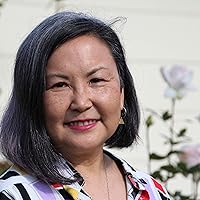
Kyoko Mori was born in Kobe, Japan, in 1957. As a young girl, she learned numerous ways to be creative, including drawing, sewing, and writing, from her mother and her mother's family. From those family members, Mori says, "I came to understand the magic of transformation — a limitless possibility of turning nothing into something."
Mori's life changed completely at age 12, when her mother died. Her father remarried one year later, but the household was not a happy one, and Mori looked for ways to stay away from home. Eventually, she moved to the United States to attend college. She then went to graduate school, where she studied creative writing.
Mori's writing grows out of her personal experiences, but she doesn't always write exactly what happens in her own life. "I think that the best thing about being a writer is that we get to make up things and tell the truth at the same time," she says. Since she received her doctoral degree in 1984, Mori has taught creative writing and has published fiction, poetry, and essays.
If you're into navel-gazing memoirs that take place in different countries, you'll like this book. Eat Pray Love fans, I'm talking to you. For my money, I got a little bit tired of Mori's constant overanalyzing of her relationship with her mother and father. I tend to overanalyze things too, but I don't write entire books about it. I keep it to my private journals where it belongs. Generally, in these "I traveled somewhere to find myself or answer questions about my life" travel narratives, the author walks away with a newer understanding of her life, but Mori left Japan just as pissed off at her father as she was when she arrived in Japan. Yes, she discovered some new things about her family, learned new things about her father and mother, and about herself, but it just got old after a while. Also, I was sort of uncomfortable with the whole "Japan bad, America good" theme that was subtly running through the book. And by "sort of uncomfortable" I mean uncomfortable.
Loved this book. The writing is quiet and insightful. There a more than a few people complaining about Mori rehashing and picking apart every slight and mistreatment and how it gets tedious to read. Having survived similar abuse I found it helpful. There were some familiar realizations and a few unfamiliar epiphanies that I believe will help with my healing. I strongly recommend this book to anyone struggling with a relationship with an abusive/overly critical parent.
Her young adult fiction book Shizuko's Daughter is very similar to her own life. After awhile, I did get annoyed with all her whining. As an adult, you have to let go of how poorly you were treated as a child. It's not healthy to hold onto that forever.
An intelligent, poetic memoir that at times is victim to its own intense scrutiny of social interactions and feelings of not belonging to any one place or family. The abuse Mori experienced is heartbreaking, the lies and other behaviors by her father and stepmother, infuriating, yet in spite of everything, Mori escapes to the U.S., earns a PhD and has a career as a writer and professor. Mori does well writing about many different things—abuse, personal and generational trauma, family, friendships, the roles of women, the differences in American and Japanese cultures and not feeling at home in either place, Japanese history, and other themes. A couple of highlights for me are the section in which Mori writes of her thoughts on intergenerational trauma while swimming with her friend Vince, and her thoughts on war and Japan’s role in WWII while visiting the Hiroshima Memorial. This is a heavy read, difficult at times, and also frustrating, but worth the effort.
The beginning of this book evokes the flat, monotone, melancholy of Japanese modern classics, and then it was surprising to have the narrator turn out to be this modern day enlightened American, returning to her mother country and confronting her family's sad history (suicidal mother, abusive father).
Mori does an excellent job of describing the subtle nuance of languages, especially the differences between Japanese and English courtesy and etiquette, conveyed through conversation - a subject that I find intriguing and complex. I was shocked by her allegations of child abuse, as it's not a topic I'd seen widely covered in Japanese media.
For those who have grown up under manipulative and toxic family, this book “hits home”. Mori is well-articulated and clearly depicts how much of our world and culture is understood by listening to authority figures like our parents. The parental roles, sometimes, play a stronger and more salient role in understanding our world than the subtle pervasiveness of culture. Maybe home is less about where it is, and more about where it is not.
This is a gorgeous and moving memoir about coming to terms with the past. The author travels from the U.S. back to Kobe, Japan, the city of her childhood, to reconnect with friends, family, who she was then and who she has become. But most of all, she struggles with the memory of her mother's suicide and how to process the cruelty of her father and stepmother. I was completely engrossed.
A slow read for me but a really good one. I found this book at a thrift shop and for some reason felt compelled to buy it after reading the back cover. Kyoko Mori does a really good job breaking down the unique cultural norms of Japan and explaining how they contributed to her upbringing — such as why she interacts with beloved childhood friends with a reserved politeness, or why she applies a similar level of courtesy to her less-deserving family members on her father’s side.
It’s a sad story, but it is really beautifully told. The details she includes about Kobe and the rest of Japan as she travels are very immersive and create a sort of delicate nostalgia. I love the way Mori talks about her conflicting feelings between the memories she has of her childhood hometown and the lense through which she navigates it now. I’m gonna have to read some more of her work.
And btw the people who say it’s annoying that she rehashes her abusive experiences with her father and her family are so fucked up. The “repetitive” retelling and working through those incidents are an entire fixture of her journey back into the land where she grew up. It’s intentional and necessary to how she tells the story. When she writes about the subtle rudeness her dad exhibits during her visit to him, his physical abuse toward her in her childhood is supposed to be front of mind. So like stfu with that
Part memoir, part travelogue, part poetry. The cultural differences are translated in eye and heart opening ways. “Knowing that your friends would never force you to talk about painful subjects is as satisfying as knowing that you can talk about them if you want to.” Comparing the city of Kobe from the air to an opened geode is a beautiful image. Thinking about past personal pain while running on what used to be the ocean.
What I learned: a lot about Japanese burial customs. The posthumous Buddhist names on the family stone. Cleaning the stone. Bringing incense and flowers and sutras. Jizo statutes for children.
Good insights on Japanese cultural attitudes towards family dysfunction, secrets, lies, and emotional abuse. A woman who grows up in Japan but lives in the U.S. as an adult goes back to Japan to visit her family and re-experiences the painful memories of her childhood. She finds out more information about the reasons for her family's behavior. She tries to process her feelings and communicate despite the inhibitions and restrictions of their culture.
Mori travels back to Japan after leaving that country thirteen years earlier. She will never live in Japan again, but she endeavors to come to terms with her past: the suicide of her mother and the constant abuse from her father and stepmother. Interesting information on the culture of Japan and its geography.
Kyoko had a very tough childhood and has been gone from Japan for a long time. This book is about her trip back and realizing just how different it is from the life she is living in Wisconsin. She talks a lot about her dislike for her father, step-mother, and grandfather (understandably BUT it gets rather repetitive). She travels through the country and meets up with old friends and family she has not seen for years. Lucky for her, most of them act as if they see each other every day.
This makes me want to reread Shizuko's Daughter. I thought she hounded a little too much on the same subjects over and over throughout the book. Every little thing had an explanation which was quite annoying after a while. I did learn quite a bit about Japanese culture though.
I've been on a roll reading Kyoko's work. Kyoko's mother committed suicide when Kyoko was only 12. After that, her life in Japan went downhill. She moved to America for college when she was 20, and in "The Dream of Water" she returns to Japan for several weeks after a 13-year hiatus. Since I've been reading multiple works of Kyokos, which include many of the same life events and struggles, it is somewhat difficult to critique independently. What I will say about this book is that the setting details are absolutely extraorinarily told. There is a very dreamy quality in this book. It is a sad story, but beautifully done. And each of her books offers me something more.
I find it interesting that in my Ethnic American Lit. Class we read a lot of memoirs. I’m not sure why. For me, I don’t often consider memoirs literature. I will admit that the memoirs we read are highly stylized, but I do wish we had read more fiction.
Regardless, The Dream of Water was a very good memoir. It is focused on Mori’s personal experience and her family trauma rather than doing a deep dive into her cultural background. Sometimes, I wanted to have a little more background. However, Mori’s writing is clear and concise, which is more than I can say for other memoirist I read this semester.
Very well written. It is very entertaining and enlightening to read about Japanese culture and how society treats suicide. The author, however, refuses to let go of her anger against her father. While she does have very good reason to be furious and hurt with her father and step-mother for the way she was treated after her mother's death, that is something that can make people sick and miserable human beings.
Kyoko Mori's memoir about returning to Japan many years after her mother's suicide. Her father and stepmother treated her terribly during her youth and continue to berate her as an adult. I felt sorry for her and understood her need to try to connect with her native country. But I confess I got weary of rehashing every insult and hurtful comment aimed at her by her family members.
I really enjoyed The Dream of Water and it's difficult to pinpoint why. Mori's writing was smooth and honest. I liked that she did not offer any easy answers or resolutions. It seemed almost as though I was reading her diary, watching as she tried to make sense of her feelings. Although we are different people with different past experiences, I felt as though I could relate to her.
Overall I liked the author's perspective on Japan and the differences with America. I've been reading a lot lately, not intentionally, about people who cannot forgive. It's completely understandable; forgiveness is the mystery. Yet, as with this author, you see how anger grips and controls, both her and this narrative.
Very interesting story. I was looking for more insight into the Japanese, but this is too highly personal a story to make generalizations about. An interesting story about a young woman beginning to confront her past. I was glad that she didn't gloss over the fact that her responses were not creating an opening for healing. I did appreciate her story. Very well written.