

What do you think?
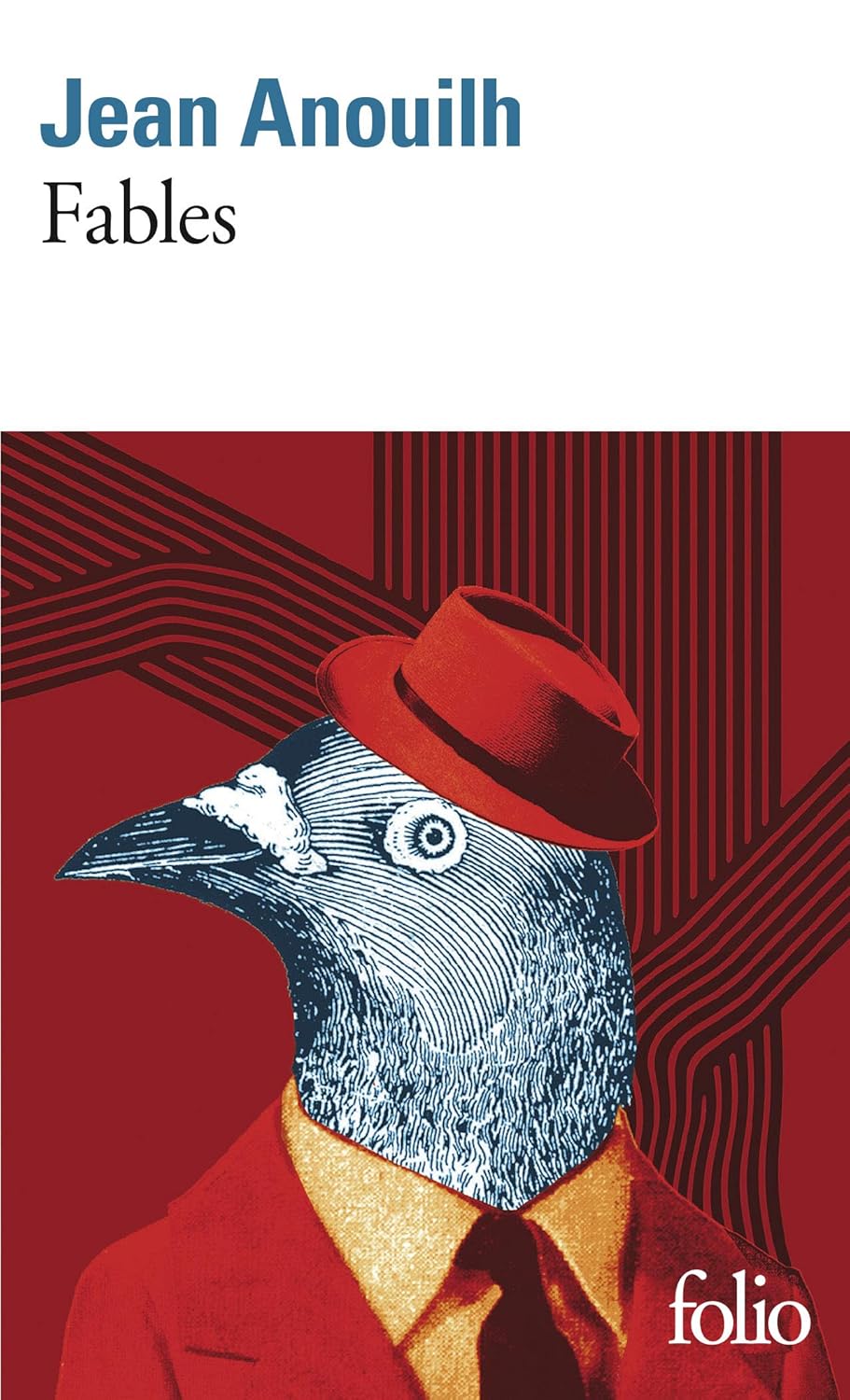
Fables
"Pourquoi n'écris-tu plus de pièces?"
M'a demandé Nicolas tout de go,
Moi qui me crois Victor Hugo,
Oeuvrant, face à la mer dans ma petite pièce,
Sur son rocher de Guernesey
(La conjoncture politique
Rappelant, par ailleurs, le règne de la trique),
Je réponds supérieur : "Non, vois-tu, cet été,
J'ai décidé
(J'ai l'air badin et amusé -
Ca me va bien) que j'écrirais plutôt des fables."
"Tu m'en montres une?" - "Elles ne sont pas pour enfants."
M'a demandé Nicolas tout de go,
Moi qui me crois Victor Hugo,
Oeuvrant, face à la mer dans ma petite pièce,
Sur son rocher de Guernesey
(La conjoncture politique
Rappelant, par ailleurs, le règne de la trique),
Je réponds supérieur : "Non, vois-tu, cet été,
J'ai décidé
(J'ai l'air badin et amusé -
Ca me va bien) que j'écrirais plutôt des fables."
"Tu m'en montres une?" - "Elles ne sont pas pour enfants."
- GenresFiction
158 pages, Mass Market Paperback
First published January 1, 1962
About the author
Jean Anouilh
272 books171 followersJean Anouilh was a French dramatist and screenwriter whose career spanned five decades, producing works that ranged from high drama to absurdist farce, though he is best remembered for his 1944 production of Sophocles’ Antigone, which, despite passing censorship, was widely interpreted as a critique of the Vichy regime. Born to a tailor father and a violinist mother, Anouilh absorbed the theatre from an early age, attending rehearsals and reading scripts, and began writing plays at twelve. The family moved to Paris, where he attended the Lycée Chaptal and briefly studied law at the Sorbonne before leaving to work in advertising. Early in his career he wrote comic scenes for cinema and worked as secretary to director Louis Jouvet, whose mentorship and the influence of playwright Jean Giraudoux inspired Anouilh to pursue theatre seriously. He debuted with collaborative and solo plays such as Humulus le muet, L’Hermine, and Mandarine, which, though not commercially successful, led to greater recognition with Le voyageur sans bagage in 1937. Anouilh developed distinct categories for his plays, including pièces noires, or tragedies like Antigone, exploring moral integrity against compromise; pièces roses, comedic works emphasizing fantasy and freedom; pièces brillantes, witty plays set in aristocratic environments; pièces grinçantes, darker, ironic comedies; and pièces costumées, historical dramas such as The Lark and Becket, highlighting protagonists pursuing moral paths amidst corruption. His later works, often called pièces secrètes, focused on dramatists and theatre professionals, emphasizing family and intimate relationships over conventional theatrical action. Politically, Anouilh remained largely apolitical, serving in the French Army and living under German occupation, his plays often interpreted as ambivalent reflections on resistance and pragmatism. Critically, he was recognized for blending lyrical language, precise dialogue, and structured plots, producing a prolific output for over fifty years, and winning accolades including the Prix mondial Cino Del Duca, consideration for the 1962 Nobel Prize in Literature, and the inaugural Grand Prix du Théâtre de l'Académie française. His works continued to be performed internationally, balancing existential concerns, moral dilemmas, and humor, reflecting a nuanced perspective on human nature. By the end of his career, he had influenced French theatre deeply, navigating between realism, comedy, and tragedy, and remained a vital figure in twentieth-century drama until his death, leaving a legacy of plays that explore the tension between idealism and compromise, the demands of conscience, and the pursuit of integrity in a flawed world.
Ratings & Reviews
Friends & Following
Create a free account to discover what your friends think of this book!
Community Reviews
Displaying 1 - 3 of 3 reviews
July 27, 2020
Un peu déçue dans l'ensemble : certaines fables sont un peu datées et d'autres manquent de finesse.
August 12, 2026
"Je voudrais qu'on les lise [ces fables] aussi vite et aussi facilement que je les ai faites", c'est ce qu'écrit Anouilh dans sa préface.
Oui bon, en effet, on les lit vite pour les oublier vite aussi en définitive. Je ne recommande pas, lisons autre chose de plus intéressant : elles ne sont pas très plaisantes et la moitié sont vraiment interminables, apprenons collectivement à dégraisser les œuvres.
Oui bon, en effet, on les lit vite pour les oublier vite aussi en définitive. Je ne recommande pas, lisons autre chose de plus intéressant : elles ne sont pas très plaisantes et la moitié sont vraiment interminables, apprenons collectivement à dégraisser les œuvres.

May 8, 2024
[avril 2024]
bon franchement je l'ai acheté car c'est anouilh et que j'aime bien cet auteur même si j'aime pas les fables. ça l'a pas vraiment fait, c’est intéressant à feuilleter mais ça s'arrête là pour moi :(
après dans la préface il dit bien qu'il a écrit ça pour l'exercice surtout et que si ça peut divertir pendant 1h ou 2 son taff est fait et c'est clairement ça...
bon franchement je l'ai acheté car c'est anouilh et que j'aime bien cet auteur même si j'aime pas les fables. ça l'a pas vraiment fait, c’est intéressant à feuilleter mais ça s'arrête là pour moi :(
après dans la préface il dit bien qu'il a écrit ça pour l'exercice surtout et que si ça peut divertir pendant 1h ou 2 son taff est fait et c'est clairement ça...
Displaying 1 - 3 of 3 reviews