

What do you think?

Спін-диктатори. Як змінюються обличчя тиранії в ХХІ столітті
Гітлер, Сталін і Мао правили шляхом насильства, страху та ідеології. Однак в останні десятиліття нові лідери, які обізнані з медійними технологіями, переробляють авторитарне правління під реалії глобальних зв’язків світу. На початку свого правління, замість відкритих масових репресій такі правителі, як Володимир Путін, Реджеп Таїп Ердоган і Віктор Орбан, контролюють громадян, спотворюючи інформацію та симулюючи демократичні процедури. Подібно до науково-дослідних експертів у демократичних країнах, вони моделюють і накидають такий стан реальності, який триматиме громадян у шорах і даватиме змогу диктаторам лишатися при владі. Розкриваючи цю нову форму авторитаризму, Сергій Гурієв і Деніел Трейсман пояснюють появу таких «спін-диктаторів», описуючи, як вони з’являються і діють, означуючи загрози, які вони становлять, і те, як демократії мають на це реагувати. У книжці означено, як такі лідери, як Лі Куан Ю із Сінґапуру та Альберто Фухіморі з Перу, запровадили менш насильницькі, більш приховані й ефективніші методи монополізації влади. Вони культивували імідж компетентності, приховували цензуру й використовували демократичні інститути для підриву демократії. Автори пояснюють, чому більшість сучасних авторитаристів є спін-диктаторами і чим вони відрізняються від решти «диктаторів страху» — таких, як Кім Чен Ин і Башар аль-Асад, а також від майстрів високотехнологічних репресій, як-от Сі Цзіньпін.
432 pages, Hardcover
First published April 5, 2022
About the author
Sergei Guriev
8 books41 followersSergey Maratovich Guriyev (Russian: Сергей Маратович Гуриев, Ossetian: Гуриаты Мараты фырт Сергей/Gwyriaty Maraty fyrt Sergej) is a Russian economist, who is Provost and a professor of economics at the Instituts d'études politiques in Paris (Sciences Po). In 2016–2019, he was the chief economist at the European Bank for Reconstruction and Development. He was a Morgan Stanley Professor of Economics and a Rector at Moscow's New Economic School (NES) until he resigned on 30 April 2013 and fled to France.
Ratings & Reviews
Friends & Following
Create a free account to discover what your friends think of this book!
Community Reviews
Displaying 1 - 30 of 161 reviews

September 3, 2023
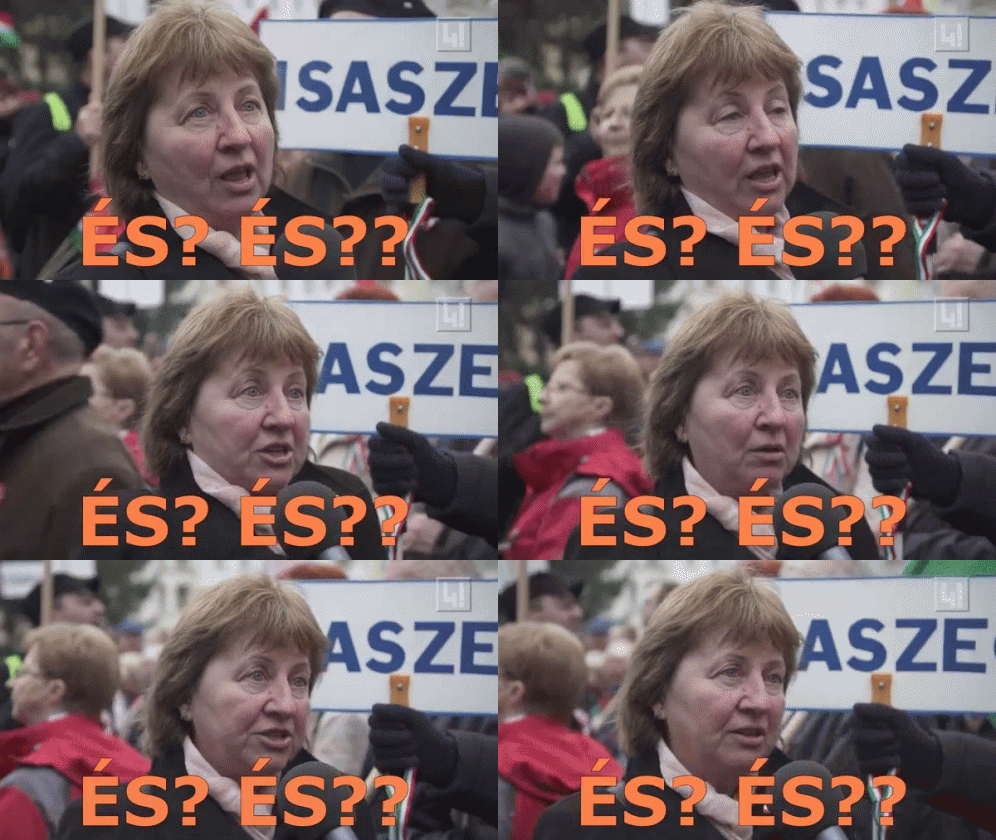
Van egy néni a Pozsonyi úton, aki rendszeresen ott tologatja a kiskocsiját a könyvesbolt előtt. A kiskocsit én először babakocsinak néztem, de nem baba van benne, hanem egy rádió, amiből a Kossuth szól, ha jól fülelek. A nénit egy ősöreg tacskó-foxi (plusz azonosíthatatlan adalék, ami a homokbarna szín génjeiről gondoskodott) keverék kíséri, akinek szemében látni egyfajta szégyenkezést - talán a gazdája miatt. No most ez a néni egy alkalommal kiszúrta ezt a könyvet a boltban, és jól fel is hergelte magát azon, hogy egy "Spindiktátorok" című alkotás borítójára Orbán Viktor arcképét merészelték rászerkeszteni. Bátran benyomult, és elkezdte fotózni a telefonjával az inkriminált jelenséget, miközben valami ilyesmit motyogott: "Diktátor! Orbán Viktor diktátor! Hát akkor Brüsszel micsoda???" Amire nyilván egyfelől azt lehet felelni, hogy: "Város." Másfelől viszont azt, hogy ez a könyv pont azt írja le, miért is diktátor Orbán Viktor még akkor is, ha nem lövet engem halomra ezért az értékelésért. Szóval pont az efféle néniknek kéne receptre felírni.
Az előző mondatomban egy finom kritika is rejtőzik: hogy az "efféle néniknek" kéne elolvasni - viszont azok, akik maguk is egy spindiktatúrában élnek, az itt leírt módszereket alkalmasint már ismerik, sőt ha olvasnak elemző kritikus sajtót, akkor egyes elemekről találkoztak már részletesebben kidolgozott szövegekkel is. A szerzőpáros nem annyira mélységében forradalmasítja tehát a politikatudományt, inkább csak felkínál egy új értelmezési keretet: megkülönbözeti az autoriter rendszerek "régi" és "új" formáját, az előzőt elnevezi "félelemdiktatúrának", az utóbbit pedig "spindiktatúrának". Az első jellemzője, hogy a nyílt agresszión keresztül folyamatos félelemben tartja polgárait, elfojtva minden kezdeményezőkedvet. A másodiknak viszont szokása magát demokráciának álcázni, a nyomásgyakorlás ezért mindig bújtatott és körmönfont. Az elsőt nem érdekli, mit gondol magában az állampolgár - a lényeg, hogy féljen, mert aki fél, az kussol. A második ezzel szemben figyeli a közvéleménykutatásokat, törekszik arra, hogy a vezető népszerű legyen, mert a vezető népszerűsége legitimálja a hatalmi túlkapásokat. A kötet pedig azt igyekszik bemutatni, hogyan és miért alakultak át előbbiek az utóbbiakká - mert nem két különböző hatalomgyakorlási elvről van szó, hanem ugyanarról a minőségről, ami mindazonáltal finomított a módszerein.
Ami amúgy (már a finomodás) már önmagában egyfajta siker, hisz végtére is csak jobb egy simán kekec diktatúrában élni, mint egy olyanban, ami hajlamos gödörbe lőni az embert. Ilyen értelemben ez az átalakulás beilleszthető a Pinker-féle optimista elméletbe, miszerint a világban fokozatosan csökken az agresszió. Ami rendben is van - ugyanakkor van egy pesszimista olvasat is. Hogy van a liberális alaptétel, miszerint a GDP növekedése a információhoz való egyre általánosabb hozzáféréssel és a gazdasági globalizációval kombinálva olyan "modernizációs koktélt" alkot, ami lassan, de biztosan egyre demokratikusabb államokat hoz létre. És ez annyiban be is vált, hogy valóban kevesebb félelemdiktatúra van ma, mint mondjuk negyven éve. Ugyanakkor az autoriter rendszerek sokkal tanulékonyabbnak bizonyultak a vártnál - a változó körülményekre kidolgozták a saját innovatív megoldásaikat, reagáltak az idők szavára, és spin diktatúrákká evolválódtak. Nem vesztek el, csak átsminkelték magukat "illiberális" vagy "szuverén" demokráciává. És hát véleményes, hogy amikor egy félelemdiktatúra spin diktatúrává változik, az egy lépés-e a demokráciához vezető rögös úton, vagy pusztán annak jele, hogy szívós a rohadék, és képes alakot váltani.
A szerzők ezzel együtt inkább bizakodónak tűnnek, mint nem - számukra ez a helyzet egy olyan kihívás, amit kezelni kell ugyan, de legalább lehet kezelni. Néha még azt is megkockáztatják, hogy a demokrácia továbbra is népszerű eszme, ellenben a kortárs diktátorok nem igazán tudnak vonzó opciót kínálni helyette. Ami nemzetközi szinten igaz - hiába mond mást az M1, az orbánizmus nem sok olyat tud ajánlani egy brit vagy pláne román állampolgárnak, amitől ő is orbánista akarna lenni. Legfeljebb a módszert nyúlják le, de az ideológiát nem tudják - mondjuk mert nincs is. Ugyanakkor ez nem változtat azon, hogy a világ frusztráltabbik felén, lokálisan ezek a vezetők mégis széles tömegek igényeivel tudnak rezonálni - vagyis nem csak azért vannak hatalmon, mert csaltak, hanem mert valóban népszerűek. Reflektáltak egy állampolgári igényre - és amíg ez az igény van, addig ők is itt lesznek. Hogy a rosseb rágná le a tobozmirigyüket.
Az előző mondatomban egy finom kritika is rejtőzik: hogy az "efféle néniknek" kéne elolvasni - viszont azok, akik maguk is egy spindiktatúrában élnek, az itt leírt módszereket alkalmasint már ismerik, sőt ha olvasnak elemző kritikus sajtót, akkor egyes elemekről találkoztak már részletesebben kidolgozott szövegekkel is. A szerzőpáros nem annyira mélységében forradalmasítja tehát a politikatudományt, inkább csak felkínál egy új értelmezési keretet: megkülönbözeti az autoriter rendszerek "régi" és "új" formáját, az előzőt elnevezi "félelemdiktatúrának", az utóbbit pedig "spindiktatúrának". Az első jellemzője, hogy a nyílt agresszión keresztül folyamatos félelemben tartja polgárait, elfojtva minden kezdeményezőkedvet. A másodiknak viszont szokása magát demokráciának álcázni, a nyomásgyakorlás ezért mindig bújtatott és körmönfont. Az elsőt nem érdekli, mit gondol magában az állampolgár - a lényeg, hogy féljen, mert aki fél, az kussol. A második ezzel szemben figyeli a közvéleménykutatásokat, törekszik arra, hogy a vezető népszerű legyen, mert a vezető népszerűsége legitimálja a hatalmi túlkapásokat. A kötet pedig azt igyekszik bemutatni, hogyan és miért alakultak át előbbiek az utóbbiakká - mert nem két különböző hatalomgyakorlási elvről van szó, hanem ugyanarról a minőségről, ami mindazonáltal finomított a módszerein.
Ami amúgy (már a finomodás) már önmagában egyfajta siker, hisz végtére is csak jobb egy simán kekec diktatúrában élni, mint egy olyanban, ami hajlamos gödörbe lőni az embert. Ilyen értelemben ez az átalakulás beilleszthető a Pinker-féle optimista elméletbe, miszerint a világban fokozatosan csökken az agresszió. Ami rendben is van - ugyanakkor van egy pesszimista olvasat is. Hogy van a liberális alaptétel, miszerint a GDP növekedése a információhoz való egyre általánosabb hozzáféréssel és a gazdasági globalizációval kombinálva olyan "modernizációs koktélt" alkot, ami lassan, de biztosan egyre demokratikusabb államokat hoz létre. És ez annyiban be is vált, hogy valóban kevesebb félelemdiktatúra van ma, mint mondjuk negyven éve. Ugyanakkor az autoriter rendszerek sokkal tanulékonyabbnak bizonyultak a vártnál - a változó körülményekre kidolgozták a saját innovatív megoldásaikat, reagáltak az idők szavára, és spin diktatúrákká evolválódtak. Nem vesztek el, csak átsminkelték magukat "illiberális" vagy "szuverén" demokráciává. És hát véleményes, hogy amikor egy félelemdiktatúra spin diktatúrává változik, az egy lépés-e a demokráciához vezető rögös úton, vagy pusztán annak jele, hogy szívós a rohadék, és képes alakot váltani.
A szerzők ezzel együtt inkább bizakodónak tűnnek, mint nem - számukra ez a helyzet egy olyan kihívás, amit kezelni kell ugyan, de legalább lehet kezelni. Néha még azt is megkockáztatják, hogy a demokrácia továbbra is népszerű eszme, ellenben a kortárs diktátorok nem igazán tudnak vonzó opciót kínálni helyette. Ami nemzetközi szinten igaz - hiába mond mást az M1, az orbánizmus nem sok olyat tud ajánlani egy brit vagy pláne román állampolgárnak, amitől ő is orbánista akarna lenni. Legfeljebb a módszert nyúlják le, de az ideológiát nem tudják - mondjuk mert nincs is. Ugyanakkor ez nem változtat azon, hogy a világ frusztráltabbik felén, lokálisan ezek a vezetők mégis széles tömegek igényeivel tudnak rezonálni - vagyis nem csak azért vannak hatalmon, mert csaltak, hanem mert valóban népszerűek. Reflektáltak egy állampolgári igényre - és amíg ez az igény van, addig ők is itt lesznek. Hogy a rosseb rágná le a tobozmirigyüket.

October 3, 2022
Today's autocracies pose new challenges to the democracies of the West. Unlike the West cold-war's adversaries, spin dictators have no real ideology. The recognize the appeal of democracy to their citizens, they pretend to embrace it. They use disinformation to spread cynicism and division. If Western publics doubt democracy and distrust their leaders, those leaders will be less apt to launch democratic crusades against them. By controlling the media, they can shape their own profile and a the same time discredit the West.
The book starts with Lee Kuan Yew, the ruler of Singapore who apparently served as the role model for would-be dictators. He was the father of spin dictatorship where the ruled in a semi-authoritarian way, curtailing press freedoms, imposing narrow limits on public protests, restricting labor movements from industrial or strike action through anti-union legislation and co-option. Not by murdering his victims in the old-fashioned way, but by bringing defamation lawsuits against prominent political opponents. Putin took notice.
The authors succeed convincingly in their effort to describe these tactics. They do not underestimate the problems they pose for Western democracies. However, in my view they are too optimistic and perhaps a little naive. They state that even with today's rise in spin dictators democracy will stay upright and the shift to democracy will eventually become a unstoppable force even in Russia and China. I have my doubts about that - perhaps this book came too early in order to process the Russian invasion in Ukraine and the rise of authoritarianism in today's Russia. I don't think Russia will ever become a democracy but rather will slide towards a more and more authoritarian regime.
The book starts with Lee Kuan Yew, the ruler of Singapore who apparently served as the role model for would-be dictators. He was the father of spin dictatorship where the ruled in a semi-authoritarian way, curtailing press freedoms, imposing narrow limits on public protests, restricting labor movements from industrial or strike action through anti-union legislation and co-option. Not by murdering his victims in the old-fashioned way, but by bringing defamation lawsuits against prominent political opponents. Putin took notice.
The authors succeed convincingly in their effort to describe these tactics. They do not underestimate the problems they pose for Western democracies. However, in my view they are too optimistic and perhaps a little naive. They state that even with today's rise in spin dictators democracy will stay upright and the shift to democracy will eventually become a unstoppable force even in Russia and China. I have my doubts about that - perhaps this book came too early in order to process the Russian invasion in Ukraine and the rise of authoritarianism in today's Russia. I don't think Russia will ever become a democracy but rather will slide towards a more and more authoritarian regime.

April 15, 2022
This is a book about the current crop of dictators arguing that they have less in common with the Hitlers, Stalins, and Maos of the 20th century. In contrast, while current dictators can and do use violence and mass incarceration when needed, they prefer; not to use these tools and instead control the information and stories that are presented to the masses so as to avoid the need for violence and torture. This is apparently a more efficient way to be a dictator and maintain a semblance of popular approval for the regime.
There may well be something noteworthy, but it is not clear to me that it is such a sharp distinction. I suspect that the war in Ukraine, along with the persistence of COVID-19 and its lockdowns, will put some of these ideas to the test.
I have to process this a bit and will revisit the review.
There may well be something noteworthy, but it is not clear to me that it is such a sharp distinction. I suspect that the war in Ukraine, along with the persistence of COVID-19 and its lockdowns, will put some of these ideas to the test.
I have to process this a bit and will revisit the review.

Read
November 4, 2022"At first glance, 'Spin Dictators' might not seem relevant to U.S. elections. The book describes new forms of dictatorship based not on fear or terror, but on manipulating media and undermining democratic institutions ... U.S. voters will find it useful to read this book and then ask themselves whether any of the candidates in their local senatorial or gubernatorial race have explicitly adopted the language and tactics originally created by modern autocrats." — Anne Applebaum
https://www.theatlantic.com/books/arc...
https://www.theatlantic.com/books/arc...
May 11, 2024
I had so many different thoughts when I was reading this book, but they were mostly about the many interesting things I could have been doing instead of reading it.

November 6, 2023
This is quite possibly the worst book I've read on dictatorship and democracy ever.
Not only do the authors have no grasp of fascism and what fascism is as an ideology and system in practice but they also do the classic liberal absurdity of equating fascism to communism. Furthermore the authors continue to equate varying types of leaders which in no way can be equated and puts them all under the simple tag of "dictator". It is so obsurdly generalised that it loses track of reality and sounds closer to a Disney movie with clear good guys and bad guys with no nuance or real academic scrutiny.
In addition the quality and depth of the evidence provided in this book creates considerable questioning on the reliability of the information presented.
The only thing this author gives of value is a surface level description of how modern dictatorships maintain control of public consent. And again we arrive at another problem, another liberal problem. The lack of self-awareness that these systems of control exist in western liberal democracies and have been displayed time and time again. The evidence is obvious but these authors are so shockingly one sided and come to appear far more as western elite propagandists than truly being academic enforcers of the democratic system. These authors are exactly the ideological arm of western supported spin dictatorship they claim to be arguing against.
If this is the state of academia, academia is long dead and has become nothing but an arm reaffirming the dominance of the western elite over their own populations and foreign.
Terrible book. I would highly recommend other authors on democratization and comparative politics.
2/5
Not only do the authors have no grasp of fascism and what fascism is as an ideology and system in practice but they also do the classic liberal absurdity of equating fascism to communism. Furthermore the authors continue to equate varying types of leaders which in no way can be equated and puts them all under the simple tag of "dictator". It is so obsurdly generalised that it loses track of reality and sounds closer to a Disney movie with clear good guys and bad guys with no nuance or real academic scrutiny.
In addition the quality and depth of the evidence provided in this book creates considerable questioning on the reliability of the information presented.
The only thing this author gives of value is a surface level description of how modern dictatorships maintain control of public consent. And again we arrive at another problem, another liberal problem. The lack of self-awareness that these systems of control exist in western liberal democracies and have been displayed time and time again. The evidence is obvious but these authors are so shockingly one sided and come to appear far more as western elite propagandists than truly being academic enforcers of the democratic system. These authors are exactly the ideological arm of western supported spin dictatorship they claim to be arguing against.
If this is the state of academia, academia is long dead and has become nothing but an arm reaffirming the dominance of the western elite over their own populations and foreign.
Terrible book. I would highly recommend other authors on democratization and comparative politics.
2/5
February 9, 2023
Good balance between history, journalism, and entertainment.
Just enough facts to be credible, just enough analysis to add depth, and a good choice of anecdotes to keep the readers' attention.
What did I miss here? Setting up a better boundary between strong leadership and dictatorship/tyranny. I don't find it a big issue, but still - it's an oversimplification.
Does the book do anything valuable with the facts gathered? I think so. There are good points on what are the effective mechanisms to counter spin dictators, there are good observations on using non-democratic methods to restore democracy. Some content did not age well (e.g., general classification of Putin), but it's hard to avoid in a book about modern-day politics.
4.5-4.6 stars
Just enough facts to be credible, just enough analysis to add depth, and a good choice of anecdotes to keep the readers' attention.
What did I miss here? Setting up a better boundary between strong leadership and dictatorship/tyranny. I don't find it a big issue, but still - it's an oversimplification.
Does the book do anything valuable with the facts gathered? I think so. There are good points on what are the effective mechanisms to counter spin dictators, there are good observations on using non-democratic methods to restore democracy. Some content did not age well (e.g., general classification of Putin), but it's hard to avoid in a book about modern-day politics.
4.5-4.6 stars

June 26, 2024
Not bad, actually. The book has resonated a lot with what I've known for years or at least have had in mind as raw unclear thought. I encountered quite interesting facts that I've never heard / read before. For example, that charging activists with false accusations (sham charges on perjury, trespass and, of course true classic, TAX EVASION for Martin Luther King) I kinda thought it was relatively new tactics. It's a fine read, worth spending time.
Four out of five.
Four out of five.

June 14, 2025
an exploration into how the face of tyranny is changing from one of fear based (mussolini, stalin) to spin based (lee kwan yew, putin). interesting to see what i’ve never articulated to myself about why that is the case but the answer is pretty straightforward — it’s more effective if u can afford it, keeps you in power longer, gives you more global legitimacy, also fear based is harder to get away with with globalisation/internet.
i wish they went deeper into the explanations they gave as examples because there was a one liner every now and then about many countries whose histories with spin dictators i didn’t know (and by the end of the book i still didn’t find out). bit all over the place, i would’ve preferred a longer book with more context than this
HOWEVERRR my biggest gripe was the way it played heavily into western paternalism/its assumption of western superiority. the narrative was that the west must be aware of the spin dictators of the global south lest they find a way to get us and corrupt our own democratic ideal. there was a literal line that said “the west must either lead the world or be led by it” and the argument was later made about why western vigilance is so important so it doesn’t lose this power. its main appeal to action was made to france, germany, US, and israel (?!) to keep an eye out before the monster under the bed comes for us. this was also written post 2016 trump presidency and i think the far more interesting argument would’ve been on how western “democracies” (see also: marine la pen and her electoral fraud) are not infallible and are equally susceptible to spin dictatorships.
in short: interesting concept, fumbled and misguided execution
i wish they went deeper into the explanations they gave as examples because there was a one liner every now and then about many countries whose histories with spin dictators i didn’t know (and by the end of the book i still didn’t find out). bit all over the place, i would’ve preferred a longer book with more context than this
HOWEVERRR my biggest gripe was the way it played heavily into western paternalism/its assumption of western superiority. the narrative was that the west must be aware of the spin dictators of the global south lest they find a way to get us and corrupt our own democratic ideal. there was a literal line that said “the west must either lead the world or be led by it” and the argument was later made about why western vigilance is so important so it doesn’t lose this power. its main appeal to action was made to france, germany, US, and israel (?!) to keep an eye out before the monster under the bed comes for us. this was also written post 2016 trump presidency and i think the far more interesting argument would’ve been on how western “democracies” (see also: marine la pen and her electoral fraud) are not infallible and are equally susceptible to spin dictatorships.
in short: interesting concept, fumbled and misguided execution

February 13, 2024
Все четко. Не только научный труд, но и инструкция (пусть и предварительная) к действию. Как бы хотелось, чтобы ей воспользовались!

April 23, 2022
A good compilation and classification of modern autocratic regimes. Contrast with XX-century-style butchers is evident and transition to more overt tactics is apparent. Main point I've got from the book: ideological emptiness of modern autocrats, with a notable exception of islamist regimes. Which is very consistent with Fukuyama's 'end of history' argument.
Coming from Belarus I've noticed that myself. For 28 years now, Lukashenko pushes the cargo-cult of Soviet era without actual communist content; without any positive ideology for that matter - only hate of 'western values' under vague umbrella of anti-liberalism. In a way I was surprised to see him classified as 'fear dictator' though. Until 2020 he'd probably fit well into 'spin' category.
Which leads to my main criticism of the book - there's no convincing discussion of factors leading the evolution of spin dictatorship into democracy or sliding back in to old school fear regimes. For sure, it's extremely hard to find those factors as we live through this processes in real time but still.
Other weak-ish point is what Western countries ought to do with spin dictators. The discussion seems to boil down to 'just be better yourself'. Which is fine in historical perspective and as preventive measure but doesn't answer the question that really matters: what democratic countries ought to do with situation right now when it's already out of control, what's the self-correction mechanism? Sure, in the long run dictators may be forced to 'fake it till you make it' democracy. But "in the long run we are all dead".
Coming from Belarus I've noticed that myself. For 28 years now, Lukashenko pushes the cargo-cult of Soviet era without actual communist content; without any positive ideology for that matter - only hate of 'western values' under vague umbrella of anti-liberalism. In a way I was surprised to see him classified as 'fear dictator' though. Until 2020 he'd probably fit well into 'spin' category.
Which leads to my main criticism of the book - there's no convincing discussion of factors leading the evolution of spin dictatorship into democracy or sliding back in to old school fear regimes. For sure, it's extremely hard to find those factors as we live through this processes in real time but still.
Other weak-ish point is what Western countries ought to do with spin dictators. The discussion seems to boil down to 'just be better yourself'. Which is fine in historical perspective and as preventive measure but doesn't answer the question that really matters: what democratic countries ought to do with situation right now when it's already out of control, what's the self-correction mechanism? Sure, in the long run dictators may be forced to 'fake it till you make it' democracy. But "in the long run we are all dead".

April 12, 2022
This book is clearly inspired by How Democracies Die: What History Reveals About Our Future, it has some interesting ideas, but at the same time it leaves much more questions than answers. Taking whats happening now between Russia and Ukraine I have to say that the main theory here is failing not only about Putin, but also about some other world leaders.
Also, some facts and data in book are quite questionable, but I will leave it to the list of references, where authors have a ton of articles from The Guardian, CNN, The Moscow Times, etc.
Also, some facts and data in book are quite questionable, but I will leave it to the list of references, where authors have a ton of articles from The Guardian, CNN, The Moscow Times, etc.

July 13, 2026
Autoři zachycují všechny důležité aspekty, ve kterých se “nové” “spin” diktatury liší od tradičních diktatur strachu (násilí, cenzura, svoboda médií, vztah k zahraničí apod.). U autorů je patrný výzkumný background, což dokládá nejen 100+ stran poznámek a zdrojů, ale i podkapitoly “Kontrola důkazů” u několika kapitol, kde svá tvrzení dokládají kvantitativními údaji ze svých databází a studiemi dalších autorů.
Celkově velmi zdařilé dílo, kterému nemám moc co vytknout. Možná jen to, že bych uvítal širší škálu zemí, které jsou jako příklady rozebrány více do hloubky (mnoho prostoru je věnováno Venezuele, Ekvádoru, Kazachstánu, Rusku a Maďarsku (?)).
Celkově velmi zdařilé dílo, kterému nemám moc co vytknout. Možná jen to, že bych uvítal širší škálu zemí, které jsou jako příklady rozebrány více do hloubky (mnoho prostoru je věnováno Venezuele, Ekvádoru, Kazachstánu, Rusku a Maďarsku (?)).

July 24, 2022
This book presents the nature of dictators of the 21st century as they differ from the dictators of the twentieth century. Sergei Guriev, the author of the book, provides case studies from various countries from Russia to Venezuela to Singapore and elaborates how the strongmen from these countries ruled over their respective countries for decades with their deceptive measures.

July 28, 2024
Odlična knjiga koja temeljno analizira načine na koji funkcionišu savremene diktature spina. Nije čudo da je NewYorker ovu knjigu proglasio najboljom političkom knjigom objavljenom 2022. godine.

March 9, 2024
starting a gofundme to get every american a copy of this book
March 21, 2026
The thesis of the book is difficult to disagree with, but extremely simple. Therefore, I couldn't help but think it could have been an article instead of 400 page book. While I found the first two chapters very interesting, the rest felt like a neverending list of examples trying to persuade the reader to agree with a pretty obvious concept. I can imagine myself recommending it to people who don't know much about politics, but to me personally it felt redundant.
Also, not really book's fault, but the political landscape has changed so much during the last few years, that some examples used (mainly Putin, and to some extent Trump) are not really working in favour of authors' arguments anymore.
Also, not really book's fault, but the political landscape has changed so much during the last few years, that some examples used (mainly Putin, and to some extent Trump) are not really working in favour of authors' arguments anymore.

October 16, 2022
An interesting read. Guriev and Treisman's main thesis is that today's authoritarian leaders are not like the dictators of the past.
Unlike the dictators of the 20th century (like Hitler, Stalin and Mao) who ruled through fear and oppression, today's dictators (like Lee Kuan Yew, Victor Orban, Recip Erdogan, Hugo Chavez and Vladimir Putin) rule through subtler means. They rule through pretending to be democracies. Dictators of the 20th century sough full controll, they ruled through fear, abolished elections (our claimed to get 100% support) and sought to indoctrinate their people to a grand idea or ideology. Modern dictators can be seen as a middle-point. They oppress, but on a smaller scale, usually by using the courts and other means. They rig elections, but not to much as a they want to uphold the pretense of being elected legitimately. They censor some of the pressebut allow for opposition voices as long as their reach is low. They rarely have any grand projects or alternate ideology, claiming instead to be "democratic" leaders. They rarely care whether some informed people in their societies protest their rule as long as the masses support them.
Guriev and Treisman ascribes this to a classical modernity thesis. As societies become more developed (richer, more educated etc.), people start to yearn for democracy. Authoritarian leaders, however, can adapt to this and stay in power by pretending to be democracies. According to the authors, Singapore's Lee Kuan Yew was the first to understand this, and the method of rule proliferated in the end of the 20th century and the start of the 21st.
Guriev and Treisman back up their findings with data and graphs, showing how there exists a unique statistical group apart from fear dictators and democracies, which they label the "spin dictators".
If I were to critique the book, it would be that their category is somewhat vague. It is clear that it is an ideal type as the boundaries between spin-dicators, democratic leaders and more modern classical fear dictatorships (here they position China) is somewhat vague. Though the system they operate in is different, it is not immediately clear what the difference is between for examle Orban and Donald Trump or Vladimir Putin and Xi Jinping. Their use of the term could also be criticized as it is not clear how the label "spin dicators" differ from more established political science terms like "hybrid regimes". Lastly, Guriev and Treisman advocates a quite rigid modernization thesis. I happen to agree with much of this thesis, but it is a thesis that has been heavily question and modified in recent decaes.
All in all, however, this is still an interesting idea which I think contains a lot of truth. Their books is well written and heavily researched and Guriev and Treisman provide many interesting examples to back up their view. I recommend this book to all who are interestd in politics, populism, authoritarianism and the challenges facing democracy in the 21st century.
Unlike the dictators of the 20th century (like Hitler, Stalin and Mao) who ruled through fear and oppression, today's dictators (like Lee Kuan Yew, Victor Orban, Recip Erdogan, Hugo Chavez and Vladimir Putin) rule through subtler means. They rule through pretending to be democracies. Dictators of the 20th century sough full controll, they ruled through fear, abolished elections (our claimed to get 100% support) and sought to indoctrinate their people to a grand idea or ideology. Modern dictators can be seen as a middle-point. They oppress, but on a smaller scale, usually by using the courts and other means. They rig elections, but not to much as a they want to uphold the pretense of being elected legitimately. They censor some of the pressebut allow for opposition voices as long as their reach is low. They rarely have any grand projects or alternate ideology, claiming instead to be "democratic" leaders. They rarely care whether some informed people in their societies protest their rule as long as the masses support them.
Guriev and Treisman ascribes this to a classical modernity thesis. As societies become more developed (richer, more educated etc.), people start to yearn for democracy. Authoritarian leaders, however, can adapt to this and stay in power by pretending to be democracies. According to the authors, Singapore's Lee Kuan Yew was the first to understand this, and the method of rule proliferated in the end of the 20th century and the start of the 21st.
Guriev and Treisman back up their findings with data and graphs, showing how there exists a unique statistical group apart from fear dictators and democracies, which they label the "spin dictators".
If I were to critique the book, it would be that their category is somewhat vague. It is clear that it is an ideal type as the boundaries between spin-dicators, democratic leaders and more modern classical fear dictatorships (here they position China) is somewhat vague. Though the system they operate in is different, it is not immediately clear what the difference is between for examle Orban and Donald Trump or Vladimir Putin and Xi Jinping. Their use of the term could also be criticized as it is not clear how the label "spin dicators" differ from more established political science terms like "hybrid regimes". Lastly, Guriev and Treisman advocates a quite rigid modernization thesis. I happen to agree with much of this thesis, but it is a thesis that has been heavily question and modified in recent decaes.
All in all, however, this is still an interesting idea which I think contains a lot of truth. Their books is well written and heavily researched and Guriev and Treisman provide many interesting examples to back up their view. I recommend this book to all who are interestd in politics, populism, authoritarianism and the challenges facing democracy in the 21st century.

Read
May 3, 2023Автори книжки стверджують, що серед диктаторів відбулася зміна. Тепер є знашно більше тих, хто віддає перевагу спін-технологіям перед насильством. Коротше кажучи, вони стали хитрішими та розумнішими і тепер, аби керувати суспільством можна вдаватися не лише до насилля (хоча вони називають це диктатурою страху), а й маніпуляціями в дусі спін-докторів. Говорять про те, що оця олдскульна тиранія потрохи відмирає, а на її місце приходить такий легший варіянт. Загалом досить оптимістишна книжка, бо вона наче цим справді доводить про ці зміни від такої тотальної жорстокости до mild та перехід до демократизації багатьох країн. Але, як бачимо із війни, не все так однозначно оптимістишно.

March 26, 2026
„Spin dyktatorzy” brzmi jak książka o manipulacji, propagandzie, PR-ze w polityce i kulisach władzy. Brzmi świetnie, serio, to jest dokładnie ten vibe, którego oczekiwałam. Problem w tym, że zamiast tego dostałam analizę systemów politycznych napisaną jak podręcznik akademicki. To trochę jak zamówić thriller, a dostać podręcznik kryminologii. Książka jest przegadana, przeładowana danymi oraz odniesieniami historycznymi, a jednocześnie zaskakująco mało mówi o samym „spinie” który przecież jest w tytule. Zamiast wciągającej analizy kulis władzy mamy raczej suchą, momentami powtarzalną strukturę, która kręci się wokół jednej tezy i uparcie ją udowadnia. I tak, zdecydowanie doceniam ogrom pracy autorów. Widać, że to solidna, naukowa robota. Tylko że to nie zmienia faktu, że czyta się to ciężko. Słucha się również ciężko. W ramach eksperymentu puściłam fragment audiobooka mężowi. Zasnął po pięciu minutach. I to jest chyba najbardziej trafne podsumowanie tej książki. Chciałam dać więcej, naprawdę, ale nie mogę się zmusić. To po prostu nie jest przyjemne doświadczenie czytelnicze.

March 18, 2025
WHAT I LIKED: Since this is material for my dissertation, I read A LOT of books on these topics - corruption, authoritarianism or autocracy, democratic backsliding, and so on. Spin Dictators is most definitely a book that I would keep handy in my tool kit, but more so for history and less so for technical applicability. The concept is a bit different from other authors in the genre who take on a broad analysis of leadership types and then apply it to future trends, whereas the thesis here was how authorism is being replaced by autocracy, thus the “spin” framework. Nonetheless, the detailed research that the authors conducted was intense and actually impactful… not just an obscure statistic, it was actually research that an investigative journalist would do. I may need to go re-read to make sure that I comprehended all of the material, but overall great read.
WHAT I DIDN'T LIKE: This is a really common theme among these books that they go from concept to concept rather than country to country. It’s only a little confusing to me to keep up with who’s country and which leader did what, but it makes sense in the concept of using different tactics as markers.
WOULD I RECOMMEND? Yes! Great backbone for research about the dynamic of modern autocracies.
WHAT I DIDN'T LIKE: This is a really common theme among these books that they go from concept to concept rather than country to country. It’s only a little confusing to me to keep up with who’s country and which leader did what, but it makes sense in the concept of using different tactics as markers.
WOULD I RECOMMEND? Yes! Great backbone for research about the dynamic of modern autocracies.

January 9, 2023
The Ur-mental image of ascendant dictators in the twentieth century is nearly a parody of itself: dressed in camouflage or regaled in other military attire, most were international isolationists who engaged in horrific campaigns of repression, censorship, and even genocide while shoring up their own political ideologies with regimes that blurred the line between government and propaganda. Stalin, Mao, Pol Pot each typify this kind of strongman authoritarian that lives in all our minds rent-free. In “Spin Dictators: The Changing Face of Tyranny in the 21st Century (Princeton University Press, 2022), Sergei Guriev and Daniel Treisman argue that since the 1970s or so, tyranny has undergone a dramatic change. There are certainly still tyrants, but the ways in which leaders tyrannize have slowly changed.
Instead of brutality, fear, repression, and coercion of old-fashioned “fear dictators,” the new “spin dictators” use more covert and tacit forms of control. Instead of outrageous acts of (often public) violence, they use tactics like the co-optation of private media, eschewing any official hardline ideologies, and entertaining the notion of democracy while leading a regime that actively undermines that democracy. In short, the spin dictator often dons a patina of democracy, sometimes openly claiming to be democratic, while nevertheless engaging in highly anti-democratic behavior. They’re also particularly adept at shaping public opinion and creating a broad base of popular support. To make matters even more difficult for international actors who want to push back against tyranny, spin dictators often operate in governments that use – at least on paper – parliamentary or constitutional governments. These modulated, updated tactics are the bread and butter of rulers like Hungary’s Viktor Orban, Vladimir Putin, Recep Tayyip Erdogan, Singapore’s Lee Hsien Loong, and Hugo Chavez.
Of course, the authors’ entire thesis begs the question: why the shift? What was the need for fear dictators to adopt these updated tactics? In short, the answer is a complex set of factors brought on by postindustrial society which they call “the modernization” cocktail, though perhaps might have been more accurately called the globalization cocktail. This includes, but certainly isn’t limited to, the information saturation of society, the ubiquity of public education, ever-evolving communication technologies, the international integration of global trade and finance, and the visibility of international human rights programs and support for humane, democratic institutions. Guriev and Treisman end with a chapter called “The Future of Spin” in which they try to anticipate upcoming trends in authoritarian rule.
If you have a background in political science and especially comparative politics of quantitative analyses of dictatorship, this book is superb. Each chapter is devoted to one major way dictatorship has changed. For example, Chapter 2, the cleverly titled “Discipline, But Don’t Punish” (and yes, we caught the Foucault reference) focuses on the shift from explicit, extreme punishment as retribution to more understated methods. Another plus is that Guriev and Treisman go out of their way to quantitatively define “fear dictator” and “spin dictator”; they’re not just working from overly broad, qualitative impressions. The end of each chapter pulls together the pertinent quantitative data and statistics the authors have collected. For the more general reader, this may get tedious. Thankfully, these parts are only the last few pages of each chapter with much of the lion’s share being standard social science fare: not exactly material for the next Alex Cross novel but written in a way that effectively communicates the necessary information.
Instead of brutality, fear, repression, and coercion of old-fashioned “fear dictators,” the new “spin dictators” use more covert and tacit forms of control. Instead of outrageous acts of (often public) violence, they use tactics like the co-optation of private media, eschewing any official hardline ideologies, and entertaining the notion of democracy while leading a regime that actively undermines that democracy. In short, the spin dictator often dons a patina of democracy, sometimes openly claiming to be democratic, while nevertheless engaging in highly anti-democratic behavior. They’re also particularly adept at shaping public opinion and creating a broad base of popular support. To make matters even more difficult for international actors who want to push back against tyranny, spin dictators often operate in governments that use – at least on paper – parliamentary or constitutional governments. These modulated, updated tactics are the bread and butter of rulers like Hungary’s Viktor Orban, Vladimir Putin, Recep Tayyip Erdogan, Singapore’s Lee Hsien Loong, and Hugo Chavez.
Of course, the authors’ entire thesis begs the question: why the shift? What was the need for fear dictators to adopt these updated tactics? In short, the answer is a complex set of factors brought on by postindustrial society which they call “the modernization” cocktail, though perhaps might have been more accurately called the globalization cocktail. This includes, but certainly isn’t limited to, the information saturation of society, the ubiquity of public education, ever-evolving communication technologies, the international integration of global trade and finance, and the visibility of international human rights programs and support for humane, democratic institutions. Guriev and Treisman end with a chapter called “The Future of Spin” in which they try to anticipate upcoming trends in authoritarian rule.
If you have a background in political science and especially comparative politics of quantitative analyses of dictatorship, this book is superb. Each chapter is devoted to one major way dictatorship has changed. For example, Chapter 2, the cleverly titled “Discipline, But Don’t Punish” (and yes, we caught the Foucault reference) focuses on the shift from explicit, extreme punishment as retribution to more understated methods. Another plus is that Guriev and Treisman go out of their way to quantitatively define “fear dictator” and “spin dictator”; they’re not just working from overly broad, qualitative impressions. The end of each chapter pulls together the pertinent quantitative data and statistics the authors have collected. For the more general reader, this may get tedious. Thankfully, these parts are only the last few pages of each chapter with much of the lion’s share being standard social science fare: not exactly material for the next Alex Cross novel but written in a way that effectively communicates the necessary information.

May 15, 2022
Από τη Σιγκαπούρη και την Τουρκία μέχρι την Ουγγαρία και τη Ρωσία, πώς οι δικτάτορες μεταμφιέζονται σε δημοκράτες και επιβιώνουν σήμερα. Ένα ταξίδι σε case studies σε όλες τις ηπείρους με μηνύματα και για την Ελλάδα.

February 3, 2025
Nie jest to książka napisana jak typowy reportaż, a raczej jako praca naukowa, lub czasami nawet swoisty manifest. I to jest chyba jednym z jej większych minusów. To wciąż kawał świetnej książki, natomiast nie ukrywam, że liczyłam tutaj na dużo więcej.

February 2, 2023
Confirms why Machiavelli is my favorite philosopher. Seems like being a spin dictator is a masterclass of gaslighting.

July 20, 2023
Adding this one to my list of books I'll never shut up about.

October 3, 2023
Ciekawa, wymagająca, napakowana informacjami. Zdaje sobie sprawdzę, że nie każdemu podejdzie jej forma, ale ja osobiście jestem zachwycona

November 15, 2023
Labai verta perskaityti - šiuolaikinių diktatūrų veidas.
555/661'000
555/661'000
August 31, 2024
Цікава книга про те, як змінювалась диктатура за останнє століття. Доволі легко та зрозуміло описані глобальні процеси, дуже багато прикладів з різних країн, що допомогло краще зрозуміти глибинну суть механізмів, які можуть видозмінюватися залежно від менталітету країни застосування.

December 24, 2025
Nice try but totally failed one. The authors had a good idea here, however the book feels like written by chat gpt. With long passages saying " this chapter will be about..." it definitely needs more data and less words. Otherwise it should be an article and not a book.
Displaying 1 - 30 of 161 reviews