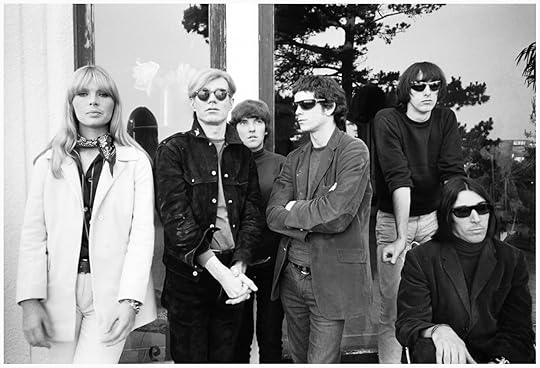
I think it's just about accurate to say I loved this book as much reading it again. My life has changed drastically since the first time back in 2016, and I am in a much better place now, irrespective of the chaos inherent in parenting a wayward toddler. This time, I could not say the experience introduced me more deeply to the vast work of Lou Reed, as that is what happened the first time, and I've been a great fan of his ever since.
However, it did still help me to renew my appreciation for him - and this time, going through his discography, some stuff that didn't really interest me that much before now does resonate with me. Being married now, and with a child, the mature themes explored in Reed's later, heart-wrenching album Magic and Loss really hit me hard. And so too did I find myself admiring his famously late-to-be-appreciated masterpiece, Berlin, which I did also like the first time hearing it. Just found some of the songs had that much more of an emotional punch this time - The Kids is an excellent song.
I still stand by my criticisms of Bockris's focus on Laurie Anderson's work, and his cringey fanboy interpolations about the dialogue Lou and Laurie had between certain albums. It is really a weak note to basically end the book on, although I was somewhat more fascinated with the extremely positive perspective taken on Lulu, which I understand to be one of the most loathed rock n' roll albums ever made. Personally, I have not greatly warmed to the album yet, but I certainly don't think it's an awful album. I feel like you have to be a true fan of Lou Reed (evidently not so much of Metallica), and you need to really have followed the guy's entire musical journey, to even begin to appreciate what's actually going on in that last, most divisive album of his catalogue (although one mustn't forget Metal Machine Music either).
On noticing that many people did not like this book, I can see in some ways where they are coming from. The writing isn't always so spectacular, and the editing is sometimes embarrassing. But, much like what they say was so effective in the early Velvet Underground albums, the roughness and the mess is part of what makes the overall atmosphere so much more potent. In other words, this at-times messy book feels, to me, like an appropriate vehicle with which to follow the tragic, terrible and truly magnificent enigma that was Lou Reed.
Favourite stuff of his: Basically the whole first album by the Velvet Underground (and poor Nico!). It's an alternative/rock classic. Likewise, Transformer, Reed's second album, is a banger from start to end. A perfect album, up there with the Smashing Pumpkins' Siamese Dream. Berlin - a great album. Then there are many wonderful songs hidden amongst the not so great in all his other albums. His two masterpieces: 'Perfect Day' (a favourite ever since I was a child, barely even five), and 'Street Hassle', which I think is his greatest and most powerful song.