

What do you think?
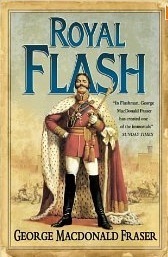
Flashman Papers #2
Royal Flash
In volume 2 of The Flashman Papers, Flashman tangles with femme fatale Lola Montez and the dastardly Otto Von Bismarck in a battle of wits which will decide the destiny of a continent.
Flashman, the arch-cad and toady, matches his wits, his talents for deceit and malice, and above all his speed in evasion against the most brilliant European statesman and against the most beautiful and unscrupulous adventuress of the era.
From London gaming halls and English hunting fields to European dungeons and throne rooms, he is involved in a desperate succession of escapes, disguises, amours, and (when he cannot avoid them) hand-to-hand combats. All the while the destiny of a continent rests on his broad and failing shoulders.
Flashman, the arch-cad and toady, matches his wits, his talents for deceit and malice, and above all his speed in evasion against the most brilliant European statesman and against the most beautiful and unscrupulous adventuress of the era.
From London gaming halls and English hunting fields to European dungeons and throne rooms, he is involved in a desperate succession of escapes, disguises, amours, and (when he cannot avoid them) hand-to-hand combats. All the while the destiny of a continent rests on his broad and failing shoulders.
304 pages, Paperback
First published January 1, 1970
About the author
George MacDonald Fraser
102 books705 followersGeorge MacDonald Fraser is best known for his Flashman series of historical novels, purportedly written by Harry Flashman, a fictional coward and bully originally created by Thomas Hughes in Tom Brown's School Days. The novels are presented as "packets" of memoirs written by the nonagenarian Flashman, who looks back on his days as a hero of the British Army during the 19th century. The series begins with Flashman, and is notable for the accuracy of the historical settings and praise from critics. P.G. Wodehouse said of Flashman, “If ever there was a time when I felt that ‘watcher-of-the-skies-when-a-new-planet’ stuff, it was when I read the first Flashman.”
Ratings & Reviews
Friends & Following
Create a free account to discover what your friends think of this book!
Community Reviews
Displaying 1 - 30 of 414 reviews

March 5, 2010
Last week I finally got around to reading Les Trois Mousquetaires, and this week, more or less by accident, I read Royal Flash. They're both excellent historical thrillers, and it's interesting to compare them. MacDonald Fraser is following very much in Dumas's footsteps. He takes real historical events from the mid-19th century, and recasts them so that history is no longer an inevitable unfolding of grand themes, but rather a haphazard collection of accidents, more often than not turning on who happens to be sleeping with whom. The first two paragraphs sum it up brilliantly:
The most obvious difference, of course, is in the treatment of Honour, and at first sight the two books give diametrically opposing views. D'Artagnan is superficially portrayed as a classical hero, driven by the purest of motives; his courage, his loyalty to his friends, his love for Mme. Bonacieux and his devotion to the Queen. Flashman, in contrast, is by his own admission an utter scoundrel. Given that Les Trois Mousquetaires was apparently written by two people, I do wonder whether D'Artagnan's interesting character is a serendipidous product of creative differences. On several occasions, he behaves every bit as badly as Flashman. He steals money from his landlord, while simultaneously trying to seduce his wife; he more or less rapes Ketty, then uses her to get close to Milady; he intercepts private letters from Milady to de Wardes, and exploits them to turn her against him.
D'Artagnan does all these very bad things, but somehow never really admits to himself what he's up to. He always has some handy excuse available; he's doing it for Mme. Bonacieux or for the Queen, or his victims were evil people who anyway had it coming. The engaging thing about Flashman, in contrast, is his straightforwardness. He never tries to excuse anything, but frankly admits that he's a bully, a heartless exploiter of women, and, when necessary, a cold-blooded killer. But, at the same time, I wonder whether he isn't also distorting the truth, this time in the opposite direction. If he were the snivelling coward he likes to claim he is, could he really have had all these hair-raising adventures, and would he have been quite so magnetically attractive to women? Despite everything, you feel that, somehow, he isn't such a terrible person after all.
The thing that's common to both books, it seems to me, is the way in which they subvert staple characters in the adventure story genre, and turn them into real people. D'Artagnan's a hero, but he could go over to the Dark Side at any moment. Flashman's a villain, but sometimes, to his and the reader's surprise, he finds his heart touched by love and affection. I wonder what would happen if they ever met? Perhaps D'Artagnan would challenge Flashman to a duel, to avenge some slight to a great lady's reputation, or perhaps they'd go off together to the best brothel in Paris and indulge themselves until daybreak. I think it would all turn on some trifle: a dropped handkerchief, or what one of them had for breakfast. Life doesn't make as much sense as we want it to, and both of these authors do a wonderful job of capturing its unpredictability.
If I had been the hero everyone thought I was, or even a half-decent soldier, Lee would have won the battle of Gettyburg and probably captured Washington. That is another story, which I shall set down in its proper place if brandy and old age don't carry me off first, but I mention the fact here because it shows how great events are decided by trifles.Nevertheless, Fraser, like Dumas, simultaneously pays his respects to the Men of Destiny; his portrayal of the young Bismarck has not a little in common with Dumas's treatment of Richelieu.
Scholars, of course, won't have it so. Policies, they say, and the subtly laid schemes of statesment, are what influence the destinies of nations; the opinions of intellectuals, the writings of philosophers, settle the fate of mankind. Well, they may do their share, but in my experience the course of history is as often settled by someone's having a belly-ache, or not sleeping well, or some aristocratic harlot waggling her backside.
The most obvious difference, of course, is in the treatment of Honour, and at first sight the two books give diametrically opposing views. D'Artagnan is superficially portrayed as a classical hero, driven by the purest of motives; his courage, his loyalty to his friends, his love for Mme. Bonacieux and his devotion to the Queen. Flashman, in contrast, is by his own admission an utter scoundrel. Given that Les Trois Mousquetaires was apparently written by two people, I do wonder whether D'Artagnan's interesting character is a serendipidous product of creative differences. On several occasions, he behaves every bit as badly as Flashman. He steals money from his landlord, while simultaneously trying to seduce his wife; he more or less rapes Ketty, then uses her to get close to Milady; he intercepts private letters from Milady to de Wardes, and exploits them to turn her against him.
D'Artagnan does all these very bad things, but somehow never really admits to himself what he's up to. He always has some handy excuse available; he's doing it for Mme. Bonacieux or for the Queen, or his victims were evil people who anyway had it coming. The engaging thing about Flashman, in contrast, is his straightforwardness. He never tries to excuse anything, but frankly admits that he's a bully, a heartless exploiter of women, and, when necessary, a cold-blooded killer. But, at the same time, I wonder whether he isn't also distorting the truth, this time in the opposite direction. If he were the snivelling coward he likes to claim he is, could he really have had all these hair-raising adventures, and would he have been quite so magnetically attractive to women? Despite everything, you feel that, somehow, he isn't such a terrible person after all.
The thing that's common to both books, it seems to me, is the way in which they subvert staple characters in the adventure story genre, and turn them into real people. D'Artagnan's a hero, but he could go over to the Dark Side at any moment. Flashman's a villain, but sometimes, to his and the reader's surprise, he finds his heart touched by love and affection. I wonder what would happen if they ever met? Perhaps D'Artagnan would challenge Flashman to a duel, to avenge some slight to a great lady's reputation, or perhaps they'd go off together to the best brothel in Paris and indulge themselves until daybreak. I think it would all turn on some trifle: a dropped handkerchief, or what one of them had for breakfast. Life doesn't make as much sense as we want it to, and both of these authors do a wonderful job of capturing its unpredictability.

May 29, 2022
Book two of Flashman's adventures see him wrapped up with historical figures Lola Montez and Otto von Bismarck.
I admit I needed to look up Lola Montez (Eliza Rosanna Gilbert), who has a detailed write up in Wikipedia. However I think Fraser used some artistic license when Flashman (more than once) refers to her as the most beautiful woman in the world, as most of the Wikipedia photographs don't bear that out, especially the Joseph Heigel portrait.
Again Fraser has done a masterful job of inserting Flashman into historic events, although in this story involves a considerable number of fictional characters and a fictional state between Denmark and Germany where the primary action takes place.
Set initially in London in the years after Flashman's return from Afghanistan (1842-43) where he is biding his time, he meets Rosanna Gilbert in the company of a young Otto von Bismark. Von Bismark takes (of course) a dislike our main character, and other events in which Flashman does little to endear himself to von Bismark, return to do him ill later in the book.
I enjoy the way Fraser writes Flashman's 'memoirs' - with plenty of self-reflection. Flashman's own self analysis and recognition of poor decision making (he reflects on whether he would have ever been remembered by von Bismark if he had not continued to needle the man); similarly, this interactions with Lola Montez are perhaps cumulative in her final act towards Flashman, who quickly forgets his past actions, living in the moment as he does. Also enjoyable is how such a self-confessed coward, when backed against the wall, commits himself fully, and puts up a better than average fight.
But I have skipped ahead. The majority of the story skips over a gap of several year (later filled by Flashman's Lady, and Flashman and the Mountain of Light) to take place in 1847 & 1848. The plot revolves around the Schleswig–Holstein question - better googled than relying on me explaining it - should you require more than this quote I enjoyed from the book:
It is here that Fraser introduces a fictional state he calls Strackenz, which nestles with Schleswig and Holstein geographically. To avoid spoilers I won't go further in plot outlines, except to say near the end of the story Flashman says he shared his story only once, with a man who went on to publish a successful book with many similarities (and he didn't even bother to change most of the names). Other reviewers name this, I won't ruin the surprise.
Otherwise, Flashman is his lovable/hatable self.
4.5 stars - rounded down, because this fall just short of the first Flashman.
I admit I needed to look up Lola Montez (Eliza Rosanna Gilbert), who has a detailed write up in Wikipedia. However I think Fraser used some artistic license when Flashman (more than once) refers to her as the most beautiful woman in the world, as most of the Wikipedia photographs don't bear that out, especially the Joseph Heigel portrait.
Again Fraser has done a masterful job of inserting Flashman into historic events, although in this story involves a considerable number of fictional characters and a fictional state between Denmark and Germany where the primary action takes place.
Set initially in London in the years after Flashman's return from Afghanistan (1842-43) where he is biding his time, he meets Rosanna Gilbert in the company of a young Otto von Bismark. Von Bismark takes (of course) a dislike our main character, and other events in which Flashman does little to endear himself to von Bismark, return to do him ill later in the book.
I enjoy the way Fraser writes Flashman's 'memoirs' - with plenty of self-reflection. Flashman's own self analysis and recognition of poor decision making (he reflects on whether he would have ever been remembered by von Bismark if he had not continued to needle the man); similarly, this interactions with Lola Montez are perhaps cumulative in her final act towards Flashman, who quickly forgets his past actions, living in the moment as he does. Also enjoyable is how such a self-confessed coward, when backed against the wall, commits himself fully, and puts up a better than average fight.
But I have skipped ahead. The majority of the story skips over a gap of several year (later filled by Flashman's Lady, and Flashman and the Mountain of Light) to take place in 1847 & 1848. The plot revolves around the Schleswig–Holstein question - better googled than relying on me explaining it - should you require more than this quote I enjoyed from the book:
"Let me begin by asking you a question," [von Bismark] says. "What do you know of Schleswig and Holstein?"
"Never even met 'em," says I. Rudi laughed aloud, and de Gaulet gave his sidelong smile.
Bismark didn't show any amusement. "They are states," he said "not persons. I will tell you about them." And he began to explain what historians call the 'Schleswig–Holstein question.' I won't bore you with it here, because even diplomats agree it is the most infernally complex affair that ever bedevilled European politics.
It is here that Fraser introduces a fictional state he calls Strackenz, which nestles with Schleswig and Holstein geographically. To avoid spoilers I won't go further in plot outlines, except to say near the end of the story Flashman says he shared his story only once, with a man who went on to publish a successful book with many similarities (and he didn't even bother to change most of the names). Other reviewers name this, I won't ruin the surprise.
Otherwise, Flashman is his lovable/hatable self.
4.5 stars - rounded down, because this fall just short of the first Flashman.
February 11, 2026
... this is the true story of a dishonest poltroon who takes a perverse pride in having attained to an honoured and admired old age, in spite of his many vices and entire lack of virtue – or possibly because of them.
Second extract from the memoirs of Sir Harry Paget Flashman, the reluctant swashbuckler of the Victorian Era, the one who would rather flee than fight yet ends up as the celebrated hero for other men’s valour.
First book introduces the character, from his school days as a bully to his early military career that eventually lands him in Kabul during the First Afghan War. Returned to London and to his libertine wife Elspeth, Flashman lives the good life of a wastrel, drinking and gambling and chasing skirts. He is already past his due date as a Regency rake, but that doesn’t cut into his aplomb.
We were entering into what is now called the Victorian Age, when respectability was the thing; breeches were out and trousers came in; bosoms were being covered and eyes modestly lowered; politics was becoming sober, trade and industry were becoming fashionable, the odour of sanctity was replacing the happy reek of brandy, the age of the Corinthian, the plunger, and the dandy was giving way to that of the prig, the preacher, and the bore.
Two other visitors to London in 1842 cross paths with Harry and find reasons to hate his guts, leading to momentous events that will soon change the political landscape in Europe. Flashman is, or at least he claims to be, the kind of pebble that overturns the chariots of history. Accidentally, of course.
The two celebrities in question are Otto von Bismarck and Lola Montez. The beautiful and fire-tempered courtesan saves Harry from a police chase and briefly becomes his lover:
As anyone will tell you, put Harry Flashman next to a woman like that and one of two things is inevitable – there will be either a scream and slaps, or the lady will surrender. Sometimes both.
When Harry shows his true nature of a cad, the Irish Lola smashes several pieces of furniture and swears revenge. Bismarck, on a personal visit to London before turning into the political powerhouse that would dominate Prussia, starts by resenting Harry for stealing Lola from him, then for mocking the foreigner over horsemanship and honor. Another lifetime enmity is born.
Although they are not a major factor in the plot, two areas of proficiency are mentioned as a counterpoint to his less than savoury talents: horsemanship and foreign languages. Both assets are used in this second book for plot coherence.
There is a moment every jockey knows, when he feels his mount surge forward, and he lies with his head down being brushed by the mane, and sees the gap narrowing ahead of him, and knows he has the legs of the field.
While not raising to the lyricism of a Dick Francis racing novel, the chapter describing a wild steeplechase race with Flashman and Bismarck is not only useful in underlining the character of the players but also very well written and memorable. An evening at a gentleman’s club in London in the company of a bare-knuckle champion is also historically accurate and key to understanding the rivalry between Flashman and Bismarck.
>>><<<>>><<<
With the introduction out of the way and with the three-way tension between Flashman, Bismarck and Lola Montez established, it is time to get at the meat of the story, which takes Flashy in 1848 first to Munich and later to the tiny dukedom of Strackenz (fictional, but neighbour to the more famous Schleswig-Holstein)
Both Germany and Denmark claimed Schleswig and Holstein, and the people living there were forever arguing about who they should belong to.
There is no need to describe the plot, because it is so famous it has created its own literary subgenre, known as Ruritanian Romance, after the original novel The Prisoner of Zenda . Harry Flashman, never known for his modesty or for any particular shyness in claiming credit for other people’s hard work, explains that it was Anthony Hope who has stolen the idea from him:
Only once did I tell the tale, and that was privately some years ago, to young Hawkins, the lawyer – I must have been well foxed, or he was damned persuasive – and he used it for the stuff of one of his romances, which sells very well, I’m told.
This deceit is also useful for George MacDonald Fraser, who follows the plot of Zenda almost to the letter, the only major departure being the despicable character and self-interest of Flashy, source of most of the humor in the novel. I feel any red-blooded modern lady should cheer for Lola Montez and for gentle, principled Duchess Irma against our dastardly Flashman:
Formal chit-chat isn’t my style – a little gallantry, a few jocularities to see if she will or she won’t, a pinch on the buttocks, and off we go. Either that, or off I go.
>>><<<>>><<<
The Flashman series is great fun for those who don’t try to read too much in the gender roles and in the liberties taken with historical fact. The books are very well researched and filled with guest appearances of major political and cultural icons of the period. Here, we have a glimpse of Ludwig I of Bavaria, whose affair with Lola is well documented, Franz Liszt, also assigned as her lover, Karl Marx, Richard Wagner, John Gully (champion boxer) and many others.
The political context is clearly explained but not allowed to overshadow the swashbuckling nature of the series. Even if Harry is a self-confessed coward, he will eventually turn back and fight like a cornered rat when all other options to flee have been exhausted. Flashy can also admit to his respect for the true adventurers of his epoch:
They are rare, but they do exist, and you can only call them adventurers. Rudi was one; it was the excitement, the mischief, that he lived for, more than the reward; the game, not the prize. Mad as hatters, mark you, and dangerous as sharks – they are not to be judged by the standards of yellow-bellies like me.
Royal Flash is the only book in the twelve part series to be filmed so far, by Richard Lester in 1975, probably because the plot is so instantly recognizable. I plan to try and find a copy and watch it soon.
Second extract from the memoirs of Sir Harry Paget Flashman, the reluctant swashbuckler of the Victorian Era, the one who would rather flee than fight yet ends up as the celebrated hero for other men’s valour.
First book introduces the character, from his school days as a bully to his early military career that eventually lands him in Kabul during the First Afghan War. Returned to London and to his libertine wife Elspeth, Flashman lives the good life of a wastrel, drinking and gambling and chasing skirts. He is already past his due date as a Regency rake, but that doesn’t cut into his aplomb.
We were entering into what is now called the Victorian Age, when respectability was the thing; breeches were out and trousers came in; bosoms were being covered and eyes modestly lowered; politics was becoming sober, trade and industry were becoming fashionable, the odour of sanctity was replacing the happy reek of brandy, the age of the Corinthian, the plunger, and the dandy was giving way to that of the prig, the preacher, and the bore.
Two other visitors to London in 1842 cross paths with Harry and find reasons to hate his guts, leading to momentous events that will soon change the political landscape in Europe. Flashman is, or at least he claims to be, the kind of pebble that overturns the chariots of history. Accidentally, of course.
The two celebrities in question are Otto von Bismarck and Lola Montez. The beautiful and fire-tempered courtesan saves Harry from a police chase and briefly becomes his lover:
As anyone will tell you, put Harry Flashman next to a woman like that and one of two things is inevitable – there will be either a scream and slaps, or the lady will surrender. Sometimes both.
When Harry shows his true nature of a cad, the Irish Lola smashes several pieces of furniture and swears revenge. Bismarck, on a personal visit to London before turning into the political powerhouse that would dominate Prussia, starts by resenting Harry for stealing Lola from him, then for mocking the foreigner over horsemanship and honor. Another lifetime enmity is born.
Although they are not a major factor in the plot, two areas of proficiency are mentioned as a counterpoint to his less than savoury talents: horsemanship and foreign languages. Both assets are used in this second book for plot coherence.
There is a moment every jockey knows, when he feels his mount surge forward, and he lies with his head down being brushed by the mane, and sees the gap narrowing ahead of him, and knows he has the legs of the field.
While not raising to the lyricism of a Dick Francis racing novel, the chapter describing a wild steeplechase race with Flashman and Bismarck is not only useful in underlining the character of the players but also very well written and memorable. An evening at a gentleman’s club in London in the company of a bare-knuckle champion is also historically accurate and key to understanding the rivalry between Flashman and Bismarck.
>>><<<>>><<<
With the introduction out of the way and with the three-way tension between Flashman, Bismarck and Lola Montez established, it is time to get at the meat of the story, which takes Flashy in 1848 first to Munich and later to the tiny dukedom of Strackenz (fictional, but neighbour to the more famous Schleswig-Holstein)
Both Germany and Denmark claimed Schleswig and Holstein, and the people living there were forever arguing about who they should belong to.
There is no need to describe the plot, because it is so famous it has created its own literary subgenre, known as Ruritanian Romance, after the original novel The Prisoner of Zenda . Harry Flashman, never known for his modesty or for any particular shyness in claiming credit for other people’s hard work, explains that it was Anthony Hope who has stolen the idea from him:
Only once did I tell the tale, and that was privately some years ago, to young Hawkins, the lawyer – I must have been well foxed, or he was damned persuasive – and he used it for the stuff of one of his romances, which sells very well, I’m told.
This deceit is also useful for George MacDonald Fraser, who follows the plot of Zenda almost to the letter, the only major departure being the despicable character and self-interest of Flashy, source of most of the humor in the novel. I feel any red-blooded modern lady should cheer for Lola Montez and for gentle, principled Duchess Irma against our dastardly Flashman:
Formal chit-chat isn’t my style – a little gallantry, a few jocularities to see if she will or she won’t, a pinch on the buttocks, and off we go. Either that, or off I go.
>>><<<>>><<<
The Flashman series is great fun for those who don’t try to read too much in the gender roles and in the liberties taken with historical fact. The books are very well researched and filled with guest appearances of major political and cultural icons of the period. Here, we have a glimpse of Ludwig I of Bavaria, whose affair with Lola is well documented, Franz Liszt, also assigned as her lover, Karl Marx, Richard Wagner, John Gully (champion boxer) and many others.
The political context is clearly explained but not allowed to overshadow the swashbuckling nature of the series. Even if Harry is a self-confessed coward, he will eventually turn back and fight like a cornered rat when all other options to flee have been exhausted. Flashy can also admit to his respect for the true adventurers of his epoch:
They are rare, but they do exist, and you can only call them adventurers. Rudi was one; it was the excitement, the mischief, that he lived for, more than the reward; the game, not the prize. Mad as hatters, mark you, and dangerous as sharks – they are not to be judged by the standards of yellow-bellies like me.
Royal Flash is the only book in the twelve part series to be filmed so far, by Richard Lester in 1975, probably because the plot is so instantly recognizable. I plan to try and find a copy and watch it soon.

August 14, 2015
Sir Harry Flashman, highly decorated officer of the 11th Light Dragoons, is a cad, a chauvinist, a misogynist, an adulterer, and most of all a coward. His positive qualities consist of having a natural gift for foreign tongues (in this case this can be interpreted as a double entendre ), being a good rider, and having a strong sword arm. What lacks is character. His 'achievements' in his military enterprises are mostly due to either blind luck, running away from danger, a talent for snatching glory from others far more deserving, or a combination thereof.
In other words, old Flashy is a sort of grotesque -yet glorious- Frankenstein's monster of many of the negative stereotypes often associated with the upper class English soldier in the era of the British Empire.
In his posthumously discovered memoirs, a retired Flashman regales his hypothetical audience with various tales of his 'illustrious' career. And it most certainly can be called that, but not in the manner many think it is. No grand, sweeping statements are to be found about the supposed heroism of war, and especially not about himself. He presents the unvarnished truth as he sees it, while being quite proud of it too.
I find myself wondering whether such a character (if it was published now) would be embraced in our own rather politically correct, hypervigilant times, even if this series of novels can not be interpreted in any other way than as being nothing more than highly diverting, escapist parodies.
However, Royal Flash is rather tame (and by extension not as intriguing) in comparison with the excellent original, which I highly recommend. Here we find Flashman as a far more toned down and passive character, an eternal victim of various villainous schemes and unforeseen circumstances. He still is an unabashed womanizer, but the utter brutishness and callousness he displayed in his Afghan adventure has been taken down a couple of notches. Did Fraser fear that he might have gone a tad too far when he started out? The line between an anti-hero and a villain is a very fine one, indeed. It might be prudent to maintain a balance.
This doesn't mean this is not an outstanding piece of adventure fiction. Au contraire, it most certainly is. Any time spent with Flashman most definitely is a joy. It just suffers from immediately following its superior predecessor. The narrative didn't grip me as much. Perhaps I was spoiled from the very beginning, and there is no hope of retrieving that initial high. However, my sources have divulged to me that the next entries are considered to be the best of the series, so I will most certainly proceed with learning all there is to know about our good old Flashman. God bless him, the dastardly bastard.
In other words, old Flashy is a sort of grotesque -yet glorious- Frankenstein's monster of many of the negative stereotypes often associated with the upper class English soldier in the era of the British Empire.
In his posthumously discovered memoirs, a retired Flashman regales his hypothetical audience with various tales of his 'illustrious' career. And it most certainly can be called that, but not in the manner many think it is. No grand, sweeping statements are to be found about the supposed heroism of war, and especially not about himself. He presents the unvarnished truth as he sees it, while being quite proud of it too.
I find myself wondering whether such a character (if it was published now) would be embraced in our own rather politically correct, hypervigilant times, even if this series of novels can not be interpreted in any other way than as being nothing more than highly diverting, escapist parodies.
However, Royal Flash is rather tame (and by extension not as intriguing) in comparison with the excellent original, which I highly recommend. Here we find Flashman as a far more toned down and passive character, an eternal victim of various villainous schemes and unforeseen circumstances. He still is an unabashed womanizer, but the utter brutishness and callousness he displayed in his Afghan adventure has been taken down a couple of notches. Did Fraser fear that he might have gone a tad too far when he started out? The line between an anti-hero and a villain is a very fine one, indeed. It might be prudent to maintain a balance.
This doesn't mean this is not an outstanding piece of adventure fiction. Au contraire, it most certainly is. Any time spent with Flashman most definitely is a joy. It just suffers from immediately following its superior predecessor. The narrative didn't grip me as much. Perhaps I was spoiled from the very beginning, and there is no hope of retrieving that initial high. However, my sources have divulged to me that the next entries are considered to be the best of the series, so I will most certainly proceed with learning all there is to know about our good old Flashman. God bless him, the dastardly bastard.

July 30, 2013
For you poor folks who have never heard of the Flashman series, they tell the story of your classic Victorian adventurer, a man who travels through many lands, making his way by his wits and his skill and always being drawn into the dangers of politics, secret plots, and local politics. But the hero of these stories comes with a twist: he's an awful cad who lies, cheats, and steals his way through the world, a coward who only survives by the skin of his teeth, but who pretends the role of the brave, bluff Brit.
The books are well-researched, full of delightful details and references for anyone interested in the period, as well as a vivid reconstruction of archaic slang. However, I find I liked the first book much better than the second one. For one, the character of Flash is much more of a rascal there--many of the things he does make you dislike the character greatly, despite his forthright charm. In this one, I wondered if MacDonald might have been making him a little more heroic, a little more sympathetic.
Along the same line, most of the difficulties he gets embroiled in throughout the course of this book--the very things that drive the plot--are thrust upon him, leaving him a much less active character. He's kidnaped, blackmailed, and forced at gunpoint to take part in various plots, instead of being trapped into them by his own faults and greed, as he was in the first volume.
But then, that's part of the problem of a cowardly character: how do you make him an active agent in his own story without forcing his hand? How do you ensure that the mess he's in really is his own fault, and not merely a contrived circumstance that forces him to act against his own nature?
Without that culpability, he begins to become a victim, a lowly and sympathetic figure instead of the brash, bold personality which he is meant to be. We do get him taking a risk here or there for the sake of lucre, but pure greed isn't the most complex or intriguing of character motivations.
Hopefully in future volumes, I'll get to see him return to his old form--because other than that, this book is a delightful bit of adventure fiction.
The books are well-researched, full of delightful details and references for anyone interested in the period, as well as a vivid reconstruction of archaic slang. However, I find I liked the first book much better than the second one. For one, the character of Flash is much more of a rascal there--many of the things he does make you dislike the character greatly, despite his forthright charm. In this one, I wondered if MacDonald might have been making him a little more heroic, a little more sympathetic.
Along the same line, most of the difficulties he gets embroiled in throughout the course of this book--the very things that drive the plot--are thrust upon him, leaving him a much less active character. He's kidnaped, blackmailed, and forced at gunpoint to take part in various plots, instead of being trapped into them by his own faults and greed, as he was in the first volume.
But then, that's part of the problem of a cowardly character: how do you make him an active agent in his own story without forcing his hand? How do you ensure that the mess he's in really is his own fault, and not merely a contrived circumstance that forces him to act against his own nature?
Without that culpability, he begins to become a victim, a lowly and sympathetic figure instead of the brash, bold personality which he is meant to be. We do get him taking a risk here or there for the sake of lucre, but pure greed isn't the most complex or intriguing of character motivations.
Hopefully in future volumes, I'll get to see him return to his old form--because other than that, this book is a delightful bit of adventure fiction.

December 9, 2025
Glad I'm reading these out of order, because if this was my second Flashman, there might never have been a third — this was just a real disappointment after the brilliance of Flashy's historically-based debut, set during the First Afghan War and establishing his totally undeserved reputation for all his adventures to follow.
DISCLAIMER: I'm not a particular fan of anything set in Germany; I think all those Cold War spy stories (especially le Carré) just burned me out on the place. But that aside, this was still a demonstrably more lackluster story that suffered from two major weaknesses. First, this was the only Flashman book with no actual basis in history, in that aside from cameo appearances by Otto von Bismarck and Lola Montez, all characters, events and even settings here are all made up, which removes over half the fun of any Flashman story; i.e., seeing how he pops up Zelig-like in all the actual historical events of his time. And second, the whole story is based on one of the most overused and implausible tropes in fiction (see everyone from Anthony Hope to Mark Twain to Tom Cruise to Mickey Mouse): the perfect doppelganger, or "why, they could be twins! With a different haircut, no one could tell them apart — let's switch 'em!".
That said, Fraser even here is a great writer and Flashman is a great character; and sure, this WAS just his second story, and they can't all be home runs. Plus, Fraser introduces a few key concepts that then work for him throughout the series: Flashman's preternatural ability to quickly learn languages, which allows both he and Fraser to gloss over all future "but how did they communicate?" problems; and the unexplained time gaps in his narratives, which allow them to go back and fill in the blanks in future stories. In this case, the story begins with a brief episode in 1843, then jumps ahead four years to Flashman "returning from abroad" in 1847 to pick up the story again; Fraser later fills in this gap with the 6th and 9th books in the series, set in Singapore, Borneo, Madagascar and India — which makes it all the more remarkable that in this book Flashman notes that he had never been to either Paris or Germany before, (obviously, a man after my own heart).
Sadly, this was the only Flashman story ever turned into a movie (1975)…and it was (and still is) just AWFUL. A bad copy is available on YouTube (and nowhere else, for good reason) — but PLEASE don't watch it. Malcolm McDowell is unbelievably miscast as Flashman, although Oliver Reed and Alan Bates do their best as villains.* But it's hard to believe Fraser himself turned his own mediocre book into an even worse screenplay;** it is silly and stupid and poorly directed by Richard Lester, who was just coming off his successful "Three" and "Four Musketeers" films, and somehow produced this stinker before returning to form in 1976 with "Robin and Marian," (which coincidentally also capped the best year of Sean Connery's total career, which also included "The Man Who Would Be King" and "The Wind and the Lion").
As Fraser's books were NOT published in historical order, I recommend reading them in basically any other order than publication date, saving this one for well near the end (if you choose to read it at all). This was my 10th Flashman with only two left to go (both set in the American west — bo-ring), so let's just call this the odd man out in an otherwise great series. But as such, and especially when compared to Fraser's other works, it's still deserving of just two stars at best, especially considering there were still a number of far better stories Fraser could have given us instead, such as Flashman at either Gettysburg or Khartoum, both of which are alluded to in other stories.
* Sadly, this was just the second and last time these two legends shared the screen, after Ken Russell's 1969 "Women in Love," remembered mainly— if at all — for its nude male wrestling scene, (or so I'm told).
** So apparently Fraser's just bad at movies; as noted previously, he also wrote the ridiculous screenplay for "Octopussy," inarguably one of the very worst James Bond films.
DISCLAIMER: I'm not a particular fan of anything set in Germany; I think all those Cold War spy stories (especially le Carré) just burned me out on the place. But that aside, this was still a demonstrably more lackluster story that suffered from two major weaknesses. First, this was the only Flashman book with no actual basis in history, in that aside from cameo appearances by Otto von Bismarck and Lola Montez, all characters, events and even settings here are all made up, which removes over half the fun of any Flashman story; i.e., seeing how he pops up Zelig-like in all the actual historical events of his time. And second, the whole story is based on one of the most overused and implausible tropes in fiction (see everyone from Anthony Hope to Mark Twain to Tom Cruise to Mickey Mouse): the perfect doppelganger, or "why, they could be twins! With a different haircut, no one could tell them apart — let's switch 'em!".
That said, Fraser even here is a great writer and Flashman is a great character; and sure, this WAS just his second story, and they can't all be home runs. Plus, Fraser introduces a few key concepts that then work for him throughout the series: Flashman's preternatural ability to quickly learn languages, which allows both he and Fraser to gloss over all future "but how did they communicate?" problems; and the unexplained time gaps in his narratives, which allow them to go back and fill in the blanks in future stories. In this case, the story begins with a brief episode in 1843, then jumps ahead four years to Flashman "returning from abroad" in 1847 to pick up the story again; Fraser later fills in this gap with the 6th and 9th books in the series, set in Singapore, Borneo, Madagascar and India — which makes it all the more remarkable that in this book Flashman notes that he had never been to either Paris or Germany before, (obviously, a man after my own heart).
Sadly, this was the only Flashman story ever turned into a movie (1975)…and it was (and still is) just AWFUL. A bad copy is available on YouTube (and nowhere else, for good reason) — but PLEASE don't watch it. Malcolm McDowell is unbelievably miscast as Flashman, although Oliver Reed and Alan Bates do their best as villains.* But it's hard to believe Fraser himself turned his own mediocre book into an even worse screenplay;** it is silly and stupid and poorly directed by Richard Lester, who was just coming off his successful "Three" and "Four Musketeers" films, and somehow produced this stinker before returning to form in 1976 with "Robin and Marian," (which coincidentally also capped the best year of Sean Connery's total career, which also included "The Man Who Would Be King" and "The Wind and the Lion").
As Fraser's books were NOT published in historical order, I recommend reading them in basically any other order than publication date, saving this one for well near the end (if you choose to read it at all). This was my 10th Flashman with only two left to go (both set in the American west — bo-ring), so let's just call this the odd man out in an otherwise great series. But as such, and especially when compared to Fraser's other works, it's still deserving of just two stars at best, especially considering there were still a number of far better stories Fraser could have given us instead, such as Flashman at either Gettysburg or Khartoum, both of which are alluded to in other stories.
* Sadly, this was just the second and last time these two legends shared the screen, after Ken Russell's 1969 "Women in Love," remembered mainly— if at all — for its nude male wrestling scene, (or so I'm told).
** So apparently Fraser's just bad at movies; as noted previously, he also wrote the ridiculous screenplay for "Octopussy," inarguably one of the very worst James Bond films.

October 11, 2012
George MacDonald Fraser's second Flashman adventure is a slight downgrade from the original, but still a lot of ribald fun. Royal Flash has the dastardly Harry Flashman, Victorian war hero-coward extraordinaire, ensnared in international intrigue by Otto von Bismarck, who employs Harry as a pawn in his efforts to unify Germany. Specifically, he's blackmailed into impersonating the prince of a minor duchy that's key to Bismarck's plans, which prove to be far more nefarious than even Flashman anticipates. Yes, the main plot is a straight-up pastiche of The Prisoner of Zenda (which Fraser acknowledges by claiming Anthony Hope stole his novel's plot from the "real" Flashman!) with all the expected scheming, sword fights and pseudo-romantic entanglements, so there aren't many surprises in how the story plays out. Arguably the book's best passages are the extended prologue of Flashman matching wits with a young, humorless Bismarck (gulling the cranky Kraut into a boxing match with retired pugilist John Gully) in London, and his torrid affair with Lola Montez, the legendary beauty who also plays a role in Bismarck's scheme. One also relishes the cheerful duplicity of Bismarck's henchman Rudi von Starenberg, even if he too is taken straight from Zenda, if not the convoluted schemes of some Danish nationalists who factor into the third act. If Royal Flash can't beat the original, it's still a fun ride, as Flashman manages to luck and lech his way through situations that would destroy a man less cowardly. Made into a disappointing film with a miscast Malcolm McDowell as Flashman, and a wonderfully-cast Oliver Reed as Bismarck.

August 2, 2013
I didn’t like Royal Flash quite as much as the first book in the series, probably because this is the lone Flashman novel set in a fictional location (instead of throwing Flashy directly into real-world events). The Flashman books work (at least for me) on three different levels: there’s the adventure, the humor, and the historical fiction. The third element is a bit lacking due to the make-believe setting Flashman spends much of the book running around in. That doesn’t mean that there are no historical elements involved – Flashman ends up working for Otto von Bismarck on a wild scheme based on the very real Schleswig-Holstein Question, and runs into a number of other real characters from the 19th century (most notably Lola Montez). But I missed seeing ol’ Flashy thrown directly into actual events, and given that this is the first and only Flashman novel to put him in a fictional location, I’m guessing I’m not alone.
Fortunately, the adventure and humor are still top notch. As the title implies, Flashman finds himself being treated like royalty for much of the book, and Fraser has a lot of fun with this situation. Fraser also toned down Flashman’s faults a little bit from the first book – he’s still a cad, and really quite a bastard, but he doesn’t behave quite as poorly as in Flashman. The ludicrous scheme that Flashman gets involved in (which I won’t spoil) is very entertaining and sets up much more of a pulpy-adventure story (with some espionage elements) than the other Flashman stories. Even if I missed the history at times, it was still a ton of fun to read.
Overall this was my least favorite of the first four Flashman books, but as I love them all that’s not meant as a major mark against it. Royal Flash is still a page turner, and if you enjoyed the first entry in the series you should have a lot of fun with the sequel. I certainly did. 4 stars, recommended.
Fortunately, the adventure and humor are still top notch. As the title implies, Flashman finds himself being treated like royalty for much of the book, and Fraser has a lot of fun with this situation. Fraser also toned down Flashman’s faults a little bit from the first book – he’s still a cad, and really quite a bastard, but he doesn’t behave quite as poorly as in Flashman. The ludicrous scheme that Flashman gets involved in (which I won’t spoil) is very entertaining and sets up much more of a pulpy-adventure story (with some espionage elements) than the other Flashman stories. Even if I missed the history at times, it was still a ton of fun to read.
Overall this was my least favorite of the first four Flashman books, but as I love them all that’s not meant as a major mark against it. Royal Flash is still a page turner, and if you enjoyed the first entry in the series you should have a lot of fun with the sequel. I certainly did. 4 stars, recommended.

June 28, 2013
-Más aventuras de un bellaco gracioso.-
Género. Novela (y en cierto sentido, hasta Novela histórica).
Lo que nos cuenta. Se descubren más manuscritos de Harry Flashman, que el autor nos presenta con mínimas correcciones ortográficas, y que en esta ocasión nos cuentan el encuentro de Harry con Otto Von Bismarck en Londres mientras escapa de una redada en una casa de mala reputación, sus posteriores escarceos con Lola Montes y un viaje hasta Alemania que se acaba complicando bastante. Segundo libro de la serie de Harry Flashman.
¿Quiere saber más de este libro, sin spoilers? Visite:
http://librosdeolethros.blogspot.com/...
Género. Novela (y en cierto sentido, hasta Novela histórica).
Lo que nos cuenta. Se descubren más manuscritos de Harry Flashman, que el autor nos presenta con mínimas correcciones ortográficas, y que en esta ocasión nos cuentan el encuentro de Harry con Otto Von Bismarck en Londres mientras escapa de una redada en una casa de mala reputación, sus posteriores escarceos con Lola Montes y un viaje hasta Alemania que se acaba complicando bastante. Segundo libro de la serie de Harry Flashman.
¿Quiere saber más de este libro, sin spoilers? Visite:
http://librosdeolethros.blogspot.com/...
June 28, 2013
-Más aventuras de un bellaco gracioso.-
Género. Novela (y en cierto sentido, hasta Novela histórica).
Lo que nos cuenta. Se descubren más manuscritos de Harry Flashman, que el autor nos presenta con mínimas correcciones ortográficas, y que en esta ocasión nos cuentan el encuentro de Harry con Otto Von Bismarck en Londres mientras escapa de una redada en una casa de mala reputación, sus posteriores escarceos con Lola Montes y un viaje hasta Alemania que se acaba complicando bastante. Segundo libro de la serie de Harry Flashman.
¿Quiere saber más de este libro, sin spoilers? Visite:
http://librosdeolethros.blogspot.com/...
Género. Novela (y en cierto sentido, hasta Novela histórica).
Lo que nos cuenta. Se descubren más manuscritos de Harry Flashman, que el autor nos presenta con mínimas correcciones ortográficas, y que en esta ocasión nos cuentan el encuentro de Harry con Otto Von Bismarck en Londres mientras escapa de una redada en una casa de mala reputación, sus posteriores escarceos con Lola Montes y un viaje hasta Alemania que se acaba complicando bastante. Segundo libro de la serie de Harry Flashman.
¿Quiere saber más de este libro, sin spoilers? Visite:
http://librosdeolethros.blogspot.com/...

April 25, 2011
I have read a number of Flashman books before this one and usually in a series you get ones that are stellar and ones that just don't have that same spark.
I felt so-so about this one. It just didn't seem to have the same sparkle.
My forever favourite is still Flashman at the Charge. It was also the first one I ever read, and it was a revelation.
I adore the Flashman character even when I dislike him.
He is a character I at once love/hate. He's such a product of his age (Victorian), and has all the expected attitudes towards women and other cultures that you would expect from a a man of that era--so much so that he comes across as disgusting and vile at times. And of course he's a coward (though given the situations he often finds himself in, like war, I think I'd be a coward too.) He's also a bully--and there are times when I really dislike him. He also, however, has such moments of understanding, empathy, connection, gratitude--and refreshing honesty, that you connect with him. He's also scathingly funny at times.
The historical approach of these books is brilliant. It's like a 'behind the scenes' look at great moments of the Victorian Age, with Flashman being this 'unwitting' force causing notable events to happen (like the Charge of the Light Brigade in the book Flashman at the Charge). History truly comes alive in these books, some of the best historical writing I have ever read. Flashman is thoroughly embedded in his era, speaks confidently about his times, so that you really believe it. These books often have me looking up things I normally have no interest in (Victorian history is not really my thing). For instance, while reading this book, of course I looked up Bismark!
The use of footnotes in this series is also brilliant and clever. These book are written as though Flashman were an old man, writing down his remembrances and memoirs--and they've been 'discovered' by the author. The author then notes important points in the 'memoirs', explaining certain historical points, or comparing Flashman's version to other (true) versions, and also offering proof for Flashmans account based on these real resources. It's a brilliant amalgamation of truth/fiction--and again makes Flashman, and his historical time, seem alive and real..
So while I didn't like this book as much as other's I've read, it's still a brilliant series. My favourite book would deserve 5 stars, so a lesser book gets 4.
I'm still a big Flashman fan and intend to keep on reading the series til I'm done!
I felt so-so about this one. It just didn't seem to have the same sparkle.
My forever favourite is still Flashman at the Charge. It was also the first one I ever read, and it was a revelation.
I adore the Flashman character even when I dislike him.
He is a character I at once love/hate. He's such a product of his age (Victorian), and has all the expected attitudes towards women and other cultures that you would expect from a a man of that era--so much so that he comes across as disgusting and vile at times. And of course he's a coward (though given the situations he often finds himself in, like war, I think I'd be a coward too.) He's also a bully--and there are times when I really dislike him. He also, however, has such moments of understanding, empathy, connection, gratitude--and refreshing honesty, that you connect with him. He's also scathingly funny at times.
The historical approach of these books is brilliant. It's like a 'behind the scenes' look at great moments of the Victorian Age, with Flashman being this 'unwitting' force causing notable events to happen (like the Charge of the Light Brigade in the book Flashman at the Charge). History truly comes alive in these books, some of the best historical writing I have ever read. Flashman is thoroughly embedded in his era, speaks confidently about his times, so that you really believe it. These books often have me looking up things I normally have no interest in (Victorian history is not really my thing). For instance, while reading this book, of course I looked up Bismark!
The use of footnotes in this series is also brilliant and clever. These book are written as though Flashman were an old man, writing down his remembrances and memoirs--and they've been 'discovered' by the author. The author then notes important points in the 'memoirs', explaining certain historical points, or comparing Flashman's version to other (true) versions, and also offering proof for Flashmans account based on these real resources. It's a brilliant amalgamation of truth/fiction--and again makes Flashman, and his historical time, seem alive and real..
So while I didn't like this book as much as other's I've read, it's still a brilliant series. My favourite book would deserve 5 stars, so a lesser book gets 4.
I'm still a big Flashman fan and intend to keep on reading the series til I'm done!

May 31, 2010
It took me a long while to get into Royal Flash. It's written from the perspective of Harry Flashman, a cowardly, selfish, mysoginistic bully who is perfectly happy to take credit for anything he hasn't earned and driven largely by his lust. A classic anti-hero and not an easy character for me to relate to at all.
However it was highly recommended and I enjoyed the way the tawdry historical references (of the sort you never find in school history books) were woven so intrinsically into the story, so I persisted. By about a third of the way through I was enjoying it and by halfway I simply had to keep reading to the end in one go.
As a character I really appriecated the fact that Flashman owns all of his unappealing characteristics and doesn't ever pretend to be otherwise. I never quite found him endearing but I did find him a fascinating character and very well written, as were all of the secondary characters also. The voices rang true; the writing was engaging, if jarring due to the characterisations; and the plot was fabulous. I particularly enjoyed the historical references and context as well.
I strongly recommend it for friends who like a different read and who are prepared to invest some serious energy into getting into a book. For anyone who wants a light read laced with wish fulfillment fantasy, forget it!
I can't say I've come to love Flashman but I will thoroughly enjoy reading the rest of his papers over time.
However it was highly recommended and I enjoyed the way the tawdry historical references (of the sort you never find in school history books) were woven so intrinsically into the story, so I persisted. By about a third of the way through I was enjoying it and by halfway I simply had to keep reading to the end in one go.
As a character I really appriecated the fact that Flashman owns all of his unappealing characteristics and doesn't ever pretend to be otherwise. I never quite found him endearing but I did find him a fascinating character and very well written, as were all of the secondary characters also. The voices rang true; the writing was engaging, if jarring due to the characterisations; and the plot was fabulous. I particularly enjoyed the historical references and context as well.
I strongly recommend it for friends who like a different read and who are prepared to invest some serious energy into getting into a book. For anyone who wants a light read laced with wish fulfillment fantasy, forget it!
I can't say I've come to love Flashman but I will thoroughly enjoy reading the rest of his papers over time.

March 18, 2008
From BBC Radio 4 Extra:
Celebrated cavalry officer, Harry Flashman is caught with his trousers down in a London club. Read by Iain Cuthbertson.

Celebrated cavalry officer, Harry Flashman is caught with his trousers down in a London club. Read by Iain Cuthbertson.

December 7, 2018
A bit slower than the first volume and not quite as fun, but still a good read if you are a fan of the series.

May 5, 2012
Originally published on my blog here in July 1999.
The second of Fraser's Flashman series, Royal Flash is a spoof on Anthony Hope's classic The Prisoner of Zenda. It keeps fairly faithfully to the plot of Hope's novel, with the central part falling to the cowardly Flashman rather than the gallant Rudolf Rassendyll.
The major change made by Fraser is the motivation for the escapade. Flashman has no liking for adventure, and it requires both blackmail and force to get him to imitate Prince Carl Gustav. The plot is laid by Bismarck, and is an attempt to destabilise the border region between German states and Denmark, one of the more volatile parts of Europe in the mid-nineteenth century. (The border provinces of Schleswig and Holstein were claimed by both German patriots and the Danish state; the 'Schleswig-Holstein question' was made complicated by the fact that Germany was at the time fragmented into a large number of independent states.) Carl Gustav, a Danish prince, is set to marry Duchess Irma of Strackenz, a fictional, tiny state joining Schleswig and Holstein on the German-Danish border. Bismarck, realising Flashman's uncanny resemblance to Carl Gustav, intends to substitute him for the prince, and then reveal his identity, framing him as an agent of British Prime Minister Palmerston, engaged on some underhanded business. The purpose of this plot is to get both the Danes and Germans in Strackenz up in arms, provoking a general war in the region.
Of course, Flashman goes through the whole adventure quaking with terror. What will happen if someone finds out he isn't Carl Gustav? What will Bismarck do to keep him quiet even if he succeeds? The beginning of a trend which continues throughout the series can be seen in Royal Flash: the bullying unsympathetic side to Flashman begins to be suppressed, the comic element is emphasised. (I like the joke after Flashy, in his guise as the prince, sleeps with a chambermaid, and says to himself that if a child is born of the liaison, and grows up thinking himself closely related to royalty, he would truly be "an ignorant bastard".)
The second of Fraser's Flashman series, Royal Flash is a spoof on Anthony Hope's classic The Prisoner of Zenda. It keeps fairly faithfully to the plot of Hope's novel, with the central part falling to the cowardly Flashman rather than the gallant Rudolf Rassendyll.
The major change made by Fraser is the motivation for the escapade. Flashman has no liking for adventure, and it requires both blackmail and force to get him to imitate Prince Carl Gustav. The plot is laid by Bismarck, and is an attempt to destabilise the border region between German states and Denmark, one of the more volatile parts of Europe in the mid-nineteenth century. (The border provinces of Schleswig and Holstein were claimed by both German patriots and the Danish state; the 'Schleswig-Holstein question' was made complicated by the fact that Germany was at the time fragmented into a large number of independent states.) Carl Gustav, a Danish prince, is set to marry Duchess Irma of Strackenz, a fictional, tiny state joining Schleswig and Holstein on the German-Danish border. Bismarck, realising Flashman's uncanny resemblance to Carl Gustav, intends to substitute him for the prince, and then reveal his identity, framing him as an agent of British Prime Minister Palmerston, engaged on some underhanded business. The purpose of this plot is to get both the Danes and Germans in Strackenz up in arms, provoking a general war in the region.
Of course, Flashman goes through the whole adventure quaking with terror. What will happen if someone finds out he isn't Carl Gustav? What will Bismarck do to keep him quiet even if he succeeds? The beginning of a trend which continues throughout the series can be seen in Royal Flash: the bullying unsympathetic side to Flashman begins to be suppressed, the comic element is emphasised. (I like the joke after Flashy, in his guise as the prince, sleeps with a chambermaid, and says to himself that if a child is born of the liaison, and grows up thinking himself closely related to royalty, he would truly be "an ignorant bastard".)

November 22, 2016
Royal Flash is the 2nd book in the Flashman series by George MacDonald Fraser. This story was used for the movie (1975) starring Malcolm McDowell as the irrepressible Harry Flashman. The book was first published in 970.
Flashman is one of those heroes / anti-heroes like Sharpe and Horatio Hornblower. The difference is that Flashman is a rogue and a coward always looking out for number 1, AKA himself. In Royal Flash, a dalliance he has with an Irish beauty, during which he also meets Otto von Bismark (who he embarrasses) causes much tribulation in Flashman's future. He embarrasses this Lola Montez as well and she is used as bait to get Flashy into an untenable situation.
Flash is encouraged to go to Germany to help Lola with a situation. The combination of his troubles with his in-laws and a payment of a considerable amount of money sways him towards this voyage even though he wonders why Lola would want his help after what he has done to her.
This starts Flash on an unplanned adventure to a small state north of Germany where he is forced to impersonate a Crown Prince of Denmark, all part of the subterfuges of future Iron Chancellor, Bismark. It's a fun and adventure-filled story, with Flash both enjoying himself (heck, he does get to dally with a beautiful princess) and fighting to save his skin.
The story moves from London to Munich to northern Germany and the action flows easily along the route. The story is interesting and moves along nicely. How will it all turn out for Flashy? Well, there are another 10+ books in the series, so you can figure it out for yourself. If you want an enjoyable adventure, you might like the Flash series. (3.5 stars)
Flashman is one of those heroes / anti-heroes like Sharpe and Horatio Hornblower. The difference is that Flashman is a rogue and a coward always looking out for number 1, AKA himself. In Royal Flash, a dalliance he has with an Irish beauty, during which he also meets Otto von Bismark (who he embarrasses) causes much tribulation in Flashman's future. He embarrasses this Lola Montez as well and she is used as bait to get Flashy into an untenable situation.
Flash is encouraged to go to Germany to help Lola with a situation. The combination of his troubles with his in-laws and a payment of a considerable amount of money sways him towards this voyage even though he wonders why Lola would want his help after what he has done to her.
This starts Flash on an unplanned adventure to a small state north of Germany where he is forced to impersonate a Crown Prince of Denmark, all part of the subterfuges of future Iron Chancellor, Bismark. It's a fun and adventure-filled story, with Flash both enjoying himself (heck, he does get to dally with a beautiful princess) and fighting to save his skin.
The story moves from London to Munich to northern Germany and the action flows easily along the route. The story is interesting and moves along nicely. How will it all turn out for Flashy? Well, there are another 10+ books in the series, so you can figure it out for yourself. If you want an enjoyable adventure, you might like the Flash series. (3.5 stars)

July 18, 2008
Flashman's character is becoming more cohesive in this book. I felt that in the 1st book Fraser didn't quite know how to handle his creation, and Flashman fluctuated between being a cad and an outright unlikeable bastard. This time he's a coward, sure, and a bully if he sees the chance, and of course if you put a skirt on a hay bale then he'd probably sleep with it, but he still never dips below likeable scoundrel.
A few slow points where Fraser dips a bit too far into the history aspect, but much of it also lends these novels their authenticity, so they become overall bearable.
A few slow points where Fraser dips a bit too far into the history aspect, but much of it also lends these novels their authenticity, so they become overall bearable.

April 14, 2011
Best Flashman ever!! OK, it's only the second Flashman I've read so far, but it's still the best. Love the Irish/Spanish adventuress, love Rudi and his gang of thugs, love Flashy being coerced into full Prisoner of Zenda mode. And Lola ends up with the swag -- poor Flashy, he just can't win!! Although he did come out of it still alive -- despite beatings, swordfights, and being sent down the pipe -- which many might count as winning. Plus he got to, er, "educate" the icy blonde Nordic countess. That's got to be worth something.
January 14, 2024
Billy Joel said it best in his song Only the Good Die Young when I think of Flashy living into his eighties. Harry Flashman is a self professed coward who would rather avoid the situations that he recounts in his papers. The impersonation of Carl Gustaf that he is forced into by Bismarck is one he wished he never got into. What he really wants to do is not heroics but live a life of wine, women, and gambling. This antihero is an amusing fellow with adventures worth reading in full.

February 13, 2022
I enjoy the way Fraser replaces grandiose histories of social forces or great men with chance and strings of accidents.

June 22, 2025
Antroji Flašmano serijos dalis yra dar vienas smagus istorinis nuotykių romanas su didele doze britiško humoro, satyros ir klasikinio istorinio nuotykių romano parodijos.
Jei pirmoji dalis nukėlė į realų karinį konfliktą Afganistane, tai ši Flašmaną įtraukia į išgalvotą politinę intrigą Vokietijos žemėse. Eina 1842 metai, kai D. Britanijoje įsigali puritoniški Viktorijos laikai. Aukštuomenės linksmybės jau nebe tos, pirmoje vietoje - padorumas, kas Flašmanui visai ne prie širdies. Jo kelyje pasipainioja jaunas, pasipūtęs vokietis Oto (ateityje tapsiantį Tuo Oto fon Bismarku), kurį pagrindinis veikėjas sugeba nejuokais (ir, žinoma, tyčia) įžeisti. O tada jau prasideda nuotykiai, į kokius tik Flašmanas ir gali įsivelti - jis klasta atviliojamas į Prūsiją, kur Vokietiją jėga svajojantis suvienyti Bismarkas priverčia jį apsimesti Danijos princu (kol tikrasis prirakintas kali požemiuose) ir vesti princesę. Su princese pagrindinis veikėjas neblogai praleidžia laiką, bet po to pasidaro nebe taip linksma…
Skaitant, mintyse šmėžavo Diuma nuotykiniai istoriniai romanai, jo “Žmogus geležine kauke”, bet Flašmanas - ne herojiškas muškietininkas, o Frazerio romano pabaigoje nebūtinai laimi “gerieji” ar labiausiai to nusipelnę. Laimės, ar greičiau išliks, tas, ką lydės sėkmė, kas bus protingesnis ir gudresnis, ir kas nesibodės įsmeigti peilio į nugarą. T. y. toks kaip Flašmanas. Bet bent jau jis neapsimetinėja herojumi ir neteisina savęs, o, kas svarbiausia, yra įdomus ir išsiskiriantis personažas, kurio avantiūras ir nuotykius labai smagu skaityti.
“Heroes are so much less of a nuisance when they’re dead.”
Jei pirmoji dalis nukėlė į realų karinį konfliktą Afganistane, tai ši Flašmaną įtraukia į išgalvotą politinę intrigą Vokietijos žemėse. Eina 1842 metai, kai D. Britanijoje įsigali puritoniški Viktorijos laikai. Aukštuomenės linksmybės jau nebe tos, pirmoje vietoje - padorumas, kas Flašmanui visai ne prie širdies. Jo kelyje pasipainioja jaunas, pasipūtęs vokietis Oto (ateityje tapsiantį Tuo Oto fon Bismarku), kurį pagrindinis veikėjas sugeba nejuokais (ir, žinoma, tyčia) įžeisti. O tada jau prasideda nuotykiai, į kokius tik Flašmanas ir gali įsivelti - jis klasta atviliojamas į Prūsiją, kur Vokietiją jėga svajojantis suvienyti Bismarkas priverčia jį apsimesti Danijos princu (kol tikrasis prirakintas kali požemiuose) ir vesti princesę. Su princese pagrindinis veikėjas neblogai praleidžia laiką, bet po to pasidaro nebe taip linksma…
Skaitant, mintyse šmėžavo Diuma nuotykiniai istoriniai romanai, jo “Žmogus geležine kauke”, bet Flašmanas - ne herojiškas muškietininkas, o Frazerio romano pabaigoje nebūtinai laimi “gerieji” ar labiausiai to nusipelnę. Laimės, ar greičiau išliks, tas, ką lydės sėkmė, kas bus protingesnis ir gudresnis, ir kas nesibodės įsmeigti peilio į nugarą. T. y. toks kaip Flašmanas. Bet bent jau jis neapsimetinėja herojumi ir neteisina savęs, o, kas svarbiausia, yra įdomus ir išsiskiriantis personažas, kurio avantiūras ir nuotykius labai smagu skaityti.
“Heroes are so much less of a nuisance when they’re dead.”

August 31, 2017
Having enjoyed 'Flashman' (The Flashman Papers, #1), I was keen to read more tales of Flashy, the unabashed racist, scoundrel, bully, cad and coward. George MacDonald Fraser continues his literary conceit that what we are reading is the second part of a cache of papers, written by Flashman in old age (between 1900 and 1905).
The second pack of papers is detailed in Royal Flash (The Flashman Papers, #2) and our disreputable hero tangles with femme fatale Lola Montez, and Otto Von Bismarck, amongst others. From London, and picking up soon after the first book, Flashman journeys to political intrigues in Germany in which he experiences both the high life and imprisonment in a dungeon. Flashy is involved in a desperate succession of escapes, disguises, amours, and (when he cannot avoid them) hand-to-hand combats. Despite an improbable plot, this really is another rollickingly good yarn.
There are 12 books in the series:
Flashman (1969)
Royal Flash (1970)
Flash for Freedom! (1971)
Flashman at the Charge (1973)
Flashman in the Great Game (1975)
Flashman's Lady (1977)
Flashman and the Redskins (1982)
Flashman and the Dragon (1985)
Flashman and the Mountain of Light (1990)
Flashman and the Angel of the Lord (1994)
Flashman and the Tiger (1999)
Flashman on the March (2005)
I look forward to reading all of them.
The second pack of papers is detailed in Royal Flash (The Flashman Papers, #2) and our disreputable hero tangles with femme fatale Lola Montez, and Otto Von Bismarck, amongst others. From London, and picking up soon after the first book, Flashman journeys to political intrigues in Germany in which he experiences both the high life and imprisonment in a dungeon. Flashy is involved in a desperate succession of escapes, disguises, amours, and (when he cannot avoid them) hand-to-hand combats. Despite an improbable plot, this really is another rollickingly good yarn.
There are 12 books in the series:
Flashman (1969)
Royal Flash (1970)
Flash for Freedom! (1971)
Flashman at the Charge (1973)
Flashman in the Great Game (1975)
Flashman's Lady (1977)
Flashman and the Redskins (1982)
Flashman and the Dragon (1985)
Flashman and the Mountain of Light (1990)
Flashman and the Angel of the Lord (1994)
Flashman and the Tiger (1999)
Flashman on the March (2005)
I look forward to reading all of them.
July 29, 2025
Aluciné con el primer libro de la saga de Flashman, pero este segundo me ha decepcionado. No está mal sus escarceos con Lola Montes, pero lo de "El prisionero de Zenda", deja mucho que desear, resulta que es la viva estampa del duque consorte de Strackenz, es algo que no convence a ningún lector. Espero que el libro 3 mejore algo porque me temo que si no es así, para mí se acaba la saga de Flashman

July 15, 2021
I really enjoyed this book. It's the second in a sequence that explores what happened to Harry Flashman after he was expelled from Rugby. The tale is devised for two settings - the first in London between 1842 and 1843, the second in Germany between 1847 and 1848. There are a common core of characters - Harry Flashman, Lola Montez, and Otto von Bismarck. The first setting describes how they all came upon each other, and how the tension between the three of them was set. The second setting is the main part of the story, it being an account of how Harry Flashman influenced the course of European history.
The first setting is triggered by one of Flashman's usual escapades - escaping from some form of vice den and then ending up at the mercy of Lola Montez and Bismarck. This encounter leads to Flashman becoming Lola's lover. It also leads to a sequence of events where Bismarck engenders a degree of enmity towards Flashman. The affair with Lola ends in acrimony, which leads Flashman to exact his revenge on the London stage. And that's where the first episode ends - Flashman humiliating Lola and earning the hostility of Bismarck.
So what? You might say. Well, events bounce back at Flashman in the second episode. In the intervening period, Lola has become the mistress of Mad King Ludwig of Bavaria and is exercising political power in that kingdom. She entices Flashman to Germany to perform a mysterious service. When in Munich, Flashman is kidnapped by Bismarck, who wants to use him for his own ends. Apparently, Flashman is the spitting image of a Danish prince. He is bullied into marrying a German Royal Duchess so that Bismarck can advance his plan for German unification through Schleswig-Holstein. Bismarck's plan fails because Flashman evades it and the 1848 revolutions cause the focus of German politics to rest upon Prussia and Berlin.
If this sounds a familiar plot, it should. It largely mirrors 'The Prisoner Of Zenda', only with a lot more sex, a good deal more violence, and quite a lot of self justification on the part of Flashman. I loved it. It is exactly the sort of ridiculous tale that I enjoy reading. It is so obviously fiction that the historicity is a mere coincidence. The situations are absurd but the characters are quite likeable. The story is well written, so the reader doesn't have to struggle through it. I would see this as an ideal bedtime story for those, like me, who have an appetite for Boys Own yarns.
The first setting is triggered by one of Flashman's usual escapades - escaping from some form of vice den and then ending up at the mercy of Lola Montez and Bismarck. This encounter leads to Flashman becoming Lola's lover. It also leads to a sequence of events where Bismarck engenders a degree of enmity towards Flashman. The affair with Lola ends in acrimony, which leads Flashman to exact his revenge on the London stage. And that's where the first episode ends - Flashman humiliating Lola and earning the hostility of Bismarck.
So what? You might say. Well, events bounce back at Flashman in the second episode. In the intervening period, Lola has become the mistress of Mad King Ludwig of Bavaria and is exercising political power in that kingdom. She entices Flashman to Germany to perform a mysterious service. When in Munich, Flashman is kidnapped by Bismarck, who wants to use him for his own ends. Apparently, Flashman is the spitting image of a Danish prince. He is bullied into marrying a German Royal Duchess so that Bismarck can advance his plan for German unification through Schleswig-Holstein. Bismarck's plan fails because Flashman evades it and the 1848 revolutions cause the focus of German politics to rest upon Prussia and Berlin.
If this sounds a familiar plot, it should. It largely mirrors 'The Prisoner Of Zenda', only with a lot more sex, a good deal more violence, and quite a lot of self justification on the part of Flashman. I loved it. It is exactly the sort of ridiculous tale that I enjoy reading. It is so obviously fiction that the historicity is a mere coincidence. The situations are absurd but the characters are quite likeable. The story is well written, so the reader doesn't have to struggle through it. I would see this as an ideal bedtime story for those, like me, who have an appetite for Boys Own yarns.

April 17, 2016
“I was sufficiently recovered from my nervous condition – or else the booze was beginning to work ...
Royal Flash is the second of the Flashman novels. Written in 1970 by George MacDonald Fraser, Fraser based the book on the plot of The Prisoner of Zenda. Set during the Revolutions of 1848 the story is amusing enough. It is set in the fictional Duchy of Strackenz. This makes it the only Flashman novel to be set in a fictitious location. The story sees Flashman
In Royal Flash we see old Flashy in all his guises. Coward, scoundrel, lover and cheat. He uses his wits and skill to out of all manner of sticky situations. Well researched and full of detail, the mixture of history, humour and adventure makes for a great read.
Royal Flash is the second of the Flashman novels. Written in 1970 by George MacDonald Fraser, Fraser based the book on the plot of The Prisoner of Zenda. Set during the Revolutions of 1848 the story is amusing enough. It is set in the fictional Duchy of Strackenz. This makes it the only Flashman novel to be set in a fictitious location. The story sees Flashman
In Royal Flash we see old Flashy in all his guises. Coward, scoundrel, lover and cheat. He uses his wits and skill to out of all manner of sticky situations. Well researched and full of detail, the mixture of history, humour and adventure makes for a great read.

October 19, 2012
Of course, you know what you are going to get in series books like this. An exact replica but set in a different location.
Flashman is back from the afgan war a hero. In an escape from a london whorehouse, he take refuge in a police chase by hiding in the carriage of Lola Montez - who is entertaining Otto Von Bismark. You can guess what happens here.
Otto and Flashy meet up again, where flashy gets his revenge on him by organising an exhibition bout against a top puglist and his affair with Lola bores him, so he denounces her her on a London stage as a non spanish charlatan.
Otto and Lola plot their revenge by getting Flashman involved in German/Danish politics where he just happens to look exactly like a Danish Prince - standing in for him at his wedding, as he recovers from a social disease.
What is it with doppleganger books that I have on at the moment - this is 2nd one in a row.
Usualy caddish, cowardly behaviour ensues with Flashman eventually getting away with it all - and the Danish Jewells that he has half inched.
Nice twisty ending - with Flashman having met his female equivalent.
The humour is once again first class and another excellent history lesson.
Flashman is back from the afgan war a hero. In an escape from a london whorehouse, he take refuge in a police chase by hiding in the carriage of Lola Montez - who is entertaining Otto Von Bismark. You can guess what happens here.
Otto and Flashy meet up again, where flashy gets his revenge on him by organising an exhibition bout against a top puglist and his affair with Lola bores him, so he denounces her her on a London stage as a non spanish charlatan.
Otto and Lola plot their revenge by getting Flashman involved in German/Danish politics where he just happens to look exactly like a Danish Prince - standing in for him at his wedding, as he recovers from a social disease.
What is it with doppleganger books that I have on at the moment - this is 2nd one in a row.
Usualy caddish, cowardly behaviour ensues with Flashman eventually getting away with it all - and the Danish Jewells that he has half inched.
Nice twisty ending - with Flashman having met his female equivalent.
The humour is once again first class and another excellent history lesson.
November 3, 2018
If youre ever to be chased out of a London club by the peelers and find yourself staring down the opportunity of escape in the back of a carriage containing an Irish girl and a German gentleman. Take the cells sir. Or you may find yourself impersonating a Danish prince, penniless, Sabrecut and lost somewhere in the midst of a revolution.
Another brilliant Flashman instalment. What a wonderful cur, a whelping coward, a miserable, sneaky, double dealing brigand. Who you love from page one to page three hundred.
Hurrah.
Another brilliant Flashman instalment. What a wonderful cur, a whelping coward, a miserable, sneaky, double dealing brigand. Who you love from page one to page three hundred.
Hurrah.

January 2, 2015
What can I say ? If you like your main character to be a rake, a fake and a coward then the Flashman series is the books for you. In the second book, the Flashman focuses on one particular fling with a woman of amazing talents, and how his dealings with her led him to adventures in the attempt to unite Germany by impersonating a Royal Dane. Great stuff. On to Book 3.

December 6, 2010
A fun, frolicking tale featuring the young Harry Flashman (cad, consummate seducer, and linguist) matching his wits against the young Otto von Bismarck whilst masquerading as a prince of the Duchy of Strackenz in 1840s Europe.

November 24, 2020
Royal Flash, the second work of the Flashman Papers, gives us more of the same as the original, which is pretty much fine with me since I enjoyed the original immensely.
Our "hero" Harry Flashman is once again thrust into great historical moments where he more or less unthinkingly influences the course of world history. Flashman is just a wonderful character, displaying his vanity and conceitedness, while also being fully aware of his cowardice and selfishness. He's a refreshing character that just admits up front that he will cheat, rob, and lie his way to honor and glory.
In the first book, Flashman is part of the British imperial force in Afghanistan and India, where he abandons his fellow soldiers to save his own skin, and comes out of the battle covered in glory after no one is left alive to describe how he actually behaved. In volume two, chance thrusts him into Bismarck's intrigues around a fictional disputed German territory where Flashman happens to bear a remarkable physical resemblance to a local prince.
It's all very far-fetched and lighthearted, though the book's attitude does indicate a pretty dim (some might say realistic) view toward the actual motivations of most of us. Fraser is great at mixing these elements in a way that feels natural, and the books goes down very easily.
Our "hero" Harry Flashman is once again thrust into great historical moments where he more or less unthinkingly influences the course of world history. Flashman is just a wonderful character, displaying his vanity and conceitedness, while also being fully aware of his cowardice and selfishness. He's a refreshing character that just admits up front that he will cheat, rob, and lie his way to honor and glory.
In the first book, Flashman is part of the British imperial force in Afghanistan and India, where he abandons his fellow soldiers to save his own skin, and comes out of the battle covered in glory after no one is left alive to describe how he actually behaved. In volume two, chance thrusts him into Bismarck's intrigues around a fictional disputed German territory where Flashman happens to bear a remarkable physical resemblance to a local prince.
It's all very far-fetched and lighthearted, though the book's attitude does indicate a pretty dim (some might say realistic) view toward the actual motivations of most of us. Fraser is great at mixing these elements in a way that feels natural, and the books goes down very easily.
Displaying 1 - 30 of 414 reviews