A propulsive lucid nightmare, at times reminiscent of Philip K. Dick at his least hinged. Kelso balances pulp momentum and pure hallucination, pushing forward a strain of speculative fiction that may truly capture imaginations once again.
- B.R. Yeager , author of Negative Space
Kelso's work is rife with effortless brutality. V0idheads makes bare the percussive scream of teenage potential crushed beneath the vertiginous sludge of contemporary life.
Chris Kelso is an award-winning genre writer, editor, illustrator, and musician from Scotland. His work has been published widely across the UK, US and Canada.
A crazy, neurotic and psychedelic rendition of the madness that resides within all of our collective unconscious, that deeper-most of all inner voids, inevitably turning us into Chris Kelso's V∅idheads. This has been unlike anything I've read before...It's excellently convoluted, with prose that's hyperreal and sickeningly poetic; "...McNeil recognized the girl in front of him, an armless girl with mousy hair yanked into a tight bun. It was you...[McNeil] tapped you above your left shoulder. You? You reluctantly turned. McNeil was taken aback by the blackness where your eyes had been. Your top lip was also missing, exposing your teeth. McNeil noticed as well as your missing left arm, you had four of the five fingers on your right hand erased. [He] saw your deflated left breast and knew he had to get you out before there was nothing left."
My second real foray into body horror and it was a real banger! An acid trip without the attendant drugs. It is quite hard to describe my feelings on this; I felt a surreal-like stasis like I was watching a VR movie while participating in the various amputations depicted within at the same time tripping on magic mushrooms. It certainly satisfied my cravings for weird Sci-Fi and Horror written with a great dialogue.
I listened to the audio for free and the narration by Kelby Losack was terrific. I'll have to read the book whilst listening to it again concurrently. A stimulating read that I'll highly recommend for enthusiasts of the horrific, the obscenely poetic and insanely weird hallucinogenic cosmic horror. I shall certainly endeavor to read all of his works. And I'll be sure to add this to my favorites-horror-splatterpunk shelf.
NB It was so good I listened to it twice back to back! Here's a YouTube link that you can listen to for free, thank me later.
How does a daredevil junkie differ from a vOidhead? The daredevil junkie receives rather than gives. But both are addicts. Both are eaten to the inside. Superficiality kills.
First off Chris Kelso fucking rocks I highly recommend his books. Voidheads is like a hallucinogenic lucid cosmic nightmare its totally bizarre and full of gore and brutality. Don't want to give to much away but seriously the writing and pace of this story is pretty intense and the narration by the awesome Kelby Losack brings this story to life. Be cool give in read this story be cool and slip into the void let it solve your problems.. Do it become a voidhead
I had a blast narrating this trippy, grim story about a sentient black hole and the teenagers addicted to being amputated by it. Listen for free here: https://youtu.be/TysR7cGOeCA
Weird, but good weird. The odd formatting and the point of view changes added to the unsettling nature of the subject. Felt like there were more legs, if you’ll excuse the pun,in the concept and I’d have happily read a longer story.
my grandfather's funeral earlier this year set me spinning, a penny drifting towards the edge of a table under its own gyroscopic procession. a fourday spell of panic insomnia and the accompanying mindrot bloomed into six weeks of medical leave, a complex posttraumatic stress disorder diagnosis, new meds, new counselors, and a teethgritted admission of the childhood abuse id long pretended didnt affect me as an adult. cptsd kaleidoscopically recontextualized almost all of me -- my sense of humor, my longstanding love for stories of wasted youth, my treatment of books as controlled access to discomfort, my willingness to publicly fight demons in goodreads reviews.
here in voidheads kelso sketches all of this hollowing-out in pollockesque spurts of impossibly black paint and cerebrospinal fluid. indeed id call voidheads a sketch, as it feels cursory, or just-barely-finished, but deliberately so. the horror of this slim little booklet lies in that unfinishedness, an acknowledgement that damage done to a human being can never really be fully quantified, so why bother trying? a quarterpage sentence about a decapitated, crucified child, the rest of the page blank. you could say more, but would it help you? would it help the child? i can contrast this with b r yeager's also-awesome Negative Space, which leverages much of the same quease, but spirals around it, fixates, ruminates.
voidheads is that lingering soreness in the back of your eye sockets, weeks after a good blow to your head, after the bruising is gone and the doctors say youre probably fine. how truly easy it is to fuck up a life, your own or another, out of ignorance or inattention or simple aloofness. how little consideration we put into tossing healthy, beautiful bits of ourselves into bottomless pits of wasted time, shitty friends, shittier family, divorced from forethought about how those bits could have benefitted us had they been allowed to grow.
i bought three copies of voidheads, put one in the library, and gave one to a friend and fellow ugliness-enthusiast. five fucking stars.
Chris Kelso is not shy about his gloom. He's not a downer exactly, but what I've read of his writing definitely stays pretty down. He's not moping, or wallowing, or catastrophizing. He's not here to make more problems. It's not about you. It's almost more like he's friends with darkness (or at least frenemies) - like it's a big, black, blobby, Totoro-by-way-of-Lovecraft sidekick that globs around behind him wherever he goes, and whom he just kind of keeps warily observing and chatting to and occasionally poking at with a stick (indeed, the title of his seminal Interrogating the Abyss all but says as much). And while he's had his hands in a hundred different cosmic horror cauldrons over the years (of which, admittedly, I've still got a lot to get to), V0idheads may be his most direct, concentrated distillation yet of that dour, symbiotic relationship.
In V0idheads, the void is literal - alive and swirling in Ori's basement - and it's hungry. In his institutionalized mother's absence, his house has become something of an unsupervised hang zone cum death cult for his peers - the titular "heads" - who have taken to offering up pieces of themselves to the seductive, and possibly sentient maw (though Ori himself is the only one to travel all the way through, enjoying what you might call a kind of transcendental endarkenment upon his return). The kids take turns, each going a little further than the last. Wanting something a little different. To make them stand out. To show they're unique. Around school, it's starting to seem like everyone who's anyone is an amputee or in the process of deciding the coolest way to become one (even the initially concerned teacher Mr. McNeil soon finds himself drawn to the allure of the void). It's all the rage.
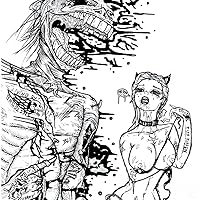
Jumping deftly between multiple viewpoints - including "You," a sacrificial lamb milling about the slow slaughter - V0idheads explores the endless metaphorical nuances of self-destruction as fashion trend. There's some fetishism at play around the margins (reminiscent of Jess Hagemann's fantastic body horror cult trip Headcheese), as well as overt drug parallels (recalling B.R. Yeager's towering Negative Space) as the void itself becomes a narcotic commodity, packaged and sold by Ori and his now-headless younger brother, and sought far and wide for its "legendary low." But you could just as easily discuss V0idheads in terms of religious zealotry, or suburban economic collapse, or environmental despair, or teenage social media angst, or self-harm carried to its logical extreme. Seriously, take your pick. The book is littered with morphological illustrations of the consumptive entity in question as it squelches and congeals through a host of impenetrable permutations. Come one, come all. The 21st century is full of Hell, and the void is as wide as its ever been - it's a big black tent - and Kelso's overall implications here remain obscure enough to allow for infinite malleability. There's more than enough darkness to go around.
As with so much of his work, the real questions aren't about what the void is, or why we're drawn to it, or why it won't just leave us alone. They're about how we live with it. How we learn to be ok with it. What we give to it, and what we protect. Can you do without an ear? A hand? Your legs? Your whole head? What's the right ratio? The return on investment? Is it better to run from the darkness? To close your eyes and pretend that's different? Pretend it's somehow the light? Or could we all stand to take a cue from Chris Kelso, and start thinking of the darkness more as a bad, but reliable hang. Keeping an eye on it. Having a chat with it. Giving it a good, sharp poke once in a while. It may not always feel practical, but then again, "impracticality" is "kind of the point." The void's obviously not going anywhere. Sometimes the only way out is through.
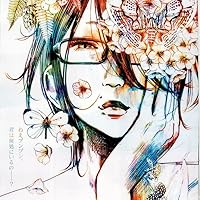
Chris Kelso invited me to draw up some art for VoIdHeADS. I read the book through once and immediately started illustrating. Reading voidheads over and over was like recalling some all too realistic hyper nihilistic fever dream. I feel like I was a voidhead and I think a lot of people will feel as though they are or were too, we just never had a name for it. Haunting, taboo, real and brutal. In my opinion Chris Kelso has created an amazing new urban legend that sticks with you. I was honored to illustrate the companion comic 🤘
I'm a huge Kelso fan and consider his The Dregs Trilogy a transgressive masterpiece. Again, with Voidheads, Kelso saunters into a dislocated, multi-perspective narrative that challenges the constructs of addiction and disenfranchised youth.
My only gripe is that Kelso's new material is becoming quite rare these days, and I really wanted this to be a longer outing. But this criticism is reflective of my own needs rather than that of the story on offer.
Highly recommended for fans of brisk, high-quality transgressive fiction.
Shades of Cronenberg (both David and Brandon) and Burroughs, V0idheads is a story of amputation fetishists, teenage compulsion, and body dysmorphia. This book asks the question: What lengths will we go to in order to fit in, to be seen by our peers as ‘cool’?
Well worth a read. I devoured it in a single sitting. It’ll be on your mind for days afterwards.
The Brotherhood Of Mutilation meets the Amygdalatropolis generation in this weird little book of amputations and reality-warping cults.
If I had to chop of one of my body parts to join a cool cult, I think I'd pick something easy instead of going straight to an arm or leg. Does cutting all my hair off count as a proper amputation? I'm saying it does.
In a world devoid of hope and meaning, what is the point? We were all teenagers once and, for some, that nihilistic feeling never truly departs. But, while you dealt with these complicated feelings in any number of (hopefully) harmless ways, the teenagers in Voidheads take self-harm to a whole new level. Thanks to the thing in Ori Dreyfus’s basement.
Told in Kelso’s typically atypical style, where the point of view seemingly drifts from character to character to void at will, with some added graphics to hammer home the alien nature of the void, Voidheads is an examination of the ennui suffered by a group of students from Ishim Lin High, in the fictional city of Ishim Lin. The exact geography of the city is never revealed, and some of the language hints at a British location while some hint that it takes place in a version of America. But, as long-time readers of Kelso’s work will know, he has been known to take certain landscapes of Earth and transpose them to his infamous Slave State. Either way, the location is irrelevant to the story. Sure, most readers in the West will recognise some version of their teenage selves in the main cast of characters. That is the most important aspect of the story, where Kelso reminds us of the empty feeling many of us experienced in our youth.
Instead of shoplifting or graffitiing or cutting, these teens want to make a more permanent statement, offering up limbs and genitalia to the void that exists in Ori’s basement. Whatever you put in that hole, you aren’t getting back. We see through the eyes of those who are curious, those who wish to impress, those who long to feel something larger than themselves – even if what they are feeling is the ultimate nothing, the “big zero” – and there are those who begin by wanting to help the teens but ultimately lose themselves to the void. What begins as an extreme statement, an addiction to some, becomes something altogether more horrific when Ori’s younger brother tries to understand the void and a teacher from the school leaves his encounter with his physical body seemingly intact.
We follow the characters from their initial experience with the void and the voidheads to seeing how the terms change meaning in Ishim Lin, and we are left with a feeling of… hope? It is hard to tell, as Kelso does reference superficiality in the closing pages. Are these the choices we are left with? See the world – the void – for what it truly is, or accept the superficiality of life and just enjoy the simple things while we can? The beauty of nihilism, the art of a brilliant mind. Kelso gets so much pain across the page in so few words (the story could have been longer, and it could have followed a more straightforward narrative style, but where’s the fun in that?). For fans of the text who may be craving more from the void, there are rumours of a companion comic and audiobook being produced in the near future. And, if you simply can’t wait for more in this vein, just take a look at Kelso’s back catalogue. He explores similar themes in The Dreg Trilogy and The Black Dog Eats the City, as well as the numerous works set in his Slave State.