A compelling and nuanced exploration of Abraham Lincoln’s political acumen, illuminating a great politician’s strategy in a country divided—and lessons for our own disorderly present
In 1855, with the United States at odds over slavery, the lawyer Abraham Lincoln wrote a note to his best friend, the son of a Kentucky slaveowner. Lincoln rebuked his friend for failing to oppose slavery. But he “If for this you and I must differ, differ we must,” and said they would be friends forever. Throughout his life and political career, Lincoln often agreed to disagree. Democracy demanded it, since even an adversary had a vote. The man who went on to become America’s sixteenth president has assumed many roles in our historical consciousness, but most notable is that he was, unapologetically, a politician. And as Steve Inskeep argues, it was because he was willing to engage in politics—meeting with critics, sometimes working with them and other times outwitting them—that he was able to lead a social revolution.
In Differ We Must , Inskeep illuminates Lincoln’s life through sixteen encounters, some well-known, some obscure, but all imbued with new significance here. Each interaction was with a person who differed from Lincoln, and in each someone wanted something from the other. While Lincoln didn’t always change his critics’ beliefs—many went to war against him—he did learn how to make his beliefs actionable. He told jokes, relied on sarcasm, and often made fun of himself—but behind the banter was a distinguished storyteller who carefully chose what to say and what to withhold. He knew his limitations and, as history came to prove, he knew how to prioritize. Many of his greatest acts came about through his engagement with people who disagreed with him—meaning that in these meetings, Lincoln became the Lincoln we know.
As the host of NPR’s Morning Edition for almost two decades, Inskeep has mastered the art of bridging divides and building constructive debate in interviews; in Differ We Must , he brings his skills to bear on a prior master, forming a fresh and compelling narrative of Lincoln’s life. With rich detail and enlightening commentary, Inskeep expands our understanding of a politician who held strong to his moral compass while navigating between corrosive political factions, one who began his career in the minority party and not only won the majority but succeeded in uniting a nation.
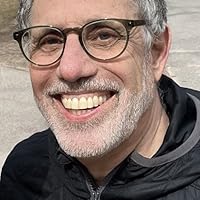
Steve Inskeep (/ˈɪnskiːp/; born June 16, 1968) is one of the current hosts of Morning Edition on National Public Radio. He, along with co-host David Greene and Rachel Martin were assigned as interim hosts to succeed Bob Edwards after NPR reassigned Edwards to Senior Correspondent after April 30, 2004. Inskeep and Montagne were officially named hosts of Morning Edition in December 2004. (David Greene joined the team as the third co-host in 2012.) Prior to being host of Morning Edition, Inskeep was NPR's transportation correspondent and the host of Weekend All Things Considered.
Inskeep is the author of Instant City: Life and Death in Karachi, published in October 2011. The book examines the changes associated with the dramatic growth of Karachi, Pakistan, in the second half of the twentieth century. Inskeep has made several trips to Pakistan in his role at NPR.
Inskeep was raised in Carmel, Indiana, and graduated from Morehead State University in Morehead, Kentucky in 1990. His first professional experience in radio was a stint as a sportscaster at WMKY-FM in Morehead. Inskeep was hired by NPR in 1996. His first full-time assignment was the 1996 presidential primary in New Hampshire
This is a decent and earnest-enough political biography of Abraham Lincoln that I found to be weighed down a bit by its exacting but unevenly-effective structure. I wouldn’t go so far as to say it’s a matter of style over substance, but the format of the book seems to dictate its content, rather than the other way around. It wants to be a series of character studies, but also wants to be a biography, and ends up awkwardly trying to be both.
In his introduction, Inskeep says his aim is to examine how Lincoln "learned, adapted, and sought advantage by interacting with people who disagreed with him." It’s a promising premise, which would appear to set this book apart from others that focus on Lincoln’s allies or mentors.
As I read, though, I couldn’t help feeling that this might have worked better as a series of discrete vignettes - “16 chapters on 16 people Lincoln interacted and disagreed with” - rather than trying to stitch them all into a cohesive narrative. Inskeep’s true aim became more clear in the author’s note at the very end, when he admits that his “first ambition for this book was to tell Lincoln’s life story through his meetings with a diverse set of people.”
So, essentially, this is a biography (a politically-focused biography, not necessarily the full life story) of Lincoln, as signposted by the selected “interactions.” The interactions are meant to illuminate aspects of Lincoln’s political rise and, eventually, his presidency. When it works, the interactions mesh with the biography, propelling the story forward and telling you a little something about how Lincoln thought, or learned, or strategized.
More often, though, I thought the interactions and biography existed somewhat awkwardly side-by-side, hanging separately, never quite coming together. The book often consists of long sections of standard biography that have nothing to do with the individual named in the chapter heading. While admittedly, these straight biographical sections are well-written and easily-accessible, they often seem merely to serve as the connective tissue meant to get us from one interaction to the next. The interactions don’t support the biography so much as the biography is a device to stitch together the interactions.
As for the interactions themselves, many are with well-known, prominent people Lincoln had to work with, or with whom he agreed to disagree - Stephen Douglas, William Seward, George McClellan, Frederick Douglass. Others are with lesser-known, bordering on unknown, people with whom Lincoln briefly interacted in passing. Sometimes these stories are interesting and illuminating in their own right, while other times the lesser-known individuals seem selected merely to serve as avatars for whatever the theme of the chapter is. The interaction isn’t as important as the fact that it happens at a stage of Lincoln’s life where the format of the book demands that an interaction occur in order to help move the biography along.
And the need to explain who these lesser-known individuals are, means that some of the chapters are more focused on the biography of the person with whom Lincoln interacted than they are about Lincoln’s actual interactions with them. Sometimes the mini-biographies of these individuals are engrossing in their own right, and almost make you forget this is ultimately meant to be a book about Lincoln and not them. The chapter on “Billy the Barber” is a standout in this regard, as his personal story is compelling and his interactions with Lincoln help to make a broader point about how Lincoln had a good relationship with a racial “inferior” on a personal level. But this chapter, like so many others, works better as a standalone, freed from the need to adhere to a rigid chronological timeline of Lincoln’s political life. And yet the rigid chronological timeline continues, to help get us to the next interaction.
Later chapters on less prominent people focus on less prominent issues like western expansion, Native American affairs, or women’s rights. In the latter chapter, Inskeep makes far too much of Lincoln’s early-career statement that he was for "admitting all whites to the right of suffrage, who pay taxes or bear arms (by no means excluding females.)" Other Lincoln biographers have interpreted this as a flippant joke - of course Lincoln knew that most females did not pay taxes or bear arms, so they would therefore have no right of suffrage. But Inskeep interprets Lincoln’s statement to mean that he "not only endorsed voting rights for some women, but also seemed to contemplate a world in which women might bear arms," which is quite a stretch.
Overall, it wasn’t entirely clear to me what the interactions were really meant to say about Lincoln. Sometimes they show us that Lincoln was a crafty politician who built alliances with those with whom he disagreed. Other times, they show how he stood firm in his opposition to those with whom he disagreed, in order to achieve his own goals. Still other times, he seems to give in altogether to those with whom he disagreed, as in the case where Inskeep interprets Lincoln's selection of his Cabinet members as a capitulation to his political rivals, in distinct contrast to Doris Kearns Goodwin's interpretation. Are we to take away from all of this that Lincoln was strong in his convictions, malleable in his beliefs, or cynically opportunistic, or sometimes all of the above? Inskeep never really says.
By the time we get to the last "interaction," with none other than Mary Lincoln herself, it's clear at this point that the "interaction" is merely a device meant not to illuminate anything about Lincoln, but simply to wrap up his biography.
I don't mean to be all negative. Inskeep is a good writer, and one can rarely go wrong writing an inspirational story about Lincoln. So I can see how some people really enjoyed this. If you're a fan of Inskeep, or Lincoln, by all means give it a read if you're so inclined. Personally, I thought this could have been better had it been a collection of interactions without the biography, or a biography without the interactions. The whole was ultimately lesser than the sum of its parts.
Thanks to NetGalley and publisher Penguin Press for the advance copy, which I finally got around to finishing a week after the book was released (oops.)
ARC. This book was fascinating! I loved reading about the different people Lincoln had to interact with and how it was influenced by / how it influenced events happening. It gave me a well rounded view of Lincoln's life and insight into why he made decisions that he did. It is important to view historical figures as people with changing thoughts and feelings, and I believe Steve Inskeep did a good job of that in this book.
Very good narration - as you would expect - but the vignettes don’t flesh out the thesis. The parts are the greater than the whole in this Great Value edition of Team of Rivals.
Steve Inskeep, an NPR correspondent and journalist, anchors the NPR Morning Edition. Penguin reached out to me to review Inskeep's book, Differ We Must, which follows Abraham Lincoln's life through his interactions with those who disagree with him. The book features a cast of characters, both famous and obscure, who played a role in Lincoln's life. From his encounters with Frederick Douglas and Stephen Douglas to his interactions with "Billy the Barber," the local black-owned barbershop in Springfield, the book offers insights into how Lincoln reacted to the events and people surrounding him. While some chapters lacked progress, overall, I found Differ We Must to be an interesting and refreshing approach to Lincoln's story, and a great introduction to the Civil War period.
What I learned from this book is that Lincoln was a true middle of the road politician especially his views toward slavery. While he believed slavery was wrong morally and mentioned in the Constitution, “all men are created equal”, he refused to villify southerners for their pro slavery views declaring “that the Southern slaveholders were neither better, nor worse than we of the North, and that we of the North were no better than they”. He blamed the system that Southern slaveholders were born into and not on Southern people themselves. I do not believe he was right in this assessment but found this perspective compelling to a 19th century thought process.
An enjoyable, light and easy read using a unique structure in which each chapter pits Lincoln against an individual with whom Lincoln purportedly differed. That doesn't always hold true - in some cases it seems merely a plot device - but it provides the framework for discussing Lincoln's almost uncanny ability to learn from, and persuade, those with opposing views. An interesting read by an accomplished NPR host.
David J. Kent Author, Lincoln: The Fire of Genius President, Lincoln Group of DC
How do you write something new about Lincoln? There are lots of fictionalized approaches. My favorite in “Lincoln in the Bardo” by George Sanders, about Lincoln trying to commune with his recently deceased son. Doris Goodwin wrote about how Lincoln’s administration succeeded during the Civil War because it comprised strong and talented individuals who were seeking power on their own and who were potential opponents to Lincoln (Team of Rivals). Now Steve Inskeep has written about how Lincoln’s approach towards educating himself was crucial to the development of wisdom and crucial to his success in the highly confrontational Civil War. According to Inskeep, Lincoln was poor and lacked the resources or parental support to gain the education that everyone associates with him as one of the consensus greatest US Presidents. To develop in an environment lacking in decent schooling, adequate books to read, or adequate parental support, Lincoln developed his approach to thinking about decisions and policies by understanding the positions of others with whom he came to interact in great detail. He developed himself to become an amazing practical thinker by learning how others had done that and then thinking through whether to agree or disagree with them, whether to imitate them or act otherwise, and how to respond to criticisms and experiences to hone his positions. This is certainly a plausible story and the story is well told. After all, much of what we think of as learning, formal or otherwise, originated in oral traditions and verbal discourse. I never really thought about Lincoln this way and will need to do some more processing.
Differ We Must is an excellent book for what it is. If someone is looking for a biography on Lincoln, this isn't their book. If someone is looking for a "leadership lessons" type book, this isn't that either. This is a glimpse of Lincoln's public life through a collection of interactions he had with others. It shows how his engagements with both opponents (like Stephen Douglas and John Campbell) and allies (like Frederick Douglas and William Seward) shaped both his and their thoughts and actions. In a climate where the world is growing ever more polarized between the left and the right, Lincoln's life and example of one who was able to brilliantly navigate and even more polarized past is a timely reminder.
To the degree that anyone knows author Steve Inskeep it is in his long standing role as a reporter with National Public Radio. The kind of broadcast that does not shout and rarely paints in broad primary political color. Not that they are always neutral, just that they are not aggressively hostile about it. The result is that Mr. Inskeep uses more of a reporter’s style of storytelling than a strictly academic historian style. His purpose is to keep your attention and tell his story.
In Differ We Must: How Lincoln Succeeded in a Divided America he attempts a story slightly more complicated than it needed to be. Abraham Lincoln is one of, if not the most written about men in American History. To the degree that this is a biography of Lincoln, that story is well known. Less Bio would have made this a better story. Mr. Inskeep’s thesis is that Lincoln was a very canny politician. He made full use of lawyerly distinctions to say exactly what he meant to say, while rarely saying that one extra thing that would offend his listener. There are 16 listeners highlighted in this book. From his African American Barber, to his most sever political critics, and competition. This is not that far removed from the better book: Team of Rivals: The Political Genius of Abraham Lincoln
To many this would seem to fit modern cynicism, proving the untrustworthiness, and slickness of all politicians. To Mr. Inskeep it is proof that this politician was never faltering in his long-term goals and inner most beliefs. He just understood that 1, you cannot lead people faster than they are willing to be lead and 2 if a listener missed the part you did not say, that was on them.
Thus, we have Lincoln, committed to high political office, a united, United States and the end of slavery. That the south feared him to the point of secession, before his inauguration; was proof of their intent, not his threat to their, “peculiar institution”.
Mostly this book succeeds in showing us another heroic, if practical side of a very human and humane Abraham Lincoln. The writing is not always smooth and points can be obscure even in hits clarification. A ready can easily miss the subtlety of Lincoln and hear only how issues were split for each listener A question left open, even as the author makes his one final case for Lincoln as a good man. There was a the real possibility that his marriage was never likely to be all that a marriage could be. He was too much of a professional politician to focus his attentions on her. And Mary Todd, the prospective bride was also a political choice.
By now, you wouldn't have thought that there could be another book about Lincoln that takes a fresh approach to his life ant times. Yet, Inskeep has done just that. Through sixteen vignettes of Lincoln's encounters with a diverse group of people, some well-known (like Frederick Douglass and George McClellan), others less so (like William Florville, Lincoln's hometown barber), Inskeep gives us an instructive picture of Lincoln's politics and personality, his innate sagacity, resolute patience and keen insight into human motivations.
Read only because it's Steve Inskeep and he narrates my drive to work most mornings, therefore I love him. And I will read any/every book written by NPR correspondents because I have a problem.
However, I did find it interesting to read about Lincoln even though I've never taken much of an interest in his life. I never knew all of the things that had to go perfectly "right" in order for John Wilkes Booth to get to the president's box in Ford Theatre, or that Mary was as apprehensive about being First Lady as she was. It reminded me of reading about Michelle Obama's time as First Lady and how she didn't always love the role.
I saw the author on the PBS News Hour talk about his new book about Abraham Lincoln, and I decided to check it out. The audiotape was read by Innskeep himself. I found his retelling of history interesting and informative.
He maintains that Lincoln was a skilled politician. It is full of great stories about the 16th President. It’s a fascinating account of Lincoln’s rise from Springfield, Illinois to the presidency of the United States during the Civil War.
If there is anything wrong with this book - is that it was too short. He does such a good job writing about Lincoln, that I wanted the book to be longer than it was.
I feel like the title of this was misleading - it promises to show us, through the prism of conversations Lincoln had with different people who disagreed with him at various points, "how Lincoln succeeded". It doesn't really do that. It spaces a number of conversations chronologically through his life, and talks a little about them, but it would've been more accurately labelled as something like "Lincoln : a life in conversation" because that's basically what this is and the author admits as much in his afterword. He wanted to write a bio of Lincoln, and that's essentially what we got, but it's pretty thin on the ground for new details or any kind of depth of analysis of Lincoln's character. He says in the afterward that he was midway through writing it when the 2020 election happened and then January 6 happened, and he realized that being able to bridge differing opinions was actually a lot more relevant now than he had supposed it to be and shifted his focus. The thing is... I don't think he did shift his focus. He still wrote the book he wanted, and then the marketing team slapped this title on it b/c they knew it would appeal to people who were nervous living in the partisan shouty hellscape that is current American politics and sucker them into buying this. People like me, frankly, so good on you you suckered me. But the last joke's on you because I read it out of the library so you didn't get any money out of me at all.
Some of the chapters are enlightening that actually show how Lincoln finessed conversations with people he disagreed with to still stay friends/civil with them, but a lot of others I'd be hard-pressed to name a coherent point that I could walk away with and apply to current political discussions I find myself in. If that was really his objective, I think the book might've done better to organize thematically around different techniques Lincoln used through his life and then use several conversations to highlight it. Chapter 1, how to use humor to diffuse disagreement. Chapter 2, how to find common ground. Chapter 3, know when to walk away because you'll never agree. Etc.
Initially, i wasn't impressed with some of the early vignettes, because I was trying to force them to fit in with the framework suggested by the title. Once I just followed the way the text portrayed Lincoln's maneuvers in a nation seriously divided, even in the non-slave states, the book became an intriguing look at the kind of social and political forces our nation has faced and actually continues to face. How can a political leader move a nation toward "justice" in the face of extremists on either side? In truth, changing circumstances have a lot to do with that. Lincoln was not a wizard, and did not have complete control over military tactics, Congressional debates or public opinion. Yet he persevered and made the best decisions he could at the time. The book's structure gradually develops a fuller picture of Lincoln and leaves the reader to ponder the demands and the high costs of leadership in a democracy.
Interesting way to biography Lincoln. I enjoyed all the anecdotes and appreciated how it showed Lincoln’s complexities. Perhaps it gives him more credit or a better sheen than his record deserves, but the book makes a compelling argument about how effective a leader he was.
I enjoyed that this book is about Lincoln the politician - not the great, mythical leader - but a master politician. Politics – the art of working with others to get things done. He excelled on one-on-one interactions with people, he adapted his views and tactics as needed, he was a great joker and storyteller, and he was an expert persuader. It is very impressive how he constantly did this with people whom he differed greatly on with regards to political views, ethics, demeanor, and backgrounds. He was an idealist at heart, but a pragmatist in action.
Steve Inskeep is one of my favorite NPR correspondents, so when I saw that he had written a book about one of our nation's most-beloved presidents, I knew I had to read it. Inskeep tells the story of Lincoln through sixteen encounters (some well-known, others not so much). I enjoyed the reading experience of learning more about such a phenomenal leader. Thank you to NetGalley and the publisher for an advanced e-reader copy in exchange for an honest review.
Before Abraham Lincoln was a president, he was a politician. I’m sorry to smear the great man, but the truth must be told even though most Americans probably agree with Mark Twain: “Reader, suppose you were an idiot. And suppose you were a member of Congress. But I repeat myself.”
Steve Inskeep, cohost of NPR’s “Morning Edition,” isn’t afraid to offend us all by writing a biography of Lincoln the politician. The title (“Differ We Must”) comes from a letter Lincoln wrote to a friend who supported slavery. These are the words not of an ideologue who must reign or destroy, but of a politician committed to the art of the possible.
I agree with Inskeep that one of Lincoln’s strengths was his knack for setting his mind on achievable goals rather than impossible ideals, and for working toward those goals with patience and grace. Inskeep demonstrates this by devoting each chapter to an individual with whom Lincoln dealt, whether that person was friend or foe, ally or enemy.
This is an unusual but enjoyable way to do a biography. Each pocket bio proceeds chronologically through Lincoln’s political life, from Joshua Giddings (“Provocateur”) in 1849 to Mary Todd Lincoln (“First Lady”) in 1865. Along the way, Inskeep artfully unveils the rich and complex fabric of American society in the middle of the 19th century.
Inskeep’s thesis is that a successful leader recognizes his limitations and works within them. The most profound limitations are those imposed by strong personalities whose agendas and interests may or may not align with yours — and which you may even find repugnant.
Lesser leaders attack enemies and demand fealty of friends. Great leaders exercise tact, restraint, and flexibility in many important things in pursuit of a few all-important things. I’ve noticed the same trait in numerous bios of American presidents, and I agree that Lincoln was a master of the art.
If the book has a weakness, it’s that it can’t be separated from its own context. Some turns of phrase rhyme with the confused acrimony of America c. 2016-2020, which is not surprising since Inskeep (as he pointedly acknowledges) was writing during the flashpoint of the 2020 election and its aftermath. Just as Lincoln biographer Benjamin Thomas heard echoes of the 1850s as he wrote during the 1950s Civil Rights Movement, so Inskeep hears echoes of his own time.
This is a petty nitpick of a worthwhile book. Each chapter is a fast read, resurrects colorful people who get short shrift (or none at all) in standard histories, and illuminates a facet of Lincoln’s character that contributed to the salvation of the Union and the extinction of slavery. If I wanted to sucker someone into venerating Lincoln to the same degree I do, this is the book I’d give them.
This books offers an interesting and unusual take on Abraham Lincoln’s political life, focusing on sixteen meetings he had with people from various walks of life throughout his life. For each, Lincoln adapted and negotiated his political views. As portrayed by Innskeep, Lincoln was an idealist with a strong pragmatic streak. He wanted to do the right thing, but also wanted to promote himself to be in a better position to affect events. By using these meeting as a way to examine Lincoln's development, we get a more intimate portrait of how he handled disagreement, always listening and often compromising. One reviewer described it as "How Lincoln became Lincoln". Innskeep draws an implicit parallel between Lincoln’s efforts to unite a fractured country and modern political polarization. In addition to being timely and relevant, it is very readable, not getting bogged down in a lot of historical arguments so that it simply tells a good story. If you are interested in Lincoln as a person and a politician, this is a great book.
Lincoln has always been my favorite president-- probably because his birthday and my birthday are so close, and when I was choosing a favor president I was young enough that that made a difference :-). Because of that I'd like to consider that I was relatively well versed in his history. This book sort of filled in a lot of what I didn't know. And I really like Steve Inskeep as the author and narrator, probably related to my familiarity with him from NPR. And I like the author's commented the end. Lincoln clearly had mixed feelings about people's right to continue slavery, the nation, the Civil War, ALL of the citizens (even with those with whom he didn't agree), and horrible divisions. His personal position on slavery was unequivocal- he did not agree with the right of a person to own another person. But the book spelled out a lot of the situations in which Lincoln found himself and the efforts that he had to endure to hold the nation together! Excellent and informative book!
I love listening to Steve Inskeep on NPR, so I loved listening to him narrate his book about Lincoln - and I love his book! The approach he took: to look at Lincoln’s interactions with different people throughout his life, really deepened my insight and understanding of one of my favorite historical figures and about a time in history that I think Americans think they know, but really don’t. And it gave me new insights into the current situation in our country as well. Ultimately, I am grateful for the incredible person Lincoln was and love him even more - and this is not a starry- eyed fanboy account by any means. Highly recommend!
How can a political leader move a nation toward "justice" in the face of extremists on either side? Through accounts of his engagements with both opponents (like Stephen Douglas and John Campbell) and allies (like Frederick Douglas and William Seward), Inskeep gives us an instructive picture of Lincoln's politics and personality, his innate sagacity, resolute patience, and keen insight into human motivations. This was a very interesting read, especially given the world we live in today.
This book tells of Lincoln’s life and growth in a very interesting way. It recounts his relationships with many people: some famous, and some not so famous. All told, it really shows how Lincoln grew as a result of all of those relationships. I definitely recommend it is a read if you’re a Lincoln fan.
Not as good as other books I’ve read about Lincoln, but interesting nonetheless. The author presents Lincoln’s encounters with sixteen individuals over the course of his life. Despite some of the repetition, this did add dimension to other biographies I’ve read. I particularly appreciated the anecdotes of the encounters with individuals that were new to me. Good audio narration by the author.
Abraham Lincoln is one of the most studied figures in American history, yet this book is full of stories I didn't know. In all, it's a great reminder that as divided as things seem now, our country has been worse off and overcome 😊
Decent enough Lincoln bio. Felt a bit lightweight, probably not helped by the episodic structure, which tells Lincoln's life through stories of personal and political conflict rather than a single, flowing narrative.
Great research but not sure that the author argued their position well. This was more useful to understand the privileged white history from inside the game of politics.
Overall a pretty interesting way to tell Lincoln’s life story. The writing wasn’t great at times. I had some trouble keeping characters straight. Three stars is probably harsh. 3.5 is more accurate. I did listen to the last 2 chapters read by the author and that actually made it better.