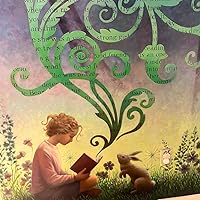
The life stories of three very different women--Tami, Maya, and Shifra--trapped within the sealed walls of war, bound by horrific memories of the past and a sense of a perilous present, intertwine, in a debut novel that follows their individual struggles to break free of their confinement. Reprint.
I often begin writing when something is bothering me. Years ago, I was thinking about Virginia Woolf’s question: what if Shakespeare had had an equally talented sister? Woolf’s answer: She died without writing a word. What, I wondered, would it take for a woman of that era, with that kind of capacious intelligence, not to die without writing a word? For one thing, she’d have to be a genius at breaking rules. My novel The Weight of Ink reaches back in time to ask the question: what does it take for a woman not to be defeated when everything around her is telling her to sit down and mind her manners? I started writing with two characters in mind, both women who don’t mind their manners: a contemporary historian named Helen Watt and a seventeenth century Inquisition refugee named Ester Velasquez. It’s been a delight working on their story. The Weight of Ink is my third novel, but I’ve also written two other novels and one novella, plus a few dozen essays and stories. Whether I’m writing fiction or nonfiction, I put words to paper because it's my way of metabolizing life. To paraphrase Henry James: I don't really know what I think until I see what I say. Thanks for visiting this page, and for your interest in books.
I loved The Weight of Ink, the author's 2017 novel, and I read it three times (lastly for book club), so I had high hopes for this one. I was terribly disappointed, although I did not realize at first it was Kadish's debut novel. It's purely character-driven with not much of a real plot, but I could not like any of the characters, especially the protagonist, Maya Goodman, whom I frequently wanted to strangle. They were not well-developed and lacked internal consistency over the course of the novel. The fantastic and meandering musings/memories of the Shoah survivor Shifra often made very little sense and occupied too much of the "story." I struggled to finish it.
I bought this book because I loved "Tolstoy Lied" by the same author. In "Tolstoy" the characters were very well developed and I truly cared for each of them. "Tolstoy Lied" was released a year after this one, but I figured "Who changes a lot in one year?" I was very wrong.
"From a Sealed Room" was very slow. The characters were kind of thrown into your face at the beginning and I had a hard time keeping them straight in my mind as I continued on to the second, third chapters. I didn't care for the characters either. I felt no connections. I didn't believe they each were very well developed. If one of them suddenly died, it really wouldn't've affected me. I got half way through the book in a matter of weeks, and have since put it down.
This is a very sad moment when I cannot finish a book. (cue funeral music)
I bought this book three months ago and have yet to finish it. That is not typical of me. I read books in from one to four days... for me to not finish a book speaks volumes (haha).
"Tolstoy Lied" is still one of my favorites, but "From a Sealed Room" will be passed down the line to make room for more greats on my book shelf.
From a Sealed Room by Rachel Kadish entwines the lives of three women: an adventurous young college student from New York, an emotionally enclosed Israeli housewife, and a fragile Holocaust survivor. I found it to be an interesting read about the interactions and thoughts of the main characters; it did seem a bit confusing until I got into it enough to sort out who was who, but then was smooth sailing to the end. The author presents life in Israel from the viewpoints of these three protagonists and what is important to each of them. She also focuses a lot on character development and lets you into the world that each of them inhabits.
Rachel is an exquisite writer. Her books are slow burns driven more by character than by plot (literary fiction). The experience of reading this book is like being in a sealed room as a reader--the oppression is tangible and the cathartic release at the end came very late--I continued to feel the stifling air more than the the release when I put the book down. Extremely atmospheric.
This is a challenging book to evaluate. I only liked one minor character, there was no driving plot to speak of, but it brought up so many questions. It was for bookclub, so sometimes when I’m smart, I take notes as I read so I remember the book by the time book club comes around, and this time my notes are all questions. I’m very curious what a non Jew will get from it. There were so many Jewish religious and cultural references. I’m hoping to get an Israeli friend to attend our bookclub, bc her perspective will be fascinating.
Considering that this was a first novel Kadish exhibited some impressive talent. Her prose was readable. Her insight into the complex personality dynamics of mother daughter conflicts, abusive relationships, and survivor guilt/PTSD of Holocaust survivors was considerable. More attention to their history via additional narrative or dialogue here and there would have made the characters even more fully developed and engaging than they already were.
Setting the story for the most part in mid 1990’s Israel allowed the author to comment on the social, political, and religious conflicts taking place between various elements in the country at that time. Part of that was her perspective on the pros and (mostly) cons of American involvement in the peace process. Some of this Israeli context was interesting, especially the role that the ultraconservative religious play in the country. But other aspects also felt superfluous at times to the personal stories being developed.
The sealed room used by Israelis to protect themselves against chemical weapons in the event of war was a useful metaphor for the extent to which so many of the characters in this novel were struggling with their own isolation and alienation from their loved ones in particular and the society in which they lived in general. The conclusion was upbeat albeit a bit cliched.
Overall, I’d give it 3 stars: good but not great. The flaws noted above detract from its quality and its ultimate impact. Kadish went on to publish other work after this one. I was engaged enough to hope for a sequel about the main female character’s subsequent life, however.
Woven into this story of a semester in Israel is the learning of love the past and the present and beyond that. Once again Rachel Kadish gives us women with real depth and questions, young, mothers ,daughters, sisters, friends. I know they will live with me well beyond this end of this book.
I really like this author. Her book “Weight of Ink” is one of my favorites. This book, in my opinion, isn’t as good, but is certainly worth the time to read. The author very realistically addresses familial dysfunction and domestic violence within the context of Israel’s ongoing history post Holocaust.
3 1/2 stars. While it was a bit distracting having 3 narrators, I found the different perspectives fascinating. As I watched the mother-daughter dynamics play out, the different narrators became more similar than vastly different as I first thought.
Her first novel. The promise is there, but I found most of the characters tiresome, and didn't completely understand the use of the Holocaust survivor's ramblings. The scenes of Jerusalem and Israel were interesting and her writing is evocative and at times lyrical.
I found this book just okay. Too many people lie in this book. I first had read “The Weight of Ink” and loved that book and wanted to read another by the same author. But this book that I just read, did not satisfy me.
A book that haunts and captures the pride and guilt of being an American Jew. Holding Zionism and liberalism in tension. A coming of age story of a young unsure woman, becoming sure of herself and history. The hope held to of a future waited for by a people plagued by the past and the present.
Usually a fan of the ‘story within a story ‘ parallel style of writing but in this case, I found the style of writing for the secondary plot to be confusing. Loved the primary story tho - sad but important
The life stories of three very different women--Tami, Maya, and Shifra--trapped within the sealed walls of war, bound by horrific memories of the past and a sense of a perilous present, intertwine, in a debut novel that follows their individual struggles to break free of their confinement.
Complex depressing look at human nature. Kadish is a wonderful writer so this really got under my skin. But it's hard to say I liked it- more that it affected me, not always in a good way.
Relationship tale between mother, daughter, boyfriend, extended family and Israel. Not quite gripping nor poignant. Scenes occasionally somewhat verbose. Still a decent novel worth the read.
I loved her other book “the weight of ink” but this one was a bit hard to keep reading. I didn’t enjoy the Holocaust survivor’s overly long ramblings, but overall the book is worth reading.
From a Sealed Room is the debut novel by Rachel Kadish. It is about 3 women bound by the past. Maya leaves America and a troubled relationship with her mother and enrolls at Hebrew University in Jerusalem after the Gulf War. She spends time with an older cousin, Tami, an Israeli, with a distressed relationship with her husband and grown son. She lives in a home that has a room sealed against scud missile attacks. Maya falls in love with an Israeli veteran who is haunted by memories of the West Bank. It is an abusive relationship. She meets Shifra, a holocaust survivor who lives in the apartment below Maya’s. Shifra has memories of prewar Poland. Maya’s visits with Shifra help her confront her problems and break free from her burdens.
Kadish describes the lives of these women and concerns of the ultra-orthodox and secular Jews in Israel. There are a lot of metaphors and complexities of the sealed room that explains how these women escape their confines. It is a deep novel and quite complex at times. This complexity makes it hard to recommend to everyone.
Well-written, but a little confusing. Although the blurb says the book interweaves three lives, it feels more like she started one story (Tami's) and moved on to Maya's, which I didn't mind too much because Tami's story is boring. It's hard to want to read about an unlikable person. I like the treatment of an abused woman and the difficulty she has getting away from it. I like bits of the Holocaust survivor's story, though sometimes it gets tedious. The book is too long, I think and the ending feels cliche, but overall, the writing is smooth, almost lyrical in places, and very quiet, with strong characterizations.
I finished this book only because I was hoping SOMETHING monumental would happen in the end to redeem this story. Sorry to say, it never did. This book was pure character study. I was so frustrated by the heroine's stupidity that I found this difficult to read. The one character who could have been interesting and made a great story died before anything could develop. I was very disappointed in this book.
Beautifully written, though I'm not sure what I learned from this book. The story's been told many times before...and this one is from an American girl who goes to Israel, learns about herself and her family, her relationship, her roots, and so on. Love the perspective but was somewhat confused as to the "downstairs" character. Would love to have seen more of her.
"For anyone who traveled in Israel in the 1990’s, this is a must read. Wholly apart form the interesting characters and well developed story, the author’s prose captures an era, a mood, and a sense that hangs in the Jerusalem air known to all who frequent the city, but that have heretofore defied description." - Lisa Bernstein
American student in Israel lives with abusive artist boyfriend but has refuge with extended family cousins she hadn’t met before, all while her mom back in the states works at her nonprofit and undergoes chemo. It’s better than it sounds.