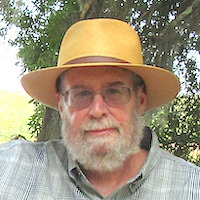
Readers can establish their baby boomer credentials by identifying the author of this book by his previous, Western name: Dr. Richard Alpert. The transformation of this Harvard psychology professor into Baba Ram Dass is part of counterculture history, but the popularity of his 1970 Remember, Be Here Now (9780517543054) continues, forty years and two million copies later. Be Love Now is the third volume of his spiritual trilogy; Still Here (9781573228718) being its lynchpin installment. Ram Dass' heart-felt blend of autobiographical stories, anecdotes, and precepts imbue this book with an unforced wisdom.
Ram Dass (Richard Alpert), was one of America's most beloved spiritual figures, making his mark on the world giving teachings and promoting loving service, harmonious business practices, and conscious care for the dying. His spirit has been a guiding light for four generations, carrying millions along on the journey, helping free them from their bonds as he has worked his way through his own.
“Once you have drunk from the water of unconditional love, no other well can satisfy your thirst. The pangs of separation may become so intense that seeking the affection of the Beloved becomes an obsession.” Be Love Now: The Path of the Heart ~~ Ram Dass
I love Ram Dass. I love BE LOVE NOW. I feel closer to my own Guru, Babaji, than I have felt in years. A more in-depth review will follow, but for now this will do.
When I feel myself becoming paranoid or lost in material stuff, Ram Dass always puts me back on the right path. He has been doing this for over 30 years and this time was no different. Since Ram Dass is no longer traveling to teach, I was afraid that was the end of the road so I was very happy to have one more book. And this book does not disappoint. If you’ve read the classic, Be Here Now, you have to read Be Love Now. Although I’ve seen Ram Dass many times I have never seen Maharaj-ji and knew very little about him. In Be Love Now, Ram Dass shares many collected stories about his beloved guru. The photo of Maharaj-ji on page 161 was phenomenal. His penetrating gaze kept pulling me in and I can only imagine the force of seeing those eyes in person. (Ram Dass warns that Maharaji-ji’s eyes had the power to take you into full samadhi and so he kept his eyes half closed because people could not bear the force.) The last part of this book describes the lives of other great saints and realized beings many of whom I had never heard of. I devoured this book very fast but like all my beloved guru’s books, I will read Be Love Now again and again.
Getting here from there: as a 27 year old, I set out on an intensely personal quest for self-realization, finding myself - on the same path so many others have traveled before. Ram Dass was very transparent about his own desire system and need for approval. This reflection works well for elevating one’s consciousness. Psychedelic experiences and humorous self-deprivation help with the dissolution of the ego. Higher consciousness is the goal of enlightenment. Change is the only constant. The more things change the more things stay the same. It’s all only love, life is love, may we all be love, and be love now.
You are loved simply for existing. This love will always be here. It’s like being in water that’s all made of love. This love is found, not in our emotional or physical heart, but in the depths of our spiritual heart. This is the heart of pure awareness, connected to the universe. This is a state of being that brings unconditional love. The state of being love is oneness. “Truth consciousness bliss” is love that completes all naturally. Conditional love is from an interpersonal standpoint. Enlightened ones can bring out in others what they never knew existed. We can become love, this path doesn’t bring us anywhere except for further into the present moment. Into the reality of who you really are at our heart-center. This is ultimate union through love.
Falling into love: unconditional love changes self-perception. The guru is a place within and the spiritual self creates unconditional love. There is nowhere else to go after experiencing unconditional love. You can only grow further into who you truly are. Unconditional love is all-knowing and completely accepting. This collapses the ego house of cards. Love is from the higher essence of our being. Our minds make us think we need emotional love, however this creates a powerful attachment from something outside of us. Love is inside us, we don’t need an object outside to be in a state of love. Love exists inside us. This is the state we all yearn to return. This is an understanding of love in a more universal way. We can be in love without anyone ever loving us back. The heart-mind is who we are, not the ego, the ego is a bundle of constantly changing thought-forms and ideas with identifications. The western psychological premise is that we are the mind. But the union of yoga is when the constellation of thought-forms cease. Spiritual practices bring inward awareness of one’s own mind. Witness consciousness is part of the heart-mind. Pure awareness is the human spirit or soul.
Home is where the heart is: graceful love always love and awareness to merge. This makes all one. Grace is at the nexus of love and awareness. To become one is grace. We are meant to love everything and everybody, not necessarily personalities, but each person’s essence. This is soul-perception. The path is to deepen this love with everyone and everything. Living within the soul opens the soul to all. Radiating love in the soul always others to attune to their soul, too. This isn’t a concept, you can’t know it, only be it.
Being loving-awareness: love everything to be aware of. Our names are like roles, but we are not those roles. What we really all are is loving awareness. Love neutralizes fear. The ego fears death, love fears nothing. The love of God operates within the human heart. God loves you, just because. If we can accept this unconditional and unwarranted love, we can give it to others as well. To bring loving awareness to everything attention to, this is being love, a beacon of love for everyone around us. Start by thinking how you love everything around, but being love is not a thought, to transition to being the love of everything around. If we deny the reality of things, we miss their reality. Cease attachment to talking and thinking to find the essence and source.
Excess baggage: human life is a series of experiences. When we break our attachment to experiences, we begin to see the unity of all things. The constellation of thoughts, feelings and concepts make experiences seem different every time. Temporal experiences are like lights flickering in a flashing show. The permanent Self is the witness of this show, it doesn’t judge and is on a different level of consciousness, it just observes. Dwelling in self-awareness is witnessing ourselves as we move through life. It’s being, not doing. To give up attachment, we can either give something up, or it can give us up. As meditation deepens, we identify less with the ego and more with love. The ego’s fear eventually dissolves in love. Shift identification from the ego to the soul. The ego doesn’t die, but identifying with it does.
The pressure cooker: eventually we all have to confront and deal with our own karmic obstacles. Suppression or repression only adds to obstacles. Getting past: lust, anger, confusion and greed. These furnish our interior desires. After, we can live in Dharma, in harmony with the laws of the universe. Doing Dharma brings us closer to God, and allows for further spiritual work. What’s important isn’t what you experience, but how you identify with it. Ultimately, every method gets you to the same place. By quieting the mind, we are able to open and enter our heart. This sometimes takes many years of meditation. Merging to oneness transcends all experience. When our minds hold us back, we have more work to do. This why there are few liberated beings, it takes complete letting go. Human conditioning makes us react and attached to our experiences.
The five limbed yoga: eating, sleeping, drinking tea, gossiping and walking about. These simple acts were charged with significance. People must feed their stomachs before they’re able to think about God. Food had to be made with love, or it’d be poison. It could seem like India runs on chai and beetle-nut tea. There is nothing to learn or do, only become. What we become is all that matters.
To become One: mantras work to help us enter a conceptual space. This is one way the mind sinks into the heart. Fingering breads, repeat “Ram, Ram, Ram..” to realize the oneness of all. We can serve God by bringing others into their souls. Create sympathetic vibrations. Repeating “Ram” also reminds us to continue looking for ways in which we can serve. Chanting with a yearning for God, brings us into the present moment. Music in combination with mantras creates a powerful and emotional opening to the heart. Mantras come from places deeper than our thoughts and minds, turning us utter-lessly inward. In India, there are no bad mothers, only children. Seeing the world as one’s mother requires a shift in perception. "Satsang" is a community of seekers. “Sat” means truth, “sang” means meeting of the ways, or a spiritual community. Each devotee feeds and inspires others. Sadhana means spiritual work. Love is the emotion of merging, of becoming one in the heart. This is really a relationship with the own deeper Self.
The Bhagavad Gita informs aspirants how to work in the world while following a spiritual path. The path is a lot of negotiation between ego and soul. Entering into love with another means anywhere you go, you feel with them. Letting go doesn’t mean giving up power, it’s giving up separation. When one dies, we have to go beyond form. To love another, we need to give up everything for them, which is what having a child is like. Being fully present in the moment moves us out of time. This is surrender and loving awareness of each moment. You are love. There is no separation. We are all one consciousness in many bodies. You can attain it, you have to become it. Merging requires grace. Love is a state of being, not a progressive path or trip.
Our evolution isn’t just Darwinian, there is also a spiritual evolution into unitive consciousness. This is performed through iterative incarnations of our being. The way to best deal with change is to live in the present moment: Be Here Now. Don’t be surprised to be surprised. Every form eventually dissolves into its formless state. Holding on to anything in time ultimately causes suffering, nothing in time is permanent. When you meet the true guru, he will awaken love in your heart. In the West, who you are is very much defined by what you do, and is bounded by death, which is a powerful motivator. The ego is defined by its role. If we reach the soul level, we’re unbounded by the ego, and overcome the fear of death. Reincarnation is a long-term view. Outward religious practice leads to too much inward fear. Our soul is separate from our role. Karma is Dharma. Darshan is the change of perspective to the soul of love from the ego. The meeting of darshan is not on the physical plane, but the soul-unified consciousness One. This is how we cut through the dualities of physical life. Darshan is the focus for spiritual aspirants and devotees. Sri sages such as Neem Karoli Baba, Sri Ramakrishna, Ramana Maharshi, Shirdi Sai Baba, these had Dharma of public recognition, others don’t. Breaking with desire for birth and fear of death is liberation. The paradox of the One is that there’s an experience with no experiencer. We strive to be in form while not in form - words are useless here. In emptiness, humans don’t identify with thought-forms or desires. There’s no clinging on liberation. If you’re having an experience, you’re not beyond beyond the physical plane. There is function at every level, and emptiness is complete fullness. Love is what let's you drive into that which is beyond all form. True yogis renounce the world. We can learn of unconditional love from those who live in it.
Experiences that reflect your own desires back at you are teachings to tell you where your at along the way. When Karma aligns with Dharma, the needs of the moment are best met, rather than desires, like Einstein with relativity and Mozart with Requiem. Enlightened beings, are not perfected but in a very late birth. There’s only a transparency left of the veil of illusion. Realization is beyond time and space so nothing is happening any way. There’s only the eternally present, but this depends on where you are in relation to time. There’s really nothing else in the entire universe but God. God is in all of us, the continuity in discontinuity. The One is in its own plane of consciousness, but it’s paradoxically not subjective. Over many lives, we must develop the ability to seamlessly move in and out of the various different planes of consciousness, depending on the needs of each moment. God is a bridge between form and formless. When bad experiences arise, see them as fierce grace. Look at relationships as vehicles for awakening. Taking anything too seriously doesn’t make it go away any faster. Sacrifice thought through grace and blessings. Money and truth have nothing to do with each other.
Guru means removal of darkness (for enlightenment) - not necessarily a guide or teacher. They have already made the journey, which is all one. Shifting from ego to soul is done through love. Synchronization of astral planes of consciousness is a wake up call. Would rather be free than right. Do what you do with another being, but never put them out of your heart.
Faith is grace. Faith is not a belief, faith is what is left when all beliefs have been shattered. If faith is based on experience, it will always flicker and change. Striving is karma, grace is the path. Bring the mind to one point, then wait for grace. Desire and belief systems shape reality. Love dissolves boundaries and is universal. Love, service and devotion are the keys. The three worlds are simply a magic show, where liberation is merely the end of error. Compassion is a focus on helping the needs of others. The spirit is transferred into other’s hearts by loving, giving and serving. This is providing presence, comfort and protection. In this way, each receives only what their karma allows. We enter each other and merge in each other’s presence when we truly let our ego-guards down. This requires true focus on one’s soul. It’s only love, the more open you are, the more you can receive it. There must be a transformation from personal to impersonal love. Empty all forms, then go deeper. Silence the mind to make space for grace. Then, bring your mind to one-point, and wait for grace.
It’s more than possible to keep both spiritual and familial worlds going. Drugs can be a distraction from the pursuit of God. Psychedelics can help you see, but they are not the way to spirituality. Spirituality is/are the keys to the mind. This is seeing vs. understanding. Miracles and powers are only used in the relief of suffering. Miracles only happen when one knows it all but only does that which will help. Siddhas only take birth to help others and spread spiritual vibrations. It’s for grace without reason or cause. Food, worship, wealth, wife should all be kept private. No type of work is insignificant when helping others. Serving people is service to God. Think about what giving will give, rather than what one gets. Think of giving more than what one gets.
Anything and everything real exists in the spaces in between - all life, what remains. The spaces in between are mind-moments, which universes are created and destroyed too quickly to tell. This is God, beyond any concept of God. This is how we can be in God and in the world. Thinking of another is a channel for love.
To Be Love Now, embrace every moment as it is. No need to cling to the past, nor create expectations for the future. The most perfect moment is now - the eternal now. There is nothing to see, you can only be. There is nothing to do, there is no doer.
So during the first half of the book, Be love now really conveyed some powerful messages in a way that I feel is pretty rare once you've read many self-help books. This was also intertwined with some quite uninteresting and quite irrelevant (at least when it comes to your personal development) stories about Ram Dass formative years, making me think of this book as an unpolished gem.
But the second half of it was pure nonsense, stories about what miracles some gurus had done, i.e. "one guru asked the local shopkeepers about oil for his lamp and when he didn't get any, he poured water into the lamp and was able to light the lamp".
So my recommendation for anyone wanting to read this book would be to try to sift through the irrelevant stories of the first half and try to cherry pick the really nice pieces, which it really has.
I admit I never knew much about Ram Dass back in the 60's when he returned from India and was teaching Americans what he learned. But recently I watched an interview he did with Oprah and was fascinated by his philosophy and history. I wanted to know more. "Be Love Now - Be Here Now - The Path of the Heart" was very worthwhile reading for me. Ram Dass describes his India experiences and what he learned there. I gained more understanding of the Hindu philosophy and obtained some fresh aspects of understanding to help me in my own quest to grow my relationship with God. I see this book as about living in the present moment, living each moment in a state of love, always seeking to expand your understanding, relationship, and one-ness with God. So glad I read this book."
More Ram Dass. He writes about his experiences within Hinduism, offering the unique perspective of a one-time Harvard professor who dropped out of Western society to become the devotee of a guru in India. As such, he has a sympathy for and connection with Western audiences that is rarely found in the writing of other Eastern spiritual authors. His writing is completely heartfelt, humble, and compassionate.
His most famous book, Be Here Now, is much less approachable than this. Here his theme is the transformative power of love, how it is central to his faith, and indeed, central to the operation of the cosmos. The technical term within Hinduism for this sort of path is Bhakti Yoga, which contrasts with other forms of Hindu devotion that focus on wisdom or power or what have you.
Primarily, Ram Dass is trying to give an account of his personal guru, and what it means to "have a guru." He attempts to describe the mystic way in which a guru isn't exactly a personhood like you or I, but something much deeper and intrinsic to everybody- the guru is universal, the guru is within all beings, the guru isn't attached to ego games like we are (or at least, the ideal, proper guru isn't; there still remain many impostors and cult leaders, of course.) This partially serves to alleviate the concerns of a Western reader who would balk at such devotion, service, and blind commitment to "just another person" who claims to have all the answers; if we are to believe Ram Dass's account, the reality is nothing like that.
Naturally, the guru is a human like you or I, but someone "much further up the path" who gives us an active demonstration of the deeper mysteries. They act as a beacon, but in order to get where they are, their ego and attachments have been shed to the point where they reside at the level of universal cosmic consciousness- they are that "still quiet voice" inside you, inside me, inside everyone (apparently.)
I really enjoyed reading this book because it was soothing. Ram Dass really goes out there and describes some incredible things, and is completely about his Hinduism, but his conviction is catching and his calm and his peace of mind are palpable. This book restored my faith in the essential nature of love. A more hardened, cynical reader might just find it cloying.
The first few pages of the book were really powerful for me. They got me really excited to experience the gifts that Ram Dass had to offer. I started off getting some very wonderful pearls of knowledge from it. But that waned after I got maybe a third of the way into the book. My experience began to become one of meandering and repetition. I think the core ideas of this book are marvelous. But I think they could've been expressed in about a third as many pages.
Also the book has a lot of illustrations in it but none of them have footnotes. Quite often I found myself looking at photo and wondering who these people were and what do they have to do with the section that I am reading.
Okay. So, a large part of this book is a collection of stories about gurus and sadhus and yogis who Ram Dass either met or heard tale of. Most of them were said to have lived on very little and performed or experienced a variety of miracles, as witnessed and retold by their devotees. These stories were basically meaningless to me and didn’t leave much of an impact.
I enjoyed the beginning of the book and I do think I gained something from the initial sections. I’m glad the later parts exists as an archive of the people and stories that influenced Ram Dass, but most of this book was just not for me.
En tredjedel av boken har någon slags vikt men sen är det pladder om hans guru och andra heliga personer i Indien som är väldigt svårt att ta till sig och få ut någon substans av i hundratals sidor. Känns som man fastnat med en gammal gubbe i hörnet av släktfesten som vägrar sluta berätta om sina repetitiva och rätt sega historier. Besvikelse efter förra TAJTA och visdomöverfyllda boken jag läste av Ram Dass.
Favoritdel: What does the Buddhist say to the hot dog vendor? ”Make me One with Everything.”
Every page of this book contains infinite jewels to savor, that touch my heart, that make me want to be a better person. Not try, not do, just be. That is the theme. Have you ever tried to let go and just be? To sit in stillness (meditation, prayer) and not ask for anything? For me, not sure if it is because I am a human, grown up in Gen X with lots of technology and the cult of busy-ness, my personality that always wants to be active and pursuing, but it is very hard. Super hard. But, the snippets of time in which I have done this, great things have happened! I used to scoff at the passage in the Bible that talks about having the faith of a mustard seed that can move a mountain...but I get that now. There is so much power within us, but we have to sit and BE and accept before we can get to any of it. I'm slowly working my way through this book, and see it as a reference-type that I should buy and revisit often.
Interesting book. Very "far out" but then it was the age of the hippy when Ram Dass made his pilgrimage.
I was really interested to find out what I it might be like to spend time in the presence of an eastern guru and this book opened my eyes and changed my view on what a eastern guru really is like. They're not as simple (or as stereo typical) as I had thought they would be.
if you are just beginning to get interested in the spiritual side of things this book can be a bit much. It doesn't really explain things in simple terms and I found it a little hard to relate to as a newbie.
I much less heavy (and more fun) place to start understanding concepts of seeing life differently would be in the book "The way of the peaceful warrior" by Dan Millman
Third in Ram Dass's 40-year trilogy in the making...now made. Follows "Be Here Now" and "Still Here" (my personal favorite, along with "How Can I Help?" w/ Paul Gorman). While "Still Here" focused on aging and changing in the 'latter years', a pertinent topic in my own life, "Be Love Now" is mostly a reflection on the guru path to enlightenment. Ram Dass, in his wise way, sees and honors many paths. This happens to be his. A book for those who are intrigued by devotion, with fascinating stories of Eastern gurus from the distant and more recent past.
Too much of a hagiography for my part. Ram Dass, who can perhaps be described as the ultimate hippy, chronicles his original meeting with his guru Mahara-ji in the 60's. The book also describes varies methods of meditations used to arrive at the Maharajis motto: Love everybody.
Because I meditate and practice vipassana meditation I often find descriptions of spirituality often miss the mark as one becomes entangled in ideals and concepts. But if one keeps this in mind then one can get inspired by the path Ram Dass has chosen.
I love Be Here Now. I love Still Here. I love Fierce Grace. I'm a fan, in other words. I enjoyed the beginning of this book, the review of how Richard Alpert became Baba Ram Dass. I liked parts of the rest, but found it mostly repetitive and not helpful. It was excessively wordy that what's come before while treading much of the same ground. Quite possibly I would have liked the print copy better than the audio.
Dan Woren reads well this audiobook. I enjoyed Ram Dass' early explorations and his discoveries of the path. It was interesting to hear about the interpersonal relationships between the guru and his followers.
Beautiful book by Ram Dass, his words opened my heart and merged me in Loving Awareness while reading it. 4 stars because it was sometimes a bit too much storytelling/history to grasp mentally. I found it easier when he talked about the love and consiousness.
Ram Dass' book Be Here Now was a catalyst for transformation in my life. 13 years since first reading it, he is still my favorite wise man. I listen to his lectures, watch the movies made about him, and read and re-read his words. I have also read Polishing the Mirror, so I've only read 3 of his books, but I plan on soaking them all up.
For someone who is constantly lost in her thoughts/doubts, this was a great read.
"Thoughts are terribly seductive, but you don't have to identify with them. You identify not with the thought, but with the awareness of the thoughts. To bring loving awareness to everything you turn your awareness to be love. This moment is love. I am loving awareness."
There comes a point where words exhaust their possibilities. At best language can point towards the Eternal Truth permeating all existence, however because of their limitations as symbols they never fully express IT. Through "Be Here Now", "Grist for the Mill", and hours of recorded lectures, I think Ram Dass has taken his language to its limit. Such as it is, "Be Love Now" did not alter my perspective like his previous mentioned work. But how could it? I had already changed. Also it did not deepen my relationship with the divine...but this is because words have taken me as far as they can on my spiritual journey. All that is left is direct experience through meditation, intense experience leading to sudden insight, and the long narrative-arch of life experience and circumstance. Learning by living.
None of this is meant to diminish "Be Love Now". In fact Ram Dass breaks down the whole trip to its essential, which is LOVE. The whole journey is awakening to the LOVE inside yourself, which in its purist form is GOD, and as we awaken we begin to discover how to express it in our lives. This is how we grow.
"Be Love Now" is a love letter to Ram Dass's guru, Neem Karoli Baba Maharaji and all divine infinitely loving saints. It's a poignant bookend to Ram Dass's life---his journey, his message, and his heart. This is what I have always loved about Ram Dass. His heart! Joy and love beam from his pours, and this I have always recognized as the kernel of authentic spirituality.
Truth be told, those parts of the book where Ram Dass goes into detail expressing his understanding of the reality and Maharaji's teachings as well as his own path did not speak to me very much. Also the intro was quite hard to get through. However, the sole reason I keep this book and recommend it to others is because in the instant Ram Dass starts to tell about Maharaji, I very distinctly feel the presence of the Maharaji himself. It moves me so deeply, as if I actually were in his physical presence. It is impossible to describe it in words. It is as if he joins me as I am reading. Such a perfect and beautiful being!
I really enjoyed the first third of this book so I feel like giving it only 2 stars is doing it an injustice. However after Ram Dass covers all of his content in the first 100 pages, I felt the rest was just repetition and packaging the same product, and dressing it up differently.
The images could have been more powerful if they had had footnotes, a quick introduction to the person, a name to reference or connect to.
I took from this: that spirituality is all about connecting through un-attaching to things, ego, emotions, people, stereotypes, power, control, food, culture. Through doing so, you become one with everything. And that summarises the entirety of this book I feel.