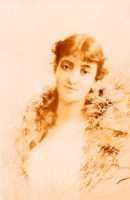
Margaret Joan Trudeau (née Sinclair, formerly Kemper; born September 10, 1948) is a Canadian author, actress, photographer, former television talk show hostess, and social advocate for people with bipolar disorder, with which she is diagnosed. She is the former wife of Pierre Trudeau, 15th Prime Minister of Canada; they divorced in 1984, during his final months in office. She is the mother of Justin Trudeau, the 23rd Prime Minister of Canada; the journalist and author Alexandre "Sacha" Trudeau;] and the deceased Michel Trudeau. She is the first woman in Canadian history to have been both the wife and the mother of a prime minister.
From 2002 to 2017, Trudeau was the honorary president of WaterAid Canada, an Ottawa-based organization dedicated to helping the poorest communities in developing countries build sustainable water supply and sanitation services. In 2014, she visited Mali as an ambassador of WaterAid Canada.
On May 5, 2006, Trudeau announced she has bipolar disorder. Since then, she advocated for reducing the social-stigma of mental illness—bipolar disorder in particular—with speaking engagements across North America. In May 2019, she presented the one-woman-show Certain Woman of an Age in Chicago as part of the city's Wellness Week. She is an honorary patron of the Canadian Mental Health Association. In July 2019, she attended an opening ceremony of WE College in Narok County (Kenya) with the Former Prime Minister of Canada Kim Campbell, The First Lady Margaret Kenyatta and Craig Kielburger, a co-founder of WE Charity organization.
In 2010, she authored Changing My Mind, a book about her personal experience with bipolar disorder.
In 2013, Trudeau received an honorary degree of Doctor of Laws from the University of Western Ontario in recognition of her work to combat mental illness.
[taken from Wikipedia article on Margaret Trudeau]
Margaret Trudeau's memoir published in 1979 sold well, fueled by the curiosity of the public and a scandal filled book tour before it was released. It was the first of Margaret Trudeau’s many books, her first efforts focused on her search for happiness after a disastrous marriage to Pierre Trudeau the Prime Minister of Canada and her later books focused on her struggle with mental illness.
After a secret wedding to the fifty-one year old prime minister in 1971, the beautiful twenty-two year old Margaret was quickly thrust into the spotlight of becoming a First Lady, a role for which she was thoroughly unprepared and one which she came to hate. Six years and three children later, she left Pierre after a scandal filled period during which she danced at Studio 54 with rock stars, had several affairs including one with a handsome US senator (later identified as Ted Kennedy) and smoked pot under the noses of her RCMP security detail.
This is the first of her three memoirs, the second, “Consequences” was published in 1982 and “Changing My Mind” in 2010. In this first book, she describes how during her years as Pierre’s wife, she was the object of so much attention she felt like a fish in a fishbowl. Before her marriage she had greeted life as a free spirit, traveled the world and sampled much of what it had to offer. She was able to do what she wanted without the constant criticism of anyone watching her closely, ready to call her out and bring attention to every misstep she made. She found it uncomfortable and suffocating.
She was eighteen when she met Pierre Trudeau while on a vacation in Tahiti in 1968. At the time Trudeau was Minister of Justice. Margaret did not know recognize him but was charmed by this intelligent, athletic, older man and they began what Margaret describes as a “fairy tale romance”. Their secret relationship and six-month engagement was known only to their families so Canadians were shocked one morning to wake up to the news their Prime Minister was married. However, they were thrilled that their free wheeling, bachelor head of state had finally settled down and were thoroughly taken in by the pretty young woman he had chosen, a women who had sewed her own wedding dress and converted to Catholicism to marry their head of state.
When she married Pierre, little was known about Margaret except that she was one of the five daughters of former Liberal Cabinet Minister James Sinclair. Her life was about to change dramatically. After the couple settled in Ottawa, Margaret took on her role as First Lady but experienced difficulty from the beginning. She was unprepared for the ceremonial duties and blindsided by the intensive press stories about everything she said or did. She had always been an independent minded young woman, who followed her own muse, did what she wanted and answered only to herself. In Ottawa she felt like a caged bird, like a “glass panel” had been gently lowered around her to prevent her making her own decisions or being exposed to public criticism.
Initially the public enjoyed seeing what appeared to be the couple’s close and loving relationship and after having three children in quick succession Margaret gained their admiration as a loving and caring mother. But behind the scenes things were quickly falling apart. Margaret resented Pierre’s long work-related absences and over time the marriage fell apart. They separated, Margaret left the children with her husband and became a much-photographed jet-setter, often headlining the news with her various outlandish antics, granting revealing interviews to both Canadian and American magazines and leading a high-flying life.
This book is about her marriage, an honest tell all book about what went on behind the scenes of the unlikely union of a flower child and a high-profile politician. In it she gave many private details of what it was like in the “long tunnel of darkness” of her marriage.
Written with startling honesty, she describes the realities behind the often-glamorous facades, adds details to the scandals that had already been widely reported and explains how the red tape, the ever-present security, the numerous grand parties, state visits and teas stultified her search for independence and self-fulfillment. She found it impossible to live restrained by the numerous rules and protocols required by her position. Desperately unhappy and plagued by mood swings, she began a trial separation from Pierre in 1977. What followed was two years of absolute mayhem in her personal life.
At that point after so much bad press, the public had little sympathy for her or her erratic and outlandish behavior. Every time she did something outrageous, like serenading the First Lady of Venezuela with a self-composed tune at a state dinner after secretly taking hallucinogenic peyote, it brought her more publicity. It appeared she was deliberately engaging in provocative behavior to get attention. Her purpose in writing the book was to present her side of the story and many readers, equally curious, disgusted and sometimes charmed by her acting out, bought her book which sold well.
Margaret candidly shares her perspective on the life she lived from the time the picture of her was taken as a demure child bride, to earth mother and then as a jetsetter determined to be free. It did not gain her much sympathy from the public as she turned her back on the Prime Minister and thumbed her nose at Canadian political life. The public no longer saw her as charming, instead they saw her as relentlessly selfish, unstable and a little “ditsy”.
As she embarked on a promotional tour for the book, there were rumours that it included stories of her intimate and private life with Pierre and the one-night love affair that was the last straw of her troubled marriage. This of course fueled sales for the book further as did the serialization of the book in the British papers and the news the paperback rights had already been purchased. Adding to the chaos and furor was that Pierre Trudeau was in the middle of a campaign for re-election and put in the distasteful position of having to compete for media attention with his wife. As Pierre addressed audiences and spoke about unity and economic stability, Margaret was traveling across Canada and the United States talking to spell bound audiences about how she had to smoke weed to get through a day in Ottawa. It had an interesting effect on the campaign with the Liberal Party worried that Margaret’s ongoing discretions reminded Pierre's audience of his bad judgement in choosing his wife.
Margaret wrote the book with the help of ghost writer Caroline Moorehead, who says Margaret took the project seriously, her effort focused on explaining what it was like to be so young and the wife of a Prime Minister. Although some were sympathetic to her plight, her detractors pointed out how Margaret did not enter her marriage blindly. She had lived her life as the daughter of a high-profile Ottawa politician and had already experienced what life was like in a political family. What was she thinking life would be like as the wife of the highest politician in the land?
Margaret developed the title “Beyond Reason” for her book because she said that was what the public accused her of, behavior beyond reason. What was not known at the time was that Margaret had an undiagnosed mental disorder, a fact that came to light only years later. One of the reasons she says she acted as she did was because at that time in her life, she was not thinking with a rational mind.
Looking at the narrative, it is easy to see many of the danger signs of a life headed for trouble and about to implode at some point in the future, but it wasn’t until several years later that Margaret was diagnosed with bipolar disease. Given the resources available to the highest office in the land, it is difficult to understand how that could not have been determined years earlier so that Margaret could have received the help she needed. Although anyone suffering from those issues must acknowledge they need help and Margaret was probably not ready to do that as she refused to consistently follow any medication regimen that was offered her. And realistically, any hint that the Prime Minister’s wife had a mental disorder would have its own inevitable fallout. Perhaps no one was willing to make that call given what might have followed.
Those interested in Margaret Trudeau’s life and her evolution to eventually become a respected mental health advocate would be wise to start with this book. It certainly puts her journey in a context that is helpful in understanding how and why she took the paths she chose.
My mom dropped this off at my house quite a while back. It was from my grandmother's collection, which my mom has slowly been reading through and passing on. "I thought you might like this."
I didn't really think too much about it at the time, but one night in the fall I picked it up while I had a touch of insomnia and it absorbed me right away. For whatever reason, I really like Margaret's voice in this book. I immersed myself in her life and circumstances and flew through this read really quickly. This book actually got me back into the habit of reading hardcovers instead of my phone before bed. No small feat.
2.5 I will try to stay away from the politics of it all and focus on the writing. there was a lot of repetition. obviously, there were things she wanted to emphasize, but it came off as rambling. also, yes, I wanted to read about the stuff I have heard about her over the years. barely anything was included of that nature. the whole thing read like a court defense.
I was surprised that this book has so few reviews, but maybe I’m assuming that because someone is famous in Canada they must be famous elsewhere. I mean, Margaret Trudeau was the subject of at least one Saturday Night Live joke, so even non-Canadians have heard of her, right? Well, whatever: the first book of memoirs .(yes, she wrote more than one) by the ex-wife of our most famous prime minister should be considered an important historical document. Margaret Trudeau (nee Sinclair) was a typical child of the sixties, albeit one born to privilege. The daughter of an MP, she grew up in a ‘typical’ WASP household determined to reject the “despicable bourgeois world of bridge clubs and whiskies before dinner.” She was rebelling against the same strictures everyone else was rebelling against, but because of her looks and connections, she ended up doing it on a world stage. “I was not so much a hippy as a failed hippy […]I had gone through the North American adolescent experience- sixties high school graduate, university with student activists, rebellion against my parents, seven months on the hippy trail in Morocco -and come out the other end with even less idea about what was to become of me than when I had begun.”
Like many people, she was not a particularly committed radical, merely absorbing the zeitgeist of campus protests, reading Leaves of Grass, smoking grass, and having endless conversations about politics and philosophy. She soon met a guy called Yves (such guys are never called Bob or Bill) who inducted her into a much more serious form of radicalism. But he was into armed revolution and poor Margaret didn’t have it in her to go down that path. So she returned home to Vancouver and grandma’s house, not sure about what to do. It was while she was moping and gazing at her navel that her mother set her up with Pierre Trudeau because yes, her father having been an MP and former cabinet minister, the Sinclairs would happen to know the new glamour-boy prime minister. Her free spirit captivates Pierre and they are soon married. As she keeps reminding us, she was only twenty-two and he was old enough to be her father. Everything is fine at first but then! Being the prime minister’s wife is such a drag! Her free spirit feels trapped by the fusty confines of politics and protocol, and her early marriage begins to wear on her. Her sensibilities are constantly assaulted: the décor of the royal yacht Britannia strikes her as dowdy, and she is mad that Pierre gives her a small allowance which won’t let her spend as much on clothes as her new BFF, Queen Alia of Jordan. Her brattiness is enlivened by the occasional comic scene. For instance, on meeting Buckminster Fuller: “He came in, sat down, refused lunch, saying he had no time to waste on food, spoke incomprehensibly and without interruption for an hour and a half, and told me he was painting a tapestry of careful thought and I was not to interrupt. When he left I cried.” She soon leaves Pierre for a life of partying at Studio 54, going around with the Rolling Stones, taking up photography, then taking up acting, and generally becoming a newly emancipated seventies woman with really famous friends. After reading this, I recommend reading Shoe, a somewhat different take on surviving the sixties, by someone not as privileged.
Margaret Trudeau is not known for living a cautious life. She blazed onto the national stage in 1971 as the ravishing 22-year-old bride of the 51-year-old Canadian Prime Minister. Their unlikely union, which produced three sons, ended in 1977 amid lurid headlines that Pierre Trudeau's erratic wife had gone off to photograph The Rolling Stones. In her 1979 autobiography, she fills in the details of her encounters with The Rolling Stones and other celebrities, her "long tunnel of darkness" experienced during her marriage and her affair with an unnamed man, later identified as senator Edward Kennedy.
I really enjoyed this book; this was the third time that I have read it and I will be keeping it on my bookshelf to read again some time. I give Beyond Reason an A+! and have put Margaret Trudeau's two other books, Consequences and Changing my Mind on my Wish List.
I picked up this book because I remembered the title from when I was a teenager but I would have been too young to have been allowed to read it. After reading Margaret’s words, I still could not understand how a prime minister in his 50’s could have decided that marrying a young and inexperienced woman barely out of her teens could have been a good idea. This marriage was similar to that of Prince Charles and Lady Diana, in the 1980’d, with respect to the age difference and mismatched expectations. I could also not help but wonder whether Margaret’s frequent use of cannabis contributed to her mood disorder and whether she had an undiagnosed postpartum depressive disorder. The book is written in a conversational style and has interesting photos. Overall, I felt sadness for Pierre Trudeau and Margaret Sinclair and for what right have been, and for their three children who experienced marital separation and divorce when both were much less common.
Very eye opening. Not an edge- of-your-seat read, but if you want to understand the Trudeaus it's a necessary read. There were certain things I didn't know about her, including the age gap between Margaret and Pierre.
I found this book at a thrift shop. It seems to have been written just as Margaret Trudeau left the public eye.
It gave me a fascinating glimpse into the life of a person who is in the public eye, eg. all the safety concerns and security measures taken to keep Margaret safe, as the Prime Minister's wife. She said how her itinerary was detailed down to the minute, indicating where she was supposed to be, every minute of the day, and how she started to rebel against it after awhile.
I read it around the same time Britney Spears was getting media attention for her erratic behavior, and if her schedule was anything like Margaret's, well that's an awful lot of stress for a person to be under!
I had started reading this before the current Prime Minister came into office. Once he had, I wanted to finish it right away, so I could move on to later memoirs. This first-person narrative is written with fresh wounds, and a great deal of humility. It made me want to look up interviews with the 22 y.o. First Lady, who was Diana before Diana was cool. She may have played The Doll's House on those 3 little boys, but at the end of this quick read, you might sympathize.
I read her current book first, and then found this old paperback from 25 years ago through some effort. Really fascinating to read memoirs by the same person half a lifetime apart! I still really like her and her writing. Interesting how she brushes over her mental illness at the time, but fully understands what happened later in life. Many of the same stories were told with different details highlighted.
Read this one after watching a mini-series on TV. I didn't realize what role she played in Canadian politics, saw her as more of a flake or liability. Her ideas (30 years later) don't seem so strange anymore (like wanting Canadian flowers planted in the gardens at 24 Sussex Drive, giving Canadian gifts). It was worth the read.