t was sitting by the fire, in a mysterious and magnificent retreat, - now a thing of the past but surviving in our memory, - whence our eyes commanded a view of Paris from the heights of Belleville to those of Belleville, from Montmartre to the triumphal Arc de l'Etoile, that one morning, refreshed by tea, amid the myriad suggestions that shoot up and die like rockets from your sparkling flow of talk, lavish of ideas, you tossed to my pen a figure worthy of Hoffmann, - that casket of unrecognized gems, that pilgrim seated at the gate of Paradise with ears to hear the songs of the angels but no longer a tongue to repeat them, playing on the ivory keys with fingers crippled by the stress of divine inspiration, believing that he is expressing celestial music to his bewildered listeners.
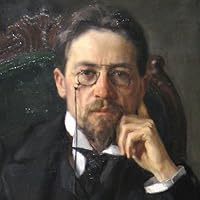
French writer Honoré de Balzac (born Honoré Balzac), a founder of the realist school of fiction, portrayed the panorama of society in a body of works, known collectively as La comédie humaine.
Honoré de Balzac authored 19th-century novels and plays. After the fall of Napoléon in 1815, his magnum opus, a sequence of almost a hundred novels and plays, entitled, presents life in the years.
Due to keen observation of fine detail and unfiltered representation, European literature regards Balzac. He features renowned multifaceted, even complex, morally ambiguous, full lesser characters. Character well imbues inanimate objects; the city of Paris, a backdrop, takes on many qualities. He influenced many famous authors, including the novelists Marcel Proust, Émile Zola, Charles John Huffam Dickens, Gustave Flaubert, Henry James, and Jack Kerouac as well as important philosophers, such as Friedrich Engels. Many works of Balzac, made into films, continue to inspire.
An enthusiastic reader and independent thinker as a child, Balzac adapted with trouble to the teaching style of his grammar. His willful nature caused trouble throughout his life and frustrated his ambitions to succeed in the world of business. Balzac finished, and people then apprenticed him as a legal clerk, but after wearying of banal routine, he turned his back on law. He attempted a publisher, printer, businessman, critic, and politician before and during his career. He failed in these efforts From his own experience, he reflects life difficulties and includes scenes.
Possibly due to his intense schedule and from health problems, Balzac suffered throughout his life. Financial and personal drama often strained his relationship with his family, and he lost more than one friend over critical reviews. In 1850, he married Ewelina Hańska, his longtime paramour; five months later, he passed away.
Scritto nel 1837,si ricollega cronologicamente e tematicamente al gruppo di opere dell'autore spinte alla "ricerca dell'assoluto".
Racconta della passione d'amore che coglie un conte italiano esule a Parigi per la sua appartenenza a gruppi sovversivi votati all'indipendenza dell'Italia dal giogo austriaco, nei confronti della avvenente Marianna, moglie innamorata e devota dello spiantato musicista Gambara incapace di tradurre sul pentagramma i suoi ispirati sogni musicali. Tra i tre nasce una amicizia voluta dal conte che spera, mostrandosi generoso e interessato alla musica di Gambara, di attrarre a sé Marianna e farne la sua amante.
Racconto che mi ha poco coinvolto e per fortuna non abbastanza lungo da indurmi ad abbandonarlo durante la lettura; nelle note in fondo al libro si legge che l'autore aveva trascinato a lungo la scrittura di quest'opera, forzosamente costretto dai debitori incalzanti a concluderla e darla alle stampe.
Probably not appealing to many, but this is a remarkably clever piece of writing... A nobleman, temporarily exiled from Italy for some political imprudence, falls in love with Marianna, married to a composer twice her age. Andrea decides to woo her by supporting him, and so it is that Balzac has the opportunity to write about music - and opera in particular - in an astonishingly gifted way. For, it is said, that when a musician or artist is asked what they mean by some aspect of their art, many reply that if it were possible to explain the concept in words then they would not have needed to create a work of art or music. Yet Balzac - using words - has managed to convey the art of composition and harmony that Gambara has composed. And furthermore he is able to critique Meyerbeer in a very sophisticated way. Balzac could assume that most of his readers knew the language of music and would know what he meant with his references to chords and keys and so on - because in those days such accomplishments (reading, singing and playing music) were a part of basic education for the class of people for whom he wrote i.e. the literate. No such assumptions could be made by any author today; most people don't even know how their favourite music is constructed much less an opera. So even though this is an age-old story of a man hell-bent on seduction it is one with limited appeal. I consider myself very lucky to have had music education that enabled me to enjoy it.
On reflection about whether Gambara was a fool or not, I think that Balzac could be doing one of two things: Meyerbeer was all the rage in Balzac's era, a superstar according to Wikipedia. So... * Maybe his savage critique of M's opera is a snipe at popular taste and/or it's a critique of 'heavy' German opera compared to 'elegant' French opera or * He's showing that the young count doesn't know as much about music as he thinks he does (because he doesn't recognise Meyerbeer's brilliance) Which would mean we can't take his judgements about G's music seriously?
Gambara is one of Balzac's wry studies of unsuccessful genius, in which it closely resembles The Unknown Masterpiece, about a painter named Frenhofer.
A wealthy Italian count named Andrea Marcosini becomes intrigued with a woman he thinks is a woman of the streets who turns out to be the young wife of an older Italian composer named Paolo Gambara. Marcosini chats up the composer to get closer to the young wife and ends up getting interested in Gambara's musical theories. He tells the wife, Marianna, that he intends to bankroll them and find a new and better apartment for them.
Gambara turns out to be one of those people who is half angelic genius and half fool. The Count is both impressed and dismayed by Gambara, but is as good as his word. Of course, he improves Gambara's lot monetarily while waltzing away with Marianna.
The ending is cynical and somewhat funny, but I don't want to give it away. Gambara is a relatively short read, but can seem longer in those bits where Balzac wishes to impress us with his knowledge of music. For him to spend some 10-20 pages on an obscure Meyerbeer opera (Robert le Diable) which no one has heard in a century, is a bit excessive -- as is the scene where Gambara gives us a long musicological rundown of his proposed opera on the life of Mohammad.
I love music, but talk about music never does anything for me.
Balzac's "Gambara" philosophical study is concerning music, I loved this story but I think the musical comments were kind of lost on me, whereas a true musical person would grasp the meaning more so. This story is in the poor Italian section of Paris and the inhabitants which are poor artists. The regular characters of the Human Comedy are not present but several of the Comtese are mentioned, as Andrea visits their salons.
I didn't read this edition but from a Delphi collection of his works that included the below.
"Published in 1837, this short story is set in Paris shortly after the July Revolution of 1830, which saw the “Citizen King” Louis Philippe placed on the thr.one. A wealthy Milanese nobleman by the name of Count Andrea Marcosini is wandering in an area adjacent to the Palais Royal, frequented by prostitutes, in pursuit of an intriguing-looking young woman."
Story in short- An exiled Italian nobleman is living in France and comes across an impoverished young girl who he cannot help but dream about her.
"New Year’s Day of 1831 was pouring out its packets of sugared almonds, four o’clock was striking, there was a mob in the Palais-Royal, and the eating-houses were beginning to fill."
"This personage was a Milanese of good family, exiled from his native country, where some “liberal” pranks had made him an object of suspicion to the Austrian Government. Count Andrea Marcosini had been welcomed in Paris with the cordiality, essentially French, that a man always finds there, when he has a pleasant wit, a sounding name, two hundred thousand francs a year, and a prepossessing person. To such a man banishment could but be a pleasure tour; his property was simply sequestrated, and his friends let him know that after an absence of two years he might return to his native land without danger."
Andrea needs to leave Italy until the government cools down and he is able to return. Meanwhile being rich and only 23, he is warned by French friends to be careful of the pitfalls of life, being that he had a strict up bringing that lack in all experiences, so he was told to have many girlfriends so that he will get it out of his system. He is able to follow this advice until he sees a poor but enchanting girl and though he has seen as pretty in his circle, he is obsessed with her and follows the young lady. He sees her go into a squalid home but this does not stop him from finding out about her. The owner and cook of the house is an Italian who likes to experiment on his cuisine and this has caused him many problems with governments and holding down jobs, thinking that he is poisoning his customers. Paolo Gambara is Marianna's older husband, being in his forties, she treats him more like a child and a father. Andrea hears that she is devoted to her husband and other men have failed to win her for themselves, so he devises to not make fun of him but make a friend of this obsessed man. Gambara's mistress is his music and when Marianna met him long ago she hoped to help make him a great man but years have gone by and they are still poor and he is ridculed. Andrea tells her that he loves her but will make Gambara great and when she changes her love to him, he will be there for her. She is grateful and sees that he has kept his word but it is not too easy to help the musician, whose ideas are not in harmony because he feels that science and mathematics are all that is needed for music to reach perfection. Andrea hears Gambara's opera which he thinks is terrible as do others, though his voice is close to heaven at times as well as his invented instrument. Andrea sees that in having Gambara drink, he starts to like the popular theater of the day and sees where he went wrong but he soon sees what Andrea is doing, even though Andrea has helped the couple financially, he refuses to drink again and complains about other music. With all the help and understanding, Marianna has fallen in love with Andrea and leaves her husband for her lover. The cook sees her 5 years later coming back to her husband who is worse off but is happy to see his haggard wife. Her looks must have started to diminish plus her travels made it worse. She tells them that Andrea married a dancer. Did he offer help to return her home? I wonder about all that. Though she never was loved by her husband as Andrea loved her for the time he did, was it worth having left her husband? She should have stayed and kept trying to help her husband. Andrea could not marry a married woman but could they see about divorce. I sure he wanted a family life being older but the unfairness is present. A married woman should never run away for a man, he could drop her when he saw the next pretty face. Marianna helps her husband try to make money by his singing. When he had to sell all his things, his musical notes are thrown away to wrap fish and garbage but he remembers and he sings his music. His music is thought to belong to a popular musician and how great it is now. He was before his time and he lost his chance to be something more. They are poor and helped by another noble couple, who offer to write to Andrea concerning helping the Gambaras but Marianna refuses. I really wanted Andrea to be a good guy and not just kick her to the curb. I don't think in the end he will be too happy.
"Thus his theories as an artist, a thinker, and a poet were in frequent antagonism with his tastes, his feelings, and his habits as a man of rank and wealth; but he comforted himself for his inconsistencies by recognizing them in many Parisians, like himself liberal by policy and aristocrats by nature. Hence it was not without some uneasiness that he found himself, on December 31, 1830, under a Paris thaw, following at the heels of a woman whose dress betrayed the most abject, inveterate, and long-accustomed poverty, who was no handsomer than a hundred others to be seen any evening at the play, at the opera, in the world of fashion, and who was certainly not so young as Madame de Manerville, from whom he had obtained an assignation for that very day, and who was perhaps waiting for him at that very hour. But in the glance at once tender and wild, swift and deep, which that woman’s black eyes had shot at him by stealth, there was such a world of buried sorrows and promised joys! And she had colored so fiercely when, on coming out of a shop where she had lingered a quarter of an hour, her look frankly met the Count’s, who had been waiting for her hard by! In fact, there were so many buts and ifs, that, possessed by one of those mad temptations for which there is no word in any language, not even in that of the orgy, he had set out in pursuit of this woman, hunting her down like a hardened Parisian."
"Andrea raised his cloak as high as his moustache, and fled from the street, spurred by the disgust he felt at this foul person, whose clothes and manner were in harmony with the squalid house into which the fair unknown had vanished. He returned with rapture to the thousand luxuries of his own rooms, and spent the evening at the Marquise d’Espard’s to cleanse himself, if possible, of the smirch left by the fancy that had driven him so relentlessly during the day."
“For, after all,” said he to himself, “if she really wished to avoid me and put me off her track, it is because she loves me. With women of that stamp, coyness is a proof of love. Well, if I had carried the adventure any further, it would, perhaps, have ended in disgust. I will sleep in peace.”
"And, in spite of it all, if fancy had stripped the woman of her livery of misery, it would have spoilt her for him; for he wanted her, he longed for her, he loved her — with her muddy stockings, her slipshod feet, her straw bonnet! He wanted her in the very house where he had seen her go in."
"Brought up by two abbes, who, in obedience to a very pious father, had rarely let him out of their sight, Andrea had not fallen in love with a cousin at the age of eleven, or seduced his mother’s maid by the time he was twelve; he had not studied at school, where a lad does not learn only, or best, the subjects prescribed by the State; he had lived in Paris but a few years, and he was still open to those sudden but deep impressions against which French education and manners are so strong a protection. In southern lands a great passion is often born of a glance. A gentleman of Gascony who had tempered strong feelings by much reflection had fortified himself by many little recipes against sudden apoplexies of taste and heart, and he advised the Count to indulge at least once a month in a wild orgy to avert those storms of the soul which, but for such precautions, are apt to break out at inappropriate moments. Andrea now remembered this advice. “Well,” thought he, “I will begin to-morrow, January 1st.”
"La Signora Gambara will not have wasted her time if she has gained the interest of a gentleman so generous as you appear to be. I can tell you in a few words all we know of the woman, who is really to be pitied. “The husband is, I believe, a native of Cremona and has just come here from Germany. He was hoping to get the Tedeschi to try some new music and some new instruments. Isn’t it pitiable?” said Giardini, shrugging his shoulders. “Signor Gambara, who thinks himself a great composer, does not seem to me very clever in other ways. An excellent fellow with some sense and wit, and sometimes very agreeable, especially when he has had a few glasses of wine — which does not often happen, for he is desperately poor; night and day he toils at imaginary symphonies and operas instead of trying to earn an honest living. His poor wife is reduced to working for all sorts of people — the women on the streets! What is to be said? She loves her husband like a father, and takes care of him like a child. “Many a young man has dined here to pay his court to madame; but not one has succeeded,” said he, emphasizing the word. “La Signora Marianna is an honest woman, monsieur, much too honest, worse luck for her! Men give nothing for nothing nowadays. So the poor soul will die in harness."
“And do you suppose that her husband rewards her for her devotion? Pooh, my lord never gives her a smile! And all their cooking is done at the baker’s; for not only does the wretched man never earn a sou; he spends all his wife can make on instruments which he carves, and lengthens, and shortens, and sets up and takes to pieces again till they produce sounds that will scare a cat; then he is happy. And yet you will find him the mildest, the gentlest of men. And, he is not idle; he is always at it. What is to be said? He is crazy and does not know his business."
"Besides, in these times liberty is no longer proscribed; it is going its rounds again. At least, so these good people think,” said he, leaning over to speak in the Count’s ear, “and why should I thwart their hopes? I, for my part, do not hate an absolute government. Excellenza, every man of talent is for depotism! “Well, though full of genius, Ottoboni takes no end of pains to educate Italy; he writes little books to enlighten the intelligence of the children and the common people, and he smuggles them very cleverly into Italy. He takes immense trouble to reform the moral sense of our luckless country, which, after all, prefers pleasure to freedom, — and perhaps it is right.” The Count preserved such an impenetrable attitude that the cook could discover nothing of his political views."
Paolo Gambara “I had built some hopes on the success of the Martiri, for we votaries of the blue divinity Hope always discount results. When a man believes himself destined to do great things, it is hard not to fancy them achieved; the bushel always has some cracks through which the light shines. “My wife’s family lodged in the same house, and the hope of winning Marianna, who often smiled at me from her window, had done much to encourage my efforts. I now fell into the deepest melancholy as I sounded the depths of a life of poverty, a perpetual struggle in which love must die. Marianna acted as genius does; she jumped across every obstacle, both feet at once. I will not speak of the little happiness which shed its gilding on the beginning of my misfortunes. Dismayed at my failure, I decided that Italy was not intelligent enough and too much sunk in the dull round of routine to accept the innovations I conceived of; so I thought of going to Germany."
This is another book of the series Etudes Philosophiques.
Kindle Locations 169258-169262 Pendant que les compositions de Carissimi, Cavalli, Scarlati, Rossi s'exécutaient dans toute l'Italie, les violonistes de l'Opéra de Paris avaient le singulier privilège de jouer du violon avec des gants. Lulli, qui étendit l'empire de l'harmonie et le premier classa les dissonances, ne trouva, à son arrivée en France, qu'un cuisinier et un maçon qui eussent des voix et l'intelligence suffisante pour exécuter sa musique; il fit un ténor du premier, et métamorphosa le second en basse-taille. Dans ce temps-là, l'Allemagne, à l'exception de Sébastien Bach, ignorait la musique.
Kindle Locations 169309-169312 Selon moi, la nature du son est identique à celle de la lumière. Le son est la lumière sous une autre forme: l'une et l'autre procèdent par des vibrations qui aboutissent à l'homme et qu'il transforme en pensées dans ses centres nerveux. La musique, de même que la peinture, emploie des corps qui ont la faculté de dégager telle ou telle propriété de la substance-mère, pour en composer des tableaux. En
Kindle Locations 169316-169319 Les lois physiques sont peu connues, les lois mathématiques le sont davantage; et, depuis qu'on a commencé à étudier leurs relations, on a créé l'harmonie, à laquelle nous avons dû Haydn, Mozart, Beethoven et Rossini, beaux génies qui certes ont produit une musique plus perfectionnée que celle de leurs devanciers, gens dont le génie d'ailleurs est incontestable.
Kindle Locations 169339-169340 La musique seule a la puissance de nous faire rentrer en nous-mêmes; tandis que les autres arts nous donnent des plaisirs définis.
This feels like a horror story designed only to terrify a very niche audience, to which I happen to belong. Balzac often comes across as arrogant, but then I read something like this that seems to reveal the artistic anxieties he surely battled with constantly. Here his mysticism is at direct odds with his concerns for the material world.
"If you feel yourself destined for great things, it is difficult not to feel they are coming your way" he remarks about a brilliant composer. A few pages later, a small audience upon hearing some of his musical innovations remark: "certainly chance alone could not avoid the harmony of any two notes together the way this lunatic has."
I don't know if it reads this way to everyone, but it's pure nightmare fuel for me.
Balzac is a master at crafting a tale of demise and the failure of the artist. Though rather symbolic and grand, his description of the everyday experiences are still quite grounded in reality. Realism meets the fantastic!
TL;DR: Estoy convencida de que Balzac escribió este libro solo para tirarle mierda a Rossini por haberle robado la amante.
El libro es… interesante. Básicamente hay un conde italiano “liberal de ideas pero aristócrata de gustos” que sigue a una chavala por los bajos fondos de París porque quiere hacer cosas cuestionables con ella. Descubre que está casada con un compositor medio loco y pobre, así que para ganarse el amor de ella decide ayudar al marido (lowkey not a bad move, fue sorprendente wholesome ese “voy a hacerte feliz ayudando a la persona que más quieres”). Total, que intenta “curar” al marido para que deje de tener ideas tan raras y metafísicas sobre la música y sea más normal. Para probar que definitivamente está curado lo acaba llevando a una representación de Robert le Diable y todo. Bueno que al final confirmamos que no sale bien, sigue siendo un chiflado y la chica se va con el noble que la acaba abandonando y ella al final regresa con el compositor pobre y loco y viven una existencia miserable hasta el final de sus días por el único crimen de tener unas ideas sobre el arte demasiado elevadas para la mayoría de mentes.
El libro se mofa bastante del concepto de artista torturado y del genio compositivo. Toca temas interesantes como lo de si la música es la más hermética de las artes o de dónde proviene la inspiración. Y bueno, tengo que reconocer que la crítica a Robert le Diable es terriblemente detallada, mi madre. Vaya máquina estaba hecho el Honoré.
Pero bueno, pasemos al salseo en cuestión: Balzac tenía una amante que era Olympe Pelisser. La cosa es que esta chica lo dejó y acabó teniendo otros amantes como (YOU GUESSED IT), Rossini. La cosa es que yo creo que puede que Balzac estuviese tirándole pullitas a Rossini con este libro porque hay una escena, por ejemplo, en la que un personaje dice algo del palo de “Rossini no sabe componer, Beethoven es mil veces mejor”. No sé, las fechas del affair y de la creación del libro me cuadran lol
En resumen, ¿recomiendo el libro? Sí, está gracioso, aunque no sé cómo de entretenido será para una persona que no sea música. La cosa es que a mí me gustó por el salseo con Rossini, las referencias a Meyerbeer y la mención de Liszt, así que no sé, leedlo y ya me decís. BTW este fue mi primer Balzac y ni tan mal, oye. La verdad es que siendo un autor francés decimonónico me esperaba un choque cultural más grande (aka, una misoginia rampante), pero fue bastante comedido en ese sentido. Así que nada, éxito!! Confirmamos que en un futuro me leeré Eugenie Grandet y Pére Goriot. Y nada, si habéis leído hasta aquí, besis.
3.1 There are about 15 pages in this story where it is comprehensible and actually fantastic, the ending especially is a highlight. However the rest of the book is a deep dive on music that I and I would imagine most have no comprehension of, in fact as far as I am aware Balzac also had little technical understanding of music, other than enjoying listening to it. Saying that the ending of this story ties together nicely and the book is short enough to read through the music quickly. It is a study of a man who you question through out if he is talented/intellectual or not, and it culminates in you finding out in fact he is intelligent but it is too late for Gambara as he is left destitute on the street.
This novella typically accompanies a companion piece also written by Balzac entitled "The Unknown Materpiece". Both explore similar themes of genius that is unable to achieve artistic greatness (which many connect to Balzac's evaluation of his own artistic efforts). The extended deliberations and explanations that compose much of the main character's dialogue while he attempts to explain his operatic works to others makes this particular novella challenging to read; however, the overall theme of the book is provocative and helped sustain this reader's interest.
Bu kitabın konusu arka kapaginda yazıyor zaten ve kısacık bir kitap. Benim kitapla ilgili yorumum şu olacak:Ey Dedalus 80 sayfalık bir kitaba imkansız sayıda yazım yanlışını nasıl sığdırdın. Dedalus'tan Lukiundoo'yu okumuştum bundan önce ve o kitapta bir iki yazım yanlışı dışında pek bir hata hatırlamıyorum. Bu yayınevinin ilk kitaplarından diyip mazur göreceğim fakat o kadar çok hata var ki Altı Kırk Beş ayarında olduğu için mazur da göremiyorum. Bu sene keşke okumasaydım dediğim birkaç kitaptan biri.
Companion piece to the shorter (and better imho) Unknown Masterpiece (about painting) this one is about music, centreing on a composer whose musical gift seems to improve with alcohol consumption(!) and with a (kind of) love interest thrown in. Also large swathes of detailed description of musical compositions (which would require more familiarity with classical music than I personally have to appreciate).
Art as an intellectual (bordering on transcendental in terms of enlightening the maker, but perhaps incomprehensible or insensible to the outside world) endeavor, resulting in novel creations vs. an aesthetic experience that can be enjoyed and understood (but may not necessarily be as 'good' or stimulating)... and the difficulty of marrying the two successfully (nigh impossible unless you are a genius!).
Gambara (1837) is een onderdeel van de ‘Comédie Humaine’ (Études philosophiques de La Comédie humaine); het hoofdpersonage is Gambara, een nogal geëxciteerd operacomponist, die groteske instrumenten uitvindt en oude instrumenten als meubilair gebruikt, maar ook de muziek zelf kan als hoofdpersoon gezien worden. Gambara beschrijft in compositorisch detail zijn opera ‘Maomet’ (Mohammed) met vermelding van alle historische details, alle toonaardwisselingen, tempi en stemsoorten (Mohammed is een bas, Ali, zijn schoonzoon een tenor enz.). Hierna volgt een vergelijking tussen Don Giovanni van Mozart (volmaakt) en Robert le Diable van Meyerbeer. Verder zijn er ook nog wat gedachten over muziek in het algemeen, ook Palestrina, Beethoven en Rossini komen ter sprake. Hierbij komt nog het relaas van een niet zo evenwichtige relatie met een (zijn) vrouw, maar dat lijkt me van minder belang. De hoofdbrok is de (fictieve) opera ‘Maomet’. Gambara zegt dat hij zelf ook het libretto heeft geschreven, want een dichter zou er nooit in slagen dit thema afdoende te ontwikkelen; de opera omhelst het ganse leven van Mohammed, personage in wie de magie van het antieke Sabianisme en de oosterse poëzie van de joodse religie samenkomen, om een van de grootste menselijke gedichten (Koran) en de dominantie van de Arabieren voort te brengen. Het staat vast, aldus Gambara, dat Mohammed het idee van een absolute heerschappij aan de joden en aan de herderlijke of Sabiaanse religies heeft ontleend, de progressieve beweging die het schitterend rijk van de kaliefen heeft doen ontstaan. Zijn bestemming stond in zijn geboorte geschreven : hij had een heiden als vader en een Jodin als moeder. In de eerste akte ziet men Mohammed als dienstbode van Khadija (bint Choewailid), rijke weduwe, bij wie hij geplaatst was door zijn oom. Hij is verliefd en ambitieus. Verjaagd uit Mekka, vlucht hij naar Medina, en maakt van die gebeurtenis het begin van zijn eigen tijdrekening. De tweede akte toont Mohammed als krijgshaftige profeet die een krijgshaftige religie sticht. In de derde akte ziet Mohammed moe van alles, zijn leven geheel uitgeput, het geheim van zijn dood verhullend om de status van een god te verwerven, de laatste inspanning van de menselijke hoogmoed. Gambara illustreert zijn ideeën op de piano en zegt:u zal oordelen over mijn manier van met klanken uit te drukken wat poëzie slechts onvolkomen zou kunnen met woorden. De ganse opera, zegt hij, berust op een bas(stem) als op een rijke (onder)grond en zijn eerste vrouw was noodzakelijker wijze een contra-alt: Khadija was oud, zij was twintig. (sic) Begrijpt u de melancholie van de ambitieuze man die niet bevredigd wordt door de liefde? Doorheen zijn klachten, door een transitie naar de relatieve toonaard (es-klein, allegro vier vierden) hoort men de doorborende kreten de epileptische verliefde, zijn woedeaanvallen en enkele oorlogszuchtige motieven, want de almachtige sabel van de kaliefen begint reeds in zijn ogen te glimmen. De schoonheden van de unieke vrouw geven hem het gevoel van de pluraliteit van de liefde, die ons zozeer treft in Don Juan. Begin je door het horen van deze motieven (piano) niet reeds het paradijs van Mohammed te zien? Maar ziehier (as majeur, zes achtsten) een cantabile in staat om de meest rebelse ziel te verruimen tot de muziek: Khadija heeft Mohammed begrepen! Zij kondigt het volk zijn ontmoetingen met de engel Gabriel aan (Maestoso in fa klein). De magistraten, de priesters, de macht en de religie, voelen zich aangevallen door een vernieuwer als Socrates en Jezus Christus, die ook de verouderde en uitstervende machten en religies aanvielen, vervolgden Mohammed en verjagen hem uit Mekka (strette in Do groot). Komt dan mijn mooie dominante (Sol, vier vierden): Arabia luistert naar zijn profeet, de ruiters komen aan (sol groot, es, kein, sol klein! Steeds vier vierden). De stortvloed van mensen wordt steeds groter. Wat de valse profeet met een stam begonnen is, zal hij doen met gans de wereld: hij belooft een universele dominantie.
Tot zover Gambara (en Balzac)
La musique est tout à la fois une science et un art. Les racines qu'elle a dans la physique et les mathématiques en font une science ; elle devient un art par l'inspiration qui emploie à son insu les théorèmes de la science. Elle tient à la physique par l'essence même de la substance qu'elle emploie : le son est de l'air modifié ; Selon moi, la nature du son est identique à celle de la lumière. Le son est la lumière sous une autre forme : l'une et l'autre procèdent par des vibrations qui aboutissent à l'homme et qu'il transforme en pensées dans ses centres nerveux. La musique, de même que la peinture, emploie des corps qui ont la faculté de dégager telle ou telle propriété de la substance-mère, pour en composer des tableaux. Madame, dit en terminant Gambara qui n'était pas gris, nous sommes victimes de notre propre supériorité. Ma musique est belle, mais quand la musique passe de la sensation à l'idée, elle ne peut avoir que des gens de génie pour auditeurs, car eux seuls ont la puissance de la développer. Mon malheur vient d'avoir écouté les concerts des anges et d'avoir cru que les hommes pouvaient les comprendre. Il en arrive autant aux femmes quand chez elles l'amour prend des formes divines, les hommes ne les comprennent plus.
Tuve que leer este libro para la facultad y todavía no entiendo por qué nos hicieron pasar por esta tortura. De todo lo que escribió Balzac, tiene que ser la obra más aburrida. Descripciones larguísimas de óperas y de los acordes y los movimientos que acompañan cada parte... Interminable!
This didn't work as well for me as its companion piece, 'The Unknown Masterpiece', which I loved. I found the art descriptions in that much more convincing than the musical equivalents in this short work - I found it all totally unbelievable.
balzac at his finest with scheming rogues and trusting victims, this time with a great deal of page time dedicated to opera and music, with a rather forward looking musical instrument that emulates an entire orchestra, and commentary on how science can enhance art
3 αστεράκια λόγω της πρωτοτυπίας του, καθώς είναι πρώτη φορά που νιώθω η λογοτεχνία να περιγράφει τόσο ζωντανά τη μουσική, σαν να μπορείς να την ακούσεις. Αν και μικρή νουβέλα, σίγουρα θέλει επιμονή για να την ολοκληρώσεις, διαβάζεται καλύτερα με συνοδεία κλασσικής μουσικής.
Que decir, estos relatos donde se pone muy explicativo y detallista, es este caso con la música, me aburre mucho. Lo bueno el desarrollo de Gambara y Marianna.
Die Geschichte ist meiner Meinung nach super langweilig und ich hasse Balzacs Art zu schreiben. Aber ich mag die Figur des Gambara ganz gerne (wenn er nicht grade 10 Seiten Opern beschreibt). Ich liebe einfach Menschen, die eine Leidenschaft haben und diese teilen. Das macht extrem sympathisch. Und das Ende war ganz nett. Andrea und Marianne fand ich furchtbar, vor allem Andrea. So ein selbstgefälliges Stück ****** Also ne, schrecklich. Habe mich beim Lesen wirklich durchgequält und teilweise Stellen nur überflogen oder gar nicht gelesen. Vielleicht etwas für Musikliebhaber, aber nichts für jemanden wie mich, die mit Opern und klassischer Musik kaum etwas anfangen kann :/
No other author can hold a candle to Balzac's musings on art... all art: poetry, painting, and in this novella - music. This work, in theme, is very similar to "The Unknown Masterpiece," but trading music for paint.
Publicado em 1837 faz parte de Estudos Filosóficos dentro da Comédia Humana. O conto tem muito em comum com Massimilla Doni, em ambos o autor discorre sobre música, dessa vez a alemã através da figura de um músico e sua jovem esposa. Ela se sacrifica por uma ideia que o domina e praticamente alucina, a criação de uma música original tocada por instrumentos inusitados.
Histórico de leitura 18/02/2019
"O primeiro dia do ano de 1831 esvaziava seus cartuxos de confeitos, quatro horas soavam, havia grande afluência de gente no Palais-Royal e os restaurantes começavam a encher."