Though our understanding of autism has greatly expanded, many autistic individuals are still missed or misdiagnosed. This highly accessible book clarifies many ways that autism can present, particularly in people who camouflage to hide their autistic traits. The authors take the reader step by step through the diagnostic criteria, incorporating the latest research as well as quotes from over 100 autistic contributors that bring that research to life. They also describe many aspects of autism that are not included in the current diagnostic criteria, such as autistic strengths and co-occurring disorders. Readers will learn about highly relevant topics, such as different types of empathy, sensory systems that are not well known, neuro-crash and burn out, and relative versus absolute thinking.
This book provides a deep, current, and neurodiversity-affirmative understanding of the less obvious presentations of autism. It is relevant to all healthcare professionals, educators, family members, autistic individuals, and anyone who is curious about autism. A clinical companion guide, Is This Autism? A Companion Guide for Diagnosing , is available for clinicians who make mental health diagnoses.
A frustrating read, because while I applaud the authors for making a concerted effort to include neurodivergent voices (and contradictory ones, at that), I was persistently on edge over their essentialising take on autism. This stems from an uncritical alignment with neurodiversity (the idea that cognitive diversity is inherently good). Yes, neurodiversity gives us a plurality of positions to reside in, undoing the damage of neuronormativity (the idea that cognitive difference is a disease to be cured), but that doesn't mean we should blindly celebrate autists as simply "born this way."
I don't know a single autist who isn't affected by PTSD or cPTSD; their traumas manifest in depression, anxiety, dissociation, bipolar, BPD, IBS, and ADHD. We are not fucking born this way, and to admit that deepens our understanding of neurodiversity. This is something scholars of disability justice, complex PTSD, and critical theory have been doing for decades. This books doesn't engage with any of those fields.
I find it incredibly irresponsible that the authors try to distance autism from mental disorders, because though there is much that needs to be destigmatised about autism (stimming, eye contact, fixation), there are plenty of traits that I find disabling. Entering a room, feeling an overwhelming sense of emotion, but not being able to locate the meaning. I don't feel shame about this, but it's something I'm intimately aware of. I hate that this cognitive difference is collapsed into neurodiversity as if it's a beautiful thing. It's not. It fucking sucks. I spent my childhood standing near people I found comforting, without speaking, not knowing that this was strange. Luckily, everyone at my high school found me endearing. I have developed better communication skills, and this does not feel like masking. It feels like reciprocity, respect, and love.
This is my issue with accommodation models that place all the responsibility of change on neurotypicals. It's condescending to neurodivergents, because it says we can't change, nor should we be held accountable for our actions. Sure, we may not recognise certain behaviours as strange, rude, or harmful, but that doesn't mean we shouldn't be held accountable for them. Don't use diagnostic labels to excuse harmful behaviour. You can use labels to explain behaviour, but the person who harms has to learn why their behaviour is unacceptable. I'm very sympathetic towards people with BPD, but that doesn't mean I will tolerate idealisation and devaluation (something the authors here call black-and-white thinking). I understand that this behaviour emerges from emotional dysregulation, overwhelming feelings of betrayal that mirror traumatic loss experienced during one's upbringing. That doesn't make the behaviour less harmful. Be sympathetic, reach out, but don't excuse.
Autists have been historically victimised; that doesn't mean we can't victimise. My ex, who I'm still best friends with, is intimately aware of how they've hurt others because they couldn't read social cues of hesitation and reluctance. These failures in recognition can be remedied by developing explicit communication rules on consent; being very clear before an advance is made, and very clear that a direct "no" is not rude, but fucking necessary. This is on the autist, as much as the person they're engaging with.
I get it: this is a book about recognition and validation, but don't put us on a pedestal. We can fuck up. We can fuck up really bad. Just because our autistic traits will be with us for life, it doesn't mean we can't relate to them differently, and grow new patterns of expressing them.
See Corvus's review on Mad World: The Politics of Mental Health for further critiques of neurodiversity and the social model of disability. They make a great point about how debilitating their OCD is, and that it shouldn't be uncritically celebrated as cognitive difference.
See also my review on Empire of Normality: Neurodiversity and Capitalism for a more systemic critique of neuronormativity. Chapman's book has a section that goes into the social construction of autism, in relation to labour exploitation and burnout, that interrogates the darker side of neurodiversity.
I originally thought I would purchase this book to use as a reference guide. However, as soon as I opened it I realized how inviting, readable, informative and enjoyable the book is. It makes sense out of the amorphous diagnostic criteria and so much more! Further, this book breaks down the subtleties of autism behaviors and challenges in understandable and relatable ways. Even if people don't formally have an autism diagnosis, the book creates an empathy in the reader for the myriad ways others communicate and possible explanations for them. Definitely a must read!!! Much gratitude to the authors!!!
This was a well-written and thoughtful book on the nuances of autism, especially in AFABs, POC and LGBTQ people, as well as men who didn’t fit the “stereotype”. It was well laid out and had great examples and vignettes from autistic folks. I was happy to hear that it mentioned common experiences like maladaptive daydreaming, alexithymia, and RSD. It also included POC and LGBTQ perspectives of autism which is so important. I highly recommend this book for anyone who wants to know more about level 1 autism and recent issues explored.
This is a good book to read if you want a diagnosis of autism—or if you've been told you're not "really autistic" because you've learned to adapt. The authors put forward a very broad theory of autism, focused on less obvious autistic people who are not obviously low-functioning (although they wouldn't like that term!) Their theory is that diagnosticians should pay attention first and foremost to the potentially autistic person's personal testimony, so that if a person says they have social difficulties or sensory sensitivities, they might be autistic, even if there is zero externally discernible problem.
A major flaw of the book is its refusal to consider the harm that diagnosis can do. The authors state that "getting a proper diagnosis of autism, particularly when it is conveyed in a neurodiversity-affirmative manner, is a very positive and even life-changing experience" because it can mean accommodation, treatment, community, and understanding. But they do not consider the stigma, lack of opportunity, and decreased ambition that can accompany a diagnosis—not to mention forced and/or ineffective treatment, a very real risk especially for children and teens.
The authors believe that diagnosis is necessary because undiagnosed "autistics are chronically misunderstood in countless ways." But this logic doesn't work. Is there any reason to believe that *diagnosed* autistic people are NOT misunderstood? What about having a diagnostic label would prevent misunderstanding?
All in all, the book is a useful polemic tool for those who want to argue for more autism diagnoses, but lacking in balance or understanding of the harm reckless diagnosis can do, especially to children.
Coherently puts together so many pieces of autistic traits and expressions that are under-discussed and under-synthesized in The Literature and in clinical settings, which on a personal level I found deeply humanizing and validating in fresh ways despite previously being validated by…Many things. But validated or not I have run into some unnecessary and major setbacks due to the kind of clinicians’ under education, anxiety and reluctance to diagnose anything outside their core interests/toolboxes described in this book. So I do yearn to mail the books to a specific list of professionals who will try anything but autism to explain someone with all the signs of autism. I am in fact a big believer in the potential utility of expert opinion, diagnosis and existing medicinal and skill based treatments. Yet there’s a hard stop on that for me, because from outpatient therapists to some of the most prestigious organizations of the country you can find clinicians who are so siloed in their diagnoses of interest and their areas of expertise that it’s not uncommon for patients to walk away with useless labels and treatment plans. For many clinicians, autism just isn’t the same thing as psychiatry, they don’t know it well, and they won’t diagnose, treat or study up on it to effectively assess and assist patients/clients. Even clinicians who are open to the idea of their autistic client often have no idea what to do with that information. It would be nice if the only experts most people can access could read even this one short book and get over the deeply annoying hump that has profound effects on the people who come to them for help. If I have a chip on my shoulder about people who don’t do this, well, it’s a god damned hassle to talk to people who follow fads and outdated data instead of listening to patients, and unfortunately that’s not too uncommon.
4.5/5, kitabın özellikle yetişkinlikte tanı alan ve hayatını nispeten daha az zorlukla sürdüren (sevmediğim tabirle "yüksek işlevli") otistiklere yönelik olmasını, dilinin savant/asperger terminolojisinin tekrarı olmamasını ve "uzman görüşü" başlıklarında doktorlar ya da psikologlar yerine otistik bireylere söz verilmesini çok sevdim, hem kendime hem de etrafımdaki nöroçeşitli insanlara yönelik anlayış düzeyimi yükselttiğini düşünüyorum.
I have mixed feelings about this book. I have heard from actually autistic people that the way these authors recruited autistic people for their input for this book was not great. I’m always skeptical of books about autism that are written by non-autistic people. In general, this book is fairly affirming, until you get to the chapter about co-occurring challenges with autism. Then the tone shifts, and there’s a lot of deficit-based language, such as disorder, etc. I didn’t even finish that chapter because honestly it felt like it didn’t fit in with the rest of the tone of the book. I appreciate the chapter on autistic strengths, but I wonder if that could’ve come earlier in the book. Overall, this was OK, but I would recommend reading a book written by an actually autistic author instead.
Really well put together book. Not only did they do a ton of research, you can tell by the amount of sourcing done, they also worded it in a very easy to read manner. This book is extremely approachable.
I loved all the quotes from all the patients/survey takers.
Comprehensive insight into all the factors of autism diagnosis and how vast the spectrum can be. I feel like there is still a lot to be understood about autism, especially since there are so many scenarios where opposite things can apply to different people on the spectrum. Makes it very difficult to decipher what it means to be autistic vs non-autistic. You would have to be exceptionally well-informed and scrutinizing to be in a position of diagnosing it. I am in the "everyone else" category of the title so this was more of a personal exploration for me than an effort to understand the demographic and I liked how each chapter prompted me to examine my own experience with these traits and how some things were quite relatable and validating. I will be going in for my own assessment in March, and still don't really know which way it will go, but am interested in knowing either way.
Therapy homework that I actually resonated with :)
Lots of interesting info and tidbits. Appreciated that they interviewed and included thoughts and first hand experiences from autistic individuals throughout every chapter. A mix of education, tying shared experiences, and all the different ways of masking, how misdiagnoses happen, and lots of other topics.
Het leest gemakkelijk, alles wordt heel duidelijk uitgelegd en mijn persoonlijke favoriet zijn de vele quotes over de ervaringen van personen met ASS. Deze is echt een aanrader!!
This book essentially serves as an informative literature review on what is currently known about autism—how to recognize it, its features, what other conditions co-occur with it, and frameworks from which to think about it.
Part I of the book is devoted to what autism looks like: the diagnostic criteria (using the DSM-5-TR) used to identify it and its main behavioural manifestations. One of the main points that stuck with me was how, even if an autistic has successfully learned how to behave in a way that matches mainstream social norms, the internal experience is still different.
In terms of notable manifestations/features of autism, it goes far beyond lack of sustained eye contact and extends to all aspects of non-verbal communication, such as gaze, prosody (stress and intonation in spoken language), gesture, facial expression, and posture. Another misconception involves relationships: many autistic people in fact do want friends but struggle with maintaining the social energy and motivation to cultivate and sustain such friendships. Another common feature of autism is repetitive or idiosyncratic behaviours. In addition to “stims” (rocking/flapping), it is common to observe patterned movements, speech, or object use (skin-picking, manipulating hair, etc.).
One of the most common features involves sensory differences, which may not always be behaviourally identifiable if an autistic has learned coping strategies. Yet, internally, such differences are often emblematic of such neurodiversity. The book covers eight senses (the main five, plus proprioception, vestibular, and interoception), stressing that the specific profile varies a lot between individuals, but that atypicality in these sense is extremely common among autistics.
Part II of the book cover co-occurring challenges with autism. Some factoids that stood out to me were that autistics are less receptive to cognitive behavioural therapy (CBT) as a treatment for generalized anxiety disorder (GAD) than non-autistics. Moreover, in high IQ autistics, “Rates of depression are much higher in autistic than in non-autistic people, and this may be particularly true in autistics with average to above- average intellectual functioning—some estimates indicate that as many as 65% of these adults are clinically depressed” (p. 180). Another fascinating finding: “While prosopagnosia is relatively rare in non- autistics (2– 3% of the general population), Ilaria Minio- Paluello and her research team found that nearly one-third of autistic people are face blind” (p. 199).
The discussion on alexithymia—difficulty in identifying, understanding, and describing one's own emotions—was extremely interesting, though of the explanations were difficult to accept. Specifically, the authors suggest that alexithymics can supposedly have an emotional reaction without being aware of it. Isn’t a more parsimonious explanation that they’re just have a physiological reaction but not emotional (since I would think an emotional reaction is characterized by being conscious of what one is feeling)?
Some weaknesses of the book were its often dry tone, convoluted sentence structure, and its light infection with and succumbing to gender (and other aspects of “woke”, for lack of a better word) ideology. Regarding the latter, there is copious topic of “multiple genders” and other fashionable ideologies circa ~2015-2023). Relatedly, we are instructed to phrase things in a less “judgmental” tone—for example, we should say “Eye contact is uncomfortable for Amy,” rather than “Amy doesn’t make appropriate eye contact.” However, the authors can’t even stick to their own advice, later characterizing eye contact as “good”, as per typical social norms.
While these aspects weakened the book, it is an informative and accessible read on the current state of autism research. Recommended.
As a non-specialist I found this book incredibly readable, insightful, and engaging. As a teacher, I've learned a great deal that enriches my understanding my students' full range of learning needs and life skills and challenges. And as a researcher in gender studies, I was happy to see the impressively nuanced and up-to-date understanding of gender and genderqueer issues as they pertain to autism, particularly, though not only, in the attention to differently-presenting autistic girls.
The book is also culturally sensitive and inclusive; meticulously organized, with helpful underscoring of key ideas; and consistently affirming of neurodivergent people, foregrounding their voices throughout.
I was hoping for a rigorous, logical examination of this topic but instead I’m bombarded with terms like "lived experience," "neurodiversity affirming speech," "intersectionality," "inclusivity" and sentimentality so exaggerated that it would be too much if used in a book for toddlers. All this denotes a penchant for dogmatic ideology, far from the free flow of ideas that is the basis for science.
Now I’m glad that we have a tool to better understand this kind of human condition but this tool is still only useful to create a separate class to lump these people into in terms of diagnoses. When it comes to understanding them, the best that these super experts can do is to say “they have a different nervous system so I’m going to list all these symptoms that might characterize them so that we can affirm their existence and shape the world around them according to their needs.”
Explaining a psychological/psychiatric condition by saying that they have a different nervous system is as useful as……. well it’s just useless. While neurodevelopmental deficiencies can be a part of the diagnosis of autism, it’s definitely not a requirement and the authors throw the label of autism around like a hot new fashion item naming celebrities and telling stories of people that identify with it.
My issue with this vigorous labelling is that it seems to take away much of the agency of these people that identify with it – "I don’t have to deal with my social anxiety or my difficulties in advancing at my career because I have a different nervous system and It’s unfair that I have to submit myself to these neurotypicals. It’s what my psychologist and psychiatrist told me so it’s true."
I’m not saying they have it easy but the assertion of these authors that the world is shaped to the needs of neurotypicals and that these “normies” hardly know what social anxiety is, displays a level of understanding so low it boggles the mind.
What we do learn here is that autism usually comes with many comorbidities, they are heavily traumatized, they are 7 times more likely to have gender dysphoria and they are more likely to delve into new trendy social justice issues, like Greta Thunberg, for example. They have a much higher likelihood to have depression and anxiety and a moderately higher likelihood to have OCD, eating disorders and at least one co-occurring mental health condition.
As I said, I’m glad we have label to explain some bizarre human behaviors and this can save patients from faulty diagnoses or excessive medications. That said, I’d say we can still be careful with labelling these people and we can try to understand them more deeply. If it comes to pass that it’s discovered to be a solely a neurological condition, then I’ll gladly stand corrected but until that happens, we can explore other avenues. One logical path could be to explore the trauma/disassociation connection with the social/emotional difficulties. Therapy is known to promote healing through neuroplasticity, I don't think we should advocate the belief that people will be stuck with a mental health label for the rest of their lives.
It was very difficult for me to settle on a rating for this book. The main thing I want you to know is that Is This Autism is definitely one that I think you *should* read.
It’s packed with science-backed facts as well as personal experiences of autistic individuals.
It reads a little on the dry side…a little like a scientific article (especially toward the end). I don’t know if that’s why it took me 7.5 months to read it or…if it was just that complex of a process comparing what I was reading to my own experience…probably that second one.
Anyway! The point is…read it! You’ll definitely be equipped with knowledge and insight that you didn’t have before.
s/o zoe for this 5 ⭐️ rec. really a great read for anyone, not just clinicians. loved the ‘what we’ve learned from the girls’ sections & the inclusion of autistic perspectives throughout. I’ll be adding this one to my bookshelf
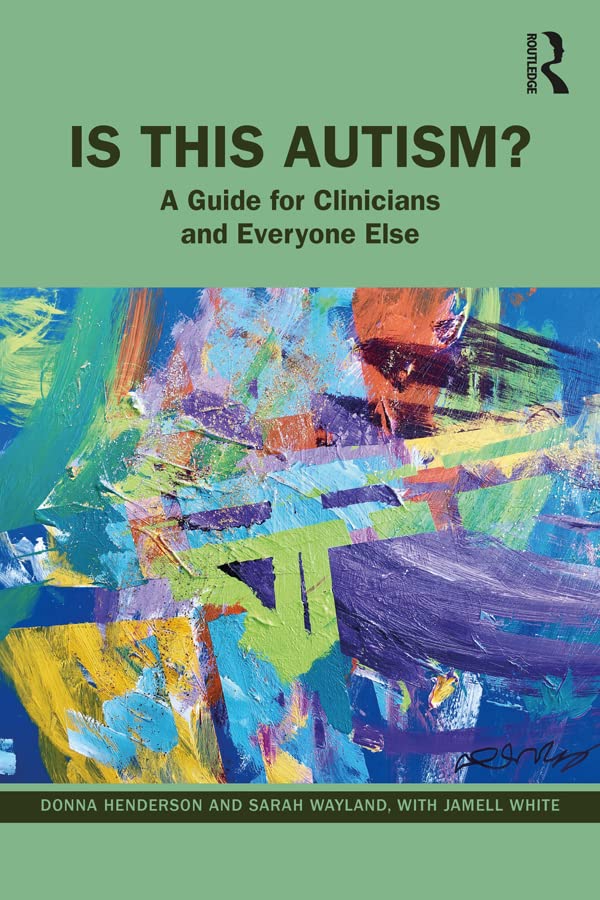
Is This Autism? I have had the pleasure of reading Is This Autism: A Guide for Clinicians and Everyone Else and Is This Autism, A Companion Guide for Diagnosing by Drs. Donna Henderson and Sarah Waylan. These books, and their associated training by the authors, should be considered the gold standard in texts on neurodiversity-affirming evaluations of Autistic individuals across the lifespan.
Anyone providing Autism assessments or supports should read and follow the guidelines provided in these thoughtfully written works. Many Autistic individuals were interviewed and included in the process of informing the author’s work for these books, and they treated this process with the respect and care that the Autistic community deserves.
To clinicians involved with assessment and support for Autistic and/or other Neurodivergent individuals (which includes almost all providers-- whether they know it or not), this set of books should be required reading to guide and inform your clinical practices.
To my fellow Neurodivergent tribe, Congratulations! The mental health field is finally starting to understand. I also recommend this book to you; I believe this book will be an invaluable guide in your process of seeking identification or validation of your lived experience. This book will also help you to be a more informed consumer of clinical evaluations of Autism and Autistic mental health care and supports. —Neurodivergent Neuropsychologist
This is an extremely validating book. As the subtitle suggests, it's a guide for clinicians and everyone else that, in my opinion, shouldn't be missed. It's a good introduction to what autism is and is not.
There are books out there that go more in depth in some of the areas mentioned in this book, like Unmasking Autism by Dr Devon Price, which focuses mostly on camouflaging and the importance of intersectionality in the neurodiversity paradigm. Both books are invaluable and must reads, but this one is particularly good to get a general sense on the topic and identify areas in which you would like to dive deeper.
As I wrote in a progress update, this is one of the most affirming (as a late-diagnosed autistic person) and intellectually-invigorating - unlike any other highly researched and qualitative - books I've ever read especially about autism. ❤️ When I was reading it, I felt like my psyche was bouncing off the walls, unable to pause for even a moment which I'm sure will unfortunately result in very little knowledge absorption. Nonetheless it was such a powerful and emotional read, a clear passion project and love letter towards all autistic folk and the ways we continue to change the world with our brilliance.
Best book on autism, especially for high-functioning autistics, girls with autism, and people who present with more nuanced forms of autism. I thought this was one of the most respectful and inclusive books I have read on neurodivergence, and I also really appreciated how they included quotes from people who are autistic. This book is not difficult to read (even though it is a guide for clinicians), and I highly recommend it for anyone who has seriously thought, "Is this autism?"
4,5 ⭐️ ik heb de nederlandse editie van dit boek gelezen, maar deze kan ik niet hier op goodreads vinden. dan maar de originele versie gebruiken.
dit boek was ontzettend interessant! het licht een hele hoop verschillende aspecten toe van autisme op een fijne manier. ook focust dit boek erop dat er een hele hoop mensen ongediagnosticeerd zijn of een verkeerde diagnose hebben en hoe dit kan. heel verhelderend boek.
A thoughtful and informative read that I would highly recommend, especially for clinicians working with autistic clients or anyone wanting a deeper understanding of autism. The book offers valuable insight, helps clarify common misunderstandings, and provides a strong foundation for understanding autistic experiences with greater awareness and compassion. Whether you are a professional in the field or simply looking to broaden your perspective, this is a worthwhile read for everyone.
A very readable, informative book about autism. I learned many things from this book, most importantly that there’s no one single autistic cognitive profile. It’s also mind-blowing to me how hard many autistic girls work to fit in as neurotypical. This explains why so many women are diagnosed later in adolescence if at all. Special thanks to the authors for including the last chapter on typical autistic strengths. I recognized some of the attributes in my child - high empathy, understanding of others’ differences, genuine, humorous. This chapter helped remind me that ASD isn’t necessarily a big scary diagnosis.
The authors are each neurodivergent but not autistic themselves, so they asked input from over 100 autistic people for quotes and to share experiences. It is slightly focused on late diagnosed females, but all may benefit from this book. Multiple views are given due to the inputs from the responders. This book will go over what the diagnostics criteria are. However, it is for a big part about challenges autists may experience. They also discuss possible co-occurring disorders. For more information about the diagnostic process, Henderson has written Is This Autism?: A Companion Guide for Diagnosing. The main goal of this book: All people deserve to be seen, to be understood, to be accepted, and validated.