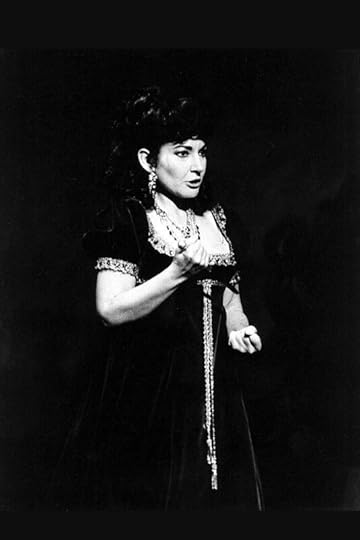
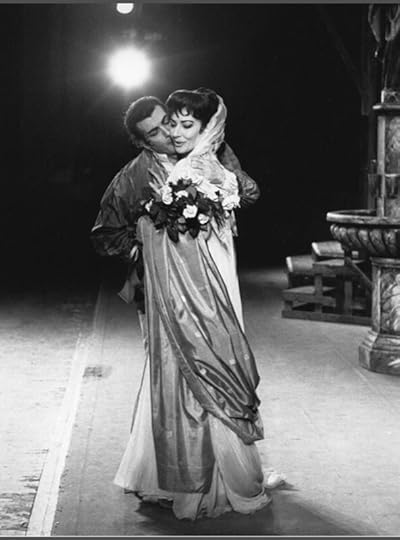
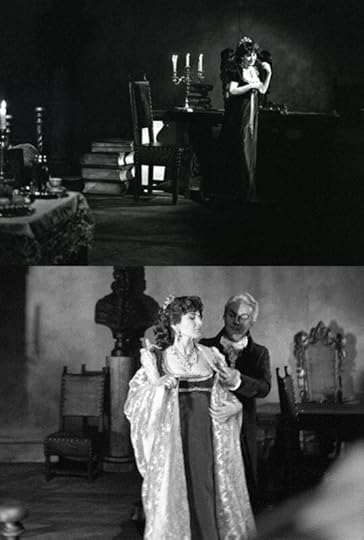
Here is one of Puccini's greatest hits, in an affordable version for complete orchestra. This story of love, art and death in Rome during the Napoleonic wars is today considered a classic for such arias as "Vissi d'arte" (I lived for art; I lived for love), but at its premiere in 1900 it was denounced as "a shabby little shocker," for things like Baron Scarpia's lechery and Tosca's termination of him with extreme prejudice. Be aware that Dover's scores are reprints from other companies that are now out of copyright; that means that they're older versions, and lack such amenities as English translations.
An Italian composer, son of Michele Puccini and fifth in a line of composers from Lucca. After studying music with his uncle, Fortunato Magi, and with the director of the Insituto Musicale Pacini, Carlo Angeloni, he started his career at the age of fourteen as an organist of St. Martino and St. Michele, Lucca, and at other local churches. However, a performance of Verdi's Aida at Pisa in 1876 made such an impression on him he decided to become an opera composer. With a scholarship and financial support from an uncle, he was able to enter the Milan Conservatory in 1880. During his three years there, his chief teachers were Bazzini and Ponchielli.
Punccini's best known operas are: Le villi (1884), Edgar (1889), Manon Lescaut (1893), La Boheme (1896), Tosca (1900), Madama Butterfly (1904), La fanciulla del West (1910), La rondine (1917), Il trittico" and Turnadot (1926).
During the composition of Turnadot, he was diagnosed with throat cancer, and died after receiving treatment in Brussles. Turnadot, was left unfinished, but was completed by Franco Alfano.
I love the unforgettable epic moment when Tosca finds her inner Scarpia and uses it against Scarpia himself. Sadly, Scarpia gets the last laugh, temporally, but that will truly be his very last laugh because there will be no more laughter in his eternal destination.
BTW, the new Met Opera production features the worst Scarpia I've ever seen. I mean that as a complement. Quinn Kelsey's Scarpia is unadulterated evil in the purest of forms. Mr. Kelsey has perfected a profanity which is most viscerally felt in the song "Te Deum" that ends the first act. The stark contrast between Scarpia's wickedness, and the innocent voices of the children's choir in the sacred setting of a church, is yet another great moment in opera.
UPDATE: I was in the front row, face to face with the devil at the Met Opera tonight. I've become a worshiper. New rating, 5 stars!
Edizione molto bella che mette a confronto il testo teatrale originario di Victorien Sardou, in cui il contesto politico ha un certo rilevo, e l’opera lirica che ne è stata tratta da Giacomo Puccini su libretto di Giacosa e Illica, più incentrata sull’elemento amoroso.
A talented young person in the performing arts victimized by a person who abuses a position of power to satisfy a passing lust? Sounds familiar to #MeToo.
The play that Puccini based the libretto for Tosca upon was written specifically for Sarah Bernhardt, the illegitimate daughter of a courtesan. It would seem that she crossed paths with many Scarpias in her life.
I read the libretto in preparation to viewing the 2018 MetHD performance, which was excellent. Seeing it once made me want to see it many more times! I always feel fortunate when my first exposure to a piece is classically staged. Creative directors sometimes forget that there is a new audience born every day.
//
7Dec2020 Update - Watching tonight’s free Nightly Met Opera Stream: Soprano Shirley Verrett takes on the title role of Puccini’s Tosca, starring opposite legendary tenor Luciano Pavarotti as Cavaradossi. Baritone Cornell MacNeil rounds out the principal trio in this thrilling 1978 performance, conducted by James Conlon.
Hay cosas de este libreto que me confunden... Y cuando veo el trabajo de los dos grandes libretistas de Puccini, Giacosa e Illica sobre el original de Sardou, considero que su trabajo ha sido soberbio sobre el original. Quizá, el espíritu de condensar supone la aparición de ciertas fallas narrativas. Pero aún así, Puccini siempre tiene razón y con su música concreta, define, especifica y logra una ópera realmente brutal, amarrando todo lo positivo que tiene en una escalada en crescendo hacia un final completamente tremendista.
Read it in preparation of listening to the opera. It gives a nice background. The play was magically related with Sarah Bernhardt, it was written for and it was during one of the performances of this play that she injured herself. I learned to like Tosca when watching the character coming alive on scene, full of passion, impulses and love.
ver esta ópera ao vivo na Arena di Verona foi sem dúvida uma das melhores experiências da minha vida! foi na própria arena que comprei uma edição em 4 línguas, podendo assim comparar o inglês ao original italiano. lindo e trágico! a representação é de uma intensidade abismal.
I read the play then watched the Opera. I didn't care for the play or the opera version. The main character Tosca was an annoying character that was full of jealousy and whiny in every single scene.
If you are beginning to learn about opera like me, I suggest reading Alexandre Dumas~The Lady of the Camellias then watching La Traviata with Anna Moffo. It was beautiful! And grab a box of tissues because it will bring tears.
Loved the 2000 production with Ricardo Muti conducting more so than others I found online. I think the translation there is a bit more emotive, a bit more closer to home than most others. The Dali-esque set designs and superb staging compliment the orchestra well, too. This is an opera not only with atmosphere, but one that easily translates into the modern-day. It's also of a more forgiving length (at least to the bladder) and it's sung-through, like Wagner. My favorite opera, to date.
Very different from the opera. In the opera you can ignore the politics and history and everything's focused on the romance between Tosca and Cavaradossi. Here there's more of a split. Definitely worth the read!
"Tosca" è una opera grande e meravigliosa di Puccini! il libretto è stupendo e bellissimo e la storia è drammatica e triste. Tosca is one of my favorite operas! I found reading the libretto in Italian and English an enjoyable experience. The story, libretto, music, are so dramatic, poetic, moving, and powerful. Tosca's final words "O Scarpia avanti a Dio" and her action at the end are breathtaking. I also love Tosca's famous words "Questo è il baccio di Tosca"; so emotional and amazing.