

What do you think?

La forme-Commune
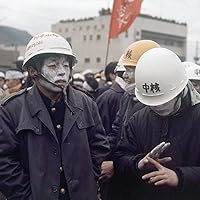
Quand l’État recule, la forme Commune s’épanouit. Ce fut le cas à Paris en 1871 comme lors de ses apparitions plus récentes, en France et ailleurs. Les luttes territoriales contemporaines, comme la ZAD de Notre-Dame-Des-Landes ou les occupations de chantiers de construction de pipelines en Amérique du Nord, ont remis à l’ordre du jour des formes d’appropriation de l’espace social. Elles ont façonné de nouvelles manières politiques d’habiter qui agissent pour interrompre la destruction de notre environnement. Mais elles ont également modifié notre perception du passé récent et donné de nouveaux noms à ce que nous voyons aujourd’hui, aiguisant notre compréhension du présent. Les luttes au long cours pour la terre des années 1960 et 1970, comme le Sanrizuka au Japon ou le Larzac, apparaissent désormais pour ce qu’elles sont : des batailles déterminantes de notre époque. Pour Kristin Ross, les processus pragmatiques et non accumulatifs qui fondent l’existence concrète de la vie de la commune – défense, subsistance, appropriation, composition et complémentarité des pratiques, solidarité dans la diversité – constituent des éléments cruciaux de ce que Marx appelait « la forme politique de l’émancipation sociale » et que Kropotkine considérait comme la condition nécessaire de la révolution et de son accomplissement.
130 pages, Paperback
Published May 19, 2023
About the author
Kristin Ross
31 books41 followersKristin Ross is a professor of comparative literature at New York University. She is the author of numerous books, including Fast Cars, Clean Bodies: Decolonization and the Reordering of French Culture and May '68 and its Afterlives.
Ratings & Reviews
Friends & Following
Create a free account to discover what your friends think of this book!
Community Reviews
Displaying 1 - 30 of 30 reviews

Read
March 7, 2025Quick read about rural ecological movements as a vanguard of contemporary communards. Reminded me of Arundhati Roy describing the forests of India as the "Maoists versus the MOUists": Local rebellions against the Memorandums of Understanding in resource megaprojects. An essay directed against the often-Marxist "sack of potatoes" prejudice against rural people, inverting the typical story of communes as urban revolutions. Some beautiful moments on location. I think I agree with the idea that contemporary communism is about a culture of control, of taking over spaces and making them your own in action with others, but the "farmers feed cities" angle of it seems like an overcorrection. But it is true, they do.

July 8, 2026
Brillant! Elogi de la defensa de la vida i de la terra, de la construcció de la comunitat i de la possibilitat d'un altre món a partir de l'apropiació del territori i la vida quotidiana. De veritat, quina il·lusió, és apassionant cada capítol.
"La defensa, en canvi, dona a entendre que encara hi ha alguna cosa de la nostra banda que posseïm, que valorem, que apreciem i, per tant, val la pena lluitar per conservar-la."
"La defensa, en canvi, dona a entendre que encara hi ha alguna cosa de la nostra banda que posseïm, que valorem, que apreciem i, per tant, val la pena lluitar per conservar-la."

December 3, 2024
i find kristin ross helpful in many ways - particularly in the asides where she again describes how present developments change how we ask questions of historic moments. This pamphlet about peasant struggle in ZAD and elsewhere is compelling and charming at times and naive at others. i ultimately couldn't shake the kind of latent 90s/00s anti-marxism / anti-communism that pops up every once in a while. i also felt that the principle and obvious criticisms of farmer's movements in the global north in 2024 weren't really addressed (that they have no lever on power, are a miniscule part of the population, and are subject to such intense competition from large-scale agribusiness that their margins provide almost no room for experimentation let alone full ecological care). worth reading tho.

March 3, 2024
Dans ce très joli et enthousiasmant essai, Kristin Ross dresse des parallèles entre la Commune de Paris, la ZAD de Notre-Dame-des-Landes, et d'autres expériences de luttes locales depuis les années 1960 et 1970. Elle en tire des leçons sur la "forme-Commune", cette forme de lutte ancrée sur un territoire où les personnes en lutte se réapproprient à la fois un espace, leur mode de vie et leur mode d'organisation en commun. Le texte est court et je l'ai trouvé absolument passionnant du début à la fin.

September 6, 2026
Muy interesante ai
August 30, 2026
Influències de la meva filla...va forta! Que no afluixi

July 4, 2025
3.5 stars standalone but 5 stars for the experience of book club that cultivated a “supple openness” in me

August 16, 2025
El tipo de coordenadas que buscaba. Un dispositivo perfecto para reinsertar el debate comunal de los 70 en un presente sin horizonte, colapsista, y agrietar su cerramiento. Qué importante recordar que la lucha por la vida es siempre una apropiación (creativa) del espacio para uso colectivo. Abrir el futuro pasa por insistir en lo cotidiano como un espacio de alianzas.

August 13, 2025
Years ago while studying the Paris Commune at uni, I came across Kristin Ross's Communal Luxury- an interesting exploration of the titular concept within the 1871 Commune. At the time, my reading was frictionless, her anarchist tendancies chiming well with my own.
Coming back to Ross's writing nearly a decade later, having moved decidedly away from this 'libertarian' bent, I still find her an interesting thinking who engaged well covering specific situations and is mostly lucid with her analysis. The majority of my points of disagreement have been clarifying rather than simply frustrating, which is always a treat.
As is the consistent theme across her writing (that I've engaged in), Ross focuses on the commune as a point of political exploration and power. In this, her writing in genuinely interesting on the opportunities for human experience within environments which are micro-breaks from capitalist political economy. There's a real value in this exploration, which can be shunned or underemphasized within a communist politics more dedicated to capturing state power. However, her 'libertarian communist' inclinations facilitate Ross drawing the links between these prefigurative political forms, and the possibilities for the state to wither away as a core structure in the intimate parts of our life.
That being said, I think the insufficiencies of this focus are highlighted when looking at a book like 'Building the Commune', which I see as an excellent case of balancing between commune's autonomy and left contesting of state structures. It feels as if Ross's thinking is insufficient for a task like this, so it's not surprising she doesn't try to approach it.
Coming back to Ross's writing nearly a decade later, having moved decidedly away from this 'libertarian' bent, I still find her an interesting thinking who engaged well covering specific situations and is mostly lucid with her analysis. The majority of my points of disagreement have been clarifying rather than simply frustrating, which is always a treat.
As is the consistent theme across her writing (that I've engaged in), Ross focuses on the commune as a point of political exploration and power. In this, her writing in genuinely interesting on the opportunities for human experience within environments which are micro-breaks from capitalist political economy. There's a real value in this exploration, which can be shunned or underemphasized within a communist politics more dedicated to capturing state power. However, her 'libertarian communist' inclinations facilitate Ross drawing the links between these prefigurative political forms, and the possibilities for the state to wither away as a core structure in the intimate parts of our life.
That being said, I think the insufficiencies of this focus are highlighted when looking at a book like 'Building the Commune', which I see as an excellent case of balancing between commune's autonomy and left contesting of state structures. It feels as if Ross's thinking is insufficient for a task like this, so it's not surprising she doesn't try to approach it.

November 2, 2025
Lefebvre had come to understand alienation more generally, as a kind of deep disempowerment experienced in all domains of life, "an inability in all areas of life to grasp or think the other." Alienation was less the loss of some human essence than it was the loss of possibilities: the sense of blockages and impasses brought on by the destruction and fragmentation of the social tissue by capitalism[...]The capitalist economic system not only creates alienation; it also limits our ability to recognize forms of alienation other than the strictly economic[...]And it presents itself as the only possible world.
October 22, 2024
I get it now

June 23, 2026
Construïm la vida comunal del nostre temps.

December 4, 2023
Une belle analyse à partir de la grille de lecture de la mobilisation de la commune de mobilisations plus récentes comme la ZAD de Notre Dame des Landes.
February 17, 2026
Llevaba tiempo con ganas de leer este libro. Hay cierta comprensión sobre las formas contemporáneas de la lucha y su relación con el espacio y la ecología que me parecen básicas, en el sentido que deberían ser ya acuerdos mínimos para el grueso del movimiento revolucionario. Sus pasajes sobre el arte y los artesanos en la Comuna de París me fueron muy esclarecedores, y siento que terminaron de darle forma en mi cabeza a como se traduce la lucha por la vida cotidiana que proclamaban los Situacionistas y Lefebvre. Sin embargo, me faltó que se profundizará en algunos aspectos que me parecieron personalmente los más necesarios, las distintas experiencias que responden a la necesidad del movimiento por resolver sus conflictos internos. Me refiero al Ciclo de los Doce, y cuan bien funcionó o no esté. ¿En la Comuna de París hubieron ejemplos similares o quizás más maduros de una suerte de Comité consultivo rotativo? En un libro que plantea la necesidad del movimiento revolucionario de la diversidad en su composición (distintas orientaciones, formas prácticas, etc.), habría que hacer un especial énfasis a los instrumentos que surgen para que está diversidad sea capaz de operar de manera eficaz sin romper el movimiento. Por otro lado, noto una ausencia peligrosa de las formas prácticas de acción directa que complementan el abanico práctico de la lucha contemporánea, hablo de los saqueos, destrucción de la maquinarias al interior del trabajo, bloqueo de carreteras, choques contra la policía, saboteó de la industria extractivista y forestal (como sucede en Chile por el movimiento Mapuche), etc. No sé puede pensar el desmantelamiento del Estado y la defensa del espacio, dejando de lado la insurrección como arte del Proletariado (Proletariado en su sentido más amplio). En cambio, cuestión que si he encontrado mucho mas presente en la reciente obra de Idris Robinson y de Jasper Bernes. Por lo que recomendaría complementar la lectura de este libro con otros.
Read
September 16, 2025Not sure about this one but it does work well as an extension of the communal luxury book. Sure the land question is important, but i’m not convinced that rural life is as prelapsarian as its made out to be here. Surely the small farmers of Europe are a product of EU subsidy as much as communal subsistence living? The ZAD is definitely interesting in terms of its composition but I think the stick gets bent too far the other way - against party AND class? Not sure. These defensive ecological movements are powerful but surely if you are forwarding diversity of tactics and broad based composition the urban and proletarian is just as important a dimension as the rural and paysan? The argument would be stronger if the movements weren’t presented as the natural successor of the Paris Commune so much as the other side of the coin.

September 28, 2025
This is an interesting book and contains some good ideas, such as tying alienation to to the loss of connection to the land. But this is certainly not a new idea, even Marx said as much. Also I'm far from convinced "paysan non-productivism" (in other words peasant subsistence farming) scales. I would even go as far as to say, as much as I want to see it, it's unrealistic. Ross seems only willing to lightly paper over the contradictions in the paysan position she is representing here, and that's only of the small handful she admits.
Heck, Ross doesn't even admit the clearest and most obvious translation of paysan is peasant (both even derive from the Old French paisant), opting for "non-corporate farmer" instead. She probably had her reasons for it, but I must say I don't find such positions helpful, particularly when they aren't even articulated.
Heck, Ross doesn't even admit the clearest and most obvious translation of paysan is peasant (both even derive from the Old French paisant), opting for "non-corporate farmer" instead. She probably had her reasons for it, but I must say I don't find such positions helpful, particularly when they aren't even articulated.

November 5, 2024
In The Commune Form, Ross examines a series of commune-like forms of social organisation in the second half of the 20th century (primarily focused on rural France), their forms and structures, and the ways in which they have resisted subsumption within the capitalist political economy. At times, Ross links these mid-20th century forms with the original Paris Commune of 1871, as well as placing them in the context of the May ‘68 movement; thus we have something of a reverse "Yesterday’s Tomorrow", where past moments of supposed failure appear in a new light because of the future events that they have informed.
January 7, 2025
“We cannot declare or decree the end of private property or wait for it to happen in some complete way. It does not await us at the end of the long train ride.”
An examination of a select few ‘embryos of communal power’ that help show a path towards life not dominated by the state or finance.
The commune is the revolution, in continual ever-changing practice, through the transformation of everyday life.
An examination of a select few ‘embryos of communal power’ that help show a path towards life not dominated by the state or finance.
The commune is the revolution, in continual ever-changing practice, through the transformation of everyday life.
February 16, 2025
While the commune formations discussed are very interesting and the book does cover some interesting ground it end up bogged down in a theoretical discussion. It's interesting as it is noted at the end that learning from praxis will overcome any theoretical discussion.
It's only half way through I discovered the author had spent time in one of these spaces. Hearing more about this and the everyday functions would have added a lot of value.
It's only half way through I discovered the author had spent time in one of these spaces. Hearing more about this and the everyday functions would have added a lot of value.
March 27, 2025
This is not a subject I have any expertise in, and yet, for an academic essay, I found this to be incredibly accessible. While I'm sure some of the nuances were lost on me, I nonetheless walked away with a much deeper understanding of the underlying tenets of the commune-form and its relation to the concept of appropriation of lived space and time.

January 28, 2025
Although the focus of the book is apparently on the present and future reality of the commune, this is still a reality in which we take turns to milk the cow. The book amounts to a Romanticisation of farmers and the importance of “defence” against the outside world.

August 10, 2025
I thoroughly enjoyed this book for the way it identifies and describes the ways various movements for change both dismantle and prefigure through the commune as direct action. I took a star off for how much some segments get lost in zombie nouns and jargon though.

July 30, 2026
supposed thesis read (recommended by potential artist) but not thesis relevant. really loved regardless. type of book that makes you want to keep reading. at some point, I think I’ll become obsessed with the situationists and Félix Guattari

April 7, 2026
great overview and contextualization of communes and land-based relationships as local revolutionary forces against state power

April 24, 2024
Éloge de la diversité dans la lutte et de l'imagination au pouvoir. Kristin Ross propose de jeter un oeil autant à la Commune de Paris qu'à la ZAD de NDDL (et d'autres exemples) pour en analyser la pratique concrète, de la lutte au jour le jour, qui dépasse la simple défense d'un lieu menacé par le Capital, en devenant la défense d'une façon de vivre dans ces lieux. Comment, en s'opposant à l'État, les militants développent leur propre pouvoir, leur propre subsistance, leur propre temporalité et pratiques. La dualité de pouvoir révolutionnaire sans Grand Soir, par la base, pour la base, grignotant, sur le temps long, le pouvoir de l'État et du capitalisme sur nos vies.
Les deux premiers chapitres, plutot historique, sont très clairs, c'est le 3ème chapitre, un poil plus philosophique qui m'a parfois bloqué, notamment sur l'idée de "l'appropriation". Je vais lire le travail de Henri Lefebvre pour essayer de mieux appréhender ces idées.
Les deux premiers chapitres, plutot historique, sont très clairs, c'est le 3ème chapitre, un poil plus philosophique qui m'a parfois bloqué, notamment sur l'idée de "l'appropriation". Je vais lire le travail de Henri Lefebvre pour essayer de mieux appréhender ces idées.

October 25, 2024
Belle exploration de ce qui constitue des manières de prendre des décisions en commun, à travers des exemples concrets de résistances. Mon bémol était une soif non-assouvrie des possibilités concrète d'organisation à encore plus grande échelle, comme CECOSESOLA au Venezuela, ou une déconstruction de systèmes désitionnels connexes ou opposés. Le livre est très court, donc il y a de la place à s'étendre plus.
March 8, 2026
Ouais ok c’était cool
C’était cool surtout pour la mise en récit et les connections faites plus que dans la description précise des choses et leur nuance : elle rapproche des choses ce qui fait des belles images mais dans le fond c’est un peu plus compliqué que ça (en tout cas ce qu’elle dit sur mai 68 et sur la zad de nddl)
C’était cool surtout pour la mise en récit et les connections faites plus que dans la description précise des choses et leur nuance : elle rapproche des choses ce qui fait des belles images mais dans le fond c’est un peu plus compliqué que ça (en tout cas ce qu’elle dit sur mai 68 et sur la zad de nddl)
September 9, 2025
"le luxe communal signifie que chacun a droit non seulement à sa juste part mais à sa part du meilleur."
Parties sur les zad extrêmement intéressantes.
Parties sur les zad extrêmement intéressantes.
This entire review has been hidden because of spoilers.


March 25, 2026
la commune appropriée contre le productivisme
Displaying 1 - 30 of 30 reviews