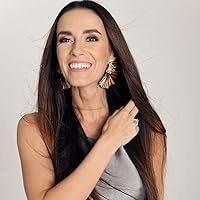
"Death can be a destabilizing force. And when it touches you closely, you must somehow discover a way to find and rebuild your secure home," popular yoga instructor Mary Paterson writes. With the death of her father, she felt as if she had no place to stand. She had lost her home. Paterson's response to this life crisis, was to embark on a pilgrimage to Plum Village, the retreat of Nobel Prize-nominated Buddhist monk, Thich Nhat Hanh. This wonderfully frank and funny chronicle of her 40-day sojourn offers readers the 40 Buddhist precepts that she learned. The primary theme is the necessity of discovering how to "take refuge" or find a permanent home within ourselves--without taking oneself too seriously. With chapters such as The Lesson in a Bad Fish, The Man Who Nicked My Headphones, How a Monk Washes His Face, and How Not to Be Sneaky, this lyrical, wise, and witty personal journey book is inspirational and a joy to read. Paterson's sensibility is grounded, realistic, and engaging.
I am the author of The Monks and Me: How Forty Days in Thich Nhat Hanh's French Monastery Guided Me Home published in the United States. Translations include: Dutch, French, German, Portuguese, Lithuanian, Czechoslovakian, Polish, Turkish, Indonesian, and Complex Chinese. Selected by Kristine Pidkameny, Editor-in-Chief, One Spirit® as one of Bookspan's Book Clubs List of Top 12 Books of 2012. "This wonderfully honest and often humorous chronicle is about finding a true home within ourselves. Life changing and inspiring, it will touch your heart."
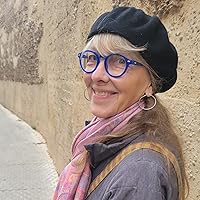
Spiritual journeys often spring from crisis. When I was 28 years old, my mother died from breast cancer. I found healing through practicing yoga and volunteering at Wellspring - a cancer support centre. After my father died when I was 40, I lived for 40 days in Zen Buddhist master Thich Nhat Hanh’s monastery in France, a deeply transformative experience. I have traveled extensively throughout India and Nepal studying yoga and meditation in-person with authentic teachers, most notably with renowned Tibetan Buddhist master Chokyi Nyima Rinpoche. I have completed multiple certifications in yoga, meditation and mindfulness, and have over 22 years experience teaching people from all walks of life. In 2001, I founded a yoga/health centre in Toronto, which I operated for 11 years before selling the studio to travel, write, and teach more widely. I have designed wellness programmes for multiple organizations including TD Bank, Princess Margaret Hospital, BioScript Solutions, Hamilton Beach Brands, and Wellspring. In March 2021, I was the featured presenter for the Four Seasons Hotels and Resorts inaugural virtual global conference, which was streamed to 50 properties in 20 countries.
In my first career, I was a professional ballet dancer. Highlights of my two decades of dancing include producing and performing in 3 Well-World Galas (charitable benefits for World Literacy and Wellspring) with Principal dancers from The National Ballet of Canada; The Nine Sentiments, a live dance/poetry collaboration with multiple award-winning author Michael Ondaatje that was adopted to film; and a theatrical production with singer/songwriter Jane Siberry. I have a Bachelor of Arts from Queen’s University, Canada, and currently teach creative writing at The University of Toronto.
Forthcoming: A memoir about my journey throughout Nepal. www.marypaterson.ca
This work may have been better suited to a travel magazine. The short chapters read like a travel journal and in a way that's fine because Plum Village is certainly an interesting place. There are no great insights here and I found by day 30 I had grown tired of the author's self-indulgence. The book also brought up questions for me about the privilege of spiritual tourism.
I wanted to love this. The idea is fabulous. But it was so poorly written and her observations so trite that I couldn't finish it. Someone else write it for me, please!!
I didn't like this book. I wanted to but it never happened. I did finish the book because there where some (very) small portions, lines or observations that I did like and I was curious where the book wood go (that why I gave it 2 stars). I found the authors voice a bit annoying (especially when the refers to her Home within) and her observations and the connections she makes/realizations uninteresting, futile and meaningless to me (although they might have been profound for her).
I wouldn't recommend this book to anyone but I am interested to read a book by Thich Nhat Hanh.
To end on a positive note: On day 39 the author describes a session with Thich Nhat Hanh, this is an example of the small things that I did like. This particular section struck a note with me because I attended a funeral earlier this week and this resonated with my own thoughts about it.
"Thây strikes a match. He lifts the flame and asks, "Has this flame always been here?" Then he takes a candle and lights the wick with the flame from the match and asks. "Is this second flame of the candle, the same as the first flame of the match? "Thây blows out the first flame. The Zen master's deep, black eyes dive into mine. "Is the first flame in the second flame?" (...) I have a written note by my mother, which I found in her wallet after she died. That note is in my own wallet now.
Do not stand by my grave and cry. I am not there. I did not die. - Mary Frye
(...) Thây speaks again. "The creature contains the creator. The daughter contains the mother. You cannot separate them." When certain conditions come together, we manifest. The flame manifested because Thây struck the mathc, causing it to catch fire. The flame went out because conditions changed - Thây blew on the flame. After he had blown the flame out he said, "The one who has died in fact has not died. They have simply grown into a form that may be unfamiliar to you.""
The Monks and Me gave me the intimacy I wanted with the monk Thich Nhat Hanh while also giving me insight into a woman's mindset as she struggles to find herself within the construct of one of the best known monasteries in the world. I received what I wanted from the story, and then some.
Paterson's voice is a bit sardonic, a little rough around the edges, and honest. She never shies away from her own faults and offers the reader an unvarnished view inside her foibles. She is a woman searching for her self and we are on that journey with her 100%.
Her writing is pithy and her scenes are interesting. In each of her chapters, there is a bit of a lesson on human dignity and self-respect. She questions herself, and in her questioning, she makes the reader do a bit of internal dialogue, as well.
I thoroughly enjoyed the book, Paterson's writing, and learning more about Thay. The organization of the story in bits and pieces was a smart one, and it left me wanting more. That's a good thing.
This is a simple book with simple insights and lessons learned along a woman's journey at a monastery. I can't say that I was either wowed or disappointed. Perhaps my view is neutral. Would I recommend it? Not necessarily, as nothing stands out to me as being a "must read" or "must pass along." As a spiritual person myself, I have an appreciation for the spiritual journey of another, so with that there's warmth toward the author, but the book fell a bit short in sharing the "meat" of her life, the parts that led to/greatly impacted her decision to go on this 40-day retreat. I would have wanted to hear more about the losses she faced and their impact on her...the pain of her brother and the impact perhaps that had on her life...and what she truly took away from the 40 days that created in her a deep sense of change or inspiration. In short, for a lover of water, the deep end of the ocean was missing.
Mary Paterson spends forty days at Thich Nhat Hanh's monastery in France and returns home to Canada calm and peaceful. This book is a collection of reflections on the thoughts Hahn shares during her visit as well as contemplation on little day-to-day events during her time in the monastery. It's a quiet book, a thoughtful book, and reading it is a little like spending a few hours in a monastery yourself.
Imdama šią knygą tikėjausi daug iš jos gauti, gal net galima sakyti, kad paaugti dvasiškai. Negaliu sakyti, kad to nebuvo, tačiau... Buvo įdomu skaityti apie autorės kelionę į Thai Nat Han Slyvų kaimelį ir gyvenimą jame, ten išgyventus ir patirtus dalykus. Ir vis dėlto, man labiau prie širdies paties Thai Nat Han rašyta knyga "Ramybė su kiekvienu žingsniu", kurią esu skaičiusi. Tiesiog paliko didesnį įspūdį, kaip joje natūraliai dera stiprios žinutės ir paprastumas. Šioje knygoje buvo stiprių žinučių, bet šalia to daug visko, kas man pasirodė kaip bandymas giliai kapstyti, bet kartais atrodydavo pernelyg painu ir pamesdavau, apie ką čia. Šiaip ar taip, tai tik mano nuomonė. Vis vien buvo įdomu skaityti ir geriau pažinti, kas gi vyksta tame Slyvų kaimelyje.
So far it is just a lovely read. I'm only about 10 chapters in to it, but the style is friendly and the stores heartfelt. Makes me wonder if such a trip is worth it or not.
Up to about day 21 now. I love it. The writing style is very nice and friendly. Can't help but think that the writer is not exactly a fairly well off person but at least she seems to be going to the monastery for all the right reasons. It's getting to be an interesting read.
Had to put it down for a few days, but finished it today. I must up my rating to five stars. It's a wonderful, and insightful read. The style and writing gets better with each passing entry in the journal. Love it. Buy it and read it if you can. You won't be disappointed.
I would say that this book was ok. I read it in preparation for my own month long stay in Plum Village. I felt rather sad about the extent of the authors ego in the novel. Perhaps she might notice it later in life. After going there myself I think that there were many things in the book that were romanticized. My other discomfort in reading it was the focus on how the author identified herself as a bit of a celebrity at the monastery. If you are reading this in preparation to go to PV I would take the story lightly and remember it is one persons experience.
3.5- This book reminded me a lot of books written about daily insights on the Camino de Santiago. The book is broken up into 40 days and the insights the author experienced living at Plum Village.
As someone newer to Buddhist thought, it felt like a helpful translation of some teachings into very practical human experiences, and the book left me wanting to journal on certain concepts mentioned throughout.
I chose this book because I have always respected Thich Nat Hanh and have used many of his teachings in my own practice and I was fascinated with what it would be like at his monastery in France. I also love it's name which is Plum Village. Through my prior readings I knew about some of the rituals that are used at the retreat, such as stopping every time a bell is rang and remembering to breathe, so I was also interested in how these things actually 'worked'. The book was successful in giving good descriptions of all these things but writing any book on seeking the spiritual is always difficult as they so easily become lists of more and more examples of an authors continuing 'growth'. To a certain extent this book was no different but I also found the author quite amusing and able to look at some of her own difficulties honestly. I think the hardest thing in monastery life would be the other "spiritual" people. I don't mean the nuns and monks but the visitors. I am at the stage of spiritual development that I can hardly keep it together with my family let alone a bunch of the 'almost ' enlightened. I grapple with the idea of taking small retreats, (although the author was there for forty days), and then expecting to have found any answers but I suppose it is better than doing nothing. The author, Mary Patterson, sounds like she has spent a lot of time doing such retreats so she seems qualified to be making the reflections that she does. The book became a bit packaged for me with every day offering some spiritual insight but it was a nice easy read.
Wow! Pleasantly surprised at the content of this book. Easy to read, but most importantly easy to relate to! I have always had a hard time really wrapping my brain around a few of the Buddhist concepts for different reasons over the years, however, this book changed one of them. In the book there is one such person (you know sometimes there are people.....) who will grate on Mary in many different ways. Mary, relating her interactions with this person made me feel absolutely and completely normal in my thoughts and reactions. Her sharing her gradual process towards feeling compassion for this person makes it all seem a little more feasible for all of us. For those of us that might not be able to venture to a monastery this book gives a good idea of what it is like for those who might attend. Everyone takes home the lessons they need the most if they are open to learning and really being inter-connected.
2.5 stars because in the end, there was a bit too much self-involved blathering on and the structure of "each day I learned x thing" format seemed forced. Maybe I just didn't get "into the journey" that much--similarly to how Eat Pray Love sort of left you feeling like you were on a fake spiritual journey during that portion, only that portion was the entire book (so no eating or loving, sadly). I could also have lived without the bits in the beginning about the noise a lobster makes as its boiled alive and such assorted knowledge that made me feel like a terrible human being. Some parts were interesting, like the friendships forged while abroad in an unfamiliar place--meditating in silence for hours of the day, and Thich Nhat Hanh's darma talk topics, but... this book didn't really make me want to go on a journey or feel truly "home" either.
Just 39 pages in and I may have to abandon this one. The way she jumps around in time is getting annoying. When she says "later that evening," she could be talking about her time at the monastery, or a flashback, or a different flashback, or sometimes a flash forward. And the whole setup of "this is what I leaned from the monks today" seems pretty forced. If you're interested in a collection of reflections on Buddhism, you might like this book, but there is no real narrative here. We know next to nothing about the author other than random little anecdotes that she uses to illustrate her points, but everything feels very disconnected. All we really know is that she came to the monastery after the death of her father. I feel like this had the makings of a great memoir but just doesn't get there.
This book, subtitled "How 40 Days at Thich Nhat Hanh's French Monastery Guided Me Home," was good, but not quite as good as Mary Rose O'Reilley's "End of the World: The Apprenticeship of a Quaker-Buddhist Shepherd." If you read only one book on Plum Village, read the O'Reilley title. (I read that one twice!)
This book helped me start my search for inner peace, improve my knowledge about love, compassion, patience, forgiveness and so many wonderful feelings, i could better understand the essence of a good life, beyond that i could dive into an amazing adventure with Mary in 40 days of teachings and outstanding experiences.
Dieses Buch hat mein Leben verändert. Ich war 22 und dieses Buch war das erste spirituelle Buch welches ich gelesen habe. Die Erkenntnisse die ich für mich herausziehen konnte haben mein Leben verändert!
This was an interesting book. I believe that there are some real moments of inspiration scattered throughout the book, but you do have to get past the humble bragging that seems to permeate the entire book. I appreciate the vulnerability that goes into writing this kind of book - it is difficult to talk about our own spiritual epiphanies without sounding rubbish. I do wish though that Paterson had been able to leave more of her ego behind this is evidenced throughout the text. Overall, I would recommend this to people who enjoy reading about yoga and others' spiritual journeys, as long as they can take what works for them and leave the rest behind.
I enjoyed this book as a travelogue for Plum Village. I've been curious what Plum Village and Thich Nhat Hanh are like, and this book satisfied a lot of my curiosity. I enjoyed the peek into someone else's meditation practice, how they used mindfulness, compassion, how they interacted with others mindfully, etc. Paterson did a nice job of describing the village and the people she met. She tried to do a lesson-in-a-day thing which sometimes felt forced. I recommend this to anyone who's curious about Plum Village.
I struggled to get through this book. I found Mary's personal story hard to follow. Partially because I simply couldn't relate to her (despite recently losing my father as well) and partially because it didn't feel like there was an actual story (of her time at the monastery) to follow. It was more snippets that didn't always flow together. However, I truly loved all the teachings of Thich Nhat Hanh, the Buddah, and Buddhism in general that she shared. It left me wanting to read more Buddhist teachings, and for that, I am grateful.
For any person considering going to Plum Village, this book is a great glimpse into retreat life. I found the author idealized the nuns and Thich Nhat Hanh, and was much harder on everyone else. Some of the lessons were a little judgemental about others who stayed there. I like the division of the book into 40 short life lessons that the author reflected on during her stay. Good as a book to pick up and read one or two.
Mary Paterson annesi öldüğünde yoga İle ilgileniyor, babasını kaybettiğinde de Kanada'dan yola çıkıp Fransa'da bir manastıra geliyor, esprili bir dille bu manastırda geçirdiği kırk günü anlatan kitabı bitirince, Thich Nihat Hanh kitapları okumak istedim,
True to Thich Nhat Hanh’s philosophy, and an authentic look at the Plum Village Rains Retreat. The Plum Village nuns seemed more present than the monks, but I suppose “The Nuns And Me” wouldn’t have had quite the same ring to it…
The best parts of this book are the mundane details of what life is like for a lay person from another culture visiting a Buddhist monastery for an extended time of retreat. We don't check our varying human personalities, baggage, and foibles at the door of the monastery - even the author.