Jump to ratings and reviews
Rate this book

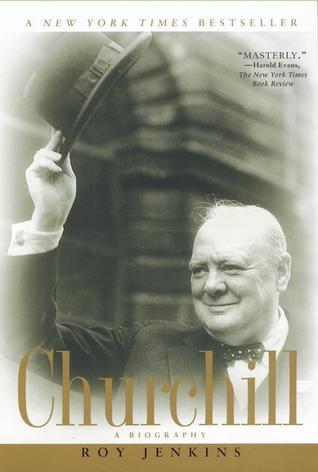
Churchill: A Biography

Rate this book
Acclaimed historian Roy Jenkins presents a comprehensive biography of Winston Churchill, an icon of modern history, from his childhood to the critical World War II period and beyond—a  New York Times bestseller.

“This is a first class, well-sustained work of history and a masterpiece of biography… It will be a brave, not to say foolhardy, author who attempts to write another life of Churchill for at least a decade, perhaps longer.”—Andrew Roberts,  Sunday Telegraph  

Roy Jenkins combines unparalleled command of British political history and his own high-level government experience in a narrative account of Churchill's astounding career that is unmatched in its shrewd insights, its unforgettable anecdotes, the clarity of its overarching themes, and the author's nuanced appreciation of his extraordinary subject.

Exceptional in its breadth of knowledge and distinguished in its stylish wit and penetrating intelligence, Churchill is one of the finest political biographies of our time.

1024 pages, Paperback

First published October 12, 2001

358 people are currently reading
5155 people want to read

About the author

Roy Jenkins

76 books36 followers
There is more than one author with this name

Roy Harris Jenkins, Baron Jenkins of Hillhead OM PC was a Welsh politician. Once prominent as a Labour Member of Parliament (MP) and government minister in the 1960s and 1970s, he became the first (and so far only) British President of the European Commission (1977-81) and one of the four principal founders of the Social Democratic Party (SDP) in 1981. He was also a distinguished writer, especially of biographies.

-Wikipedia

Ratings & Reviews

What do you think?
Rate this book

Friends & Following

Create a free account to discover what your friends think of this book!

Community Reviews

5 stars
1,956 (35%)
4 stars
1,970 (35%)
3 stars
955 (17%)
2 stars
397 (7%)
1 star
237 (4%)
Displaying 1 - 30 of 251 reviews
Profile Image for Manny.
Author 48 books16.1k followers
December 17, 2022
I loved Churchill's History of the Second World War, so when this book came out, I bought it. It had had good reviews from people who pointed out how well-qualified Jenkins was to write about his illustrious predecessor, having himself had top posts in the British Government.

Well... I wish I could say I knew why it didn't come together. I just didn't feel very gripped by the story, which is funny, because Churchill had a truly incredible life. Maybe there was too much detail, or Jenkins isn't that good at sketching character, or he was too intimidated by his huge admiration for Churchill to venture any speculative or controversial analysis. I read the whole thing, and of course there were a number of good stories, but I still felt disappointed.
_________________________

mannyrayner: Write a passage where Boris Johnson dreams that he meets Winston Churchill, who roundly insults him.

ChatGPT: Suddenly, Boris Johnson found himself transported into a dream where he was face to face with Winston Churchill. He looked at the famous British Prime Minister nervously, unsure of how this meeting was going to go.

But Churchill seemed to be in no mood for accommodation. He looked at Boris with contempt and said in a grave voice, "I am absolutely disgusted to see how you have handled this pandemic. You are an incompetent, a charlatan, and you have absolutely no respect for this country's legacy."

Boris opened his mouth to defend himself, but Churchill cut him off, saying, "Don't even bother trying to respond. You are not up to the task that has been entrusted to you. You are a small man, with none of the qualities necessary to lead this country."

Boris felt his cheeks flush with anger and shame as he listened to Churchill's insults. He woke up sweating, wondering how he was going to face the day ahead.
Profile Image for Anthony.
375 reviews153 followers
October 20, 2025
A Great Man of History

Churchill by Roy Jenkins was the epoch of my interested in reading history, having picked this book up as a secondary school pupil when it was first published. I have now come back to it twenty years later and it has reminded me of how good this book is. Jenkins is an utterly masterful writer, his use of language kept me hooked from the beginning in 1874, to the end in 1965, 90 years of jaw dropping adventure, war, momental writing and dog eat dog politics. I found myself finding time to come back again and again, sitting with this book in hand at every opportunity.

In Churchill Jenkins writes with characteristic elegance and wit, combining narrative flair with sharp analysis. He traces Churchill’s astonishingly varied career from his early adventures as a soldier and war correspondent, through his turbulent political shifts between the Conservatives and Liberals, to his wartime premiership and postwar decline, with both admiration and clear-eyed criticism. Jenkins neither sanctifies nor diminishes his subject; he appreciates Churchill’s brilliance, rhetorical power, and sheer energy, while also acknowledging his vanity, impulsiveness, and sometimes poor judgment.

With this biography you get Jenkins’ mastery and sensitivity to political context. His account of Churchill’s parliamentary life and ministerial roles brims with insight into the workings of British government and party politics. Jenkins has an unerring feel for the atmosphere of Westminster, and he explains complex policy disputes with clarity and precision. His treatment of Churchill’s great moments, which goes without saying, his leadership during the Second World War is the height of this, both manages to feel grand and grounded, celebrating Churchill’s indispensable role without lapsing into hero worship.

Jenkins also brings a humane and sometimes humorous touch to his portrayal. He is fascinated by Churchill’s eccentricities such as his extravagant lifestyle, his love of good food and drink, his artistic pursuits, and treats them as integral parts of a personality both larger than life and deeply human. The prose itself is a delight: urbane, learned, and occasionally dryly ironic, reminiscent of Jenkins’ own speeches and essays.

If I have a criticism, it’s that Jenkins, writing from the perspective of a fellow politician rather than a social historian, tends to focus more on Churchill’s public life than his private one. Readers seeking psychological depth or detailed treatment of Churchill’s family relationships might find this aspect underdeveloped. Still, as a political biography, Churchill is masterful judicious, insightful, and often deeply moving.

It is of course obvious and necessary to compare this to Andrew Robert’s Churchill: Walking with Destiny and even though I have given this book five stars, Robert’s is still the better of the two. The simple reason being 41 papers and documents have been deposited into the Churchill Archive since the writing of Jenkins book and HM The Queen allowed Roberts to use King George VI’s diaries. This provides the important backdrop of the essential PM-monarch relationship during the Second World War which was so important to victory. Jenkins did not have this to use and so it is missing.

Having said that all that, Churchill is of course excellent. Jenkins a Labour and then SDP politician, who states that a Tory PM is the greatest to ever to hold the office tells you all you need to know about this most famous of men. As I have spoken about above, this is by no means a hagiography, Jenkins shows how Churchill could be obtuse, childish and indulgent. However, as this was written in 2001 he does not have to justify Churchill against the modern wokery and insane thoughts such as he was responsible for the sinking of the Lusitania or masterminded the Bengal Famine. You can just sit back and enjoy the history as it is supposed to be.
Profile Image for Aaron Million.
550 reviews524 followers
June 13, 2020
Roy Jenkins' biography of Winston Churchill looks intimidating: clocking in at over 900 pages, and with no breaks contained within chapters, it is a serious read. Fortunately, its subject is one of the most well-known and largest characters of the 20th century. Churchill led such a long (he lived to be 90) and interesting life that one would seriously have to question if a book written about his life could be dull, despite the best efforts of the author to make it so. Fortunately, Jenkins does not attempt to do that, and instead employs full biographical treatment of Churchill, making sure to tally all of the warts and the glory so that Churchill is alive from beginning to end (one pleasant aspect of this book is that, on every other page, Jenkins has the year noted unobtrusively up at the top so the reader always knows exactly what year(s) the storyline is in).

Having said that, the first two hundred pages or so are nothing great. In fact, at times they can be a bit tedious as Jenkins mentions so many names that my head quickly began spinning. There were too many Dukes, Earls, Sirs and their wives and sisters to keep track of, especially for someone who has no particular inclination to become familiar with British royalty. Throw in the many colleagues and friends that Churchill had and I quickly had a lot of people I was trying to juggle around in my small mind. I didn't quite get the feeling that Jenkins was intentionally trying to overload the reader with all of these names, but it did happen nonetheless. And given the life that Churchill led – extraordinary by anyone's standards – the names keep coming throughout the book, although later it becomes more settled.

Jenkins tightens things up as he gets to the onset of WWI. It really is remarkable to think that Churchill played such large roles in both World Wars. Unfortunately for him, WWI was a disaster that almost wrecked his career as his impetuosity and big mouth got him into trouble. He badly mismanaged the Dardanelles campaign while First Lord of the Admiralty, ultimately losing his job, being demoted, going off to serve half-heartedly in the British Army in France, then wandering around for the next two years or so – half in and half out of decision-making. Churchill definitely did not cover himself in glory during this time frame. He saw little front-line action, thus his war experience was limited. During his brief time at the front, he seemed more concerned with the politics going on back in London than what was happening in France. Sort of an odd position for a person to be in: he certainly did not have to enlist or volunteer for active duty, yet once he was active he seemed somewhat detached from the action.

One area of strength is Jenkins' cogent analysis of Churchill's vast literary works. Had the man been an author and nothing more, he would have been regarded for his prodigious output of words and multi-volume histories and biographies. Jenkins explores how much of these books was actually Churchill himself doing the work (quite a bit, actually, and on some works it was pretty much all him), and how much was a result of the multiple research assistants that he employed (more than he would have ever admitted to, most likely). Jenkins also critiques the works in a fair manner, much like he does Churchill overall. During the 1920s and 30s, writing was Churchill's main mode of making a living, and he did quite well at it. Aside from all of the books, he wrote gobs of articles for numerous London newspapers, and even some American magazines. Jenkins analyzes Churchill's WWI and WWII memoirs, pointing out some inaccuracies and also some of the works' stronger points. He does it in such a way that I neither wanted to rush out and get my own copies so I could read them, nor to think that they are inconsistent and self-serving and thus not worth reading.

Despite how thoroughly Jenkins covers many aspects of Churchill's life, on some important points I think he comes up abruptly short. Churchill and his wife lost a daughter at a very young age to illness. This had to have been one of the most difficult moments in Churchill's long life, if not the most difficult one. Yet Jenkins dispatches it in a single sentence. How can this be? Surely there is something more to write about it: how did it affect Churchill, his wife, their relationship, his outlook on life? Jenkins delves into none of these important topics. I would have much preferred more on this type of difficulty that Churchill faced rather than his political warfare with Neville Chamberlain, Stanley Baldwin, and others. While interesting, it can get tedious at times to read about. And at some point, you want to say: “I get it. They don't get along very well!” Still interesting to read about, but perhaps with a little less volume.

In the same vein, we get precious little about Churchill's relationship with his children. Jenkins seems content to keep making periodic snide swipes at Randolph Churchill. At first I found them amusing, but as they multiplied they seemed to take on more of the character of Jenkins just not liking Churchill's son. This left me wondering if Jenkins, a member of Parliament himself following WWII, tangled with Randolph on his own and thus this was him making clear his dislike of the man. My point here is that these asides did nothing to augment the book, and after awhile in fact they slightly took away from it.

Similarly, Jenkins also throws a few barbs at Americans. In describing Churchill's near fatal encounter with a car in New York City in 1931. On page 443 he notes “...the perverse habit of the Americans of driving on the right.” Perverse? It wasn't offensive or cruel, but it did make me question why he felt the need to put that in the book. I would rather have learned more about many other topics relating to Churchill, than to know that Jenkins disapproves of American traffic flow.

Another area where I found Jenkins to be less clear was in the byzantine world of British politics. While Churchill's battles were covered at length, it seems that Jenkins assumes the reader has some knowledge of early 20th century British politics. For example, it is not clear to me why Herbert Asquith was removed as Prime Minister in 1916. Perhaps it went right over my head. I have a fairly superficial idea, but Jenkins certainly doesn't spell it out, so it left me wondering. Ditto with David Lloyd George in 1922. Again, I am not quite sure why he lost power. Perhaps I am being too picky, but on the one hand I felt like I got deluged with minute details over Churchill's political actions, while on the other hand the big picture items occasionally seemed to be taken for granted that I knew them. Fortunately, the lead-up to WWII and Chamberlain's resignation is not covered in this manner; Jenkins is very detailed here and does a solid job of explaining exactly why, at long last, Churchill was finally named Prime Minister. Incidentally, I think Churchill provides hope for any middle-aged person who thinks that they have not done much with their lives: he did not attain his ultimate goal of becoming PM until age sixty-five, and this after forty years in politics.

The WWII portion of the book, and specifically Churchill's magnificent performance of leadership in 1940, is the highlight of both Churchill's life and Jenkins' work. He does well in bringing to the reader the almost insurmountable pressures and odds stacked against Churchill. How many men or women could have withstood the barrage from Hitler, the squawking at home, and the lack of material support from other countries, like he did? The traits that had caused him so many issues in life and created for him countless enemies were the traits that helped him (and Britain) to persevere through the bleakest period of the war and emerge, while not intact, at least unbowed. Truthfully, throughout most of this book, I found Churchill to be insufferable: I did not like his personality, how he tried to bulldoze over people, his lack of interest in others unless it suited his needs, his willingness to shift around politically to whatever stance most benefited him, and most of all his arrogance. Yet, it is difficult to not acknowledge his greatness as a wartime Prime Minister, and had he not been at the helm at this most critical of all critical moments, it is not inconceivable that German, and not English, might be the language I would be typing in right now. If Britain had not held out against Germany, who knows how much more powerful Hitler would have become. The United States, while in the process of rearming under Franklin Roosevelt, was not yet ready for war. Keep in mind that it took Pearl Harbor to drag a reluctant U.S. into the war, not because of Roosevelt, but because of the strong isolationist mood of the country throughout the 1930s. If Churchill had capitulated in the summer of 1940, like so many wanted him to do – in effect sue for peace, similar to what France had done – our world would almost certainly be radically different today.

Jenkins charts Churchill's second installation as Prime Minister from 1951-1955 as being one of mixed success, where Churchill neither totally embarrassed himself nor lived up to his previous high reputation for leadership. In that one sense he reminded me of Theodore Roosevelt (whom Churchill had met – Roosevelt did not like him): once out of power, both desperately wanted to get back in. While Churchill succeeded at that, his agenda for establishing a working relationship with the Soviet Union never really came close to fruition, and he was reduced to at times clinging to power simply for the sake of power. And after leaving office for the last time, although surviving for another decade, he was really finished as a buoyant, influential figure in world, or even British, politics. Jenkins is largely favorable to Churchill, not sycophantically so, but I wonder if his treatment would not have been better at times had he possessed a more critical eye. Churchill's many faults are laid out, but Jenkins seems to mostly override them by returning to the great things that Churchill accomplished. I think this is a fair view to take, although one could easily make a less conciliatory case against Churchill and still have justification for it. Final verdict: a good, at times very good, book about one of the most towering figures in the 20th century and world history.

Grade: B
Profile Image for Martin,  I stand with ISRAEL.
200 reviews
April 12, 2021
I am taking a course at Oxford called Churchill:Soldier, Politician, Statesman and this book is required reading. I love anything and everything about Sir Winston Churchill. My children paid the course fee for my birthday. Having said that, reading this book was a chore.

Roy Jenkins was the author of this book. I am an American so I am not very familiar with the author’s accomplishments in life until I looked him up on Wikipedia. I would say he was a very important politician and statesman himself. Unfortunately, I hated his writing style.

As I said, this book, all 912 pages, was a chore to read. Mr Jenkins gets an A+ for his research on his subject. Yet, this book wasn’t written for an non-British audience. He lists so many names and dates that I would loose track on what he was talking about. Also, he would fill his book with French, Latin or English(British) sentences that I had no idea what point he was trying to get across. Why would he do that?


I cannot recommend this book for an American audience. I think there are much better books on Churchill that are readable.
Profile Image for Mikey B..
1,136 reviews481 followers
July 11, 2014
A compelling biography of Churchill. As the author is also a long-standing member of the British Parliament the emphasis through-out is on Churchill’s political side. This is justified as Churchill’s primary life objective was to achieve political success and longevity. We follow him as he rises through the Conservative party, switched to the Liberals, and then with the demise of that party, returns back to the Conservatives.

Churchill was always a meteor. He was a welcome and vibrant addition to any party – and his goal was to have a role in the cabinet. This meteor caliber was recognized early on – he held cabinet posts in his early thirties. His written output – by speeches, newspaper articles and books was immense and of high quality.

Mr. Jenkins explains well the political relationships in Churchill’s long career from Asquith and Lloyd George to Chamberlain and Anthony Eden. Churchill was always a strong individualist – somewhat adding to the peril of his livelihood. Even though his eloquent Munich address – condemning Chamberlain’s handing over of the Sudetenland to Hitler is retrospectively seen to be correct – at the time he was highly criticized and forced to keep a low profile in order to maintain his membership in the Conservative Party.

Mr. Jenkins is less comfortable describing Churchill’s family relationships. There is little on his children, most of it being on Randolph. Given the longevity of his marriage not very much is said on Clementine. They did spend much time apart traveling; in another biography I read by Ralph Martin he speculated that she may have had a brief affair during a sea voyage she took. The author does elaborate on the peculiar relationship Churchill had with both his parents – Randolph and Jennie. There is no mention of the suicide of his daughter Diana in 1963.

Mr. Jenkins does speculate on the relationship with Roosevelt and why he did not attend his funeral in 1945. However Jenkins is incorrect when he states that Roosevelt was “semi-comatose” during the Yalta conference in 1945.

Nevertheless this is very entertaining with a great deal of humour throughout. Churchill led an extraordinarily active life and the author captures the low points and the glorious ones when he became the beacon of the Western World.


Profile Image for Yair Zumaeta Acero.
135 reviews30 followers
October 28, 2022
En el año 2002 fue publicada esta monumental biografía de Sir Winston Leonard Spencer Churchill, del puño y letra del eminente político británico Roy Jenkins. ¿Otra biografía más de Churchill?. Es cierto que desde 1968 (tan solo tres años después de la muerte de Churchill) se han venido publicando incontables biografías de quien puede ser fácilmente considerado uno de los más famosos e importantes (si no el más) personajes del siglo XX. A los innumerables relatos biográficos de Churchill deben sumarse los infinitos análisis políticos y militares; resúmenes, compilaciones y análisis de sus discursos; reseñas de sus obras literarias e incluso, observaciones exhaustivas de sus pinturas y su faceta como paisajista. Entre toda esta vasta marea documental, ¿Qué valor agregado puede tener la biografía escrita por Jenkins?

En un principio “Churchill” puede parecer más de lo mismo. Sin embargo, si se han leído otras biografías de Sir Winston se hará evidente el enfoque diferencial que este libro presenta frente a todos los otros que se hayan escrito (o por los menos, los que humildemente he leído). Sin caer en el excesivo detalle de la minucia y la cotidianeidad del biografiado, navegando incluso en la ficción histórica especulativa que se expresa en “The Last Lion” de William Manchester; o sin convertirse en un injusto panfleto crítico y revisionista que buscaba derribar al gigante de su pedestal, como ocurre con “Churchill, the End of Glory: A Political Biography” de John Charmley; en esta ocasión Jenkins aborda a la leyenda de Churchill desde su actividad parlamentaria, política y como servidor público responsable de varios ministerios y ostentando en dos ocasiones el cargo de Primer Ministro. Si bien es cierto, el relato de la vida de Churchill obedece a un orden cronológico, el peso de esta biografía radica en las actuaciones, discursos, estrategias, alianzas y tragedias que vivió Churchill a lo largo de su extensa actividad parlamentaria (la cual ocupó casi el 80% de su vida), apoyado en el paralelismo existente entre el biógrafo y el biografiado. Tanto Jenkins como Churchill fueron hijos de políticos destacados; ambos llegaron muy jóvenes a la Cámara de los Comunes y desempeñaron los mismos cargos en el gobierno: Secretario del Interior y Canciller del Tesoro, tras haber hecho el tránsito de su partido a otro distinto. Sin embargo no todos son relatos y discursos en el Parlamento, y contaremos con crónicas detalladas de los momentos más emocionantes de la vida de Churchill, desde su captura por Bóeres y posterior escape de un campo de prisioneros en Pretoria; su papel en el Almirantazgo real durante la Primera Guerra Mundial y tal vez su mejor momento como salvador de su país y luz de la resistencia solitaria frente al ejército nazi en 1940-1941 especialmente durante la “Batalla de Inglaterra”.

Si se tratara de destacar fragmentos específicos de esta biografía de más de mil páginas, por supuesto se deberá hablar del período de mayor brillantez de Churchill, desde el ascenso de Hitler en 1933 (donde Churchill fue uno de los primeros en reconocer y denunciar públicamente la amenaza que representaba Hitler y el nazismo para Europa), pasando por sus gloriosos y valientes momentos como Primer Ministro durante la Segunda Guerra Mundial. Jenkins hace igualmente un maravilloso trabajo al relatar el lento ocaso de Churchill desde su derrota en las elecciones generales de 1945 y su muy cuestionable segundo mandato como Primer Ministro en 1951 con 77 años de edad, numerosos problemas de salud y un declive que se extendió penosamente hasta 1955, que tal como el mismo Churchill lo describió, se trató de “un avión al final de su vuelo al atardecer que se está quedando sin combustible”.

Una muy buena biografía - tal vez no tan maravillosa como la que es para mí la más interesante y mejor escrita “Churchill: Walking with Destiny” de Andrew Roberts-; pero con un enfoque diferencial que permite conocer más acerca de aquel “hombre universal” como lo fuese Goethe en su momento, cuyos defectos no eran nada comparados con el supremo logro de dar a Gran Bretaña la voluntad colectiva de combatir en un momento en el que nadie quería, o podía hacerlo.
Profile Image for Marks54.
1,566 reviews1,227 followers
July 29, 2011
This is a superb biography of Churchill. It is one long volume, so it covers most aspects of his long interesting life, but is not as thorough as some of the specialized bios or the multiple volume bios such as by Gilbert or Manchester. Jenkins is a longtime parliamentary insider, so the focus of the volume is political. The author is well acquainted with and makes good use of rich documentary sources to great effect and without being too tedious. Churchill had an amazing life and was the early version of "Where's Waldo?" for critical world events. He began his military career in NW India and Afghanistan, then moved to the Sudan, where he took part in the expedition to avenge Gordon, and in doing so rode in the last British Calvary charge. He then went to the Boer War as a correspondent -- and became a media star after being captured and then escaping. As first Lord of the Admiralty, he led the British Navy in changing over to oil power - and thus making the Middle East important. He survived a massive failure at Gallipoli - which got Rupert Murdoch's father started in journalism - and reemerged in government to among other things - lead Britain back onto the gold standard in 1924 - at an overvalued rate. His reemergence to central importance in the 1930s and 1940s is better known but also well discussed here. Even his final premiership in the early 1950s is interesting and shows someone who has stayed on a bit too long.

Jenkins is very effective throughout but I thought he was most effective in showing how Churchill put together the political coalition in the 1930s that returned him to power and made him the perfect person to lead Britain in WWII. Nearly anything about Churchill is interesting, but this was a really engaging book - which is hard to say about most 900+ page volumes.
Profile Image for Steve.
37 reviews13 followers
January 23, 2008
Churchill was without doubt the greatest Englishman of the 20th Century and the saviour of the western world, when Britain stood defiantly alone in 1940/41.

Roy Jenkins, a great statesman in his own right, wrote before his death a mega biography of this great man, without any nuances; Churchill was unpopular and considered crassly ambitious and arrogant in his political life from 1903 to 1939. Even then, he was considered a dangerous warmonger. In 1945, the voters luckily remembered who he was in peacetime and he was thrown out, which led the way for social reform and the independence of India. Still, he was again Prime Minister when I was born, in 1953.

His life outside politics was immensely productive: Books, articles, painting and building. He never met Hitler - he was due to do so in 1932 in Munich, but the meeting was cancelled. I wonder if it would have made any difference some 8 years later?

(By the way-it took me 3 summer holidays to read this humungous work)
7 reviews3 followers
April 14, 2018
As has been noted by many a reviewer of this work, Roy Jenkins brings nothing especially new to light in this 1000 page biography. Perhaps this says more about the sheer amount of writing talent that has been sacrificed at the altar of this enigmatic character. What Jenkins does effectively however, is guide the passive student of Churchill through a sniff test of literature about, and because he was an prolific diarist and letter writer by modern standards, to and by Britain’s most famous political figure. In doing this, he goes to great lengths to create a semblance of a continuous theme in a life that seemed to have been lived in a manner that would suggest the protagonist did not care much for close scrutiny.

What view is the reader left with of Churchill, Jenkins, and Jenkins’ opinion of Churchill? To answer this query, it is necessary to highlight the fact that this book owes its claim to balance to the fact that the biographer narrates his subject’s distasteful idiosyncrasies with the precision of a critic but still manages to convince the reader of his greatness. He dispels the myths in a way one would if one’s aim were to counter a hagiography, but reminds the reader that these distortions on truths are not there to mask disagreeable character traits. He leaves the reader wondering why one person was wrong so often, or indeed has so many chances to be wrong, yet helps one see how his moments of clearmindedness and apposite forward thinking gave Britain some of its most defining moments as a people. Jenkins makes it difficult to disagree with his conclusion that despite all of Churchill’s indulgences, character flaws and recurring lapses of judgement, W remains ‘the greatest human being ever to occupy 10 Downing Street.

This, along with the fluidity of the prose, is what makes ‘Churchill’ by Jenkins a must for any follower of British politics, earns its praise as one of the most compelling works in the field and ultimately proves that it is a unique contribution to the history of writing on political history.
Profile Image for Robert Case.
Author 5 books54 followers
March 12, 2018
This comprehensive political biography of Winston Churchill is available on audible.com. I listened to the entire content over the span of a month and while commuting. The book is that engaging, and comprehensive. The narration by Robert Whitfield is thoroughly British in tone and inflection and fits like a glove. I highly recommend this book to anyone who enjoys biography or modern history.

Profile Image for Ghost of the Library.
364 reviews69 followers
April 18, 2018
This one was a labour of love and patience from my part..took me 3 months to be able to finish it the 1rst time i read it, almost 5 years ago - and that was, somewhat to my shame, after i had had it sitting on my desk for about a year and, daunted by its size, always found an excuse to postpone reading it. ;)

So much as been said and keeps being said (and written) about the great man that i will refrain from giving you yet another description of the basics of his life, and stick to my impression on this particular book.

Roy Jenkins, the author, has had a long and successful political career, having had the opportunity to "see" Churchill in action while in the House of Commons.
That being said, it should be explained that political is what this work is, 100% political memoir, focusing on the positions he occupied and the conflicts he had with allies and rivals so, if politics are your thing this will be a wonderful read, but if you want to begin and know his life in a more complete manner, move this one to the bottom of your reading pile.
Jenkins does explains some parts of his personal life but many times fails to mention the influence those moments had in Churchill and his future - moments like his father´s downfall or the significance of his mother in Churchill´s life.

More than a biography, this is a memoir of Churchill from Mr. Jenkins point of view - it should be read, yes by all means, but it shouldn't be a starting point, think of this one as a piece of the puzzle, but not its center.

If anyone feels brave enough "to handle" the great man then by all means start with one of these two works:

Churchill, A Life - Martin Gilbert

Churchill, The Last Lion - William Manchester (its meant to be a 3 volume work, not sure if the last one is out already - update, it is).

Both of these requiring some love, dedication and patience, i admit having read only one volume of Manchester´s work, and Gilbert´s is what you would call a never ending work in progress, because the amount of information that keeps being added is enormous and staggering (still don´t be scared by the size, it is very enjoyable and easy to read).

And then of course there are dozen of books out there that focus on a single point, outlook, event, detail of his life - take your pick, if there´s one thing about Churchill that interests or intrigues you, you can bet you will find a book published about it ( update - thanks to "The Crown" i am planning on reading about his final years in government, post WW2).

Churchill is and will remain for decades to come an endless source of interest/fascination... and something tells me he would have loved it!

Happy Readings!
Profile Image for Lynne Stringer.
Author 12 books342 followers
November 18, 2015
While there's no doubt this biography was detailed (its size made that evident) it is a ponderous read, and lumbers along with all the speed of a glacier. It also seemed more concerned with various aspects of British politics than it should have been. While there's no question politics should have been covered, given who Churchill was, so often a story that should have been about Churchill's involvement in politics seemed to morph into a political discussion with a brief mention of Churchill only when it was absolutely necessary.
Profile Image for Greg Strandberg.
Author 94 books97 followers
October 14, 2014
What can I say? This book is dry.

Churchill was interesting, and some takeaways from this were his love of painting in later life and the fact that he really didn't drink that much.

He'd always have a drink, but he'd sip it and such. So he drank over the whole day in little amounts.

This book does a good job talking about his time in South Africa around 1899 or so. You also get some of his role in WWI, well, quite a bit, but honestly, I read this book a few years ago so it's a bit hazy.

Profile Image for Jack Fleming.
81 reviews25 followers
January 25, 2022
'History will be kind to me, for I intend to write it' claimed Winston Churchill towards the end of his epochal life. He set out to prove the point, writing books by the shelf load, including his monumental History of the English Speaking Peoples and his own account of the Second World War, both of which helped to shape the legend that surrounds the man and his reputation, a mythology he seemed desperate at all costs to control. The old boy needn't have worried himself unduly. In the years since his death in 1965 biographies have poured forth in an unceasing stream, each more hagiographic and lionizing than the last. Martin Gilbert, Andrew Roberts, Geoffrey Wheatcroft, William Manchester, and Roy Jenkins among many others have all set out to produce the best one-volume biography of a figure whose life and achievements can sometimes seem so enormous that fitting them into a single book must involve an enormous amount of condensing. After all, this is a man who was born in the reign of Queen Victoria, took part in the last cavalry charge at Omdurman in The Sudan in 1895, saw the Boer War up-close, knew every major political figure of his time, held every major office of State, commanded the might of the British Empire, led his country in both World Wars and watched the dawn of the Atomic age first-hand, yet who was also alive to see The Beatles Twist and Shout and the start of the swinging sixties. Not so much a figure in History, as a figure of History then. Even those biographers who have dared to criticise the old bulldog have rather strained for effect. In trying to avoid gushing hyperbole, historians of both left and right have fallen into the opposite trap and made Churchill an almost demonic figure. It was John Charmley, leader of the revisionist school of historians who argued that the British Government should have sued for peace in 1940 rather than fighting on, and in effect sought to imply Churchill's moral equivalence for the war with Hitler and Mussolini, a scandalous implication, up with which, as Winston might say, we will not put.

How strange that the balance between praise and condemnation should tilt so heavily in the direction of the former, when, as Jenkins himself admits in this otherwise glowing biography, had Churchill died when he was hit by a car on a lecture tour of New York in 1931, he might have been remembered very differently, if at all. Until then most of the major political decisions he had made in his life he had got wrong, often disastrously so. Gallipolli, Tonypandy, The Russian Civil War, The Gold Standard. Any of these decisions on their own could have destroyed a lesser politician, yet Churchill was responsible for all of them, and still survived. He once admitted as much, as well as the tenacity that contributed to his success by revealing "The secret lies in going from failure to failure without any loss of enthusiasm." What the victims of his mistakes thought however, history has not deigned to record. In his wilderness years in the 1930s (which necessitated his money-making tour of the USA) Churchill's extremist views on Ireland and especially Indian nationalism, were enough to alienate even his most loyal supporters. It is simply not enough to say glibly that everyone at the time was prejudiced, or that social attitudes have moved on. Even by the standards of the Conservative party of that era, his views on, for example Gandhi, or the treatment of the Aborigines, truly merit the epithet 'racist', a word which was daubed on his statue outside Parliament last year during the protests over the slaveowner Edward Colston. Unquestionably, if anyone was deserving of the label it was Churchill, whose attitudes were admittedly more Social-Darwinist than overtly genocidal, but who nevertheless shared many attitudes in common with the regimes he was later to struggle against.

And yet. And yet. Regardless of his odious opinions or strategic blunders, the grandeur of the man does in some sense remain undiminished. It may be said of Churchill that he got every single major decision of his life wrong, except the most important one, when he was right, and right sooner, than almost anyone. He saw the threat of Nazism early, called it a menace, and worked tirelessly to ensure Britain was better placed to fight and defend itself than it would have been without his hectoring. While the Labour party was mired in Pacifism and opposed rearmament, many in the Conservative party were equally complacent and actually harboured a grudging admiration for Hitler, whose ruthless Anti-Bolshevism they shared. In contrast, faced with the most genocidal, murderous regime in History, Churchill found the language and the resolve to galvanize a nation and an empire to struggle on against enormous odds, persuade the most powerful country on earth to abandon Isolationism and fight, and ally with his mortal enemy Joseph Stalin, to first hold the line and then take the fight to the enemy. His speeches of that year 1940 are masterpieces of political theatre and can put the hairs on end of even the most Anglophobe reader. Blood, Toil, Tears and Sweat. We shall fight them on the Beaches. Never, ever surrender. Never in the field of human conflict has so much been owed by so many to so few. The phrases have entered the pantheon and even reading the speeches on the page can still stir. Though Britain was never truly alone, even in 1940, as long as it had its overseas colonies and allies, it did look at one point like the island would soon go the way of the rest of civilized Europe, with a puppet dictator installed. The fact that it didn't is in large part thanks to the resolve of its wartime leader, whose work ethic and physical courage even into his 60's amazed his doubters, and who seemed to have been waiting his whole life for such a moment. While Roosevelt provided the money and Stalin the men, Churchill undoubtedly provided the moral imperative and the resolve, and in the long run that may remain the most enduring legacy of the war years.

Jenkins, a formidable politician in his own right, does not fall into the trap of other Churchill biographers and take the man at his own word. He knows his subject could be bombastic and bellicose and that words and deeds did not always meet. He is laudatory in the key phases, critical where necessary, as on India, and judicial on major issues like the failure of the Dardanelles campaign. While admitting that Churchill was a flawed character, he still reveres him as the greatest man to ever hold the office of PM. What a stark contrast this is to the current incumbent of Number 10, whose desperate fanboying cannot disguise the fact that he is a long way from being half the man his idol was. Like a stupid person's idea of a clever person, Johnson resembles nothing more than a daguerreotype of the original with all the power and majesty faded. Perhaps Marx was right when he said that all History occurs twice, first as Tragedy then as Farce. The fact that a politician in the 21st century should so cravenly try to claim political descent from a man born in the 19th does testify to his evergreen appeal however. Especially in America, birthplace of his mother Jennie, the cult of Churchill is hugely potent, especially on the right. Republicans from Reagan to Bush junior to Trump have all invoked his name, and every major decision involving war has invariably drawn comparisons to Munich in 1938, as if every equivocator were a Neville Chamberlain. This does not happen to the same extent in Britain, where Churchill's name is still remembered in many quarters with scorn and derision, particularly on the left, where he is seen as a bigot and bully, and on the far right, where he is blamed for the war whose cost ultimately led to the decline and fall of the British Empire. It is one of History's great ironies that the man who above all else wanted to protect and strengthen the Empire is also now the figure most widely blamed for its demise. History to the victors? Not exactly.

George Orwell once wrote of the poet Rudyard Kipling that "During five literary generations every enlightened person has despised him, and at the end of that time, nine-tenths of those enlightened persons are forgotten, and Kipling is still there." The same could equally apply to Churchill. As each successive generation is brought up on the comforting myths of the Churchill cult, they eventually come to learn the more complex and nuanced picture for themselves, which leads to a period of necessary iconoclasm. At the end however, the factors that made Churchill a mythic figure in the first place remain, as does the Cult itself, largely intact. Perhaps we do need our national myths, a fact which Churchill the historian must have known well as he was crafting his own semi-legendary aura. When the current furore over national icons has died down and historical legacies are able to be debated more dispassionately, Churchill's example during the war years will remain as a towering example of the Great Man theory of history, and the rest will fade away over time, like a crude insult sprayed inelegantly on a statue.
Profile Image for Tommy Kiedis.
416 reviews14 followers
December 22, 2020
“I do not believe that biography demands or even necessarily profits from personal knowledge.” Roy Jenkins, Churchill: A Biography

Roy Jenkins sends us on our biographical voyage with his somewhat self-effacing disclaimer. I think he knows better. Certainly, one need not be a colleague of his biographical subject, but readers of Churchill: A Biography reap the first-hand benefits of those guided by a contemporary, even if our esteemed biographer was a later associate.

Roy Jenkins (1920-2003) was former president of the European commission, an accomplished author (Gladstone, Asquith, FDR), and a member of Parliament during Churchill’s second premiership. As Jenkins notes, “I suppose I can also claim to have had the widest parliamentary and ministerial experience of his biographers" (xiii).

That fact is to our benefit. Jenkins’ work stands apart from those I have read for its depth of political context (times/events/issues/people), exquisite use of language, and penetrating analysis of the man he calls, “the greatest human being ever to occupy 10 Downing St" (912).

There are many treats for those who open this biographical box:

Depth of political/historical context: In Biography as High Adventure, Stephen B. Oates writes, "By telling a story, the pure biographer hopes to engage our hearts as well as our minds" (p. xi). Jenkins does this.

Jenkins gives us Churchill, but our perspective is deepened by our biographer's grasp of the context. One example will suffice. In 1933, Churchill was sending early warning signals of the dangers of the growing Hitler menace (p. 469). Churchill was sounding the alarm in the House of Commons, but his speech was unheeded, even derided by fellow members. Why? Jenkins' work is masterful here as he identifies several factors that led to Churchill being ignored rather than celebrated (chapter 25, pp. 471-475), notably Churchill's previous failure, repugnant attacks on members of parliament, unfavorable stance on India, and inability to see how his own sentiments on war clashed with a nation still reeling from WWI. Here is a portion of Jenkin's comments:
Even without India he was less effective in bringing the bulk of the Conservative party round to the need for rearmament that was the softly nudging approach of flabby old Baldwin (Prime Minister 1935-1937), as he dismissively regarded him. Mainly because of India, but also because of his clanging anti-utopianism, Churchill had got himself into a box of isolation. He was an alarm clock, but he was a rasping one, which made most listeners more anxious to turn it off than to respond to its summons. (p. 474).
Employment of language: Few can match Churchill's mastery of the English language, but Jenkins too knows how to deploy the king's English. This biography is a delight to read. The reader will discover:

1. Insightful summary assessments:
About Lord Randolph: "he had the gift of insolence."
About Lord Salsbury's response to Lord Churchill's resignation: "But Salisbury already had more than enough. He was a better if quieter tactician than Churchill. And he was not a man to resist the suicide of a nuisance. Lord Randolph was out for good" (p. 17).
About Churchill's second premiership: "he was gloriously unfit for office" (p. 853).

2. Gentle humor:
About Sir Laming Worthington–Evans, Churchill’s successor as War Secretary, Jenkins comments, "[he] is a one-man proof that length of name offers no guarantee of lasting fame” (p. 365).

3. Use of metaphor:
Churchill is a master of word pictures. His descriptions are vivid and delightful:
“[Churchill] looks like a bird which was bound to beat its wings against whatever ceiling was placed above it" (p. 122).
About Churchill’s inquisitiveness: “his natural instinct was to shake any apple tree within reach to get as much fruit off it as he possibly could” (p. 143).
In reference to Hitler‘s desire to annex the rump of Czechoslovakia in March 1939, Jenkins writes: “1939, after the clashes of 1938, was for Churchill a year of rowing back towards the shore of government, although he, with a degree of justification, regarded it as a period in which the shore of government move more to meet him" (p.539).
Mastery of language is not mastery of subject, but in Jenkins' work the two go hand-in-hand.

Parliamentary and political analysis: As noted, Jenkins was a later contemporary, but his parliamentary expertise is to our benefit. For instance, in reference to WSC’s apparent political flip flop of 1938, Jenkins observes:
However no one who has ever been through the process of trying to remain within a party while disagreeing with its leadership on the central issue of the day should be inclined to criticize [Churchill] for this. The minor votes against one’s conviction, the attempts to set an artificial line and to confine rebellion to big issues, are all too familiar a feature of party politics, incomprehensible to those outside the game, but necessary, even to those who consider themselves brave, if they seek, however loosely, to operate within its frame (535).
And this bit of commentary relative to WSC's second premiership:
Whether or not any other Prime Minister of either party would have done better on this front may be doubtful. What is more certain is that the sin of omission of the second Churchill government was that it failed to impart any new dynamic into the post-war British economy (p. 853).
And this assessment/explanation for Churchill's pro-Stalin comments at the Yalta Conference in 1945:
WSC said, “I walk through this world with greater courage and hope when I find myself in a relation of friendship and intimacy with this great man, whose fame has gone out not only all over Russia, but the world." And later, WSC said, "We feel we have a friend whom we can trust.” Of course Churchill changed his estimation shortly thereafter, but about this effuse praise Jenkins writes, “Allowance must obviously be made for the headiness of the circumstances, and it can also be pleaded in mitigation that Churchill was frank about his flattery (which was largely reciprocated), publishing the text of the bouquets in his 1954 last volume of war memoirs." (p. 781) It was Churchill being a very frank Winston Churchill.
Delightfully, while Jenkins is fond of Churchill, he does not grovel before him, as indicated in his summation regarding WSCs second premiership, about which he comments: "It is impossible to reread the details of Churchill’s life as Prime Minister of the second government without feeling that he was gloriously unfit for office. The oxymoron is appropriate to the contradictions of his performance” (p. 845).

I love to read biography in general, and Churchill in particular, for the leadership lessons. Here are five:

Leadership lesson #1 -- Leadership is stewardship.
A young Churchill (about 25), seeing his political future, wrote, "This life is vy pleasant and I pass the time quickly and worthily -- but I have no right to dally in the pleasant valley of amusement. What an awful thing it will be if I don't come off (p. 44). Of course, some of this (most?) was fueled by ambition and his belief that, following family tradition, his life would be short-lived (p. 88). Jenkins highlights Churchill's incessant activity throughout his biography. "He never did nothing" (p. 186). He was a driven man (p. 211). Paul's words come to mind, "What do you have that you have not been given?" And "Moreover, it is required of stewards that they be found faithful" (1 Corinthians 4:7,1).

Leadership lesson #2 -- Understand your rhythms.
To borrow from Gordon MacDonald, a leader must understand his/her rhythms for maximum effectiveness. Churchill survived on eight hours of sleep, however, not eight consecutive hours. Clementine Churchill said he had to have eight in a 24-hour period. Churchill loved baths, took two every day, and even carried a bathtub and heating device when traveling. He worked late into early mornings, but he also took (religiously) an afternoon nap, complete with getting into his pajamas. The same is true with his holidays. As noted, “He never did nothing: his relaxations were above all conversation, with a high ratio of talking to listening, over long indulgent meals, painting (after 1915). His rhythmical idiosyncrasies included bricklaying, watching films, and especially in his later years, playing bezique. His holidays included a ferocious amount of work, especially writing as he turned out 31 volumes.

Leadership Lesson #3 -- Take the time to look ahead.
Churchill's prescience is legendary. This came from his analytical mind, historical perspective, and willingness to think, think long, and think ahead (see pages 204, 526, 527, 814).

Leadership Lesson #4 -- Your team and friends make all the difference.
Churchill relied on Brendan Bracken (his fixer), Max Beaver Brook (“some take drugs, I take Max”), “the prof” (F.A. Lindemann), secretaries such as John Jock Covell and Montague Brown (903), and a host of stenographers and research assistants.

Leadership Lesson #5 -- Failure is temporary.
For Churchill attitude did make the difference. Jenkins frequently notes Churchill's "black dog" (depression), a phrase (not the depressive spats) which biographer Andrew Roberts (Churchill: Walking With Destiny) discounts as actually appearing very little. That said, failure and depressive moods accompany every leader and Churchill was no exception (the Dardanelles "fiasco" and political consequence being most notable). The point with which Jenkins counters is this: “Yet one of his major virtues [was] that he never allowed even dismal failure to drive him slinking into his bunker ....” (p 470).

As with other biographies of England's bulldog, Jenkins includes a generous amount of Churchillian quips, quotes, and anecdotes. Here is a sampling:

1. Nicolas Soames, recounting the question he asked of his grandfather when Soames was about six and had sneaked past the guards into Churchill's office, “Grandpa, is it true that you are the greatest man in the world?" Churchill said: “Yes, and now bugger off” (p. 849).

2. In reference to fellow MP's Thornton-Kemsley's letter of regret over attacks of WSC regarding his Nazi warnings as being unfounded, Churchill wrote, “So far as I’m concerned the past is dead” (p. 543).

3. On responsibility and power: “Nor could I conscientiously accept responsibility without power” (p. 285).

4. On war: "War is a game to be played with a smiling face" (p. 299).

5. On the rare occasion (only time in 25 years) of being seen smoking a cigarette (a Turkish cigarette at that), and asked why, he replied "with frivolity and depression that, 'they were the only thing he got out of the Turks'" (p. 733).

6. On socialism versus conservatism: It is the the difference "between the ladder and the queue. We are for the ladder. Let us all do our best to climb. They are for the queue. Let each wait in his place until his turn comes" (p. 841).

The more I reflect on Jenkins' work, the more I appreciate it. His "Glossary of Parliamentary Terms" is gold for any reader, but especially for non-British readers like me.
297 reviews2 followers
November 9, 2018
I wanted to read a biography of Churchill because I am aware that although some people see him as a hero figure that saw the Brit's through WW2, there are contradicting views. I had a vague knowledge of problems in WW1 and some issues with letting groups of people down at the end of WW2.
I did feel that reading a biography of Churchill gave me an amazing overview of the history at the turn of the century and into the early 20th century. Although Jenkins did address Churchill's actions in the Dardanelles in WW1 and his imperfections of character I also felt that may be writing a biography of a winner of the Nobel prize for literature and a renown wordsmith made Jenkins feel he had to compete. I enjoy the challenge of looking up the odd new word but I felt that Jenkins used complicated, unnecessary words when others would have done. Looking up 2 or 3 words a paragraph can be irritating and when they do not add clarity I question their use.
There were also puzzling details in places with details lacking in others. For example, it was explained that Casablanca became better known for the film rather than the conference, but that did not help in anyway and for those of a younger generation might not mean anything at all. However a little way down from this there is talk of De Galle's strong but alienating charisma and some explanation of this would have been very helpful. The term Halifax-style negiotiated end of the war was also lost on me but that I needed to know.
60 reviews
October 14, 2018
It is with some guilt and major disappointment that I'm putting down "Churchill". I read 238 of 912 pages and was still in 1914. But it was a sentence (a full paragraph) on page 226 that made me give up:
"After this general defence of his colleagues, which showed that Churchill knew how to play upon a National Liberal Club audience as did practically no one else until it came to the great oration in the same room of the Club, seven years later and after her father's victory in the Paisley bye-election, of his friend the more faithfully Liberal Violet Bonham Carer, he then turned specifically to the main object of his speech: 'the Chancellor of the Excequer is more bitterly hated in certain powerful classes - certain great organized confederated groupings of public opinion - he is more bitterly hated and more relentlessly pursued than even Mr. Gladstone was in the great days of 1886.' "

I may eventually go back to read from 1935 on.
Profile Image for Wes Kronberger.
33 reviews
September 20, 2017
This one took me forever, a lot of good historical information, but it jumped around way to much and was not presented well in my opinion. I need to find a better book on Churchill
Profile Image for Michael.
204 reviews
May 2, 2022
I hesitated to give this book five stars as it came up short in a couple respects. Most importantly, this reader was surprised that the author gave such short shrift to exciting moments in Churchill's early life, like the Battle of Omdurman, as well as to the end of Churchill's life, where his death is dealt with in basically a sentence, and we are left to wonder what his wife, his children, and the world had to say. Meanwhile, no detail is spared in describing the dynamics of a local race for Parliament, or the number of cabinet meetings that occurred in a particular month. This probably shouldn't come entirely as a surprise given that the author was himself a member of Parliament and cabinet member, who entered the scene as Churchill was making his long exit.

In the end, however, the sheer readability of the work, its sparkling prose, is such that five stars are warranted. This biography is a joy to read. There is not a page without a turn of phrase that jumps off the page and delights. Suffice it to say the subject matter doesn't hurt either.

At some future point I'll be reading the Andrew Roberts book, but I am very glad I didn't skip this one on the way. Beautifully written.
20 reviews
April 18, 2021
Well it's taken me years to read this! Maybe 5 years... It's superb. We all at least roughly know the story, but this book makes the relentless energy of the man clear. I've now bought the entire set of Churchill's Second World War books and I'm glad I read this first. The WW2 series is criticised for being written to flatter the author, but in point of fact he was proven right against the wider consensus so often, that it seems entirely reasonable for him to write as he does. Jenkins is hugely experienced and does not idolise his subject. He does however admire him enormously and finishes the book setting him on the top step. Quite right!
Profile Image for Matthias Kinghorn.
14 reviews5 followers
November 2, 2020
This is the only Churchill biography I´ve read and so I have not had the opportunity to compare it with the plethora of others that are available to those interested in the life of that distinguished man. The Martin Gilbert/Randoplph Churchill one seems often to be regarded as the definite one. "Winston Churchill as I knew him" by Lady Violet Bonham Carter has also sparked my interest, coming from the pen of that great liberal dame and prime ministerial daughter, who seemed to be a recurring feature in Churchills life long after he had crossed the floor.

Jenkins in the preface mentions two special circumstances surrounding him as author of a Churchill life, namely that he is the only octogenarian amongst that list and that he did sit with him in the house of commons, albeit on the opposite side (labour). When we consider that Jenkins is also an historian of note we have the key to this biography. It is a book that centres on the political life of Churchill, the author is well qualified to outline this, since he had had several of the same appointments during his career, most notably the chanccelorship of the exchequer. The second central aspect focuses on Churchills writing, where again the author can draw upon his considerable own experience in that field.

What makes this Biorgaphy particularly appetizing is the language that is employed, written with "solemn sneer" and coming from the arsenal of Jenkins seemingly extensive erudition, it is wonderful to read.

From what I gather from forums many have read the book with a singular interest hinging on the "hinge year" of 1940. While this is self admittedly the year in Churchills carreer he would most like to relive and although the second World War is allotted a portion proportionate to its gravity in the present biography we must consider that Churchill was in his seventies by then. The build up to this finest hour is a long ride through an interesting political career that was more than once on the brink of ruination, most notably during the "wilderness years". The political permutations during this period was percieved by many readers as having been outlined as too detailed. I for one was very happy that light was cast on the political environment and the correspondence that WSC had with his political contemporaries.

Churchills second government is not presented with the same gusto as the preceeding chapters in his life, which may not be a failure of the author (we must remember that this constitutes the time of his formative years as a politicean) but rather an accurate depiction of the circumstances at the time.

It is certainly not a sparse book. The reader should be one that is "up to the task" to grapple with this 1000 page Volume. A few times I was almost persuaded to give it up, but then the words of the subject resonated through my inner ear and I was spurred on to not surrender.
Profile Image for David.
7 reviews1 follower
October 29, 2017
Thorough and absolutely magnificent biography, written by a surprisingly interesting figure.

Fair analysis and great use of context explain Churchill's innermost thoughts and wide ranging political decisions.

I've never spent so much time on one book and that it kept me astoundingly interested this long is incredibly. Highly recommended.
89 reviews
July 30, 2022
A hard read at time with periods that feel quite drawn out. Other sections much more engaging. I felt more insight to personal life and particularly after retiring as this bit felt rushed. Heavy political subject (to be expected) but overall glad I read it and some interesting points I had not heard before.
Profile Image for Kauther.
106 reviews3 followers
February 22, 2018
This is truly an amazing book. It is the longest one I have read in my life, but I really didn’t want it to end.
The book offers a great picture of Winston Churchill as a person, and a fantastic story of his life. It goes into just the right amount of details for you to not only learn the facts, but to feel the events, and understand Churchill’s thoughts as well.
The only thing I found less than completely satisfactory is Winston’s personal life, and his interactions with his family; more details on this might have made this remarkable book even better.
Profile Image for Naeem Baig.
Author 7 books5 followers
January 29, 2020
An excellent book portraying every moment of Churchill's personal and professional life. His premiership era was most interesting part of this book. Roy Jenkins deserve appreciation.
Profile Image for Paul Adrian.
59 reviews3 followers
July 19, 2020
Lord Jenkins's writing is at times nonconformist and prone to self-praise, but there is no doubt that he has exceeded himself. This, at least in my understanding, is the biography of 2001.
Profile Image for Tom S.
26 reviews1 follower
May 4, 2025
It was long, but it was great.
Displaying 1 - 30 of 251 reviews

Join the discussion

Can't find what you're looking for?

Get help and learn more about the design.