

What do you think?

The Gypsies
"This book is written as a protest against oblivion, as a cry of love for this race of strangers who have lived among us for centuries and remained apart. Thus it is of the nomads that I sing." (Jan Yoors, from the Introduction) At the age of twelve, Jan Yoors ran away from his privileged Belgian family and home to join a wandering band, a kumpania, of Gypsies. For ten years, he lived as one of them, traveled with them from country to country, shared both their pleasures and their hardships and came to know them as no one, no outsider, ever has. In this firsthand, highly personal account of an extraordinary people, Yoors tells the real story of the Gypsies' customs and their never-ending struggle to survive as free nomads. In a rare publishing event, Jan Yoors' The Gypsies became an instant classic upon its original publication. Yoors vividly describes the texture of daily Gypsies as lovers, spouses, parents, healers, and mourners; loyalties and hostilities; moral and ethical beliefs and practices; language and culture; and history and traditions behind their fierce pride. The exultant celebrations, daring frontier crossings, yearly horse fairs, and convoluted business deals are brought to life in this memorable portrait of the most romanticized yet most maligned and least-known people on earth. As one reviewer wrote, " The Gypsies conveys an understanding of Other that transcends stereotypes and analytical flatness." The Waveland Press reissue of this extraordinary work includes stunning photographs taken by the author during his travels with European Gypsies. Titles of related interest from Waveland Gmelch, The Life of an Irish Travelling Woman (ISBN 9780881336023) and Sutherland, The Hidden Americans (ISBN 9780881332353).
256 pages, Paperback
First published January 1, 1967
About the author
Jan Yoors
13 books16 followersJan Yoors was born to a cultured, liberal family of artists, but at the age of twelve he ran off with a Gypsy tribe and lived with the kumpania on and off for the next ten years. During World War II, Yoors worked with the Allies to help the Gypsies who were being systematically exterminated. He was captured twice and imprisoned until the end of the war.
In 1950 Yoors settled in New York City, where he set up a studio and constructed a 15-foot vertical loom. His wife Marianne and her sister Annebert joined him in 1951; they were to collaborate with Yoors in the weaving of all his work. His work brought him international acclaim.
In the 1960s Yoors deepened his interest in photography. He returned to Europe to reestablish contact with those Gypsies who had survived the Holocaust. The pictures he took on this journey became an exhibition at the National Museum of Science in New York City and now illustrate the paperback edition of "The Gypsies".
Ratings & Reviews
Friends & Following
Create a free account to discover what your friends think of this book!
Community Reviews
Displaying 1 - 30 of 63 reviews

February 16, 2009
If you are trying to understand how gypsies think, reason and behave this is one book I can recommend, but I learned that there are gypsies and then there are gypsies. There are those that are scarcely nomadic any more - the Gitanos of Spain and France,the Sinti of Germany and the Rudari of Romania! The Rom that are dispersed around the world may be split up into four main tribes: the Lowara, the Tshurara, the Kalderasha and the Matchyaya. They differ in appearance, temperament, occupations, language and mode of living. Their customs and traditions differ. The Lowara and the Tshurara are predominantly horse dealers, while the Kalderasha, which are the most numerous, are coppersmiths and live in tents. The author, who was born in Antwerp, Belgium, left home at the age of twelve to live with Lowara Rom. It is the customs, traditions, beliefs and behavior of this group that one learns most about in this book. The author spent ten years living with the Lowara, during the 1930s. The dates are very unclear. There are few people who straddle both the Rom and the Gaje communities, as non-gypsies are called by the Rom. The book concludes with the treatment of the Rom during WW2.
The book covers the food, festivals, manner of comportment, clothing, marriage, birth of children and death among these people. The author was accepted as one of them, although he periodically left them and returned to his birth family. It is very strange to observe how his Belgian family reacted! He stayed predominantly with one "large family", living with them in a horse drawn wagon, several wagons making up the kumpania. A little time is spent with both Tshurara and Kalderasha Rom, allowing readers to learn about the tribal differences. My reaction to this was that there was little tolerance between the different groups. Intermarriage is rare.
Although I learned a lot from this book, I do not necessarily trust the validity of all the statements. The author is speaking as a Lowara speaks. He was not impartial. I questioned his credibility, particularly his judgments of gypsies from other tribes. He was very supportive of the Lowara beliefs and extremely critical of the Tshurara Rom. Here I am, trying desperately to "see" as the Rom do, to understand how they think, and I find they are so mistrustful and hateful towards each other and of course the Gaje too.
Trickery is central to their lifestyle. No denial of this is made in the book! I use the word trickery because I cannot drop my moral code and see their actions as they see them. They feel for example it is OK to steal chickens, because they need them for food, we are told they only take a little and only what is absolutely necessary. Do I believe that? How do you define what is "necessary"? I still cannot excuse or accept this behavior. They feel they may cheat non-gypsies because they are mistreated.
After reading this book I cannot forgive or even really understand their life choices. They are intolerant of non-gypsies and of each other! Although I have learned a lot, this book has not made me more forgiving or more tolerant of their misdemeanors. I have learned so many things about them that I do not like! I cannot think as they do. I thought this book would bring me closer rather than pushing me away from the Rom!
The book covers the food, festivals, manner of comportment, clothing, marriage, birth of children and death among these people. The author was accepted as one of them, although he periodically left them and returned to his birth family. It is very strange to observe how his Belgian family reacted! He stayed predominantly with one "large family", living with them in a horse drawn wagon, several wagons making up the kumpania. A little time is spent with both Tshurara and Kalderasha Rom, allowing readers to learn about the tribal differences. My reaction to this was that there was little tolerance between the different groups. Intermarriage is rare.
Although I learned a lot from this book, I do not necessarily trust the validity of all the statements. The author is speaking as a Lowara speaks. He was not impartial. I questioned his credibility, particularly his judgments of gypsies from other tribes. He was very supportive of the Lowara beliefs and extremely critical of the Tshurara Rom. Here I am, trying desperately to "see" as the Rom do, to understand how they think, and I find they are so mistrustful and hateful towards each other and of course the Gaje too.
Trickery is central to their lifestyle. No denial of this is made in the book! I use the word trickery because I cannot drop my moral code and see their actions as they see them. They feel for example it is OK to steal chickens, because they need them for food, we are told they only take a little and only what is absolutely necessary. Do I believe that? How do you define what is "necessary"? I still cannot excuse or accept this behavior. They feel they may cheat non-gypsies because they are mistreated.
After reading this book I cannot forgive or even really understand their life choices. They are intolerant of non-gypsies and of each other! Although I have learned a lot, this book has not made me more forgiving or more tolerant of their misdemeanors. I have learned so many things about them that I do not like! I cannot think as they do. I thought this book would bring me closer rather than pushing me away from the Rom!

January 20, 2014
As a person of Romany decent who has been trained in the traditions of my people, I can say with confidence that MUCH of the information in Jan Yoors "authoritive" text is inaccurate.
After being given a copy of The Gypsies, I was very angry at how my culture and people were represented... Some of the misinformation was laughable, like that of "The Gypsy King," which seemed to take on a lot of importance in this book; in reality, we are largely matriarchal in our power structure, so idea of our having a king was impossible.
In truth, the "Gypsy King" was chosen during Summer Solstice celebrations and was more of a fool; it was a position that held no power or authority, and nor does it to this day.
Likely the individual who presented himself to Gorgers as the "King" was playing a trick of some sort for financial gain.
Jan Yoors also told stories of Romany people buying simple medicines from drug stores and rebottling them to sell at an inflated price as magic, curative potions; I suppose some unscrupulous individuals or Tribes might have done such a thing, but that would NEVER have been an accepted practice within the larger, nomadic Tribal group.
All smaller Romany Tribal groups have legitimate healers with skills that have been passed down thru the generations for hundreds of years. Beyond that, there are entire Tribes who's focus is on traditional healing and the spirit world, where daughters would go for training or to enter into an apprenticeship with a more experienced practitioner. The very idea that the Rom would bother to sell cough medicine as a Gypsy cure is ludicrous.
As a people, the Romany are extremely private, and would NEVER voluntarily share any significant details of Tribal life with an outsider, never.
Romany are extremely black and white in their moral code, and after reading Jan Yoors' collection of stories, I can only assume the Tribe he lived with was a smaller one, living on the fringes of accepted behavior.
I did share an excerpt or two with my husband, who is also Romany, and he suggested that the things described could only take place in a small band who had formed of individuals who had been shamed in some way for their own conduct and forced to leave their own Tribes and were unable to find a respectable Tribe who would be willing to accept them.
This does seem a reasonable possibility, especially if they were having a difficult time providing for themselves and thought having a Gorger travel with them might increase revenue.
The idea that the author was "accepted in" is dubious, though, as traditionally, all members of the Tribe's council, in addition to any concerned Tribal members, would need to come to a consensus regarding allowing anyone from outside the Tribe to join them. That individual would be required to have skills that would bring enough wealth to contribute to the entire Tribe, in addition to providing enough for his own needs.
It would also necessitate that person's own Tribe entering into negotiations to account for the loss of a valuable member of their group and potentiality gifts to the new Tribe to make up for any lack in value carried by the prospective member.
Ultimately, my husband and I ripped the book up and threw it out.
After being given a copy of The Gypsies, I was very angry at how my culture and people were represented... Some of the misinformation was laughable, like that of "The Gypsy King," which seemed to take on a lot of importance in this book; in reality, we are largely matriarchal in our power structure, so idea of our having a king was impossible.
In truth, the "Gypsy King" was chosen during Summer Solstice celebrations and was more of a fool; it was a position that held no power or authority, and nor does it to this day.
Likely the individual who presented himself to Gorgers as the "King" was playing a trick of some sort for financial gain.
Jan Yoors also told stories of Romany people buying simple medicines from drug stores and rebottling them to sell at an inflated price as magic, curative potions; I suppose some unscrupulous individuals or Tribes might have done such a thing, but that would NEVER have been an accepted practice within the larger, nomadic Tribal group.
All smaller Romany Tribal groups have legitimate healers with skills that have been passed down thru the generations for hundreds of years. Beyond that, there are entire Tribes who's focus is on traditional healing and the spirit world, where daughters would go for training or to enter into an apprenticeship with a more experienced practitioner. The very idea that the Rom would bother to sell cough medicine as a Gypsy cure is ludicrous.
As a people, the Romany are extremely private, and would NEVER voluntarily share any significant details of Tribal life with an outsider, never.
Romany are extremely black and white in their moral code, and after reading Jan Yoors' collection of stories, I can only assume the Tribe he lived with was a smaller one, living on the fringes of accepted behavior.
I did share an excerpt or two with my husband, who is also Romany, and he suggested that the things described could only take place in a small band who had formed of individuals who had been shamed in some way for their own conduct and forced to leave their own Tribes and were unable to find a respectable Tribe who would be willing to accept them.
This does seem a reasonable possibility, especially if they were having a difficult time providing for themselves and thought having a Gorger travel with them might increase revenue.
The idea that the author was "accepted in" is dubious, though, as traditionally, all members of the Tribe's council, in addition to any concerned Tribal members, would need to come to a consensus regarding allowing anyone from outside the Tribe to join them. That individual would be required to have skills that would bring enough wealth to contribute to the entire Tribe, in addition to providing enough for his own needs.
It would also necessitate that person's own Tribe entering into negotiations to account for the loss of a valuable member of their group and potentiality gifts to the new Tribe to make up for any lack in value carried by the prospective member.
Ultimately, my husband and I ripped the book up and threw it out.

June 8, 2014
ROAMING WITH THE ROMA
I first learned of the existence of this extraordinarily fascinating book by Jan Yoors when I was reading Fonseca's book about gypsies (Roma), "Bury me Standing". Published in 1967, this book is available from on-line second-hand stores.
Sometime in between the 2 world wars, Jan Yoor, a young Belgian teenager, did something very unusual. He ran away with the gypsies. He joined a group ('kumpania') of Roma camping near to his home, and was eventually adopted by them. His understanding parents did not seem to mind him being away from home and school for long periods whilst he wandered around Europe with his new companions.
Yoor's first-hand experiences of living the life of a young gypsy were not wasted. Years later, he described them in his book "The Gypsies". His account of living with the Roma is detailed and seems accurate. Yet, it is not a dispassionate anthropological study. As I read his book, I felt that I was almost experiencing the trials and tribulations of life on the road with the gypsies. Yoors shows a deep understanding of the subtleties of the Roma mentality, and describes their beliefs, traditions, and daily life, exquisitely. At times, his writing has a poetic quality, yet it never becomes trite or flowery. The Roma could not have wished for a more sympathetic yet objective description of their lives than that written by Yoors.
Read this gracious book, and you will see the Roma in an entirely new light.
I first learned of the existence of this extraordinarily fascinating book by Jan Yoors when I was reading Fonseca's book about gypsies (Roma), "Bury me Standing". Published in 1967, this book is available from on-line second-hand stores.
Sometime in between the 2 world wars, Jan Yoor, a young Belgian teenager, did something very unusual. He ran away with the gypsies. He joined a group ('kumpania') of Roma camping near to his home, and was eventually adopted by them. His understanding parents did not seem to mind him being away from home and school for long periods whilst he wandered around Europe with his new companions.
Yoor's first-hand experiences of living the life of a young gypsy were not wasted. Years later, he described them in his book "The Gypsies". His account of living with the Roma is detailed and seems accurate. Yet, it is not a dispassionate anthropological study. As I read his book, I felt that I was almost experiencing the trials and tribulations of life on the road with the gypsies. Yoors shows a deep understanding of the subtleties of the Roma mentality, and describes their beliefs, traditions, and daily life, exquisitely. At times, his writing has a poetic quality, yet it never becomes trite or flowery. The Roma could not have wished for a more sympathetic yet objective description of their lives than that written by Yoors.
Read this gracious book, and you will see the Roma in an entirely new light.
February 10, 2008
A LIFE CHANGING BOOK FOR ME. I THINK I RECOGNIZED MY NAN. MADE ME WANT TO LEARN MORE AND MORE.

November 15, 2017
If the author wanted to dispel gypsy stereotypes, he sure as hell did not do a good job. If you take gypsy stereotypes and take out the more extreme once like actual witchcraft and sexual promiscuity, you are pretty much left with the image the author presents of these Lovarra.
And even though the book is called "The gypsies" the author makes it pretty clear early on that he is not interested in any gypsies that live sedentary of seminomadic (like gitanoes, gypsies of England, Sinti and Rudari). He outright says he is only writing about nomadic gypsies (he seems to look down e.g. on the urban Kalderasha girls), he says their disheveled appearance is some defense mechanism and considered totally normal and says they are not really Christian or Muslim, it is only a thin veneer to hide their true religion... which are exactly some of the stereotypes known.
And he is not even consistent. You see while some statements support the unkemptness of gypsies the author stated at the start, others don't fit that at all and he almost seems to hesitate calling them strict in their rules. He didn't want to call them Victorian but based on what he says their rules are just as strict.
If what the author wrote here is true than these people are gypsies in every way. There is no regular way of acquisition mentioned except theft for a long time, no income except begging, magic and fortune telling until late in the book when horse trading is mentioned. They are xenophobic. Constantly lie and blame the gaje for it and according to him they may not even be poor. When the author wrote that Kore and another boy went to a nearby hamlet to offer to whet knives and sharpen and adjust scissors, I hoped that finally there is some other income except begging, magic and theft, but nope. They "charmed" the daughter into one scissor which they only gave back because Jan prodded Kore to, who saw nothing bad in the theft and Jan excuses it with indifference to material possession. In fact he tends to state gaje as evil quite quickly while excusing every Roma behavior. The moment these Rom have an honest trade (horses) we get this story of how Jan and Nanosh rip off some Jewish tailor because they reason that their dresses are so extravagant, that he can give it to no one else, even if they cannot pay in full. That is the reasoning of a swindler.
I know the author tries to portray the "Gaje" as unjustifiably mistrustful and somehow the gypsies as justified, at least he doesn't condemn it, if all of them in the group act like Pulika and Kore, I see no reason to trust them. They are liars, thieves, xenophobic, chauvinist and quite frankly when you are not one of them; you cannot trust them at all. At least based on what the author is writing. The people he presents are insanely superstitious, xenophobic and anti-women. Of course the author tries to excuse it or spin the latter as somehow something positive for women that half their body is considered impure.
Is it even verified that what he wrote happened? You see the more I read of this book the more I suspected that the author misinterpreted things or made them up. He claimed that gypsies have no Christianity but ancestor worship but so far except for that spell there was no ancestor worship, he says they do not bond or want to associate with gaje, but then they do it whenever there is opportunity to do it, they have friendship and many even own land apparently. The only thing consistent is that he excuses their criminal behavior.
And he not only is hypocritical when it comes to Rom and Gaje but also between the different tribes or maybe even groups. You see Pulika also claimed to have been King of the Gypsies once, that was ok for the author, but these other kings apparently only call themselves so out of vanity. In fact the author seems to have a distain for them because they like to dress stylishly and being well groomed. The other gypsies he claims to dress disheveled (the kids even wipe their hands on their hair to give it a sheen) and being thieves and liars but these kings are the vain ones?
He described the Tshurara women in exactly the way many would have described "his" gypsies, wild, unkempt, dirty, the girls with awkward attractiveness. And his Kore friend is totally judgmental about them. Also I do wonder whether the author did not mix stereotypes with fact as we even had the "they are actually rich" cliché and only when they almost terrorize the country side is he not ok with it. He almost rants about the Tshurara, contrasting them to the suddenly oh so disciplined Lovarra, calling them completely undisciplined, dirty and being the reason for the gaje hostility. As if he is projecting. Maybe the current hostility is due to the Tshurara, wherever the book was currently, but who knows. He doesn't know, and he claims the Tshurara only steal, but how would he know? When Tshurara girls basically invade a shop and trick the owner, respectively steal from him, the author comments this with that no gypsy would ever be welcome again in that place but when the Lovarra of his group do the same or something similar the consequences are apparently not worth mentioning. This double standard made me seriously considering stopping reading this. Fonso whipped his sister on the face and hands because when Tsinoro's son had half-heartedly pretended to abduct the bride her sigh was to Fonso more a sigh of pleasure and that was too dishonorable for him? And of course the author has no comment for that. When Gaje and Tshurara do this or gorge themselves wildly he scolds them but his precious Lovarra get scolded barely. What a hypocrite.
And some things really can only be excused by citing cultural differences because no other would work. The author mentions a case where the mother of a baby was 12 or 13 years old, which could mean childbirth is dangerous. And yes she is married to a much older man and so the gypsy group here lies and if they want to lie to cover it up, why on earth do they claim this obviously elderly woman is the mother? Come to think about it, apart from some exceptions, the only women mentioned are elderly or girls... combine that with everything prior and the statements of how often they falsify papers and citizenships this book is a tirade of gypsy stereotypes.
Whenever the author talks about what is gypsy, like that true gypsy style is to have no change of clothes, I cannot help but suspect that he is exaggerating or plain lying. That someone has no other clothes is hard enough to belief but what about the gypsies who are not nomadic? I guess they aren't true gypsies for him aka the guy is judgmental not because of any harm done but because it does not fit his views.
Not only does it appear as if the people he is living with don't really tell him anything as he learns apparently important stuff over and over anew, but he comes along as an arrogant prick. He referred to the language of the "Cale or Gitanos of Spain" as a language all their own, much influenced by corrupt Spanish. And unless "corrupt" has some meaning I am not aware of, that is a derogatory statement.
And he even complains that the term gypsy is often and inaccurately used to connote romantic dreams of unfettered, unrealizable freedom, adolescent yearnings for a passionate way of life, contempt for the menial, or to specify any good-for-nothing vagrant of questionable honesty, which is ironic, considering how much this describes the people he presented.
The most striking difference between what he claims and what I know was when he shortly mentioned Sinti. Sinti themselves as far as I know do not say that the word means person or human being. And I would not count on most being musicians and makers of stringent instruments even back then. Right away I can only remember a few from the time of this book who did that. Also they are smaller than the Roma and easily angered? The women always clad in black? I have seen lots of pictures from Sinti of the time and the women rather tended to dress like this:
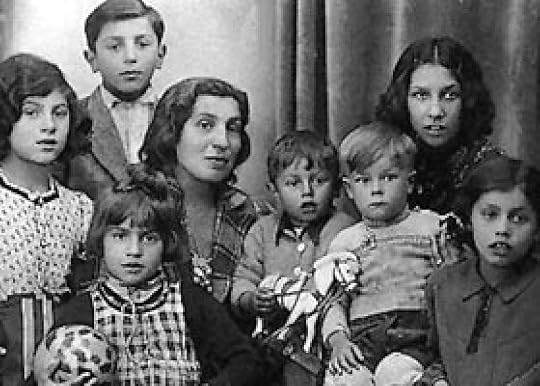
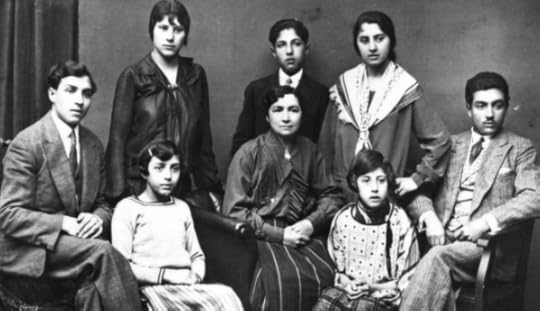
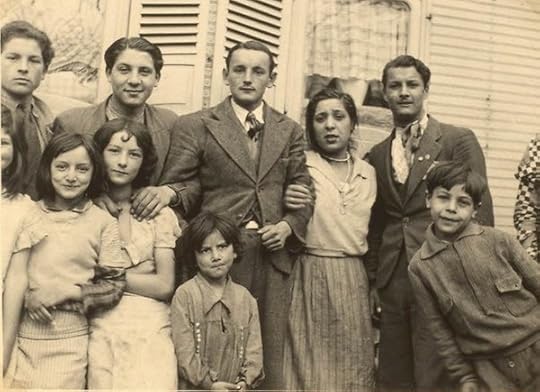
So what is his statement based on? And their tribal organization is matriarchal and marriage only by elopement? And if their dialect is practically unintelligible to other gypsies, can it really still be called a dialect? Also he says it preserved the purest and most ancient forms of words and pronunciations who have lost most of the original inflections and have to a large extent substituted faulty German grammatical structure for their own. Wow this guy is condescending. And how does he even know that? Not to mention that a Lovarra here apologizes to his ancestors, the mule, for relying on the "Blessed Virgin of the Gaje." Based on everything I ever read and heard about Sinti, they are usually the direct opposite of these Lowara in this regard.
Not to mention, considered that then author stated that the Rom follow no form or ritual, they sure as hell seem to be overburdened with ritual, customs, laws and the like.
So yeah, the book seems quite contradictory and the title is misleading. At best it should have been called "The Lovarra."
PS. Only towards the end do we ever get told where the group actually is that time (in Paris), prior it was always so vague that it could be anywhere, thereby invoking another gypsy stereotype. Just like the claims that these gypsies chose their life and that they want to wander all the time.
And even though the book is called "The gypsies" the author makes it pretty clear early on that he is not interested in any gypsies that live sedentary of seminomadic (like gitanoes, gypsies of England, Sinti and Rudari). He outright says he is only writing about nomadic gypsies (he seems to look down e.g. on the urban Kalderasha girls), he says their disheveled appearance is some defense mechanism and considered totally normal and says they are not really Christian or Muslim, it is only a thin veneer to hide their true religion... which are exactly some of the stereotypes known.
And he is not even consistent. You see while some statements support the unkemptness of gypsies the author stated at the start, others don't fit that at all and he almost seems to hesitate calling them strict in their rules. He didn't want to call them Victorian but based on what he says their rules are just as strict.
If what the author wrote here is true than these people are gypsies in every way. There is no regular way of acquisition mentioned except theft for a long time, no income except begging, magic and fortune telling until late in the book when horse trading is mentioned. They are xenophobic. Constantly lie and blame the gaje for it and according to him they may not even be poor. When the author wrote that Kore and another boy went to a nearby hamlet to offer to whet knives and sharpen and adjust scissors, I hoped that finally there is some other income except begging, magic and theft, but nope. They "charmed" the daughter into one scissor which they only gave back because Jan prodded Kore to, who saw nothing bad in the theft and Jan excuses it with indifference to material possession. In fact he tends to state gaje as evil quite quickly while excusing every Roma behavior. The moment these Rom have an honest trade (horses) we get this story of how Jan and Nanosh rip off some Jewish tailor because they reason that their dresses are so extravagant, that he can give it to no one else, even if they cannot pay in full. That is the reasoning of a swindler.
I know the author tries to portray the "Gaje" as unjustifiably mistrustful and somehow the gypsies as justified, at least he doesn't condemn it, if all of them in the group act like Pulika and Kore, I see no reason to trust them. They are liars, thieves, xenophobic, chauvinist and quite frankly when you are not one of them; you cannot trust them at all. At least based on what the author is writing. The people he presents are insanely superstitious, xenophobic and anti-women. Of course the author tries to excuse it or spin the latter as somehow something positive for women that half their body is considered impure.
Is it even verified that what he wrote happened? You see the more I read of this book the more I suspected that the author misinterpreted things or made them up. He claimed that gypsies have no Christianity but ancestor worship but so far except for that spell there was no ancestor worship, he says they do not bond or want to associate with gaje, but then they do it whenever there is opportunity to do it, they have friendship and many even own land apparently. The only thing consistent is that he excuses their criminal behavior.
And he not only is hypocritical when it comes to Rom and Gaje but also between the different tribes or maybe even groups. You see Pulika also claimed to have been King of the Gypsies once, that was ok for the author, but these other kings apparently only call themselves so out of vanity. In fact the author seems to have a distain for them because they like to dress stylishly and being well groomed. The other gypsies he claims to dress disheveled (the kids even wipe their hands on their hair to give it a sheen) and being thieves and liars but these kings are the vain ones?
He described the Tshurara women in exactly the way many would have described "his" gypsies, wild, unkempt, dirty, the girls with awkward attractiveness. And his Kore friend is totally judgmental about them. Also I do wonder whether the author did not mix stereotypes with fact as we even had the "they are actually rich" cliché and only when they almost terrorize the country side is he not ok with it. He almost rants about the Tshurara, contrasting them to the suddenly oh so disciplined Lovarra, calling them completely undisciplined, dirty and being the reason for the gaje hostility. As if he is projecting. Maybe the current hostility is due to the Tshurara, wherever the book was currently, but who knows. He doesn't know, and he claims the Tshurara only steal, but how would he know? When Tshurara girls basically invade a shop and trick the owner, respectively steal from him, the author comments this with that no gypsy would ever be welcome again in that place but when the Lovarra of his group do the same or something similar the consequences are apparently not worth mentioning. This double standard made me seriously considering stopping reading this. Fonso whipped his sister on the face and hands because when Tsinoro's son had half-heartedly pretended to abduct the bride her sigh was to Fonso more a sigh of pleasure and that was too dishonorable for him? And of course the author has no comment for that. When Gaje and Tshurara do this or gorge themselves wildly he scolds them but his precious Lovarra get scolded barely. What a hypocrite.
And some things really can only be excused by citing cultural differences because no other would work. The author mentions a case where the mother of a baby was 12 or 13 years old, which could mean childbirth is dangerous. And yes she is married to a much older man and so the gypsy group here lies and if they want to lie to cover it up, why on earth do they claim this obviously elderly woman is the mother? Come to think about it, apart from some exceptions, the only women mentioned are elderly or girls... combine that with everything prior and the statements of how often they falsify papers and citizenships this book is a tirade of gypsy stereotypes.
Whenever the author talks about what is gypsy, like that true gypsy style is to have no change of clothes, I cannot help but suspect that he is exaggerating or plain lying. That someone has no other clothes is hard enough to belief but what about the gypsies who are not nomadic? I guess they aren't true gypsies for him aka the guy is judgmental not because of any harm done but because it does not fit his views.
Not only does it appear as if the people he is living with don't really tell him anything as he learns apparently important stuff over and over anew, but he comes along as an arrogant prick. He referred to the language of the "Cale or Gitanos of Spain" as a language all their own, much influenced by corrupt Spanish. And unless "corrupt" has some meaning I am not aware of, that is a derogatory statement.
And he even complains that the term gypsy is often and inaccurately used to connote romantic dreams of unfettered, unrealizable freedom, adolescent yearnings for a passionate way of life, contempt for the menial, or to specify any good-for-nothing vagrant of questionable honesty, which is ironic, considering how much this describes the people he presented.
The most striking difference between what he claims and what I know was when he shortly mentioned Sinti. Sinti themselves as far as I know do not say that the word means person or human being. And I would not count on most being musicians and makers of stringent instruments even back then. Right away I can only remember a few from the time of this book who did that. Also they are smaller than the Roma and easily angered? The women always clad in black? I have seen lots of pictures from Sinti of the time and the women rather tended to dress like this:
So what is his statement based on? And their tribal organization is matriarchal and marriage only by elopement? And if their dialect is practically unintelligible to other gypsies, can it really still be called a dialect? Also he says it preserved the purest and most ancient forms of words and pronunciations who have lost most of the original inflections and have to a large extent substituted faulty German grammatical structure for their own. Wow this guy is condescending. And how does he even know that? Not to mention that a Lovarra here apologizes to his ancestors, the mule, for relying on the "Blessed Virgin of the Gaje." Based on everything I ever read and heard about Sinti, they are usually the direct opposite of these Lowara in this regard.
Not to mention, considered that then author stated that the Rom follow no form or ritual, they sure as hell seem to be overburdened with ritual, customs, laws and the like.
So yeah, the book seems quite contradictory and the title is misleading. At best it should have been called "The Lovarra."
PS. Only towards the end do we ever get told where the group actually is that time (in Paris), prior it was always so vague that it could be anywhere, thereby invoking another gypsy stereotype. Just like the claims that these gypsies chose their life and that they want to wander all the time.

July 12, 2018
I have read one other book on the Gypsies - Australian Gypsies: Their Secret History - which is written in recent times through various interviews. The stereotype Gypsy is dispelled in both books but this one is far more personnel and embracing.
Yoors leaves home, with his parents permission, and joins a family of Gypsies with this book taking him through his teens and up to WWII. He explains there are various types of Gypsies, their customs, lifestyle and relationship with non-Gypsies. As marginalised outsiders, which is what they want, Gypsies also were subjected to persecution, racism and violence.
Yoors early life was certainly different as he embraced a world unencumbered with the need for chattels.
Yoors leaves home, with his parents permission, and joins a family of Gypsies with this book taking him through his teens and up to WWII. He explains there are various types of Gypsies, their customs, lifestyle and relationship with non-Gypsies. As marginalised outsiders, which is what they want, Gypsies also were subjected to persecution, racism and violence.
Yoors early life was certainly different as he embraced a world unencumbered with the need for chattels.
May 9, 2010
"This book is written as a protest against oblivion, as a cry of love for this race of strangers who have lived among us for centuries and remained apart..."
With this poetic beginning, Jan Yoors tells us the story of his life as he left his family to join a new family among the Rom, more commonly called Gypsies.
For the most part, we gaje (non-Gypsies in their language) only know the most minimal stereotypes about this culture; fortunetelling women, swarthy bandana-wearing people in covered wagons who play pranks, the fiddle, and according to many myths, kidnap non-Gypsy children. Even in the Renaissance fair circuit in the USA, those who dress as "gypsies" know very little about the real Gypsy culture. What Jan Yoors does in his book is pull away the curtain and show us the life of a Rom family on the road, joining at the age of 12, and traveling with them through World War II. And he does it as one of their people, not some potentially dry anthropologist or even someone who creates a romanticized cookie-cutter vision. To Yoors, his family, led by the elder Pulika, are individuals who live their lives like any of us would, just in a very different fashion. We learn about how the process of arranged marriages and the negotiations involved, about fortunetelling being the province of Rom women, and how Pulika's group, or kumpania, connect with the non-Gypsies for business and pleasure.
No doubt there are aspects of Gypsy culture that many of us would find negative. The concept of purity being one of them, especially with regards to women. Long story short, women are considered 'impure' from the waist down, so say their skirts touch the chain of a wagon, it would need to be replaced. Don't worry ladies, using the bathroom is also considered impure to the point Gypsy guys have to go "check on the horses" in a group, because people who go out alone are assumed to be using the bathroom and it's wrong for a person to have other people think that's what they're doing, because it's dirty (as an American guy, "Hey, I need to hit the restroom, come with me" is weird). Yoors presents these aspects of Gypsy life fully realizing that his audience may be outraged or weirded out by these, but rather than just have a knee-jerk reaction, like "they must be total chauvinists!", Yoors takes a thoughtful and realistic approach to this, trying to understand how these cultural aspects developed; in the case of women and the purity issue, he brings up the point of menstruation and living in very close conditions with very little privacy, and points out how Rom women use this to their benefit, such as getting some privacy and in one case using it to drive other Gypsies away. And he does it from a loving perspective; there's no doubt his love for the Rom is deep and sincere, but he also does not put them on a pedestal. Because of this, The Gypsies becomes a story about individual lives lived in the backdrop of a culture and an overall enriching tale.
I mark this book under my history shelf because not only does the book focus on the Gypsies, but their interactions with mainstream European culture gives a rare presentation on Europe as the Nazis rise to power and Europe begins to slide into war. He discusses how the Gypsies were brutally victimized during the war, with over half a million of their people slaughtered and how the Rom tried to adapt to the situations.
All in all, this book is a loving, well-written story. I don't know if Jan Yoors is still alive, but if he isn't I hope there were Rom at his funeral weeping and tearing at themselves the way they do when others of their family pass away.
With this poetic beginning, Jan Yoors tells us the story of his life as he left his family to join a new family among the Rom, more commonly called Gypsies.
For the most part, we gaje (non-Gypsies in their language) only know the most minimal stereotypes about this culture; fortunetelling women, swarthy bandana-wearing people in covered wagons who play pranks, the fiddle, and according to many myths, kidnap non-Gypsy children. Even in the Renaissance fair circuit in the USA, those who dress as "gypsies" know very little about the real Gypsy culture. What Jan Yoors does in his book is pull away the curtain and show us the life of a Rom family on the road, joining at the age of 12, and traveling with them through World War II. And he does it as one of their people, not some potentially dry anthropologist or even someone who creates a romanticized cookie-cutter vision. To Yoors, his family, led by the elder Pulika, are individuals who live their lives like any of us would, just in a very different fashion. We learn about how the process of arranged marriages and the negotiations involved, about fortunetelling being the province of Rom women, and how Pulika's group, or kumpania, connect with the non-Gypsies for business and pleasure.
No doubt there are aspects of Gypsy culture that many of us would find negative. The concept of purity being one of them, especially with regards to women. Long story short, women are considered 'impure' from the waist down, so say their skirts touch the chain of a wagon, it would need to be replaced. Don't worry ladies, using the bathroom is also considered impure to the point Gypsy guys have to go "check on the horses" in a group, because people who go out alone are assumed to be using the bathroom and it's wrong for a person to have other people think that's what they're doing, because it's dirty (as an American guy, "Hey, I need to hit the restroom, come with me" is weird). Yoors presents these aspects of Gypsy life fully realizing that his audience may be outraged or weirded out by these, but rather than just have a knee-jerk reaction, like "they must be total chauvinists!", Yoors takes a thoughtful and realistic approach to this, trying to understand how these cultural aspects developed; in the case of women and the purity issue, he brings up the point of menstruation and living in very close conditions with very little privacy, and points out how Rom women use this to their benefit, such as getting some privacy and in one case using it to drive other Gypsies away. And he does it from a loving perspective; there's no doubt his love for the Rom is deep and sincere, but he also does not put them on a pedestal. Because of this, The Gypsies becomes a story about individual lives lived in the backdrop of a culture and an overall enriching tale.
I mark this book under my history shelf because not only does the book focus on the Gypsies, but their interactions with mainstream European culture gives a rare presentation on Europe as the Nazis rise to power and Europe begins to slide into war. He discusses how the Gypsies were brutally victimized during the war, with over half a million of their people slaughtered and how the Rom tried to adapt to the situations.
All in all, this book is a loving, well-written story. I don't know if Jan Yoors is still alive, but if he isn't I hope there were Rom at his funeral weeping and tearing at themselves the way they do when others of their family pass away.
September 24, 2008
Honestly, I enjoyed this book and learned a little about Romani customs, but a lot of the book seems completely unlikely . . . it is suppose to be the factual account of a boy who was taken in by a traveling group of Romani when he was 12 years old. You find out later that he had perfectly respectable, even well-off, parents, but they didn't really look for him or even make a fuss when he got back all those months later; then, were happy to let him go back whenever he wanted. In addition to that, Romani are known for using implausible stories to throw outsiders off their track so I really don't know how much of this is the truth and how much is just a bunch of bologna. I would really like to read a book, written by a Romani, giving a truthful account of their culture. Is that too much to ask?

February 1, 2018
I read this probably 30 years ago and was entranced by this unusual tale. One has to wonder what sort of parents would allow their son to run away with the Gypsies quite regularly, but when you read the book, you are glad that they did so. I cannot compare it to any other book I have ever read. This is an inside, fond but honest look at gypsy life as it existed then. Many years later, the author tried to find the gypsies he remembered, and that book was a much sadder portrayal, but also worth reading.

February 8, 2018
I have to confess to not having read this book in over 40 years, when I was young and easily impressed, but it's a book I've never forgotten. It may have been the source of my own wanderlust (satisfied, fortunately, by the US Army).
Gypsies are universally scorned, often by people who never even met one. Reading this book taught me more than about Gypsies, but also the need to keep an open mind in the face of uninformed prejudices. (As if a Jew wouldn't know that.)
It doesn't hurt that the author was also a gifted writer. This book is a delightful read from first page to last.
[May 2005: Have discovered another, maybe better, book on Gypsies: BURY ME STANDING, by Isabel Fonseca. Less romantic, more factual, more pieces of the puzzle filled in.]
Gypsies are universally scorned, often by people who never even met one. Reading this book taught me more than about Gypsies, but also the need to keep an open mind in the face of uninformed prejudices. (As if a Jew wouldn't know that.)
It doesn't hurt that the author was also a gifted writer. This book is a delightful read from first page to last.
[May 2005: Have discovered another, maybe better, book on Gypsies: BURY ME STANDING, by Isabel Fonseca. Less romantic, more factual, more pieces of the puzzle filled in.]

August 28, 2012
Gypsies have always seemed romantic and mysterious to me in a sort of dark and otherworldly way. I never wanted to find out more, but I ended up reading this fascinating account of their lives for my book club. I'll admit that I did a lot of "skimming and scanning" because, as I said, I really didn't care much about this topic. However, I'm glad I spent the time I did, and if you are going to learn about gypsies, this book is IT! The author actually lived with them off and on for about 10 years before WWII, starting when he was 12 years old. He was from a cultured Belgian family, and it is so amazing that his parents allowed him to run away to the gypsies and become so "embedded" with them.
The writing is interesting, too. It not a dry account of facts, but is infused with the essence of what it means to be a gypsy in a way that makes it seem both beautiful as well as troubling to our Western psyche/culture.
Bonus material is next... ha ha . Read at the risk of boredom.
Probably the gypsies' most troubling behavior, in the eyes of non-gypsies (gaje), is stealing. Even the author has trouble, at least initially, personally digesting the rationale for the gypsies' stealing.
"... I had, naively, not given a thought to the cause of Pesha's arrest. .... In assuming that their defenselessness alone was what had tempted their tormentors, I had made my renewed allegiance to them uncomplicated and direct. The pitiful discovery of their thieving... showed me the fallacy of this uncritical loyalty and shattered my illusions. " It was explained to the author that "... stealing from the Gaje was not really a misdeed as long as it was limited to the taking of basic necessities." (pg. 34) Later it was called subsistence thieving. Well, we usually root for Robin Hood, don't we?
I found this dichotomy between the way the Western culture sees them and the Gypsies' reality, not just about stealing, to be the most interesting facet of the whole book. Other dichotomies are exposed. Another interesting one is their treatment of women. The author is, at first, horrified that women are separated (marhime) and treated so differently during their menstrual periods. However, he comes to see that, "Far from being derogatory, the notion of marhime gave a woman added dignity and a heightened awareness of the mystery of her femininity." Hmmm...
Fortune-telling is shown to be only a front, or "protective screen” against the Gaje, or Westerner, to discern information about them and to obtain their money. The gypsies' strange and seemingly distasteful ways are often used for a hidden purpose as well. Constant scratching of their body in the presence of a stranger on a train causes the stranger to move, fearing the presence of lice. Voila: an extra seat for the gypsy or their kin, for example. Both the scratching and the fortune-telling stop immediately when Gaje are not present!
So many of the gypsies' behaviors are troubling to those not a part of their culture, like myself. Their discipline was really only a "self-discipline based on understanding" ( pg. 162) and in no way aligned itself with a Westerner's view of laws or rules. While some of it was really repugnant to me, other times I felt myself thinking of small acts of "civil disobedience" that I have knowingly committed. At the very least, I think it's always valuable to personally examine these contradictions every once in a while. This book definitely made me do that!
Another belief that the book made me examine was my attachment to both place and belongings. In the book it was explained that the gypsies' constant moving and leaving of a particularly pleasant place and their "extravagant lavishness to the point of squandering would make one cherish the memory of a past place or the red-letter days worthy of legend ...even more, with the tenderness reserved for incompletely satisfied longings..... and help (one to) possess the single passing moment more passionately, more fully, without regrets... living in the perpetual present." (p.35) I loved their saying, "a candle is not made of wax, but is all flame." Hey, this could be Eckhart Tolle!
I loved the ending of the book, too. The old woman, Lyuba, who had been so unfriendly to the author in the beginning but had come to accept him over time, was singing and had a strange metamorphosis that brought her back to her earlier, legendary days. "She talked to the dead and for a while they and their times lived again in the present, as a vision for all of us to see. It was so sad and inspiring - a good way to end the book!
The writing is interesting, too. It not a dry account of facts, but is infused with the essence of what it means to be a gypsy in a way that makes it seem both beautiful as well as troubling to our Western psyche/culture.
Bonus material is next... ha ha . Read at the risk of boredom.
Probably the gypsies' most troubling behavior, in the eyes of non-gypsies (gaje), is stealing. Even the author has trouble, at least initially, personally digesting the rationale for the gypsies' stealing.
"... I had, naively, not given a thought to the cause of Pesha's arrest. .... In assuming that their defenselessness alone was what had tempted their tormentors, I had made my renewed allegiance to them uncomplicated and direct. The pitiful discovery of their thieving... showed me the fallacy of this uncritical loyalty and shattered my illusions. " It was explained to the author that "... stealing from the Gaje was not really a misdeed as long as it was limited to the taking of basic necessities." (pg. 34) Later it was called subsistence thieving. Well, we usually root for Robin Hood, don't we?
I found this dichotomy between the way the Western culture sees them and the Gypsies' reality, not just about stealing, to be the most interesting facet of the whole book. Other dichotomies are exposed. Another interesting one is their treatment of women. The author is, at first, horrified that women are separated (marhime) and treated so differently during their menstrual periods. However, he comes to see that, "Far from being derogatory, the notion of marhime gave a woman added dignity and a heightened awareness of the mystery of her femininity." Hmmm...
Fortune-telling is shown to be only a front, or "protective screen” against the Gaje, or Westerner, to discern information about them and to obtain their money. The gypsies' strange and seemingly distasteful ways are often used for a hidden purpose as well. Constant scratching of their body in the presence of a stranger on a train causes the stranger to move, fearing the presence of lice. Voila: an extra seat for the gypsy or their kin, for example. Both the scratching and the fortune-telling stop immediately when Gaje are not present!
So many of the gypsies' behaviors are troubling to those not a part of their culture, like myself. Their discipline was really only a "self-discipline based on understanding" ( pg. 162) and in no way aligned itself with a Westerner's view of laws or rules. While some of it was really repugnant to me, other times I felt myself thinking of small acts of "civil disobedience" that I have knowingly committed. At the very least, I think it's always valuable to personally examine these contradictions every once in a while. This book definitely made me do that!
Another belief that the book made me examine was my attachment to both place and belongings. In the book it was explained that the gypsies' constant moving and leaving of a particularly pleasant place and their "extravagant lavishness to the point of squandering would make one cherish the memory of a past place or the red-letter days worthy of legend ...even more, with the tenderness reserved for incompletely satisfied longings..... and help (one to) possess the single passing moment more passionately, more fully, without regrets... living in the perpetual present." (p.35) I loved their saying, "a candle is not made of wax, but is all flame." Hey, this could be Eckhart Tolle!
I loved the ending of the book, too. The old woman, Lyuba, who had been so unfriendly to the author in the beginning but had come to accept him over time, was singing and had a strange metamorphosis that brought her back to her earlier, legendary days. "She talked to the dead and for a while they and their times lived again in the present, as a vision for all of us to see. It was so sad and inspiring - a good way to end the book!

February 2, 2020
Absolutely fascinating story. I learned so much about the gypsies from it, and I feel sad that their traditional way of life is largely not possible nowadays.

August 14, 2012
It took me a little bit to get used to the style of writing, and due to the foriegn names it made it sometimes impossible for me to always remember who was who. Admittedly I had thought of giving up on this book, but I'm happy to say I found myself unable to stop reading it! I suppose the dreamlike descriptions made it hard for me in the begining to attach to the people involved in the story, however as I read on I appriciated the dreamlike quality of the story.
This book gives a rare insight into the lives of gypsies back in the early to mid 1900's. Jan Yoors shares his unique story in the first person of how he became part of a Gypsy Kumpania at just twelve years old. At first he only travelled with them during the summer, but eventually as time passed he endured the winters with them as well. After tha passing of his best friend he's adopted by the boy's gypsy father bringing him further into the intimate folds of gypsy life.
This is an incredible true life story, and I think it's one that even some of todays gypsies could learn something from. After watching My Big Fat Gypsy Weddings, and seeing how many of them say, "I don't know why we do this that way" on explaining some of their customs I feel they might learn a little about why they do things certain ways by reading this book.
At the end it gives a brief description of how WW2 effected the gypsies, and their involvement in the resistance. I guess there's a sequal to this book that goes into further details of the war, but still doesn't give exact details of who survived, and who didn't. Instead at the end of the sequal, from what I gather of the reviews it leaves you with the sense that Pulika didn't survive the war. This book also leaves me with the same understanding since he learns twenty five years later that Keja the oldest daughter of Pulika did survive when in fact he thought she had not. It's sad to learn this terrible fate of the gypsies we come to love, and care for through Jan Yoors.
This book gives a rare insight into the lives of gypsies back in the early to mid 1900's. Jan Yoors shares his unique story in the first person of how he became part of a Gypsy Kumpania at just twelve years old. At first he only travelled with them during the summer, but eventually as time passed he endured the winters with them as well. After tha passing of his best friend he's adopted by the boy's gypsy father bringing him further into the intimate folds of gypsy life.
This is an incredible true life story, and I think it's one that even some of todays gypsies could learn something from. After watching My Big Fat Gypsy Weddings, and seeing how many of them say, "I don't know why we do this that way" on explaining some of their customs I feel they might learn a little about why they do things certain ways by reading this book.
At the end it gives a brief description of how WW2 effected the gypsies, and their involvement in the resistance. I guess there's a sequal to this book that goes into further details of the war, but still doesn't give exact details of who survived, and who didn't. Instead at the end of the sequal, from what I gather of the reviews it leaves you with the sense that Pulika didn't survive the war. This book also leaves me with the same understanding since he learns twenty five years later that Keja the oldest daughter of Pulika did survive when in fact he thought she had not. It's sad to learn this terrible fate of the gypsies we come to love, and care for through Jan Yoors.

April 16, 2009
Update 7/31-09 I quit. I started reading other books. Maybe I'll finish this some day.. But for now, it's just not motivating me ..
UPDATE 6/11/09
I'm re-reading this now and it is a s-l-o-w read. I guess it seems a bit too intentionally instructive, if you know what I mean.. Like the author is wanting the reader to agree with him about the Gypsies: ('Aren't they cool, Wasn't it cool of me to run away with them? Don't they impress you with their cunning ways/lying and trickery? Aren't I cool for being so open minded?") Uh, no, Mr Yoors, that stuff doesn't impress me. I guess back when I was 18 I thought it was cool;the whole idea of running with a band of Gypsies seemed like such an adventure. Intentional deception, trickery, and the wandering nomad life are not ways I approve of nor do I find them inspiring. I am learning a bit about the habits and customs of these groups.. but I am finding this book reads more like an anthropology study.
I've had this book for over 30 years ( an earlier printing of course). My sister read it in College, and I read it a long time ago, I think when I was 18 years old.. I loved it then but wonder how I'll feel about it now.. so I'm rereading it to find out. Sometimes it is can be interesting to reread books you liked years ago, and find you have a very different reaction to them now.
Gypsies is a true story of a boy who ran way from home, (with his parents permission!) when he was only 12 years old- to live with a band of Gypsies. He lived with them for I think 10 years. Then he wrote this book about his experiences.
I think later Jan Yoors became an avante garde artist of sorts, making tapestries with his two wives (!) Yoors died young and his wives continue his tapestry art.
UPDATE 6/11/09
I'm re-reading this now and it is a s-l-o-w read. I guess it seems a bit too intentionally instructive, if you know what I mean.. Like the author is wanting the reader to agree with him about the Gypsies: ('Aren't they cool, Wasn't it cool of me to run away with them? Don't they impress you with their cunning ways/lying and trickery? Aren't I cool for being so open minded?") Uh, no, Mr Yoors, that stuff doesn't impress me. I guess back when I was 18 I thought it was cool;the whole idea of running with a band of Gypsies seemed like such an adventure. Intentional deception, trickery, and the wandering nomad life are not ways I approve of nor do I find them inspiring. I am learning a bit about the habits and customs of these groups.. but I am finding this book reads more like an anthropology study.
I've had this book for over 30 years ( an earlier printing of course). My sister read it in College, and I read it a long time ago, I think when I was 18 years old.. I loved it then but wonder how I'll feel about it now.. so I'm rereading it to find out. Sometimes it is can be interesting to reread books you liked years ago, and find you have a very different reaction to them now.
Gypsies is a true story of a boy who ran way from home, (with his parents permission!) when he was only 12 years old- to live with a band of Gypsies. He lived with them for I think 10 years. Then he wrote this book about his experiences.
I think later Jan Yoors became an avante garde artist of sorts, making tapestries with his two wives (!) Yoors died young and his wives continue his tapestry art.

December 31, 2019
Color me skeptical. One of the first things the author does is say that gypsies have a tendency to BS Gaje (non-gypsies) when explaining their lives and culture. So when the author said he ran away from a perfectly comfortable home to live with the gypsies at age 12, I cocked an eyebrow. When he said he returned home some months later to parents who had a matter-of-fact reaction to his return, I was scratching my head. When he returned without his parents chasing him, I'm just not buying it. He talked of some sort of written pass or permission slip used to explain to authorities why this obviously outsider kid was living with the Roma, I smelled fish. It may be true that all of this happened, and the immersive view into their life and culture is surely interesting. But the author is an artist, not an anthropologist.
March 26, 2023
This goes on my list of favorite anthropology books! It's an auto-biographical account of someone that ran away from home, sort of on accident, and was adopted into the Lowara tribe of the Rom people. He describes his life and the world that he lived in during that time. It was written in the 1930's and ends with the beginning of WWII. He loves the people deeply, and there are some touching moments between these covers.
Some observations I found interesting:
* The Lowara have really strong chastity/purity-related taboos. For example, anything that touches a woman's skirt is marhime, or ritually impure. There is an episode in the story where girls from a less scrupulous tribe gather strawberries and bring them to a camp shared with the Lowara. At first people are very happy to see the harvest, but then there are whispers that the berries may be marhime, which no one jokes about. Someone questions the girls for a while, and it is found that the girls walked single file through a field of strawberries, meaning that the girls in the back likely picked from plants that were touched by the skirts of the girls in the front. They had to throw all the berries out! Another time, a woman's husband was being badly beaten by a group of drunk men. She kept telling them to stop, but they would not, and as a last resort she ripped off one of her outer skirts and flailed all the men with it. They were shocked and horrified and of course stopped immediately: they were all marhime! They would have to live outside the company until the next tribunal could absolve them.
* The Rom liked being outsiders, and intentionally engaged in behavior that made people want to avoid them, from itching and coughing to encouraging rumors and begging and acting like they had magic powers. Outsiders were called Gaje, and Gaje were to be fooled and used (not violently, but certainly exploitatively). The entire world of the Gaje was essentially public domain, with the Rom holding hunting rights. They did not recognize the authority of Gaje governments (e.g. governments of Germany, France, etc.), and they viewed the focus on writing with disdain. They kept no records, and did their best to obtain legal papers in as many countries as possible to make traveling easier.
* For example, the Rom marry younger than is allowed by Gaje laws, so generally when a baby is born to a new couple, a random pair of people take the baby to a town hall to be registered (need those travel papers!). It might be an 80-year-old lady who clearly couldn't have children, but the bewildered bureaucrat has to give them the papers! There are unfortunate episodes where the authorities found out about a 12- or 14-year-old having a baby, and the girl is apprehended and taken to a reform school of some kind, with the baby taken somewhere else, which is absolutely awful.
* The attitude towards clothing and hair were also fascinating; I think many people have seen pictures of super dirty people outside a wagon, which is an awful image for us. For the people described by the author, shoes, clean clothes and well-kept hair are a sign of superficial Gajo culture and are unbecoming of a Rom. The children wipe food grease in their hair, and no one bothers washing their clothes, simply getting new ones when the old are worn out. This of course will also have the benefit of keeping the Gaje away :D There is an interesting episode where the author and another teenager get a nice new suit in town, and when they return to the camp they get a lot of compliments. The author's (adopted) dad admires the suit and his son, then lovingly grabs one of the lapels and tears it. There's a Romani saying: may you live a long healthy life while your clothes tear and fall apart. Living a vivacious life with your family and kumpania contrasts in their eyes with the fleeting, vain nature of worldly possessions, which must become old and wear out.
* There is another group, members of the Tchurara, who are less scrupulous and treat Gaje with more disdain. There's a very unfortunate period of time in the book where a Tchurara kumpania is traveling ahead of the Lowara kumpania, wantonly stealing and causing property damage wherever they go; this causes the local populace to be very hostile to all of them, and they have a very tough season of traveling, with much difficulty getting food and water.
* The Rom are a diverse people. The Lowara were extremely conservative, highly formal (even if often mock formal), did not play musical instruments, were nomadic, etc. The author's dad uses the Tchurara as an anti-example, and the author meets Kalderasha at some point and finds them uncomfortably different. Groups within groups within groups, as humans always are.
One last note: the author uses the term Gypsy and has no ill-meaning with it. I was told recently by a European that this is a slur, though I've used it for my entire life with no negative connotation, and doing a bit of research I only see (some) people (in the US at least) avoiding the term in the last few years. I assume that there's some lingering memory of animosity among Europeans, while in America they had a fresh start (and are apparently largely assimilated), so the term could not really develop into a slur among us.
The author's dad tells him that Gypsies are in every land, in some places settled and integrated and some even, sadly, *ashamed* of their Gypsy origins. The book is a love letter to his culture, which prided itself on its independence and strictly refused assimilation, espousing an identity as an outsider among Gaje while stubbornly considering *everyone else* the real outsiders. The pose of the boy on the front cover says it all: "This is us. Handle it!"
Some observations I found interesting:
* The Lowara have really strong chastity/purity-related taboos. For example, anything that touches a woman's skirt is marhime, or ritually impure. There is an episode in the story where girls from a less scrupulous tribe gather strawberries and bring them to a camp shared with the Lowara. At first people are very happy to see the harvest, but then there are whispers that the berries may be marhime, which no one jokes about. Someone questions the girls for a while, and it is found that the girls walked single file through a field of strawberries, meaning that the girls in the back likely picked from plants that were touched by the skirts of the girls in the front. They had to throw all the berries out! Another time, a woman's husband was being badly beaten by a group of drunk men. She kept telling them to stop, but they would not, and as a last resort she ripped off one of her outer skirts and flailed all the men with it. They were shocked and horrified and of course stopped immediately: they were all marhime! They would have to live outside the company until the next tribunal could absolve them.
* The Rom liked being outsiders, and intentionally engaged in behavior that made people want to avoid them, from itching and coughing to encouraging rumors and begging and acting like they had magic powers. Outsiders were called Gaje, and Gaje were to be fooled and used (not violently, but certainly exploitatively). The entire world of the Gaje was essentially public domain, with the Rom holding hunting rights. They did not recognize the authority of Gaje governments (e.g. governments of Germany, France, etc.), and they viewed the focus on writing with disdain. They kept no records, and did their best to obtain legal papers in as many countries as possible to make traveling easier.
* For example, the Rom marry younger than is allowed by Gaje laws, so generally when a baby is born to a new couple, a random pair of people take the baby to a town hall to be registered (need those travel papers!). It might be an 80-year-old lady who clearly couldn't have children, but the bewildered bureaucrat has to give them the papers! There are unfortunate episodes where the authorities found out about a 12- or 14-year-old having a baby, and the girl is apprehended and taken to a reform school of some kind, with the baby taken somewhere else, which is absolutely awful.
* The attitude towards clothing and hair were also fascinating; I think many people have seen pictures of super dirty people outside a wagon, which is an awful image for us. For the people described by the author, shoes, clean clothes and well-kept hair are a sign of superficial Gajo culture and are unbecoming of a Rom. The children wipe food grease in their hair, and no one bothers washing their clothes, simply getting new ones when the old are worn out. This of course will also have the benefit of keeping the Gaje away :D There is an interesting episode where the author and another teenager get a nice new suit in town, and when they return to the camp they get a lot of compliments. The author's (adopted) dad admires the suit and his son, then lovingly grabs one of the lapels and tears it. There's a Romani saying: may you live a long healthy life while your clothes tear and fall apart. Living a vivacious life with your family and kumpania contrasts in their eyes with the fleeting, vain nature of worldly possessions, which must become old and wear out.
* There is another group, members of the Tchurara, who are less scrupulous and treat Gaje with more disdain. There's a very unfortunate period of time in the book where a Tchurara kumpania is traveling ahead of the Lowara kumpania, wantonly stealing and causing property damage wherever they go; this causes the local populace to be very hostile to all of them, and they have a very tough season of traveling, with much difficulty getting food and water.
* The Rom are a diverse people. The Lowara were extremely conservative, highly formal (even if often mock formal), did not play musical instruments, were nomadic, etc. The author's dad uses the Tchurara as an anti-example, and the author meets Kalderasha at some point and finds them uncomfortably different. Groups within groups within groups, as humans always are.
One last note: the author uses the term Gypsy and has no ill-meaning with it. I was told recently by a European that this is a slur, though I've used it for my entire life with no negative connotation, and doing a bit of research I only see (some) people (in the US at least) avoiding the term in the last few years. I assume that there's some lingering memory of animosity among Europeans, while in America they had a fresh start (and are apparently largely assimilated), so the term could not really develop into a slur among us.
The author's dad tells him that Gypsies are in every land, in some places settled and integrated and some even, sadly, *ashamed* of their Gypsy origins. The book is a love letter to his culture, which prided itself on its independence and strictly refused assimilation, espousing an identity as an outsider among Gaje while stubbornly considering *everyone else* the real outsiders. The pose of the boy on the front cover says it all: "This is us. Handle it!"

January 16, 2016
Wow I read this and wanted to run off and be a gypsy. A very informative read on the early 1900's lifestyle of this interesting nomadic people. Highly recommended

January 28, 2022
I saw this book sitting on a stack of books in a family members home and it immediately attracted me. Just the word Gypsies is exotic enough, yet I have had personal contact with the Rom, so I asked to read and return this book.
I lived and worked in Budapest for two years and traveled around Eastern Europe extensively. My first encounters were in Warsaw Poland. It was winter in Poland, dark, cold, and snowy. Each morning Gypsy women and children would be dropped off on busy street corners to sit in the cold all day and beg. The children were usually infants, and I was told that they were usually drugged so that they would sleep most of the day. The sight was pathetic and must have pulled at people’s heart strings because these gypsies would not have done this unless there was money being made.
When I was new to these cities and walked city streets and used underground street crossings, I became aware that things in my pockets began to disappear. On one occasion, I had a silver pen and pencil set in my shirt pocket. I have no recollection of bumbling into anyone or hands groping at me, yet in a miraculous way when I existed the underground, I did not have my pen and pencil set.
In Russia while walking with a friend on a busy street we were accosted by a group of urchins. I cannot in truth say that they were gypsies, they were more like Fagin’s children in the Charles Dickens story Oliver Twist. Fagin was the leader of a group of children whom he taught to make their livings by pickpocketing and other criminal activities, in exchange for shelter. This group of young children lead by an older person surrounded us and with overwhelming numbers attempted to steal from us. They appeared out of nowhere and just as rapidly disappeared in an instant while a police officer stood observing from across the street. After these type encounters it should be evident that my interest was peaked by the title of this book.
The first thing that struck me in the opening chapters was that young Yoors decided to join a group of Gypsies with total disregard for the feelings of his parents. Did he love his parents? Did they love him? By his telling, he went off for six months to live with a traveling band of Gypsies with no thought as to his parent’s anguish regarding his disappearance. He then tells us that after his six-month adventure he returned home with little, or no questions asked nor a reprimand…. unbelievable.
Yoors’ does his best to depict the Roma as honest people who just desire to live a quiet nomadic life based on their own interpretation of the world. I can not buy into it. When they come into a territory, they disrupt everything. Everything that is not nailed down is stolen or destroyed. They beg borrow and steal. When they leave, their garbage remains to be disposed of by others. To study any culture is interesting and as stated previously I have had firsthand knowledge of these people as they and I traveled throughout Eastern Europe. I cannot see any value to this way of life, the Roma run counter to cultures that want education, social development, advancement of learning and prosperity for themselves and their children, you can even say that they prey on these other cultures.
Yoors gives us very little knowledge of himself in this story. After a few chapters the narrative becomes dull and repetitive and never tells us why a child from a privileged life would ever desire to sleep on the ground in all kinds of weather or eat normally uneatable food, it is sickening, and they eat this garbage with their dirty hands. This reader can’t understand why anyone would choose this lifestyle.
I read on until the end believing that our author would tell us about the Nazi persecution of these people. But Yoors’ disappoints by providing two or three pages devoted to this topic and very little context about the murder of 2 million gypsies by the Nazi.
This book is not well done and if a reader or researcher wanted scholarly information about gypsies and their lifestyle this is not the book to seek it in.
I lived and worked in Budapest for two years and traveled around Eastern Europe extensively. My first encounters were in Warsaw Poland. It was winter in Poland, dark, cold, and snowy. Each morning Gypsy women and children would be dropped off on busy street corners to sit in the cold all day and beg. The children were usually infants, and I was told that they were usually drugged so that they would sleep most of the day. The sight was pathetic and must have pulled at people’s heart strings because these gypsies would not have done this unless there was money being made.
When I was new to these cities and walked city streets and used underground street crossings, I became aware that things in my pockets began to disappear. On one occasion, I had a silver pen and pencil set in my shirt pocket. I have no recollection of bumbling into anyone or hands groping at me, yet in a miraculous way when I existed the underground, I did not have my pen and pencil set.
In Russia while walking with a friend on a busy street we were accosted by a group of urchins. I cannot in truth say that they were gypsies, they were more like Fagin’s children in the Charles Dickens story Oliver Twist. Fagin was the leader of a group of children whom he taught to make their livings by pickpocketing and other criminal activities, in exchange for shelter. This group of young children lead by an older person surrounded us and with overwhelming numbers attempted to steal from us. They appeared out of nowhere and just as rapidly disappeared in an instant while a police officer stood observing from across the street. After these type encounters it should be evident that my interest was peaked by the title of this book.
The first thing that struck me in the opening chapters was that young Yoors decided to join a group of Gypsies with total disregard for the feelings of his parents. Did he love his parents? Did they love him? By his telling, he went off for six months to live with a traveling band of Gypsies with no thought as to his parent’s anguish regarding his disappearance. He then tells us that after his six-month adventure he returned home with little, or no questions asked nor a reprimand…. unbelievable.
Yoors’ does his best to depict the Roma as honest people who just desire to live a quiet nomadic life based on their own interpretation of the world. I can not buy into it. When they come into a territory, they disrupt everything. Everything that is not nailed down is stolen or destroyed. They beg borrow and steal. When they leave, their garbage remains to be disposed of by others. To study any culture is interesting and as stated previously I have had firsthand knowledge of these people as they and I traveled throughout Eastern Europe. I cannot see any value to this way of life, the Roma run counter to cultures that want education, social development, advancement of learning and prosperity for themselves and their children, you can even say that they prey on these other cultures.
Yoors gives us very little knowledge of himself in this story. After a few chapters the narrative becomes dull and repetitive and never tells us why a child from a privileged life would ever desire to sleep on the ground in all kinds of weather or eat normally uneatable food, it is sickening, and they eat this garbage with their dirty hands. This reader can’t understand why anyone would choose this lifestyle.
I read on until the end believing that our author would tell us about the Nazi persecution of these people. But Yoors’ disappoints by providing two or three pages devoted to this topic and very little context about the murder of 2 million gypsies by the Nazi.
This book is not well done and if a reader or researcher wanted scholarly information about gypsies and their lifestyle this is not the book to seek it in.

June 2, 2019
This book is an insider account of a Dutch boy who, for reasons unknown perhaps even to himself, found himself drawn to wander along with a company of Gypsies several months of the year several times in the period just before the beginning of World War II. Like many people who read this, I found the story told both powerful and troubling, powerful because it represents an insider look at gypsy society, with the internal divisions and the approach to the societies and their governments by gypsies portrayed vividly, and troubling for the reason that it demonstrates a certain lack of honesty and transparency in the relationships between gypsies and outsiders. Even for those whose sympathy for gypsies and their struggles is limited, this book is particularly poignant for showing a picture of gypsy society in Europe just before it was greatly harmed by Hitler's regime and the murder of a great many (at least tens of thousands, if not hundreds of thousands) of the people the author wandered with and befriended. And it was that poignancy that made this book worthwhile to me even if I did not find the gypsies the author traveled with to be all that enjoyable of a people to read about.
This book is about 250 pages long and it covers a period during the author's life when he spent a lot of time wandering around with gypsies. The author details how it was that he found himself gradually and perhaps grudgingly accepted by a company of gypsies and how his identity as a gypsy-friend allowed him to not only befriend the gypsies himself but also to serve as an ambassador in the company's dealings with outsiders. He witnesses the tension between different companies of gypsies and the way that certain gypsies seemed to inflame relations with outsiders more than others, and examines the way that gypsies were a lot more sympathetic to the author once he saw their rules and the way that they sought to cleverly deceive those on the outside. In one dramatic moment the author finds himself being pushed into marriage with a young gypsy girl, which is meant to seal his membership in the gypsy company, but he turns his back on the marriage in a way that seeks to avoid causing offense to anyone, and then finds himself a member of Dutch society in a period where it was itself imperiled by Nazi rule.
In general, I have to say that this book solidified what it is about gypsy society that has most bothered me when I have read about it. To be fair, it is not a problem that the gypsies themselves alone have, but it is very characteristic of them. That problem is the way that the gypsies themselves do not wish to be known by others. This leads inevitably to a sense of deception and a glorification of the gullibility of those with whom the gypsies deal with, and is an essentially dishonest approach that prevents trust from building across the gulf between gypsies and the mystified and often irritated populations with whom they move. That is aside from the many acts of petty thievery that the author notes, including horse rustling as well as subsistence stealing of food items like chickens and fish and even hedgehogs. If the gypsies do not appear as threats to mainstream society, they do not seem like the sort of people one would want to be hanging around one's community, engaging in various charlatan tricks and seeking to preserve a sense of mystery and power through claims of magical ability.
This book is about 250 pages long and it covers a period during the author's life when he spent a lot of time wandering around with gypsies. The author details how it was that he found himself gradually and perhaps grudgingly accepted by a company of gypsies and how his identity as a gypsy-friend allowed him to not only befriend the gypsies himself but also to serve as an ambassador in the company's dealings with outsiders. He witnesses the tension between different companies of gypsies and the way that certain gypsies seemed to inflame relations with outsiders more than others, and examines the way that gypsies were a lot more sympathetic to the author once he saw their rules and the way that they sought to cleverly deceive those on the outside. In one dramatic moment the author finds himself being pushed into marriage with a young gypsy girl, which is meant to seal his membership in the gypsy company, but he turns his back on the marriage in a way that seeks to avoid causing offense to anyone, and then finds himself a member of Dutch society in a period where it was itself imperiled by Nazi rule.
In general, I have to say that this book solidified what it is about gypsy society that has most bothered me when I have read about it. To be fair, it is not a problem that the gypsies themselves alone have, but it is very characteristic of them. That problem is the way that the gypsies themselves do not wish to be known by others. This leads inevitably to a sense of deception and a glorification of the gullibility of those with whom the gypsies deal with, and is an essentially dishonest approach that prevents trust from building across the gulf between gypsies and the mystified and often irritated populations with whom they move. That is aside from the many acts of petty thievery that the author notes, including horse rustling as well as subsistence stealing of food items like chickens and fish and even hedgehogs. If the gypsies do not appear as threats to mainstream society, they do not seem like the sort of people one would want to be hanging around one's community, engaging in various charlatan tricks and seeking to preserve a sense of mystery and power through claims of magical ability.
March 22, 2021
This is a hard review to write for me, and I gave myself some space from finishing the book before writing it.
It's a nonfiction book, and a fairly well-written one, I'd go so far as to call it artistic. It, I think, accurately depicts a single individual's experiences. I feel the book as a whole resembles less of an academic or anthropological book, or even as a general cultural overview book, as much as it is a travelogue.
As far as the actual things conveyed, I find it... problematic. It is nonfiction -- I do not agree from an ethical or moral standpoint with everything that happens in the world -- so that is to be expected to a degree. But time and time again when reading the book, I was disturbed, creeped out, or taken aback about what was contained within. This is not to say that it is A Bad Book, but that it is, like humanity, complicated and troublesome. A product of my upbringing and beliefs, but here it is, a small selection:
The author's journey. He runs away at age 12 with the Rom in the first place, and his described reaction of his parents is... blasé. That they were sad, but felt it was what he must have wanted so be it, go ahead. The idea, to me, of letting your twelve year old child decide to go live on their own seems frankly negligent to me, nor does his description of events paint them as particularly concerned with him having left at all, even without knowing where he had been.
The tribalism depicted over and over; hatred and contempt of pretty much anyone not a part of their group, from the gaje to the police to other Rom. Certainly there is plenty of prejudice and injustice, particularly from the gaje, to provoke these feeling, and what is described is authentically human, but hard for me to read.
The sexism, over and over. The way the women of the tribe he traveled with were treated and regarded in his account, second-class servants. At one point I believe he goes so far as to say the true Rom are the men, and the men alone. Again, I do not doubt his experience, but this is a sad picture to hear.
And final in this list, his own language. Keeping in mind this is an adult man writing these memories down, the language and way he goes about describing the little girls of the tribe... "primitively seductive" "softly sensuous" "dusky youth... not yet woman" "innocence and sensuousness" "lush and vivacious"
Perhaps that is how he felt at the time. But reading those words from someone who is not just past their first decade of life, speaking of girls that seem to range from eight to fourteen years of age is not something I'm comfortable with.
Is this a fairly well-written book, an accurate account as far as we know of an individual's travels with a tribe of Rom? Yes.
Would I recommend it to another for their reading pleasure? Perhaps, but with caveats and warnings. The book is like the slice of humanity it describes, complicated and difficult to understand to one who is not part of it.
It's a nonfiction book, and a fairly well-written one, I'd go so far as to call it artistic. It, I think, accurately depicts a single individual's experiences. I feel the book as a whole resembles less of an academic or anthropological book, or even as a general cultural overview book, as much as it is a travelogue.
As far as the actual things conveyed, I find it... problematic. It is nonfiction -- I do not agree from an ethical or moral standpoint with everything that happens in the world -- so that is to be expected to a degree. But time and time again when reading the book, I was disturbed, creeped out, or taken aback about what was contained within. This is not to say that it is A Bad Book, but that it is, like humanity, complicated and troublesome. A product of my upbringing and beliefs, but here it is, a small selection:
The author's journey. He runs away at age 12 with the Rom in the first place, and his described reaction of his parents is... blasé. That they were sad, but felt it was what he must have wanted so be it, go ahead. The idea, to me, of letting your twelve year old child decide to go live on their own seems frankly negligent to me, nor does his description of events paint them as particularly concerned with him having left at all, even without knowing where he had been.
The tribalism depicted over and over; hatred and contempt of pretty much anyone not a part of their group, from the gaje to the police to other Rom. Certainly there is plenty of prejudice and injustice, particularly from the gaje, to provoke these feeling, and what is described is authentically human, but hard for me to read.
The sexism, over and over. The way the women of the tribe he traveled with were treated and regarded in his account, second-class servants. At one point I believe he goes so far as to say the true Rom are the men, and the men alone. Again, I do not doubt his experience, but this is a sad picture to hear.
And final in this list, his own language. Keeping in mind this is an adult man writing these memories down, the language and way he goes about describing the little girls of the tribe... "primitively seductive" "softly sensuous" "dusky youth... not yet woman" "innocence and sensuousness" "lush and vivacious"
Perhaps that is how he felt at the time. But reading those words from someone who is not just past their first decade of life, speaking of girls that seem to range from eight to fourteen years of age is not something I'm comfortable with.
Is this a fairly well-written book, an accurate account as far as we know of an individual's travels with a tribe of Rom? Yes.
Would I recommend it to another for their reading pleasure? Perhaps, but with caveats and warnings. The book is like the slice of humanity it describes, complicated and difficult to understand to one who is not part of it.

January 6, 2019
My husband Gary has read all Yoors’ books, and I had been meaning to read at least one from the Gajo who ran away from home at age twelve and lived with off and on with the Rom for many years before WWII. It is a beautiful, touching book, successful both as literary prose and as ethnography, though he holds back. If I were teaching anthropology this would be on my reading list.
By using the experiences of his life with the Rom, Yoors sheds light on the lies and truths about Gypsy life. He remembers the sights, the sounds, and smells, as well as the ideas, and he recounts the stories and questions of his youth with faith. It is my favorite read this month. While he does not bring the adult perspective I wanted in Belli’s book, he does present an adult objectivity. I know he loves these people, but I also absolutely trust his resistance to sentimentality and self-justification. He explains and he describes without seeming to defend either his own choices or the those of the people he lives with. Clearly, he expresses understanding of himself and his life and he provides a very personal perspective. But most of all he loves and respects these people, his other family.
I call thus a memoir but Jan Yoors is not telling his own story, he is telling the story of the Lowara.
By using the experiences of his life with the Rom, Yoors sheds light on the lies and truths about Gypsy life. He remembers the sights, the sounds, and smells, as well as the ideas, and he recounts the stories and questions of his youth with faith. It is my favorite read this month. While he does not bring the adult perspective I wanted in Belli’s book, he does present an adult objectivity. I know he loves these people, but I also absolutely trust his resistance to sentimentality and self-justification. He explains and he describes without seeming to defend either his own choices or the those of the people he lives with. Clearly, he expresses understanding of himself and his life and he provides a very personal perspective. But most of all he loves and respects these people, his other family.
I call thus a memoir but Jan Yoors is not telling his own story, he is telling the story of the Lowara.

October 29, 2019
A very loving, nostalgic-without-sentimentality, and detailed immersion into the lives of the Romani of Europe during the years between the two World Wars. The rather incredible true adventure begins with the almost unimaginable (to me as a mother) parental permission, bordering on encouragement, of a 12-year-old blond, blue-eyed Belgian boy to run off with a nearby kumpania of gypsies, which adopts him as the son of the group leader. He subsequently spends the next 5 plus years between travelling with his adoptive gypsy family and returning to visit with his parents, a creature pulled in cycles between his 2 different worlds, a veritable member of both irreconcilable cultures. Highly recommended for a moving and well-told view into an inconoclastic, mysterious nomadic culture that has carried stigma and romance with it for centuries from the dim human past.

October 28, 2025
"Pendant les claires nuits d'été, sur toutes les routes du monde, les Tsiganes écoutent leurs conteurs. Les anciens disent aux jeunes : "Si vous ne faites que parler, vous n'apprendrez rien." C'est ainsi qu'au hasard des rencontres, au croisement des routes, la tradition se perpétue. Les Rom pour qui le mot écrit n'existe pas ne connaîtraient rien de leur histoire sans ces swatura. Dans les swatura, les faits réels et imaginaires se mêlent et c'est à l'auditeur de distinguer le vrai du faux.(...)" p154
June 5, 2026
A beautiful book about a beautiful people. Anyone tempted by the idea of escaping "civilized" society will be fascinated by the Rom people, as they get to pick and choose from the trappings of modernity in ways the rest of us simply cannot.
The author, a Belgian, left his own society when he was just twelve and lived with a Rom clan for some ten years--astoundingly, with his parents' consent! This book is one of the rare first person accounts of a notoriously mis... [see the rest on my book review site.]
The author, a Belgian, left his own society when he was just twelve and lived with a Rom clan for some ten years--astoundingly, with his parents' consent! This book is one of the rare first person accounts of a notoriously mis... [see the rest on my book review site.]

November 19, 2020
- "Shuk tski khalpe la royasa." (Beauty cannot be eaten with a spoon)
A mysterious, vivid painting of a world so far away, but presumably still exists today. Two worlds, so different, and partially at each other's throats, while one trolls another- Jan serves as a bridge, bringing us into the land of the gypsies.
Why, to wander? Why not! A chronicle of wandering, loneliness, anguish, acceptance, and ritual that blends into WWII.
A mysterious, vivid painting of a world so far away, but presumably still exists today. Two worlds, so different, and partially at each other's throats, while one trolls another- Jan serves as a bridge, bringing us into the land of the gypsies.
Why, to wander? Why not! A chronicle of wandering, loneliness, anguish, acceptance, and ritual that blends into WWII.

January 23, 2018
A really insightful look at the life of the Gypsies of Europe in the 20s and 30s when Jan Yoors lived with them for 10 years starting at the age of 12 when he ran away from home. He is truly a remarkable writer with a unique ability to make the people he talks about come alive as few authors can. I have often wondered about the Gypsies and this book answer so many questions.

May 29, 2018
I loved this - the author is an excellent writer, and the people he describes are so interesting. My favorite parts are the gypsy sayings and descriptions of their culture. It's not always one I agree with (especially the 2nd class citizen treatment of women), but it is admirable in its devotion to life, family, and adventure.
July 15, 2020
Interesting book on a group that is surprisingly under-documented in academic literature. It's the only book focusing on the Romani that I have found, but it's a first-person narrative without citations. So it's more about the author's subjective view of the Romani Gypsies and their culture as opposed to an objective take. Take in everything you read with a big grain of salt

October 2, 2020
I’ve been fascinated by the Roma after seeing them in Europe. Their camps, the young families eating a sack lunch beside the road, and the children playing around tourist sites. It’s obvious it is a difficult life and the lack of schooling for children really breaks my heart. I’m reading to understand it and this book was helpful. I highly recommend if you are interested.

May 20, 2019
Powerful book. You don’t end up liking the gypsies more, you just have an insight on what is their understanding of the world. I find it also extremely useful to get to know what was the gypsies’ perspective on the Second World War. A must read!
Displaying 1 - 30 of 63 reviews