

What do you think?
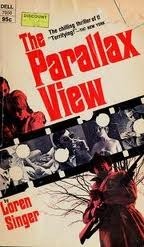
The Parallax View
After the assassination of President Kennedy, a number of people involved in the investigation either "commited suicide," were killed in "accidents," or disappeared.
The truth of what went on during that incredible period of time is only being hidden by a conspiracy of powerful people - at least that is what I and many other people have concluded from the events.
In Parallax View, Loren Singer, an American novelist, has similar ideas in an adventure story which closely coincides with some of the sinister events that have recieved little worldwide publicity.
Twenty-five men and women appear on a piece of film. They were witnesses to a shattering and violent event. One by one they die. To save themselves, the four who have survived must find out why they have been marked for death.
185 pages, Hardcover
First published January 1, 1970
About the author
Loren Singer
9 books5 followersLoren Adelson Singer was an American novelist, best-known for his 1970 political thriller, The Parallax View, which was made into a successful 1974 film, of the same name, starring Warren Beatty, Paula Prentiss, Hume Cronyn and William Daniels.
Ratings & Reviews
Friends & Following
Create a free account to discover what your friends think of this book!
Community Reviews
Displaying 1 - 16 of 16 reviews

March 30, 2021
Big fan of '70s paranoia thriller movies, me. One of the bleakest and best of them is of course The Parallax View, which is based on this book.
I expected it to be pretty bad, but found it's actually quite an engaging thriller, that only really fumbles it in the last quarter of the book.
The idea of a (shadow-)government run Parallax Corporation, a group that seeks out psychopaths in society to become assassins, is still quite effective.
The film is better, it is much more focused - the book gets distracted by its own subplots. An interesting difference in the book is that two journalist colleagues try to solve the mystery of the Parallax Corporation (instead of just one Warren Beatty), and one of them is eventually hired as the assassin of the other. Sadly that idea isn't worked out very well, and you get the feeling the author was much more enamoured by his ideas and what it said about US society at that moment, and forgot a thriller also needs a good plot.
The book's ending is rushed and characters spend a lot of time spouting philosophies and thoughts, and it all feels a bit nebulous, rushed and ultimately unsatisfying.
The film veers away from the book's plot halfway through the book, and is much the better for it.
Interesting to have read it, not sure I would recommend it to other fans of the film.
I expected it to be pretty bad, but found it's actually quite an engaging thriller, that only really fumbles it in the last quarter of the book.
The idea of a (shadow-)government run Parallax Corporation, a group that seeks out psychopaths in society to become assassins, is still quite effective.
The film is better, it is much more focused - the book gets distracted by its own subplots. An interesting difference in the book is that two journalist colleagues try to solve the mystery of the Parallax Corporation (instead of just one Warren Beatty), and one of them is eventually hired as the assassin of the other. Sadly that idea isn't worked out very well, and you get the feeling the author was much more enamoured by his ideas and what it said about US society at that moment, and forgot a thriller also needs a good plot.
The book's ending is rushed and characters spend a lot of time spouting philosophies and thoughts, and it all feels a bit nebulous, rushed and ultimately unsatisfying.
The film veers away from the book's plot halfway through the book, and is much the better for it.
Interesting to have read it, not sure I would recommend it to other fans of the film.
This entire review has been hidden because of spoilers.
September 20, 2013
How this was ever published I will never know. It's an insult to good novel writing. When it begins you feel like you've missed a chapter - I even checked to see if I was really on page one and hadn't got a duff copy. It then runs wild through all sorts of irrelevant and/or impossible-to-believe scenarios, never reveals anything behind the oh so important reel of film, before ending absurdly. Having bought it for a dollar I gladly binned it.

September 18, 2026
It is a rarity that a film adaptation surpasses the source material, but this is certainly one of them.
The book drops the reader in what filmmaking calls media res making the audience have to figure out what is happening and what relationships people have with each other. A good structure. So long as you have both the story and the narrative capacity to pull it off. This book has neither.
It is hard to say if it's just bad writing (because it is written poorly) or it is a product of its time (being written in the 70s, the language used is overty racist, sexist and homophobic) but the book is light on description and moves through time and action at a breakneck pace. Again, this wouldn't be a problem if the prose was remotely engaging and had an ability to unravel a mystery with any tact. The book instead relies on hokey gimmicks that, for the time, were a dime a dozen. Reading it contemporary times it just doesn't land.
The film plays on the government mistrust that echoes through the shady and down right open corruption we are seeing today. The book gives you none of that.
I am shocked to say: Skip this. Go watch the movie instead.
The book drops the reader in what filmmaking calls media res making the audience have to figure out what is happening and what relationships people have with each other. A good structure. So long as you have both the story and the narrative capacity to pull it off. This book has neither.
It is hard to say if it's just bad writing (because it is written poorly) or it is a product of its time (being written in the 70s, the language used is overty racist, sexist and homophobic) but the book is light on description and moves through time and action at a breakneck pace. Again, this wouldn't be a problem if the prose was remotely engaging and had an ability to unravel a mystery with any tact. The book instead relies on hokey gimmicks that, for the time, were a dime a dozen. Reading it contemporary times it just doesn't land.
The film plays on the government mistrust that echoes through the shady and down right open corruption we are seeing today. The book gives you none of that.
I am shocked to say: Skip this. Go watch the movie instead.
March 13, 2026
The Parallax View
, written by Loren Singer and published in 1970, was made into a film in 1974 that has become one of the classics of paranoid 1970s cinema. This was an era, in the wake of the assassinations of the 1960s and the onset of the Nixon backlash, when cynicism toward government power, belief in conspiracies and the prevalence of assassination combined to produce many memorable novels and films—Six Days of the Condor, The Domino Principle, Flashpoint, The Killer Elite and The Bourne Identity being some of my favorites. I loved the Parallax film but I’d never heard much about the novel, so I finally decided to pick up a copy and give it a read.
As the story opens, a journalist named Tucker is showing his co-worker Mal Graham photos of a recent high-profile assassination. We’re not told who was assassinated, but we are told that four of the eight journalists Tucker knows who witnessed it have died in suspicious circumstances, along with many others that he doesn’t know. Tucker believes there’s a conspiracy to eliminate the witnesses, and since he and Graham are two of the four still alive, they need to do something drastic. Graham is shocked by Tucker’s allegations but finds them plausible:
This opening excerpt sets the tone for the book: there are many little philosophical speeches, dialogues and inner monologues throughout, so if you’re looking for a straight action thriller and don’t care for that sort of thing, be warned.
Anyway, Tucker and Graham use their journalistic skills to investigate the conspiracy, and soon discover that recruitment ads by an outfit called the Parallax Corporation are being placed throughout the country that correlate with the deaths of the witnesses. Graham narrowly avoids being killed while investigating one of the deaths in upstate New York and kills the hitman, then Tucker kills a Parallax employee on Long Island in a fit of rage while Graham watches. The two men are fully committed to their war against Parallax now.
They cleverly decide to apply for positions with Parallax to infiltrate the organization, passing the company’s psychological tests designed to filter out the unworthy and hone in on potential assassins. The final test borders on brainwashing, though it was much more disturbing and dramatic in the film. Without giving away too many spoilers, the story takes an interesting twist at this point that turns the two into adversaries. There’s also a strange detour into a romantic subplot between Graham and the widow of the Parallax agent killed by Tucker, which really defused the narrative tension and seemed totally unnecessary.
There is an interesting scene toward the end where Graham is invited to dinner by the mastermind of Parallax and chief of a secret government bureau called the “Bureau of Social Structure”. This man chillingly explains the nature of the Bureau and tries to justify their work:
Essentially, the Bureau is in the business of manufacturing conspiracies of political assassination and disruption as a means of unifying a country that has grown increasingly divided and ungovernable. What a chillingly plausible idea!
Meanwhile, the strange soap opera romance I mentioned earlier continues, a professor is enlisted into Graham’s war against the Bureau, more philosophical monologues are made, and the action finally picks up as the story races to a violent and offbeat ending.
Overall, I have to say this novel was pretty disappointing. Compared to the riveting film, it lacks tension and thrills. There are too many philosophical asides, pretentious observations, gratuitous 70s sexual attitudes and soap opera dialogues. There’s also a general vagueness about the whole thing: we’re never given any details about the famous assassination that started the whole story, never told what the main characters look like, their backgrounds or given much reason to care about them. Parallax has some very interesting ideas, but the author lacked the skill of better thriller writers to turn it into a gripping read—which probably explains why author Loren Singer didn’t published much else, and this novel remains obscure while the film has become a classic. It’s not a terrible book, just not nearly as good as it could have been.
As the story opens, a journalist named Tucker is showing his co-worker Mal Graham photos of a recent high-profile assassination. We’re not told who was assassinated, but we are told that four of the eight journalists Tucker knows who witnessed it have died in suspicious circumstances, along with many others that he doesn’t know. Tucker believes there’s a conspiracy to eliminate the witnesses, and since he and Graham are two of the four still alive, they need to do something drastic. Graham is shocked by Tucker’s allegations but finds them plausible:
“But the thing that you’re saying is appalling. It requires the kind of resources—not just financial but, Christ! social, intellectual, that are enormous.”
“Big, all right,” said Tucker. “Solid, man. A whole system of destructos. And aimed at you and me.”
“Why couldn’t it be true,” Graham wondered aloud. “Only because it shouldn’t be.”
“It’s happened in other countries. Happened in Rome, Germany, Russia. What’s so sacred about this country? Tell me. What’s so different about its people? They’re just as disgusting as any of the others anywhere. What I’ve seen I remember. This isn’t a civilization any more if it ever was. It’s packs of curs yawping at the asses of their betters. Led by nonentities who come to power because there’s a vacuum to fill.”
This opening excerpt sets the tone for the book: there are many little philosophical speeches, dialogues and inner monologues throughout, so if you’re looking for a straight action thriller and don’t care for that sort of thing, be warned.
Anyway, Tucker and Graham use their journalistic skills to investigate the conspiracy, and soon discover that recruitment ads by an outfit called the Parallax Corporation are being placed throughout the country that correlate with the deaths of the witnesses. Graham narrowly avoids being killed while investigating one of the deaths in upstate New York and kills the hitman, then Tucker kills a Parallax employee on Long Island in a fit of rage while Graham watches. The two men are fully committed to their war against Parallax now.
They cleverly decide to apply for positions with Parallax to infiltrate the organization, passing the company’s psychological tests designed to filter out the unworthy and hone in on potential assassins. The final test borders on brainwashing, though it was much more disturbing and dramatic in the film. Without giving away too many spoilers, the story takes an interesting twist at this point that turns the two into adversaries. There’s also a strange detour into a romantic subplot between Graham and the widow of the Parallax agent killed by Tucker, which really defused the narrative tension and seemed totally unnecessary.
There is an interesting scene toward the end where Graham is invited to dinner by the mastermind of Parallax and chief of a secret government bureau called the “Bureau of Social Structure”. This man chillingly explains the nature of the Bureau and tries to justify their work:
“Place this country, this particular state in comparison with the great ones of the past, and you will see that it’s truly a giant.”
He waved his arm as though to brush the predecessors away. “That’s not to say there’s nothing wrong with it. It’s godawful in many areas. It reeks of violence, it’s jammed with incompetents, it has slave populations crammed in corners from coast to coast; its culture is appalling; it’s hypocritical in its policies; it’s noisy, tasteless, overbuilt, and underdeveloped, but it is the major state in the world for now and the foreseeable future. And you know it, as I know it. That’s a fact. What’s wrong with it can be changed. But you have to see that its existence is preserved. You have to manage its survival. Manage it. That is precedent.
“You don’t agree. Well, I don’t care much whether you do or not.
“We have a pattern of violence here that we must control. We managed to live with it for two centuries. Well and good. Will we be able to for the next fifty? Twenty? Ten?”
Essentially, the Bureau is in the business of manufacturing conspiracies of political assassination and disruption as a means of unifying a country that has grown increasingly divided and ungovernable. What a chillingly plausible idea!
Meanwhile, the strange soap opera romance I mentioned earlier continues, a professor is enlisted into Graham’s war against the Bureau, more philosophical monologues are made, and the action finally picks up as the story races to a violent and offbeat ending.
Overall, I have to say this novel was pretty disappointing. Compared to the riveting film, it lacks tension and thrills. There are too many philosophical asides, pretentious observations, gratuitous 70s sexual attitudes and soap opera dialogues. There’s also a general vagueness about the whole thing: we’re never given any details about the famous assassination that started the whole story, never told what the main characters look like, their backgrounds or given much reason to care about them. Parallax has some very interesting ideas, but the author lacked the skill of better thriller writers to turn it into a gripping read—which probably explains why author Loren Singer didn’t published much else, and this novel remains obscure while the film has become a classic. It’s not a terrible book, just not nearly as good as it could have been.
March 27, 2022
Terrible book. Virtually no bearing on the much better and more focused movie. About the only relationship is the title and the initial setup. I think that the author was into some sort of self-indulgent trip. None of the characters were particularly worthy of the reader's interest or engagement. I kept waiting for something to happen. Too much philosophizing and political meandering dialogues.

November 7, 2015
3 1/2 stars. A dandy little thriller and, though this feels backwards, it's 'almost' as good as the movie.

November 23, 2025
I was drawn to this book by an urge to get more answers than the movie provided, but I now realize that jettisoning the reasons for the conspiracy was the best move that Lumet and company could have made. In the film, the most terrifying aspect of this shadowy Parallax operation was that they seemed to have no philosophy at all, that they hired out killers to anyone, which resulted in an endless parade of assassinations. And since there's always someone ready to clip the string on any outspoken idealist, the world would be doomed. As Beatty says, "It seemed like someone was always killing the best and brightest." So in a world where anyone can zap their political rivals, the worst and dullest shall rise! However, in the book (during the big Final Boss speech during dinner), we realize that political killers are actually a way of channeling an increasingly aggressive populace, satiating their rage to curb any uprisings, which is *much* less frightening than the hopelessness depicted in the film. What the book does do that's interesting is how it amplifies the "doubling" aspects of the plot. In the movie, we discover there are always two assassins on a job, sometimes not even working together but in opposition. But in the book, instead of Beatty's "Joe Frady (cat)" going it alone, there are a pair of reporters who immediately take the Parallax test and successfully sign up to be assassins, even though they realize they will be pitted against one another by the company. So no real investigation materializes here, just the question of who will kill the other one first. This is fascinating as far as exposing the underlying savagery of normal people, but even this tension is abandoned in favor of a shockingly limp detour into a love story with the wife of one of the Parallax lackeys. Not only does this take up a bizarre amount of space in the narrative, it also sidelines everything else all the way until the end. But it's such a small book that maybe I'd still recommend it as a curiosity, especially if you're very familiar with the film, so at the very least you can see how a scandalous gay orgy in the novel is distilled into a short loving glance between two characters in the movie, or why that odd fishing sequence was all that was left of an equally odd (and seemingly endless) angling interlude. The JFK mantra "back and to the left" definitely works here, especially when you're talking about literal and figurative worms on hooks.
in-the-eye-of-the-hurricane
December 3, 2024In this thrilling political fiction, Singer is able to excitingly explore the same themes revolving around the Watergate Scandal. Paranoia, unchecked powers, systemic corruption, conspiracy and more all contribute to show the parallels of this real and fictional scandals that show the fragility of democracy and the power of governmental media manipulation. In a murder/ political "mystery about patriotism, violence, and cultural paranoia" this story follows a newspaper journalist following the assassination of a senator and the witnesses. Inspired by JFK's assassination, this book turned film tells a fictional thriller of politics and how easily the media can manipulate society. Although it predates the Watergate incident, Singer captures the very same atmosphere in her novel with themes of abuse of power and distrust. Most importantly, this novel and the real life scandal parallel in highlighting the importance of journalism as the journalist in the literary work mirrors the two journalist who helped uncover the truths of Watergate, Woodward and Bernstein. These two narrative emphasize the crucial role of journalism in a society that relies on it to expose corruption in the government.
https://www.bam.org/film/2024/paranoi...
https://cinema.wisc.edu/blog/2023/10/...
https://www.bam.org/film/2024/paranoi...
https://cinema.wisc.edu/blog/2023/10/...

June 11, 2026
I'm not quite sure what to make of this. There are some good scenes but it's pretty much frayed round the edges, and in parts it's blatantly idiotic. The whole thing seems pointless, as if the author was literally making it up as he went along. Characters behave weirdly, sometimes it's difficult to work out who is saying what, and the entire situation seems illogical and ill-conceived. Also, by his use of words and phrases, Mr. Singer seems more intent on making himself look clever than on writing a coherent story.
This is a pretty poor example of a novel, the basis of it is ridiculous. I had to force myself to finish it. I'm even getting bored writing this review.
On the plus side, it was made into a great film!
This is a pretty poor example of a novel, the basis of it is ridiculous. I had to force myself to finish it. I'm even getting bored writing this review.
On the plus side, it was made into a great film!

September 10, 2024
This is a hard book to review. It is well-written, but the plot is dated and far-fetched. A group of journalists who witnessed an assassination are being systematically killed by hitmen hired by a secret Bureau of our government. Some of the action scenes are chilling, but the overall atmosphere is both cold and futile. Plus, the propaganda rants got old after a while. I can only hope that the movie adaptation, starring Warren Beatty and Paula Prentiss (1974), is better than the book.
March 28, 2022
Weird from the beginning. Gave it about 30 pages.
July 2, 2026
IMHO the film is much better than the book. Kudos to David Giler and Lorenzo Semple Jr to adapt this source and turn it into such a great film

May 2, 2019
Visit JetBlackDragonfly (The Man Who Read Too Much) at www.edenthompson.ca/blog
The Parallax View by Loren Singer is a dynamite 1970 paranoia conspiracy thriller, the inspiration for the 1974 Warren Beatty film of the same name. Directed by Alan J. Pakula, it's an excellent film about the brainwashing of the American people and the process of government manipulation, it still holds up today, you should see it.
Malcolm Graham and a few other newspaper men, photographers and reporters meet to watch a film reel of an event they covered. What they have in common is each person in the film is being killed off in accidental ways, one by one. Some scoff and some become frightened, as they begin to investigate. Malcolm follows the death of his friend and uncovers system of secret agencies who work within or outside of the government to disrupt dissent. Malcolm signs up for the program - a series of visual and mental protocals, which aims to systematically brainwash and set up 'lone gunmen' to accomplish whatever is deemed necessary by the unknown bureau, and he waits to find out if he is a suitable employee.
If you are a cynical nihilist, this is for you. At first a series of odd accidents soon becomes a trap that is impossible to escape from. The Parallax Corporation is just one of many outside contractors with an unknown head, merely a testing organization for societal alienation, and stability reaction working for the Bureau of Social Structure. Unlike the film, this remains in the New York area, and has a few similarities to the movie which were nice to revisit, but the book takes a more personal approach, less action. Malcolm falls into a pit of paranoid delusion that is all that more frightening because his fears are completely real. The Parallax Corp. may be an experiment or a continuing program, but it offers persuasive arguments for those acting against the government or the government placating it's people with lone gunman theories.
The Parallax View by Loren Singer is a dynamite 1970 paranoia conspiracy thriller, the inspiration for the 1974 Warren Beatty film of the same name. Directed by Alan J. Pakula, it's an excellent film about the brainwashing of the American people and the process of government manipulation, it still holds up today, you should see it.
Malcolm Graham and a few other newspaper men, photographers and reporters meet to watch a film reel of an event they covered. What they have in common is each person in the film is being killed off in accidental ways, one by one. Some scoff and some become frightened, as they begin to investigate. Malcolm follows the death of his friend and uncovers system of secret agencies who work within or outside of the government to disrupt dissent. Malcolm signs up for the program - a series of visual and mental protocals, which aims to systematically brainwash and set up 'lone gunmen' to accomplish whatever is deemed necessary by the unknown bureau, and he waits to find out if he is a suitable employee.
If you are a cynical nihilist, this is for you. At first a series of odd accidents soon becomes a trap that is impossible to escape from. The Parallax Corporation is just one of many outside contractors with an unknown head, merely a testing organization for societal alienation, and stability reaction working for the Bureau of Social Structure. Unlike the film, this remains in the New York area, and has a few similarities to the movie which were nice to revisit, but the book takes a more personal approach, less action. Malcolm falls into a pit of paranoid delusion that is all that more frightening because his fears are completely real. The Parallax Corp. may be an experiment or a continuing program, but it offers persuasive arguments for those acting against the government or the government placating it's people with lone gunman theories.

July 23, 2019
A small group of journalists notice that the witnesses to a long-ago political assassination are mysteriously dying - and worry that they might be next. One of them tries to infiltrate a corporation that hires government assassins, with dangerous results. Most famous for inspiring the Alan J. Pakula-Warren Beatty film from 1974, the novel is, unfortunately, better as a concept (or a template for the film) than a book. The characters are thinly sketched, the plot murky and much of it bogged down in indiscernible exposition, or else author rants about the military-industrial complex that are very much of their time. Beyond the very basic concept and a few specific scenes (the assassin personality test, rendered as an unforgettable montage in the movie version, is the closest parallel) little of the book survived to the film version; there's no assassination to foil, while the dramatic focus is dispersed among three leading characters, none of whom emerge as particularly compelling. A thriller without thrills, just some interesting ideas that worked better in another medium.

June 7, 2009
Strange book, don't think I really got it.

Read
July 31, 2011Very believable about the dirty tricks some "free world" governments would get up to.
Displaying 1 - 16 of 16 reviews