Jump to ratings and reviews
Rate this book

Quartet

Rate this book
Aperitifs in smoky Montparnasse cafes, cheap hotel rooms, and Marya Zelli, trying to make of her life something substantial to withstand the unreality which surrounds her. Alone, stranded in Paris after her Polish husband is jailed, Marya is befriended by an English couple who take her home with them. Slowly they overwhelm her with their passions as Marya drifts into an affair with the husband, an affair the wife seems strangely eager to promote. The husband demands, the wife fosters, and Marya is left - as always - to comfort herself.

192 pages, Paperback

First published January 1, 1928

71 people are currently reading
5257 people want to read

About the author

Jean Rhys

67 books1,449 followers
Jean Rhys, CBE (born Ella Gwendolyn Rees Williams; 24 August 1890–14 May 1979) was a British novelist who was born and grew up in the Caribbean island of Dominica. From the age of 16, she mainly resided in England, where she was sent for her education. She is best known for her novel Wide Sargasso Sea (1966), written as a prequel to Charlotte Brontë's Jane Eyre.

She moved to England at the age of 16 years in 1906 and worked unsuccessfully as a chorus girl. In the 1920s, she relocated to Europe, travelled as a Bohemian artist, and took up residence sporadically in Paris. During this period, Rhys, familiar with modern art and literature, lived near poverty and acquired the alcoholism that persisted throughout the rest of her life. Her experience of a patriarchal society and displacement during this period formed some of the most important themes in her work.

Ratings & Reviews

What do you think?
Rate this book

Friends & Following

Create a free account to discover what your friends think of this book!

Community Reviews

5 stars
543 (19%)
4 stars
1,077 (39%)
3 stars
894 (32%)
2 stars
210 (7%)
1 star
32 (1%)
Displaying 1 - 30 of 296 reviews
Profile Image for Lisa.
1,108 reviews3,290 followers
February 8, 2020
What people call love is often more of a fight, an obsession, a compulsively destructive behaviour.

If this is a semi-autobiographical novel, describing Jean Rhys' experiences with Ford Madox Ford and his wife, then she is brutally brave!

Who dares to write about the pain of obsession and admit its deep abysses? Who dares to write about the ugliness of a "love" affair carried out in a lopsided power hierarchy? Who dares to show the pettiness of hotel rooms, of mean remarks and of the never-ending partiality of society - siding always with male sexuality, against the version of the woman, who loses regardless of what her position is. "Sob stuff or sex stuff" - that sums up the attitude of the male protagonist quite clearly. Despite being an intelligent, thinking person, he makes a deliberate choice not to understand his own hypocrisy, or what makes his "sex stuff" turn into his lover's "sob stuff".

Forcing wife and mistress to "share him" for months, exposing both to humiliation and psychological torture, he chucks his lover in disgust when he thinks he has to share her with her husband who is released from prison. Be intact, or have an income - that is the brutal choice for a woman if she wants to be "good". For most women, that is not an option, so they have to be "bad" by society's definition.

Locked into an impossible dilemma, there is more "sob stuff" than "sex stuff" to fill the day, and the question remains which of the two is more painful or more humiliating. What really got under my skin was the side remark that the alpha male in the room was not even a "good" lover. He didn't have to, as he would get away with distracted, clumsy touches, and he would get away with not really liking women and despising them for making him feel desire. Why is that so often the case? Why are women drawn to men that treat them like furniture and then drop them as soon as they show signs of thinking and feeling like human beings?

I have no definitive answer, but there is something that attracts people to dangerous, destructive beings.

In the end, Marya, Jean's alter ego, watches a fox in a zoo together with an American socialite. They see the animal in quite different ways, summing up human relationships in the deeps and in the shallows quite accurately:

"There was a fox in a cage at the end of the zoo - a cage perhaps three yards long. Up and down it ran, up and down, and Marya imagined that each time it turned it did so with hopefulness, as if it thought that escape was possible. Then, of course, there were the bars. It would strike its nose, turn and run again. Up and down, up and down ceaselessly. A horrible sight, really.
"Sweet thing", said Miss Nicholson."

A wild animal locked into a cage to be admired in its despair by the shallow society - that animal is a symbol for Marya. Only she loses hope in the end, as opposed to the fox. She's in the deep waters, where the sharks swim, and she knows it.

Brutally good!
Profile Image for Orsodimondo.
2,457 reviews2,429 followers
May 21, 2022
VIAGGIO NEL BUIO


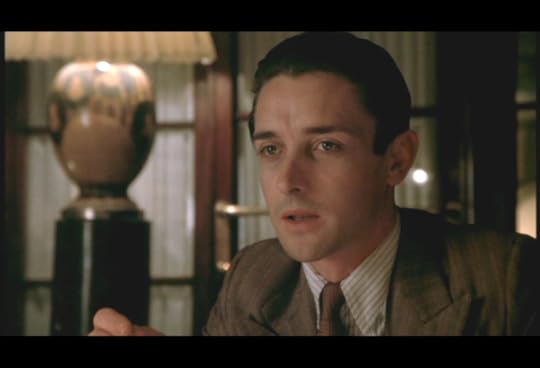
La protagonista del film omonimo diretto da James Ivory nel 1981: Isabelle Adjani.

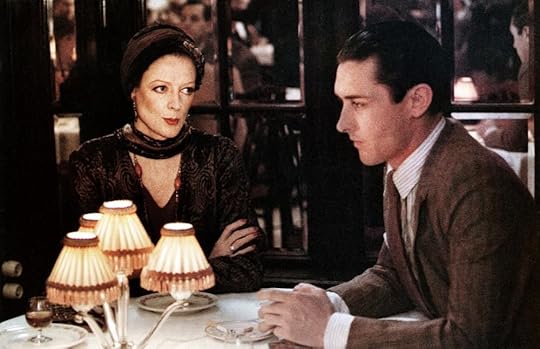
Il titolo giustamente mette in evidenza i quattro protagonisti, due coppie, e cioè due donne e due uomini: ma il clou della storia si potrebbe racchiudere in un ménage à trois.
E quindi, c’è un quarto incomodo.


Stephan Zelli è Anthony Higgins.

Marya è rimasta sola, i genitori sono morti, l’unica zia vive lontano, e la ventiquattrenne fa la ballerina, non proprio la professione che garantisce sicurezza e futuro.
A Londra incontra un uomo di origine polacca, Stephan Zelli, che si occupa di cose antiche. Zelli non è mai molto trasparente sulla sua attività, ma la sensazione che si ha sin dal principio risulta azzeccata: è un losco trafficante di oggetti d’arte, a cominciare da quelli rubati.
Stephan propone a Marya di seguirlo a Parigi dove vive e di sposarlo. Per un po’ la giovane ha una relativa sensazione di appagamento e serenità: ma dura pochi mesi, presto il marito finisce nei guai e viene arrestato per furto.
Marya ritorna sola, e questa volta neppure a casa sua, in Inghilterra: questa volta succede all’estero, in Francia, a Parigi.


Alan Bates è Heidler.

Quando un coppia di connazionali conosciuta per caso, gli Heidler, le offre di andare a vivere con loro in modo da risparmiare sulle spese, Marya non può non accettare: lui si muove nello stesso campo del marito in prigione, ma è un autentico mercante d’arte, lei è pittrice dilettante, e con Marya si comportano all’apparenza come due genitori adottivi, prodighi e ospitali.
In apparenza.
Nella realtà l’offerta nasconde un inghippo, anzi un vero e proprio tranello: il signor Heidler inizia subito a corteggiarla spudoratamente, e la signora Heidler rimane indifferente alla cosa, anzi capisce che può utilizzarla a suo vantaggio, come strumento per tenere suo marito incatenato. Che torbida situazione!


Lois Heidler è interpretata da Maggie Smith.

La storia, ambientata nella Parigi degli anni venti, tra squallide stanze d’albergo e caffè immersi nel fumo, prosegue e include un viaggio al sud della Francia, Zelli che esce di prigione, la coppia Stephan-Marya che riprova a stare insieme…
Ci sono tante altre cose in questo romanzo ricco di trama che Jean Rhys, nonostante l’impianto autobiografico, riesce a raccontare lavorando di sospensione e sottrazione, alludendo più che svelando.


Isabelle Adjani è Marya Zelli.

Quartetto è il romanzo d’esordio della Rhys (1928) e, come dicevo, ha molti elementi autobiografici ricalcando in qualche modo il suo primo breve matrimonio parigino che le consentì di entrare nei circoli letterari dove conobbe Ford Madox Ford che fu il suo pigmalione, oltre a coinvolgerla in un vischioso ménage con sua moglie.
E fin dal principio Rhys inaugura quelle sue eroine inquiete, che precorrono i tempi non fosse altro che per la difficoltà che hanno ad adattarsi alla realtà sociale ed esistenziale che le circonda, alla superficie di rispettabilità che il mondo intorno dispiega e sotto la quale nasconde ben altre pulsioni. La fatica di indossare una maschera. Eroine che finiscono sole, alienate ed emarginate, proprio come nel suo capolavoro Il grande mare dei Sargassi.
Ho letto che Quartetto è una riscrittura post-moderna di Il buon soldato di Ford Madox Ford, perciò ho messo questo titolo nella mia lista desideri.


Gli Heidler.

L'amore le aveva fatta questo, tra le altre cose, l'aveva resa brutta. Se questo era amore, questo continuo doloroso desiderio, questa ferita che sanguinava incessantemente goccia a goccia. E la speranza divorante. E la paura. Quella era il peggio. La paura con la quale conviveva, che quel poco che aveva le venisse improvvisamente tolto. L’amore era una cosa terribile.


Ella Gwendolen Rees Williams più nota come Jean Rhys.
Profile Image for Jenn(ifer).
192 reviews1,012 followers
February 25, 2013
Something in me is broken.

Ah Jean, it's so nice to have you back. You smell of gin and desperation and self-loathing, but that doesn't matter; I still love you anyway. No one pulls at my heartstrings quite the way you do...

Some of you may remember my Rhys rampage of last summer. I read through her novels so quickly, you might have thought the pages were burning my fingertips. Well wisely, at least I think wisely, I saved one novel for a rainy day, a day when no one but Jean Rhys would do. Strangely, the very day I needed Jean the most, her Complete Novels arrived at my door, sent to me ever so sweetly by my dear GR friend Mark. Mark didn't know it, but when he sent me this book as a thank you I had just the day before ordered it for myself. And more oddly still, he had had the book since Christmas. Kismet.

The title of the book looks like it was scrawled on the page by some dame using her tube of candy apple red lipstick. The dame in question in this particular novel goes by the name of Marya (which, truth be told, annoyed the shit out of me the whole time... my brain kept changing her name to Myra, and how was it supposed to be pronounced anyway, Maria?). Marya is married to a scoundrel named Stephan who early on gets arrested for theft and sent to prison for a year, leaving Marya penniless and alone. Now anyone who knows a thing or two about Jean Rhys knows that she actually was married to a guy who was a scoundrel and went to prison, leaving her penniless and alone.

Anyway, a seemingly nice and rather well-to-do couple, pitying Marya, offer to take her in. Only their offer is clearly not as altruistic as it may seem and Marya is quickly drawn into a scandalous affair when unsurprisingly the husband starts coming on to the pretty young Marya every chance he gets. (Here's a juicy bit of gossip -- the affair between Marya and the wealthy married man is a fictionalized account of Rhys's own affair with Ford Maddox Ford). Foolish girl that she is, needy little empty bag of bones that she is, she's so starved for love and affection that her heart is easily won over by a few measly "I love yous." Before her lover goes limp, she has lost all of her power and soon, all of her allure.

The wife is no innocent victim in all of this. She is fully aware of what is happening under her roof, and she sanctions it. She knows that by keeping her husband on a long leash, he will never leave her. But she is obviously disgusted by Mayra and the goings on between the two, and bitter. Such a bitter sad, pathetic little thing...

I'll cease with the plot synopsis here so that I don't give anything else away...

Rhys's "Quartet" was originally titled "Postures," which seems to me much more suitable. Because it's all about posturing, isn't it? It's all about keeping up appearances and wanting to fit in and trying to make everyone else believe the big fat lies of love.

Oh Jean, your always leave my with a gaping wound and a chest crushing emptiness. But I love you all the same.
Profile Image for Warwick.
Author 1 book15.4k followers
July 13, 2023
Paris between the wars – the world capital of creativity, romance and adventure. For Hemingway, famously, it was the time when ‘we were very poor and very happy’.

For Jean Rhys, by contrast, it was when we were very poor and miserable as all hell.

Her Paris is not a glittering city of light, but a seedy warren of cheap drinks and cheaper hotel rooms, peopled by duplicitous strangers. The artistic mecca of Montmartre is, for Rhys – or her fictional stand-in Marya – pervaded by a ‘sinister and rakish atmosphere’, and when she steps into legendary venues like the Dôme, she sees only ‘mournful and tightly packed’ drinkers.

This is Rhys's fictionalised account of her time in Paris living in an awkward ménage à trois with Ford Madox Ford and his first wife, the Australian artist Stella Bowen, who appear here as ‘the Heidlers’. It is not a flattering portrait of either of them. Lois Heidler, the wife, is snide and condescending and Marya fantasises about smashing her face in with a wine bottle. As for Heidler himself, he is an unsettling mixture of threatening, patronising and exploitative.

‘My darling child,’ said Heidler with calmness, ‘your whole point of view and your whole attitude to life is impossible and wrong and you've got to change it for everybody's sake.’


The fourth member of this ‘quartet’ is Marya's own husband, who spends most of the novel in prison on mysterious charges of fraud (as did Rhys's own husband of the time). To be fair, Rhys is not kind to herself either, seeing her heroine as ‘a strange animal’, ‘reckless, lazy, a vagabond by nature’, continually unable to look after herself but needing a string of men for emotional and financial support.

As she says in a kind of bitter mitigation, and with the full weight of experience, ‘poverty is the cause of many compromises’. The entanglement Marya is involved in is not a romantic one in the normal sense of the word (‘it wasn't a love affair. It was a fight’) but something more painful and existential.

And always, behind the action, is this brilliantly evoked portrait of Paris around Montmartre, Pigalle and Montparnasse. It doesn't matter whether she's heading for the Dôme, the Sélect, the Coupole or the Closerie des Lilas (all of them still there, by the way!), the atmosphere is the same.

When and where? In some café, of course. The unvarying background. Knowing waiters, clouds of smoke, the smell of drink.

Clouds of smoke and the smell of drink seem, indeed, to waft up from the pages of this slim book. Rhys's writing is heartfelt and incisive, quietly witty, determinedly unsentimental. It's a bitter treat, and I drank it down like a neat Pernod.
Profile Image for Fiona MacDonald.
808 reviews198 followers
February 9, 2018
The second book I have read by Jean Rhys and I am utterly besotted with her. I can’t comprehend how she creates such beauty and utter emotion with her writing, it sucks you in and won’t let go. I don’t really have words to explain how much I admire her or her work. Set again in Paris, ‘Quartet’ follows Marya as she is abandoned by her husband and taken in by a kindly couple who may or may not have ulterior motives. She speaks so clearly about heartbreak, love, destructive thoughts and depression and I was by her side suffering and rejoicing as she searches for happiness. I wish she had written so much more.
Profile Image for Madeleine.
Author 2 books951 followers
April 5, 2013
Oh, another instance of three stars signifying my failure as a reader (and possibly as a compassionate human being). I haven't felt such regretful pangs of "It's not you, it's me" and been so keenly reminded that my histrionic, womanly emotions prevented me from appreciating the finer points of a novel since A Confederacy of Dunces. At least that had moments of comedy to keep the blackness at bay; Quartet was just all hopelessness all the time. And I just couldn't take it, regardless of all the tragic beauty Rhys veritably stuffed into this inspired-by-true-events tale of woe.

I feel like such a hypocrite for recently praising Woolf's ability to summon inglorious emotions and loving her for it while allowing the same gut-wrenching talent Rhys exhibits to anger me to the point of yelling at these characters because I couldn't relish the physical relief of smacking some sense into them: The difference is that Woolf seemed to give terrible things a bigger-picture significance while Rhys's intent is not the same. There's no point to the bleakness because sometimes life just sucks. Especially if you're a woman in the early 20th century and, therefore, are expected to live as a subservient possession -- and so help you if you're not appropriately and outwardly grateful for the privilege to go through life on your hands and knees, please and thank you, sir. It takes some writing chops to believably portray the ugliness going on here and make it sound so necessarily hopeless yet so poetic, and, ye gods, does Rhys ever have 'em. It is no fault of her own that I read this with a post-women's-lib perspective, often in my office where I get to rule my department with an iron fist (or passive-aggressive guilt -- whatever, same result) and, according my boss, have instilled the fear of God in men older than I am and then go home to a husband who loves me as a person and treats me as an equal partner in our relationship: Mine is not at all the world Rhys is writing about, and I realize not being able to truly understand hers is not a bad problem to have but presents a problem nonetheless in my approach to Quartet.

It is remarkable that, for being written in the late 1920s and so clearly expressing how servile women are supposed to be, there was something so urgently timeless about this book. It's not easy for a piece of literature that's nearing its centennial to shirk the grasp of datedness but this book certainly does. And Rhys? You're fucking AWESOME for pulling that off.

I wanted to feel so badly for Marya, I really did. A husband in jail and a married man whose advances she mistakes for love make for a lousy situation, especially when the weakling she married forces her to fend for herself when that's just not feasible, leaving her to seek refuge with a couple whose interest in her well-being is so transparent a blind man could have realized their motives. It's really not her fault that she had no means of surviving on her own, let alone the knowledge or inner strength to do so even if she had found a path to freedom. What made things all the more awful was that Marya had these achingly poignant moments of hating her circumstances so much and recognizing the futility of her situation that almost -- almost! -- drove her to action if she weren't so damnably susceptible to being torn down by both her husband and the cad to whom she is a reluctant mistress. It was like watching a friend stubbornly spiral down the rabbit hole of bad decision chased by bad decision all because she had no regard for the well-intended interventions that all proved maddeningly futile. Seriously: If I had to hear one more character, even the all-bark-no-bite Lois whose big mouth only took her as far as her dominating husband would let her run, I was going to throw this book at the first guy who had the misfortune of speaking to me at the wrong time.

In the end, I couldn't help but feel like such somberly lovely prose was wasted on such irrevocably rotten characters -- not that the play of the two dueling aesthetics didn't add to the insurmountable misery that was doing a fine job of escalating on its own. But I just couldn't, in good conscience, say that I loved a book where a woman was so ruthlessly victimized by both the era in which she had the misfortune of existing and the men who dominated her without a twinge of conscience. I usually do care more that a story is told well than I do about the plot itself but this one was just too raw and too filled with hurt to ignore: The beauty of the language couldn't save the soul-crushingly appalling tale it told.
Profile Image for Paul Bryant.
2,408 reviews12.6k followers
February 1, 2015
Completely miserable autobiographical first novel from the Queen of English Mope herself where the only laughs to be had are mocking and bitter and short. Feminists must approach Jean Rhys like an improvised explosive device. Is she perfect material for an argument about patriarchy? Or is she a self-indictment of the fatalistic self-destructive masochistic doormat woman? Yes to both.

Plot is easily sketched out. English Marya lives with Stephan, her Polish wide boy husband in 1920s Paris; she has no idea what her husband does for a living. Quelle non-surprise, he’s arrested for theft and banged up for a year. Marya is then befriended by a couple of arty types she knows, Mr and Mrs Heidler. Old Heidler looks like Queen Victoria and has the hots for Marya. As she has no money at all, she agrees to go and live with them. He declares his love & that his wife doesn’t mind, this is Paris, you’ve heard of Paris, non? Her situation is impossible. She leaves, but only to a room in a hotel he pays for. He keeps her for a while.

He wasn’t a good lover, of course. He didn’t really like women. She had known that as soon as he touched her. His hands were inexpert, clumsy at caresses… He despised love. He thought of it grossly, to amuse himself, and them with ferocious contempt… But it didn’t really matter much.

Marya gets steamrollered by the awful Heidler but in any case she’s a mixed up shook up girl, as Patti and the Emblems would have put it 34 years later. She thinks she loves him but she knows she hates him :

Love was a terrible thing. You poisoned it and stabbed at it and knocked it down in the mud – well down – and it got up and staggered on, bleeding and muddy and awful.

Between Heidler and Stephan, soon to emerge from prison, and her lonely life with no job and no money, you might think the Seine would soon be presenting her with its twinkling liquid solution but first stop for Marya along that bus route is pernod.

This Heidler-Marya affair is a rum thing. He says :

I love you, I can’t help it, it’s not your fault, it’s not my fault. I love you, I’m burnt up with it.

And he also says :

I have a horror of you. When I think of you I feel sick.

Oh well, that’s men for you.

And she says similar stuff too.

Well of course, I’m not saying that Heidler and his wife Lois ought to have been gunned down or decapitated but I did keep wishing that Mary could have summoned up just a tinge of Thana from Ms 45 or Jennifer from I Spit on your Grave or even Carrie, Nikita, Thelma and Louise. And actually, her daydreams sometimes do proceed in this fashion :

One of these days when she’s thought of something clever to say about me for her friends to snigger at, just when she’s opening her mouth to say it, I’ll smash a wine-bottle in her face.

And

One day I’ll walk into your studio and strangle your cad of a Lois…get my hands round her thick throat and squeeze

Yeah… a little bit of this


and a little bit of that


But no, mostly it’s moping and drinking and moping and walking and moping and worrying and walking and drinking in bars. There’s no money, but there are always drinks to be drunk. This Marya, she’s never the doer, always the done-to, like a pinball, but one bouncing forlornly and waving its arms ineffectually, moaning faintly oh dear oh dear.

From our 90 years later perspective, the thing that strikes one as odd in all this is that there’s only a couple of vague mumblings about well maybe you should go and get a job. This woman has to depend on men for money, it seems, even though she was formerly a chorine tapdancing into her own weekly pay packet. You kind of want to say to Marya, come on dear, do buck up. But she can’t, she doesn’t. She has no vim, grit or pep. She’s like a jellyfish or baby octopus, you stand her up and she flops right down.

The ending of this novel however is brilliant. So bleak, and so right.

So : recommended….. if you can take it! 3.5 stars and another pernod, s'il vous plait.

Profile Image for Roman Clodia.
2,895 reviews4,646 followers
January 9, 2021
You're a victim. There's no endurance in your face. Victims are necessary so that the strong may exercise their will and become more strong.

Is Rhys the ultimate poet of a kind of voluptuous victimhood that is gendered female? In this first of her novels to portray what has become known critically as the composite Rhys woman, she offers us Marya: fragile, corruptible, ineffectual and defenceless. There's nothing solid or dependable about Marya: she drifts through her life, almost haunting it with her ethereal existence.

And yet, there's a kind of dynamism of despair that sustains this book: imagery of being caged and confined; of fantasies of violence ('one of these days just when she's thought of something clever to say about me for her friends to snigger at, just when she's opening her mouth to say it, I'll smash a wine-bottle in her face'), and a kind of survival no matter the cruelties of the world prevent Marya from succumbing to an ultimate annihilation.

Set against dark and rainy Parisian streets where 'the trees along the Boulevard Clichy stretched ridiculously frail and naked arms to a sky without stars', where bars and cafés are smokily dangerous and seductive, and where hotel rooms entice and repel with their sordid sensuality ('the wallpaper was vaguely erotic - huge and fantastically-shaped mauve, green and yellow flowers sprawling on a black background'), Marya's story plays out always in a frame of the present with no definitive beginning or end.
Profile Image for Mariel.
667 reviews1,209 followers
February 22, 2012
"She said to me: 'What's the matter with you is that you're too virtuous.'"

I read the second book in my "The Complete Novels" Jeans Rhys book. There's a photograph before this one too. The title is: "Two girls looking for tricks". It's black and white (that may be just the book and not a stylistic decision from the photographer. I don't know about these things). It's an aerial of a street and the bright road lines remind me of one of those movies of a speeding shot of a street. Cars whiz by and there are neon lights to suggest other places. It looks like it should be artificially lit up, anyway. I wouldn't know they were prostitutes if the title of the photograph didn't say so. No one else would be out on a deserted street, at night, I suppose. Now that I think about it of course they have to be night birds, if you take in times and the averages (something I don't want to do, and of course, the neon lights demand it). But the street wants to swallow them from my eyes. There shouldn't be two of them! Quartet is alone. The street feeling I get from Quartet is avoiding eyes and hoping to hear something you'll understand. The right words after a cry for help. Come home, please. Lamp posts, street urchin windows, lights out. There shouldn't have been two. Maybe imagined sympathy in one of those windows. The shape is the same silhouette like in Peter Pan. I'm not as pleased with this choice for a photograph.

One edition of Quartet uses a shot of an ashtray and half glass empty on a bar table. Warmer. Or is that colder? The more cigarette butts the better. Some man will have to come in and offer the use of his lighter. He wants something, naturally. The music playing is like listening to every song on the radio after you had your heart broken and desperately applying all of the words of solace just for you. Of course, they had to mean you. You're not alone.

Marya is stuck on words she wants to hear. "She said to me: 'What's the matter with you is that you're too virtuous.'" Of everything that happened, of all the ways to be used, it's what they must think of her that cannot be swallowed. Refrain from this refrain, if you know what's good for you. Of course, she doesn't. They are playing a game. Of course they are playing a game. It's not really about the hunger in her belly and filling their wolf wombs with her crawl into fetal position and give up self respect and will. Of course, your hair and nails still grow after you're dead. Perfect for cat fights of scratching and hair pulling.

There's a Merchant Ivory film version from the '80s starring Isabelle Adjani as Marya. Maggie Smith is Lois (of course she is). I don't know about this. Not that I've seen it, or anything. Isabelle Adjani was good once (Queen Margot) and plenty of other times insipid beyond my tolerance levels. In my mind I was seeing an Eric Rohmer film. The sad longing of The Green Ray (a personal favorite). Maybe a everyone always loses when they try to grab at youth for themselves, like in Claire's Knee (also good). Merchant Ivory is boring. I can see them, and Adjani, turning Marya's slip into a hole of held up images of how everything should be into a scene itself. Marya wasn't making a scene. She would have to know what position there was to make one and she didn't. (Maybe I'm being unfair to Adjani. I watched her in the Nosferatu Herzog film last year and really disliked her. Besides, Marya wasn't supposed to be beautiful. She's the used to be pretty sort, always less pretty than you remembered her to be.) Marya might buy tickets to their film version and if she had a video player would rewind everything that Lois said about her. She would watch husband Stephan, dear hero imprisoned, and the fat Heidler eat the choice bits on the plate first. She would think, "He looks good on the big screen like this. I must love him..." Then she would go to the next matinee. Where would she go when they kicked everybody out? With the first person who asked her. Hands out, fisted in sleep like a baby.

I didn't hunger in my own belly over what Marya was skin and bones for. I know that I didn't love Quartet as much as I loved Voyage in the Dark. I was with her on the street. I wasn't with her on the broken record. I don't listen for that. If you heard it, you'd still be hungry. It's someone else singing on some far away radio. Hats off, tips please. Of course there wouldn't be another hooker on that street. I'm reading nothing but sad books these days. I don't know, this was different. It was more painful in what it would hear. Walk those streets and it's too late at night. I would stop walking, here.

I think I would go for a photograph of some place to hide that is no good as a permanent hiding place. I'm not stuck on what I want to see. I know what I want to see and I want someone else to see it too. Wanna be a hooker with me?
Profile Image for luce (cry bebè's back from hiatus).
1,555 reviews5,836 followers
August 26, 2022
blogthestorygraphletterboxd tumblrko-fi

“There she was and there she stayed. Gradually passivity replaced her early adventurousness. She learned, after long and painstaking effort, to talk like a chorus girl, to dress like a chorus girl and to think like a chorus girl - up to a point. Beyond that point she remained apart, lonely, frightened of her loneliness, resenting it passionately. She grew thin. She began to live her hard and monotonous life very mechanically and listlessly.”


3 ½ stars

An unsparing and piercing interrogation of passivity and victimhood, Quartet is a hypotonic work of fiction. Jean Rhys’ prose is immaculate. Her writing, although exquisitely crisp, has this deeply evocative quality to it that resulted in a truly immersive reading experience. I could picture with ease Marya’s various environments: from the hotel bedrooms she stays in, to the streets she walks down on. I admired Rhys' ability to articulate Marya’s various states of mind with such clarity and finesse as to lend elegance to even her most petty thoughts. Although the setting has this subtle bygone, almost gilded age quality to it, one that brought to mind the work of Edith Wharton, Rhys also employs noir aesthetics that result in a backdrop that is at once beautiful and disenchanted.
Although the title suggests that the narrative will be concerned with the complex dynamic between four individuals, the story presents us with an all too familiar triangle: a young woman becomes involved with an older married man of means. His wife claims that she is ‘happy’ with this ‘arrangement’. But, as Marya becomes further enmeshed in the lives of the Heidlers, she becomes all too aware that the wife resents her presence. In order not to alienate her husband she pretends otherwise, and Marya finds herself cast in the role of villainess and homewrecker.

The novel opens in Paris during the 1920s. Marya, our heroine, is a young woman married to Stephan, a Polish man whose dodgy art dealings eventually land him in jail. The two were leaving from hotel room to hotel room, and once Stephan is imprisoned Marya finds herself on the verge of destitution. An orphan with no assets to speak of, Marya was wholly dependent on Stephan’s income. A socialite married couple, the Heidlers, come to her ‘rescue’, insisting that she stay with them. Marya does, even if she expresses some uneasiness at this arrangement. Mr Heidler, who goes by H. J., had previously made a pass at her and once she’s staying with them, he declares that he has feelings for her. According to him, his wife, Lois, is content with this. Marya learns that she’s not the ‘first’, and as the weeks go by and her feelings for H. J. deepened, she became wary of the Heidlers’ ‘games’. While Marya doesn’t have today’s vocabulary, contemporary readers will be able to recognise the Heidlers’ ‘tactics’: they manipulate and gaslight Marya. Passive Marya finds herself playing into this role that they’ve thrust on her, doing what they want, and keeping silent about this whole affair. Cleverly, Rhys doesn't quite paint Marya as a hopeless and hapless victim of her gender and her circumstances. There are numerous instances that indicate that Marya performs this role of ‘victim’. But does her self-victimization make her any less of a victim? Especially when others uphold this view of herself?
While Rhys mines the psychological depths of her heroine, cataloguing her ennui, misery, loneliness, and disorientation, she maintains a certain distance from her characters, Marya included. These characters retain a certain inscrutable quality: some of their actions may strike as bizarre, while their words often are full ambivalence. The characters retain this air of mystery that really complements the shadowy atmosphere of their world: from their soirées to their clandestine encounters in hotel rooms. There were many striking passages describing Marya’s environment. Her internal dialogue too is rendered in arresting detail, and however frustrating her naivete and passivity were I found sympathetic towards her ‘plight’. Her feelings towards H. J. are somewhat inexplicable, as she seems to fall in love with him just like that. While Marya thinks herself in love with him, I thought differently. Her infatuation reeked of desperation, and I too found myself viewing her as a victim of the Heidlers’, specifically H. J., deceptions. Time and again we are told that what Marya craves is happiness and safety, and after Stephan is in prison, she is so desperate that she is willing to believe that those things may come if she becomes H. J.’s ‘mistress’.
The novel also has a roman a la clef dimension as Marya’s embroilment with the Hedlers’ mirrors Rhys’ one with Ford Madox Ford and his wife Stella Bowen . While there were many sentiments that struck me for their presence and timelessness, particularly in relation to Marya’s ‘female malaise’, a few passages stuck out for the wrong reasons. An example would be a scene where Marya observes “a little flat-faced Japanese” drawing “elongated and gracefully perverse little women”...which…le sigh.

Initially, I was planning on giving this a high rating but the bathetic denouement left a lot to be desired. While I can appreciate how certain authors are able to continue their narratives after the central character has ‘exited’ the scenes, here the last few pages struck me as callous and unsatisfying. I would have almost found it more satisfying if Rhys had gone the Madame Bovary or The House of Mirth route, but there is a soap-opera worthy heated confrontation that did not feel particularly satisfying or convincing. While I appreciated how Rhys, similarly to Flaubert and Wharton, is not afraid to focus on how pathetic or silly or petty her characters are, that finale just didn’t do it for me.
Still, I can see myself re-reading this and giving it a higher rating in the future. I am definitely planning on reading more by Rhys as her writing is simply superb and I am always interested in narratives centered on alienated and perpetually perplexed young women.

Marya is a fascinating character who carries an air of impermanence, one that makes her all the more intriguing. Her impermanence also deepens the dreamlike quality of the narrative. There are many instances where her dreams seem to seep into her reality, making us wonder how reliable a character she is. As things take a downward turn, her moments dissociation intensify, her sadness and anxiety so overwhelming as to make her reality unendurable.


Some of my fave passages:

“She began to argue that there was something unreal about most English people.”

“Still, there were moments when she realized that her existence, though delightful, was haphazard. It lacked, as it were, solidity; it lacked the necessary fixed background. A bedroom, balcony and cabinet de toilette in a cheap Montmartre hotel cannot possibly be called a solid background”

“Marya, you must understand, had not been suddenly and ruthlessly transplanted from solid comfort to the hazards of Montmartre. Nothing like that. Truth to say, she was used to a lack of solidity and of fixed backgrounds.”

“[S]he felt a sudden, devastating realization of the essential craziness of existence. She thought again: people are very rum. With all their little arrangements, prisons and drains and things, tucked away where nobody can see.”

“She would have agreed to anything to quieten him and make him happier, and she was still full of the sense of the utter futility of all things.”

“Words thatshe longed to shout, to scream, crowded into her mind:‘You talk and you talk and you don’t understand. Notanything. It’s all false, all second-hand. You say what you've read and what other people tell you. You think you're very brave and sensible, but one flick of pain to yourself and you’d crumple”

“It was a beautiful street. The street of homeless cats, she often thought. She never came into it without seeing several of them, prowling, thin vagabonds, furtive, aloof, but strangely proud. Sympathetic creatures, after all. There was a smell of spring in the air. She felt unhappy, excited, strangely expectant.”

“‘You’re a victim. There’s no endurance in your face. Victims are necessary so that the strong may exercise their will and become more strong. ’ ‘I shall have to go away,’ she decided. ‘Of course. Naturally. ’ Sleep was like falling into a black hole.”

“‘I’ve been wasting my life,’ she thought.‘How have I stood it for so long?’”

“She felt hypnotized as she listened to him, impotent. As she lay in bed she longed for her life with Stephan as one longs for vanished youth. A gay life, a carefree life just wiped off the slate as it were. Gone! A horrible nostalgia, an ache for the past seized her. Nous n’irons plus au bois; Les lauriers sont coupes. . . . Gone, and she was caught in this appalling muddle. Life was like that. Here you are, it said, and then immediately afterwards. Where are you? Her life, at any rate, had always been like that.”

“There they were. And there Marya was; haggard, tor-tured by jealousy, burnt up by longing.”

“Marya thought: ‘Oh, Lord! what a fool I am.’ Her heart felt as if it were being pinched between somebody’s fingers. Cocktails, the ridiculous rabbits on the wallpaper. All the fun and sweetness of life hurt so abominably when it was always just out of your reach. “

“Of course, there they were: inscrutable people, invulnerable people, and she simply hadn’t a chance against them, naive sinner that she was.”

“The Boulevard Arago, like everything else, seemed unreal, fantastic, but also extraordinarily familiar, and she was trying to account for this mysterious impression of familiarity.”

“‘My darling child,’ said Heidler with calmness, ‘your whole point of view and your whole attitude to life is impossible and wrong and you’ve got to change it for everybody’s sake.’ He went on to explain that one had to keep up appearances. That everybody had to. Everybody had for everybody’s sake to keep up appearances. It was everybody’s duty, it was in fact what they were there for. ‘You’ve got to play the game.’”

“She made a great effort to stop it and was able to keep her mind a blank for, say, ten seconds. Then her obsession gripped her, arid, torturing, gigantic, possessing her as utterly as the longing for water possesses someone who is dying of thirst. She had made an utter mess of her love affair, and that was that. She had made an utter mess of her existence. And that was that, too. But of course it wasn’t a love affair. It was a fight. A ruthless, merciless, three-cornered fight. And from the first Marya, as was right and proper, had no chance of victory. For she fought wildly, with tears, with futile rages, with extravagant abandon - all bad weapons. ‘What’s the matter with you?’ she would ask herself. ‘Why are you like this? Why can’t you be clever? Pull yourself together!’ Uselessly.”
​​
“A petite femme. It was, of course, part of his mania for classification. But he did it with such conviction that she, miserable weakling that she was,found herself trying to live up to his idea of her. She lived up to it. And she had her reward. ‘. . . You pretty thing - you pretty, pretty thing. Oh,you darling.”

“As she walked back to the hotel after her meal Marya would have the strange sensation that she was walking under water. The people passing were like the wavering reflections seen in water, the sound of water was in her ears. Or sometimes she would feel sure that her life was a dream - that all life was a dream. ‘It's a dream,’ she would think; ‘it isn’t real’ - and be strangely comforted. A dream. A dream.”

“But when she tried to argue reasonably with herself it seemed to her that she had forgotten the beginnings of the affair, when she had still reacted and he had reconquered her painstakingly. She never reacted now. She was a thing. Quite dead. Not a kick left in her.”

‘You’ve smashed me up, you two,’ she was saying. That was pitiful because it was so obviously true. It was also in an obscure way rather flattering. She put her hands up to her face and began to cry.

“The next few days passed like a dream. Lovely days, fresh, and washed and clean. And the knowledge that this was the irrevocable end of their life in Paris made every moment vivid, clearly cut and very sweet. Those were strange days, detached from everything that had gone before or would follow after.”

“Heidler was saying in a low voice: ‘I have a horror of you. When I think of you I feel sick.’ He was large, invulnerable, perfectly respectable. Funny to think that she had lain in his arms and shut her eyes because she dared no longer look into his so terribly and wonderfully close. She began to laugh. After all, what did you do when the man you loved said a thing like that? You laughed, obviously.”
Profile Image for nastya .
388 reviews521 followers
August 30, 2021
Now this one was the purest soap.
The quartet consists of:
1. Old controlling husband who runs after ladies
2. His pitiful jealous but "completely fine" with her husband's lover living in her home old wife
3. Young Polish guy, who is in jail almost the whole novel
4. Our protagonist - a young spineless amenable doormat of a woman, old guy’s mistress, young guy’s wife, older woman’s enemy

Yeah, this was a fail. Admittedly, it was one of her first novels but it was dull and tiresome read. I need to take a break from Jean Rhys after this one.
Profile Image for Ian "Marvin" Graye.
948 reviews2,782 followers
March 10, 2014
Virgin Marya, Marionette

Montparnasse. 1928. Narrow, sordid streets full of “shabby parfumeries, second-hand book-stalls, cheap hat-shops, bars frequented by gaily-painted ladies and loud-voiced men…” There are rumours of Bolshevist plots and scares.

Marya is “a pretty girl, but a girl who thinks too much.” She’s not a particularly sad person by nature, but she longs to be safe and happy.

Pre-Existentialism, “her existence, though delightful, was haphazard.” It lacked “solidity; it lacked the necessary fixed background.”

Her husband has been sent to prison for twelve months. She contemplates her room without him: “Empty it looked and full of shadows.” She receives an offer of accommodation from apparent Good Samaritans, Hugh and Lois Heidler. Compared to their sophistication, Marya is like an animal, strange, hurt, strayed – “one not quite of the fold.”

Hugh places his hand possessively on her knee, and so starts a beautiful, but appalling, muddle, a game, a vague procession, a merry-go-round, yet hidden under the surface is “a vague and shadowy fear of something cruel and stupid that had caught her and would never let her go.”

Lois thinks she can detect the real Marya: “If I were you, I’d hate, loathe, detest everybody safe, everybody with money in the bank.” It’s her way of putting her in her place, of asserting authority and superiority.

Money makes all the difference. “Without money, Paris is as rotten as anywhere else and worse.” Initially, Marya is conscious of “the essential craziness of existence,” though she draws a subtle distinction: “I’m not sick of myself. I’m rather sick of my sort of life.”

Hugh and Lois seem to have everything: a marriage, an apartment, money and an “[excessively modern] arrangement”: “Lois and I each go our own way…after all, we’re in Paris.”

On the other hand, Lois regards Marya as “too virtuous,” so the game proceeds to the next level with a challenge to her virtue, an invitation that makes of her a “naïve sinner.” In return, she receives comfort and safety, though it too often seems like a new unreality, one where she experiences “the fright of a child shut up in a dark room, [the] fright of an animal caught in a trap.”

She feels like a marionette. Just as her strings might lift her, they can drop her into the abyss, they can lead to her fall as well. The challenge then is whether she can climb out of the blackness.

Published 38 years apart, this short novel shares many of the concerns of “Wide Sargasso Sea.” The Paris works of Jean Rhys deserve to be thought of in the company of the diaries and fiction of Anais Nin and Henry Miller. However, there is also a sense in which she deftly portrays Existentialism from a woman’s point of view.
Profile Image for Janelle.
1,619 reviews344 followers
May 13, 2023
A strangely compelling story about a naive young woman who finds herself relying on an older English couple in Paris after her Polish husband is jailed (he sells art, it’s pretty clear to the reader that it’s a bit dodgy but Marya doesn’t seem to join the dots). Perhaps it’s the arty bohemian cafe life in Paris that makes this readable because all the characters are unlikeable. This is Jean Rhys’s first novel and partly autobiographical apparently. I’ll have to read more about her I think.
Profile Image for Bloodorange.
848 reviews209 followers
December 6, 2017
1. Before reading Quartet I only knew one of Rhys's novels: Wide Sargasso Sea, her last big work. Quartet, published nearly forty years earlier, is her first, already featuring some of the recurring themes of her writing, typical reactions and reflections of her characters, a peculiar type of heroine and - most importantly, perhaps - classification of people into two categories: the sensitive, obsessing victims and the cruel, thoughtless survivors (this changes in Wide Sargasso Sea, to some extent.)

Much has been said about the composite heroine of Rhys's writing - seemingly, her early novels all feature one woman and her ups and downs (mostly downs) in the interwar underworld. She is weak - pretty, but losing her looks fast in adverse circumstances, petted or dumped by men, sensuous and weak-willed, dependent on men for emotional and financial sustenance, and on alcohol for forgetfulness when things go bad. (I know this is rather a remote connection, but somehow I couldn't get rid of the thought that Marya from Quartet is poor man's (or woman's) Madame Olenska, a tragic figure to whom things simply happen.)

Both Marya and Antoinette of Wide Sargasso Sea are weak, languid, sensuous and doe-eyed - yet, pushed to the very edge of their resistance, they contemplate - or are capable of - violence:
'One of these days just when she's thought of something clever to say about me for her friends to snigger at, just when she's opening her mouth to say it, I'll smash a wine-bottle in her face.' Quartet

She smashed another bottle against the wall and stood with the broken glass in her hand and murder in her eyes. Wide Sargasso Sea

2. Marya seems to be separated from the world of the survivors, 'hard' men and women, by her sensitivity- - or their lack thereof:
There was a young fox in the cage at the end of the zoo - a cage perhaps three yards long. Up and down it ran, up and down, and Marya imagined that each time it turned it did so with a certain hopefulness, as if it thought that escape was possible. Then, of course, there were the bars. It would strike its nose, turn and run again. Up and down, up and down, ceaselessly. A horrible sight, really.
'Sweet thing,' said Miss Nicolson.

3. Rhys wrote about intoxication, obsession, and depression the way other writers write about food, art, and sex. She knew, intimately, how alcohol works. Marya drinks to be able to stop thinking obsessively about the man he loves, or the bleak future that awaits her with no money to support herself. Offended and broken, she thinks:
'I must get drunk tonight. I must get so drunk that I can't walk, so drunk that I can't see.'

4. Marya is a creature of the city; sent to Cannes - 'to recuperate' after an affair - she writes to her lover:
'I am horribly unhappy. I'm simply going mad here. ...I'm being tormented...'

When, very drunk, again, she interprets the sounds of the sea as the sounds of the forest, this is a sign of her mental decay (and a foreshadowing of the stifling, lush greenery of Wide Sargasso Sea):

The croaking of frogs came in through the open window and, very faintly, the sound of the sea. Then it was not the sound of the sea, but of trees in a gale. Dark trees growing close together with thick creepers which hung down from the branches like snakes.

5. The edition I read - Penguin Classics - has a very informative introduction by Katie Owen, which is a good key to the body of Rhys's work, as it mentions some of the themes and imagery she frequently relied on - abysses and precipices, the victim and the victor, caged animals, masks.
Profile Image for Josefina Wagner.
591 reviews
January 21, 2021
https://serserikuslar.blogspot.com/20...

1930 yıllarında Paris'de geçiyor hikaye. Konu ; Marya ve kısa bir zamanda tanışıp evlendiği Stephan'ın Paris'de sürdürdükleri Bohem yaşantısı yani; sorunları sorun yapmayan günü birlik yaşayan ikilinin....

''I would never be party of anything , I would never really belong anywhere and I knew it and all my life would be the same trying to belong and falling. Always something would go wrong. I am stranger and always will be and after all I didn't really care.''
Profile Image for merixien.
671 reviews664 followers
May 17, 2022
Dörtlü Jean Rhys’ın ilk kitabı ve bütün kitaplarında olduğu gibi bu kitapta da kendi hayatından çok fazla iz bulunuyor.

Benim için çok da keyif aldığım bir kitap olmadı açıkcası. Öncelikli olarak Marya - ki her ne kadar her açıdan dürüst ve toplum onayına ihtiyaç duymayan bir aktarımı olsa da- ile bağ kurmanız neredeyse imkansız. Sadece Marya değil hiçbir karaktere bir sempati beslemeniz ya da anlamanız pek mümkün değil. Toplumun görünüm saplantısını ve ikiyüzlülüğünü keskin bir dürüstlükle anlatsa da benim çok sevdiğim bir kitap olmadı.
Profile Image for Nate D.
1,653 reviews1,251 followers
January 28, 2015
Jean Rhys brilliantly conveys a kind of entrapment in societal circumstance. Her heroines have a kinship with Kavan's, though they tend to have more fight and relatable introspection. Still, the outcomes are about the same. It's easy to shout advice from the sidelines in these cases, but Rhys conveys well how that advice might not really be conceivable or relevant to one finding herself in such a life. And she writes beautifully -- spare, precise, confidently sketching in multifaceted characters in a few believable strokes. As well as precarious constructions of interrelation. Must love be so... damaging? Sometimes, sometimes.
Profile Image for Raul.
370 reviews294 followers
July 11, 2023
"Life was like that. Here you are, it said, and then immediately afterwards. Where are you?"

The second book set in France during the first half of the 20th century that I’ve read this past month, the other one being Black Docker by Ousmane Sembène. Both are first novels, both focus on characters at the margins of society, and both drew from the personal lives of their writers. Where Sembène focused on a Black immigrant man in France, Rhys focuses on a poor and down and out (white) immigrant woman.

Marya finds herself in a dire situation when her Polish husband, Stephan, is arrested by French authorities and is left with no income and could basically become homeless, when an English couple offers her their home to stay in while she’s in this fiasco. She soon finds out that the husband wants to have an affair, and the wife will put up with and even (falsely) encourage this as long as it doesn’t disrupt her marriage. Both pulling at and using the emotionally broken woman who seeks escape from her depressing reality in drink.

It’s incredible that this was published in 1928. The psychological probing into the power dynamics of relationships between men and women reminded me of early Doris Lessing (which is really all the Lessing I’ve read so far), only Rhys work is tighter in form and clearer in language. It’s just marvellous and completely absorbs the reader into the tribulations of a financially dependent woman in a downward spiral.

This was truly a depressing book. It wasn’t intended as my first Rhys read, Wide Sargasso Sea was meant to be my first one, but a brief biography I’d read of Jean Rhys made me interested in her life and work and tracing her literary and philosophical development through the years, and so I decided to read the books in order of publication. Only I’ve found out too late that this was her first novel but not her first book, as she had a collection of short stories published a year before this that I’m yet to read. Learning that this book was inspired by Rhys’s affair with the writer Ford Madox Ford, his wife Stella Bowen and her husband Jean Lenglet rounding up the real quartet, adds more sadness to this book.
Profile Image for leah.
518 reviews3,374 followers
May 14, 2023
this was just fine for me. it gets points for being very ahead of its time though.
Profile Image for Banu Yıldıran Genç.
Author 2 books1,416 followers
June 24, 2023
yani şimdi jean abla, kendi hayatından yola çıkıp pek çok roman yazmışsın. şimdi yaşadığın döneme göre gerçekçi olalım fena da bi hayat yaşamamışsın. metres olmayı seçmişsin, evlilik olmayınca da genelde ayrılmışsın. hiç kınamam, kadınların yaşayabilmek için pratik çözümleri bunlar, sonuna kadar desteklerim gerekirse.
ama işte bu hayatlardan roman olmamış bence. en azından ford madox ford ve karısıyla yaşadığı toksik ilişkiden yola çıkan “dörtlü” olmamış. aynen romandaki gibi kocası birtakım dolandırıcılık işlerinden hapisteyken yaşadığı bu ilişki marya zelli karakterine ilham olmuş.
marya zelli ingiltere’de kumpanyalarda filan şarkıcılık dansçılık yapmış, sonra polonya göçmeni kocasına aşık olup onla paris’e göçmüş bir kadın. kocasını pek seviyor, bana en çok o değer veriyor filan derken hop adam hapse giriyor.
zengin ve sanatsever bi çift tarafından himaye edilmeye başlıyor marya ve adamın karısı lois tarafından nerdeyse peşkeş çekiliyor. parasızlıktan kabul ediyor önce. ve tabii melankolik ve başına gelen her şeyi kabullenir bir hali olduğu için gıkını çıkarmıyor. sonra hop diye aşık olduğunu açıklıyor bize anlatıcı.
adama aşık olacak tek bir veri yok romanda. yani para için metreslik yapıyor dese daha inandırıcı. hem para alıyor, hem adamın boşanmasını hayal ediyor ki adam en baştan kartları açmış, hem aşığım ölüyorum diyor, hem karısının her tür oyununu çekiyor kölesi gibi yanında dolaşıyor…
yani sinir oluyoruz, anlamıyoruz, anlamlandıramıyoruz çünkü jean rhys romanda bence karakterleri hiçbir biçimde derinleştirmiyor. sonra koca hapisten çıkıyor, marya bir süre sonra gerçekleri anlatıyor filan. adam vurucam diyor, ok normal bi tepki, beklenebilir, sonra roman öyle saçma bi biçimde bitiyor ki ne siz sorun ne ben söyleyeyim :))
anlaşamadık. sanırım rhys’in başyapıtı çok sonra yazdığı, jane eyre’den esinlendiği “geniş geniş bir deniz”. ama bir daha okur muyum bilmiyorum.
1930’lar, paris sokakları, bohem ressamlar filan seviyorsanız belki okunur. pınar kür çevirisi çok iyi ama onu söylemeden olmaz.
Profile Image for C.S. Burrough.
Author 3 books141 followers
November 13, 2024
Published in 1928/9 and set in Paris's bohemian café society, this was Jean Rhys's breakthrough novel. It was her first published piece (other than her 1927 The Left Bank short story collection completed under the tutelage of her then lover, Ford Madox Ford). In America Quartet was titled Postures.

This is thought to have been an autobiographically derived revenge piece based on Rhys's stormy affair and bitter break up with Ford Madox Ford. That real life affair occurred in France under Ford's roof, with the knowledge of his common law wife, Australian artist Stella Bowen, twenty years his junior, who turned a blind eye to his affairs.

Rhys and her first of four husbands, Jean Lenglet, a French-Dutch journalist, songwriter (and spy) had wandered through Europe, living mainly in London, Paris and Vienna. Lenglet had been arrested and jailed on murky 'currency exchange' charges, leaving Rhys alone, destitute and stranded. At Lenglet's protective urging from behind his prison bars, Rhys allowed herself to be 'taken in' by Ford and Bowen, whom she knew socially as a couple. An affair developed with Ford, which his wife winked at, seeming to condone. When that affair ended and Ford cast her off, Rhys was alone and deserted in a foreign place. When her husband Lenglet discovered the course of events, he felt betrayed and left her once he was released from jail.

Rhys was embittered ever thereafter, considering Lenglet the great love of her life, a soul mate with whom she had a daughter, Maryvonne. Rhys and Lenglet remained close friends for life, but always from afar, never reuniting romantically. This episode, one of her great regrets, was paradoxically perhaps her greatest creative catalyst.

Rhys's inference in Quartet is that the Ford-based character was a monstrous predator exploiting the vulnerable young Rhys-based female protagonist, and that she was not his first such victim. That he serially chews up these young women, ruins their lives then spits them out. And that his wife, passively complicit, remains partly in denial for self-preservation.

Having read every word Jean Rhys ever had published, I see she's still not quite formed in this work. Yet there she is, a legend in the making. Her incisive take on this heroine's plight gives an alarming first glimpse of the Rhys we'll come to adore in later books.

Her disturbingly close-up look into this, her first protagonist's lot, is something rare and unique, leaving us wanting more and forgiving of Rhys's not-quite-there-yet form. The parallels to the novel's real life basis are bold:

Stephan, a fly-by-night European art dealer, is charged with selling stolen artwork and sentenced to a year's jail. Mado, his wife, finds herself stranded, alone and destitute. At Stephan's urging, she moves in with wealthy Englishman H.J. Heidler and his painter wife, Lois. H.J. has a history of inviting young women to move into his and Lois's 'spare room' and initiating affairs with these female houseguests under Lois's nose. Lois permits it, wanting to keep H.J. happy. Mado visits Stephan weekly in jail, which H.J. and Lois complain about and discourage her from continuing. As Mado succumbs to H.J.'s intimate advances, it is unclear how willing or reluctant she really is. When Stephan is released from jail, he leaves France without Mado. She is left alone, stranded and destitute and we wonder what will become of her.

The title Quartet refers to these four main characters. Each of their real life counterparts wrote and published their own version of this affair, all fictionalised except Stella Bowen's in her 1940 memoir Drawn from Life. In Rhys's, this first published of the four accounts, we see one of the most underestimated twentieth century greats first granted a voice that resonates with incomparable clarity and realism.

The 1981 Merchant Ivory film of this, starring Isabelle Adjani, Maggie Smith and Alan Bates won Isabelle Adjani the Cannes Film Festival's Best Actress award and Maggie Smith the Evening Standard Awards Best Actress award. Like other screen adaptation attempts at Rhys's writing, it failed to impress her fans.

No other writer would ever come close to this one, with her unmatched, unique and marvellous voice. Jean Rhys will forever remain in a league of her own. There was no one like her before and has never been since.

After you've read this first one, be sure to move on to her later works and witness the magnificent development.
Profile Image for merixien.
671 reviews664 followers
Read
May 17, 2022
Dörtlü Jean Rhys’ın ilk kitabı ve bütün kitaplarında olduğu gibi bu kitapta da kendi hayatından çok fazla iz bulunuyor.

Benim için çok da keyif aldığım bir kitap olmadı açıkcası. Öncelikli olarak Marya - ki her ne kadar her açıdan dürüst ve toplum onayına ihtiyaç duymayan bir aktarımı olsa da- ile bağ kurmanız neredeyse imkansız. Sadece Marya değil hiçbir karaktere bir sempati beslemeniz ya da anlamanız pek mümkün değil. Toplumun görünüm saplantısını ve ikiyüzlülüğünü keskin bir dürüstlükle anlatsa da benim çok sevdiğim bir kitap olmadı.
Profile Image for Lee Foust.
Author 11 books213 followers
March 27, 2015
Second installment in my project to read all of Jean Rhys's early novels in order. This is the only one that I have read previously, many years ago, in college, in an "Ex-patriot Lit: Paris of the 1920s" course. In that time and place we approached the novel as a roman a clef--Rhys, Ford, and Hemingway prominently featured in the class as authors and characters in the writing of itself that the Parisian expat scene of the '20s auto-effectuated. This time I read it more as an adult interested in the portraiture of the forced manage-a-trios and its complex psychological machinations, the way that the characters (people) give in to each other unwillingly, pretending to be emotionally ingratiating, and then take back their gifts of indulgence with ill-will and subtle, pouty, put-upon emotional black-mailings and guilt-provoking depressions. Are we really so happy to be unhappy? Must we revel in such self-indulgent spitefulness when we feel abused by others but refuse to call them on their betrayals and selfishnesses directly because it's just not done or we're afraid to lose them completely should we openly rebel? Isn't the world already bad enough in the many ways that it allows outside forces and institutions to abuse us and our trust? Is it the state of such hierarchical social (sexist, racist), economic, and political abuse that leads us to repeat this sick form of false surrender and back-stabbing passive/aggressive resistance/revenge on those with whom we are most intimate? Must we always necessarily turn on those we pretend to love, Lucifers all, resentful of the power that intimacy, love, and trust take away from us in our intimate interactions with others? Must we always desire other others, draw them into our webs and massacre our own illicit and shameful desires through our guilt and self loathing at our emotional betrayals of those we love, turning that love into a maze of joy and agony at the same time? It would seem so. And yet, Marya pushes on. We are all numb. Survivors. Walking wounded at the end of this narrative. Excited to move on myself to After Leaving Mr. MacKenzie.

Oh, and, thoughtful content and emotional portraiture aside, this was so exquisitely written. I relished nearly every iron-wrought sentence. It helped me, too, as I was final drafting my own novel whilst reading it.
Profile Image for Joselito Honestly and Brilliantly.
755 reviews429 followers
February 25, 2010
A household of three. A menage a trois. And right there in Paris!

Marya, a 28-year-old blonde, pretty Englishwoman married to Stephan, a Pole trying to eke out a living in Paris (most likely as a thief). He was sent to prison (for stealing, what else) for one year. Marya was left penniless.

A chic, childless couple, Heidler and Lois, took pity on her and persuaded her to live with them. Heidler liked her and fell in love with her, and they began having steamy, hot sex right there at the conjugal dwelling whenever Lois was away. Later, it appeared that Lois was aware of the humping that was going on between the two and even seemingly encouraged it. Her grand philosophy: if her husband strays, better give him complete freedom with his girl of the moment. That way, he gets tired of her faster and leave her (the girl). This is the most brilliant philosophy a wife can have, difficult but foolproof, and it's a great wonder why it hasn't caught on yet (men can only dream about it now).

I must tell you that Stephan--with whom Marya knew real joy and peace--eventually got out of prison. I must also tell you that Marya eventually confessed everything to him. But I musn't tell you how the melancholy Jean Rhys ended this novel. For if I do, you will never feel the sadness, and the taedium vitae, there is in coitus.

Jean Rhys, I love you. Five stars for all your novels, read or unread!
Profile Image for Eylül Görmüş.
754 reviews4,669 followers
February 23, 2022
Tuhaf bir kitaptı Dörtlü. Yüzyıl başı romanlarında hep benzer bir sıkıntı yaşıyorum: karakterleri anlamakta güçlük çekiyorum. (Woolf okurken de buna yakın bir kafa karışıklığı yaşıyorum sıklıkla.) Jean Rhys 30lar Paris’inde geçen bir öykü anlatıyor, kocası hapse girince evli bir adamla ilişki yaşamayan başlayan bir kadının öyküsü. Adamın eşi de ilişkiden haberdar, hal böyle olunca özellikle bu iki kadını tüketen tuhaf, garip, hastalıklı, depresif bir ilişkiler yumağı doğuyor. Konusu itibariyle oldukça ilginç ama diyorum ya, diyalogları anlamlandırmakta, insanların motivasyonlarını, bakış açılarını çözmekte çok zorlanıyorum ve 100 senede ne kadar değişmiş insan ilişkileri diye şaşırıyorum hep. Ezcümle ilginç ama bazen fazla basit bulduğum bir kitap oldu Dörtlü. Bu kadar karmaşık bir hikâyenin daha derinlikli anlatılmasını isterdim sanırım, o zaman daha ikna edici olabilirdi. (Son not: 30lar Paris’inde gezinmek çok güzeldi fakat.)
Profile Image for CanadianReader.
1,303 reviews183 followers
June 13, 2021
A sordid melodrama whose possibly sole merit is its ability to provide insight into a very disturbed psyche. I suspect biographer Carole Angier’s assessment of Rhys as a sufferer of borderline personality disorder is on the mark. A short autobiographical novel, insufferably tedious and repetitive, it feels much longer than it actually is.
Profile Image for John Dishwasher John Dishwasher.
Author 3 books54 followers
November 5, 2022
This book is an allegory in which the participants of this Quartet represent four elements of the human personality. There are the bodily instincts in one character. Practicality in another. Intelligence in a third. And a latent child-likeness represented by the protagonist. Rhys throws these elements into a situation which reflects our human condition: The protagonist, already plagued with a vague aimlessness, has all security torn from her. We are shown through her trial that even someone who wants to retain their innocence and virtue can become amenable to any offer of refuge, regardless what corruption it might entail.

Rhys insists, subtextually, that despite the corruption most of us eventually fall to, at heart we all remain an innocent child within. She portrays her desultory protagonist as such: Naive. Frank. Impetuous. Mercurial. And prone to tantrums. At one point another character even consoles her with a ‘There, There, There.’ Up to the end her protagonist repents and regrets her loss of innocence and virtue. I saw Rhys' representation of a latent innocence in us as affirming the ultimate goodness of our humanity.

This is a sad book full of futility and resignation. But also full of wonderful phrases and the chic of 1920s Paris. Rhys employs her setting to more meaningful effect than most novels. In a twisted way the book uses corruption to affirm our natural goodness.

A sentence: "One knows that the whole damn thing is idiotic, futile, not even pleasant, but one goes on. One's caught in a sort of trap, I guess."

Profile Image for Mighty Aphrodite.
603 reviews58 followers
August 15, 2025
La società inglese perbenista e benpensante segue Marya anche a Parigi, ne è circondata anche nelle sue passeggiate interminabili e senza meta per le strade della capitale francese, vagabondaggi nei quali riflettere sull’atmosfera della città, su quelle vie così strette e piene di misteri, sui piccoli cafè nei quali sedersi per scaldarsi e bere un bicchiere di Pernod.

In fondo Marya non appartiene a niente e a nessuno, è questa la ferita più profonda, quella che non si rimarginerà mai: può forse dirsi inglese, anche se troppo selvaggia e povera per quella società blasonata, piena di ipocrisia e silenzi; vorrebbe forse sentirsi francese, radicata profondamente nell’unica città che può accogliere il suo errare muto e disperato senza domande, senza scacciarla via, farla sentire un’estranea, fuori luogo; infine è polacca quasi per caso, in seguito al suo matrimonio con Stephan, un uomo conosciuto in Inghilterra di cui non sa molto se non che è sicuramente un mascalzone, un mascalzone che, però, la rende felice.

Ma quando Stephan finisce in prigione, Marya è sola e senza mezzi. Non ha nessuno a cui appoggiarsi, non ha soldi per aiutare sè stessa e il marito in prigione. In un attimo la sua vita è cambiata per sempre e Marya non sa che questo è solo l’inizio della vorticosa caduta che l’attende. La famiglia Heidler, infatti, vede in lei un gatto randagio, qualcuno da salvare dalla strada e da un destino fatale. O almeno così sembra, quando la invitano a trasferirsi da loro, a vedere in loro un porto sicuro dal quale poter ricominciare.

Pur essendo in aperta difficoltà, Marya è una donna indipendente, che non vuole ritrovarsi ingabbiata nelle logiche di una famiglia inglese borghese e ambigua e inizialmente rifugge al pensiero, le fa orrore pensarsi in quella casa insieme a loro. Ma l’insistenza di Lois Heidler e la sua estrema solitudine la convincono ad accettare la sua offerta. Ma ben presto scoprirà che la loro proposta non era così disinteressata come gli Heidler le avevano fatto credere e non potrà fare a meno di cadere nella trappola che Mr Heidler ha così ben confezionato intorno a lei, alla ricerca di un calore, un amore e di una pace che, in realtà, non esistono.

Continua a leggere qui: https://parlaredilibri.wordpress.com/...
Profile Image for Dan.
499 reviews4 followers
June 23, 2018
Quartet, Jean Rhys’ first novel, was published as Postures in England in 1928. If published today, ninety years after its initial release, Quartet would prove a strong contender for the Desmond Elliott Prize and the First Novel Prize for debut novels. If published today, Quartet could earn a spot on the Booker shortlist. If published today, Quartet would seem just as fresh and contemporary as in 1928. If published today, Quartet might still send eyebrows soaring.

Quartet is essentially a simple story of Marya, an unsophisticated, uneducated, somewhat pretty young woman, downwardly mobile from her modest and shaky social station. The quartet of the title consists of Marya; Stephan, her shady husband imprisoned for fencing stolen art; H. J., her stolidly middle class lover; and Lois, his scheming wife. All attachments are temporary. Lois secures H. J.’s devotion by accepting his philandering and procuring lovers for him. She encourages Marya’s assignations with H. J. by telling her that "'What’s the matter with you is that you are too virtuous.'” Marya simultaneously despises H. J. and loves him, as when she reveals her feelings about H. J. to Stephan: ”’I love him.’ A delicious relief flooded her as she said the words and screamed again louder: ‘I love him! I love him!’”

What makes Rhys’ Quartet so contemporary? Rhys’ prose is always completely clear and straightforward. Rhys speaks directly to the reader: ”Marya, you must understand, had not been suddenly and ruthlessly transplanted from solid comfort to the hazards of Montmartre. Nothing like that. Truth to say, she was used to a lack of solidity and of fixed backgrounds.” Moral disapprobation is alien to Rhys and to her characters: ”Opposite her, a pale, long-faced girl sat in front of an untouched drink, watching the door. She was waiting for the gentleman with whom she had spent the preceding night to come along and pay for it, and naturally she was waiting in vain. Her mouth drooped, her eyes were desolate and humble.”

Rhys’ characters hold grim views of life. Here Lois speaks to Marya: “’I’ve realized, you see, that life is cruel and horrible to unprotected people. I think life is cruel. I think people are cruel.’” And here H. J. talks to Marya: “’Oh God, I am so utterly sick of myself sometimes. D’you ever get sick of yourself? No, not yet, of course. Wait a bit, you will one of these days. . . “One knows that the whole damned thing’s idiotic, futile, not even pleasant, but one goes on. One’s caught in a sort of trap, I suppose.’”

With Rhys, her characters’ grim views of life start with relationships between men and women, which are all instrumental. Here’s Cairn, a young man who yearns for Marya: “’After all,’ he told himself, ‘I’ve got no money. I can’t do anything for her. She probably knows perfectly well what she’s up to, and can bargain while the bargaining’s good.’” And here’s H. J., speaking to Marya: “’Don’t be silly,’ he told her calmly. ‘You’ve every right to be like that if you want to be like that, and I’ve every right to take advantage of it if I want to. That’s truth, all the rest is sob stuff.’” And Marya’s internal response to H. J.: ”She thought: ‘Sob stuff, sex stuff. That’s the way men talk. And they look at you with hard, greedy eyes. I hate them with their greedy eyes.’” In Quartet’s marvelous conclusion—which I’ll leave you to discover for yourself—Rhys uses Stephan, Marya’s husband, as the instrument to bear the truth about even marital relationships between men and women.

Rhys’ characters are disreputable. The impoverished Marya dreams that H. J. sees her as a whore: ”’That’s what is meant by having principles. Nobody owes a fair deal to a prostitute. It isn’t done. My dear girl, what would become of things if it were? Come, come to think it over. Intact or not, that’s the first question. An income or not an income, that’s the second.’” Stephan’s louche, a grifter at best and a criminal at worst. Lois and H. J., solidly middle class, are quietly and covertly sleazy. The bourgeoisie are just as amoral and seamy as the poor, although, as with Lois, they may have learned better that ”’It’s fatal making a fuss’ [. . .] The more fuss one makes . . . I don’t believe in making scenes about things, forcing things. I believe in letting things alone. I hate scenes.’” In short, the poor and the middle class—and all of Rhys’ characters—are equally amoral.

Quartet is timeless, and a remarkable debut for Jean Rhys. A solid 4.5 stars.
Profile Image for Jay Fox.
159 reviews3 followers
March 10, 2021
I have felt this book with me all the time I’ve been reading it; I only picked this up after reading Good Morning, Midnight because Rhys’s depth of female despair hit me so hard, and this story happened to be exactly what I needed right now. It was so appropriate, and I know I won’t stop thinking about it for a long while. This book may have ripped a little of my soul out, just a tiny bit - but left me feeling better for it. There is nothing more telling than a book that engraves itself into your life, and whenever I think of this wonderfully harsh and sad story, I’ll think of right now, everything that I’m feeling and doing. I won’t say anything else, stories like this have little plot as it is, so spoilers would ruin the whole experience, but I think the text of this review says a lot about the weight of this book.

Honestly, you should read this book if you want to feel the depth of your own despair but in a space that is just distant enough to address it rationally. And sometime, you might well need that.
Displaying 1 - 30 of 296 reviews

Can't find what you're looking for?

Get help and learn more about the design.