Jump to ratings and reviews
Rate this book

Naked Lunch: The Restored Text

Rate this book
Naked Lunch: The Restored Text.

Paperback

Loading...
Loading...

About the author

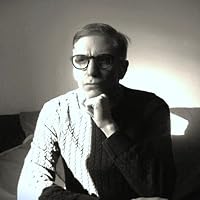
William S. Burroughs

452 books7,173 followers
William Seward Burroughs II, (also known by his pen name William Lee) was an American novelist, short story writer, essayist, painter, and spoken word performer.
A primary figure of the Beat Generation and a major postmodernist author, he is considered to be "one of the most politically trenchant, culturally influential, and innovative artists of the 20th century".
His influence is considered to have affected a range of popular culture as well as literature. Burroughs wrote 18 novels and novellas, six collections of short stories and four collections of essays.
Five books have been published of his interviews and correspondences. He also collaborated on projects and recordings with numerous performers and musicians, and made many appearances in films.
He was born to a wealthy family in St. Louis, Missouri, grandson of the inventor and founder of the Burroughs Corporation, William Seward Burroughs I, and nephew of public relations manager Ivy Lee. Burroughs began writing essays and journals in early adolescence. He left home in 1932 to attend Harvard University, studied English, and anthropology as a postgraduate, and later attended medical school in Vienna. After being turned down by the Office of Strategic Services and U.S. Navy in 1942 to serve in World War II, he dropped out and became afflicted with the drug addiction that affected him for the rest of his life, while working a variety of jobs. In 1943 while living in New York City, he befriended Allen Ginsberg and Jack Kerouac, the mutually influential foundation of what became the countercultural movement of the Beat Generation.
Much of Burroughs's work is semi-autobiographical, primarily drawn from his experiences as a heroin addict, as he lived throughout Mexico City, London, Paris, Berlin, the South American Amazon and Tangier in Morocco. Finding success with his confessional first novel, Junkie (1953), Burroughs is perhaps best known for his third novel Naked Lunch (1959), a controversy-fraught work that underwent a court case under the U.S. sodomy laws. With Brion Gysin, he also popularized the literary cut-up technique in works such as The Nova Trilogy (1961–64). In 1983, Burroughs was elected to the American Academy and Institute of Arts and Letters, and in 1984 was awarded the Ordre des Arts et des Lettres by France. Jack Kerouac called Burroughs the "greatest satirical writer since Jonathan Swift", a reputation he owes to his "lifelong subversion" of the moral, political and economic systems of modern American society, articulated in often darkly humorous sardonicism. J. G. Ballard considered Burroughs to be "the most important writer to emerge since the Second World War", while Norman Mailer declared him "the only American writer who may be conceivably possessed by genius".
Burroughs had one child, William Seward Burroughs III (1947-1981), with his second wife Joan Vollmer. Vollmer died in 1951 in Mexico City. Burroughs was convicted of manslaughter in Vollmer's death, an event that deeply permeated all of his writings. Burroughs died at his home in Lawrence, Kansas, after suffering a heart attack in 1997.

Ratings & Reviews

What do you think?
Rate this book

Friends & Following

Create a free account to discover what your friends think of this book!

Community Reviews

5 stars
7 (25%)
4 stars
5 (18%)
3 stars
6 (22%)
2 stars
7 (25%)
1 star
2 (7%)
Displaying 1 - 5 of 5 reviews
5 reviews1 follower
February 1, 2025
Reading this made me feel really excited about reading my next book, which is anything with a plot.
Profile Image for Shyllard.
34 reviews1 follower
April 6, 2025
It was a mistake to read it with a sober mind. I appreciate what he was doing. But god damn, it was a really bad read.
2 reviews
May 23, 2026
I had bought this book years ago, read through the first three pages several times and gave up on it, till I picked it up the beginning of this year. In the meanwhile, I had read Fear and Loathing in Las Vegas, which I had loved, which gave me encouragement to give this a second chance. Having read this now, this took a lot of encouragement, both to start and to finish, part of which lies in the stream of consciousness writing style, which I also hated in that Virginia Woolf book. You have to read every sentence multiple times, several times group of paragraphs with no inherent maning in them, sometimes you find you’re just reading through sentences without understanding anything, so you read them again. It is written obtusely. But the three things that make it special and enjoyable are its originality, its imagery and its humour. Try filling 200 pages with gibberish and you’d understand how hard it is to write meaningful gibberish. It’s quite unconventional, irreverant, original; there’s nothing like this I’ve read before and I’ll never read anything close to those combination of sentences ever again. It made me feel the way that time I saw Salò.Then again, there’s a strange, wicked sense of humor permeating the entriety of the book. It takes you to this magical surreal place in space and time, that was Tangiers. Gosh, I’d wanna time travel there to experience that intersection of humanity. It also takes you into the mind and reasoning and need of an addict with unblinking honesty without sugarcoating or pitying or glamorizing it. I loved this book, but I would never wanna read it again, except for the sections I’ve highlighted, because that would be too much of an ordeal.

“Boss Man, I’ll shine your shoes with the oil on my nose”
Profile Image for Taz T C.
9 reviews
January 16, 2024
This book leads me to leave the Beatnik culture was selfish. I know there is debauchery and filth in this world and to pretend it doesn't exist is naive and unhelpful. But, if I'm going to read or learn about the dark underside of society, I want to come away with some sense of having learned how to recognise or help people in those situations or how to avoid those situations or I want have expanded my empathy to a wider group of people. This book did none of that, while I understand that it was pivotal in pushback on literary censorship in the US, I find it insane that this work in particular is the one chosen to immemorial Burroughs. I also find it hard to stomach the fact that Burroughs was a trust fund baby who never had to work a day in his life, had he existed in the modern day I would say he's a spoilt champagne socialist who doesn't participate in any helpful activism and instead is part of the counter culture to fuel his perceived intelligence and as a means to indulge in his own selfish behaviour. If a person of colour had written this book it would not have achieved anywhere near this amount of praise or longevity, but for some reason a white man's drugg addled ramblings are worthy of being immortalised. In my opinion to be part of a true counter culture is to be part of a feasible alternative to the individualistic, capitalistic society of today that encompasses community, equity and kindness (which I think is the biggest thing we lack in the mainstream).
Displaying 1 - 5 of 5 reviews