
What do you think?
Rate this book


Jake is more preoccupied with the day-to-day. His construction site job gives him ample opportunity to consider his romantic failures and the ever-present symbols of war. There's also a new graffito that has sprouted among the various deadly acronyms. IRA, UVF, and UDA make no more sense than OTG, but at least everyone knows what they stand for. OTG becomes a puzzle to all of Belfast--is it, the authorities wonder, a new terrorist group? (Jake also notes several other phrases, FTP, FTQ, and FTNP--the "T" stands for the and "P" and "Q" for Pope and Queen. The "N" is for Next.) Despite his love for Belfast, Jake loses heart with its zealots and fanatics and, halfway through, Eureka Street threatens to slide into windy bathos. It's only a momentary lapse amid energetic, colloquial poetry and comic realism.
Paperback
First published January 1, 1996


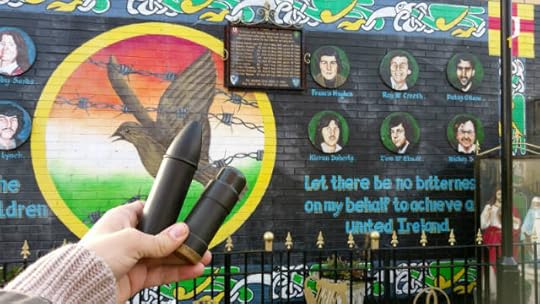

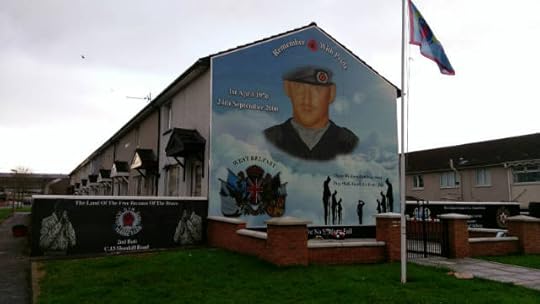

The city's surface is thick with its living citizens. Its earth is richly sown with its many dead. The city is a repository of narratives, of stories. Present tense, past tense or future. The city is a novel.
Cities are simple things. They are conglomerations of people. Cities are complex things. They are the geographical and emotional distillations of whole nations. What makes a place a city has little to do with size. It has to do with the speed at which its citizens walk, the cut of their clothes, the sound of their shouts.
But most of all, cities are the meeting places of stories. The men and women there are narratives, endlessly complex and intriguing. The most humdrum of them constitutes a narrative that would defeat Tolstoy at his best and most voluminous.


