Jump to ratings and reviews
Rate this book

Shklovsky: Witness to an Era

Rate this book
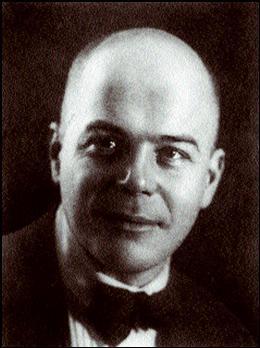
Shklovsky: Witness to an Era is a blend of riotous anecdote, personal history, and literary reflection, collecting interviews with Viktor Shklovsky conducted by scholar Serena Vitale in the '70s, toward the end of the great critic's life, and in the face of interference and even veiled threats of violence from the Soviet government. Shklovsky's answers are wonderfully intimate, focusing particularly on the years of the early Soviet avant-garde, and his relationships with such figures as Eisenstein and Mayakovsky. Bearing witness to a vanished age whose promise ended in despair, Shklovsky is in great form throughout, summing up a century of triumphs and disappointments, personal and historical.

120 pages, Paperback

First published November 6, 2012

84 people want to read

About the author

Serena Vitale

88 books21 followers
Serena Vitale è una scrittrice e traduttrice italiana, vincitrice del Premio Bagutta nel 2001 con La casa di ghiaccio. Venti piccole storie russe, Premio letterario Piero Chiara e Premio Napoli nel 2015.

Pugliese d'origine, si trasferisce nel 1958 a Roma con la madre e uno dei fratelli.

Allieva di Angelo Maria Ripellino, si avvicina allo studio della lingua russa, trasferendosi dal 1967 al 1968 a Mosca per approfondirne la conoscenza. Proprio nella casa di Ripellino incontra per la prima volta il poeta Giovanni Raboni nel 1969. L'anno seguente inizia con lui una lunga convivenza, che culmina con le nozze del dicembre 1979.[1] Il matrimonio naufragò due anni più tardi, quando Raboni si lega sentimentalmente a Patrizia Valduga.

Nel 1972 è a Genova come docente di lingua russa presso la locale università.

Professore ordinario di letteratura russa presso l'Università Cattolica del Sacro Cuore di Milano, vive nel capoluogo lombardo.

Carriera letteraria
Autrice dai primi anni settanta di saggi e approfondimenti su autori quali Josif Aleksandrovič Brodskij, Aleksandr Sergeevič Puškin, Vladimir Nabokov, Marina Ivanovna Cvetaeva, Sergej Esenin, Michail Bulgakov, Sergei Timofeevič Aksakov, Isaak Babel' o Jurij Valentinovič Trifonov, Vladimir Majakovskij.

Nel 1979 pubblica Testimone di un'epoca: conversazioni con Viktor Sklovskij.

Ha tradotto anche Bella Achmadulina, Ladislav Fuks, Ludvik Vaculik, Vladimir Majakovskij, Milan Kundera, Osip Mandel'štam, Vladimir Zazubrin, Vasilij Makarovič Šukšin, Andrej Platonov e Fëdor Dostoevskij.

Nel 1995 scrive per Adelphi Il bottone di Puškin, che ottiene successo internazionale e viene tradotto in sei lingue.

Nel 2000 con Arnoldo Mondadori Editore pubblica La casa di ghiaccio. Venti piccole storie russe, che si aggiudica il Premio Bagutta ed il Premio Chiara.

Nel 2006 ancora con Arnoldo Mondadori Editore pubblica altri venti racconti in L'imbroglio del turbante.

Si cimenta anche con il romanzo, sempre per la medesima casa editrice: esce nel 2010 A Mosca, a Mosca!.

Ratings & Reviews

What do you think?
Rate this book

Friends & Following

Create a free account to discover what your friends think of this book!

Community Reviews

5 stars
13 (54%)
4 stars
7 (29%)
3 stars
4 (16%)
2 stars
0 (0%)
1 star
0 (0%)
Displaying 1 - 6 of 6 reviews
Profile Image for Glenn Russell.
1,525 reviews13.4k followers
February 5, 2024


Viktor Borisovich Shklovsky (1893 – 1984) – Influential Russian and Soviet novelist, literary theorist, literary critic and film critic. Shklovsky developed theories and techniques within the movement known as Russian Formalism. If you are unfamiliar with the author, this little book of interviews, Witness to an Era, is an excellent place to start. Scholar Serena Vitale is the interviewer and throughout Viktor Shklovsky reflects on his past, his views of leading Russian authors and his thinking on various topics within the world of art and literature. To share a glimpse of what a reader will encounter, below are a number of direct Shklovsky quotes along with my comments:

“Art derives from the fact that man is marked by contradictions. And in art these contradictions can be resolved more or less favorably, but completely favorably – that’s impossible.”

If anybody is looking for easy answers, they should keep away from art, especially the novel. In a classic novel there is NEVER an easy division between good and evil or right and wrong. It is no accident fundamentalist religion or political dogmatism do not mix well with art and literature.

“The end of Resurrection: the story of Nekhlyudov’s transformation also contains another novel. But that novel was not written. That’s why I say that there are novels with an ending.”

How true, Viktor! “They lived happily ever after” is restricted to fairy tales. When I finish a novel I am nearly always left wondering what will unfold for the characters in the future. Will Nick Dormer remain faithful to his calling as a portrait painter (The Tragic Muse by Henry James)? Will Helene Bang remain in America or return to Denmark (One Fat Englishman by Kingsley Amis)? What happens to Gillette (The Unknown Masterpiece by Honoré de Balzac)? A great novel or tale creates characters that live beyond the last page.

“The conclusion, in the novel, is a cloying additive. It only appears to conclude things.”

I agree. I am not a fan of a novel with an epilogue or afterwards, informing the reader in capsulized form what happens to all the novel’s characters in the years to come. Or when a novelist feels compelled to end with a grand finale. Case in point: Amsterdam by Ian McIewen is a fine novel spoiled by an ending that is both forced and unnatural. Why can’t novelists, including many first-rate novelists, learn a lesson from the Japanese: a novel ending with subtlety and delicacy, restraint and understatement can enhance the entire work.

“I can’t remember anyone – not even Gorky himself, early on, not to mention Mayakovsky, or Blok – I don’t remember any of them ever having secretaries. These new forms of social interaction, in my opinion, are negative.”

Particularly in our age of computer, where exchanges of correspondence are so simple and direct, I can't see any reason for a literary writer to employ a secretary. Same thing goes for writing a novel or play or essay - much preferable to write the work yourself, from beginning to end.

“I’ve never kept a diary, and I regret it, because, as Pushkin said, the flow of the pen halts at the word that will be read with indifference, with coldness. Everyone who writes a diary always makes himself seem smarter than he is.”

I'm all for keeping a diary. There are many advantages, including how a daily practice of writing will hone your skill as a writer. Curiously, in many ways, writing book reviews regularly is a close cousin to keeping a diary - an excellent way to track your progress as a writer, both in terms of depth of insight and ability to communicate clearly and elegantly.

“Ah, if only people understood that the birth of poetry is itself poetry.”

I enjoy how Shklovsky places the emphasis on the initial inspiration and imaginative flare. If you are a poet, please take Viktor's words to heart: keep writing your poetry and try not to pass harsh judgement on your poems.

“One needn’t be afraid of technology. At one time people were afraid of trains, they thought that the rail traffic was going to cause horrible catastrophes. But people ought to love the future.”

Words of wisdom coming from a man who lived through much of the turbulence and violence in the 20th century.

“When Tolstoy was alive, with all the respect everyone had for him, they would make up to two thousand edits in one book. And the editor was certainly no idiot. The fact is that Tolstoy wrote in the language of the future, in the language to come. Whereas the editor wasn’t even writing in the language of the present, but the language of the past.”

Ha! A literary artist's vision transcends the boundaries of society and its limitations, including the limitations placed on language.


“You have to store up books, becoming acquainted with human experience; let them lie around your thoughts, becoming yours—ring upon ring, as a tree grows, let them rise up from the depths like coral islands. If it gets crowded with all the books and there's nowhere to put your bed, it's better to exchange it for a folding bed”
― Victor Shklovsky
Profile Image for Buck.
157 reviews1,041 followers
December 22, 2012
The very existence of this book is faintly anomalous. Its subject, Viktor Shklovsky, shared the earth with Tolstoy, wrote game-changing literary theory back in the 1910s, and belonged to the same doomed generation as Mandelstam and Tsvetaeva. So how is it that this man was still hobbling around Moscow as late as 1984, on the eve of perestroika, during the first season of Miami Vice? It’s all a bit Aspern Paper-ish.

But that’s Shklovsky for you. Everything about him seems to defy periodization. His amazing memoir, A Sentimental Journey, came out in 1923 but remains as friskily postmodern as anything published last month. In some ways, we’re still catching up to this guy. In other ways, I think we’ve stopped trying.

Near the end of his life, Shklovsky was visited by the Italian scholar Serena Vitale, who spent several afternoons interviewing the old man in his apartment, while his wife puttered around in the next room and the obligatory KGB escort waited outside in their cars. The resulting book, brief as it is, seems ridiculously frontloaded, with all the best lines and biggest revelations coming in the two prefaces (a very Shklovskian touch, that superfluous preface). But it’s an important and fascinating document, all the more precious for being so unlikely.

At first, Shklovsky comes on all gruff and cynical, still tossing off the sort of epigrams that made him the bad boy of the Russian avant garde back in the day:

I never had talent, just displaced fury.

The only thing I need to be fully appreciated is death. Actually, maybe that’s what other people need. I don’t need anything.

There are only two ways to survive: write for yourself and earn money from some other occupation, or lock yourself in your house and contemplate the meaning of existence. There is no third way. I chose the third.


That last line, aside from being intrinsically awesome, is also a coded reference to the impossible country in which he lived and wrote. The resounding subtext here is that practically everyone and everything Shklovsky cared about was destroyed by Stalin, and that his own survival required more or less atrocious compromises. Shklovsky is remarkably upfront about all this. Recalling a long-ago betrayal of Pasternak, he asks himself why he did it:

The most terrible thing is that I don’t remember anymore. The times? Sure, but we’re the times, I am, millions like me. One day everything will come to light: the records of those meetings, the letters from those years, the interrogation procedures, the denunciations—everything. And all that sewage will also dredge up the smell of fear.

The most affecting moment in the book comes in an unguarded, off-the-record moment recalled by Vitale. After their session one day, Shklovsky tells her about his brother, a talented linguist who died in the Gulag. It’s a wrenching, appalling story, like something out of Solzhenitsyn, and at the end of it, there’s just this:

"I still don’t know where he’s buried." He took a sip of water. "It’s a horror, isn’t it? Old people crying. It puts me off too."
Profile Image for Deni.
380 reviews61 followers
April 21, 2020
Libro imprescindible y alucinante. Muy corto, además.
43 reviews47 followers
May 16, 2021
The man's a legend.
Profile Image for Sam Gilbert.
145 reviews9 followers
June 15, 2014
After a pair of dramatic introductions by Vitale (who appears to be a rather courageous person), the interviews offer a marvelously entertaining, intellectually exciting portrait not only of an era and the many scholars, novelists, and film directors Shlovsky got to know intimately, but of Shklovsky's own mind. His contributions to formalism were striking and powerful, but it turns out that he led a varied life, and we learn a great deal about his various carrers, and the shifts in his own thinking about poetry, prose fiction, and literary theory.
Displaying 1 - 6 of 6 reviews

Can't find what you're looking for?

Get help and learn more about the design.