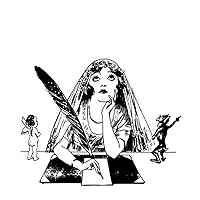
Kate Chopin was an American author whose fiction grew out of the complex cultures and contradictions of Louisiana life, and she gradually became one of the most distinctive voices in nineteenth century literature. Raised in a household shaped by strong women of French and Irish heritage, she developed an early love for books and storytelling, and that immersion in language later shaped the quiet precision of her prose. After marrying and moving to New Orleans, then later to the small community of Cloutierville, she absorbed the rhythms, customs, and tensions of Creole and Cajun society, finding in its people the material that would feed both her sympathy and her sharp observational eye. When personal loss left her searching for direction, she began writing with the encouragement of a family friend, discovering not only a therapeutic outlet but a genuine vocation. Within a few years, her stories appeared in major magazines such as The Atlantic Monthly, Vogue, and The Century, where readers encountered her local-color sketches, her portrayals of women navigating desire and constraint, and her nuanced depictions of life in the American South. She published two story collections, Bayou Folk and A Night in Acadie, introducing characters whose emotional lives were depicted with unusual honesty. Her short fiction often explored subjects others avoided, including interracial relationships, female autonomy, and the quiet but powerful inner conflicts of everyday people. That same unflinching quality shaped The Awakening, the novel that would later become her most celebrated work. At the time of its publication, however, its frank treatment of a married woman’s emotional and sensual awakening unsettled many critics, who judged it harshly, yet Chopin continued to write stories that revealed her commitment to portraying women as fully human, with desires and ambitions that stretched beyond the confines of convention. She admired the psychological clarity of Guy de Maupassant, but she pushed beyond his influence to craft a voice that was unmistakably her own, direct yet lyrical, and deeply attuned to the inner lives of her characters. Though some of her contemporaries viewed her themes as daring or even improper, others recognized her narrative skill, and within a decade of her passing she was already being described as a writer of remarkable talent. Her rediscovery in the twentieth century led readers to appreciate how modern her concerns truly were: the struggle for selfhood, the tension between social expectations and private longing, and the resilience of women seeking lives that felt authentically theirs. Today, her stories and novels are widely read, admired for their clarity, emotional intelligence, and the boldness with which they illuminate the complexities of human experience.
Identity seems to be the bullet that outbursts the warlike behaviour within this theatrical battle known as society.
Edna had been taking part in this performance, but she was unconscious about the magnitude of her paper in this oeuvre; its greatness would pose a shadow that notwithstanding wouldn’t let her know that she was a theatrical agent.
This was an interesting read. There’s some really great lines in here…
“‘One of these days… I’m going to pull myself together for a while and think - try to determine what character of a woman I am; for, candidly, I don’t know. By all the codes which I am aquainted with, I am a devilishly wicked specimen of the sex. But some way I can’t convince myself that I am. I must think about it.’” Like that’s great.
But I have to acknowledge that it left me feeling a bit off. I think this holds a “unique” place in feminist theory, considering the racial and class implications. I can understand how this is considered such a seminal text for some “feminists” today, considering that there is so much girlboss white feminism that really takes up wayyy too much space in feminist discourse today. This is a tale that only could’ve played out in a situation like Edna’s - a white, upper class woman, constantly served by servants, getting pretty much whatever she desired from her husband/family. When I think about how she was able to quickly drop everything, begin renting and moving into the pigeon house, it’s hard to imagine any other woman of any other social status having the ability to do so. I guess what I’m saying is perhaps that Edna’s “awakening” was only possible because of the racial and economic status she held. When I imagine a woman with fewer means in that era, while an awakening is more than likely to occur, it seems impossible for such a thing to really be fully carried out. Any other would have no time, no money, and not nearly as much grace from her community, to completely exit the traditions as Edna was able to. Think of all the women who suffered for displays less than Edna’s, who were sent to mental hospitals and locked away! And especially for women of color, who are held prisoner not only to sexist traditions, but also to systemic racism, and at that time, a world where slavery was so recently abolished. While I liked some of the points this book raised, it felt as though it was occurring in a bit of an isolated vacuum.
Let’s also just say that it was constantly made clear that Chopin was a supporter of the confederates doing the Civil War… really unpleasant. I understand that this is from a certain point in time, but it’s high time we stop making excuses for those on the wrong side of history.
Long freaking review, but it really made me think lmao.
This entire review has been hidden because of spoilers.
I was going to reread just The Awakening because something reminded me of it recently. I read it once when I was 16 (after my English teacher had us read Chopin’s short story “The Story of an Hour,” also in this book) and I didn’t really like it then. So I found it on Internet Archive and started reading and then happened upon this collection in a used bookstore when I was halfway through it. I’m glad I did! Excellent stories.
Chopin writes with a sort of a fin de séacle, southern gothic vibe. Her stories are richly symbolic and subversive. A woman in the late 1800s questions the sanctity of marriage and motherhood, and has affairs, and embraces the nihilism reserved in that age for men. Another feels glee at her loving husband’s death because it means freedom. Another spends a sum on herself instead of on her children. Black people living lives of poverty and servitude have full, rich, complicated romances and devoted platonic loves. One story about nuns reads to me like a lesbian romance, though I doubt Chopin meant for it to be read that way.
I also really liked about these stories that many of the characters remind me of people I have known - strange, given that over 100 years have passed since they were published. Chopin writes about these people in such a tender and human way that you can’t help but love them even when they’re vain and capricious.
What a book! Some elements are a little bit shocking today, so it's hard to imagine the reception in 1899 (spoiler alert: it was not received well). I've read English novels written by Victorian women, but fewer American texts from the same time period and even fewer from the South. The New Orleans/Gulf Coast area is much more than just a setting here--it is omnipresent, with unique cultural and natural aspects that affect the characters and story profoundly. So that creates a strikingly different reading experience, and then there's just all that uninhibited women's liberation. But one thing that this novel has in common with others of its time is that eventually, the text has to force some sort of containment upon itself. Or is it exactly the opposite here? This short book definitely made an impression.
Four stars for The Awakening on its own. Beautifully written and ahead of its time. There are some absurdly beautiful lines and excerpts in this story that I was not expecting at all. This surprised and delighted me and I’m glad to have read it :) I’ve been exceptionally lazy at these reviews lately but I really loved this. The setting, the language, the musings on identity and revelation, just lovely and hit very deep for me.
Three stars for the collection as a whole. The strongest stories in this (besides The Awakening) were definitely the ones with similar motifs to The Awakening (female independence/individuality) and the ones where Chopin’s knowledge/description of southern setting/dialect/society are most apparent. Chopin is a southern writer, and when she leans into that identity she is absolutely at her most powerful. Her physical descriptions of the American South and her ability to capture its atmosphere within her stories is both sublime and incredibly affecting.
Edit: the awakening has really stuck with me… like to the point of almost wanting to give it five stars. So I think I will increase this rating to 4 stars overall.