

What do you think?
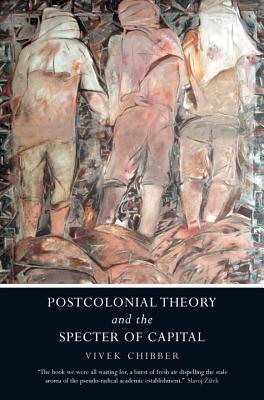
Postcolonial Theory and the Specter of Capital
Postcolonial theory has become enormously influential as a framework for understanding the Global South. It is also a school of thought popular because of its rejection of the supposedly universalizing categories of the Enlightenment. In this devastating critique, mounted on behalf of the radical Enlightenment tradition, Vivek Chibber offers the most comprehensive response yet to postcolonial theory. Focusing on the hugely popular Subaltern Studies project, Chibber shows that its foundational arguments are based on a series of analytical and historical misapprehensions. He demonstrates that it is possible to affirm a universalizing theory without succumbing to Eurocentrism or reductionism.
Postcolonial Theory and the Specter of Capital promises to be a historical milestone in contemporary social theory.
Postcolonial Theory and the Specter of Capital promises to be a historical milestone in contemporary social theory.
306 pages, Paperback
First published February 12, 2013
About the author
Vivek Chibber
38 books156 followersVivek Chibber is Professor of Sociology at New York University and the author of Postcolonial Theory and the Specter of Capital and Locked in Place: State-Building and Late Industrialization in India, which won the Barrington Moore, Jr. Prize. He has contributed to, among others, the Socialist Register, American Journal of Sociology, Boston Review and New Left Review.
Ratings & Reviews
Friends & Following
Create a free account to discover what your friends think of this book!
Community Reviews
Displaying 1 - 30 of 31 reviews

Read
August 15, 2026So I’ve been aware of Chibber’s commentary on present America for some time, but I had little interest in reading his basic revolutionary politics pamphlets. I was, however, curious about his academic work, and I knew about his beef with Gayatri Spivak, so I decided to check this out.
Honestly, I was just kinda lost. He spends most of the time lobbing attacks on Ranajit Guha (whom I haven’t read), and the Subaltern Studies group more broadly. Of the three he digs into, Partha Chatterjee is the only one I’d read in any substantive fashion, and he reaches pretty similar conclusions to those I drew. Unless you have an abiding interest in the details of Desi cultural and academic debate, I don’t think this is really worth your time.
Honestly, I was just kinda lost. He spends most of the time lobbing attacks on Ranajit Guha (whom I haven’t read), and the Subaltern Studies group more broadly. Of the three he digs into, Partha Chatterjee is the only one I’d read in any substantive fashion, and he reaches pretty similar conclusions to those I drew. Unless you have an abiding interest in the details of Desi cultural and academic debate, I don’t think this is really worth your time.

May 7, 2023
Very easy to see why this caused so much beef, as no prisoners are taken at any point. There's aspects I am hesitant about - Chibber appears to find the idea of writing about cultural difference inherently uninteresting and de facto exoticising, and writing about literature and culture in general to be beneath a serious Marxist intellectual. But: the critique at the heart of this, aimed at how academic radicalism both repackages orientalism and misunderstands capitalism, is both vicious and devastatingly effective. Perhaps a less brutal version of the argument might have been more able to get through to some of the softer sympathisers with these positions, but it is frankly very enjoyable to read polemic done the old way.

Want to Read
April 12, 2014Haven't read the book, but reading Gayatri Spivak's review of it: http://www.tandfonline.com/doi/full/1...

April 29, 2021
A thorough and damning repudiation of the Subaltern Studies Project and its myriad shortcomings, theoretical misconceptions and misattributions as formulated and propagated by Guha, Chakrabarty, and Chatterjee. Chibber painstakingly delves into the texts of the Subalternists to set the record straight and show some of the truly absurd claims and theoretical conceptualizations made by the three main antagonists mentioned above. It's a laudable and praiseworthy endeavor by Chibber especially given that he has to weather so much of the post-modernist mumbo jumbo of the Subalternists. His frustration is palpable and his arguments are forceful and incendiary. It is astounding how Orientalist and absurdly essentialist some of the work by the Subalternists is and Chibber lays bare for all to see this.
What was a shortcoming for me was that Chibber often conflates "postcolonial theory" with the Subaltern Studies Project without really showing a clear link between how postcolonial theory, which in his own words is "diffuse and nebulous", is implicated by the Subalternists. Although he does state that the Subaltern Studies is a prominent face of the postcolonial theory, he doesn't really map out how postcolonial theory takes on or is built on the work of Subalternists and vice-versa. Therefore, for the reader, it may be difficult to understand how much of this polemic is solely applicable to the Subalternists and how much of this critique applies to other postcolonial theorists.
On another note, Chibber is an excellent writer and highly accessible. He makes a concerted effort to make sure that he properly engages with the works of the Subalternists and that his arguments are absorbed by readers. I would have loved reading this as a university student because the chapters are well organized and have summarized conclusions at the end of every chapter and he links up arguments made in previous chapters. Definitely a book written for university courses' reading assignments.
What was a shortcoming for me was that Chibber often conflates "postcolonial theory" with the Subaltern Studies Project without really showing a clear link between how postcolonial theory, which in his own words is "diffuse and nebulous", is implicated by the Subalternists. Although he does state that the Subaltern Studies is a prominent face of the postcolonial theory, he doesn't really map out how postcolonial theory takes on or is built on the work of Subalternists and vice-versa. Therefore, for the reader, it may be difficult to understand how much of this polemic is solely applicable to the Subalternists and how much of this critique applies to other postcolonial theorists.
On another note, Chibber is an excellent writer and highly accessible. He makes a concerted effort to make sure that he properly engages with the works of the Subalternists and that his arguments are absorbed by readers. I would have loved reading this as a university student because the chapters are well organized and have summarized conclusions at the end of every chapter and he links up arguments made in previous chapters. Definitely a book written for university courses' reading assignments.

January 18, 2026
Teilweise sehr dicht, bin auch nicht sicher, ob ich Chibber in allen Punkten zustimmen würde (mal abgesehen davon, ob ich alles verstanden habe), allerdings sehr überzeugende Argumentation gegen die Subalternisten anhand ihrer eigenen Argumente, die er als orientalistisch "entlarvt". Ich habe mich noch nicht mit Guha, Chakrabarty oder Chatterjee auseinander gesetzt, daher normal, dass manches für mich nicht ganz klar war. Insgesamt: Chibber bringt den Fokus in der postkolonialen Debatte wieder auf materielle Verhältnisse, was meiner Meinung nach der richtige Weg ist.

February 9, 2022
"in their hands, the most powerful social and structural force in the world becomes a wisp of smoke, something so ghostly one becomes not quite sure it exists."

September 5, 2018
An interesting book, certain sections are far more valuable than others. Chibber is a compelling writer however and the book certainly does deserve the attention it has received thus far. Admittedly this book requires a good amount of supplemental material - Chibber is not writing to audience unfamiliar with subaltern theory or Marxism in India (looking up works by Ranajit Guha is all but a necessity by the midway point of the book). Take notes and read carefully - the book is dense and filled with lots of complex details that can be missed easily if skimming.

November 15, 2020
Pretty spicy ngl

March 31, 2024
A truly infuriating book. I must admit that it has been a while since I read much Subaltern Studies but Chibber made me want to read more... sympathetically. This polemic critique of subaltern studies falls down on a number of key points. First, it fails to describe why such a polemic critique is necessary. As such the tone and viciousness is pretty unappealing. The title suggests it is a critique of postcolonial theory, but in reality it is a critique of one school of postcolonial theory and an attempt to generalize this beyond just subaltern theory. This might be convincing if for the second half of the book Chibber didn't draw so heavily on Said... a post-colonial theorist. This might be an attempt at a rhetorical flourish, Chibber going for the 'Ah ha got you!'. But it doesn't work so well since Chibber takes quite a simplistic and convenient view of orientalism, which left me thinking does he understand what he is writing about. Throughout I wonder if Chibber will give me something that is very useful but time and again he relies on the bad faith argument that those he is critiquing didn't understand, before explaining what Marx really meant. This is lazy, and there is little attempt to look at the ways in which his opponents (this is the right way to describe his writing style towards them) might have opened up interesting new avenues for scholarly discussion. It is simply, 'they misunderstood, i didn't and Marx was write all along'.
The writing is turgid and doesn't offer very much outside of the quite fixed battle ground of an annoyed Marx bro attacking a sub-field of postcolonial theory. The book could have been shorter, and this would likely have made it easier to read. Instead he has been given the license to write a long polemic that didn't need to be written.
The title, which I have mentioned is an issue as it casts the net of what the book is about too wide, came from Neil Brenner who has taken a similar essentialist and global approach in his promotion of planetary urbanization. When I read that the title was Brenner's creation the book made a little bit more sense.
I often say at the end of a review why and how a book might be useful to someone, but I really have no recommendation for anyone to read this book. Truly a pointless book that offers very little unless you are fully signed up to Marxism as the only productive approach to social science and want to see someone trying to assert that dogmatic position badly.
The writing is turgid and doesn't offer very much outside of the quite fixed battle ground of an annoyed Marx bro attacking a sub-field of postcolonial theory. The book could have been shorter, and this would likely have made it easier to read. Instead he has been given the license to write a long polemic that didn't need to be written.
The title, which I have mentioned is an issue as it casts the net of what the book is about too wide, came from Neil Brenner who has taken a similar essentialist and global approach in his promotion of planetary urbanization. When I read that the title was Brenner's creation the book made a little bit more sense.
I often say at the end of a review why and how a book might be useful to someone, but I really have no recommendation for anyone to read this book. Truly a pointless book that offers very little unless you are fully signed up to Marxism as the only productive approach to social science and want to see someone trying to assert that dogmatic position badly.

August 28, 2023
Chibber posits strong arguments and scathing critique agianst the self orientalizing aspects of the Subaltern studies project in finding difference from Marxist frameworks. Interesting read focused on the Subaltern studies project however takes a part for the whole and aims the same line of criticisms to other strands of post-structuralist and post colonial thought without much consideration of engaging with those arguments on their own at all.

May 31, 2020
Sehr gute und verständliche Kritik an den Subaltern Studies, ihrer Verdrehung dessen, was Kapitalismus ist, und ihrem grassierenden Orientalismus, mit dem sie die Kluft zwischen ~Ost und West~ manifestieren.

Read
April 4, 2026Read for class, and totally finished it on time for that…..

January 8, 2020
Interesting book. It was a bit slow read at times, but i very much enjoyed the second half of it particularly. Chibber makes a very strong argument for universal secular humanism against the post-colonial narrative which I strongly agree.

February 27, 2013
Excellent (devastating?) critique of postcolonial studies. That said, Chibber deploys a Marxism so flexible that it risks losing its substance.

October 22, 2013
A strong blow to the Subaltern Studies academia, without diluting the Marxian project !!!

May 22, 2026
In two minds on this.
I'm familiar with Chibber from output which has arisen out of a shift in his perspective which dates from the failure of the first Sanders campaign to come to anything. In this book, and a few articles here and there, he is willing to consider or value works written by Gramsci, Thompson or Hall who tried to answer the question: why are the western working class taking Ls? Presently he is dogmatically economistic, he valorises a gas-and-water socialism to be achieved through the 'left' of the Democratic Party and attributes everything that has gone wrong in American life since the New Deal or the broader postwar democratic consensus - which, like many of Jacobin's contributors he radically simplifies - to the woke left.
Since then it's as though Chibber is consciously maximising his spread over points of view which I find disagreeable: the Brenner line on the origin of capitalism, the usual lazy, lazy smear jobs on degrowth, the non-existence of the labour aristocracy (which of course comes with the notion that the Global South’s political representatives were atavistic maximalists), Kautskyism (and one which claims Lenin and Luxemburg at that), an analytic or neo-classical Marxism (which leans on free markets and profit maximisation), all of which I could take or ignore, if it wasn't for the strawmanning, shadow-boxing, failures to name antagonists so as to more easily distort their work, strident declarations of I am the only materialist Marxist and in fact being exactly the same type of radical social scientist he ceaselessly complains about, namely: a tenured in a prestigious institution who thinks they know what the working class is and what it needs and writing on the cultural morés of other social scientists.
This is to say this critique was published before 2016 when, as far as my recollection goes, Marxism still had to make its case against post-structuralism and categories like the working-class or imperialism were seen as a bit naff. Unlike Slobodian, Arrighi and the actual history of national liberation movements the content of which, as I’ve noted, Chibber often lies about, I'm not particularly interested in subaltern studies. I worked in a university department where it was at a premium and these well-off academics postured at being anti-fascist or inclusive while cutting my and my colleagues’ wages. If I ever encounter a position which has the air of radical heterogeneity or irreducible particularity I’ll just tune out. So I would neither be surprised if Chibber is imputing stuff that isn't there, or that all these critics are idealists tripping over basic Volume I stuff; saying wage labour could never happen in India because of kinship networks and caste or such.
Everything regarding the attribution of too much coherence and compatibility to the aims of the European bourgeoisie and the working class made sense to me; similarly that this is Cominternslop, overlooking that the democratising forces of Europe were landless peasantry and working class, neither would it surprise me if they weren’t up on the history of the French Revolution or the English Civil War. What I might dispute is Chibber's construal of material interest. The account of capitalism and what it means for how we understand society proceeds by axiom. If: capital -> drive to accumulate -> dispossession -> waged labour -> working class etc. It would be churlish to argue that capitalism isn't a revolutionising social formation and the most durable on earth to date, particularly in defense of idealism, but I'm conscious of what pushing the universalisation of capital idea too far can get you. Abstractly, wage labourers exist in one camp, employers on the other. That *should* get you a majority with a ground-shaking common interest, but this only seems to be accomplished in the context of a logic game. That's putting it a bit too strongly. The high-level way capitalism functions — and I don’t think there’s grounds for saying Marx was substantively wrong about any of it — does not matter if that interest cannot be actualised. Material interest is not something that is rationally calculated and knowledge of the social structure is not given. It is mediated and given dynamic expression by the determinate political conjuncture. Capitalism takes social structures as they are and moves things towards a certain set of outcomes, sure, but it doesn’t accomplish the same ones everywhere. It re-invents itself in response to intra and inter-class struggle and, in the present, climactic crises. Pick idealism apart, absolutely, I think it would be a bad idea to act as though we are done with specificity because we have the answers. Don’t have the organic relationship with the working class, you haven't even started thinking.
I'm familiar with Chibber from output which has arisen out of a shift in his perspective which dates from the failure of the first Sanders campaign to come to anything. In this book, and a few articles here and there, he is willing to consider or value works written by Gramsci, Thompson or Hall who tried to answer the question: why are the western working class taking Ls? Presently he is dogmatically economistic, he valorises a gas-and-water socialism to be achieved through the 'left' of the Democratic Party and attributes everything that has gone wrong in American life since the New Deal or the broader postwar democratic consensus - which, like many of Jacobin's contributors he radically simplifies - to the woke left.
Since then it's as though Chibber is consciously maximising his spread over points of view which I find disagreeable: the Brenner line on the origin of capitalism, the usual lazy, lazy smear jobs on degrowth, the non-existence of the labour aristocracy (which of course comes with the notion that the Global South’s political representatives were atavistic maximalists), Kautskyism (and one which claims Lenin and Luxemburg at that), an analytic or neo-classical Marxism (which leans on free markets and profit maximisation), all of which I could take or ignore, if it wasn't for the strawmanning, shadow-boxing, failures to name antagonists so as to more easily distort their work, strident declarations of I am the only materialist Marxist and in fact being exactly the same type of radical social scientist he ceaselessly complains about, namely: a tenured in a prestigious institution who thinks they know what the working class is and what it needs and writing on the cultural morés of other social scientists.
This is to say this critique was published before 2016 when, as far as my recollection goes, Marxism still had to make its case against post-structuralism and categories like the working-class or imperialism were seen as a bit naff. Unlike Slobodian, Arrighi and the actual history of national liberation movements the content of which, as I’ve noted, Chibber often lies about, I'm not particularly interested in subaltern studies. I worked in a university department where it was at a premium and these well-off academics postured at being anti-fascist or inclusive while cutting my and my colleagues’ wages. If I ever encounter a position which has the air of radical heterogeneity or irreducible particularity I’ll just tune out. So I would neither be surprised if Chibber is imputing stuff that isn't there, or that all these critics are idealists tripping over basic Volume I stuff; saying wage labour could never happen in India because of kinship networks and caste or such.
Everything regarding the attribution of too much coherence and compatibility to the aims of the European bourgeoisie and the working class made sense to me; similarly that this is Cominternslop, overlooking that the democratising forces of Europe were landless peasantry and working class, neither would it surprise me if they weren’t up on the history of the French Revolution or the English Civil War. What I might dispute is Chibber's construal of material interest. The account of capitalism and what it means for how we understand society proceeds by axiom. If: capital -> drive to accumulate -> dispossession -> waged labour -> working class etc. It would be churlish to argue that capitalism isn't a revolutionising social formation and the most durable on earth to date, particularly in defense of idealism, but I'm conscious of what pushing the universalisation of capital idea too far can get you. Abstractly, wage labourers exist in one camp, employers on the other. That *should* get you a majority with a ground-shaking common interest, but this only seems to be accomplished in the context of a logic game. That's putting it a bit too strongly. The high-level way capitalism functions — and I don’t think there’s grounds for saying Marx was substantively wrong about any of it — does not matter if that interest cannot be actualised. Material interest is not something that is rationally calculated and knowledge of the social structure is not given. It is mediated and given dynamic expression by the determinate political conjuncture. Capitalism takes social structures as they are and moves things towards a certain set of outcomes, sure, but it doesn’t accomplish the same ones everywhere. It re-invents itself in response to intra and inter-class struggle and, in the present, climactic crises. Pick idealism apart, absolutely, I think it would be a bad idea to act as though we are done with specificity because we have the answers. Don’t have the organic relationship with the working class, you haven't even started thinking.

January 15, 2020
In der Kritik an Chibber wird immer wieder betont, dass er mit den subaltern studies nur einen Teil des ganzen Feldes kritisiert, das mittlerweile von den postcolonial studies besetzt wird. Das ist so richtig wie nichtssagend. Es gelingt Chibber überzeugend, wenn auch gelegentlich etwas redundant, die Axt an die grundlegenden Überzeugungen der vielfältigen kulturalistischen "Differenztheorien" zu legen. Wer seine Überzeugungen auf einen gravierenden Unterschied östlichen Denkens zum westlichen Denken mit sozialökonomischen Unterschiedenen begründen will, befestigt so oder so das, was man "Orientalismus" nennt und nur eine eigentümlich spiegelverkehrte Reproduktion der westlichen Vorurteile dem Osten gegenüber ist. Freilich gibt es regionale Besonderheiten und eigenständige kulturelle Traditionen sowie auf religiösen Überzeugungen aufbauende politische Bewegungen, die als solche zu würdigen und zu untersuchen sind. Aber im zutreffenden Diktum Chibbers sind sie unter drei Perspektiven zu analysieren, von denen die erste ihre wirkliche Rolle in den sozialen Bewegungen der Zeit betrifft. Das wäre die notwendige "Geschichtsschreibung von unten", die eben zeigt, wie sehr der nach außen so erfolgreich scheinende "Klassenkompromiss" in Westeuropa kein Geschenk der Bourgeoisie, sondern Resultat wirklicher, im Osten noch zu führender Klassenkämpfe ist. Eine zweite muss herausarbeiten, ob es sich dabei wirklich um autochthone Bewegungen handelt, oder ob diese nicht längst deformiert und als Reaktion auf die verneinte Macht der Kapitalzwänge funktionalisiert sind (wie man es am Beispiel des Salafismus als Ideologie des islamistischen Terrors sehen kann). Und drittens schließlich muss bedacht werden, inwieweit autochthone Traditionen zu beschreiben sind, EHE SIE VON KAPITALISTISCHER MODERNISIERUNG AUSGELÖSCHT WERDEN, oder ob sie diese so wenig tangieren, dass sie parallel weiterbestehen können. Daran schlösse sich die Frage an, inwieweit es sinnvoll ist, Traditionen und kulturelle Diversität zu verteidigen (was man freilich so oder so tun soll!), bzw. inwieweit man damit schon als Don Quichote gegen Windmühlen kämpft. Chibbers Buch legt diese Fragen nahe, ohne sich explizit damit auseinanderzusetzen, weil es ihm um die Grundlagen geht, mithin um die Widerlegung der Angriffe auf den Marxismus, dem sein Insistieren auf die universalisierende Tendenz des Kapitals vorgeworfen wird. Dabei hebt Chibber zu Recht darauf ab, dass die Universalisierung des Kapitals freilich nur partiell homogenisierende Folgen hat, weil Differenz immer wieder ausgenutzt oder sogar reproduziert wird und schließlich als "soziale Differenz" in immer wieder neuen Formen sogar von ihm neu hervorgebracht wird. Was als "Differenz" also kulturell verortet und indigenen Lebensformen zugeordnet wird, ist nur die eine Seite in einem Prozess, in dem das Kapital selbst immer neue kulturelle (und soziale, politische etc.) Differenzen schafft. Dabei gehört es für mich zu den grandiosen, freilich wie nebenbei ausgeführten Ideen, dass die marxistische Geschichtsteleologie selbstverständlich ihre Berechtigung hat, weil sie zwar keine "Blaupause" für geschichtliche Entwicklungen liefert, aber grundlegende Prinzipien beschreibt, von denen die Entwicklung nicht abweichen kann, solange sie eine kapitalistische ist. Grundlegende Prinzipien schließen einerseits ein Set von Möglichkeiten ein und gerade deswegen auch ein anderes Set von Möglichkeiten aus. So muss jede Entwicklung, staatlich oder global, am privaten Eigentum festhalten und alternative Eigentumsformen bekämpfen, muss der Staat das Eigentum schützen und gleichzeitig die Akkumulation von Kapital fördern (womit es immer Wachstum und eine soziale Spaltung der Gesellschaft geben wird) usw. usf. Das ausgeführt wäre interessanter als das missglückte ABC des Marxismus, dessen Vereinfachungen niemanden erreichen (außer universitäre Erstsemester). Aber in diesem Buch ist das nicht Chibbers Anliegen. Es soll eine Kritik der subaltern history geben und die leistet es so überzeugend und mit so vielen nicht neuen, aber prägnant formulierten und deswegen besonders eingängigen Bezügen zur Kapitalismus- und Revolutionsgeschichte in Europa, dass fünf Sterne absolut angemessen sind. Ein bisschen marxistisches Wissen braucht man für das Verständnis wohl, aber auch wiederum nicht so viel, dass man es nicht verstehen könnte, wenn man unbedarfter an die Lektüre herangeht. Wer sich also für postkoloniale Theoriebildung, indische (Kolonial)Geschichte und ihre Bezüge zur bzw. die theoretischen Reflexionen über europäische Geschichte interessiert, dem sei das grandiose Buch wärmstens empfohlen. Studenten der Kultur- und Regionalwissenschaften sollten es sowieso unbedingt lesen!

June 20, 2015
Postcolonial theory provides a framework for understanding the global South. It has many faces, but it also has many questions that originate from itself. It originated from literary/cultural theory from the newly decolonized parts of the world. It brings out the particularities and peculiarities of the political and economic formations of those parts of the world. Yet, this literary/cultural theory morphed into its own framework for understanding both the current political culture and the political evolution of these parts of the world. It started to assume the mantle of a historical and sociological world of colonial pasts of decolonized states. The theory for understanding colonial theory used to be Marxist theory. Yet, with the development of thought, the 1990’s saw a decline of Marxist theory. So, postcolonial took on the mantle of radical critique.
Is it up to the task of answering some of the questions that Marxist theory initiated? Yes, it is no longer just a literary/cultural theory. The work of historians and anthropologists have developed a framework, from the experience of different people, that generated a series of arguments about why the global south is the way that it is today. At the heart of this project of post colonialism theory is one concept: social difference. The East and the West (broad concepts which mean capitalist world and colonial and developmental world) are just placeholders for economic formations. The East and West are deeply and fundamentally different, hence the social difference. The concepts that tried to subsume it under the same theoretical framework are deeply flawed because they fail to understand the empirical differences that separate the parts of the world. It is a political and moral difference. These frameworks impose a grid on the East that comes out of the experience of the West, making them Eurocentric. They suggest that East is ascribed cultural moralities that the agents do not have. They deny them the political ends and desires that they seek (denies them both their agency and political morality). All of this is an expression of the underlying concept of social difference.
It requires a revolution in the social sciences (moral sciences= humanities + social sciences). Across the 19th and 20th centuries, Marxist observed that capital globalized around the world. Originated from Europe and spread across the globe. By the mid-20th century, it was well on its way and in the late 20th century it was all over the place. Global equalization does not equal universalization. Liberalism only has the currency that it claims to have if the realities it is examining are realities that sort of approximate the lands from which it originated. The reality of the East should look like the realities of the West. This is what universalization is supposed to be- making other parts of the world look like the West. If it is true that capital globalizes and does not universalize, there is some weight in this argument. Capitalism ceases to have the properties that it had in Europe. It does not do the same things that it did in Europe. The capitalism in the East is one of a specific sort, the theories do not have the same realities in the non-West. The East has a non-capitalism, a bastardized capitalism.
A proper capitalism should have a liberal bourgeoisie. This was supposed to have been seen in the bourgeoisie revolution in France and England. There was supposed t be some kind of political system by the people that it was supposes to govern. When you look at the global south and non-West, it is an illiberal bourgeoisie; they rely on coercion, outright dominance, and the use of political force, instead of this all-encompassing culture. It is true that you have a liberal culture in the west. It is true that the poor will be given equal respect and have a legitimate expectation of having their grievances expressed. Yet, the bourgeoisie brought none of it. The exact opposite happened in England and France. They were illiberal, undemocratic, and coercive forms of rule. The bourgeoisie pursued an oligarchic, exclusionary form of rule. The shift to a liberal form of rule has not come from the top to the masses. It came from a two centuries long struggle by the masses to extract power away from the masses. It is a blunder to say that a real capitalism has a liberal bourgeoisie. Bourgeoisie capitalists have been forced to accept capitalism, but have never fought for it. In the global south, we have capitalists who do not recognize he rights of the poor; this is not a deviation from the norm.
A real capitalism has forms of power that is fundamentally different from what you have in the global south. Governance relies on formal equality. They rely on equality in the courts in some sort of republicanism. Real capitalism revolutionized all of the social relationships in that particular part of the world. It changes culture ideology and every nook and cranny of the society. Yet, in the East, you have the persistence of all traditional beliefs (i.e. religiosity instead of science). The political culture, too, stays in a backward looking cycle. The political culture is so different from the West that you cannot call it capitalism. They end up obfuscating the realities of these countries, becoming a hindrance on these societies.
Marx was another European theorist. You need an authentic social science that is attune to the particularities of that local society. It abandons universalization in favor of localization. Each place will have its own social science.
Capitalism does not explain the entire gamut of social practices, but only for the economy. What is specific to capitalism is a shift away from production for use to production for exchange. There has never been a society for production to exchange until about the 16th century. This transformation of economic practices has been carried out through different cultural practices. The idea that a proper capitalism revolutionized all aspects of society does not describe the capitalism that we have seen anywhere. Capitalism says that as long as the workers do their job and produce, we don’t care about their religion, family, etc. Just want them to make their profits. It is an empirical question how far the transformation and the consequences associated with it. It has never been said that until everyone is wearing the same clothes, we don’t have capitalism.
Postcolonial theory is empirically wrong and conceptually flawed. Radicals have tried to find ways to find a way out of capitalism, but this seeks to find a way for better capitalism. It is not carrying out what it was assigned to do, or what it promised to do for the people. There is a history in Marxism about arguments against the bourgeoisie. In the USSR, Stalin said that there was a bourgeoisie stage that every country had to go through, but that the bourgeoisie would help set the stage for this historic mission. It strives to bring a social and political motivation that was imported straight from the liberal historians. The history of this idea in the left has been in various countries. Countries that have communist parties still function with the idea that we need to help the bourgeoisie. This has nothing to do with progressive politics, but that there is a deep and flawed problem.
For its entire history, if it is one thing that Marxism did, it was to focus unrelentingly on social differences. The communist parties tried to understand why their countries looked so different from the one that Marx laid out. Lenin had a theory of imperialism and how imperialism generates weaknesses and revolution comes from breaking the weakest in the link. But what separated Marxism from post colonialism theory is that they did not reify the difference. There was recognition that there are different types of capitalism, but they are not departures from capitalism. Labor and capital still defines these countries. They still need to organize capital, rather than bemoaning that they do not have capital. Capitalism may not look like Wall Street, but they are propagated by the same ideas that run Wall Street. The key point is to understand what the differences or departures from a certain social kind are, not to pretend that there are no differences.
Capitalism has globalized, but it has also universalized. The first task of any radical today is to understand what capitalism is. Any theory that does not realize this has no place in the left. As the left reconstitutes itself, these theories will have to be rejected. The popularity in the left today is the defeat of the left and subject to conceptual confusion. It is a responsibility for the left to clarify this confusion.
Is it up to the task of answering some of the questions that Marxist theory initiated? Yes, it is no longer just a literary/cultural theory. The work of historians and anthropologists have developed a framework, from the experience of different people, that generated a series of arguments about why the global south is the way that it is today. At the heart of this project of post colonialism theory is one concept: social difference. The East and the West (broad concepts which mean capitalist world and colonial and developmental world) are just placeholders for economic formations. The East and West are deeply and fundamentally different, hence the social difference. The concepts that tried to subsume it under the same theoretical framework are deeply flawed because they fail to understand the empirical differences that separate the parts of the world. It is a political and moral difference. These frameworks impose a grid on the East that comes out of the experience of the West, making them Eurocentric. They suggest that East is ascribed cultural moralities that the agents do not have. They deny them the political ends and desires that they seek (denies them both their agency and political morality). All of this is an expression of the underlying concept of social difference.
It requires a revolution in the social sciences (moral sciences= humanities + social sciences). Across the 19th and 20th centuries, Marxist observed that capital globalized around the world. Originated from Europe and spread across the globe. By the mid-20th century, it was well on its way and in the late 20th century it was all over the place. Global equalization does not equal universalization. Liberalism only has the currency that it claims to have if the realities it is examining are realities that sort of approximate the lands from which it originated. The reality of the East should look like the realities of the West. This is what universalization is supposed to be- making other parts of the world look like the West. If it is true that capital globalizes and does not universalize, there is some weight in this argument. Capitalism ceases to have the properties that it had in Europe. It does not do the same things that it did in Europe. The capitalism in the East is one of a specific sort, the theories do not have the same realities in the non-West. The East has a non-capitalism, a bastardized capitalism.
A proper capitalism should have a liberal bourgeoisie. This was supposed to have been seen in the bourgeoisie revolution in France and England. There was supposed t be some kind of political system by the people that it was supposes to govern. When you look at the global south and non-West, it is an illiberal bourgeoisie; they rely on coercion, outright dominance, and the use of political force, instead of this all-encompassing culture. It is true that you have a liberal culture in the west. It is true that the poor will be given equal respect and have a legitimate expectation of having their grievances expressed. Yet, the bourgeoisie brought none of it. The exact opposite happened in England and France. They were illiberal, undemocratic, and coercive forms of rule. The bourgeoisie pursued an oligarchic, exclusionary form of rule. The shift to a liberal form of rule has not come from the top to the masses. It came from a two centuries long struggle by the masses to extract power away from the masses. It is a blunder to say that a real capitalism has a liberal bourgeoisie. Bourgeoisie capitalists have been forced to accept capitalism, but have never fought for it. In the global south, we have capitalists who do not recognize he rights of the poor; this is not a deviation from the norm.
A real capitalism has forms of power that is fundamentally different from what you have in the global south. Governance relies on formal equality. They rely on equality in the courts in some sort of republicanism. Real capitalism revolutionized all of the social relationships in that particular part of the world. It changes culture ideology and every nook and cranny of the society. Yet, in the East, you have the persistence of all traditional beliefs (i.e. religiosity instead of science). The political culture, too, stays in a backward looking cycle. The political culture is so different from the West that you cannot call it capitalism. They end up obfuscating the realities of these countries, becoming a hindrance on these societies.
Marx was another European theorist. You need an authentic social science that is attune to the particularities of that local society. It abandons universalization in favor of localization. Each place will have its own social science.
Capitalism does not explain the entire gamut of social practices, but only for the economy. What is specific to capitalism is a shift away from production for use to production for exchange. There has never been a society for production to exchange until about the 16th century. This transformation of economic practices has been carried out through different cultural practices. The idea that a proper capitalism revolutionized all aspects of society does not describe the capitalism that we have seen anywhere. Capitalism says that as long as the workers do their job and produce, we don’t care about their religion, family, etc. Just want them to make their profits. It is an empirical question how far the transformation and the consequences associated with it. It has never been said that until everyone is wearing the same clothes, we don’t have capitalism.
Postcolonial theory is empirically wrong and conceptually flawed. Radicals have tried to find ways to find a way out of capitalism, but this seeks to find a way for better capitalism. It is not carrying out what it was assigned to do, or what it promised to do for the people. There is a history in Marxism about arguments against the bourgeoisie. In the USSR, Stalin said that there was a bourgeoisie stage that every country had to go through, but that the bourgeoisie would help set the stage for this historic mission. It strives to bring a social and political motivation that was imported straight from the liberal historians. The history of this idea in the left has been in various countries. Countries that have communist parties still function with the idea that we need to help the bourgeoisie. This has nothing to do with progressive politics, but that there is a deep and flawed problem.
For its entire history, if it is one thing that Marxism did, it was to focus unrelentingly on social differences. The communist parties tried to understand why their countries looked so different from the one that Marx laid out. Lenin had a theory of imperialism and how imperialism generates weaknesses and revolution comes from breaking the weakest in the link. But what separated Marxism from post colonialism theory is that they did not reify the difference. There was recognition that there are different types of capitalism, but they are not departures from capitalism. Labor and capital still defines these countries. They still need to organize capital, rather than bemoaning that they do not have capital. Capitalism may not look like Wall Street, but they are propagated by the same ideas that run Wall Street. The key point is to understand what the differences or departures from a certain social kind are, not to pretend that there are no differences.
Capitalism has globalized, but it has also universalized. The first task of any radical today is to understand what capitalism is. Any theory that does not realize this has no place in the left. As the left reconstitutes itself, these theories will have to be rejected. The popularity in the left today is the defeat of the left and subject to conceptual confusion. It is a responsibility for the left to clarify this confusion.
December 26, 2025
Genuinely one of the most frustrating reads in recent memory. I swear the vulgar/reductive materialists just end up sounding like analytic philosophers, exhibiting an unparalleled anality about consistency, etc. I also think the title is a bit misplaced: Chibber admits the nebulousness of the heading "postcolonial theory," and his true target here is the Subaltern Studies project, namely Guha, Chatterjee, and Chakrabarty, though on the basis of the title one might expect him to be responding to the likes of Saïd, Spivak, Bhabha, et al. Nevertheless, the Subaltern Studies project is absolutely indispensable for the intellectual history of postcolonial theory, so take that as you may. The absolute aversion to post-War French structuralist thought, though, could easily be read as a Sokal and Bricmont (he also too-readily assimilates "Foucault and Derrida," as an example, as influences on postcolonialism, when anyone who has read, for example, a Spivak, knows that her relation to each of those two figures is rather different). There are a few arguments running throughout this text, so we can address some of them here. Chibber's account of one postcolonialist claim is that, because capitalism developed differently in many areas of the Third World than it did in Europe, Western Marxism is not particularly well-equipped to analyze these societies (I am perhaps putting it more charitably than he would). If we accept this characterization of postcolonial theory, massaged as it is by me, Chibber then charges the postcolonialists with Orientalism for differentiating the West from the rest. But while Chibber thinks he is defending Marxism against postcolonialism, one could see this very differentiation as a holdover of Marx's own Orientalism, specifically in his (under)theorizing of an "Asiatic mode of production." It is unclear, then, on what grounds Chibber is insisting on the universality of the Marxist mode of analysis, given his claimed allegiance to Marxism, when Marx himself saw the entirety of Asia as somehow exempt from the standard analysis of the transition from one mode of production to another. There are other claims that are either misrepresentations or banally true: for example, in attempting to refute the postcolonial charge against imposing a bourgeois instrumentality onto peasant consciousness, Chibber is reduced to claiming that human beings innately possess an instinct for self-preservation. His account of this, meanwhile, might as well be lifted from some rationalist economist's game theory description, or perhaps from Hobbes. But the statement itself is so banally true that, either, postcolonial theory does not actually rely on it being refutable or false, or it does, which would make it so laughable that one would wonder why the bother in needing to refute it. A very unpleasant read—the Žižek endorsement on the cover should have been all the warning I needed.

March 25, 2023
Spectacular. A book that demands to be read by anyone sincere about engaging with Postcolonial Theory and its proponents. Chibber sets out what he plans to do at the outset, and then does it with intelligence and plenty of facts. There is a lot to think about here, which is exactly the type of scholarship I am fascinated to read. I planned on reading "The Debate on Postcolonial Theory and the Specter of Capital" from Verso, but a page or two into the Introduction and I knew I had to read Chibber's book first. Well-researched, well-argued, and hard to find much fault with at all. Admittedly not an exhaustive account of Postcolonial Theory, Chibber just carves up the arguments of Postcolonial Theorists with simple, clear, and effective counters. Fascinating!

September 14, 2022
Post-colonial theory is vulgar, antiscientific and, on the long run, ideological and reactionary.
Illustration projects and derivates (from Hegel to Marx) can understand the “otherness” of supposedly ignored cultural groups/societies because their analysis is universal (of course with historical and geographical variations here and there).
Post-colonial theory can’t understand capitalist dynamics because on its core there is a negation of the statement that capital is on every corner of the earth (because such claim would be “eurocentric”, another ideological category that tries to escape from praxis, revolution and communist discipline).
Good book tbh.
Illustration projects and derivates (from Hegel to Marx) can understand the “otherness” of supposedly ignored cultural groups/societies because their analysis is universal (of course with historical and geographical variations here and there).
Post-colonial theory can’t understand capitalist dynamics because on its core there is a negation of the statement that capital is on every corner of the earth (because such claim would be “eurocentric”, another ideological category that tries to escape from praxis, revolution and communist discipline).
Good book tbh.

Read
June 22, 2023I was always sceptical of analytical responses to speculative theories. But Chibber does an excellent job of deconstructing Subaltern Studies' arguments using empirical and logical analyses in a ridiculously lucid manner. What's more, the bibliography is excellent.

Read
November 8, 2023Giftig
May 25, 2026
Good book. Systematic takedowns of Postcolonial theory.
June 12, 2026
Erfrischende marxistische Analyse der Subaltern Studies aus ökonomischer Sicht..mal was anderes... leider zu sehr auf Indien bezogen, sodass die Allgemeingültigkeit für das gesamte Feld der Postcolonial Studies in Frage gestellt werden sollte. Schwache und verkürzte Auseinandersetzung mit den kulturellen Mechanismen des Postkolonialismus, gerade hier ist viel kritisches Potenzial verloren gegangen. Wenigstens ein komplettes Demaskieren der zeitgenössischen Orientalismus-Debatten und deren Bloßstellung als Generatoren von simplifizierten Interpreationsansätzen. Am Ende nichts weniger als ein solides Grundlagenwerk für all die, die Postcolonial Studies als eine poststrukturalistische Verirrung und als verkürzten identitären Akademiker:innenautoritarismus wahrnehmen.

September 26, 2024
Chibber's ascerbic and spectral argument takes Subaltern Studies as the whole of postcolonial theory, and he self-consciously reduces that to the arguments of Subaltern Studies's foundational theorists:
It seems a strong stance to take with a field known for its antifoundational tilt, but to be truthful I'm no position to make such a defense. Whatever relative merits such a point may have (or not), I am inclined to believe Chibber is taking the subject of his criticism seriously, and also think his arguments are both honest and insightful, particularly with arguments such as this:
Overall I think Chibber the Sociologist has written an excellent critical history of a very influential corner of the cultural turn.
Postcolonial theory is a diffuse and nebulous body of thought. I have focused on Subaltern Studies because it is acknowledged, both by its leading exponents and by commentators, as the most successful exemplar of postcolonial theorizing in historical and social analysis. My premise has been that if the theory has real value for social analysis—in a domain beyond its home in literary theory—then this value should be apparent in the work of those historians most famously associated with it. Furthermore, and to its credit, the Subaltern Studies project has produced a body of work that is quite tightly wrapped around a shared set of assumptions and propositions.
It seems a strong stance to take with a field known for its antifoundational tilt, but to be truthful I'm no position to make such a defense. Whatever relative merits such a point may have (or not), I am inclined to believe Chibber is taking the subject of his criticism seriously, and also think his arguments are both honest and insightful, particularly with arguments such as this:
The history of Marxian analysis in the twentieth century is the history of doing just this—understanding the specificity of the East. There is probably no project to which Marxist theorists have devoted more energy and time since the first Russian Revolution of 1905 than to understand the peculiar effects of capitalist development in the non-West. Perhaps this seems shocking at first blush, especially in light of the unceasing claims from postcolonial theory to the contrary. The fact is, owing to the peculiar fate of socialist movements namely, that they gained the most traction in the less- developed parts of the world—Marxists were driven from the outset to train their lenses on the backwaters of global capital, every bit as much as on the developed West. If we draw up a list of the main theoretical innovations to come out of the Marxist tradition after Marx's death, we see that many of them are attempts to theorize capitalism in backward settings: in the first half of the century, there was Lenin's theory of imperialism and the "weakest link," his analysis of agrarian class differentiation, Kautsky's work on the agrarian question, Trotsky's theory of uneven and combined development, Mao's theory of New Democracy, Gramsci's distinction between state legitimacy in Eastern and Western Europe. All of these were attempts to understand social reproduction in parts of the world where capitalism was not working in exactly the way Marx described it in Capital. In the years of the New Left, there came dependency theory, world-systems theory, Cabral's work on the African revolutionary path, the theory of the articulation of modes of production, the Indian "modes of production" debate and the list goes on.
I mention this in part because Marxism is the favorite target of postcolonial theorists' accusations against the Enlightenment tradition.
Overall I think Chibber the Sociologist has written an excellent critical history of a very influential corner of the cultural turn.

June 13, 2016
Str. 56- Dokaz za neuspeh univerzalizacije kapitala je dejstvo, da buržoazija ni pridobila privolitev tistih, ki jih je izkoriščala, ali celo da ni uspela predstavljati "volje ljudstva".
Zadnja platnica -"Čas je" je nekoč v odzivu na prvi val tega akademska iracionalizma v progresivni pteobleki zapisal E. P. Thompson, "da razum ZAŠKRTA z zobmi."

Read
August 5, 2013A complex book made more complex by the animus surrounding it (and, it should be added, contained within it). I will try to have more to say at a later date, but I'm still digesting.

October 19, 2014
Lot of things to be set straight in this book. Some points hold. Most don't. Needs a lot of writing/reading to straighten this book out.
Read
October 31, 2014325.3 C5327 2012
Displaying 1 - 30 of 31 reviews