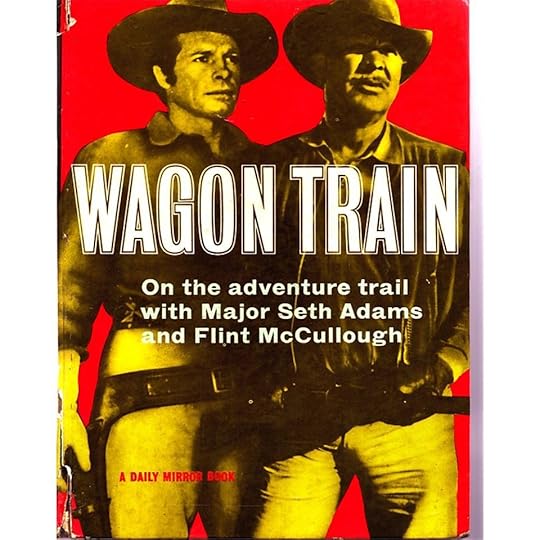
Wagon Train is a book based on the American Western television series, which ran for eight series, between 1957 and 1965. This book contains one story, entitled “Twins of the Trail”. It is lavishly illustrated with coloured naturalistic paintings, one on every page, and each about half a page in size.
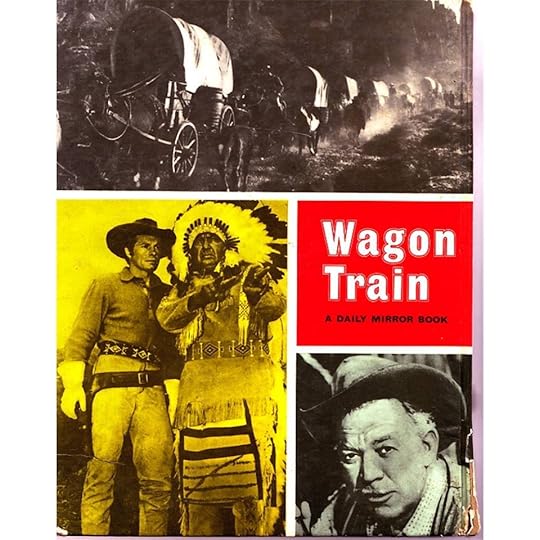
Here are two covers from other “Wagon Train” books I enjoyed at the time. These contained a mixture of stories and strip stories:
The television series was inspired by two films: “Wagon Master” of 1950 and an earlier widescreen wagon train epic “The Big Trail” from 1930. The series loosely told the story of over a million ordinary people from all over the world, who trekked in “Conestoga” wagons which were pulled by horses or oxen, from the frontier to begin new lives out west. This particular trail is from the Missouri river westwards to California, crossing over Cherokee territory. At the earliest it would be around the time of the California Gold Rush in 1849, or possibly later when migration became increasingly popular. 1870 has been suggested.
The story tells of Billy and Bob Jordan, twin brothers of around twelve years of age. They were bored, and decided to go away from the wagon train for a while, in search of an adventure. Meanwhile, the scout Flint McCullough raced his horse back to the wagon master, Major Adams, in great alarm. He had spotted what he called a Cherokee raiding party led by the leader Red Cloud, about six miles away.
The twins were having great fun in the woods playing with their catapults. Eventually they noticed it was dropping dark, so they started to work out how to retrace their steps back to the wagon train. Then they heard an urgent cry for help. . The rest of the story describes how Little Bear related the whole episode to his father, and a new friendship was forged between the Cherokee and the palefaces, who were allowed to go in peace back to the wagon train.
It seems extraordinary to me how many of these western stories about cowboys or early pioneers I watched and read about at the time. A British child, I had only a vague idea of the premise behind “cowboys and Indians” and no idea of the ethical issues of land rights, or the colonisation issues: of the sorry history of ignorance, disease, destruction and discrimination pertaining to the indigenous Native American peoples, whom I now learn comprise more than 500 separate tribes.
The stories I watched seemed to be exciting and good fun. As well as “Wagon Train”, there was “High Chaparral”, about a cattle ranch in the Arizona Territory in the 1870s. The threat to the pioneers here came from Apaches and Mexicans. “Laramie” was a spin-off from “Wagon Train”, and included one of the same actors. I liked “Bonanza” which seemed more humorous. The one I loved best though, was everyone’s favourite: “The Lone Ranger”, all about the only remaining Texas ranger, now masked to conceal his identity. I can see him now, riding his wild horse “Silver”, alongside “Tonto” on his own white steed. “Heigh-ho Silver!” Tonto was a Mohawk Indian from Ontario, who had originally rescued the Lone Ranger.
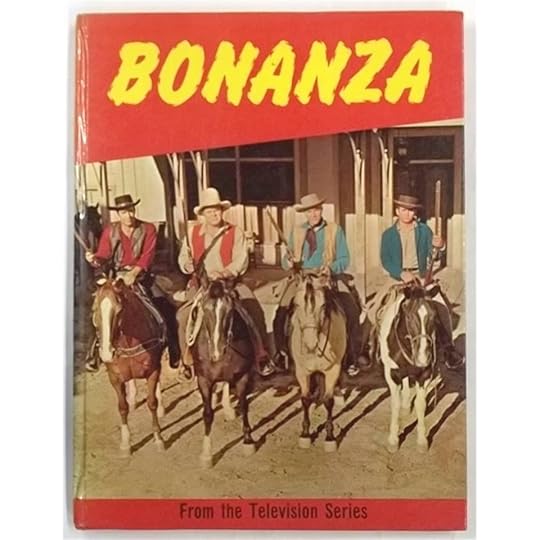
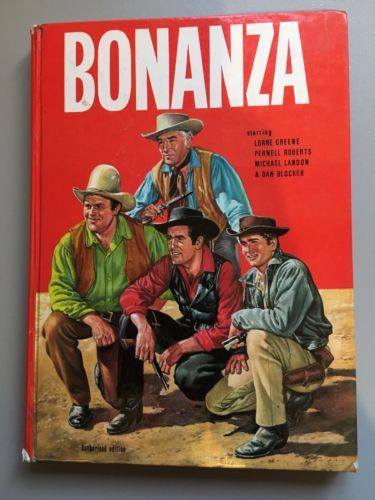
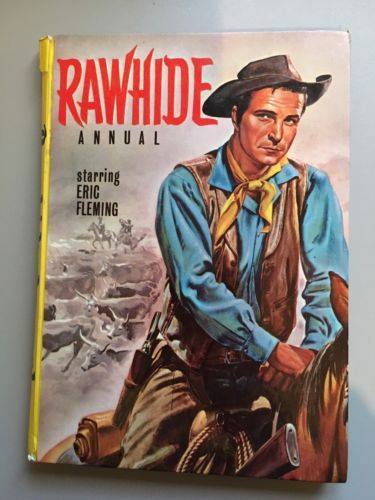
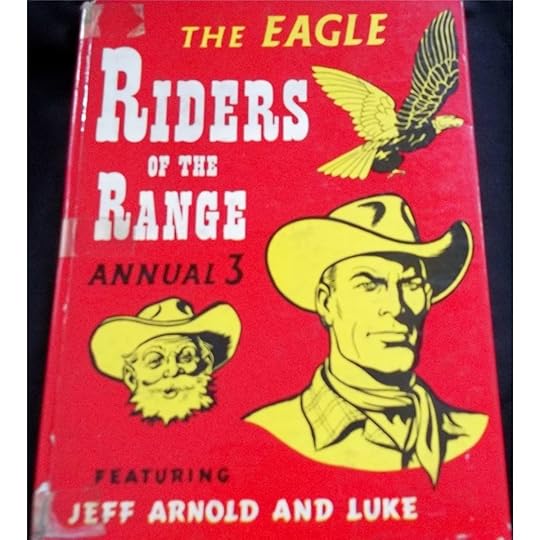
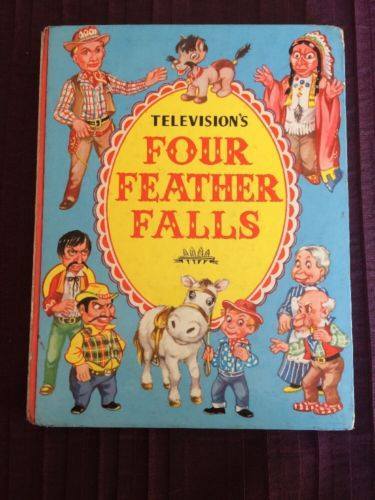
Here are covers from other cowboy books I enjoyed at the time, all but one of which were spin-offs from television series. These mostly contained a mixture of stories and strip stories, plus puzzles:
The illustrations in this Wagon Train story, show figures who are impossibly neat and clean, and always have handsome cherubic faces. The whole concept is very “Hollywood”. Nevertheless, this story, “Twins of the Trail” is quite exciting, and the illustrations good. Best of all, the values of friendship, trust, respect, and the forming of new bonds under difficulties are very well conveyed. It stays at a three star read for me, despite the fact that it was published in 1960.