Jump to ratings and reviews
Rate this book

KVINDEN DER VÅGER OVER VERDEN : INDIANSKE ERINDRINGER ; LINDA HOGAN

Rate this book
"I sat down to write a book about pain and ended up writing about love," says award-winning Chickasaw poet and novelist Linda Hogan. In this book, she recounts her difficult childhood as the daughter of an army sergeant, her love affair at age fifteen with an older man, the legacy of alcoholism, the troubled history of her adopted daughters, and her own physical struggles since a recent horse accident. She shows how historic and emotional pain are passed down through generations, blending personal history with stories of important Indian figures of the past such as Lozen, the woman who was the military strategist for Geronimo, and Ohiesha, the Santee Sioux medical doctor who witnessed the massacre at Wounded Knee. Ultimately, Hogan sees herself and her people whole again and gives an illuminating story of personal triumph.

205 pages, Paperback

First published January 1, 2001

17 people are currently reading
1169 people want to read

About the author

Linda Hogan

79 books551 followers
Linda K. Hogan (born 1947 Denver) is a Native American poet, storyteller, academic, playwright, novelist, environmentalist and writer of short stories. She is currently the Chickasaw Nation's Writer in Residence.

Linda Hogan is Chickasaw. Her father is a Chickasaw from a recognized historical family and Linda's uncle, Wesley Henderson, helped form the White Buffalo Council in Denver during the 1950s. It was to help other Indian people coming to the city because of The Relocation Act, which encouraged migration for work and other opportunities. He had a strong influence on her and she grew up relating strongly to both her Chickasaw family in Indian Territory (Oklahoma) and to a mixed Indian community in the Denver area. At other times, her family traveled because of the military.

Her first university teaching position was in American Indian Studies and American Studies at the University of Minnesota. After writing her first book, Calling Myself Home, she continued to write poetry. Her work has both a historical and political focus, but is lyrical. Her most recent books are The Book of Medicines (1993) and Rounding the Human Corners. (2008) She is also a novelist and essayist. Her work centers on the world of Native peoples, from both her own indigenous perspective and that of others. She was a full professor of Creative Writing at the University of Colorado and then taught the last two years in the University's Ethnic Studies Department. She currently is the Writer in Residence for her own Chickasaw Nation.

Essayist, novelist, and poet, Hogan has published works in many different backgrounds and forms. Her concentration is on environmental themes. She has acted as a consultant in bringing together Native tribal representatives and feminist themes, particularly allying them to her Native ancestry. Her work, whether fiction or non-fiction, expresses an indigenous understanding of the world.

She has written essays and poems on a variety of subjects, both fictional and nonfictional, biographical and from research. Hogan has also written historical novels. Her work studies the historical wrongs done to Native Americans and the American environment since the European colonization of North America.

Hogan was a professor at the University of Colorado at Boulder and the University of Oklahoma. She is the (inaugural) Writer-in-Residence for the Chickasaw Nation in Oklahoma. In October 2011, she instructed a writing workshop through the Abiquiu Workshops in Abiquiu, New Mexico.

(from Wikipedia)

Ratings & Reviews

What do you think?
Rate this book

Friends & Following

Create a free account to discover what your friends think of this book!

Community Reviews

5 stars
196 (35%)
4 stars
193 (34%)
3 stars
124 (22%)
2 stars
28 (5%)
1 star
12 (2%)
Displaying 1 - 30 of 77 reviews
Profile Image for Debbie Zapata.
1,980 reviews59 followers
July 5, 2022
March 29, 1020am ~~ Review asap. Stunning, sad, profound book. Many things to think about.

March 31, 1030am ~~ As usual when a book touches me deeply, I take a few days to think before trying to write a review. Sometimes that space of time helps me organize my thoughts from WOW to something more definite and explainable.

But sometimes this procedure does not work and I am left with my brain filled with that WOW floating around among all the other thoughts that a book stirs up.

This is one of those times.

I can only say that while this is a painful book to read in many ways, it is also one of great wisdom and beauty. The author's courage in telling her story is heart-stopping. I doubt if I would have even survived a life such as hers. But she found the courage to follow her path, to not surrender.

And this woman knows. About life, about people, about Earth, about the connections that 'civilized' people have allowed to be broken. She knows, she cares, and she is able to express her beliefs in a way that touches a reader's heart and soul.

And that is all I can say except for WOW.

Profile Image for Peggy.
Author 2 books41 followers
December 17, 2020
This book is written so beautifully that it spoiled me for another memoir I've been reading behind the scenes. I agree with the blurb by Teresa Jordan that the book "reaches back through human experience until it arrives at the very core of being." Hogan excavates the material of her biography in layers, passes through history, DNA, nature, science, and spirit until the reader finally understands that any event Hogan relays has been molded by an enormous chronology of native survival. The depth of the author's perspective repays the reader in compassion learned. I love this book for the narrative it presents and for the wisdom of its melodic voice.
Profile Image for Ron.
761 reviews145 followers
April 21, 2012
The West has been vanishing almost since it was first inhabited by Europeans, and as a Native American writer, Hogan is devoted to the recovery of what has been nearly lost -- in particular, the culture and history of Native American tribes. This collection of personal essays, part memoir, argues that history lives, often unacknowledged, in our bodies. The catastrophe of shattered Indian cultures lives on, generations later, in the shattered lives of so many descendants of those tribes.

Hogan is of Chickasaw descent, her ancestors inhabitants of what is now Tennessee and Mississippi, forcibly relocated over 100 years ago to the "Indian Territory" of Oklahoma, a journey remembered as the Trail of Tears. Her father an Army sergeant, she spent her first years in Germany, and in later years lived in Colorado. It was a difficult childhood, including a teenage "marriage" to an older man, a silent mother terrified of other people, her father often absent. She writes of her own alcoholism and adoption of two Lakota sisters, both deeply scarred emotionally by a history of severe child abuse.

Hogan's book is an account of her emergence from the "dark underworld" of her early life and the discovery of her own humanity and capacity for love. There is the love for her troubled daughters and the love she learns to feel for her parents, in particular her father, who grew up as a cowboy and whose world forever made cowboys and horses appealing to her.

There is much about pain in Hogan's story -- physical, emotional, spiritual. There is the pain of cultural genocide, and its aftermath in the scourge of alcoholism, poverty, domestic violence, and child abuse. There is the pain of her own troubled life and that of her daughters. There is also the pain of a debilitating physical condition, fibromyalgia. Finally, there is a near fatal accident when she falls from a runaway horse, causing a head injury and fractured pelvis and requiring many months of recovery.

Besides her own story, there are illuminating ruminations in this book on memory, dreams, lost souls, horses, the body, landscapes, identity, and myth. You put the book down after the last page with a sense that you have been on a long, deeply experienced personal journey. Hogan makes reference to Andre Dubus, another writer whose life was abruptly changed by an accident. As a companion to this book, I'd recommend his collection of essays, "Broken Vessels."
Profile Image for Carol Douglas.
Author 12 books97 followers
September 1, 2016
This is a beautifully written books, as are all of Linda Hogan's works. Hogan is the Chickasaw Nation's writer in residence. Her many books tell of the beauty and extreme difficulty of Native Americans' lives.
The Woman Who Watches over the World is her autobiography. The title is based on a statue she bought that broke but is still beautiful, and it ushers in the story of people who are broken but still full of love.
Hogan was literally broken by a fall from a horse. But despite a life of pain, she struggles on. She tells of growing up with a mother who was silent because of her own pain, and of Linda's own struggles in her youth with alcohol. That surprised me. She has done so much to lift the human spirit that I never would have guessed that she had once been its captive.
She tells of adopting Native daughters who had suffered, and believing that she could mend their injuries. She found that one's pain was too great to be healed, but the other flourished after much help.
It is good of Hogan to show that a fine novelist and poet has been through great suffering but continues to watch over the world and love all of its creatures. Her nature writing is always superb.

Profile Image for Christina.
182 reviews6 followers
September 5, 2025
I was lucky enough to take a writing class from Linda Hogan, back when she taught. She was the only creative writing instructor I had that actually gave practical advice. The others knew how to write, but didn't know how to explain the process. (We were supposed to pick it up by osmosis, I guess, with amature feedback from our fellow students. More often than not, it was the naïve leading the ignorant.) Hogan had a knack for explaining why a piece of writing was working—or wasn't. She brought in powerful examples from authors I had never heard of, widening my world of reading. It was interesting reading about her life, especially outside of a university classroom.


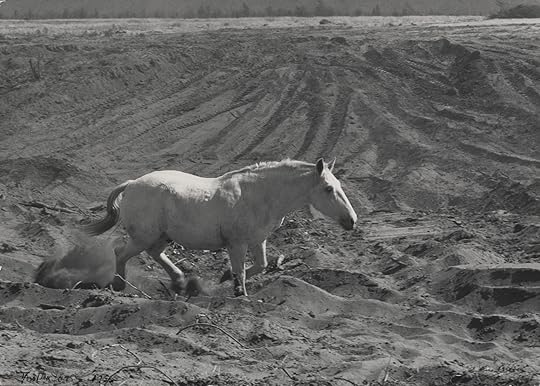
Dorothea Lange, Terrified Horse, Napa County, California, 1956. This photograph and it's subject is the jumping off point of the final chapter. Lange is best known for her photographs documenting migrant workers during the Great Depression, and the internment camps of Japanese-American citizens during World War II. Source.

As it says in the title, this is a memoir, not a autobiography, so it's selective. It's centered around the theme of pain. The pain of doing too much emotional labor for a too damaged lover at too young an age. The pain of fibromyalgia. The pain of raising an adopted child who had already been too abused to love or trust again. The pain of alcoholism and its legacy in families. The pain of being severely injured by a horse who never should have been ridden. In other words, the pain of life. The Woman Who Watches Over the World is a title borrowed from a clay art work Hogan bought in a museum gift shop.
"I bought the clay woman and asked the clerk to mail her to me, then I returned home, anticipating the day The Woman Who Watches Over the World would appear.
     When she arrived, she wasn't whole. Her legs were broken off, the gray interior clay exposed beneath the paint. I glued them back on. Then she began to fall apart in other ways. Her nose broke. Soon one of her hands fell off. The woman who watches over the world was broken. Despite my efforts, she remained that way, fragmented and unhealed. At first I was disappointed, but then I thought, Yes, the woman who watches over us is as broken as the land, as hurt as the flesh people. She is a true representation of the world she flies above. Something between us and earth has broken."
There's lots of other stories and related thoughts blended into the narrative. The chapter where she talks about her illness doesn't dwell on the day-to-day difficulties of living with it, but takes off in the direction of dreams, visions, divination, and the dark. (One of the symptoms was sleep disorder that robbed Hogan of vivid dreams she had experienced since childhood.) This is not a linear account of her life, but more of a web of memories and essays. If you enjoy the writing style of Rebecca Solnit, or Annie Dillard, you'll have a good idea of what to expect here. She often pulls deeply from her experience as a Chickasaw woman, her family's history, and the larger history that has shaped them. And while there's a lot of pain, there's also surviving. Even flourishing.


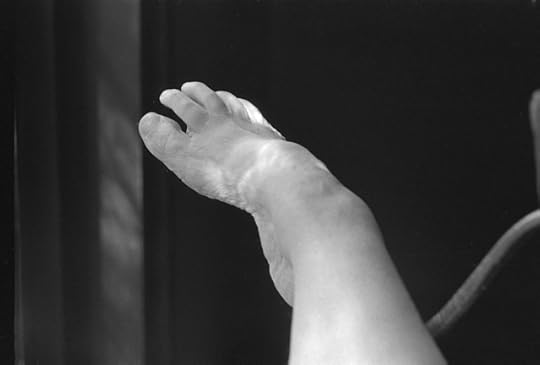
Untitled (Lange's Foot), circa 1957. Lange took this photo of her own polio deformed foot while teaching at the California School of Fine Art in Berkeley. It was a assignment she gave her students to produce a photo on the theme, "where I live." Hogan also talks about this photo in the last chapter. Source.
Profile Image for Liz.
1,008 reviews195 followers
December 16, 2009
This is the first Linda Hogan work which I've read in whole--I've read excerpts from Dwellings and The Book of Medicine. The times I've read her it's been assigned reading, and I have to say I'm not really sure how well known she is outside academia. I read this for my women's and gender studies class, where we learned a lot about systems of oppression, including race, and how these perpetuate other systems of oppression. I almost wonder if it would have been better to start with this out of all her works, as it's Hogan's memoir and explains who she is. However, this isn't just Hogan's memoir, but a memoir of her people.

If I had to summarize this book in one sentence, I would say it's about Hogan's experiences growing up and living as an American Indian in America. Hogan places a lot of emphasis on family and tradition and how traditions are passed down. She covers a lot of serious and explicit subject matter in this work. It is true that in some ways, non-American Indian readers might relate to certain areas of this book, such as the difficulty of passing down tradition through generations.

However, as a white reader, one really isn't supposed to be able to connect with this book. To me, this whole book is about the problems that resulted because white people wanted to kick American Indians off American soil. It's about the oppression of a race. It's not only a great lesson in American history, but a reminder that American Indians still don't have great lives.

Hogan writes a considerable amount about spirituality and uses intimate diction in her work. She writes about spiritual connections with land and place which no white man can have--I know I've felt connected with nature before, but not quite to the extreme that Hogan does, if that's even the word I'm looking for. This may sounds like an alienating thing, but to me it wasn't. American Indians and Americans have had very different relationships with the land, such as using every part of the buffalo versus building railroads for ourselves on the land. I found the spiritual aspects of this work to be eye-opening, and I think it's important for Americans to become more educated about American Indian culture, because understanding their relationship to the land versus ours helps us understand how we repress them and what we can do to make it right.

On the back of this book, there is a quote from Hogan saying, "I sat down to write a book about pain and ended up writing about love." At many points in the work Hogan talks about how much more she and those around her thrived in a loving atmosphere. At the end of her book, she doesn't give her reader an exact call to action, but I thought her call to action was to love. Learn more about other cultures that exist in the same country as your own. Learn to love them, and gain a better understanding of they want and need to live happier lives. I think we should not only take action on our own to get this education, but works like Hogan's help with this process, and maybe eventually there will be more love between races, instead of oppression.
1 review4 followers
January 26, 2022
I have read Linda Hogans book "dwellings" and that is one of my most cherished reads, given that, I may have set too high of expectations on this memoir by her. I also love some of her poetry, I find a lot of work to be profoundly beautiful and in the past considered her one of my favorite authors simply by the little amount of her work that Ive read. Reading this somewhat changed my mind on that, it doesnt discount the work Ive read in the past but something about this book threw me off a bit. I believe there is very beautiful aspects of this book, and some profoundly deep quotes that stuck with me. Such as her portion of glacial ice and how she tied that to dreams. The way she talked about the physical pain she has endured struck me as well and I now have a greater outlook on that thanks to her. Some facts she said really stuck with such as the tribe who hid in the mangroves for years. There is a lot of aspects of this book I do really enjoy.
For some reason though I just wanted to get over and done with this book. As heartbreaking as it was, the way Hogan wrote did not cause me to feel much emotion, which is what I look for in books. I cant necessarily pinpoint why. It may be that this book is simply not for me. Part may be that some of the ways she phrased things I could not understand what she was trying to say or how it related to the story she was telling. It was also hard to paint a picture of her life because it seemed somewhat all over the place.
My favorite book is "For Joshua" written by Richard Wagamese, which is like this book, a native memoir. Having Wagamese's book as my favorite read may have added extra high expectations for this book. Wagameses book spoke to me heavily and I have absolutely zero bad things to say about that book. That book made me cry so so so many times and made me feel so much emotion throughout. The thing is he never made it seem like he was complaining about the things he endured. And it never felt as though he put the blame on anyone. It felt much like a book of acceptance and healing and insight and has been one of my greatest teachers. I can not say the same of Hogans book, which is okay because that is on me for putting expectations on this work. I honestly think I probably ruined it for myself by comparing and putting it to the standards of my favorite book.
"The Woman Who Watches Over the World" simply just did not do it for me. I loved parts of it but there was many parts I dont have much good to say. I think this book has a great possibility of speaking deeply with certain individuals as I have seen in some of the other reviews. That is why I am not going to rate this book very low because the courage she put into writing and publishing this book is incredibly respected and I believe this book could be a great teacher. Simply not for me but I certainly still found lots of beauty and love and pain in this book. Wish I did not put expectations, I believe I would have enjoyed it much more, you live and you learn. I hope if youre contemplating reading this you at least give it a try, I think you could really like it. Thank you Linda Hogan.
233 reviews2 followers
September 30, 2020
While this was a very well written book, I just don't think it was for me. The story covers a range of topics and not necessarily in order. Also, I really wanted more about her story: her daughters, her horse accident, her recovery from her accident. It really seemed surface level, although it felt deeper. That depth just didn't seem to come across in her words or stories.

It's possible I'm not fully understanding this which is why I'm concluding that this book is just not for me.
Profile Image for P C.
55 reviews
Read
April 17, 2021
This book unsettled me to the core and was super difficult to read, tbh. The author - a chickasaw woman in diaspora - weaves together all parts of her story of living through and beyond chronic pain, abuse, and traumatic injury (and history). She locates all of these experiences in her body and its relation to the world, acknowledging that there's limits on its knowability and translatability. Her points about phantom pain and the colonial urge to know what can't or doesn't want to be known are going to stay with me.

CW: pedophilia, sexual abuse

Editing to add:
There were definitely uncomfortable parts where she describes (nonconsensual) interventions that her adopted lakota children - CSA survivors - were put through to make them interact "normally". From the story, it's clear that state systems (of foster care, mental healthcare etc) were inadequate for facilitating any kind of healing for her kids. The author speaks positively of the treatment (which "worked"), but I think about what few, if any, alternatives she might've had, and the impossible choices that native peoples continue to be faced with.
Profile Image for Christie Bane.
1,470 reviews25 followers
August 19, 2024
Not for me. Any book written in such a way that I know the author is a poet before I know it is not for me. This was a random pick out of a Little Free Library in Abingdon, VA, and it will be going back in my Little Free Library where hopefully someone will find it and enjoy it more than I did. The author is a Native American woman who writes about a bunch of different subjects: her tribal history, her family, her adopted daughters (my favorite chapter), her relationship with horses, and a bunch of woo-woo stuff about nature, sacred memories, etc that many people gobble up but I am not into not one bit. I suppose the writing is good, maybe even very good, but, as I said, not for me.
Profile Image for Alexia.
36 reviews
August 26, 2022
I will say that this book was gut-wrenching, soul-cutting, and soothe-saying all in one bundle. Hogan’s words held me through the crumbling of my own world, and I will forever be grateful for that. Beautifully written and well crafted piece of work if I ever read one.
Profile Image for Laura Norton-Cruz.
81 reviews4 followers
October 31, 2011
I loved loved loved this book in parts. I was absorbed in it. I felt like a friend was telling me stories because there is something intimate, loving, and wise about Linda Hogan. At other parts of the book, I was lost or bored or put off by her poetic, philosophical musings.

Some of the historical, scientific, or cultural literature from which she draws in her musings is very interesting and powerful for narrating certain truths about Native American history or the importance of the bones of our ancestors. And some of her poetic interpretations of these ideas are incredibly poignant--I had to underline them and write them down in my journal. But other parts seem like an attempt to connect too many disparate things and a lack of an editor.

Her narratives about her own life, however, are incredibly compelling, as well as her reflections on her life: why her mom may have been so full of fear and incapable of love, or why, as a 12-year-old, she was drawn into a romantic relationship with a soldier. Everything about these sections was powerful, except or those places where an editor should have intervened to prevent redundancy.

Some of Hogan's words that I love:

"And always, when confronted with smallness, all I wanted to have count was my own capacity to love."

"There are events or times remaining from childhood that stay within a person for no known reason, as if they wait within a person for a kind of clarity or meaning."

<3 <3

"As a young person coming from silences of both family and history, I had little of the language I needed to put a human life together. I was inarticulate to voice it, therefore to know it, even from within...Language is an intimacy not only with others, but even with the self. It creates a person."

So, if you can slog through certain parts, the book is a beautiful narrative of hurt and healing, and very worth reading.
Profile Image for Natalie.
527 reviews
August 15, 2017
Linda Hogan's writing is insightful and lovely as always, but I wanted her to dig in a little deeper in each essay than she did--or else to weave back and forth between them and give us a little more of a sense of her life as a whole. I was really intrigued by her statement in the introduction that she wrote the book as an answer to all the young people who asked her how she survived her life, but having finished the book, I don't feel like I quite know the answer. I really enjoyed her essay collection _Dwellings_, so I'm trying to put my finger on what didn't quite work for me about this collection. I think maybe that these essays were not as thematically linked as the ones in _Dwellings_ were, and I missed having a thematic throughline?
Profile Image for Sonja.
610 reviews
December 31, 2014
This book was so hard for me to read. I had to put it down several times because of the abuse she suffered, along with what other relatives suffered. It was just too sad. I have to give the author credit, tho, for having such a forgiving spirit and coming out of her experiences, both mental and physical, with a kind and loving heart. She was so in touch with her Native American background, its history, spirituality, connection with earth and sky, that she came out whole. She is a very strong woman in her own right. If we all could be so grounded to come out of adversity this well, the world would be a much better place.
Profile Image for Hiram Diaz III.
11 reviews2 followers
April 6, 2014
I can't say very many positive things about this book. The tone is self-pitying and self-righteous. The narrative is, it would seem, inadvertently discontinuous, aimless, and inadvertently aporetic - on the one hand, the book is supposed to be a memoir, but on the other hand, the author eventually tells her reader that she "no longer know[s] what truth there is in memory" (p.170).

Hogan's heavy-handed sentimentalism, in my opinion, trivializes the very real problems she wants us to remember, ponder, and address in the public sphere.
Profile Image for Kelly.
2 reviews22 followers
December 9, 2014
Reading this was like having a religious experience. I spent two days reading this in order to answer one exam question for a Women's Studies course and I am deeply moved by the stories Hogan told. For the longest time I have been in a bad place but Hogan helped me shed some light on the bad, showed me how I can change for the better "knowing that the horrible and beautiful are together in the world," and passing "the threshold into something finer." There's something tragically beautiful about her story and the truths that are revealed. Something life-changing.
Profile Image for Wendy.
77 reviews6 followers
July 24, 2009
Hogan has some beautiful turns of phrase in this book, and some excellent descriptions. Beyond that, it's hard to find anything good to say. There was no story. There were probably a dozen stories interwoven, except they didn't go anywhere and coalesce into a larger point. I'm not even sure what this book was supposed to be about, except as a vehicle for Hogan to whine about how painful her life is and has been.
Profile Image for Randine.
205 reviews14 followers
September 8, 2016
This book had an enormous impact on me. So much so that I looked Linda Hogan up and watched a 3 hour interview with her on In-Depth Books and then I requested her friendship on FB. Her story is exceptional. The first half of the book is almost too sad to read but her writing is poetic and it's impossible to not feel her love and acceptance of life generated from a Native American point of view. She has a stunning soul.
Profile Image for Catherine.
143 reviews21 followers
November 26, 2010
This is a poet I want to keep close tabs on. Her beautiful and rending thoughts of pain illuminated many things for me and as a result, healing came. She's lived a rough life but she's hung on and has eyes for great beauty amidst suffering.
1 review
June 26, 2022
The Woman Who Watches over The World is one of the saddest, but most interesting memoirs I have ever read. From the very beginning, Linda Hogan dives deep into the traumatic past that was her childhood, her experiences as a mother of two adopted children, and her life growing up as a Native American in a world that was hostile to her people. She did not set up her story in a chronological manner, but rather danced between many different events in an attempt to create a coherent story that did not rely on time. She would introduce events from her childhood later into the memoir and it was clear that it was a good way of creating a powerful and emotional for the reader.
Conflict was prevalent throughout the entire memoir, and it was really clear from the way Hogan set up her story. Since she was a child, Hogan had to deal with a lot of pain and hardship in her life. She had been in bad relationships, had seen violence, had lived through wars, and had been hurt a lot. Even when she adopted two children, she struggled to raise them because the children were really abused by former foster parents. A lot of the conflict in her memoir helps to show how she grew as a person and pushed past the trauma and tried to reconnect with her ancestral tribe.
Self-discovery was a big part of Linda Hogan’s memoir. She was very lost in the world, trying to figure out her identity and feeling voiceless like many of the Native women that grew up in boarding schools. These boarding schools were meant to erase the identity of Native women. So, when Linda went through a good portion of her early childhood in very difficult relationships and situations, she tried to find herself in her Chickasaw identity by the end. It was really important to see how she grew and reconnected with her roots as a Native woman.
I think that this memoir was very much an eye-opener for me. I have really only read about the problems Natives faced in history textbooks, but I had never really seen the world through their eyes. It’s honestly really sad what Native Americans had to go through, especially because they had been oppressed for years and they did not have very happy lives. The part that especially got to me was when she described her adopted children and how the two girls had gone through so much pain and hardship. It was honestly a moving, but rewarding memoir to read, and I recommend it for anyone who wants to understand just how painful life can be for the Native Americans and Indigenous peoples of North America.
Profile Image for Razif.
107 reviews
February 12, 2019
Soo, yeah, I borrowed this book from my campus' library, thinking maybe this book was good--and light read, because of its small size, and I could bring this book everywhere.

Turns out, it was one of the heaviest book I've ever read. It brought so many emotions--mostly kinda sad. It was so painful to continue reading without having these mental images built up in my mind. I had to stop for several reasons. It felt so vivid.

As a guy who barely knows anything about Native American history, I had to look up the meaning of some words as well, sometimes it ruined the mood and vibe, but at least I learned something.

But on the other hand, I almost could feel the buried hatred within the author towards white people... I don't know much about this matter, so I won't comment anything further.
81 reviews
February 8, 2021
After a life altering accident, Hogan writes, “To lose memory and time throws the idea of self into doubt. It splits apart all the notions of psychology. We humans consist of the unity of selves, the body a juncture, a union where the two road meet. I had come apart, but in that breaking was a ray of light; it was the soul remained.”

This memoir by a terrific native writer should be of interest to anyone who wants to learn more about native culture, its mythology, and its history through the lens of the life of its writer. Its structure makes for a very easy read, with bits and pieces from different times in her life sewn together by her thinking about her own life and especially her experience of both love and pain.


Profile Image for Matt Dalthorp.
19 reviews4 followers
January 10, 2024
So many elements of the story are grim, even shocking, yet through the darkness, Hogan's warmth shines beautifully. Sometimes the prose is overwrought, but it'd be hard not to become so, given the passion and depth of feeling at play, and throughout the perspective is unique and striking. Hogan does bring a great gift for communicating a great depth of narrative weight with relatively minimal literal detail, often digressing into historical or spiritual asides which augment the actual points of the story.
Profile Image for Jay.
10 reviews
April 5, 2018
Very beautiful and tremendously apt sentiment. Took me a while to get through as I did not flow with the abstract organization easily. But Hogan has a gift with words which made me reminisce about the importance of writers as well as the roles of storytellers she discusses in the novel. Sharing and connecting through these means give us the power to understand intergenerational pain and struggle. From this novel there are many lessons to be learned if only we would listen.
1,654 reviews13 followers
April 20, 2024
This is a memoir that centers around key themes and struggles in the life of this Native American writer. She is able to bring out the pain and hurt relationships she found within her family with honesty, clarity and insight. She is especially good at writing about the emotional parts of life. I have really enjoyed the depth of several of her novels, and it was good to get a better sense of her background as a Native woman and writer. An interesting memoir.
Profile Image for Tina T..
98 reviews
December 19, 2025
The Woman Who Watches Over the World is luminous and deeply moving. Linda Hogan weaves personal memory with Indigenous history in prose that feels both sacred and intimate, transforming pain into clarity and love. Every page carries quiet power ancestral voices, resilience, and healing braided together into a memoir that lingers long after the final sentence. This is not just a story you read; it’s one you feel. An essential, soul stirring read.
Profile Image for Kristine.
13 reviews1 follower
March 24, 2020
I didn't appreciate that she called my Jesus "that desert man." It honestly threw me off. However, I continued to read it to understand what she wanted to tell. Her story was very painful to read but gave me insight on Native American history. A lot of readers actually liked the book but I beg to differ. I would consider this novel poorly written and biased.
Profile Image for Emily Ho.
202 reviews
November 21, 2021
Solipsistic and unfocused. I appreciate that it’s a memoir, which invites solipsism, but it was a hard book to finish because it got so incredibly navel-gazey. Some interesting ideas, facts I didn’t know before, and a desperately sad story of pain and abuse, but overall would not recommend. Not my fav read of hers.
23 reviews
April 27, 2023
My favorite quotes from it:


“When a person says ‘I remember’ all things are possible.”

“Intimacy is the greatest threat”

“It was out of love that they became another part of the pain of the children”

“The hurt child raises itself and doesn’t just walk but swims and flies”

“Pain has the shortest memory”
Profile Image for Fiona Juarez-Sweeney.
3 reviews
August 25, 2024
Beautifully written and powerful, a bit slow paced and hard to follow at times. Touched on very important themes and ideas that were articulated eloquently and in connection with the earth which I enjoyed a lot. I wish it was a bit more personal and was more engaging at times. Overall glad I read it though.
Displaying 1 - 30 of 77 reviews

Can't find what you're looking for?

Get help and learn more about the design.