’There’s a blast of palpable stupidity that comes from our host, like opening the door of a sauna. The best way to contradict him is to let him speak.’
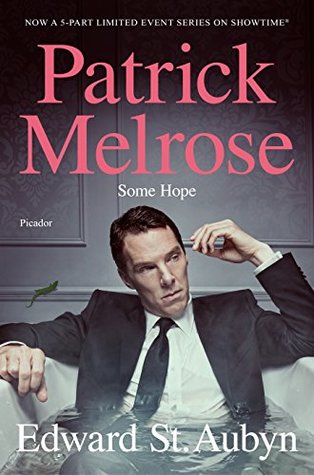
Some Hope is the third installment in what was a trilogy and only later became a pentalogy. It has the air of temporary finality about it but leaves us with the door open. By some unfathomable miracle Patrick Melrose, the protagonist but by no means hero of the series, has risen from his drug and incest induced hell hole and is, possibly, on the road to reclaiming his life. We are back in the realm of upper-class English snobs which is, on the one hand, Patrick’s turf – he, too, is a snob – but, on the other, the constant object of all his snarky ridicule.
With his dark English satire St Aubyn is back in the aristocratic, witty guise we saw him in in Never Mind. This time he even manages to deliver an anarchistic blow to Princess Margaret during a particularly gruesome party to which everyone with a background (but with very little foreground, to borrow from St Aubyn) is invited. If the dialogue with her even remotely resembles the truth, as we’ve every reason to believe it does because St Aubyn has met her, she had it coming:
’Oh,’ groaned the Princess, making a disagreeable face, a muscular contraction that cost her little effort.
‘I was in a taxi once,’ she began in a tone that invited Sonny to marvel at her audacity.
‘The Queen was saying only the other day that London property prices are so high that she doesn’t know how she’d cope without Buckingham Palace,’ Princess Margaret explained to a sympathetic Peter Porlock.
Some way into the novel, I realized that many of the characters we meet peopled no 1 in the series, Never Mind. But I couldn’t remember any of them. They are mostly flat characters, satirized versions of people St Aubyn has no doubt met in those upper social strata, but there is something just a bit too flippant in the caricature at times. But like Evelyn Waugh, I suspect he is more interested in dialogue than in round character studies, or rather in letting his characters reveal themselves through speech without the narrator getting in their way with descriptions. His gift is to write lightly about heavy subjects, but the irreverence seems deliberately over-the-top, if not implausible. For the first time, however, we begin to hope that one or two of the cardboard snobs will redeem themselves. Patrick’s friendship with Johnny, for one thing, is based on something real and good – unlike the rest of Patrick’s life.
Ultimately Patrick begins to wonder whether there might be something to this thing called life, even for him. But how does he sort out the mess he has made of things so far? He is exhausted by the hatred of his father, but where would he be without it?
What was the thread that held together the scattered beads of experience if not the pressure of interpretation? The meaning of life was whatever meaning one could thrust down its reluctant throat.
I am helplessly caught in the web of Edward St Aubyn’s prose, even if I’m not always entirely enamoured by his subject matter. His take on social satire, even at its darkest and most disheartening, is seen from someone on the inside and is for that reason inescapably relevant but also, often, unnervingly funny.