Jump to ratings and reviews
Rate this book

Arab American Writing

The Cairo House: A Novel

Rate this book
Samia Serageldin's heroine, the daughter of a politically prominent, land-owning Egyptian family, witnesses the changes sweeping her homeland. Looking back to the glamorous Egypt of the pashas and King Faruk, Serageldin moves forward to the police state of the colonels who seized power in 1952 and the disastrous consequences of Nasser's sequestration policies.


Through well-chosen portraits and telling descriptions of the era's fashions and furnishings, Serageldin conveys detailed social and cultural information. She offers a glimpse of the beach at Agami in the 1960s and conveys the change in mood through the Sadat years. Serageldin's fictional treatment of recent Egyptian history includes key events leading to the rise of Islamic fundamentalism, such as the assassination of writer Yussef Siba'yi and the harassment of theologian Nasr Abu Zayd.
Serageldin's heroine goes into exile in Europe and the United States but returns to Egypt in an attempt to reconcile her past and present. Charting fresh territory for the American reader, this semi-autobiographical novel is one of the most sensitive and accessible documents of historical change in Egyptian life. The book will appeal to a general audience and will be particularly useful to students interested in the social customs of the upper class in Egypt in the Nasser and Sadat years.

Hardcover

Published September 1, 2000

8 people are currently reading
156 people want to read

About the author

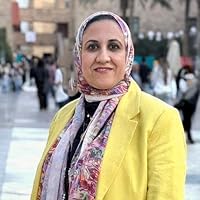
Samia Serageldin

8 books9 followers
وُلدت الروائية سامية سراج الدين في القاهرة، وهاجرت مع عائلتها إلى الولايات المتحدة الأمريكية عام 1980.
نالت شهادة الماجيستير في العلوم السياسية من جامعة لندن

Ratings & Reviews

What do you think?
Rate this book

Friends & Following

Create a free account to discover what your friends think of this book!

Community Reviews

5 stars
36 (18%)
4 stars
74 (38%)
3 stars
61 (31%)
2 stars
18 (9%)
1 star
5 (2%)
Displaying 1 - 26 of 26 reviews
Profile Image for Jalilah.
414 reviews107 followers
May 29, 2017
When author Samia Serageldin was asked in an interview to characterize the Cairo of her childhood in one phrase, her reply was "Gone with the wind".

But The Cairo House is not Gone with the Wind. Rather, it is an autobiographical novel telling the story of a rich Egyptian landowning family starting with the "luxurious" days of King Farouk ( only luxurious for a small percentage of the population), through the socialist Nasser era, followed by Sadat years and finally to today's Egypt.

All this is told through the eyes of the lead character, Gina. Reading Serageldin's biography, her early life very much resembled Gina's. Like Gina, Serageldin grew up in such a family and like Gina she had an arranged marriage at 19 which ended in divorce a few years later. Also like her character Gina Seif el Islam, Samia Serageldin left Egypt as a young adult first to England, then France and finally the United States.

Because this book is autobiographical, there are, like in real life, many unresolved issues. The story does not wrap up neatly at the end and there are many questions left unanswered. For this reason it might leave some readers unsatisfied. In my case I enjoyed the novel very much. I visited Egypt frequently throughout the 80s and 90s and am familiar with many of the neighbourhoods described, so reading this book made me nostalgic. Taking in consideration this novel is more of an autobiography and it is also a debut novel I think it's still worth reading and I would definitely read more from this author!
Profile Image for Yara Hossam.
Author 2 books81 followers
March 20, 2020
I am aggravated with feelings right now and cannot possibly give this review its fair share of intellect. I will try to do just this tomorrow.
Profile Image for Danderma.
Author 2 books44 followers
April 5, 2012
The night I read this book I had wanted to read a bit in bed before I fell asleep. I read the first page, nearly three hours later and I'm halfway through the book and struggling to put it down! I barely got a wink of sleep that night, and by 2 am the next night the book was regretfully over!

The best thing about this book is that it’s based on the writers true life events… how was is like for an aristocrat living in Egypt during the revolution… the book is beautifully written and very easy read and most importantly gives you a glimpse into how bashawat Egypt lived and thought and interacted… how life can turn around 180 degrees and how not to take anything for granted. It also it paints Jamal Abdulnasser in another light all together… something you barely see anyone daring to do in modern literature. Whether or not you agree with the writer is not the point… the point is that it’s a good book and originally written and published in English and is a very good read!
Profile Image for Alison Smith.
843 reviews23 followers
July 20, 2016
Interesting to read an account of an ordinary family - albeit related to The Pasha, who lived in the Cairo House, the twilight of power for the rich sophisticated elite living in European style luxury, but whose mores were governed by Muslim tradition and convention - not, please note, by fundamentalism. Big difference. Due to the translation factor, few Egyptian novels come my way.
Profile Image for Susan.
397 reviews115 followers
February 4, 2009
This one doesn’t live up to the encomiums on the back cover, but is till an interesting book. It is not “beautifully written” throughout, yet there are haunting and memorable passages, often repeated, in italics, in different parts of the novel to represent the characters’ thinking about her life. One captured me right from the beginning:

For those who have more than one skin, there are places where the secret act of metamorphosis takes place, an imperceptible shading into a hint of a different gait, a softening or a crispening of an accent. For those whose past and present belong to different worlds, there are places and times that mark their passage from one to the other, a transitional limbo: like airports.


It’s a novel written in the first person and reads like a memoir so that one assumes the main character, Gihan—called “Gigi”, has much in common with the author. It reminded me at first of The House on Sugar Beach where an upper-class Liberian woman reflects on her privileged childhood and the aftermath of the palace coup that violently overthrew the governing class from which she came. Similarly in The Cairo House, Gigi is the daughter of a wealthy family whose seat is the Cairo House, where the Pasha—the current male head of the family—involves himself in government, business, and of course, the doings of all his relatives. With the coming of Nassr, though, comes “sequestration” where Gigi’s relatives are arrested, imprisioned and some left on “house arrest” for most of their lives. Property is confiscated, privileges are lost, and lives change drastically. Gigi, growing up in the 50ies, learns in school that in the past wealthy landlords oppressed the common people.

The position of women is highlighted, from Gigi’s first marriage, arranged by her relatives, though she was not forced to agree (she “did what was expected of her”) to her difficulties getting a divorce (a man can just say “I divorce you” to his wife; a woman must get her husband’s approval). She sees a very secular Egypt moving toward woman wearing veils and some of the more onerous regulations for females that she saw when she followed her husband briefly to Saudi Arabia.

I found the book compelling enough to read quickly, but at several points I didn’t really understand the character’s motivation so maybe the cultural transfer is incomplete. I particularly enjoyed the locales in Egypt that I’d visited—Zamalek where she lived, the Corniche along the Nile, Luxor and Hurghada where one went for holidays without leaving the country. The sense of place was not as strong outside Egypt, as when Gigi lived in London, Paris or in New Hampshire (presumably Hanover about which she seems impressed primarily by the snow).
Profile Image for Dina.
29 reviews
January 14, 2010
رغم عدم تعاطفي مع الكاتبة او بمعنى اصح مع بطلة الرواية ولكنني اعجبت جدً
بالرواية وسوف اقوم بقرائتها مرة ثانية في وقت قريب أنشاءالله.
Profile Image for ilona.
63 reviews21 followers
August 19, 2014
Žao mi što sam stigla do poslednje stranice, onaj osećaj koji prati samo dobre knjige...
Profile Image for Nelly Ali.
22 reviews45 followers
February 4, 2025
I really wanted to love Cairo House and was so grateful to have found it. As someone born in London but of Egyptian origin, I naturally gravitate towards books like this—stories written by women who have lived between different worlds and cultures. I appreciate the effort to capture Egypt’s social and political transformations from the perspective of a woman straddling two identities.

The novel undoubtedly taught me many things about Egypt’s past—decades before I was born and before I truly knew the country. I was especially grateful for the personal reflections, as the book is semi-autobiographical, giving a glimpse into a world that is both familiar and distant to me. However, despite all this, I couldn’t fall in love with it.

That said, I loved the beginning of the novel. The way Serageldin described identity as a chameleon-like adaptation was incredibly powerful and resonated deeply with me. The photo album analogy, in which the protagonist’s identity shifts depending on which version of herself is presented—whether in Egypt, France, or the United States—was a brilliant and evocative way to capture the experience of living between multiple cultures. These early reflections on identity, belonging, and self-perception were some of my favourite parts of the book.

However, my main issue was the characters—even the protagonist, Gigi, failed to truly resonate with me. She seemed detached, and while I understood her struggles, I found it difficult to sympathise with her. This wasn’t necessarily because she left her son, but rather because her vulnerabilities weren’t exposed in a raw and authentic way. Instead, they felt more like justifications. She repeatedly stated that she was never someone who could make decisions, yet she made incredibly definitive choices—choosing to leave her son and country to move to France, and later choosing to marry Luc. These were life-altering decisions, and the claim that she was incapable of making choices did not quite align with the narrative.

Beyond Gigi, I struggled to connect with the other characters as well. Though they were all developed, I couldn’t see them, sympathise with them, or feel their sorrow or joy. Often, it felt as if the protagonist was speaking to imagined people, particularly in conversations with her son. We rarely learned his reactions or responses, which was somewhat unsettling. The relationships, especially her marriages, lacked depth for me. I could not fully grasp what warmth existed in them, or how they changed over time. The emotional exchanges that might have allowed me to feel part of those relationships as a reader were missing.

I also found the reflections on Egypt upon Gigi’s return to be somewhat superficial, occasionally leaning into western stereotypes rather than offering a more layered perspective. Given the novel’s premise, I had hoped for a more nuanced exploration of her reconnection with the country she left behind.

That said, there were many parts of the novel I appreciated. The descriptions of Cairo and the grandeur of her family’s past were beautifully written, evoking a strong sense of place and history. The exploration of exile and displacement, particularly the way personal choices are shaped by broader political changes, was thought-provoking. I also enjoyed the moments that captured the social dynamics of Egypt’s elite, the shifting class structures, and the political tensions that defined different eras.

Ultimately, Cairo House had elements I admired, but I found myself wanting more emotional depth and authenticity from the characters. It is an interesting read for those interested in Egypt’s changing landscape and the experience of living between two cultures, but I personally struggled to fully connect with it.
Profile Image for Shaimaa ElBanna .
27 reviews
June 29, 2024
The Cairo House* by Samia Serageldin is a captivating novel that masterfully intertwines personal and political history, taking readers on an evocative journey through Egypt's turbulent transformations from the era of King Farouk to Hosni Mubarak's rule. Serageldin's exquisite use of vocabulary and her meticulous attention to small details enrich the narrative, making the story not just a historical account but a deeply personal and immersive experience.

The novel centers around Gigi, an Egyptian woman whose life is intricately connected to the political upheavals of her homeland. Through Gigi's eyes, we witness the shifting sands of Egypt's political landscape and the impact these changes have on individual lives and familial relationships. Serageldin's descriptions are vivid, bringing to life the bustling streets of Cairo, the grandeur of the titular Cairo house, and the intimate moments of Gigi's life.

One of the most compelling aspects of *The Cairo House* is how it captures the essence of Egyptian society during pivotal moments in history. Serageldin deftly portrays the hopes and disillusionments of a nation, allowing readers to understand and feel the emotional and social currents that have shaped modern Egypt. For those familiar with the Mubarak era, like me the novel resonates deeply, offering a poignant reflection of the times and events that many, including myself, have either witnessed or read about.

Gigi's personal journey is as compelling as the historical backdrop against which it unfolds. Her struggles, particularly her separation from her son, evoke a profound sense of empathy. While I found myself feeling for her predicament, I couldn't help but partly blame her for leaving her son behind. This inner conflict added a layer of complexity to my reading experience, as I wrestled with the desire not to judge her decisions while understanding the societal expectations she faced.

The novel's ending, where Gigi returns to the path expected of her, left me with mixed feelings. I wished she had chosen to stay in Egypt and carve out a different destiny for herself, but her story's cyclical nature underscores the powerful grip of societal norms and the inevitability of some life choices.

In conclusion, *The Cairo House* is a beautifully written and emotionally resonant novel that offers a window into the heart and soul of Egypt. Samia Serageldin's skillful storytelling and rich descriptions make it a memorable read that lingers long after the last page is turned. Whether you're drawn to its historical insights or the poignant personal tale, this novel is a testament to the enduring spirit of Egypt and its people.
This entire review has been hidden because of spoilers.
Profile Image for Camilia.
9 reviews
March 21, 2025
I really enjoyed the post war Egyptian history but the writing style seemed sort of bland. It felt like reading a Wattpad book, but I can also see how it’s almost like a way to keep memories of Cairo as a treasure. The last line was so sad “I might go back to Egypt but I will never go home again”
Profile Image for Courtney Ferriter.
645 reviews37 followers
July 22, 2021
** 3 stars **

This novel follows Gigi, who is born in Egypt to a wealthy and influential family when the country is still a kingdom. Her family's political status changes dramatically after the revolution in 1952 when a coup d'état leads to the Nasser regime, then again during the Sadat years, and yet again when Mubarak is in power. Gigi marries and has a son, eventually divorcing her husband. She moves first to France, then to the U.S. Following the Sadat years, there is a marked rise in Islamic fundamentalism in Egypt. By the time Gigi visits again, she is torn between nostalgia for the Egypt she once knew and the realization that it is a different world now, perhaps even one she does not belong in.

I hadn't known much about the political upheaval in Egypt over the course of the 20th century, so the book was somewhat enlightening on that subject, although I should add that we see all events through the eyes of a wealthy family who never have concerns about access to basic resources or have to fear for their lives (the worst thing that happens is that the Pasha is placed under house arrest during Nasser's regime). It was not difficult reading and I enjoyed getting to know the atmosphere of Egypt through the story, but ultimately I felt like I didn't really connect with any of the characters and the ending felt pretty cliched.
139 reviews1 follower
February 8, 2014
A sombre, beautiful and very moving story. The author chose to write a novel rather than her memoirs because it gave her more freedom. Given the personal nature of the book and the politics, this is understandable. The story is told from the perspective of the daughter of wealthy landowner and businessman, himself one of a large Egyptian family, his eldest brother and head of the family being the occupant of the very grand Cairo House (which does exist). The insight into the lives and intrigues of the family is fascinating; but much changes when they become subject to Nasser's sequestration orders. The protagonist's endeavours to create a life for herself and her son, within the constrictions of the Shari'a law and family traditions, as well as the very matter of survival, bring the story to around the time of the build up to the Arab Spring. Remarkable resilience is displayed by both those who stayed (or had no choice but to) and those who left, bound by endless ties to their homeland, not least the unique nature of this ancient city, so vividly and lovingly described. A valuable account of modern Egyptian affairs.
Profile Image for May El Maraashly.
9 reviews1 follower
April 24, 2020
I've read this book about seven years ago, and stumbled upon it as I was tidying up my shelves recently, and couldn't help re-reading it. This is a very intimately, beautifully, really well-written memoir/novel indulging deeply into elaborate descriptions of parts of my childhood Cairo in Garden City. It manages so seamlessly and yet sophisticatedly to capture very delicate personal and intimate details portraying a woman torn apart among nostalgia; endless vacillating and soul-searching across four cities in three continents; heart-breaks over wrong choices and abrupt endings that brought the romantic, sheltered, avid reading girlhood to an end too prematurely. It is the kind of book I find myself, seven years later, identifying with many parts of quite closely after having gone through some share of unexpected turning points myself. A very engaging, and beautifully crafted piece of lucid writing. Shelved among the rare books I could re-read every phase of my life, and still find something nostalgic to relate to across its pages.
Profile Image for Ann.
43 reviews2 followers
July 27, 2009
I read it to the end, which is a tribute to the author. The writing was good if not brilliant. I thought it was probably autobiographical. I lived in Egypt for a couple of years, in the early 90s. Had no contact with the upper classes and no experience, even reflected from my in-laws, of the sequestrations etc. or of life in Cairo. But I spent time in Agami, Alex, Cairo and Luxor. I identified more with the common people on the street. So I learned something. I only lived in a building with a doorman briefly in Luxor. The heroine seemed to me to be a bit of a wimp and not the rebel that she thought she was. But who I am I to judge? But it was a good read. Others may want to read Penelope Lively's Oleander, Jacaranda which is a perceptive reconstruction of an admittedly foreigner's childhood in Egypt.
Profile Image for David.
221 reviews4 followers
February 7, 2009
This was ok. It had hints of Kite Runner, but not as enthralling or intense. It's about an Arab American woman going back to Egypt to see family. The good thing about this book is that it showed how a Communist dictator in the 60s took an estate from the protagonist's family, an estate that had been in the family for generations, just to make it a community house. That's good because it shows that Communists are thieving assholes.
Profile Image for Aprillee.
48 reviews
October 9, 2009
If you've lived in Egypt you will enjoy this book. Its written by an Egyptian woman who grew up there after the 1952 revolution. She was a member of a wealthy family whose lifestyles were changed by Nasser's paranoia and the political changes in the country. As you read her descriptions you will remember a time when you saw the same thing as you were in Egypt.
Profile Image for Pali Reen.
Author 3 books5 followers
August 2, 2017
Sometimes it is interesting to read about what is happening in far away places not even remotely connected with you to understand what is happening closer to home. Set in Egypt during Anwar Sadat Nasser's times, it is an interesting to know what happens to the rich when regimes change. That the author now lives in the US is an indication.
6 reviews34 followers
March 17, 2010
Ms Serageldin ,herself, knows ''what emotional connections I have with this book. it has a ''special'' place in my heart. Ms Serageldin ,we simply love your delicate style & we ''THANK you'' for this book.' Merc'i. 'Shokran'.' Efxaristo' !
Profile Image for Lori.
80 reviews3 followers
April 12, 2015
It is always interesting to get a first hand report of what goes on isn't it? I don't like what I learned but I appreciate the honest and brave authoress who penned these pages. It is hard to believe these worlds existed, and, I'm sure, can even yet still be found.
Profile Image for Hermien.
2,321 reviews64 followers
September 3, 2015
A very enjoyable and interesting read. It felt biographical and genuine because it was not embellished or romanticised. I'm not sure whether telling part of the story in the first person and other parts in the third person (both Gigi) really worked for me. I found it confusing at time.
Profile Image for Sue Ann.
196 reviews3 followers
April 16, 2017
I found this interesting since I'd just returned from Egypt. It ends abruptly and left me wondering what's the point?
Profile Image for Elusive.Mystery.
486 reviews9 followers
September 18, 2013
An Egyptian woman returns to the homeland to try to find herself as a young girl and to reclaim the son she left behind. She fails.
6 reviews
January 6, 2016
amazing book!! so proud that the writer is egyptian.
Displaying 1 - 26 of 26 reviews

Can't find what you're looking for?

Get help and learn more about the design.