

What do you think?
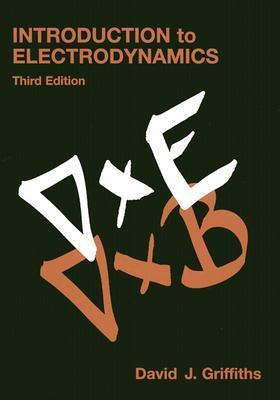
Introduction to Electrodynamics
This work offers accesible coverage of the fundamentals of electrodynamics, enhanced with with discussion points, examples and exercises.
576 pages, Hardcover
First published January 1, 1981
Ratings & Reviews
Friends & Following
Create a free account to discover what your friends think of this book!
Community Reviews
Displaying 1 - 30 of 220 reviews

September 1, 2008
This book is the paragon of fine textbook writing. Griffith discusses experiment, history, and theory alongside one another. Every great equation is preceded by a discussion of the physics behind it and when you do reach that beautiful equation, you understand every piece. Intuitive pictures and explanations accompany any abstract proof. Doing the exercises is like unwrapping a present; each leading the student to discover some new and interesting facet of the material most recently presented. There are frequent attempts to unify concepts and keep the big picture in mind. This is the kind of textbook that a self-motivated learner (read: student who doesn't go to lecture) dreams of.
I'm just starting his Quantum Mechanics book and long for the day after when I can crack open that Elementary Particles book.
Dr. David Griffiths, I salute you sir.
I'm just starting his Quantum Mechanics book and long for the day after when I can crack open that Elementary Particles book.
Dr. David Griffiths, I salute you sir.

May 30, 2022
some of the most educational exercises i've ever seen. a clear, concise, and complete writeup of classical emag. excellent.
April 21, 2012
Finished the second round of reading as part of my work as teaching assistant for a fourth-year electrodynamics course. I did not have much time to really grind through the details myself, but I finally managed to refresh and read to some extent the entire book this time.
Griffifths' text has one major strong point: its casual but detailed explanation on the physics at hand. This is extremely crucial for undergraduate level physics where many learners are either (1) not going to be physicists, or (2) less acquainted with the mathematical aspects of physics ("mostly physics" physicists). This book may not be enough for -advanced- electrodynamics (like Jackson's), but certainly more than enough for typical physicists who will not use advanced electrodynamics in their lives (like myself, who is on the quantum information side).
The footnotes that appear very often in the texts for subtleties and references are also greatly appreciated. The worked out examples are also very well-chosen, including the argument about why electrostatics and relativity necessarily implies magnetism (magnetostatics). I also learnt a great deal about electrodynamics in a medium, which this book did pretty well.
Overall, I think unless your work requires extensive electrodynamics, this book is probably the only you -ever- need to learn electrodynamics. You probably don't even need any lecture notes from anywhere else, except perhaps for the relativistic situations (where for some reason I find the chapter slightly less well-written than the other 11 chapter).
Griffifths' text has one major strong point: its casual but detailed explanation on the physics at hand. This is extremely crucial for undergraduate level physics where many learners are either (1) not going to be physicists, or (2) less acquainted with the mathematical aspects of physics ("mostly physics" physicists). This book may not be enough for -advanced- electrodynamics (like Jackson's), but certainly more than enough for typical physicists who will not use advanced electrodynamics in their lives (like myself, who is on the quantum information side).
The footnotes that appear very often in the texts for subtleties and references are also greatly appreciated. The worked out examples are also very well-chosen, including the argument about why electrostatics and relativity necessarily implies magnetism (magnetostatics). I also learnt a great deal about electrodynamics in a medium, which this book did pretty well.
Overall, I think unless your work requires extensive electrodynamics, this book is probably the only you -ever- need to learn electrodynamics. You probably don't even need any lecture notes from anywhere else, except perhaps for the relativistic situations (where for some reason I find the chapter slightly less well-written than the other 11 chapter).

May 25, 2007
Every book should be this book.
I am taking a class involving this book again, and have been reacquainted with how awesome it is. It is in fact almost unnecessary to take a class to learn the material if you have this book and enough motivation.
Some people are somewhat put off by the informal, conversational writing style, the way it forces you to work through problems rather than handing everything to you, and it's somewhat non-standard notation. I must say, if the writing style is more difficult for you to engage with than the average physics/math text, you are probably a robot. Of course, having worked with the author, I have the added bonus of hearing his voice saying the words in this book when I read it, which certainly adds something. As for notation, i-hat, j-hat and k-hat are dumb and add needless letter clutter. David's notation is better, except that the r-prime for location of charge and the r-prime for r variable under the integral sign can be confused when you're just quickly looking something up.
If I could change anything about this book, I'd put the solutions to the problems in the back. When so much material is left to the reader to work out for him/herself, it would be more confidence inspiring to have an easy way to check answers.
I am taking a class involving this book again, and have been reacquainted with how awesome it is. It is in fact almost unnecessary to take a class to learn the material if you have this book and enough motivation.
Some people are somewhat put off by the informal, conversational writing style, the way it forces you to work through problems rather than handing everything to you, and it's somewhat non-standard notation. I must say, if the writing style is more difficult for you to engage with than the average physics/math text, you are probably a robot. Of course, having worked with the author, I have the added bonus of hearing his voice saying the words in this book when I read it, which certainly adds something. As for notation, i-hat, j-hat and k-hat are dumb and add needless letter clutter. David's notation is better, except that the r-prime for location of charge and the r-prime for r variable under the integral sign can be confused when you're just quickly looking something up.
If I could change anything about this book, I'd put the solutions to the problems in the back. When so much material is left to the reader to work out for him/herself, it would be more confidence inspiring to have an easy way to check answers.

January 1, 2012
This book is an introduction on electricity and magnetism covering:
Electrostatics
Electric Fields
Magnetostatics
Magnetic Fields
Radiation
Relativistic Electrodynamics
The style of the book is very concise. In my opinion the majority of the examples are a bit abstract. Still the explanations are clear and the main points are indicated in such a way that you cannot miss them. For instance, in the story about Faraday’s law, the sentence
“A changing magnetic field induces an electric field.”
is printed in bold with a box around it and lots of whitespace. To be honest, I first tried winging it, only reading handouts and lecture notes. This was a big mistake. Having this book in my possession was a huge improvement.
Electrostatics
Electric Fields
Magnetostatics
Magnetic Fields
Radiation
Relativistic Electrodynamics
The style of the book is very concise. In my opinion the majority of the examples are a bit abstract. Still the explanations are clear and the main points are indicated in such a way that you cannot miss them. For instance, in the story about Faraday’s law, the sentence
“A changing magnetic field induces an electric field.”
is printed in bold with a box around it and lots of whitespace. To be honest, I first tried winging it, only reading handouts and lecture notes. This was a big mistake. Having this book in my possession was a huge improvement.

November 29, 2014
It was so good, I read it twice! (I also walked out of the exam with an A, yay me!)

January 21, 2017
The best introductory book about electromagnetism. For more advanced material you'll need Jackson, but Griffiths smooths the way tremendously.

March 19, 2024
Top tier book for surviving your undergraduate electromagnetism physics course. Griffiths is the 🐐! You want electricity between two potential lovers in a book? No one explains the electric potential between two metal balls the way Griffiths does. But maybe you want a thrilling story with violence and crime? Well Griffiths will tell you exactly how to violate the laws of electrodynamics!! It’s all there folks, the only book you’ll ever need.
Still giving it 4 stars because of the amount of fucking study this book put me through
Still giving it 4 stars because of the amount of fucking study this book put me through

June 18, 2024
Maar 1 keer geweend
July 6, 2025
Geweend en gelachen, 10/10

May 15, 2025
I’m counting this toward my reading challenge idgaf
May 8, 2026
Textbook so good it made me get over the trauma of two years of poorly-taught E&M. Textbook so good I read it the whole way through, and annotated it to hell and back, and worked through a lot of the examples, and had fun doing the homework problems. Textbook so good that I don't even want to return the copy I borrowed to my friend.

April 17, 2015
good book , I enjoyed my course with this book

August 26, 2023
Perhaps one of the few physics book that i would say: DO NOT SELL THIS

August 30, 2026
Honestly an excellent textbook, one of the only ones of my undergraduate career worth keeping, but unfortunately I loathe E&M even more than I loathe quantum. Logging this to get one book closer to my reading challenge doesn't even to begin to scab over the yawning chasm of pain and misery that has infested my soul ever since I took that godforsaken class. But every bit helps.
call this book a conducting shell the way it shielded me (+q) from having to experience how nasty E&M can get (charge configurations inside conducting sphere) while still communicating the net important information (+q). ahah. Ahahahahahaahaha
call this book a conducting shell the way it shielded me (+q) from having to experience how nasty E&M can get (charge configurations inside conducting sphere) while still communicating the net important information (+q). ahah. Ahahahahahaahaha

Read
April 27, 2026pain and suffering!

June 26, 2016
Seriously one of the best stories ever told.
Griffiths connects almost everything you learn in Freshman physics. The story starts with how have we learned simple electric and magnetic fields behave experimentally, and what are equations that model that? Coulomb's law, Biot-Savart law. Electric fields of stationary charges and magnetic fields of steady currents. Then chapter 7 is the climax. Maxwell's equations. E&M distilled to its essence.
My favorite is chapter 9. All the wave/optics equations that seem so arbitrary in Freshman physics? Guess what. You can derive them all from Maxwell's equations. So awesome.
Other highlights:
- Dipole moment potential derivation using only the definition of electric potential, geometry (law of cosines helps, but that's easy to derive), and binomial expansion approximation for square roots.
- Basically all of the derivations
Griffiths connects almost everything you learn in Freshman physics. The story starts with how have we learned simple electric and magnetic fields behave experimentally, and what are equations that model that? Coulomb's law, Biot-Savart law. Electric fields of stationary charges and magnetic fields of steady currents. Then chapter 7 is the climax. Maxwell's equations. E&M distilled to its essence.
My favorite is chapter 9. All the wave/optics equations that seem so arbitrary in Freshman physics? Guess what. You can derive them all from Maxwell's equations. So awesome.
Other highlights:
- Dipole moment potential derivation using only the definition of electric potential, geometry (law of cosines helps, but that's easy to derive), and binomial expansion approximation for square roots.
- Basically all of the derivations

May 31, 2017
نسبت به کتاب های الکترومغناطیس دیگر ، زبان روان تری دارد و بهتر توضیح داده است ، گرچه اشتباه هم در کتاب پیدا میشود
Read
March 5, 2021Oof
November 12, 2021
Meh, I prefer Sadiku's element of electromagnetismm over this book

June 22, 2022
Very helpful.

August 11, 2023
solid book, great intro
April 27, 2025
Riktig bladvändare!

June 19, 2025
griffiths is a madman /affectionate

July 2, 2026
The best textbook to study from, love it🔥👏

February 9, 2026
Утвърдено любимо четиво за зимния семестър.

September 15, 2026
Fuck you.

Read
December 5, 2024THE textbook of all time (read a mix of 4th and 5th ed)

January 30, 2024
অল্প কিছু অংশ পড়েছিলাম।পরীক্ষার জন্য। এতটুকুই বলতে চাই, পড়তে বসার পর কান্না করা ছাড়া আর কিছুই করার থাকবেনা। তবে সন্দেহ নেই যে ইলেক্ট্রোডাইনামিক্টাসের উপর এটা একটা ভাল বই।

November 29, 2024
This book made me cry. But it helped me go through electrodynamics. I read some chapters more than 3 times and everytime I read it, I understand it in a more profound way. As much as electrodynamics caused me a lot of pain, it is nonetheless a very intriguing subject and I enjoy its concepts very much.
Displaying 1 - 30 of 220 reviews