This is FRANK HERBERT's never-before published dystopian novel, written between his classics The Dragon in the Sea and Dune. EMASI! Each Man A Separate Individual! That is the rallying cry of the Seps engaged in a class war against the upper tiers of a society driven entirely by opinion polls. Those who score high, the High-Opps, are given plush apartments, comfortable jobs, every possible convenience. But those who happen to be low-opped, live crowded in Warrens, facing harsh lives and brutal conditions. Daniel Movius, Ex-Senior Liaitor, rides high in the opinion polls until he loses everything, brushed aside by a very powerful man. Low-opped and abandoned, Movius finds himself fighting for survival in the city's underworld. There, the opinion of the masses is clear: It is time for a revolution against the corrupt super-privileged. And every revolution needs a leader.
Franklin Patrick Herbert Jr. was an American science fiction author best known for the 1965 novel Dune and its five sequels. Though he became famous for his novels, he also wrote short stories and worked as a newspaper journalist, photographer, book reviewer, ecological consultant, and lecturer.
The Dune saga, set in the distant future, and taking place over millennia, explores complex themes, such as the long-term survival of the human species, human evolution, planetary science and ecology, and the intersection of religion, politics, economics and power in a future where humanity has long since developed interstellar travel and settled many thousands of worlds. Dune is the best-selling science fiction novel of all time, and the entire series is considered to be among the classics of the genre.
Written sometime between his first book in the late 50s and his masterpiece Dune in 1966, this early dystopian novel was not published until 2012, 30 years after his death.
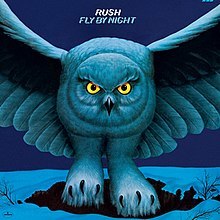
I liken this book to Rush’s 1975 second album Fly By Night, clearly the work of a young artist, still feeling out his phenomenal powers, but also youthful, energetic and fun.
In language reminiscent of Herbert’s 1977 novel The Dosadi Experiment, as well as nuanced homages to several SF masters like Poul Anderson and Isaac Asimov, the author describes a future where society is stratified in an hierarchical system based upon opinion poll voting: the higher levels “High Opps” are in positions of power and privilege and the lower vote getters, the “Low Opps” are consigned to the LP, the Labor Pool, and are indicative of the proles in Orwell’s great dystopian work.
While this is certainly inspired by 1984, Herbert flexes his skill as a writer by weaving in elements of sociology and psychology, as well as his uncanny ability at minute detail that fans of the Dune series will recognize.
It is surprising and fantastic when a dystopian novel written decades ago seems to be in tune with what is currently happening in the world, be it the voyeuristic and controlling government in “1984”, or the entertainment-drugged masses, bred to their social status in “Brave New World”. “High-Opp” offers this kind of precognitive insight, a hint of “Future Shock”-esque vision from Mr. Herbert.
As with the typical format for a dystopian novel, the story begins with an attempt at a utopia gone wrong. What was originally intended to be the ultimate of democratic processes where everyone has equal access to resources so that no one is left wanting and no voice is ignored, has become corrupted. The survey voting system that was supposed to allow everyone an equal say in government has been secretly usurped and is being manipulated by a handful of now high ranking officials or “High-Opps”, the majority of which are now in their current position because of the family they were born into, just like royalty. There are exceptions, like one official who was clever, ambitious and resourceful enough to rise from the bottom ranks to the top, Daniel Movius, and the story begins with his downfall, once an abuser of the corrupt system, and now a victim of it.
Not surprising, feeling slighted and vengeful, he is willing to join the resistance, the “Seps “ and the book follows his struggles from there: his alliances, his manoeuvring and his attempts to use the way the system works to counter his antagonists.
I really enjoyed this book, with a great deal of detail woven into the narrative, delightfully flawed characters – the protagonist is not always all that likable, enhancing the sense of realism in the book – and plenty of action and intrigue surrounding the politics and the posturing. If I had only one complaint, it was that I found the very ending of the book a little unrealistic and over-the-top. Other than that, the story was an entertaining and enlightening read.
I’d like to give this a 4.5, but with the limitations of a 5 star rating system, I’d have to say I’m more inclined to give it a 5 than a 4. I’d recommend it to anyone who would appreciate a stimulating dystopian tale that mirrors many current-day events.
If I had not known that this was written the better part of half a century ago before I started, I would have assumed it to be relatively contemporary. The language use flows naturally, suggesting that Herbert was writing beyond his era and perhaps explaining why he couldnt get it published at the time. This is the first Herbert work I have ever read... and I'd bought Dune before I had even finished. It certainly won't be my last.
This is novel that is both thought provoking and just darn fun to read. Set in a dystopia where the world is run by 'public opinion' via polls sent to supposedly random groups of the population, even so many years on it is hard not to feel the echoes. With a system that is rigged to keep the politicians on top, the rich richer and the poor yet more poor, it is at once a world ripe for rebellion and yet permitted by the apathy of the masses. More uncomfortable harmonies ring...
I was genuinely gripped by this novel. The world rang true, the characters rang true... and the narrative hooked me. At the same time as I could see the resistance building, I could feel the confusion of conspiracies. I did think it finished rather quickly, given the build up but all the loose ends were tied at least. The rest is up to your imagination. The ending was also somewhat over the top for the scenario... very sudden, very flashy and rather unlikely to say the least! That said, this did not impact on my enjoyment of the novel.
I found this in box in my back room. I could finish there. Ok! That’s unfair! For some reason this reminds me of The Bridge by Ian Banks. There is no way to explain why my brain shelved them together. They have less than a few things in common. Dirty underground life perhaps. For those fallen from grace. Banks’ character was having an existential episode, while Herbert’s was existing and navigating a laid-out series of events.
I couldn’t really understand the characters’ motivations other than they did things to make a story, to be put in words and printed on pages, then bound into a book. It was alright. I know he could’ve been more fascinating.
I don't know if this was written before Dune but I hear resonances of it in this work. Great book. 1984 meets Dune would be a very, very good representation of this story.
I gave this an average rating because it's obviously not Herbert's best work and I'm dubious of it origin. I enjoyed it, but other fans of Frank Herbert may not.
This was a previously unpublished novel. Probably what Stephen King would call a "trunk book". Something set aside for later rework or abandoned all together. I have to wonder about the state of the story when it was found, because the author line on the cover says "High-Opp was created by Frank Herbert". I'm curious how much of this story is Frank and what portion is Brian and/or Kevin J. Anderson
The plot is fairly simple and direct, but shows the seeds of Herbert's reoccurring themes. The book is all political maneuvering and conflict, without the Science Fiction setting that make Dune and his other novels so fantastic. In the conclusion of the story, the main character gives instructions that could have easily been spoken by the God Emperor Leto II.
Not present are the in-depth character studies and the detailed descriptions of the environments. Instead the novel reads much more like 1984. This is appropriate given the story's dystopian nature. However, you get a much better understanding of Winston Smith than we ever do of Daniel Movius, the main character in High-Opp.
I found the story interesting and enjoyable. Your mileage may vary.
By 'never before published' what I think they mean is 'half finished manuscript that Frank Herbert started working on very early in his career and then gave up on and buried in a drawer somewhere because he figured it just wasn't good enough, until his son came along and published every scrap of paper of his father's stuff he could find'.
Which is to say, it's okay, but... a curio really.
Better than those new travesties of Dune novels I suppose.
This starts as a thoughtfully disturbing, inventively oppressive novel, a chillingly Orwellian vision based upon the truly terrifying premise that democracy has been automated, and law-making ‘devolved’ to mechanised opinion polls. It is interesting to note that the novel was published posthumously in 2012, the author of the legendary Dune having died 26 years earlier, in 1986. The opening builds on the dystopian premise, and I was optimistic for the remainder of the novel as the wheels of revolution began to grind inexorably forward. However, for me, things began to come off the rails in the middle.
It’s a good story, but it has an aging, outmoded sensibility that grates in 2022, and should have grated in 2012 when it was published. But, there were three aspects in particular that I struggled significantly to deal with:
(a) A lot of side character names flash around in places and frequently I found they were not developed/engaging enough to remember who they were, not aided by the fact that most of the names are Anglophile, which tends to beg questions about what kind of setting this is;
(b) The protagonist, Daniel Movious, is ridiculously emotionally obtuse. I’m all in favour of the position that one cannot see the wood for the trees sometimes, but I thought there were places where that interpretation became implausible as an explanation for some of his internal monologue in response to the female lead;
(c) By far the most heinous issue for me however is the treatment of the two main female characters in this story. Some quotes to illustrate:
“You’ve got good taste, Movious. She’s no raving beauty, but she has good looks and personality, the kind that wear well as a wife.” I know it’s a character statement, but it’s not called out by the protagonist. This is appallingly dismissive, the sort of description one might apply to a washing machine. Deplorable.
“A wife should take an interest in what’s happening to her husband.” The same secondary character: again, no defence from the protagonist husband to this demeaning statement. Still, it could be put down to character attitude.
“Why did she have to go all female on him at a time like this?” From the protagonist this time. I know these are unlikely to be the conscious thoughts of the author, but they are, demonstrably, the thoughts of the main character. Why would I root for someone like this? Lines like this overshadow the character’s aims and motivation, which in any case are rather vague.
Staggeringly, even the main female character herself supports the misogynistic tone that runs through the story. She questions Movious’ actions at one point, and then admonishes HERSELF, saying “I’m just being female.” It’s extraordinary, and—for me—it is distasteful. But, it is not the worst incident in the story, by a long way.
Sexual assault as revenge?!?! But it’s so casual: absolutely hideous. And Movious regards the female character as the aggressor. The regret comes late and feels weak. And then… then the capping insult, the final slap to the face; she says “I asked for it.” I ASKED for it?! Seriously? I tried to rationalise this. This was a mechanism to illustrate Movious’ descent into becoming what he hated in the first place. But even if that was the intention, it cannot justify this execrable line in which a female character excuses the protagonist for abusing her.
In 2012, a publisher, an editor, a marketing exec thought this was acceptable? Unbelievable.
There is a catalogue of, at the very best, regrettable, at worst reprehensible attitudes to female characters from most of the male characters in this story; from casual chauvinism to actual, physical abuse. I feel it’s extremely important to restate that Frank Herbert did not publish this book, this was done after his death. But I think it would be better that it had been left unpublished because, certainly for me, it has tarnished the memory of a great writer.
The ultimate insult, however, is reserved for the end. Because, in the end, both female characters crave to be with Movious, the one who belittled herself before him, and the one he abused physically. Deeply troubling.
Engaging & suspenseful, a hero to root for. Plot develops briskly, reader wants to see revenge for main guy, it’s a novel of revolution. If it were all fleshed out more then 4 stars. Not a great one though, some wooden characters centering around set ups and double agents, and a little dated, but worthwhile stand alone / short read.
I can understand why Herbert didn't publish this. Even considering the date it was written and therefore forgiving the way women are portrayed, it's still pretty bad. The beginning is good and the conclusion is good, but the middle is not.
I quite enjoyed this novella by Frank Herbert. It was a story of rebellion in a highly stratified future society, with a dollop of Foundation and a dash of The Moon is a Harsh Mistress thrown in. It is a quick read and I wouldn't say there are too many surprises in it, but I really loved the ending - thoughtful and well done.
I am finding that Mr. Herbert is one of those authors that I truly enjoy reading anything by. On to the next unpublished novel by him (got a 4 pack from Amazon on sale - what a steal). Pick this one up off the shelf for some light sci-fi reading.
Early unpublished work and, to be honest, you can see why.
It was not really that well executed, the characters were not believable or fleshed out and the story went too quickly / was too shallow. I never felt like this was a real world. It felt like some ideas that had not quite been thought through enough. An early draft of a much larger and more nuanced tale to be told.
None the less there were some interesting ideas. The fact that this utopia had been corrupted by power was believable bit the conspiracies within conspiracies became tiresome.
Another way of looking at this was that it was a short story stretched too far. The very end of the book was effectively a short story ending with a smart alec comment. That was a little unworthy as well.
I like Frank Herbert books. He has written some astounding work of speculative fiction. This just isn't one of them.
This is one of Herbert's shorter books, only about 6hrs in audiobook. Like many of Herbert's novels, this book is social and political commentary in novel form. In particular, this novel focuses on how governments manipulate a voting populace through carefully worded ballot measures. The subjects covered in this novel are things that every voter should be aware of and carefully considering while voting for or against new laws.
Read for 2018 read harder challenge. I found this novel tedious and long, but this really isn't a long novel. Felt no connection with any of the characters and found the female characters pathetically wooden and one dimensional.
It’s a shame someone stumbled upon this half-written book and decided to publish it. How can this have been written by the author if the masterpiece, Dune? Awful.
Ce roman d'anticipation, publié pour la première fois en 2012, daterait du milieu des années 50. C'est une dystopie politique, dans laquelle on retrouve une société divisée en deux classes sociales : les high-opps, citoyens privilégiés travaillant pour le gouvernement, habitant les grands appartements dans les hautes tours de la ville et les low-opps de la classe ouvrière, habitant les Terriers, « immenses tapis crasseux et enfumés » d'appartements minuscules des quartiers éloignés du centre. Le gouvernement est mondial et centralisé et un coordinateur suprême a autorité sur des bureaux, équivalents de ministères (Bur-Opp, le Bureau des Opinions, Bur-Cont, Bur-Psy, Bur-Trans et autres .....) qui bien sûr se livrent à d'incessantes luttes d'influence, d'où la fonction du Liaitor, chargé d' assurer l'entente entre eux.
Le gouvernement tire sa légitimité de l'opinion publique qui s'exprime quotidiennement par sondages. Daniel Movius, en charge du Liator va en faire les frais : « Pour des raison d'économies fiscales, seriez-vous en faveur de l'élimination du département surnuméraire du Liaitor ? » Et parce qu'il y a eu 79 % de Oui, «La fonction gouvernementale de Liaitor est déclarée abolie . Puisse la Majorité toujours diriger », et Daniel Movius perd son travail et est « low-oppé ». Mais le Bur-Psy et les Seps ( les Séparatistes) s'intéressent à lui, et il devient le leader de la révolution qui couve.
Ce qui est décrit ici est un système politique en apparence parfaitement démocratique, mais où la population est manipulée par des sondages soigneusement orientés (on connaît l'importance de la formulation des questions dans lesdits sondages ! ) le roman est aussi une charge contre l'hyper bureaucratisation et les privilèges et inégalités qu'elle suscite et met en scène un « héros » qui agit d'abord par vengeance personnelle mais qui devient, un peu malgré lui, un leader révolutionnaire.
J'avoue avoir eu du mal au début avec toutes les abréviations, les différents bureaux et leurs chefs et les luttes intestines entre ces bureaux.... Passé cet obstacle, on a envie de savoir comment toute cette histoire va se terminer et on ne peut pas s'empêcher de lui trouver une certaine modernité.... « Pour des raisons d'économies fiscales, seriez-vous prêts à.... / en faveur de .... » A vous de compléter ! Et bien sûr « Puisse la Majorité toujours diriger » !
Reading this was a like riding a roller coaster that inexplicably grinds to a halt and then falls off the rails. In the opening, I was genuinely interested in the worldbuilding, conceits, and quality of the writing. There was a tone that felt rather Orwellian, but once the actual plot gets going in the second act it becomes a bogged down and boring mess, before a ludicrous eyebrow waggling, fart sniffing conclusion.
This is an older, unpublished book released posthumously, so that has to be somewhat taken into account, but the politics, assumptions, and handling/ treatment of women range from ridiculous to disgusting and abhorrent. The women are one dimensional 'Madonna' and 'Whore' archetypes and the men are hardly characters either.
In many different ways I'm offended by this book, but the treatment of women, farsical and unopposed abhorrent views taken as fact, and a meandering and boring 'great man' 'beneficent' authoritarian revolution are at the top of my list, along with making me think this really might be something.
The performance is actually brilliant and perfectly in line with the tone, which I don't think I would have finished this without.
I'm learning the hard way that the Audible Included library is not the way to first encounter famous writers. I am still interested in reading Dune, though, knowing some of the conversation around its actual intent and message, the politics of this book will certainly be in my mind.
Here are five main takeaways from Frank Herbert's High-Opp, based on its themes, narrative, and the broader context of Herbert's work:
1. The Power and Peril of Public Opinion: High-Opp portrays a dystopian society governed entirely by opinion polls, where social status—High-Opps versus Low-Opps—is determined by how individuals score. This highlights Herbert's critique of systems where popularity or superficial metrics dictate power, reflecting his recurring interest in how societies can be manipulated or destabilized by collective perception, much like the political machinations in Dune.
2. Class Struggle and Revolution: The novel centers on a class war between the privileged High-Opps and the oppressed Low-Opps, with the Seps rallying under the cry "Each Man a Separate Individual!" The story of Daniel Movius, who falls from grace and rises as a revolutionary leader, underscores the inevitability of rebellion against corrupt, hierarchical systems—a theme Herbert explores deeply in his later works like The Dosadi Experiment.
3. The Fallibility of Leadership and Systems: Movius’s journey from a high-ranking official to an outcast illustrates how quickly fortunes can shift in a flawed system. Herbert examines the cyclical nature of governments and societies, suggesting they are destined to fail due to internal corruption or external pressures, a concept that echoes the rise and fall of empires in Dune.
4. Individual Agency in a Controlled Society: Despite the rigid structure of the poll-driven world, Movius’s ability to adapt and lead a revolution emphasizes the potential for individual action to challenge oppressive systems. This aligns with Herbert’s recurring focus on charismatic leaders and their dual role as both liberators and potential tyrants, a dynamic seen with Paul Atreides in Dune.
5. Seeds of Herbert’s Later Themes: Written between The Dragon in the Sea and Dune, High-Opp serves as an early sketch of ideas Herbert would refine later—bureaucratic overreach (akin to the Bureau of Sabotage in The Dosadi Experiment), the dangers of centralized power, and the tension between individualism and collective control. While less polished, it reveals the philosophical groundwork for his more famous works.
These takeaways reflect High-Opp’s role as both a standalone dystopian tale and a precursor to Herbert’s more intricate explorations of power, society, and human nature.
4.25* You can definitely tell that this was one of Frank Herbert's earlier works, but his prose and ideas remain at the forefront, even then. This story is based on a dystopian future Earth, where an ongoing series of opinion polls set the boundaries of a sort of caste system: the high scored High-Opps are rewarded with luxury and privilege, while the low-opp people struggle to survive and make an honest living in the overcrowded Labor Pool. Senior Liaitor Daniel Movius is flabbergasted when he falls from the upper ranks to the lowest depths of society, due to an insider conspiracy and he faces the brutal conditions of the underworld where he finds a budding revolution in dire need of a leader. Thats really all I can say without spoiling too much, but just know that the characters are very strong and even though the novel is closer in length to a novella, they are also extremely realized. Clearly at least somewhat influenced by 1984, he manages to add his own creative flair while deep diving into the politics and the different and sometimes extreme philosophical views. The only flaw is that its a bit too short, but the ending is still satisfying as heck All in all, Frank Herbert is quickly vaulting my list of favorite authors and I cant wait to start up another of his works!
( Format : Audiobook ) "Majority opinion rules." From the opening sequences, the reader is drawn into the bleak dystopian world of Daniel Movius as he looks out on his coming fall from one of the haves to that of used-to-be, from the quietude of luxury, to noisy, jostling squalor. And his crime? A popular vote had eliminated his government office for 'tax economy purposes'. But how had his driver known the results of the poll at least an hour before the results could have been called?
This is a fun romp through political manoeuvrings, with the same bleak prescience as Brave New World of 1984. Although there is little attempt to flesh out the characters, dialogue and action carry the story forward at a brisk pace to the elevated ending. Narration is by Scott Brick whose reading is immaculate, further adding to the sense of bleak inevitability of all that occurs..
Over an half mercury since it was written and lacking the later immersive polish of Dune, High-Opp is still a good read. My thanks to the Audible Plus programme for the complimentary download.
This is a good example of where I wish the rating system was more flexible and gave you the opportunity to award half stars. This is actually my first ever Frank Herbert novel, and the only reason I paid it any attention was because it positioned itself rather nicely on my Audible homepage as a free listen.
For saying this was, by all accounts one of his very first novels, albeit one never published in his lifetime and one from which Herbert borrowed ideas from later in his career, I found it to be a classic, enjoyable pulpy science fiction ride, one that borrowed its key ideas unashamedly from other works such as 1984 to craft a more than serviceable dystopian outing. It isn't anything amazing as far as ideas, characters or even dialogue goes, and some hackneyed political views shine through at parts (which I suppose is sort of unavoidable given the main themes), but I still found myself sucked into the story and routing for Movious throughout.
A very solid 6.75, rounded down because it just isn't a 4 star worthy story in my view
Frank Herbert wrote High Opp before Dune was published in 1965. It wasn’t published until 2012, then 26 years after Frank Herbert’s death. It was published by Wordfire Press owned by Kevin J Anderson, co-author along with Brian Herbert (Frank Herbert’s son) of a myriad of “Dune” novels.
High Opp is a dystopian novel, a tale of a world society consisting of the the haves and the have nots. The haves or High Opps control everything and live in luxury, as compared to the have nots or LPs (Lobor Pool) which do as they are told living meager lives.
Dan Movius was a lower level High Opp that was low opted as part of a power struggle. But Movius was not taking the demotion sitting down. The result a revolution with Movius as the leader.
While I liked the concept of High Opp it was difficult and confusing to read. The writing was representative of a writer on the cusp of greatness but not yet there. Dune would change all of that. If Herbert had written High Opp after a few Dune novels had been published I’m sure it would have been a better tale more enjoyable to read.
This entire review has been hidden because of spoilers.
An interesting short story set on a dystopian world where democracy (and its manipulation) have reached dysfunctional extremes. Political intrigue with plans-within-plans like only Herbert can plot, perhaps constrained somewhat by the length of the feature. The lead character starts single-mindedly focused on revenge, but turns its considerable skill and talent to humanity's advantage as he takes over a revolutionary cause. Interesting psychology-as-strategy moments, and parties fixated on long term planning foreshadowing the Bene Gesserit's thinking.
If you are a Frank Herbert fan, this is well worth the read and much more enjoyable than the new books in his universe written by others. If you are new to his works, this is not the place to start — interesting as it may be, I feel this work was not published before because it was not finished. The story is crisp, but it feels like some parts of its development were left to a future revision.
I must say that this book was a really pleasant surprise for me. Although, the writing is somewhat more difficult than Frank Herbert's later books and is not dissimilar to the writing style used in Dragon in the Sea, the story is quite catching and paces smoothly. The main character is a combination of secret agent/saboteur (i. e. James Bond or Jorj. X Mckie type from Tactful Saboteur/Dosadi Experiment) and guerilla/freedom fighter reminding me of Paul Atreides from the Dune or C'tair Pilru from the Dune preludes. But sometimes, the main protagonist seems to be too much of a superhero. The book also have a Orwell's 1984 feel.
Overall, I quite enjoyed the reading and this book made me to dive Frank Herbert's older works I haven't read yet.