In this witty, engaging, and challenging book, Carolyn Steedman has produced an original and sometimes irreverent investigation into how modern historiography has developed. Dust: The Archive and Cultural History considers our stubborn set of beliefs about an objective material world inherited from the nineteenth century with which modern history writing and its lack of such a belief, attempts to grapple. Drawing on her own published and unpublished writing, Carolyn Steedman has produced a sustained argument about the way in which history writing belongs to the currents of thought shaping the modern world.
Steedman begins by asserting that in recent years much attention has been paid to the archive by those working in the humanities and social sciences; she calls this practice "archivization." By definition, the archive is the repository of "that which will not go away," and the book goes on to suggest that, just like dust, the "matter of history" can never go away or be erased.
This unique work will be welcomed by all historians who want to think about what it is they do.
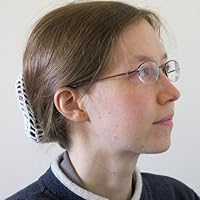
Carolyn Kay Steedman, FBA (born 20 March 1947) is a British historian, specialising in the social and cultural history of modern Britain and exploring labour, gender, class, language and childhood. Since 2013, she has been Emeritus Professor of History at University of Warwick, where she had previously been a Professor of History since 1999.
Steedman graduated from the University of Sussex with an undergraduate degree in English and American Studies in 1968, and then completed a master's degree at Newnham College, Cambridge, in 1974. She was a teacher from then until 1982, when she joined the Institute of Education in the University of London as a researcher; for the 1983–84 year, she was a Fellow there, before lecturing at the University of Warwick, where she was appointed Senior Lecturer in 1988, Reader in 1991 and Professor of Social History in 1995. For the year 1998–99, she was Director of Warwick's Centre for Study of Social History. Steedman returned to Newnham College to complete her doctorate, which was awarded in 1989.
In 2011, Steedman was elected a Fellow of the British Academy (FBA), the United Kingdom's national academy for the humanities and social sciences.
Read for my thesis. A fascinating and insightful read on the archive. I didn't care too much for the first two essays, but I thought ch.4 & ch.6 were the best of the bunch. Some really gorgeous passages in there. I'm not sure how much of it I'll be able to use for my thesis, but it gave me a lot of food for thought. I'm adding it to my favourites because a lot of it was beautiful and profound.
This was disappointing. The best chapter was about dust in various trades. But once again I am disappointed by Carolyn Steedman’s overall inattention to the ways in which English working class history is constituted by colonialism.
People have been recommending this to me forever and it's likewise taken forever to get through it. Actually I quit 50 pages in yet it took me a year and a half to go that far. It's rambling and unstructured, making it extremely hard to follow or focus on or maintain any interest in. Others have commented that the theory turned them off, but I wish there had been more: it was the concrete examples that felt random and uncontextualized to me. I enjoyed reading the analysis of Derrida's Archive Fever, probably because my and Steedman's conclusions are the same. Beyond that gratifying point I didn't see any need to slog through this book more than I already have. There's much more archival and historical theory out there, and I daresay most of it's better.
i expected a lot more of this book to be on archiving, and i did not vibe with the parts on archives that i did get. this book definitely perpetuates the stereotype of the “dusty archive” and the rest of the book did not make up for it. if anything, the lack of a coherent structure turned me off even more.
"The first sign then, is an excessive attention to the bed, an irresistible anxiety about the hundreds who have slept there before you, leaving their dust and debris in the fibres of the blankets..." p. 17
"This is what we do, or what we believe we do: we make the dead speak, we rescue the handloom-weavers of Tipton and Freshitt from the enormous indifference of the present. We have always, then, written in the mode of magical realism." p. 150
Very incoherent, filled with unorganized chapters that go on even more unorganized tangents. So unorganized, that I’m not even sure what the main point of this book is? I was convinced it was primarily historiographical/theoretical with some random ramblings about actual dust- but other reviews are talking about labor history?!?
Rich, brilliant, erudite, and incredibly useful work. Steedman’s cultural history of dust traces the development of the concept of the archive via the residue of dust, which materially contains the acts and beliefs of the past.
Steedman made very interesting literary choices to engage with the theories surrounding archives, primary sources, and history-writing, but I am still incredibly lost with her close attention to dust and what her goal was with that.
This is a fabulously thought-provoking little collection of essays. Ideal if you're like me and cannot help but endlessly ponder history, the past, and old things.
I picked this up because it promised to have a sense of humour. I think that the author certainly thinks that the book possesses a sense of humour. But reader, it does not.
Fun, readable cultural theory. I started reading this in a graduate level film studies course and finished on my own time. What keeps me from giving the book a 5-star rating is that there are a few sections about, say, the history of paper (was it?) that are a little dry. But even those parts, if you enter with the proper mind-set (I'm going to learn a little something new today!), can be interesting. However, the highlights are more theoretical and discuss the archive and study of history in a fresh and engaging way.
Assigned this for a class I'm teaching on media historiography. I'm teaching it tomorrow, and expecting a revolt from this group - those who've read it, anyway. I found this brilliant at times, and frustrating at others. Not directly about archives in the way I expected.
I read this while studying Research and Archives at university. Really loved the prose and its poetic tone. Found some interesting points within, and really enjoyed critically engaging with Steedman's ideas in my work. Would recommend.
This book focuses on the theoretical, and was hard to follow at times. The chapters I found most interesting were the ones that dealt with something concrete, such as the effects of actual dust, or a discussion of George Eliot's _Middlemarch_.