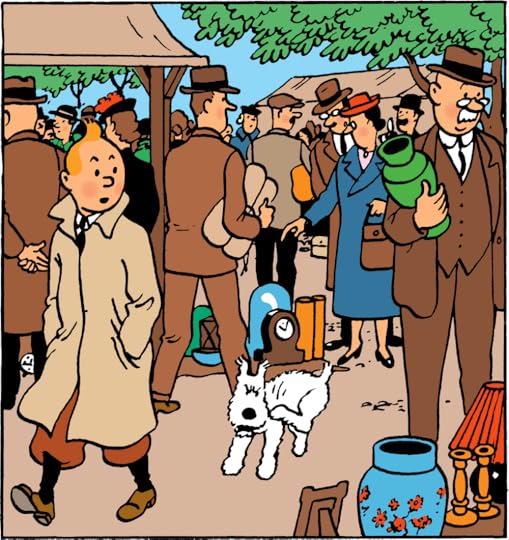
Tintin achète un modèle réduit de bateau pour le capitaine Haddock au Vieux Marché. Par coïncidence, c'est le modèle de celui que commandait son ancêtre, le chevalier de Hadoque, sous le règne de Louis XIV.
Tintin découvre par hasard dans le grand mât du bateau un parchemin incompréhensible en faisant tomber le bateau. Entre temps, Haddock a découvert un coffre contenant les objets ayant appartenu à son ancêtre, et en particulier des manuscrits...
Grâce à ces manuscrits, Tintin et lui apprennent l'existence d'un trésor et décident de se lancer à sa recherche. Le modèle est volé et Tintin apprend que deux autres répliques du navire existent, et que pour retrouver le trésor, il faut réunir les trois répliques…
Georges Prosper Remi (22 May 1907 – 3 March 1983), better known by the pen name Hergé, was a Belgian comics writer and artist. His best known and most substantial work is The Adventures of Tintin comic book series, which he wrote and illustrated from 1929 until his death in 1983, leaving the twenty-fourth Tintin adventure Tintin and Alph-Art unfinished. His work remains a strong influence on comics, particularly in Europe.
"Hergé" is the pseudonym of George Remí, making a game with the initials of his name inverted. Throughout the evolution of his star character, Tintin, we can see the progress of this author: from the first titles marked by the ultraconservative doctrine of the director of the newspaper Le Petit Vingtième, to the breaking of conventions embodied from The Blue Lotus , as well as the evolution of the society of his time. The research carried out by Hergé to historically contextualize his Adventures, as well as his implicit social criticism, have made Tintin a masterpiece of the 20th century.
I admit that this episode is one of my favorite Tintin albums. It combines everything I love: a pirate story, an unexpected find at a flea market, and the History with a capital "H" of Captain Haddock and his ancestors—in short, a story full of twists, turns, and suspense! Here, we discover the captain's roots, and the reader finds him as the heir to a long and noble lineage. This album is full of mystery, thanks to coded messages hidden inside the masts of each reproduction of the famous ship "The Unicorn"—a truly ingenious achievement by the author! In short, I love it!
বেলজীয় কার্টুনিস্ট হার্জের দুঃসাহসী টিনটিন সিরিজের এগারোতম কমিক বই। কমিকসের মূল চরিত্র টিনটিন, কুট্টুস আর ক্যাপ্টেন হ্যাডক ও তার এক পূর্বপুরুষ স্যার ফ্রান্সিস হ্যাডকের রেখে যাওয়ার ধাঁধা নিয়েই কাহিনী আবর্তিত হয়। ধাঁধার সমাধান করে লাল বোম্বেটের গুপ্তধন পেতে তাদের প্রয়োজন ইউনিকর্ন জাহাজের তিনটি মডেল। কিন্তু সেগুলো পাওয়ার জন্য অপরাধীরাও মরিয়া হয়ে ওঠে আর এজন্য তারা কাউকে খুন করতেও দ্বিধা করে না।
ব্রুসেলসের পুরনো বাজারে ঘুরতে গিয়ে টিনটিন একটা জাহাজের মডেল কেনে বন্ধু ক্যাপ্টেন হ্যাডকের জন্যে। কিন্তু তখনই জাহাজের মডেল সংগ্রাহক ইভান ইভানোভিচ স্যাখারিন আর অ্যাণ্টিক-সন্ধানী বার্নাবি এসে সেটা কিনতে চায়। তারা বহুগুণ দাম সাধাসাধি করলেও টিনটিন কারো কাছেই সেটা বিক্রি করেনি। বাজারে পুলিশের দুই গোয়েন্দা জনসন ও রনসনকেও দেখা যায়; তারা পকেটমার ধরতে বেরিয়েছে। টিনটিন জাহাজের মডেলটা বাসায় এনে রাখার কিছু পরেই কুট্টুসের ধাক্কায় এটার বড় মাস্তুল ভেঙে যায়। মেরামত করে ক্যাপ্টেন হ্যাডককে দেখানোর পর জানা যায়, এটা ‘ইউনিকর্ন’ জাহাজের মডেল, ক্যাপ্টেনের এক পূর্বপুরুষ ছিলেন যার কমান্ডার।টিনটিন যখন বাড়ির বাইরে, জাহাজের মডেলটা চুরি হয়ে যায়। সেটার খোঁজে টিনটিন স্যাখারিনের বাড়িতে গিয়ে দেখে, তার কাছেও ইউনিকর্নের হুবহু একইরকম আরেকটি মডেল আছে। বাসায় ফিরে টিনটিন খুঁজে পায় গোল করে পাকানো একটুকরো কাগজ যা হয়তো মডেল জাহাজের ভাঙা মাস্তুলের ভেতর ছিল। কাগজে লেখা দুর্বোধ্য একটা ধাঁধা: "তিন ভাই... তিন জাহাজ... দুপুর বেলায় যাত্রা... সূর্য পথ বাতলায়... আলো থেকেই আসে আলো... তাতেই আঁধার কাটে"।
هرژه برای طراحی کشتی تکشاخ توی این جلد از تخیل خودش استفاده نکرد بلکه دست به تحقیق زد. اون به موزه دریانوردی بروکسل رفت و نقشههای کشتی فرانسوی قرن هفدهم، «سَنلوئی»، رو مو به مو بررسی کرد. نتیجه این شد که ماکت «تکشاخ» تصویر مستندی از یک کشتی واقعی شد. قشنگی این ایده اینجاست که درست همون لحظهای که تنتن توی بازار عتیقهفروشها اون ماکت زیبا و خاص رو میخرد، داره بما هم یک شی تاریخی واقعی رو نشون میده، یعنی هم ما و هم تنتن همزمان داریم به یک ماکت واقعی نگاه میکنیم و شگفت زده میشیم. یک چیز جذاب دیگه توی این جلد برای من اینه که دیدم هادوک عجب پیشینه عجیب بزرگ باورنکردنی ای داره، اگه من جاش بودم همه جا با اون اجداد خفنم فلکس میکردم :)
A friend gave my kid a bunch of Tintin books, so we've been reading through them together, problems and all.
There's some fun adventure in this one. I actually didn't realize how old some of these books are! For its age, mostly it holds up quite well and is interesting throughout, in part because this is thankfully one of the less racist ones (I see from the back of the book that uh, yikes, quite a few have that bad old school "what Europeans think about native peoples" problem going on). We still had a few discussions about old books and old representations. But I think all that went well, and we had fun overall. The story continues with a search for treasure. My kid was patient enough to sit through this whole book, so we'll see where things go from here.
به عنوان کسی که از بچگی شغل ایدهآلش دزد دریایی شدن بود، عاشق این جلدم. یک ساعت قبل از جلسهی دفاع از پروپوزالم شروعش کردم و این خیلی بامزه بود که در عین حالی که به آرزوهای کودک درونم خیانت کردم و دزد دریایی نشدم، الان دقیقا توی سنی بازخوانیش کردم که Chemist محسوب میشم😂
One of my all time favourite Tintin adventures. I do see this and the following volume (Red Rackham’s Treasure) as a single adventure, but I am perfectly capable of telling you which of the two books is my favourite. It’s The Secret of the Unicorn. In fact, this was the first time that Hergé had split one of the adventures into two parts deliberately. Sure, you could point to Cigars of the Pharaoh and The Blue Lotus, but those were linked and yet completely self-sufficient stories. Here, The Secret of the Unicorn is a clear set up for Red Rackham’s Treasure, leaving on a bit of a cliffhanger, but oh my lord.
About this format, Michael Farr mentions “Hergé was, however, such a consummate craftsman that each part can be–and very often is–read separately with the greatest enjoyment. The double adventure was such a successful formula that he repeated it in the next four books.” He also mentions something else that warms my heart: “For long Hergé considered The Secret of the Unicorn to be his best story; Red Rackham’s Treasure has, meanwhile, sold more copies than any other single adventure.”
So what makes this so special? Everything, starting with the first panel, a news piece that is alerting the readers to the presence of a pickpocket around town. Just this alone plays out throughout the entire adventure, with wallets going missing left and right.
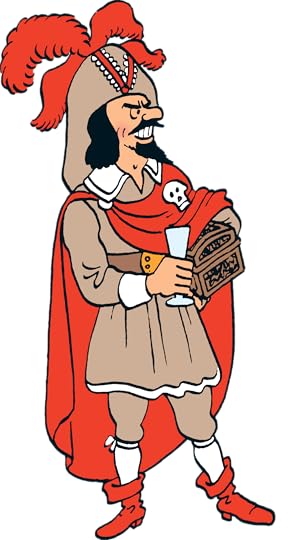
I love the model ship at the Old Street Market, the sheer stupidity of the Thom(p)sons, the story of the meeting between Sir Francis Haddock and Red Rackham, and the introduction of Marlinspike Hall (Moulinsart in the original French).
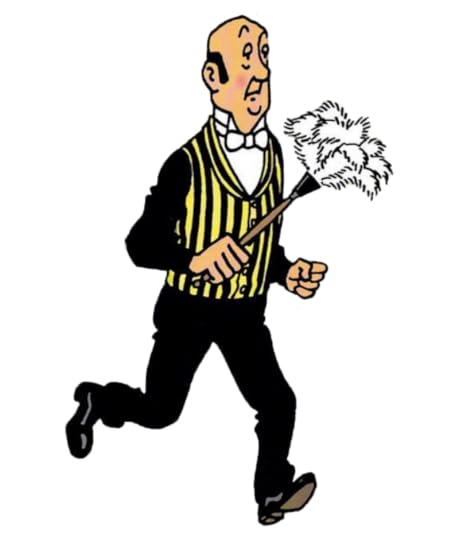
We are also introduced to Nestor, a recurring and beloved character who is the butler at Marlinspike Hall.
And so I reach quintessential Tintin in my Tintin read through.
The plot line will be quite familiar to those who have seen the Spielberg/Jackson film as it forms the basis for the first part of the story. Tintin purchases a model ship as a gift to Captain Haddock and is surprised when two people immediately show great interest in his purchase. Tintin refuses their offers and takes the ship home. He later finds that his apartment has been broken into and the ship stolen. Tintin tries to track the people who are interested down and an adventure with very close connections to Captain Haddock begins.
While not as funny as other adventures, The Secret of the Unicorn delivers on the mystery and intrigue. And it relies much less on coincidence that other Tintin stories, but still a lot more than your average story. Captain Haddock plays a large role here and is as funny as ever, and there is plenty of Thompson and Thomson, but they do not do their charming mis-clarifications sadly.
This story leads into the next, and is even obviously stated by Tintin in the last panel breaking the fourth wall. The mystery is mainly solved. The location of the treasure is known. Now it's time to find it!
This is one of my most loved adventures of Tintin. The story is well written with good adventure and interesting characters. It is a quick-paced adventure with good suspense. The additional mystery of the puzzle over the parchments which was believed to be a clue to a treasure buried in the sea with the relics of the "Unicorn" added further excitement. The humor almost always achieved at the expense of either the Thompson duo or Captain Haddock completed the enjoyment of this interesting story.
The Secret of the Unicorn is one of the best books in the Tintin series. I've read this I don't know how many times as a child, but it still fascinates me as if I'm reading it for the first time. Except for those early few ones which I had trouble enjoying, most of the adventures in the series are quite interesting. So when you are suffering from "reader"s block" (as I particularly experienced this weekend), there is nothing like a comic from your childhood to lift up your reading mood.
I wanted to include a comic book in my World Cup Reading Challenge and Tintin is one of the most iconic cartoon character, so was an easy choice for Belgium.
I decided to go for this title as main plot of this story was adapted into the first half of the 2011 movie.
Combination an intriguing mystery with slapstick comedy is soon obvious why these books have mass appeal. The story narrative which includes Captain Haddock recreating a flash back scene is hilarious!
Tintin, Snowy and the gang must find three parchments so that they can piece together all the clues. The story ends on a great cliffhanger, I really want to read the next volume now!
The Secret of the Unicorn (or as I first read it in Farsi: راز کشتی اسب شاخدار) was the very first volume of Tintin I read. Actually, the first few hundred times it was my dad who read it to me starting when I was around three. It was one of my all-time favorites growing up and I requested it, if not daily, on a very regular basis. Our old Persian copy is torn, battered and loved, my English copy is treated with the utmost respect and care, and I don't have a hard copy of it in French, but I will get one. La Licorne is still one of my favorites, and thankfully, I think, (or I hope) one of the least problematic books in the whole series so I can love it without feeling guilty.
The text below is included in ALL of my reviews for the Tintin series. If you've already read it, feel free to skip it. I am a lifelong fan of Tintin and Hergé. Tintin was the earliest memory I have of being exposed to books and stories, my dad started to read Tintin to me when I was less than three years old and continued to do so until I learned to read on my own. I have loved these stories my whole life, and I know all of them by heart, in Persian, in English, and in French. But, as a devout fan, I think it's time to do the hard but right thing: confess that these books are far from perfect. They are full of stereotypes, racist, whitewashed, colonialist, orientalist, you name it. Not to mention a complete lack of female characters (Bianca Castafiore is a mocking relic of the poor dear Maria Callas that Hergé hated, her maid Irma is present in approximately 20 frames, Alcazar's wife also, anyway, there aren't any significant female characters in these books). In the past few years, I've struggled to decide how I feel about these books. Will I dismiss them? Consider "the time they were written in" and excuse them? Love them in secret? Start disliking them? I don't know. So far I haven't reached a fixed decision, but I will say this: I am aware that these books are problematic. I acknowledge them. I don't stand for the message of some of these books. At the same time, I won't dismiss or hide my love for them because they were an integral part of my growing up memories and fantasies and games, and I do, still, love captain Haddock very much, stupid and ridiculous as he is.
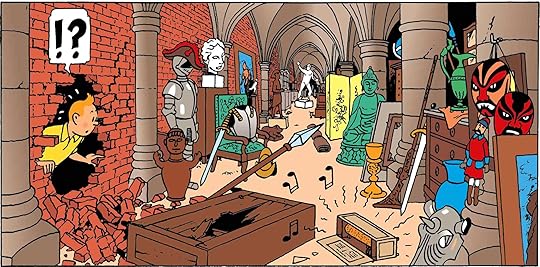
First published in French in 1943 as The Secret of the Unicorn (Le Secret de la Licorne. An epidemic of wallet snatching in and around Brussels affects the Thom(p)son twins as theylose wallets by the dozen. Meanwhile Tinin sees a curious model ship and decides to buy it for his friend , Captain Haddock , after which he is pestered by dealers to sell it to them. The Captain unpieces the mystery of the adventures of his ancestor Sir Francis Haddock , who lived in the reign of Charles II , and his battle against the pirates. Meanwhile Titnin finds himself on the wrong side of rogue art thieves , the Bird brothers, and gets kidnapped by them where he does battle with them at their headquarters at Marlinspike Hall. This is the first in a two part series leading up to Tintin's search for the centuries old lost treasure in Red Rackham's Treasure.As usual , full of adventure and fun-filled confusion, not to mention the historical flashbacks to the escapades of Sir Francis Haddock and the villainous pirate chief , Red Rackham.
Tintin was one of the comic book heroes of my childhood. I'm going to read my way through the series again as I listen to a radio program about him, and his creator, Hergé. After a few standalone books comes this adventure that spans two books, (books 11 and 12), The Secret of the Unicorn, and Red Rackham's Treasure. The Secret of the Unicorn begins with Tintin finding a model ship in a market. He buys it, and wants to give it to the captain, but things don't go to plan, the ship gets stolen.
I think these two Tintin books are the best of the series, or at least up there with the very best. The two books are different, but everything works in both of them. I think they may be the perfect Tintin adventure, even though The Secret of the Unicorn is the first book in the series where Tintin spends the entire book in Belgium. It is a different kind of adventure from the usual glob trotting Boy Scout we usually get.
In some sense The Secret of the Unicorn is closer to a mystery than adventure. There is a theft, or perhaps more accurately, there are committed two seemingly unrelated crimes. First there is the theft of the model ship, which Tintin starts to investigate, and soon realises that behind that theft there is something deeper. At the same time Thomson and Thompson are investigating a series of pick pocketing. The two cases don't seem to have anything in common, but of course the two will eventually prove to be connected.
As a mystery I think it works quite well. It draws the reader from one clue to the next, and does so fairly logically. And one gradually realises what is going on. By the time Hergé wrote this one, he had become a good writer. This isn't the barely connected cliffhangers that one got in the first few books, but a plot that well thought out.
This is obviously a children's book, and they are not just about the adventure. The other angle of the Tintin formula is the humour. He mixes these two elements together in the books to various degree. Here he does a good job with mixes these elements together into a great cocktail. Thomson and Thompson are in good comic form, but the humour doesn't just rest on them, but also on Tintin, Snowy, Captain Haddock, and other characters. At the same time none of these characters are there just for the humour, even Thomson and Thompson get their moments where they show something else. It all just works wonderfully together in this volume.
Between the NINE MILLION STARS I could give the good Tintin titles for blowing my little small town mind as a child, making me aware of the existence of Europe and the sophisticated possibilities latent in a comic book, and the snooty two stars I could disdainfully issue now citing dim physical comedy, linear plotting, and a heavy reliance on the comic delights of alcoholism, is a middle point of 4,500,001 stars. But this is one of those situations where an average doesn't tell you much about the data, so I just won't rate the Tintins. This is a good one, and I imagine I've read it at least a dozen times. It doesn't take nearly as much time as it used to.
كابتن هادوك يروي حكاية جد جد جده قائد سفينة اليونيكورن .. وسر تماثيل مطاببقة لتلك السفينة تضع تان تان في مغامرة كبري وحتي القصص الفرعية الطريفة لنشال المحافظ يستفاد منها في المفاجأة بنهاية القصة
وتتحول القصة بعد ذلك لرحلة بحث عن الكنز ولكن في المغامرة التالية هي تقريبا القصة الاولي لتان تان التي تعتبر في انتظار استكمال في قصة تاليه
في الأغلب قراءتها من قبل ولكن لا أتذكر متي وهل كانت ورقية ام بي دي اف
اعتقد انها القصة الاشهر لتانتان في العقد الاخير والسبب هو تحويلها لفيلم انيميشن بنفس الاسم عام ٢٠١١ بتصميمات مبهرة وميزانية ضخمة وبيد صناع افلام كبار كسبيبرج وبيتر جاكسون
الفيلم بالمناسبة كان ثلاثة كتب ، هذا الكتاب و جزءها الثاني كنز القرصان الاحمر وتان تان والمخالب الذهبية
لأ ادري لما اختار المترجم اسم الخرتيت للكتاب فاليوني كورن هو حصان احادي القرن
Tintin is browsing the market when he buys a wonderful old model of a ship that leads him into danger and intrigue. This is part one, so if you plan to read this make sure you pick up Red Rackham's Treasure as well.
Re-watching the Spielberg production of Tintin on tv made me want to return to the comic itself. I grew up reading these, although I must admit that Tintin was not my favourite series ('Yoko Tsuno', and 'Blake et Mortimer’ were). These adventures are fun, especially when you have Haddock swearing words that are not swear words :O) This one is a good one but you really need to read the follow-up, Le Trésor de Rackham le Rouge, to get the whole story.
Coming back to the film, I must take my hat to the screenwriter for using the Unicorn plot as a skeleton, changing it in order to introduce all the characters, and fleshing it with scenes from across the whole series. The result is pretty impressive, story-wise. And I loved that they even had a cameo of Hergé, as the artist drawing a portrait of our hero :O)
সেরা টিনটিন গুলোর একটা। শীতের রাত বলে রক্ষা। সবাই কান ঢেকে ঘুমাচ্ছে। নতুবা রাতদুপুরে আমার হাসির চোটে বাসার লোকজনের ঘুম ভাঙলে আমার জায়গা হতো মানসিক হাসপাতাল। নাহ্, আর বড় হতে পারলাম না। পুরো পাঁচতারা, বছরের প্রথম পাঁচতারা ক্লিক করার সৌভাগ্য এল এতটা দেরিতে।
Me ha gustado mucho este cómic de Tintin. Me ha encantado cómo Hergé hiló la historia y el hecho de que sin salir de Bruselas, me imagino, nos transporta a la Edad Moderna, a un conflicto en altamar entre un antepasado del capitán Haddock y un pirata que alberga un tesoro. Dicho cofre será el protagonista del próximo álbum. Se da nuevamente una continuidad entre ambos cómics, pese a ser historias que se cierran de forma independiente.
La portada, no obstante, ha sido de las que menos me ha gustado. El tratamiento del color, por otro lado, es admirable y la riqueza de la historia cada vez es mayor. Se nota que el dibujante ya había terminado de dar forma a su personaje, pues la regularidad en la calidad ya empieza a ser una característica propia de las historias.
The story of the Unicorn starts when Tintin visits a flea market and buys a ship model (called The Unicorn) as a gift for Captain Haddock. Little does he know that several others are after the same ship model as well. But why? When Tintin's home is burgled twice in a single day, he begins to find clues that may have been hidden inside the model ship. Meanwhile, the two policemen are after a pickpocket who steals wallets.
The Secret of the Unicorn is one of the best plotted of the series so far! Tintin and the Captain join hands to solve the mystery. After all, it is related to Captain Haddock's ancestor, who also was a captain! Their search leads them to Marlinspike Hall, which would soon become a sort of headquarters for our heroes. The end is predictable and is sort of left in limbo for the next book, where the duo set out to complete the quest that they discovered in this book. Best to read the two together!
Though lacking a little in the humour department than usual, it still has a lot of fun scenes, especially involving Thompson and Thomson. Their search for a pickpocket is extremely hilarious. Captain Haddock's attempt to show how thirsty his ancestor was funny too.
A pretty decent read, but the next one sets up a lot of the canon info on the Captain, so I like that one better.
Tintin's adventures are refreshing, even though this one was written 70 years ago, as they make everything so easily available. It's hard to walk the balance these days. I feel like it'd be harder to market something like Tintin now. Either it would be pushed towards more gritty or more family-oriented. Tintin stories just include whatever Hergé felt was necessary. Murder and booze are always hanging around the boy-wonder journalist and his dog, as they do everything can to solve every mystery in Belgium.
It's so classic in its adventure-mystery storytelling honesty. Tintin's a moody hero who always wants to do the right thing, but he gets annoyed and frustrated when things aren't turning out. This particular tale is about Tintin buying a model of a pirate ship that seems to hold a secret. Then craziness ensues. Then Captain Haddock gets drunk and nearly stabs Tintin accidentally. Then Snowy says something sardonic. Then Thomson and Thomson do something silly. Then Tintin goes rogue and does some dangerous shit to save the day.
It's always a wacky adventure with this son of a bitch.
By this time Captain Haddock, the detectives Thompson & Thomson are fixtures in the Tintin comics and this time we go into the history of Captain Haddocks family. When Tintin buys a ship model at an art market he immediately finds that there is a lot of interest for his little ship which gets stolen in the end. Tintin gets kidnapped and finds himself in castle Molenslot and find out more about the family lore of Captain Haddock.
This is the first part of a two part story and its writing is far more tight than any of the previous installments of the series, Tintin before was certainly a lot of fun but now we get a bit more quality infused into the series.
The adventures of Tintin remains a classic series that is far away from the realistic darker comics today and yet remains much more relate-able and fun, it is for a reason that this series is called classic.
هرژه رسید به ۱۹۴۳ و در کشور اشغال شدهش یازدهمین تن تن رو منتشر کرد. کمیک استریپی که فلش بک داشت و واقعا فوق العاده بود. این اولین کتاب بود که هیچ وقت دچار هیچ سانسوری نشده، که دلیلش هم فاصله گرفتن هرژه از مسائل روز جامعهست. داستان در واقع یک داستان جستجوی گنج است. از طرف دیگر هم اولین اثر هرژه بود که دنبالهدار شد و آخر این کتاب نوشته بود ادامه دارد و باید باقیش را در جلد بعد خواند. پینوشت: تا اینجا هرقدر جلوتر آمدم بیشتر و بیشتر با تنتن حال کردم. شاید کم کم دارم با کمیک استریپ آشنا میشوم و درکش میکنم. خیلی دوست داشتنی شده.
Hacia mucho que no leia una aventura de Tintin. Ya no recordaba la cantidad de palabrotas que es capaz de decir el capitan Haddock, como Hernandez y Fernandez consiguen encerrar a los villanos, todo lo que ayuda milú a su amo y por supuesto todos los desafios que va resolviendo el joven reportero segun se mete en problemas. Una gran historia que no pasa de moda
?Bij mijn bieb hebben ze alle 24 albums van Kuifje. De ene spreekt me waarschijnlijk wat meer aan dan de andere, maar ik ben wel van plan er een hoop te lezen want ze spreken mij nu toch meer aan dan in mijn jeugd toen ik er waarschijnlijk maar 5 gelezen heb. # Kuifje#10 (Kuifje 11 De Schat van Scharlaken Rackham (een vervolg op #10 heb ik ook gereserveerd bij mijn bieb) 🤔 Wel een aardig album waarin veel gebeurt zoals meestal bij Kuifje... en soms net iets teveel naar mijn smaak... maar misschien kom ik daar nog wel op terug na het lezen van #11 en lees ik dit deel ook nog eens over...of later dus ;-) MW16/6/24



 a close second!