

What do you think?
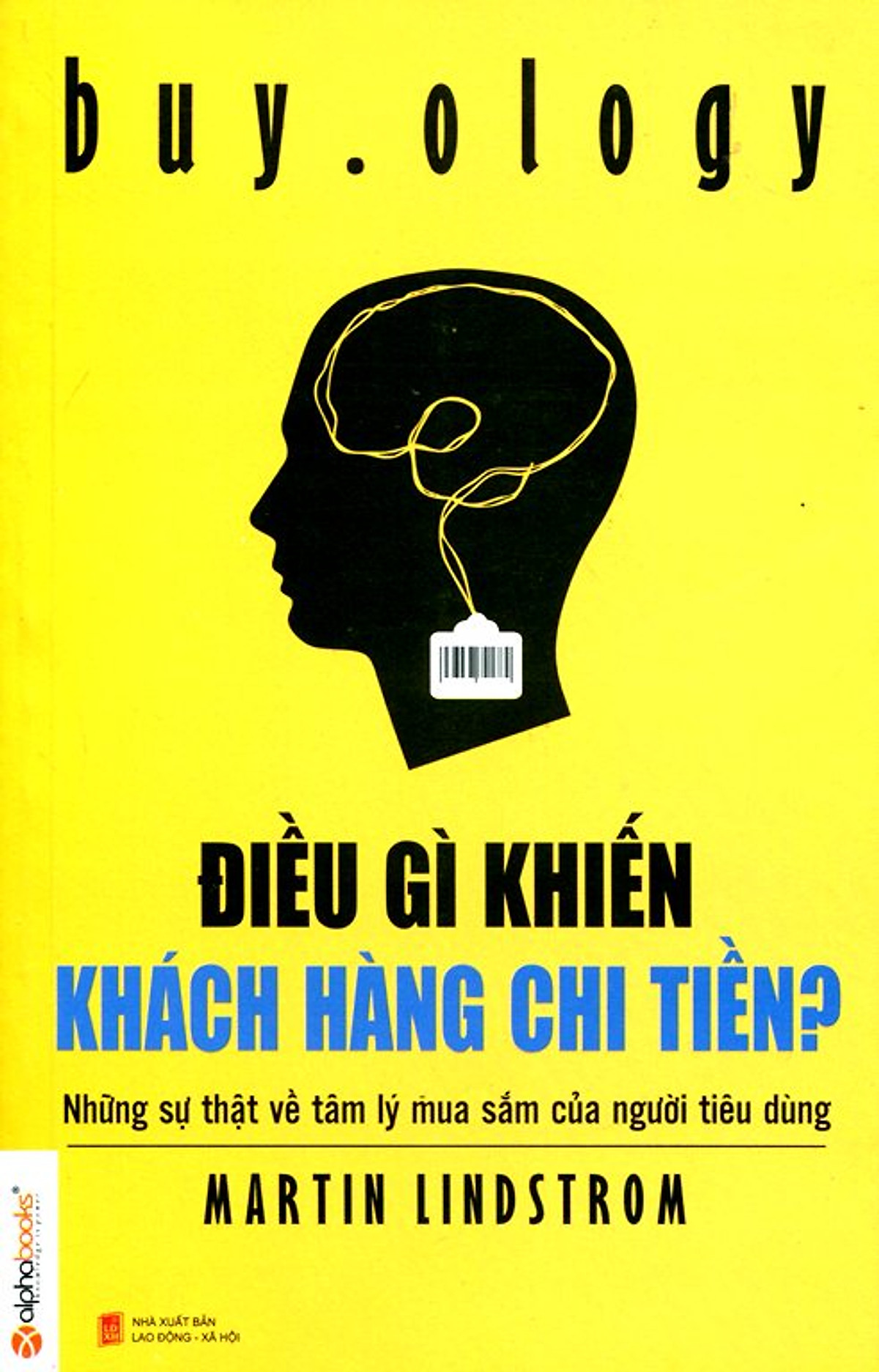
Điều gì khiến khách hàng chi tiền - Những sự thật về tâm lý mua sắm của người tiêu dùng
“Đầy ắp những câu chuyện thú vị về cách mà bộ não, các thương hiệu và cảm xúc dẫn dắt sự lựa chọn của người tiêu dùng. Sự kết hợp sáng tạo giữa tiếp thị và khoa học thần kinh của Martin Lindstrom đã cho chúng ta một cái nhìn sâu sắc hơn về sự năng động, sức mạnh to lớn của tiềm thức ảnh hưởng như thế nào đến các quyết định mà chúng ta đưa ra. Một khi đã đọc cuốn sách này, bạn sẽ nhìn nhận các hành vi của người tiêu dùng và nhà sản xuất bằng một con mắt hoàn toàn khác.” _Philip Kotler, Tiến sĩ, Giáo sư danh dự S.C Johnson & Son, khoa Tiếp thị Quốc tế, Trường Quản trị Kellogg, Đại học Northwestern.
Chúng ta hiểu biết đến đâu về lý do khiến chúng ta mua hàng? Những gì thực sự ảnh hưởng tới quyết định của chúng ta trong thế giới ngập tràn thông tin này? Một quảng cáo bắt mắt, một câu khẩu hiệu dễ nhớ, hay do hiệu ứng dây chuyền? Có khi nào những quyết định của chúng ta lại diễn ra bên dưới bề mặt, nằm tận sâu bên trong tâm trí tiềm thức của chúng ta, mà chúng ta rất ít khi nhận thức được sự tồn tại của chúng?
Trong cuốn sách Điều gì khiến khách hàng chi tiền, tác giả Martin Lindstrom giới thiệu những phát hiện gây chấn động từ nghiên cứu có tên là thần kinh học tiếp thị mang tính chất đột phá, kéo dài trong vòng 3 năm, tiêu tốn đến 7 triệu đô-la, đây là một cuộc thử nghiệm đầu tiên nhằm đi sâu vào tìm hiểu bộ não của trên hai nghìn người tình nguyện từ khắp nơi trên thế giới, trong đó, họ được tiếp xúc với vô số các quảng cáo, logo, video, thương hiệu và sản phẩm. Những kết quả đáng kinh ngạc mà tác giả thu được đã đập tan những niềm tin từ lâu đã ăn sâu cắm rễ vào tiềm thức của chúng ta, về những gì làm chúng ta bị mê hoặc và khiến chúng ta quyết định mua hàng. Dưới đây là một vài vấn đề mà tác giả nghiên cứu trong cuốn sách này:
Liệu có thể kinh doanh tình dục không? Những người mẫu ăn mặc thiếu vải hay những dáng vẻ khêu gợi có thực hấp dẫn khiến chúng ta mua hàng hay không?
Bất chấp các lệnh cấm của các chính phủ, có phải các quảng cáo đánh vào tiềm thức của con người vẫn tồn tại và ngày ngày bủa vây chúng ta – từ các quán bar, các biển quảng cáo cỡ lớn trên đường cao tốc, cho đến đến các siêu thị cỡ lớn hay không?
Liệu những thương hiệu “hấp dẫn” như iPods có tác động trực tiếp vào những bản năng giống nòi của con người không?
Liệu những giác quan khác – như khứu giác, xúc giác, thính giác – có thể tác động mạnh mẽ đến bản thân chúng ta khi nhìn thấy một sản phẩm hay không?
Liệu các công ty bắt chước những nghi thức trong thế giới tôn giáo và tinh thần – như uống rượu Corona là phải uống với một lát chanh tươi – có thể khiến chúng ta chịu rút ví chi tiền mua sản phẩm hay không?
Đầy ắp trong cuốn sách là những câu chuyện thú vị về cách chúng ta phản ứng đối với những thương hiệu được nhiều người biết đến như Marlboro, Nokia, Calvin Klein, Ford và chương trình giải trí American Idol, Mua hàng học là một hành trình vô cùng kỳ thú và hấp dẫn, đi sâu tìm hiểu trí óc của những người tiêu dùng hôm nay. Nó sẽ làm say đắm bất cứ ai đã từng một lần bị hấp dẫn – hoặc bị dẫn dụ - bởi những nỗ lực không mệt mỏi của các nhà quảng cáo nhằm chiếm được lòng tin, sự trung thành, tiền bạc và cả tâm trí của chúng ta.
(bizspace.vn)
Chúng ta hiểu biết đến đâu về lý do khiến chúng ta mua hàng? Những gì thực sự ảnh hưởng tới quyết định của chúng ta trong thế giới ngập tràn thông tin này? Một quảng cáo bắt mắt, một câu khẩu hiệu dễ nhớ, hay do hiệu ứng dây chuyền? Có khi nào những quyết định của chúng ta lại diễn ra bên dưới bề mặt, nằm tận sâu bên trong tâm trí tiềm thức của chúng ta, mà chúng ta rất ít khi nhận thức được sự tồn tại của chúng?
Trong cuốn sách Điều gì khiến khách hàng chi tiền, tác giả Martin Lindstrom giới thiệu những phát hiện gây chấn động từ nghiên cứu có tên là thần kinh học tiếp thị mang tính chất đột phá, kéo dài trong vòng 3 năm, tiêu tốn đến 7 triệu đô-la, đây là một cuộc thử nghiệm đầu tiên nhằm đi sâu vào tìm hiểu bộ não của trên hai nghìn người tình nguyện từ khắp nơi trên thế giới, trong đó, họ được tiếp xúc với vô số các quảng cáo, logo, video, thương hiệu và sản phẩm. Những kết quả đáng kinh ngạc mà tác giả thu được đã đập tan những niềm tin từ lâu đã ăn sâu cắm rễ vào tiềm thức của chúng ta, về những gì làm chúng ta bị mê hoặc và khiến chúng ta quyết định mua hàng. Dưới đây là một vài vấn đề mà tác giả nghiên cứu trong cuốn sách này:
Liệu có thể kinh doanh tình dục không? Những người mẫu ăn mặc thiếu vải hay những dáng vẻ khêu gợi có thực hấp dẫn khiến chúng ta mua hàng hay không?
Bất chấp các lệnh cấm của các chính phủ, có phải các quảng cáo đánh vào tiềm thức của con người vẫn tồn tại và ngày ngày bủa vây chúng ta – từ các quán bar, các biển quảng cáo cỡ lớn trên đường cao tốc, cho đến đến các siêu thị cỡ lớn hay không?
Liệu những thương hiệu “hấp dẫn” như iPods có tác động trực tiếp vào những bản năng giống nòi của con người không?
Liệu những giác quan khác – như khứu giác, xúc giác, thính giác – có thể tác động mạnh mẽ đến bản thân chúng ta khi nhìn thấy một sản phẩm hay không?
Liệu các công ty bắt chước những nghi thức trong thế giới tôn giáo và tinh thần – như uống rượu Corona là phải uống với một lát chanh tươi – có thể khiến chúng ta chịu rút ví chi tiền mua sản phẩm hay không?
Đầy ắp trong cuốn sách là những câu chuyện thú vị về cách chúng ta phản ứng đối với những thương hiệu được nhiều người biết đến như Marlboro, Nokia, Calvin Klein, Ford và chương trình giải trí American Idol, Mua hàng học là một hành trình vô cùng kỳ thú và hấp dẫn, đi sâu tìm hiểu trí óc của những người tiêu dùng hôm nay. Nó sẽ làm say đắm bất cứ ai đã từng một lần bị hấp dẫn – hoặc bị dẫn dụ - bởi những nỗ lực không mệt mỏi của các nhà quảng cáo nhằm chiếm được lòng tin, sự trung thành, tiền bạc và cả tâm trí của chúng ta.
(bizspace.vn)
323 pages, Bìa mềm
First published January 1, 2008
About the author
Martin Lindstrom
35 books388 followersMartin Lindstrom (born 1970) is the author of the bestseller The Ministry of Common sense - How to Eliminate Bureaucratic Red Tape, Bad Excuses, and Corporate Bullshit.
Through unconventional thinking, Martin Lindstrom reveals how to get closer to our customers by eliminating bureaucratic red tape, bad excuses, and corporate BS, whether we’re in the office or behind our screens.
An eight-time New York Times best-selling author, Lindstrom’s books have sold 4.5 million copies and been translated Into 60 languages. His books include The Ministry of Common Sense, Buyology, and Small Data. TIME Magazine named Lindstrom "One of the World's Most Influential People," and Thinkers50 listed him one of the world’s top-20 business thinkers of 2021.
Through unconventional thinking, Martin Lindstrom reveals how to get closer to our customers by eliminating bureaucratic red tape, bad excuses, and corporate BS, whether we’re in the office or behind our screens.
An eight-time New York Times best-selling author, Lindstrom’s books have sold 4.5 million copies and been translated Into 60 languages. His books include The Ministry of Common Sense, Buyology, and Small Data. TIME Magazine named Lindstrom "One of the World's Most Influential People," and Thinkers50 listed him one of the world’s top-20 business thinkers of 2021.
Ratings & Reviews
Friends & Following
Create a free account to discover what your friends think of this book!
Community Reviews
Displaying 1 - 30 of 994 reviews

November 6, 2008
Summation: Lindstrom gets all excited about doing brain scans on consumers as they view advertisements and products.
Strike 1: Lindstrom seems to think that technology -- all technology -- is neutral. His example is that hammers can do nasty things but there is no need to outlaw, restrict or ban hammers. Fine, I agree. As long as we are talking about hammers, that is.
But when discussing companies doing fMRI scans on potential consumers to get at their instinctual, pre-rational impressions of advertisements and products, the BS meter goes off: this is not neutral technology. In Jerry Mander's In The Absence of the Sacred, he makes quick work of the fallacy of "neutral technology." In short, all one has to do is ask a few questions to determine if any given technology is neutral or not. Who has access to this technology? Who will be able to control the use of this technology? Will the control be primarily democratic or will it require bureaucratic, centralized organizations to manage it? Who will primarily benefit from the use of this technology? And mainly, who can afford it? The answers to such questions should show pretty readily if a technology can honestly be considered neutral or not.
I don't know about y'all but I can't drop $7,000,000 for an fMRI machine but I'm damn sure that ConAgra, Phillip Morris, and GE can afford it... and subsequently profit from it. Neutral, my ass.
Strike 2: Dear Mr. Lindstrom, when writing about your groundbreaking new experiments that delve into the inner workings of consumer behavior, please refrain from starting each chapter with the equivalent of the following: I am now going to blow your mind with the most brilliant, coolest, most insightful bit of research ever. If it truly is all of those things, you really don't have to overtly try to convince me.
Jeez, I have to tell a marketer this?
Strike 2.5: Lindstrom fails to point out that even if marketing agencies have access to our innermost motivations, humans are not automatons that have to respond directly to the reptilian portion of our brains. Granted, it is extremely difficult to be aware of the drive behind our consumeristic urges, but for that I would point readers to Hooked: Buddhist Writings on Greed Desire and the Urge to Consume. In fact, if anyone is interested in why people buy crappy products they don't need with money they don't have, start with Hooked and leave Lindstrom to his chest thumping.
One redeeming feature of the book: Lindstrom does a nice job of showing how effective various advertising strategies are. Product placement in movies and television? Unless the product is essential to the plot, folks just don't remember it. I found his discussion of the ban on tobacco advertising and how tobacco companies have had to get really creative in their marketing to be pretty interesting. It turns out that subliminal advertising works really well for well known, established brands like Camel, Marlboro, etc. But overall, these nuggets weren't worth the effort of sifting through the rest of the rubbish....
Strike 1: Lindstrom seems to think that technology -- all technology -- is neutral. His example is that hammers can do nasty things but there is no need to outlaw, restrict or ban hammers. Fine, I agree. As long as we are talking about hammers, that is.
But when discussing companies doing fMRI scans on potential consumers to get at their instinctual, pre-rational impressions of advertisements and products, the BS meter goes off: this is not neutral technology. In Jerry Mander's In The Absence of the Sacred, he makes quick work of the fallacy of "neutral technology." In short, all one has to do is ask a few questions to determine if any given technology is neutral or not. Who has access to this technology? Who will be able to control the use of this technology? Will the control be primarily democratic or will it require bureaucratic, centralized organizations to manage it? Who will primarily benefit from the use of this technology? And mainly, who can afford it? The answers to such questions should show pretty readily if a technology can honestly be considered neutral or not.
I don't know about y'all but I can't drop $7,000,000 for an fMRI machine but I'm damn sure that ConAgra, Phillip Morris, and GE can afford it... and subsequently profit from it. Neutral, my ass.
Strike 2: Dear Mr. Lindstrom, when writing about your groundbreaking new experiments that delve into the inner workings of consumer behavior, please refrain from starting each chapter with the equivalent of the following: I am now going to blow your mind with the most brilliant, coolest, most insightful bit of research ever. If it truly is all of those things, you really don't have to overtly try to convince me.
Jeez, I have to tell a marketer this?
Strike 2.5: Lindstrom fails to point out that even if marketing agencies have access to our innermost motivations, humans are not automatons that have to respond directly to the reptilian portion of our brains. Granted, it is extremely difficult to be aware of the drive behind our consumeristic urges, but for that I would point readers to Hooked: Buddhist Writings on Greed Desire and the Urge to Consume. In fact, if anyone is interested in why people buy crappy products they don't need with money they don't have, start with Hooked and leave Lindstrom to his chest thumping.
One redeeming feature of the book: Lindstrom does a nice job of showing how effective various advertising strategies are. Product placement in movies and television? Unless the product is essential to the plot, folks just don't remember it. I found his discussion of the ban on tobacco advertising and how tobacco companies have had to get really creative in their marketing to be pretty interesting. It turns out that subliminal advertising works really well for well known, established brands like Camel, Marlboro, etc. But overall, these nuggets weren't worth the effort of sifting through the rest of the rubbish....

April 30, 2011
Likely interesting ideas completely subsumed by self-aggrandizement and shitty writing. This book is structured pretty much like an episode of America's Next Top Model: recap of previous episode! glamor shots of author! two minutes of "what you'll see next"! commercial break! recap of what we just told you you're about to see! sixty seconds of actual content! review of what you've just seen! more "coming up next"! wash! rinse! repeat! Tyra wears a jumpsuit, and Andre Leon Talley wears a muumuu with a face on it! Everyone's brains are ugly-pretty! Remember, you're there to sell clothes, not just look pretty!
Did not finish.
Did not finish.

December 17, 2010
What did I think (that teasing little prompt to write a review)? Lindstrom's book reads more like a piece of fiction!
If you can wade through the overblown prose (read author's sense of self-importance, borrowed deux ex machina and cliff-hanger endings to various chapters, all of which fizzle out along the way), Lindstrom actually has some sound advice for consumers!
If you value your purchasing sovereignty, read this book (and borrow it from the library, so as to avoid 'buying' into Lindstrom's hype). Marketeers are already implementing some of the ideas in this book, rightly or wrongly (and not considering the ethics and the funding of the research Lindstrom undertook).
How does a brand smell? Taste? Feel? Look like? Sound? And specifically, given the demographic in which you, as the customer, most likely fit, which representation of these characterisics should a brand/product have in order to engage your 'impulse buy' mechanism?
Ultimately, if you can determine what it is that drives you to purchase something, you're better protected against mindless consumerism. It might have not been the point Lindstrom wanted to make, but that's certainly the message I took from the book. Buyer beware.

February 22, 2011
Under normal circumstances I wouldn't even review this book because a) it was awful, and b) I wanted to throttle the smug little billionaire consultant of an author three times a chapter, and why would I revisit that in a review? But this is the first book I've legitimately read, start to finish, since starting my crazy new jobs, and I guess that merits some words.
Words like: "ugh." And: "That's not how foreshadowing works. This is nonfiction." Honestly this might have been a great 4 page article -- the self-satisfied neuroscientists who write for Wired are able to keep my attention for that long without a significant rage reaction from this reader. But there was no reason for 200+ pages to explain the results of three studies. Branding is about emotion. Brains have mirror-neurons. MRIs prove people are deeply unaware of their own preferences and habits, making this guy's method of brand-testing much more effective than decades-old, pencil-based focus groups and such.
None of those are bad things to know I guess, but this book wasn't even good enough to get my blood boiling about those effing corporate bastards with all the money to throw around to do huge studies to control our unconscious minds. And that's one of the easiest things to get me fired up about! Mostly there was stating the obvious, then restating it with examples because the assumed reader was too stupid to get it the first time, followed by a cap on each chapter describing what we'd learn in the next. This isn't Dickens, dude, you're not serialized. Segue like a grown up.
Oh and in case you missed it, Martin Lindstrom is very important! He makes a lot of money and his opinions are highly regarded in his field! He also finds himself to be rakishly handsome and clever!
Do. Not. Read.
Words like: "ugh." And: "That's not how foreshadowing works. This is nonfiction." Honestly this might have been a great 4 page article -- the self-satisfied neuroscientists who write for Wired are able to keep my attention for that long without a significant rage reaction from this reader. But there was no reason for 200+ pages to explain the results of three studies. Branding is about emotion. Brains have mirror-neurons. MRIs prove people are deeply unaware of their own preferences and habits, making this guy's method of brand-testing much more effective than decades-old, pencil-based focus groups and such.
None of those are bad things to know I guess, but this book wasn't even good enough to get my blood boiling about those effing corporate bastards with all the money to throw around to do huge studies to control our unconscious minds. And that's one of the easiest things to get me fired up about! Mostly there was stating the obvious, then restating it with examples because the assumed reader was too stupid to get it the first time, followed by a cap on each chapter describing what we'd learn in the next. This isn't Dickens, dude, you're not serialized. Segue like a grown up.
Oh and in case you missed it, Martin Lindstrom is very important! He makes a lot of money and his opinions are highly regarded in his field! He also finds himself to be rakishly handsome and clever!
Do. Not. Read.

December 8, 2008
I normally love books about consumer psychology ... but I stopped reading before the end of the first chapter. From the first page, the author seems more interested in convincing you how important he is than in conveying any substantive information. By page 16, I didn't care enough about the subject to keep going.
May 14, 2011
Buyology.
The beginning 3 chapters of this book are a long disclaimer and sale job for EMRI based marketing research that can safely be skipped.
The correlation between branding and religion is quite interesting, and so is the idea of "creating rituals"...
Magic happens when people don't think.
Cult of Personality.
10 common pillars:
1. Sense of Belonging
2. A Clear Vision
3. Power Over Enemies (AAPL: Microsoft, RED:The Film Industry)
4. Sensory Appeal
5. Story Telling
6. Grandeur
7. Evangelism
8. Symbols
9. Mystery
10. Rituals
Our senses are much more important than logos. Touch. Smell. Sound. Color. The senses, especially when used in combination are extremely powerful. The logo is secondary, because it's not emotional.
Love sells 50% of the time.
Sex only sells 25% of the time.
When people see sex, they think sex - not about the product, same goes for extreme celebrity or extreme beauty.
Reality TV dominates television networks because consumers like it - consumers like "ordinary" people like themselves. When we see people that look like models, we believe that people must be selling us lies. When we see regular people, we trust them, we think "he says what he believes".
The biggest trend in marketing is consumer generated commercials - which is like reality TV, but for commercials. We want to see real testimonies.
Sex in advertising is about wish fulfillment. Controversy sells far more than Sex - creating controversy is priceless.
Neurological-Marketing is a combination of FMRI (Functional) and EEGs - Neurological Imaging (Science) with Marketing (a 20th century invention). Marketing is a guessing name, relying on luck, chance, or repeating the same old game.
90% of consumer behavior is subconscious.
MindCode is an FMRI Neurological Marketing company.
High-End Luxury watches are often sold at a discount.
Higher price of a product increases our enjoyment of it.
Asking consumers why they buy something, they don't give you an accurate response.
Fear is an effective form of marketing, especially when based on our insecurities. Fear works.
Branding is just beginning.
Branding is like a religion.
Saki-Saba was a mackerel fish in Japan that was differentiated in 1988, it used to be a fish for the poor, but this created a 600% price increase in only one year.
Or think about a rock. If I put it in a box and give it to you as a present, you are disappointed, but if I say it was part of the Berlin Wall, you are excited. If I say it was a rock from the moon, you are overjoyed.
Humans have a predisposition to stories, and to brands.
The beginning 3 chapters of this book are a long disclaimer and sale job for EMRI based marketing research that can safely be skipped.
The correlation between branding and religion is quite interesting, and so is the idea of "creating rituals"...
Magic happens when people don't think.
Cult of Personality.
10 common pillars:
1. Sense of Belonging
2. A Clear Vision
3. Power Over Enemies (AAPL: Microsoft, RED:The Film Industry)
4. Sensory Appeal
5. Story Telling
6. Grandeur
7. Evangelism
8. Symbols
9. Mystery
10. Rituals
Our senses are much more important than logos. Touch. Smell. Sound. Color. The senses, especially when used in combination are extremely powerful. The logo is secondary, because it's not emotional.
Love sells 50% of the time.
Sex only sells 25% of the time.
When people see sex, they think sex - not about the product, same goes for extreme celebrity or extreme beauty.
Reality TV dominates television networks because consumers like it - consumers like "ordinary" people like themselves. When we see people that look like models, we believe that people must be selling us lies. When we see regular people, we trust them, we think "he says what he believes".
The biggest trend in marketing is consumer generated commercials - which is like reality TV, but for commercials. We want to see real testimonies.
Sex in advertising is about wish fulfillment. Controversy sells far more than Sex - creating controversy is priceless.
Neurological-Marketing is a combination of FMRI (Functional) and EEGs - Neurological Imaging (Science) with Marketing (a 20th century invention). Marketing is a guessing name, relying on luck, chance, or repeating the same old game.
90% of consumer behavior is subconscious.
MindCode is an FMRI Neurological Marketing company.
High-End Luxury watches are often sold at a discount.
Higher price of a product increases our enjoyment of it.
Asking consumers why they buy something, they don't give you an accurate response.
Fear is an effective form of marketing, especially when based on our insecurities. Fear works.
Branding is just beginning.
Branding is like a religion.
Saki-Saba was a mackerel fish in Japan that was differentiated in 1988, it used to be a fish for the poor, but this created a 600% price increase in only one year.
Or think about a rock. If I put it in a box and give it to you as a present, you are disappointed, but if I say it was part of the Berlin Wall, you are excited. If I say it was a rock from the moon, you are overjoyed.
Humans have a predisposition to stories, and to brands.

April 7, 2009
Given my enthusiasm for Oliver Sacks and some of Malcolm Gladwell's writings, one might presume Buyology would be the perfect blend of the two worlds.
One would be mistaken.
This book, although a worthwhile read, suffers from an overinflated sense of self-importance. Consider how Gladwell can say obvious things in such a low-key way that you take time to consider his arguments fully. This careful subtlety is lost on Lindstrom, who continually injects the book with references to his own importance as a consultant. He also regularly inflates the actual novelty of the research he is reporting on, referring to it as the largest neuroscientific marketing research effort ever conducted. Such superlatives belie the basic science and make much of this book feel like puffery.
Which is a shame because the content, stripped of the puffery and exaggeration, is interesting and scientifically valid. In the hands of a less self-promotional author, the same material might have soared beyond the business shelves of the bookstore to attract the general reader. I recommend the book to people patient enough to sit through the stories of how busy Lindstrom is flying around the world to meet with big name client because at the core of the book lie several interesting nuggets that reveal how the connection between what we think and how we act is not as strong as we would assume.
One would be mistaken.
This book, although a worthwhile read, suffers from an overinflated sense of self-importance. Consider how Gladwell can say obvious things in such a low-key way that you take time to consider his arguments fully. This careful subtlety is lost on Lindstrom, who continually injects the book with references to his own importance as a consultant. He also regularly inflates the actual novelty of the research he is reporting on, referring to it as the largest neuroscientific marketing research effort ever conducted. Such superlatives belie the basic science and make much of this book feel like puffery.
Which is a shame because the content, stripped of the puffery and exaggeration, is interesting and scientifically valid. In the hands of a less self-promotional author, the same material might have soared beyond the business shelves of the bookstore to attract the general reader. I recommend the book to people patient enough to sit through the stories of how busy Lindstrom is flying around the world to meet with big name client because at the core of the book lie several interesting nuggets that reveal how the connection between what we think and how we act is not as strong as we would assume.

October 30, 2008
There are some crazy techniques being used in marketing and they will only get crazier, more intrusive and more subtly manipulative thanks to guys like Martin Lindstrom. He seems a little conflicted about what he does - on one hand he tries to come off as a consumer advocate, exposing marketing tricks so we can be aware of them, on the other he actively employs the same techniques in the companies he works with. He had me going back and forth about whether he is the 'good guy' or the 'bad guy.'
Either way, the book is somewhat of an eye opener to the work being done to perfect advertising techniques that are effective despite what consumers think works, and instead basing them on what brain scans show actually works--often two completely different things.
I'm only rating it 3 stars because the first 30 or 40 pages were full of repetitive hyperbole building up Lindstrom's research techniques and unprecedented large study group size and generally amazing work only to to be followed by much less than revolutionary results throughout the rest of the book. It's an interesting read, but definitely not as groundbreaking as it's made to sound in the first few chapters.
Either way, the book is somewhat of an eye opener to the work being done to perfect advertising techniques that are effective despite what consumers think works, and instead basing them on what brain scans show actually works--often two completely different things.
I'm only rating it 3 stars because the first 30 or 40 pages were full of repetitive hyperbole building up Lindstrom's research techniques and unprecedented large study group size and generally amazing work only to to be followed by much less than revolutionary results throughout the rest of the book. It's an interesting read, but definitely not as groundbreaking as it's made to sound in the first few chapters.

June 30, 2020
Meh. Tries to understand why some advertising works and others don't, partly through use of fancy-sounding fMRI and other neuroscience experiments. The validity of the experiments is questionable and his conclusions from them are likely only half-right at best. The importance of mirror neurons is highly overblown here (as in many other works). Still, I enjoyed being reminded of some of the shady marketing tricks and the incredible and disturbing fact that they work on most people. Written around 2009, the final chapter predicts that the global recession at that time would reset consumer buying patterns so much that they'd never return to their crazy spending. From here in 2020, I don't think it turned out that way, at least not until a pandemic hit.

February 10, 2009
This was absolutely the WORST book I've ever read. The guy has no idea what he is talking about and brags about his job and success throughout the book.
He claims that mirror neurons are responsible for our buying behaviour. There is no scientific evidence for this, and his scientific methods are sketchy, bordering illegal.
I just skimmed most of it because it was SO bad.
He claims that mirror neurons are responsible for our buying behaviour. There is no scientific evidence for this, and his scientific methods are sketchy, bordering illegal.
I just skimmed most of it because it was SO bad.

June 22, 2012
Why oh why do we buy? Martin Lindstrom's Buyology: Truth and Lies About Why We Buy and the New Science of Desire goes a long way in answering that question.
Lindstrom explains the methods and mechanics used to judge our true buying tendencies. A brief history on past failed practices to elicit this information, as well as the current (and apparently successful) techniques, are discussed prior to the meat of the book, which is mainly about how our brains react to stimulus and how advertisers are tapping into that knowledge, for better or worse.
I don't like marketing and advertising, but I love learning how our brains work, and so I enjoyed much of what Buyology had to offer...even the embarrassing parts wherein I discovered I've been duped right along with millions of others into purchasing certain items because of a clever ad. The useful and uselessness of company logos, the "smashableness" of products, historic examples of product failure and success, all of these interesting topics were written in an intriguing, entertaining and engaging manner.
Lindstrom explains the methods and mechanics used to judge our true buying tendencies. A brief history on past failed practices to elicit this information, as well as the current (and apparently successful) techniques, are discussed prior to the meat of the book, which is mainly about how our brains react to stimulus and how advertisers are tapping into that knowledge, for better or worse.
I don't like marketing and advertising, but I love learning how our brains work, and so I enjoyed much of what Buyology had to offer...even the embarrassing parts wherein I discovered I've been duped right along with millions of others into purchasing certain items because of a clever ad. The useful and uselessness of company logos, the "smashableness" of products, historic examples of product failure and success, all of these interesting topics were written in an intriguing, entertaining and engaging manner.

May 3, 2012
Now and then, I try to find a marketing-advertising book that I can use in my profession. Unfortunately, I always find books on e-advertising and other online marketing activities, which somehow get outdated with every technological development. Buy-ology saved me from finding harder in the business section at bookstores. After Martin Lindstrom visited the Philippines for his talk, I immediately bought my copy and finished reading it. I was not disappointed.
I basically bought the book not to know the "truth and lies about why we buy" but to know how to lie and create truth to manipulate the consumer’s behavior. Being a marketer, I must get inside the consumer's brain.
Buyology offers a different approach to discovering the "truth and lies about why we buy." Unlike the usual written research and survey, Lindstrom focused on neuromarketing study, whereas he utilized MRI technology to perform brain scans on his subjects to understand their brain activities.
Lindstrom uncovered the brain's reactions to advertisements and other marketing initiatives. He studied the brain's response and how it perceives product placements, subliminal messages, superstitions, religion, and even sex in advertising, among others. By understanding the primary factors that affect brain activities and, eventually, consumers' buying behavior, advertisers and marketers will be able to utilize media and improve their marketing initiatives fully.
I find the book interesting, especially his marketing insights and inputs. Though I can't fully grasp the whole process of neuromarketing, since I am not a neuroscientist, the marketing part is useful for me. I am surprised by the results of his research, and it's good to consider the possible effects of advertising strategies on consumers.
This book also helped me understand my own buying behavior. It helps to understand how other companies tried to manipulate my buying habits so that I won't get into unnecessary purchases in the future.
I basically bought the book not to know the "truth and lies about why we buy" but to know how to lie and create truth to manipulate the consumer’s behavior. Being a marketer, I must get inside the consumer's brain.
Buyology offers a different approach to discovering the "truth and lies about why we buy." Unlike the usual written research and survey, Lindstrom focused on neuromarketing study, whereas he utilized MRI technology to perform brain scans on his subjects to understand their brain activities.
Lindstrom uncovered the brain's reactions to advertisements and other marketing initiatives. He studied the brain's response and how it perceives product placements, subliminal messages, superstitions, religion, and even sex in advertising, among others. By understanding the primary factors that affect brain activities and, eventually, consumers' buying behavior, advertisers and marketers will be able to utilize media and improve their marketing initiatives fully.
I find the book interesting, especially his marketing insights and inputs. Though I can't fully grasp the whole process of neuromarketing, since I am not a neuroscientist, the marketing part is useful for me. I am surprised by the results of his research, and it's good to consider the possible effects of advertising strategies on consumers.
This book also helped me understand my own buying behavior. It helps to understand how other companies tried to manipulate my buying habits so that I won't get into unnecessary purchases in the future.

May 28, 2009
Some quick & dishevelled points:
Lindstrom's "research" consists of op-eds, blogs, and NYT articles. He hasn't even read any of the books he cites, rather, he consults others' reviews thereof.
I counted 39 occasions in which Lindstrom boasts of basically having invented a new science -- neuromarketing --, and how his book will usher in "an almost Aristotelian shift in thinking." !!! (195)
Not quite. His book is embarrasingly bad, -- poorly researched, poorly organized, poorly written, poorly reasoned, and usually completely off the avowed topic. His thesis is simply that we buy irrationally -- in other words, that unconscious forces acting on our brain are more powerful in our retail decisions than our rational & conscious ones. Of course they are! But Lindstrom has nothing to add beyond that, other than anecdotes about rubbing elbows with important CEOs all over the world, and other desultory comments about commercials he's watched on TV. It's really bizarre -- the book resembles a series of papers written by a tenth grader who has scoured the internet for trivia about Hello Kitty products & brain scans conducted by researchers with whom he has no professional relationship.
My predilection to pack lightly meant that Buyology was the only book that accompanied me on a trans-continental, 17 hour flight. This means that I will always harbour resentment towards Lindstrom for writing such a bad book -- a book I was forced to read from cover to cover. Ultimately Lindstrom himself is to blame, because he actually sounded interesting on NPR.
Lindstrom's "research" consists of op-eds, blogs, and NYT articles. He hasn't even read any of the books he cites, rather, he consults others' reviews thereof.
I counted 39 occasions in which Lindstrom boasts of basically having invented a new science -- neuromarketing --, and how his book will usher in "an almost Aristotelian shift in thinking." !!! (195)
Not quite. His book is embarrasingly bad, -- poorly researched, poorly organized, poorly written, poorly reasoned, and usually completely off the avowed topic. His thesis is simply that we buy irrationally -- in other words, that unconscious forces acting on our brain are more powerful in our retail decisions than our rational & conscious ones. Of course they are! But Lindstrom has nothing to add beyond that, other than anecdotes about rubbing elbows with important CEOs all over the world, and other desultory comments about commercials he's watched on TV. It's really bizarre -- the book resembles a series of papers written by a tenth grader who has scoured the internet for trivia about Hello Kitty products & brain scans conducted by researchers with whom he has no professional relationship.
My predilection to pack lightly meant that Buyology was the only book that accompanied me on a trans-continental, 17 hour flight. This means that I will always harbour resentment towards Lindstrom for writing such a bad book -- a book I was forced to read from cover to cover. Ultimately Lindstrom himself is to blame, because he actually sounded interesting on NPR.

February 20, 2020
What makes us buy one product, but ignore another? According to Lindstrom it's more complicated that we thought. We'd like to think our purchases happen based on our keen deduction, but studies say no. Our purchases are based on emotion and ad men know it.
This was in interesting book that explored and destroyed a lot of myths about what lies behind consumers' behavior.
This was in interesting book that explored and destroyed a lot of myths about what lies behind consumers' behavior.

March 1, 2013
يتحدث الكتاب عن التسويق العصبي
أو التأثير على الدماغ من حيث اللا وعي
كما يتحدث عن تجارب تدعم طرق التسويق هذه
كتاب جميل ويفتح آفاق كثيرة، مع أن اسلوب الكاتب كان مملا بعض الشيء
أو التأثير على الدماغ من حيث اللا وعي
كما يتحدث عن تجارب تدعم طرق التسويق هذه
كتاب جميل ويفتح آفاق كثيرة، مع أن اسلوب الكاتب كان مملا بعض الشيء

November 10, 2010
The only reason I gave this audio book 2 stars is that my sheer contempt for it kept me listening until the end. This is, without a doubt, the most useless book on marketing I have ever read.
It has no point.
The author contradicts himself all the time - sometimes just pages apart.
The conclusions drawn from the FMRI scans are often nonsensical. While the studies provide facts, the interpretation of those facts are easy to argue.
Seriously, I just wasted 4 odd hours of my time so you don't have to.
You're welcome.
P.s. Nando's is a South African chain, not Australian - twit.
It has no point.
The author contradicts himself all the time - sometimes just pages apart.
The conclusions drawn from the FMRI scans are often nonsensical. While the studies provide facts, the interpretation of those facts are easy to argue.
Seriously, I just wasted 4 odd hours of my time so you don't have to.
You're welcome.
P.s. Nando's is a South African chain, not Australian - twit.

September 12, 2017
This was a read for college, and it was pretty awesome tbh

September 1, 2021
3.5 stars

July 31, 2009
I challenge you to read this book and not want to smack the author upside the head with it. A self-styled (read: non-degreed) marketing consultant, Lindstrom reveals himself to be an unapologetic biological determinist, attempting to convince his reader that with the advent of "neuro-marketing" a new age dawns where qualitative and quantitative methods (such as focus groups and surveys) are no longer of any use to marketers. Why? Because, as he asserts repeatedly, "the brain doesn't lie." That said, these neurological "truths" are really just a bunch of neurons firing beneath an MRI machine -- Lindstrom and his colleagues must interpret what they "really mean", thus calling into question the objectivity of the various "truths" he purports to uncover.
While a few of his theories are interesting, his uncritical acceptance of his results leads his reader to question them. Not once does he consider an alternate explanation for why we buy, even though often his assertions appear flat out wrong. Lindstrom often bases his hypotheses around people's lack of engagement with the external world, making blase assertions that he doesn't know why he buys Diesel jeans or an iPod, doesn't remember what he ate for breakfast, doesn't remember where he was last week, etc. With every sentence, one says to one's self, "Really?" I'm thoroughly unconvinced that it's merely a soup of instincts and experience that led me to choose an iPod over a Zune. Instead, this would be one of many, many examples where I had a conscious thought process that I can easily relate to you here: Microsoft hasn't had an original idea since Windows, and their clunky copycat offers neither the ease of use nor the lovely aesthetics of the Apple, while adding features I find utterly useless.
According to Lindstrom, that kind of choice takes place only unconsciously, as in his world I choose Jif peanut butter because my subconscious remembers that "choosy moms" choose it. Listen buddy, this is the real world, not an advertiser's fantasy: I'm going to choose the generic store brand, because it's least expensive. And yes, I'm going to think about my choice consciously while I do it, and spend more than a fraction of a second doing so. Hope your high-priced, name-brand clients enjoy your advice!
While a few of his theories are interesting, his uncritical acceptance of his results leads his reader to question them. Not once does he consider an alternate explanation for why we buy, even though often his assertions appear flat out wrong. Lindstrom often bases his hypotheses around people's lack of engagement with the external world, making blase assertions that he doesn't know why he buys Diesel jeans or an iPod, doesn't remember what he ate for breakfast, doesn't remember where he was last week, etc. With every sentence, one says to one's self, "Really?" I'm thoroughly unconvinced that it's merely a soup of instincts and experience that led me to choose an iPod over a Zune. Instead, this would be one of many, many examples where I had a conscious thought process that I can easily relate to you here: Microsoft hasn't had an original idea since Windows, and their clunky copycat offers neither the ease of use nor the lovely aesthetics of the Apple, while adding features I find utterly useless.
According to Lindstrom, that kind of choice takes place only unconsciously, as in his world I choose Jif peanut butter because my subconscious remembers that "choosy moms" choose it. Listen buddy, this is the real world, not an advertiser's fantasy: I'm going to choose the generic store brand, because it's least expensive. And yes, I'm going to think about my choice consciously while I do it, and spend more than a fraction of a second doing so. Hope your high-priced, name-brand clients enjoy your advice!

December 22, 2008
As I got into the book, I kept envisioning a commerical that I have seen of late (one which I cannot remember the product being promoted - go figure!) It's the one where you initially see a smiling face of a young woman. As the camera pans around to the back of her head, you see what is making her smile, what perhaps she is thinking. I believe this commerical to sum up neuromarketing and where we can expect advertising to be in the not too distant future. Advertising gurus will ramp up their determination to link the products being offered with emotional ties of the consumer. Logos alone don't work for the most part. People respond better when more than one sense is involved - sight + hearing + smell.
I know my world to be in order when I walk into a bookstore and see all the books on the shelves and "smell" the books and of course the coffee.
I learned about several different parts of the brain and their respective functions.
I learned lots of new words/phrases - dopamine, mirror neutrons, nucleus accumbens, implicit memory, caudate nucleus, somatic markers.
XBOX 360 that's what the commercial was advertising.
XBOX 360 that's what the commercial is for.
I know my world to be in order when I walk into a bookstore and see all the books on the shelves and "smell" the books and of course the coffee.
I learned about several different parts of the brain and their respective functions.
I learned lots of new words/phrases - dopamine, mirror neutrons, nucleus accumbens, implicit memory, caudate nucleus, somatic markers.
XBOX 360 that's what the commercial was advertising.
XBOX 360 that's what the commercial is for.

September 28, 2013
الكتاب يعرض لموضوع مهم وجيّد وغنيّ بالأسئلة المثيرة والأفكار العلمية والعملية التطبيقية. واختار الكاتب عنوانًا مميزًا وذكيًا ( buy-ology) .
إلا أنّ الكتاب يفتقد إلى الأسلوب الرصين، وإلى المعلومات المرتبة والمتكاملة والنقاش العلمي العميق اللازم في طرح مثل هذه المواضيع.
بل إنّ أسلوب الكاتب في استعراض "أهمية " نفسه وتفرّد "أبحاثه" ودورانه حول ذات النقطة على امتداد صفحات وصفحات دون أن يتطرّق للأفكار بالبحث العميق ، يثير في النفس الإحباط والملل.
قرأت فصوله الأولى وانتابتني حالة من الملل الشديد والإحساس بقلة الاستفادة، ولم تفلح استراتيجيات الابتعاد ثم العودة وقراءة فصول أخرى أو المرور عليها أو قراءة خلاصة الكتاب في تغيير شعوري هذا ولا في في زيادة مستوى استفادتي .
إلا أنّ الكتاب يفتقد إلى الأسلوب الرصين، وإلى المعلومات المرتبة والمتكاملة والنقاش العلمي العميق اللازم في طرح مثل هذه المواضيع.
بل إنّ أسلوب الكاتب في استعراض "أهمية " نفسه وتفرّد "أبحاثه" ودورانه حول ذات النقطة على امتداد صفحات وصفحات دون أن يتطرّق للأفكار بالبحث العميق ، يثير في النفس الإحباط والملل.
قرأت فصوله الأولى وانتابتني حالة من الملل الشديد والإحساس بقلة الاستفادة، ولم تفلح استراتيجيات الابتعاد ثم العودة وقراءة فصول أخرى أو المرور عليها أو قراءة خلاصة الكتاب في تغيير شعوري هذا ولا في في زيادة مستوى استفادتي .

May 13, 2016
Vừa là do tác giả, vừa là do dịch giả mà quyển này mang đến cảm giác kể chuyện hơn là học thuật, nên đọc rất dễ chịu lại kích thích người ta muốn đọc nữa. Lần đầu tiên biết đến khái niệm "buy-ology", biết rằng rất nhiều lần câu trả lời của khách hàng trong bảng khảo sát không hẳn là cái mà não họ đã vô thức yêu thích, hiểu hơn về cách quảng cáo và marketing để đánh vào chất hóa học trong não chứ không chỉ dựa theo nghiên cứu thị trường bằng khảo sát thông thường. Đang đọc dở thì...
TỔ CHA NÓ ĐỨA NÀO CHÔM HẾT ĐỐNG SÁCH CỦA CÔNG TY BÀ!!! ĐI TÌM MUA LẠI THÌ HẾT BÁN RỒI!!! BÀ NGUYỀN RỦA MÀY!!!
TỔ CHA NÓ ĐỨA NÀO CHÔM HẾT ĐỐNG SÁCH CỦA CÔNG TY BÀ!!! ĐI TÌM MUA LẠI THÌ HẾT BÁN RỒI!!! BÀ NGUYỀN RỦA MÀY!!!

September 6, 2020
This is an incredibly informative book. Everyone working in or studying marketing/communications should read it.

February 3, 2021
O autor dá-nos vários exemplos ao longo do livro de publicidades que resultaram e que não resultaram - e porquê.
Faz-nos pensar e repensar nas nossas decisões de consumo que achamos que são racionais, mas muitas vezes são inconscientes.
No entanto, apesar de muito interessante, achei as conclusões muito curtas e, por vezes, até repetitivas.
Faz-nos pensar e repensar nas nossas decisões de consumo que achamos que são racionais, mas muitas vezes são inconscientes.
No entanto, apesar de muito interessante, achei as conclusões muito curtas e, por vezes, até repetitivas.

February 6, 2024
This book belongs in the “using the Neuro- prefix to make basic ideas seem scientific” time out box.
June 26, 2010
Martin Lindstrom's Buy•ology is described as containing "findings from his ground-breaking three year multi-million-dollar neuromarketing study," and answers questions about "what truly influences our decisions" about what we buy.
Lindstrom sticks primarily (and rightly) to what he knows: branding and marketing. Those reading this book for insight into the world of neuromarketing will be disappointed.
The book's neuromarketing research backs up what is likely already obvious to most marketers. The research itself should make up for the lack of novel findings, enabling a reader to defend what they already know using Lindstrom's research, but the research results are not discussed in enough detail to be usable. Cases and examples are discussed at the most length, and the brain-imaging data is relatively general and acts more as a summary than a focal point.
Lindstrom's style is casual, which makes for an easy and fun read, though this also leaves some topics lacking adequate explaining. For example, Lindstrom tells a unattributed anecdote about the development of the Nike logo that seems to contradict the accepted history of Carolyn Davidson's design and development of the logo. It left this reader questioning whether Lindstrom mis-communicated his point or did not verify his research. Either calls the rest of the findings in the book into question.
I would suggest this book to novices who want some quick thoughts on marketing principles and neuromarketing research. If you are looking for a more comprehensive view of neuroimaging and how it can be used for marketing applications, I would look elsewhere.
Lindstrom sticks primarily (and rightly) to what he knows: branding and marketing. Those reading this book for insight into the world of neuromarketing will be disappointed.
The book's neuromarketing research backs up what is likely already obvious to most marketers. The research itself should make up for the lack of novel findings, enabling a reader to defend what they already know using Lindstrom's research, but the research results are not discussed in enough detail to be usable. Cases and examples are discussed at the most length, and the brain-imaging data is relatively general and acts more as a summary than a focal point.
Lindstrom's style is casual, which makes for an easy and fun read, though this also leaves some topics lacking adequate explaining. For example, Lindstrom tells a unattributed anecdote about the development of the Nike logo that seems to contradict the accepted history of Carolyn Davidson's design and development of the logo. It left this reader questioning whether Lindstrom mis-communicated his point or did not verify his research. Either calls the rest of the findings in the book into question.
I would suggest this book to novices who want some quick thoughts on marketing principles and neuromarketing research. If you are looking for a more comprehensive view of neuroimaging and how it can be used for marketing applications, I would look elsewhere.

October 6, 2011
This was a nice and easy nonfiction read, seeming almost like a vacation after the intellectual beating offered by the likes of Steven Pinker and R. Douglas Fields. But that's faint praise, as this book excelled in ambition and authorial back-patting, but was pretty short on big ideas. The crux of the book is the emergence of neuromarketing, which involves using fMRI and other brain-scanning techniques as a means of truly understanding consumers' loves and hates, rather than just asking the consumers to their faces. One of the main messages of the book is that focus groups, long the bread and butter of market researchers, are on their way out, largely because people either lie purposely when surveyed, or they just don't know what they want, and that neuroanalytical methodology is the wave of the marketing future. If this sounds scary, well, it kind of is, and Lindstrom is careful (perhaps too careful) to calm his readers' fears of dystopian manipulation, mainly because he himself is a big force in pushing these brain-scanning techniques forward.
Despite these somewhat pointed criticisms, the book does offer a handful of truly remarkable findings. My favorite among them? That smokers, when shown those disgusting anti-smoking images (man smoking through hole in throat, woman with teeth rotted out), actually experience activation in the nucleus accumbens, which is one of the brain's primary craving centers---yes, the exact warnings meant to dissuade smoking make smokers want to light up. And we never would have found that out in a focus group, right?
Despite these somewhat pointed criticisms, the book does offer a handful of truly remarkable findings. My favorite among them? That smokers, when shown those disgusting anti-smoking images (man smoking through hole in throat, woman with teeth rotted out), actually experience activation in the nucleus accumbens, which is one of the brain's primary craving centers---yes, the exact warnings meant to dissuade smoking make smokers want to light up. And we never would have found that out in a focus group, right?

April 8, 2018
Pra quem tem pouco conhecimento de neuromarketing, acho que é uma boa introdução. Esse é um livro velho (de 2008), hoje (em 2018) esse assunto é explorado por muitas pessoas. Eu recebi essa recomendação ainda na faculdade (em 2011), no curso de comunicação em marketing. Comprei mas não li e ficou por aí.
Eu recomendaria sim para quem está acostumado a comprar muito nos shoppings. Lindstrom elucida as técnicas usadas para gerar os estímulos de compras. Por mais que alguém não seja da área de publicidade, aprender a dominar esses estímulos é uma forma de nos proteger contra a condução arquitetada de quem está preocupado em nos vender alguma coisa.
O autor Martin Lindstrom fez um bom trabalho nesse livro. No entanto, eu acho que 70 páginas era o suficiente para abordar todas as discussões pretendidas. Como ele é consultor, achei desnecessário o primeiro capítulo, que é praticamente sobre seu currículo. Os outros assuntos e capítulos tentam seguir um padrão de introdução, "como fazem por aí" e "como eu faço na minha pesquisa". Alguns momentos se acerta, outros se procrastina e fica bem chato. Tanto é que demorei muito pra voltar a ler...
Eu recomendaria sim para quem está acostumado a comprar muito nos shoppings. Lindstrom elucida as técnicas usadas para gerar os estímulos de compras. Por mais que alguém não seja da área de publicidade, aprender a dominar esses estímulos é uma forma de nos proteger contra a condução arquitetada de quem está preocupado em nos vender alguma coisa.
O autor Martin Lindstrom fez um bom trabalho nesse livro. No entanto, eu acho que 70 páginas era o suficiente para abordar todas as discussões pretendidas. Como ele é consultor, achei desnecessário o primeiro capítulo, que é praticamente sobre seu currículo. Os outros assuntos e capítulos tentam seguir um padrão de introdução, "como fazem por aí" e "como eu faço na minha pesquisa". Alguns momentos se acerta, outros se procrastina e fica bem chato. Tanto é que demorei muito pra voltar a ler...

January 11, 2019
الكتاب جميل ومليء بالأدلة التي تُثبت أنّ التسويق والدعاية أقرب للفن منه للعلم
فصول متنوعة بعضها مسلّ وبعضها مملل
واستعراض الكاتب لنفسه ودراسته بغّض الكتاب لي
عموماً الكتاب جلّى بعض الأشياء التي لم أكن أفهمها جيداً
وكيف أنّ العلامات التجارية بعضها ينجح بمحض الصدفة ولا علاقة للتخطيط والتسويق بسبب نجاحها
وأن الترويج لايقوم فقط على الدعاية المرئية بل يدخل فيها الصوت والإحساس واللون والرائحة وأشياء كثيرة
أجمل الفصول هو الفصل السابع بعنوان "لماذا اخترتك" ويوضح فيه كيف أن قرارتنا لشراء أي شيء تمرّ عبر مسيرة طويلة من اللاوعي وعدم الإدراك وتمرير الرسائل الخفية من المعلنين لتصل في آخر الأمر لقرار لا يتعدى وقت اتخاذه أكثر من 5 ثوان
الكتاب يفيد المسوقين ومدراء الأعمال
ويفيد المستهلك العادي ليعرف كيف يستولي المذكورون أعلاه على أموالك وأنت تضحك :)
فصول متنوعة بعضها مسلّ وبعضها مملل
واستعراض الكاتب لنفسه ودراسته بغّض الكتاب لي
عموماً الكتاب جلّى بعض الأشياء التي لم أكن أفهمها جيداً
وكيف أنّ العلامات التجارية بعضها ينجح بمحض الصدفة ولا علاقة للتخطيط والتسويق بسبب نجاحها
وأن الترويج لايقوم فقط على الدعاية المرئية بل يدخل فيها الصوت والإحساس واللون والرائحة وأشياء كثيرة
أجمل الفصول هو الفصل السابع بعنوان "لماذا اخترتك" ويوضح فيه كيف أن قرارتنا لشراء أي شيء تمرّ عبر مسيرة طويلة من اللاوعي وعدم الإدراك وتمرير الرسائل الخفية من المعلنين لتصل في آخر الأمر لقرار لا يتعدى وقت اتخاذه أكثر من 5 ثوان
الكتاب يفيد المسوقين ومدراء الأعمال
ويفيد المستهلك العادي ليعرف كيف يستولي المذكورون أعلاه على أموالك وأنت تضحك :)

July 31, 2017
Buyology represents a few interesting insights, but the majority of the book is dedicated to the authors rather large ego. The book simply details how brainscanning can advise on products trends in advance, but lacks any real disscussion or referencing.
Lindstrom fails to produce a decent narrative and just cites loosely-connected facts, there is also lots of repetition. It was a chore to finish this book and wish I had spent my time reading something more worthwhile.
Lindstrom fails to produce a decent narrative and just cites loosely-connected facts, there is also lots of repetition. It was a chore to finish this book and wish I had spent my time reading something more worthwhile.
Displaying 1 - 30 of 994 reviews