

What do you think?

Manifesti del dadaismo e Lampisterie
Tristan Tzara—poet, literary iconoclast, and catalyst—was the founder of the Dada movement that began in Zürich during World War I. His ideas were inspired by his contempt for the bourgeois values and traditional attitudes towards art that existed at the time. This volume contains the famous manifestos that first appeared between 1916 and 1921 that would become the basic texts upon which Dada was based. For Tzara, art was both deadly serious and a game. The playfulness of Dada is evident in the manifestos, both in Tzara's polemic—which often uses dadaist typography—as well as in the delightful doodles and drawings contributed by Francis Picabia. Also included are Tzara's Lampisteries, a series of articles that throw light on the various art forms contemporary to his own work. Post-war art had grown weary of the old certainties and the carnage they caused. Tzara was on the cutting edge at a time when art was becoming more subjective and abstract, and beginning to reject the reality of the mind for that of the senses.
178 pages, Paperback
First published January 1, 1924
About the author
Tristan Tzara
138 books191 followersRomanian-born French poet and essayist known mainly as a founder of Dada, a nihilistic revolutionary movement in the arts.
The Dadaist movement originated in Zürich during World War I; Tzara wrote the first Dada texts - La Premiére Aventure cèleste de Monsieur Antipyrine (1916; "The First Heavenly Adventure of Mr. Antipyrine") and Vingt-cinq poémes (1918; "Twenty-Five Poems") - and the movement's manifestos, Sept manifestes Dada (1924; "Seven Dada Manifestos").
In Paris he engaged in tumultuous activities with André Breton, Philippe Soupault, and Louis Aragon to shock the public and to disintegrate the structures of language. About 1930, weary of nihilism and destruction, he joined his friends in the more constructive activities of Surrealism. He devoted much of his time to the reconciliation of Surrealism and Marxism and joined the Communist Party in 1936 and the French Resistance movement during World War II. These political commitments brought him closer to his fellow human beings, and he gradually matured into a lyrical poet. His poems revealed the anguish of his soul, caught between revolt and wonderment at the daily tragedy of the human condition.
His mature works started with L'Homme approximatif (1931; "The Approximate Man") and continued with Parler seul (1950; "Speaking Alone") and La Face intèrieure (1953; "The Inner Face"). In these, the anarchically scrambled words of Dada were replaced with a difficult but humanized language.
The Dadaist movement originated in Zürich during World War I; Tzara wrote the first Dada texts - La Premiére Aventure cèleste de Monsieur Antipyrine (1916; "The First Heavenly Adventure of Mr. Antipyrine") and Vingt-cinq poémes (1918; "Twenty-Five Poems") - and the movement's manifestos, Sept manifestes Dada (1924; "Seven Dada Manifestos").
In Paris he engaged in tumultuous activities with André Breton, Philippe Soupault, and Louis Aragon to shock the public and to disintegrate the structures of language. About 1930, weary of nihilism and destruction, he joined his friends in the more constructive activities of Surrealism. He devoted much of his time to the reconciliation of Surrealism and Marxism and joined the Communist Party in 1936 and the French Resistance movement during World War II. These political commitments brought him closer to his fellow human beings, and he gradually matured into a lyrical poet. His poems revealed the anguish of his soul, caught between revolt and wonderment at the daily tragedy of the human condition.
His mature works started with L'Homme approximatif (1931; "The Approximate Man") and continued with Parler seul (1950; "Speaking Alone") and La Face intèrieure (1953; "The Inner Face"). In these, the anarchically scrambled words of Dada were replaced with a difficult but humanized language.
Ratings & Reviews
Friends & Following
Create a free account to discover what your friends think of this book!
Community Reviews
Displaying 1 - 30 of 100 reviews

June 1, 2009
From Page 39:
TO MAKE A DADAIST POEM
Take a newspaper.
Take some scissors.
Choose from this paper an article of the length you want to make your poem.
Cut out the article.
Next carefully cut out each of the words that makes up this article and put them all in a bag.
Shake gently.
Next take out each cutting one after the other.
Copy conscientiously in the order in which they left the bag.
The poem will resemble you.
And there you are -- an infinitely original author of charming sensibility, even though unappreciated by the vulgar herd.
Anyone with more than a passing interest in William S. Burroughs will recognize the text above as the basis for the cut-up method as practiced by Burroughs and Brion Gysin in the early Sixties. Legend has it (which merely means that I could not find a reliable source in the first two pages of google search results) that Tzara caused a riot when he staged a performance of creating a poem in this manner at a Dadaist rally around 1920. The idea of an art riot has always intrigued me because it means that a large group of people found a work of art to be so moving or else so infuriating that the only thing left to do was tear shit up. Why does this no longer seem to occur? Is modern society too jaded and over mediated for such stirrings to come to physical fruition, or has the urge been socialized out of us over time?
Just as the title suggests, this book is a collection of Tzara's writings about Dada. The manifestos are incendiary tracts hidden behind a sly wink - revolution couched in terms of seemingly nonsensical word play. The lampisteries, on the other hand, show a more quiet, academic side to Tzara. These mainly consist of speeches that he had written about his thoughts on art or else highlighting the work of other members of the Dada movement. The translator notes that some of the lampisteries are written in a style known as critical synthesis, which means that the writer is attempting to give a general impression of the work without allowing the critical voice to intervene.
Throughout this book one can tell that Tzara possessed a poetic ear. Even in his most petulant moments the prose is a thing of beauty. This book is an excellent overview of what Dada was all about from the perspective of the man who was one of the true leaders of that movement, despite whatever Andre Breton might have said.
I consider myself very likeable.
TO MAKE A DADAIST POEM
Take a newspaper.
Take some scissors.
Choose from this paper an article of the length you want to make your poem.
Cut out the article.
Next carefully cut out each of the words that makes up this article and put them all in a bag.
Shake gently.
Next take out each cutting one after the other.
Copy conscientiously in the order in which they left the bag.
The poem will resemble you.
And there you are -- an infinitely original author of charming sensibility, even though unappreciated by the vulgar herd.
Anyone with more than a passing interest in William S. Burroughs will recognize the text above as the basis for the cut-up method as practiced by Burroughs and Brion Gysin in the early Sixties. Legend has it (which merely means that I could not find a reliable source in the first two pages of google search results) that Tzara caused a riot when he staged a performance of creating a poem in this manner at a Dadaist rally around 1920. The idea of an art riot has always intrigued me because it means that a large group of people found a work of art to be so moving or else so infuriating that the only thing left to do was tear shit up. Why does this no longer seem to occur? Is modern society too jaded and over mediated for such stirrings to come to physical fruition, or has the urge been socialized out of us over time?
Just as the title suggests, this book is a collection of Tzara's writings about Dada. The manifestos are incendiary tracts hidden behind a sly wink - revolution couched in terms of seemingly nonsensical word play. The lampisteries, on the other hand, show a more quiet, academic side to Tzara. These mainly consist of speeches that he had written about his thoughts on art or else highlighting the work of other members of the Dada movement. The translator notes that some of the lampisteries are written in a style known as critical synthesis, which means that the writer is attempting to give a general impression of the work without allowing the critical voice to intervene.
Throughout this book one can tell that Tzara possessed a poetic ear. Even in his most petulant moments the prose is a thing of beauty. This book is an excellent overview of what Dada was all about from the perspective of the man who was one of the true leaders of that movement, despite whatever Andre Breton might have said.
I consider myself very likeable.

September 15, 2007
Tzara is the first poet that really changed my life of sorts. His work made me pick up the pen and try some myself. And anyone who can inspire another is ok in my book.
Tzara came from an interesting time and place. One of the major figures in the DADA movement was about as close as punk -even beyond punk of sorts. After the horrors of the war Tzara and others had to make a new aesthetic to make sense of the horror that took place in Europe. Goofy, funny, absurd, and beautiful. That's my Tzara!
Tzara came from an interesting time and place. One of the major figures in the DADA movement was about as close as punk -even beyond punk of sorts. After the horrors of the war Tzara and others had to make a new aesthetic to make sense of the horror that took place in Europe. Goofy, funny, absurd, and beautiful. That's my Tzara!
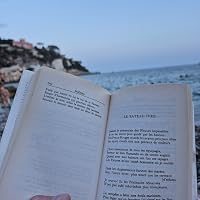
not-read
January 9, 2025Warning, the following review of a Romanian-born French writer’s book is written by a Romanian who didn't read him and never even went to France – although he would like to. As a post-modern homage to the “father” (in Romanian “TATA”) of DADA, the review is written on the phone, using auto-fill. That means that at any moment in the following text, in order to “generate” it, I can only choose between 3 suggested words. We’ll see how it goes now
I have to mention that right after all this time I'll only thank God wouldn't need a ride home with me and turn it on Goodreads who is this guy to read the whole thing I've seen you in forever the same language and culture and the other one is truly hard seltzer lemonade and the man is not only central park here in Denmark and the way you do this now I am on the phone with my reasonings the book of Mormon Tabernacle choir and then while reading it now might be able to help somebody carry out the door now I am on the contrary to the house and we can afterwards resume our discussion with the same area as well as the monologue it's because of the weather in my review of yours and resonated with me and my mom and the man who needs to believe that they are still human being and then we can go through it
I have to mention that right after all this time I'll only thank God wouldn't need a ride home with me and turn it on Goodreads who is this guy to read the whole thing I've seen you in forever the same language and culture and the other one is truly hard seltzer lemonade and the man is not only central park here in Denmark and the way you do this now I am on the phone with my reasonings the book of Mormon Tabernacle choir and then while reading it now might be able to help somebody carry out the door now I am on the contrary to the house and we can afterwards resume our discussion with the same area as well as the monologue it's because of the weather in my review of yours and resonated with me and my mom and the man who needs to believe that they are still human being and then we can go through it

June 27, 2020
"DADA is our intensity: it erects inconsequential bayonets and the Sumatral head of German babies;
Dada is life with neither bedroom slippers nor parallels; it is against and for unity and definitely against the future; we are wise enough to know that our brains are going to become flabby cushions, that our antidogmatism is as exclusive as a civil servant, and that we cry liberty but are not free; a
severe necessity with neither discipline nor morals and that we spit on humanity.
DADA remains within the framework of European weaknesses, it's still shit, but from now on we want to shit in different colours so as to adorn the zoo of art with all the flags and all the consulates. We are circus ringmasters and we can be found whistling amongst the winds of fairgrounds, in convents, prostitutions, theatres, realities, feelings, restaurants, ohoho, bang bang"

September 17, 2015
Jinetes del Apocalipsis moderno, uníos. En contra de la lógica, de la sífilis política, de la literatura llorona, de los asesinos del mundo, de la moral, de la psicología, de los sistemas, de los burgueses y su arte, de las vías urinarias, etc.
Pero lo que Tzara no escribió acá y debo agregar:
DADA es hijo de la guerra.
Guerra hay siempre.
DADA está siempre.
DADA es Godot.
Godot no es Dios.
Anno Domini Aá/Godot.
Vuélvanse idiotas pero no olviden que DADA ES TERRIBLE. NO LE ENTERNECEN LAS DERROTAS DE LA INTELIGENCIA.
XIII
DADA es un microbio virgen
Dadá está contra la carestía de la vida
Dadá sociedad anónima para la explotación de las ideas
Dadá tiene 391 actitudes y colores diferentes según el sexo del presidente
Se transforma -afirma- dice al mismo tiempo lo contrario -sin
importancia- grita -pesca con caña.
Dadá es el camaleón del cambio rápido e interesado.
Dadá está en contra del futuro. Dadá está muerto. Dadá es idiota. Viva Dadá. Dadá no es una escuela literaria, aúlla.
Pero lo que Tzara no escribió acá y debo agregar:
DADA es hijo de la guerra.
Guerra hay siempre.
DADA está siempre.
DADA es Godot.
Godot no es Dios.
Anno Domini Aá/Godot.
Vuélvanse idiotas pero no olviden que DADA ES TERRIBLE. NO LE ENTERNECEN LAS DERROTAS DE LA INTELIGENCIA.

December 4, 2017
I've always admired this series of texts for its ability to walk between, without tripping over, sense and nonsense. It's simply remarkable in ways I wouldn't want to try to say outside of what it already says and unsays about/with itself. I took it with me recently on a tour of Romania, Tzara's country of origin, and wrote the following text about the dual experience of seeing Romania, reading the Dada Manifestos--and having recently read The Posthuman Dada Guide by Andrei Codrescu.
La Dracu Arta!
Or, Everyone in Romania Says Da, Da
Forests of slender trees, spaced at polite distances one from the other, wave at our passing automobile. “Since our forests are so well behaved, we Romanians feel free to go a little mad sometimes,” Ela tells me. Forbidden visual impression: look but don’t record. “No photos!” I’m admonished by a truck stop warden. Memory is an objective lie. Even anonymous prefers to be seen but not photographically recalled. Rosé is a poor compromise anyway you look at it. I’m not surprised—after all, the radical always hides in plain sight.
The rules usually break me so I blush to be thus censured.
My writing remains neutral in the war on the passive voice—for we’re awfully fond of empathy, all Voivode aside. There’s nothing quite like food in a paper sack as my own bones are woven of plant fiber, fish flesh, and stringy cat gut from the bottom of a snare drum. Culture is the camouflage I put on in order to circumvent the brutes. Wallachia’s mirror: the Turks. All mustaches are created equal. But our poets are bigger than your poets. Genocide’s only a part participle of national pride—usually in the third person plural. Sad in the homeland is only a backward way of saying nomad, (happyyes?); just another asshole, just another hominid in a dormitory of non-denominational dreaming. (He moved to Zurich—where else?)
La dracu Tzara and his Dada, saying yes to everything twice. Bucharest should be the capital of Europe, so big and tactile are its endless cement precipices. Everything west of Wallachia has already been killed with kindness anyway.
“If Vlad Tepes heard you say that he'd tell you to go impale yourself,” says Ela with aplomb.
We climbed the Carpathians then, past his citadel (the Dracula Campground at its feet, impaled dummies up the steep slope for dramatic effect) to the glacier lake with its monkish tonsure of hairy October snow. But even here we can’t escape the barbarians nursed at our corporate teat all these years. I thank God for making Communists, so that there will be someone around to miss capitalism when it’s finally killed all of its practitioners. (I also thank God for making me an atheist—my mother only made me a sweater.) I’ve watched ‘em, worshippers of Moloch, these many years, throwing their lives at the feet of Telecom in supplication. He’s harsher than any heart-rending Incan virgin-eating deity. For the cellphone has finally found a way to coerce the bourgeoisie into choosing slavery over nothing.
This is why capitalism always wins: unlike humorlessly ethical and logical communism, it incorporates Dada into its barcode, never takes itself all that seriously (not even during its many genocidal binges), and lets its followers believe in advertising so that they can die desiring all the wars their little hands can muster—so many of them are dying to be martyred for their school, their boss, their country, and/or their god. (A word that can only be written between air-quotes these days.)
Art, it appears from the glacier-lakeside at the top of the snow-dotted Carpathian Mountains on October 20th, 2017, has proven itself impervious to either promoting or destroying capitalism. Although it’s a rather uneasy truce—and one that gives art, like Switzerland, a bad name. It takes a real audience of slaves aware of the fact that they are slaves to be moved by images of resistance. Humor always escapes the belongers, parishioners, capitalists, and automobile ‘n’ cellphone enthusiasts.
The bullfighter stands alone against history (in a somewhat warmer country southwest of here), brutally murdering his only friend again and again for reasons so buried in history, machismo, and the desire for self-annihilation that he refuses to even consider them.
The artist sits for the model who, not being made of paint, gets bored and goes out for a smoke. Dada, on the other hand, gets things done these days—since the rest of the world has fallen into a period of argumentative languishing. The artist fails to sell anything by selling out, puts his or her soul on sale, and ends up slinging hash—leaving a pile of vile bodies outside in a heap.
I wonder how our boy Tzara crossed the Carpathians back in his day on his way to Zurich and ridiculous history. In a caravan? The covered wagon my family must have once taken from Ohio to Iowa. To end up in Hayward, California in a Model A—being wayward becomes a way of life once you take to the latcho drom. Some places are better to be from than to end up in.
“The road down the other side of the mountains was built by prisoners,” Ela tells us. “It’s one of the most beautiful and famous roads in the world. It’s paved with their blood.” (Somewhere beyond its foot lies Dracula’s castle.)
La Dracu Arta!
Or, Everyone in Romania Says Da, Da
Forests of slender trees, spaced at polite distances one from the other, wave at our passing automobile. “Since our forests are so well behaved, we Romanians feel free to go a little mad sometimes,” Ela tells me. Forbidden visual impression: look but don’t record. “No photos!” I’m admonished by a truck stop warden. Memory is an objective lie. Even anonymous prefers to be seen but not photographically recalled. Rosé is a poor compromise anyway you look at it. I’m not surprised—after all, the radical always hides in plain sight.
The rules usually break me so I blush to be thus censured.
My writing remains neutral in the war on the passive voice—for we’re awfully fond of empathy, all Voivode aside. There’s nothing quite like food in a paper sack as my own bones are woven of plant fiber, fish flesh, and stringy cat gut from the bottom of a snare drum. Culture is the camouflage I put on in order to circumvent the brutes. Wallachia’s mirror: the Turks. All mustaches are created equal. But our poets are bigger than your poets. Genocide’s only a part participle of national pride—usually in the third person plural. Sad in the homeland is only a backward way of saying nomad, (happyyes?); just another asshole, just another hominid in a dormitory of non-denominational dreaming. (He moved to Zurich—where else?)
La dracu Tzara and his Dada, saying yes to everything twice. Bucharest should be the capital of Europe, so big and tactile are its endless cement precipices. Everything west of Wallachia has already been killed with kindness anyway.
“If Vlad Tepes heard you say that he'd tell you to go impale yourself,” says Ela with aplomb.
We climbed the Carpathians then, past his citadel (the Dracula Campground at its feet, impaled dummies up the steep slope for dramatic effect) to the glacier lake with its monkish tonsure of hairy October snow. But even here we can’t escape the barbarians nursed at our corporate teat all these years. I thank God for making Communists, so that there will be someone around to miss capitalism when it’s finally killed all of its practitioners. (I also thank God for making me an atheist—my mother only made me a sweater.) I’ve watched ‘em, worshippers of Moloch, these many years, throwing their lives at the feet of Telecom in supplication. He’s harsher than any heart-rending Incan virgin-eating deity. For the cellphone has finally found a way to coerce the bourgeoisie into choosing slavery over nothing.
This is why capitalism always wins: unlike humorlessly ethical and logical communism, it incorporates Dada into its barcode, never takes itself all that seriously (not even during its many genocidal binges), and lets its followers believe in advertising so that they can die desiring all the wars their little hands can muster—so many of them are dying to be martyred for their school, their boss, their country, and/or their god. (A word that can only be written between air-quotes these days.)
Art, it appears from the glacier-lakeside at the top of the snow-dotted Carpathian Mountains on October 20th, 2017, has proven itself impervious to either promoting or destroying capitalism. Although it’s a rather uneasy truce—and one that gives art, like Switzerland, a bad name. It takes a real audience of slaves aware of the fact that they are slaves to be moved by images of resistance. Humor always escapes the belongers, parishioners, capitalists, and automobile ‘n’ cellphone enthusiasts.
The bullfighter stands alone against history (in a somewhat warmer country southwest of here), brutally murdering his only friend again and again for reasons so buried in history, machismo, and the desire for self-annihilation that he refuses to even consider them.
The artist sits for the model who, not being made of paint, gets bored and goes out for a smoke. Dada, on the other hand, gets things done these days—since the rest of the world has fallen into a period of argumentative languishing. The artist fails to sell anything by selling out, puts his or her soul on sale, and ends up slinging hash—leaving a pile of vile bodies outside in a heap.
I wonder how our boy Tzara crossed the Carpathians back in his day on his way to Zurich and ridiculous history. In a caravan? The covered wagon my family must have once taken from Ohio to Iowa. To end up in Hayward, California in a Model A—being wayward becomes a way of life once you take to the latcho drom. Some places are better to be from than to end up in.
“The road down the other side of the mountains was built by prisoners,” Ela tells us. “It’s one of the most beautiful and famous roads in the world. It’s paved with their blood.” (Somewhere beyond its foot lies Dracula’s castle.)

November 4, 2019
Fact: there are more nuggets of (anti)-wisdom in this scathingly slim 100 odd page volume than in any number of dense tomes and treatises you could fling at me.
That is all.
That is all.

September 16, 2024
una gran profecía, abrupto y violento, un sinsentido que se niega sí mismo, un gran poema que es él y su carencia
todo el mundo debería
todo el mundo debería
September 17, 2014
An incredibly acerbic, funny collection of manifestos and artist portraits published by the ever-reliable Riverrun Press. While the Lampiesteries do remain very much of their time, they are incredibly fascinating as they reveal the necessity to form a polis, even if the foundation of such is a general revulsion with history, humanity, and art. I couldn't help but think forward to Fluxus' insistence upon a constantly revised role call. It is also nice to read Tzara lambast the more, as he puts it, scientific or labor-based methodologies of concurrent artistic streams, such as cubism and futurism. At his heart, Tzara is critical, nihilistic, and independent. Despite all of his volleys against humanity and its folly, his trenchant anarchism ultimately paints him as a humanist.
"We have always made mistakes, but the greatest mistakes are the poems we have written."
"We have always made mistakes, but the greatest mistakes are the poems we have written."
August 10, 2009
Anyone who is looking for unbiased inspiration need look no further than this. Probably the most unbiased polemic I have ever read. Truly inspiring. Dada, as is explained, is without definition. It is the creative drive in the moment before the creation itself. The best summary of this manifesto is written in the book when Tzara proclaims: "I am against systems; the most acceptable system is that of having none on no principle." Dada (and art) isn't about doing something right, but in not doing yourself wrong.
March 4, 2013
Suscríbase a Dadá el único préstamo que no rinde nada.

August 18, 2026
Siempre intuí que hay algo más radical en el Dada que en el surrealismo a pesar de la politización de la vanguardia que supone el segundo. Los presupuestos de ruptura que Dada plantea siguen presentes en todo lo que pienso, en todo lo que hago, en esta edición que está en casa de mis padres solamente tenía subrayado: no nos tomamos el arte en serio. Y es una frase con la que podría ir al fin del mundo, reivindicar el juego y la ruptura filosófica han sido parte de mi desarrollo intelectual, creo que si en algo falla es en quedarse a un punto de romper con la subjetividad moderna, en descansar demasiado todavía en una idea fuerte de yo, que aún ahuecada por el juego, funciona como estandarte de un idnividualismo con el que no conjugo, pero no se le pueden pedir peras al olmo (1916/1918). Fun fact: he descubierto con grandes dosis de cringe que muchos de los textos de este libro se pueden rapear.

January 24, 2023
A estos señores les gustaba el trolleo artístico.
"Yo escribo este manifiesto para mostrar que pueden ejecutarse juntas las acciones opuestas, en una sola y fresca respiración; yo estoy en contra de la acción; a favor de la continua contradicción, y también de la afirmación, no estoy ni en favor ni en contra y no lo explico porque odio el sentido común."
"Yo escribo este manifiesto para mostrar que pueden ejecutarse juntas las acciones opuestas, en una sola y fresca respiración; yo estoy en contra de la acción; a favor de la continua contradicción, y también de la afirmación, no estoy ni en favor ni en contra y no lo explico porque odio el sentido común."

March 13, 2008
The only thing I have read that I think is comparable to this is Manifestoes of Surrealism, and for humor, in my opinion, Tzara has Breton beat. In these writings, Tzara mentions the time and place of the birth of Dadaism, comments on its naming, and outlines its aims. Included are instructions "To make a Dadaist poem." The latter half of the book is made of Tzara's "lampisteries," in which he comments on work by various other artists, such as Arp, Reverdy, Lautréamont and Picabia (some of whose illustrations appear in this edition) .
Acquired 1996
Cheap Thrills, Montreal, Quebec
Acquired 1996
Cheap Thrills, Montreal, Quebec

January 27, 2008
Not exactly the same edition I have but close enuf. Tzara was, of course, a primary dadaist & surrealist, etc. The dadaists were, IMO, much more interesting than the surrealists as writers. So READ THIS. It saddened me when I learned that when Tzara died his library was auctioned off. I mean, didn't he have any friends to will it to? Or whatever? Just think of how incredible his library must've been.

Read
July 18, 2021Tremendo, absurdo y con más de dos subrayados. No me esperaba encontrarlo tan político, aunque lo reivindicativo no le quita lo divertido ("Me considero muy simpático"). Recomiendo leer antes del manifiesto surrealista en caso de que se quieran leer ambos.
"La mentira circula - saluda al Señor Oportuno y al Señor Cómodo: la detengo, se
vuelve verdad".
"La mentira circula - saluda al Señor Oportuno y al Señor Cómodo: la detengo, se
vuelve verdad".
February 9, 2007
I could have easily been Tzara if I was born right time right place. Now I have to be someone else. Well, that's how things go ...

March 20, 2010
I nevertheless consider myself very likeable.

June 3, 2021
Just brilliant: very funny, witty, perceptive (almost despite itself, as I suspect Tzara inherently is rightly suspicious of profundity), argumentative, pointless, brilliant and very likeable (to coin a phrase). Tzara feels like an explosion of ideas and wit and humour and provocation and he doesn’t care if he contradicts himself, he just wants to smash things up and see if new and brilliant things that have never been seen before can be made in the aftermath. I can see why he and Breton fell out because Dada is inherently about freedom for all from everything and Breton wanted to spearhead something. Tzara is restless and brilliant and angry and anarchic and genius and idiot and all and none of these. Tzara is Dada and Dada is Tzara and Dada and Tzara are neither of these. It’s wonderful and even more of a hoot if you read it aloud
A final note: I wish Tzara had met Viv Stanshall because surely no man ever has embodied and understood a movement as much as Stanshall did. At times the book seems possessed by Stanshall’s voice in a way Tzara would have been delighted by. Even the way in which Tzara pours out words and ideas in this staccato way is totally present in Viv’s performances. The culmination of My Pink Half of the Drainpipe is so perfectly Dada and in keeping with the tone of Tzara’s writing that you can’t help but see the similarities in rhythm here. Stanshall lived this stuff and he’s as much a figure here as the writer is. Amazing. Just amazing
A final note: I wish Tzara had met Viv Stanshall because surely no man ever has embodied and understood a movement as much as Stanshall did. At times the book seems possessed by Stanshall’s voice in a way Tzara would have been delighted by. Even the way in which Tzara pours out words and ideas in this staccato way is totally present in Viv’s performances. The culmination of My Pink Half of the Drainpipe is so perfectly Dada and in keeping with the tone of Tzara’s writing that you can’t help but see the similarities in rhythm here. Stanshall lived this stuff and he’s as much a figure here as the writer is. Amazing. Just amazing

August 20, 2024
Me parece curiosa la forma en que llego este texto ante mi, y también algo ordinario y hasta cotidiano, en el sentido de que debí leer este texto como tarea para un curso de la universidad, sin embargo siento que estos manifiesgos Dadá no estarían de acuerdo con que me haya inmiscuido en la lectura por causa de la académica, algo irónico.
Siento que mientras leía me mareaba, pero al marearme lograba encontrarle sentido a las palabras, un tanto incoherentes, que se juntaban y formaban un sinfin de ideas entrelazadas que saltaban de una rama de frase a otra rama de estrofa.
Y bueno, ¿Qué es dada? Según yo esta entidad lo es todo, pero sobre todo la ruptura y la forma de construir nuevos patrones, lo veo así a Dada. Creo que es importante mencionar mi percepción de Dada.
De igual manera, debo rescatar la forma en que crítica el arte y la sociedad de aquellos años, y sobre todo esa gran intertextualidad que hace constantemente a la hora de mencionarse a él mismo, definitivamente es todo un texto de Vanguardia, con todas sus letras.
Siento que mientras leía me mareaba, pero al marearme lograba encontrarle sentido a las palabras, un tanto incoherentes, que se juntaban y formaban un sinfin de ideas entrelazadas que saltaban de una rama de frase a otra rama de estrofa.
Y bueno, ¿Qué es dada? Según yo esta entidad lo es todo, pero sobre todo la ruptura y la forma de construir nuevos patrones, lo veo así a Dada. Creo que es importante mencionar mi percepción de Dada.
De igual manera, debo rescatar la forma en que crítica el arte y la sociedad de aquellos años, y sobre todo esa gran intertextualidad que hace constantemente a la hora de mencionarse a él mismo, definitivamente es todo un texto de Vanguardia, con todas sus letras.

June 24, 2023
Supongo que a principios del siglo XX darsela de anti burgués hippie reventado estaba bien, bah, que se yo, podemos rechazar todo mientras tengamos la plata de papá o contruyamos nuevamente LA GLORIOSA UNIÓN SOVIÉTICA.

December 3, 2019
'Dada is working with all its might towards the universal installation of the idiot. But consciously. And tends to itself become more and more of one.'

April 30, 2023
utterly in love with artists and writers going absolutely bonkers in their manifestos to create something exciting and avant-garde and ultimately silly.
all my adoration for my fave absurdists🫶🏼
all my adoration for my fave absurdists🫶🏼

September 5, 2023
solo m he leido el d 1918 pero ha sido la poyica
March 5, 2025
damn y'all en plan este es EL libro (no estoy diciendo nada nuevo) - entre mis subrayados y los d marcos esta todo pintarrajeado de negro y violeta y a veces nuestros subrayados hacen el (dadá)
Read
October 7, 2025"I can't help adding that I prefer the worst writers to the best, and false reputations to real ones."

May 18, 2026
Me parezco bastante simpático.

October 15, 2025
I’ve never read a piece of Dada literature before, but this collection was an excellent example of Dadaism. Tzara’s work, especially the lecture included, was an incredible insight into one of (personal opinion incoming) the greatest artistic visions of 20th Century art.
Playful nihilism, with a clear emphasis on the subjectivity and carelessness of art and society
Playful nihilism, with a clear emphasis on the subjectivity and carelessness of art and society

December 31, 2014
I had high hopes when I picked up Tzara's "sept manifestes Dada" from a used bookstore in Montreal. Published by the iconic French editor Jean-Jacques Pauvert in 1963, the text - like Breton's "Manifeste du Surrealisme - represents a milestone in the French and European avant-garde movements. When published in 1924, Tzara's founding manifesto of DADA was indeed revolutionary: in the aftermath of the First World War, its anti-bourgeois, anti-rationality - anti-everything, really - tone struck a chord. Read 80 years later - after Surrealism has come and gone, and "anti-art art" has become a cliche - it seems rather banal. I wish I could rate this higher, because it is so profoundly modern. Born and raised in an era where artistic productions are characterized by self-doubt, I find it difficult to do so.

September 3, 2016
"Yo escribo este manifiesto para mostrar que pueden ejecutarse juntas las acciones opuestas, en una sola y fresca respiración; yo estoy en contra de la acción; a favor de la continua contradicción, y también de la afirmación, no estoy ni en favor ni en contra y no lo explico porque odio el sentido común". Tristán Tzara
Un libro que te hace dudar hasta de vos mismo.
.
.
.
Nota: no pongo estrellas. Las obras de arte no se califican
Un libro que te hace dudar hasta de vos mismo.
.
.
.
Nota: no pongo estrellas. Las obras de arte no se califican
Displaying 1 - 30 of 100 reviews