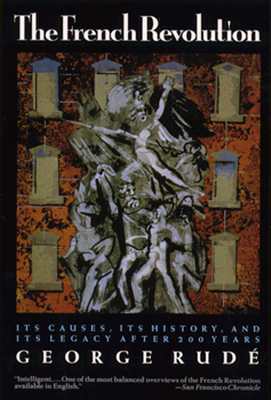
In The French Revolution, the distinguished historian George Rude turns his penetrating eye to one of the most cataclysmic events of modern history, presenting a cogent survey of the revolution, of the Reign of Terror and the dictatorship that ensued, and of the revolution's ultimate, enduring impact on Western history. The French Revolution is an indispensable study of his pivotal era and of its lasting impact on the world.
George Rudé was a British Marxist historian, specializing in the French Revolution and "history from below," especially the importance of crowds in history.
Apologetics masquerading as historiography. Shrewd readers can easily catch the communist author juggling meaninglessly glib and deftly overwrought sentences as he downplays the crimes of the revolutionaries and deflects the responsibility of talking about their myriad hypocrisies.
The largely uninformative writing style where the author pretends to be rigorous by giving his extremely detailed opinions and at the same time failing to sketch the events upon which he comments to any significant degree was annoying, to say the least.
Useless for introductees into the eponymous historical event, as it fails to be narratively informative, and likewise ueless for those who are already well-read on it, as they must already have formed their opinions on the given subject.
A bit *too* concise — aggressively truncated so not terribly illuminating in any specificity, yet its scope is so unwieldy it also cannot really put down any idiosyncratic interpretation of events. Fine, I suppose, but there are better “short histories” and it’s unclear to me what function this fulfills in one of the most overcrowded historical fields.
Yazarın toplumu sınıflar ve katmanlarla ele alması çok açıklayıcı. Alışık olduklarımıza kıyasla daha mantıklı neden-sonuç ilişkilerş kurulmuş. Ayrıca genellikle savaşlarıyla anılan Napolyon’un devrimin ne noktasında durduğunu, devrim fikirleri yönünden fransa ve avrupa’ya nasıl etki ettiğini güzel özetlemiş.
Elimdeki kitap İletişim’den çıkan beşinci baskı. Şüphesiz orijinal dildeki anlatım zorlayıcıdır ancak yine de çeviri ve redaksiyonda iyileştirmeler yapılabileceğini düşünüyorum.
The book was fantastic! It explains the Revolution generally, but it doesn't miss the crucial details. Especially, in Jacobins part, there is some shocking information. The book helps us to understand the difficulties of passing to democracy. I recommend those who are interested in the late 18th century.
The opposite of Schama if you like, extremely concise, Rudé covers not only the Revolution but also Napoleon's rise to power and the Revolution's wider effects in Europe, the World, and the legacy in France up to the present day. Quite an achievement for a volume of just 183 pages, and as a companion to Schama it is ideal, as it provides a summary to read alongside. However once we leave Schama behind, the coarse grain of such a judicious synthesis becomes apparent. It left me wanting to read more about Napoleon, as what's presented here is a very quick overview of the revolutionary legacy he brought to various European countries: the Code Civile, equality before the law, a removal of seigneurial dues and levies and the opening of posts and careers to men of talent rather than of name. But the differences in the different countries are really only sketched in very broad strokes - useful as a summary perhaps in addition to something more detailed.
Yazar Fransız Devriminin ortaya çıktığı koşulları Devrimdeki halk hareketlerini güzel anlatmış. Sonraki 48 ihtilalleri ile bağdaştırması da iyi. Hatta Kronoloji ve Kaynakça tasnifi de çok iyi bu nedenle bu kitaptan konu ilginizi çekerse yazarın önerileri doğrultusunda başka kitaplara geçebilirsiniz. Diğer ülkelere etkisi kısmı biraz eksik. Fransız Devrimini bu yönü ile inceleyecekseniz bu kitabı tavsiye etmem. Fransız Devrimi ile ilgili çalışacağım nereden başlamalıyım diyenler varsa onlar için bu kitap başlangıç olabilir. Detaylı tartışma yapmak istemiyorum. Ben tavsiye ederim teşekkürler :)
I had forgotten that the Revolution was a middle class revolt against the nobility and monarchy. The period's violence and turmoil are absolutely fascinating, as the various parts of French - really Parisian - society vied for control.
This book would get 5 stars, but it assumes a familiarity with the subject that left me a little confused at times. Nevertheless, well worth the read. The subject should get a lot more attention in high school and college history classes.
This book gives a very detailed explanation of the stages and causes of the revolution, as well as an in-depth analysis of the social factors, class tensions, and class struggles of 18 century french society.
This book might not be for everyone, it can be a little tedious at times, but overall its a very interesting read, you really get a sense of exactly why things occurred. However, i would not recommend unless you already have a fairly decent knowledge of the french revolution.
This is an excellent, concise survey of the major events of the French Revolution. Less ambitious in scope than major recent books like Simon Sciama's “Citizens” or the classic histories by Michelet, Taine, Lefebvre, or even his own “The Crowd in the French Revolution”, the brevity may make the whole picture easier to comprehend. So much has been written about this period and from such contrasting political perspectives that one is easily overwhelmed. Rudé's calm orderly presentation inspires confidence through the precision of telling detail and the long experience which informs his choices of what to highlight. Rudé is generally described as a “Marxist historian” but unless a compassionate view of how events affected the broad public troubles a reader, they might not notice. There is no obtrusive “historical materialism” in this book, only a mature perspective on turbulent events.
This manages to covers an impressive amount of ground for such a relatively short book. Apart from it's discussions of the key phases of the revolution from 1789 to 1802, it includes chapters on the Napoleonic empire up to 1815, the French revolution's lasting influence up to the 1848 revolutions in Europe and beyond, plus an interesting summary of French Revolution historiography. The book's major blind spot was its handful of dismissive references to the great Haitian revolution, which was anachronistically described as a colonial 'civil war' fought against 'natives'.
Can I say I "read" the book when I didn't? Got to Chapter 2 and quit. The topic is good but the writing is so dry and academic that I gave up and went to my next book on the French Revolution: "The Terror" which, like this book, also covers historical background and analysis, but is more readable. If I change my mind and want to give it another go, I will come back and edit my review.
Fransız Devrimi'nin uzun yıllar önceden kök salmış sebeplerinden başlayıp halk hareketlerini, terörü ve Napolyon'un iktidara geliş sürecini anlatan, 1848'e de kısaca değinilen bir kitap. Devrimin Avrupa'da ve tüm dünyadaki etkileri net şekilde anlatılmış.
Benim gibi Fransız Devrimi hakkında bir şey bilmiyorum, genel hatlarıyla ne olup bittiğini öğrenmek istiyorum, diyorsanız doğru kitap bu olmayabilir. Fransız Devrimi yıllar süren bir keşmekeşmiş, kitap da bu havayı yansıtıyor sanki... :)
A little tedious at times, the book was well worth the read. Especially helpful and appreciated were the glossary, timeline of main events and “Index of Main Characters”.