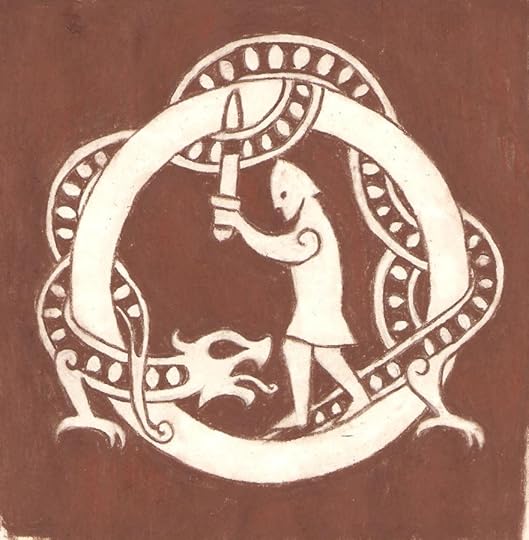
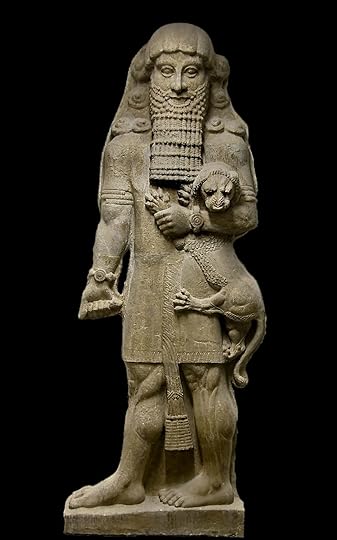
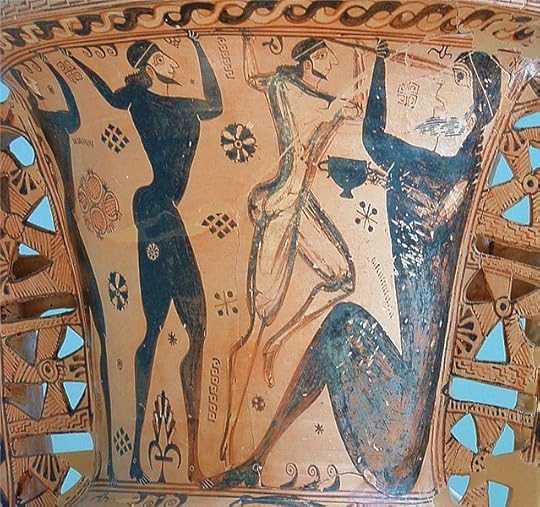
This book is very hard to classify. Doesn't the title make you think "World Mythology"? Well, if it did, you would be wrong. I bought this book, looking forward to (especially) a female viewpoint of comparative mythology from various different countries around the world. What I got was an extremely thorough set of retellings (with impeccably named sources) by Hamilton of virtually every classical (Greek and Roman) myth ever told), with the very strange inclusion of approximately 20 pages of Norse myths. I don't ever object to reading Norse myths. They are my favourite, since they make between them almost a linear single story with cause-and-effect leading us from the creation of the world to its inevitable destruction. I do admit to feeling offended, almost, that this amazing body of Norst myth should be included as an afterthought in 20 pages of a book nearly 470 main pages long, leaving out all the things that make the Norse world view make so much sense. I was pleased to see the Volsungasaga included, since it is so often replaced by the Nibelungenlied (the Germanic version of Sigfried and his messed up love life), but then as I read it I found to my dismay: "The story of Siegfried is so familiar that that of his Norse prototype Sigurd can be briefly told." Do you notice the word "prototype" in that sentence? Does Edith Hamilton not care that the prototype is more important than the bastardized version invented by Germanic peoples? There are reasons for the re-invention of the Sigurd story that are not entirely pleasant, and the re-invention of that story as the Wagnerian Ring Saga in opera. These reasons are unsavory and political, the stories are later, and they are unsatisfactory in the extreme, compared to the Volsungasaga. Okay, enough of my own particular hobby horse. It's time to ask why Hamilton was so extraordinarily thorough with Greek myth (and Roman, while aware that Roman stories are nearly all renamed versions of the Greek tales), and yet she left out so many other myths so much older and so much more important, for example The Epic of Gilgamesh, perhaps the oldest written story on Earth, which relates the story of the historical King of Uruk from Ancient Sumeria (2750-2500 BCE) originally on 12 clay tablets in cunieform script. This astoundingly important tale in human history is completely ignored by Hamilton. So are all the myths of the rest of the world. I would like to give this book five stars for its really complete and fairly narrated Greek mythos, but since it leaves out the whole rest of the world (except as above), I can only give two stars at most. If the title of the book had been "Greek Mythology", I think I could have given it five stars. But then it would have had to compete with so many other works about Greek mythology, that probably the publishers said to change the name and add something that wasn't Greek. Sorry for the disillusionment about the publishing trade, but I've been there.