What do you think?
Rate this book


196 pages, Paperback
First published January 1, 1950

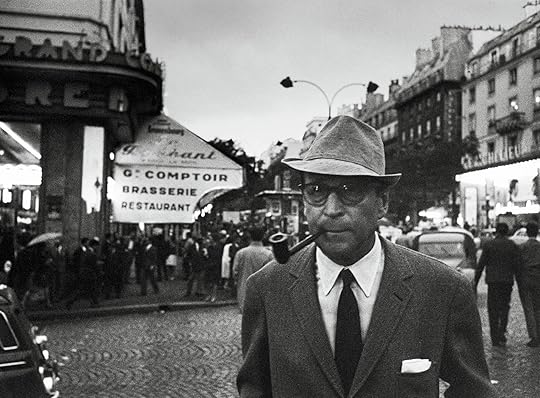
That was when everything started to ‘buzz inside his head ‘, as he described to himself.All these stages in Maigret’s process are evident here as in pretty much all the cases of his I’ve read, that patient observation, leaving the hackwork to others but endeavouring to be in the right place at the appropriate time to talk to all the parties involved and notice their reactions.
In the beginning he knew nothing, only precise facts, as written in the reports. Then he would find himself talking to people he’d never seen, whom he hadn’t known before, and he looked at them as if looking at photographs in an album.
He had to get to know them as quickly as possible, ask questions, believe or disbelieve their answers, avoid forming an opinion too quickly.
It was a period when people and things were clear but a little distant, still anonymous, impersonal.
Then, at a particular point, for no apparent reason, everything ‘started to buzz’. The characters became hazier and at the same time more human, more complicated especially, and it was important to pay attention.“In other words,” Simenon writes, “he began to see them from the inside,” so that in due course the truth would emerge, “unaided”. And this is exactly what happens in this case. Who would want to murder the old lady, and what would be their motivation? Is it the estranged elder stepson Théo, who though not rich affects the manner of the Duke of Windsor and who currently happens to be in Étretat? Can it possibly be the second stepson Charles who has called in Maigret to help solve the case? What about Arlette Sudre, Valentine’s only child, who hates her mother, preferring her life with husband and child in Paris while having peccadilloes of her own?