

What do you think?

Modern War Studies
The Soviet-Afghan War: How a Superpower Fought and Lost
The War in Afghanistan (1979-1989) has been called "the Soviet Union's Vietnam War," a conflict that pitted Soviet regulars against a relentless, elusive, and ultimately unbeatable Afghan guerrilla force (the mujahideen). The hit-and-run bloodletting across the war's decade tallied more than 25,000 dead Soviet soldiers plus a great many more casualties and further demoralized a USSR on the verge of disintegration.
In The Soviet-Afghan War the Russian general staff takes a close critical look at the Soviet military's disappointing performance in that war in an effort to better understand what happened and why and what lessons should be taken from it. Lester Grau and Michael Gress's expert English translation of the general staff's study offers the very first publication in any language of this important and illuminating work.
Surprisingly, this was a study the general staff never intended to write, initially viewing the war in Afghanistan as a dismal aberration in Russian military history. The history of the 1990s has, of course, completely demolished that belief, as evidenced by the Russian Army's subsequent engagements with guerrilla forces in Chechnya, Azerbaijan, Tadjikistan, Turkmenistan, and elsewhere. As a result, Russian officers decided to take a much closer look at the Red Army's experiences in the Afghan War.
Their study presents the Russian view of how the war started, how it progressed, and how it ended; shows how a modern mechanized army organized and conducted a counter-guerrilla war; chronicles the major battles and operations; and provides valuable insights into Soviet tactics, strategy, doctrine, and organization across a wide array of military branches. The editors' incisive preface and commentary help contextualize the Russian view and alert the reader to blind spots in the general staff's thinking about the war.
This one-of-a-kind document provides a powerful case study on how yet another modern mechanized army imprudently relied upon the false promise of technology to defeat a determined guerrilla foe. Along the way, it vividly reveals the increasing disillusionment of Soviet soldiers, how that disillusion seeped back into Soviet society, and how it contributed to the collapse of the Soviet Union. The Red Army had fought their war to a military draw but that was not enough to stave off political defeat at home. The Soviet-Afghan War helps clarify how such a surprising demise could have materialized in the backyard of the Cold War's other great superpower.
In The Soviet-Afghan War the Russian general staff takes a close critical look at the Soviet military's disappointing performance in that war in an effort to better understand what happened and why and what lessons should be taken from it. Lester Grau and Michael Gress's expert English translation of the general staff's study offers the very first publication in any language of this important and illuminating work.
Surprisingly, this was a study the general staff never intended to write, initially viewing the war in Afghanistan as a dismal aberration in Russian military history. The history of the 1990s has, of course, completely demolished that belief, as evidenced by the Russian Army's subsequent engagements with guerrilla forces in Chechnya, Azerbaijan, Tadjikistan, Turkmenistan, and elsewhere. As a result, Russian officers decided to take a much closer look at the Red Army's experiences in the Afghan War.
Their study presents the Russian view of how the war started, how it progressed, and how it ended; shows how a modern mechanized army organized and conducted a counter-guerrilla war; chronicles the major battles and operations; and provides valuable insights into Soviet tactics, strategy, doctrine, and organization across a wide array of military branches. The editors' incisive preface and commentary help contextualize the Russian view and alert the reader to blind spots in the general staff's thinking about the war.
This one-of-a-kind document provides a powerful case study on how yet another modern mechanized army imprudently relied upon the false promise of technology to defeat a determined guerrilla foe. Along the way, it vividly reveals the increasing disillusionment of Soviet soldiers, how that disillusion seeped back into Soviet society, and how it contributed to the collapse of the Soviet Union. The Red Army had fought their war to a military draw but that was not enough to stave off political defeat at home. The Soviet-Afghan War helps clarify how such a surprising demise could have materialized in the backyard of the Cold War's other great superpower.
392 pages, Paperback
First published December 1, 2001
About the author
Lester W. Grau
18 books24 followersLester W. Grau is a retired U.S. Army Lieutenant Colonel. He served as an infantry officer and a Soviet Foreign Area Officer (FAO) throughout his career. He fought in Vietnam. In 1981, he completed one year of Russian language training at the Defense Language Institute at Monterey, California and then graduated from the U.S. Army Russian Institute (USARI) in Garmisch-Partenkirchen, Germany in 1983. USARI was a two-year post-graduate school which dealt with all aspects of the then Soviet Union and all classes were taught in Russian. He has served in Moscow and traveled extensively in the former Warsaw Pact and former Soviet Union and continues that travel today. Since 1983, his work has exclusively been in the area of Russian and Soviet tactics and operations. As a combat infantryman, he finds it fascinating to compare and contrast how both the US and USSR fought and fight.
Ratings & Reviews
Friends & Following
Create a free account to discover what your friends think of this book!
Community Reviews
Displaying 1 - 25 of 25 reviews
April 28, 2019
This was a very thorough overview of the Soviet presence in Afghanistan. Contrary to popular belief, the 40th Army was ushered in by the pro-communist Afghan government and there was not a strong-arm invasion. On December 24, 1979, the Soviet Union invaded Afghanistan, under the pretext of upholding the Soviet-Afghan Friendship Treaty of 1978.
The introduction and background leading up to the war was superb in my opinion. The author presents from neither pro-/anti-Soviet but merely presents the facts.

This book literally gives you a breakdown of operations, tactics (raids, ambushes, cordon and search), arms/weaponry/unit sizes, artillery, reconnaissance, and combat support (medical, technical, uniforms, post-exchange amenities, housing, pay).
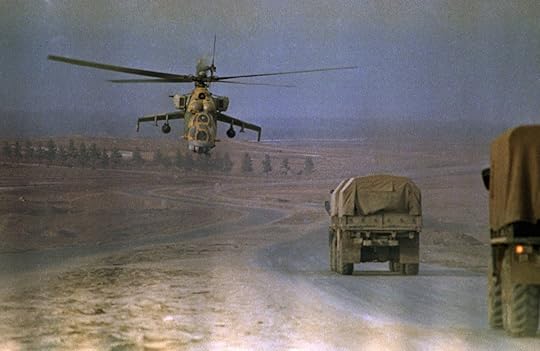
The interesting part to me was the air assault/airborne operations and Army aviation operations (you know: the typical stuff you see in the movies). There is extensive information about these operations with paratroopers and helicopters!
Again retired US Army Lt Col Lester Grau gives an editors commentary at the end of each chapter. This is an outstanding book. If this subject interests you also check out 'The Bear Went Over The Mountain' for further Soviet tactics and operating procedures. Thanks!
The introduction and background leading up to the war was superb in my opinion. The author presents from neither pro-/anti-Soviet but merely presents the facts.
This book literally gives you a breakdown of operations, tactics (raids, ambushes, cordon and search), arms/weaponry/unit sizes, artillery, reconnaissance, and combat support (medical, technical, uniforms, post-exchange amenities, housing, pay).
The interesting part to me was the air assault/airborne operations and Army aviation operations (you know: the typical stuff you see in the movies). There is extensive information about these operations with paratroopers and helicopters!
Again retired US Army Lt Col Lester Grau gives an editors commentary at the end of each chapter. This is an outstanding book. If this subject interests you also check out 'The Bear Went Over The Mountain' for further Soviet tactics and operating procedures. Thanks!

March 31, 2022
This volume, edited by Lester Grau and translated by Michael Gress, is the third in a trilogy on the Soviet-Afghan War, with the other two volumes being The Bear Went Over the Mountain: Soviet Combat Tactics in Afghanistan and The Other Side Of The Mountain: Mujahideen Tactics In The Soviet-Afghan War Illustrated Edition .
This book was produced by a team of academicians in the Russian General Staff, led by a Colonel Runov. Throughout, other officers who had participated in the war add their own contributions of events or procedures. Chapter 1 focuses on the phases and course of the conflict, Chapter 2 on the organization, armament and training of the Soviet 40th Army and the army of the Afghan Democratic Republic, Chapter 3 on the organization, armament, and training of the Mujaheddin. Chapter 4 is on the Soviet "Operational Art", Chapter 5 is on Combined Arms tactics, Chapter 6 on Combat Arm Branch Tactics, Chapter 7 on Combat Support, Chapter 8 on Combat Service Support, and Chapter 9 is the conclusion and summary. Throughout, the editor and translator add their own commentary.
In short, the book describes how a relatively high-technology Soviet army, trained for a high-intensity war against NATO, fought a highly-motivated guerrilla force until the Soviets were forced to withdraw in 1989. When their initial tactics failed, they instead switched to the use of precision weaponry, improvising the use of combined-arms brigades, and small "armored groups" of 3-5 vehicles each. Additionally, the authors describe the use of small commando units or special forces and the use of helicopters, used until the Mujaheddin received Stinger missiles and other anti-aircraft weaponry.
The Soviets were consistently impeded by logistics issues and the rapid attrition of vehicles, and epidemic diseases also sank morale. The use of Uzbek, Tajik, and Turkmen troops or other Central Asian minorities within the Soviet Union also, in the Grau's and Gress' view, did not help the Soviet aims. Firstly, the use of minority ethnic groups as cannon fodder for an an unpopular war, and secondly, the patronizing assumption that people within a loose geographic proximity would magically understand Afghanistan was also a serious mistake.
It might be appealing to draw comparisons between this and other campaigns - for example, the US campaigns in Afghanistan, but these would be superficial. To give the most basic comparison: the Soviet "Limited Contingent" fluctuated between 90,000 and 120,000 troops, whereas the Resolute Support Mission, from 2014 to 2021, had only a peak of 17,000 troops.
There are some areas that I wish the Russian General Staff had discussed further - their opinions and description of the Afghan Democratic Republic. That might have been straight-jacketed by other political considerations. Grau and Gress instead describe at first the possibility that this was from a Soviet attempt to save the Democratic Republic of Afghanistan from disintegrating into civil war, or perhaps to avoid a Western turn. A greater politial discussion would have been valuable in discussing how the insurgency formed, and how it was ultimately victorious.
And while this is a direct work of military operations, it is only because of Gress and Grau that civilian casualties and the immense toll of human suffering that were a result of the war are mentioned at all.
This book was produced by a team of academicians in the Russian General Staff, led by a Colonel Runov. Throughout, other officers who had participated in the war add their own contributions of events or procedures. Chapter 1 focuses on the phases and course of the conflict, Chapter 2 on the organization, armament and training of the Soviet 40th Army and the army of the Afghan Democratic Republic, Chapter 3 on the organization, armament, and training of the Mujaheddin. Chapter 4 is on the Soviet "Operational Art", Chapter 5 is on Combined Arms tactics, Chapter 6 on Combat Arm Branch Tactics, Chapter 7 on Combat Support, Chapter 8 on Combat Service Support, and Chapter 9 is the conclusion and summary. Throughout, the editor and translator add their own commentary.
In short, the book describes how a relatively high-technology Soviet army, trained for a high-intensity war against NATO, fought a highly-motivated guerrilla force until the Soviets were forced to withdraw in 1989. When their initial tactics failed, they instead switched to the use of precision weaponry, improvising the use of combined-arms brigades, and small "armored groups" of 3-5 vehicles each. Additionally, the authors describe the use of small commando units or special forces and the use of helicopters, used until the Mujaheddin received Stinger missiles and other anti-aircraft weaponry.
The Soviets were consistently impeded by logistics issues and the rapid attrition of vehicles, and epidemic diseases also sank morale. The use of Uzbek, Tajik, and Turkmen troops or other Central Asian minorities within the Soviet Union also, in the Grau's and Gress' view, did not help the Soviet aims. Firstly, the use of minority ethnic groups as cannon fodder for an an unpopular war, and secondly, the patronizing assumption that people within a loose geographic proximity would magically understand Afghanistan was also a serious mistake.
It might be appealing to draw comparisons between this and other campaigns - for example, the US campaigns in Afghanistan, but these would be superficial. To give the most basic comparison: the Soviet "Limited Contingent" fluctuated between 90,000 and 120,000 troops, whereas the Resolute Support Mission, from 2014 to 2021, had only a peak of 17,000 troops.
There are some areas that I wish the Russian General Staff had discussed further - their opinions and description of the Afghan Democratic Republic. That might have been straight-jacketed by other political considerations. Grau and Gress instead describe at first the possibility that this was from a Soviet attempt to save the Democratic Republic of Afghanistan from disintegrating into civil war, or perhaps to avoid a Western turn. A greater politial discussion would have been valuable in discussing how the insurgency formed, and how it was ultimately victorious.
And while this is a direct work of military operations, it is only because of Gress and Grau that civilian casualties and the immense toll of human suffering that were a result of the war are mentioned at all.

March 6, 2021
Afghanistan has long hold reputation as the graveyard of empires. Harsh lands with equally harsh climates filled with warlike tribes, it was singularly difficult to impose centralized rule as often found on an imperial administration. Following the footsteps of British Empire, which effort to subdue the Afghans ended in a catastrophic and bloody retreat, was Soviet Union, which tried to impose a centralized, communistic client government. This was an effort which as hopeless as trying to herd bunch of cats. The Soviets got their backsides kicked so hard, that this almost ten years war became one of the factors behind Soviet Union breakup.
This book, which is a translated work from Russian to English, is a mostly military analysis of Soviet war efforts in Afghanistan, that, in my opinion, although similar, went much worse from Americans’ experience in Vietnam. Many aspects were discussed, from Soviet tactics, armaments, right down to security and support groups. However, while certainly informative and not lacking in details, this book missed my expectations on this subject. While Soviet-Afghan War is an interesting, and new topic for me, this book was probably not the best go-to for me, who is more interested in political processes and how the war went on, rather than war logistics and how far rocket ammunition can reach enemy. I also want to know more about The Mujahideen, which were sparsely described within this book.
This book, which is a translated work from Russian to English, is a mostly military analysis of Soviet war efforts in Afghanistan, that, in my opinion, although similar, went much worse from Americans’ experience in Vietnam. Many aspects were discussed, from Soviet tactics, armaments, right down to security and support groups. However, while certainly informative and not lacking in details, this book missed my expectations on this subject. While Soviet-Afghan War is an interesting, and new topic for me, this book was probably not the best go-to for me, who is more interested in political processes and how the war went on, rather than war logistics and how far rocket ammunition can reach enemy. I also want to know more about The Mujahideen, which were sparsely described within this book.
January 16, 2013
"The Soviet-Afghan War" by members of the Russian General Staff, and translated by Lester Grau and Michael Gross, is a summary overview of the Soviet experience in the Afghan Invasion and War of the 1980s. The book consists of separate chapters on various aspects of the war, including the experiences of various components of the Soviet Army. It is therefore more of an organizational review of lessons learned rather than a history.
Each of the chapters is, in many ways, very similar to American Military Staff studies of various military aspects. Chapters cover topics such as organization, combined arms tactics, combat service branch specific tactics, combat support, and combat service support. One interesting point made through the book, in the comments, by the translators is how unprepared the Soviet Army was for the guerrilla war in Afghanistan. The Soviet Army had a long history of dealing with guerrilla conflicts. Yet, in the 1980's the Soviet Army had forgotten that history, and instead was fully oriented towards massive modern armored combat in the North German Plain. While some lessons were learned, this failure put the Soviet Army at a disadvantage during the entire conflict.
I cannot sufficiently compliment the translation of this book. The translators wonderfully and accurately translated the Russian language studies into colloquial English. More than that, they mapped and Soviet military concepts into American military concepts. They also explained, in great detail, the differences and similarities between the two systems and the decisions that they made in translating the text. This is certainly the highest quality translation effort I have encountered in many years. I believe that it was the quality of the translation that made the book accessible to this reader. My highest compliments and appreciation to Mr Grau and Mr Gross!
This book would appeal to those interested in the history of Afghanistan, the United States and/or the Soviet Union. It will also appeal to students of modern military tactics, logistics, and military organizational operational activities.
Each of the chapters is, in many ways, very similar to American Military Staff studies of various military aspects. Chapters cover topics such as organization, combined arms tactics, combat service branch specific tactics, combat support, and combat service support. One interesting point made through the book, in the comments, by the translators is how unprepared the Soviet Army was for the guerrilla war in Afghanistan. The Soviet Army had a long history of dealing with guerrilla conflicts. Yet, in the 1980's the Soviet Army had forgotten that history, and instead was fully oriented towards massive modern armored combat in the North German Plain. While some lessons were learned, this failure put the Soviet Army at a disadvantage during the entire conflict.
I cannot sufficiently compliment the translation of this book. The translators wonderfully and accurately translated the Russian language studies into colloquial English. More than that, they mapped and Soviet military concepts into American military concepts. They also explained, in great detail, the differences and similarities between the two systems and the decisions that they made in translating the text. This is certainly the highest quality translation effort I have encountered in many years. I believe that it was the quality of the translation that made the book accessible to this reader. My highest compliments and appreciation to Mr Grau and Mr Gross!
This book would appeal to those interested in the history of Afghanistan, the United States and/or the Soviet Union. It will also appeal to students of modern military tactics, logistics, and military organizational operational activities.

November 22, 2011
Sadly abit dry, to be expected though since its simply the direct translation of the Soviet High Commands write up of their participation and the break down of support structures during the Soviet Afghan War.
Will stick to authored books on the subject from here on out, high command reports are not my reading style in the slightest.
Will stick to authored books on the subject from here on out, high command reports are not my reading style in the slightest.

March 28, 2012
This book was quite dry on the one hand, and on the other was a pretty candid look at the Soviet efforts in Afghanistan. The level of detail about how raids were conducted to what kind of canned rations were provided the soldiers offers a pretty realistic look at the way wars are. I think that anyone who has served in the military, and especially in a combat situation (either in Iraq or Afghanistan) will recognize many of the elements that the Soviet Army logistics, tactics, and everyday reality.
If you are interested in the military, Soviet history, Afghanistan, or the reality of war, this book is a good choice.
If you are interested in the military, Soviet history, Afghanistan, or the reality of war, this book is a good choice.

January 9, 2017
This was a very interesting read. Packed with technical details, it's the assessment of the Soviet generals of their actions in Afghanistan. The editing team did well to supplement and illuminate some exaggerations of shortfalls in the generals assessments.
This book isn't for everyone, but it is an interesting read if you are interested in war history, the Soviet Union military, or military action in Afghanistan.
This book isn't for everyone, but it is an interesting read if you are interested in war history, the Soviet Union military, or military action in Afghanistan.

March 9, 2017
Written by Russian staff officers who fought the war, this book goes into great detail on the tactics and inner workings of the Soviet military in Afghanistan. Covers everything from small unit tactics to logistics and base exchanges. Editors provide helpful critical commentary when the self reflection of the Soviets comes up short.
February 28, 2017
Excellent review of the Soviet war in Afghanistan. Provides a wonderful explanation of what running a war entails, which is something I don't think I've really come across before. Especially interesting in terms of the lesser-covered stuff, like combat support and services.

March 24, 2021
First the interesting part surrounding the publication of this book. The work was done by Russian genenral staff in 1990s but since there was no interest/money to publish it in Russia US publishing house stepped in and got people researching Cold War Soviet military involved. These people were former US military with long experience in counter insurgency warfare and that shows. While saying there is a glee on their part in describing Soviet difficulties would be too harsh there is an underlying sense of smirk that Soviets were encouraging insurgencies through out the world and are now on the receiving end of one, and don't know how to react.
Then there is timing. Book was published in early 2002, which is right after 9/11 and US invasion of Afghanistan and start of the war that is still ongoing 19 years later. To compound the irony in chapter on history of Afghanistan there is a part titled "Soviet Union's turn". Of course when book came out it was US turn. And Us faces same issues and same problems, with a benefit that Taliban are less well equipped then Mujahedin were.
Now on to the book. Book offers look into all aspects of the war. We learn about use of various branches (artillery, tanks, mechanized forces, helicopters, air support.....), tactics (sweeps, blocks, raids, convoy and base security.....) and other aspects (medical support, accommodation, uniforms, equipment, pay, morale.....). Given the size of the book and size of the subjects these are not in depth analysis but they offer good enough analysis so we can get a good picture. Soviets are free to admit their mistakes and authors in their commentary are quick to point further ones.
Unlike The Bear Went Over the Mountain: Soviet Combat Tactics in Afghanistan this book doesn't focus on individual actions but rather on overall performance. Not "mechanized battalion attacked into a valley to destroy enemy base" but rather "battalion sized mechanized forces were used for combat operations aimed at destroying enemy bases, they were not always successful" For this reason these books complement each other, this one provides general impression of a branch while The Bear provides examples and more detail.
Overall this is a good analysis of the war that doesn't ignore non combat aspects, such as support services, things that are often overlooked. It would be of interest to people interested in this particular war of guerilla conflicts in general.
Then there is timing. Book was published in early 2002, which is right after 9/11 and US invasion of Afghanistan and start of the war that is still ongoing 19 years later. To compound the irony in chapter on history of Afghanistan there is a part titled "Soviet Union's turn". Of course when book came out it was US turn. And Us faces same issues and same problems, with a benefit that Taliban are less well equipped then Mujahedin were.
Now on to the book. Book offers look into all aspects of the war. We learn about use of various branches (artillery, tanks, mechanized forces, helicopters, air support.....), tactics (sweeps, blocks, raids, convoy and base security.....) and other aspects (medical support, accommodation, uniforms, equipment, pay, morale.....). Given the size of the book and size of the subjects these are not in depth analysis but they offer good enough analysis so we can get a good picture. Soviets are free to admit their mistakes and authors in their commentary are quick to point further ones.
Unlike The Bear Went Over the Mountain: Soviet Combat Tactics in Afghanistan this book doesn't focus on individual actions but rather on overall performance. Not "mechanized battalion attacked into a valley to destroy enemy base" but rather "battalion sized mechanized forces were used for combat operations aimed at destroying enemy bases, they were not always successful" For this reason these books complement each other, this one provides general impression of a branch while The Bear provides examples and more detail.
Overall this is a good analysis of the war that doesn't ignore non combat aspects, such as support services, things that are often overlooked. It would be of interest to people interested in this particular war of guerilla conflicts in general.
August 28, 2021
"History is written by the victors", goes the old saw, but it is worth hearing from the vanquished as well. They are more willing to say how they went wrong.
The book is mostly a translated series of accounts by Soviet military officers who were involved in the war, with endnotes of each chapter by American authors. The Soviets' version describes how they had been trained to fight either China or Europe and never expected to fight a guerrilla war in the mountains and deserts of Afghanistan, how the misunderstood the native's mentality and culture, and how they kept changing tactics to minimize their own losses while doing as much damage as they could to the enemy, only to find that they did not get enough resources to win the war. The American authors mention things that the Soviets left out, such as how resources were really allocated, and how disease was actually the bigger enemy of the Soviet forces than the muhajideen, as well as the fact that the Soviet military was viewed as unwelcome invaders and who in fact committed various atrocities.
The war has been called the "Soviet Vietnam" and this has been proven the case. Already weakened by other factors, the war helped bring down the Soviet Union in the end.
The book is mostly a translated series of accounts by Soviet military officers who were involved in the war, with endnotes of each chapter by American authors. The Soviets' version describes how they had been trained to fight either China or Europe and never expected to fight a guerrilla war in the mountains and deserts of Afghanistan, how the misunderstood the native's mentality and culture, and how they kept changing tactics to minimize their own losses while doing as much damage as they could to the enemy, only to find that they did not get enough resources to win the war. The American authors mention things that the Soviets left out, such as how resources were really allocated, and how disease was actually the bigger enemy of the Soviet forces than the muhajideen, as well as the fact that the Soviet military was viewed as unwelcome invaders and who in fact committed various atrocities.
The war has been called the "Soviet Vietnam" and this has been proven the case. Already weakened by other factors, the war helped bring down the Soviet Union in the end.

August 13, 2018
A bit dry to read but it has many interesting tidbits. If one really wants to get the most out of it though one should first read "Bear Went over the Mountain" (Soviet vignettes) and "Other Side of the Mountain" (Mujahideen vignettes) before reading this. The Russian General Staff frequently reference the same stories that Grau has already translated and covered in-depth in the two aforementioned books.

November 17, 2020
On of the better books on the Soviet adventure in Afghanistan. Translated from Soviet military documents. They explain the organization and operation of combat arms, combat support, and combat service support. The editors provide comments on each section and chapter which gives the reader more insight into the Soviet military experience.
August 17, 2019
Some good points. Not narrative at all.
August 18, 2015
Un análisis sobre la guerra afgano-soviética escrito por el estado mayor del ejército ruso, traducido (al inglés), y comentado por un oficial norteamerciano especialista en la URSS.
Como puede esperarse, el libro es ante todo un análisis militar, donde la descripción de los fenómenos políticos es tangencial.
Incluye:
1-Descripción de Aghanistán, geografía física y política.
2-Descripción del entremaniento y organización de los soviéticos y ejército popular afgano.
3-Descripción de las facciones de muyaidines a las que se enfrentaron los soviéticos, incluyendo las potencias que los financiaban.
4-Descripción de las diversas armas del ejército soviético, o al menos las que componían el 40° ejército. Incluye vehículos , armamento, etc.
5-Descripción de las tácticas más usadas, con algunos ejemplos concretos (incluyendo algún croquis).
6-Conclusión, listas y cronologías.
El libro es una excelente fuente de información de la tecnología militar soviética de los años 80.
Destacan las excelentes notas a pie de página y el contraste de opiniones entre lps generales rusos y el oficial norteamericano.
Como puede esperarse, el libro es ante todo un análisis militar, donde la descripción de los fenómenos políticos es tangencial.
Incluye:
1-Descripción de Aghanistán, geografía física y política.
2-Descripción del entremaniento y organización de los soviéticos y ejército popular afgano.
3-Descripción de las facciones de muyaidines a las que se enfrentaron los soviéticos, incluyendo las potencias que los financiaban.
4-Descripción de las diversas armas del ejército soviético, o al menos las que componían el 40° ejército. Incluye vehículos , armamento, etc.
5-Descripción de las tácticas más usadas, con algunos ejemplos concretos (incluyendo algún croquis).
6-Conclusión, listas y cronologías.
El libro es una excelente fuente de información de la tecnología militar soviética de los años 80.
Destacan las excelentes notas a pie de página y el contraste de opiniones entre lps generales rusos y el oficial norteamericano.
February 14, 2017
A very highly detailed book on the soviet logistical and combat tactics during the Soviet-Afghan war
September 2, 2009
Fascinating book. But a bit dry and technical. Took me a year to read it. Basically looks at the Soviet Army organization, strategy, tactics and logistics in their nearly 10 year war in Afghanistan. I read it because of our escalation there and it does have some value for Americans wondering about the war.
This is a staff study, written by Soviet Officers and translated by an American and a Russian with their notes and commentary (maybe a total of 20 pages, so they tend to let the Soviets speak for themselves.).
So, if you are interested, read the intro and conclusion and some of the translators comments. If you are in the military and maybe might be headed there, you should think about reading the whole thing.
On a side note, if you chop off the end and the beginning, you would maybe think the Soviets had won, as they tend to focus on what worked..
This is a staff study, written by Soviet Officers and translated by an American and a Russian with their notes and commentary (maybe a total of 20 pages, so they tend to let the Soviets speak for themselves.).
So, if you are interested, read the intro and conclusion and some of the translators comments. If you are in the military and maybe might be headed there, you should think about reading the whole thing.
On a side note, if you chop off the end and the beginning, you would maybe think the Soviets had won, as they tend to focus on what worked..

August 30, 2010
This book is a difficult read, due to its dry subject, but the lessons are very important considering events in Afghanistan today. The Russian General Staff does a decent job of pointing out what went right for them (though they overestimate their own effectiveness often) and see some of the problems that defeated them, but fail to offer any ideas as to how the U.S.S.R. could have won the conflict. Certainly worth reading to clearly identify the problems we face, though you will not get the answers to those problems in this book.

November 12, 2011
An excellent read that builds on the tactical vignettes of the Bear Went Over the Mountain and The Other Side of the Mountain. Unfortunately, it is a tactical book that focuses only on how Soviet units fought engagements. There is little to describe the overall Soviet strategy in Afghanistan although some of this can be distiller from the text. Overall it is worth the time to read for those interested in Afghanistan or military tactics.
December 30, 2008
As others say, this book really is matter-of-fact kind of book.
That is to be expected from a "study" written by military strategists.
Other than a bit monotonous narrative, it is really an informative read, and as the editor of the book states, it is "relatively free of political...bias."
That is to be expected from a "study" written by military strategists.
Other than a bit monotonous narrative, it is really an informative read, and as the editor of the book states, it is "relatively free of political...bias."
November 18, 2011
I mostly read this book because of my interest in the Soviet military and in particular, its involvement in Afghanistan. Other reviews are correct in their assessment that it is too technical. It is clearly meant for field officers to study from. However, it is a good read for the armchair strategist as well, and anyone studying the military history of Afghanistan should read this.

September 25, 2010
economics, one...tank turrets can't rise as required...among other things.

August 9, 2012
A General Staff study. The Soviet military definitely wasn't ready for such a conflict.
Read
June 2, 2013Afghan war
April 18, 2025
The 3 stars may give a wrong impression, because it’s in essence not a bad or boring book. It’s very factual, albeit a bit dry ;)
For the really interested.
For the really interested.
Displaying 1 - 25 of 25 reviews