The German occupation of the Netherlands brings with it food shortages, harsh treatment for resistants and deportation of Jews. The changes dramatically affect Rosamond Jansen’s life on her family’s farm on the outskirts of Huizen. When she finds herself under constant surveillance and oppressive treatment in her government typist job and the Nazis deport her best friend, her resentment turns to fear and a deepening hatred. Verbal cruelty, belittlement and emotional turmoil take their toll on her until a man arrives at the farm who, along with her uncle from Amsterdam, enlist her father into resistance work. When her father does not return home, Rosamond, too, is drawn into resistance activity. As more people disappear from her life, her involvement goes deeper, bringing her to a villa in Huizen where a woman named Madelief has a secret. As Rosamond becomes close to Madelief and the secret is revealed, her life starts to unravel.
Based on actual events at the villa, The Girl from Huizen tells the story of how Rosamond, working with Madelief, dared to defy the SS and their collaborators. But this is no ordinary Resistance versus Nazi story, rather it is a story of a shocking and unexpected unfolding where flames of tension ignite the page, as loss and grief consume and drive the girl from Huizen. It is a powerful story about the trusting friendship between two women. Ultimately The Girl from Huizen is a homage to the brave resistance members who risked everything to fight against Nazi oppression. Their efforts saved thousands upon thousands of lives.
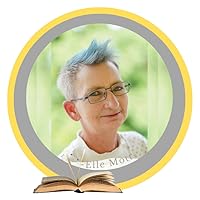
Paulette Mahurin is a best selling literary fiction and historical fiction novelist. She lives with her husband Terry and two dogs, Max and Bella, in Ventura County, California. She grew up in West Los Angeles and attended UCLA, where she received a Master’s Degree in Science.
Her first novel, The Persecution of Mildred Dunlap, made it to Amazon bestseller lists and won awards, including best historical fiction 2012 in Turning the Pages Magazine. Her second novel, His Name Was Ben, originally written as an award winning short story while she was in college and later expanded into a novel, rose to bestseller lists its second week out. Her third novel, To Live Out Loud, won international critical acclaim and made it to multiple sites as favorite read book of 2015. Her fourth book, The Seven Year Dress, made it to the top ten bestseller lists on Amazon U.S., Amazon U.K. and Amazon Australia. Her fifth book, The Day I Saw The Hummingbird, was released in 2017 to rave reviews. Her sixth book, A Different Kind of Angel, was released in August, 2018.
Semi-retired, she continues to work part-time as a Nurse Practitioner in Ventura County. When she’s not writing, she does pro-bono consultation work with women with cancer, works in the Westminster Free Clinic as a volunteer provider, volunteers as a mediator in the Ventura County Courthouse for small claims cases, and involves herself, along with her husband, in dog rescue. Profits from her books go to help rescue dogs from kill shelters.
This heart-pounding story based on actual events packs a powerful punch. Rosamond's story of loss, personal triumph, and the perseverance of the human spirit really spoke to my heart. Her heartbreaking journey from an innocent girl to a horrified spectator of the German occupation and Nazi invasion of her beloved Netherlands to a determined, feisty young member of the resistance. A homage to all those who risked everything, even their lives, to fight against injustice and genocide. I couldn't read fast enough, terrified for Rosamond and the Jewish children she saved. The story builds with wonderful tension and keeps the reader enthralled. A riveting, unforgettable book that should be read.
An engaging and thought provoking historical fiction novel based on real events.
Mahurin does a great job describing the perils in Holland for not only Jews, but also citizens who wanted to do the right thing by protecting innocent children and families.
The story depicts tales of heroism of a seemingly ordinary girl who risks her life to save innocents around her. A must ready for any historical fiction fan.
I thank BooksGoSocial and NetGalley for providing me with an ARC copy of this novel, which I freely chose to review. This is the second novel I’ve read by Paulette Mahurin, an author who excels at historical fiction, and this book is a perfect example of it. There are many historical novels set during the WWII period, and the best of them provide readers with an insight into what it must have been like to live at the time, especially important now that there are not that many survivors left to share their experiences. In this occasion, Mahurin chooses to focus on the experiences of those living in the Netherlands during the German occupation, and although most of us are familiar with Anna Frank and her diary, here the story is that of a gentile living in a rural area, with the advantages and disadvantages that entailed. The fictional protagonist of the story, Rosamond, Roz, an 18 y.o. girl at the beginning of the story, is an only child that lives on her parents’ farm (they grow onions and potatoes), and whose life (like that of everybody in her country, most of Europe, and a lot of the rest of the world) is totally disrupted by the war. This is not only a historical novel, but also a coming-of-age story, as she goes from a naïve and selfish girl to a brave and determined young woman by the end of the war and the narration. The main character, Roz, works perfectly as a conduit for the readers, as she isn’t aware of the realities of life, politics, and the ins and outs of the historical situation when the novel starts. Her journey towards awareness and knowledge is followed by the readers, who get a chance to experience in the first-person (used throughout the novel) the trauma of loss, the fear of reprisals, the deprivation, hunger, and boredom at the limited supply of basic goods (and how wonderful it is to get access to the tiniest luxuries, like a bit of milk or an apple), the difficult decisions (keeping quiet and keeping safe, pretending not to know what is really going on, or doing what feels morally right), the horror at the collaborators, and the price to pay for one’s kindness and good heart. As the author explains, in a note at the end of the novel, although she has collected the experiences of many people living in Holland during the war to write the novel (and we see how Roz’s mother’s reactions and behaviour are quite different to those of her daughter, for example, and we also hear about many other people, both, working for the resistance, and Nazi collaborators), she based one of the main characters, who plays an important part in the later part of the book, on a real historical figure, Marion Pritchard. I will not go into a lot of detail (you can do your own research, or better still, read this story), but I must admit I had never heard about her, and I am pleased I have now. A remarkable and heroic woman, who comes across as such in the novel, without losing her human dimension. The book is beautifully written, with lyrical descriptions of the scenery that go beyond the purely visual to include sounds, smells, and even textures. Although Roz is a young woman and the story is told from her point of view, it is clear from the writing style that this is meant as a reconstruction of how things were and felt at the time by the older Roz, a memoir and a somewhat nostalgic view, but not a less realistic one at that. These seem to be the reflections of a woman looking back at her youth, making sure that what she lived through is not forgotten, although that is never made explicit in the book. It is easy to see that Roz is a reflective and sensitive soul, one who feels more at home in nature and with the farm animals (her beloved horse Jongen) than in social situations, and one who hesitates and has doubts, but does what she feels is right, nonetheless. She might be annoying at times, but by the end, I really liked her and felt quite moved by her story and the events relayed in the novel. Any warnings? At the beginning of the story, Roz tries to avoid bad news and any details of what might be going on, but later on, she learns about the real plight of the Jews and the fate of many who had tried to help them (and later, of those who collaborated with the Germans also), but this is not in lurid detail, and most readers of historical fiction of this period would know what to expect and wouldn’t take issue with it. There is also a romantic love story (as romantic as can be expected in the circumstances, but the character experiences it as such), which feels like a pretty natural part of the growing-up Roz is going through, and that includes a sex scene, not a very explicit one, but it is worth pointing out. Also, as I mentioned, the book is written in the first person, and although I felt it worked very well in this instance, I am aware some people prefer not to read books written in that manner. I recommend this book to readers who enjoy historical fiction, especially set during WWII and based in true events and real historical figures. It is beautifully written, and it makes us reflect and wonder what would we do if something similar happened again, a scenario that appears much closer nowadays than it did just a few years back. We all hope we would be brave and help resist, but things are never as simple and straightforward as we might think when reality hits. Thoroughly recommended.
This is a riveting story of lost youth, devastating grief, but also the strength of the human spirit to overcome in the face of tyranny.
The author has a great ability to create an atmosphere and characters that draw you in and engage you in every aspect of their lives. Rosamond develops from a young woman forced to work within a brutal and callous food appropriation programme by the enemy to a resolute and courageous participant in a desperate effort to save children.
One can only imagine life under an iron fist where food, freedom and a sense of security is completely lacking, and you can trust nobody even your own neighbours. Despite being a time of great loss and grief however, there is also a chance meeting and romance. Though together fleetingly, this love sustains and motivates Rosamond to keep undertaking dangerous assignments hoping for a day when she can be reunited with the one she loves.
There are other wonderful characters such as a mother desperate not to lose a daughter, a brave young woman who is prepared to give her life if needed to save children and families from deportation and the extermination camps, and local down to earth men and women who secretly work to hamper the efforts of the enemy to starve and enslave them.
This scenario is not unique to this time in our history and even today there are entire populations living under similar regimes. This book is based on fact and as always the author has conducted immaculate research to bring the heroism of the few to our attention. I highly recommend the book and others by the author.
"Kindness will bring gifts you can't imagine." Adrian
The Girl From Huizen is a very well researched book by Paulette Mahurin It is a fictional story based on actual traumatic events during World War II Nazi occupied Netherlands. The family of 18 year old Rosalind Jansen, "Roz", are forced to give a substantial amount of their potato and onion crops to the Nazis. Her father Adrian, farmer and gentle soul, despite arguing with his wife Gerdi, has moved forward to resist the enemy and save the lives of Jewish children. He brings resistance member Karl into their lives. Roz requires the young man's help in the future. Although I liked his dedication, in all honesty this relationship felt 'off' to me. I received this book from the publisher through NetGalley and this is my personal opinion about it. The opening is quite emotional. In my notes I take for writing a review I wrote, "could trigger trauma (memories)" perhaps from memories of a tragic event, death of a loved one, etc. The horrendous acts that victimized citizens of the Jewish people, their townsfolk and the country were, in part, depicted in the book. The author causes tension and anxiety for the children of the book along with their brave rescuers. The added stress of hidden human beings certainly increased the horror for those who risked their lives to help. Members of the Dutch Resistance are well portrayed. Ordinary people with a huge depth of bravery, cunning and sense of what is right. They were willing, and often did, sacrifice so much for the people who needed them. Madelief is a courageous member who is based on the real life heroine Marion Pritchard.
Another stellar, well-researched book from this author. This a story of ordinary people trying to survive the brutal German occupation of Holland without losing their own humanity. The plot is a familiar one of trying to save Dutch Jewish children and the consequences when caught are difficult to read about. Also difficult to understand was the fact that Nazis were assisted by so many Dutch collaborators, including the police & railway workers. This is a timely read with antisemitism and fascism raising its ugly head here in our own country. This book makes you ask yourself, what would you do?
I thank BooksGoSocial and NetGalley for providing me with an ARC copy of this novel, which I freely chose to review. This is the second novel I’ve read by Paulette Mahurin, an author who excels at historical fiction, and this book is a perfect example of it. There are many historical novels set during the WWII period, and the best of them provide readers with an insight into what it must have been like to live at the time, especially important now that there are not that many survivors left to share their experiences. In this occasion, Mahurin chooses to focus on the experiences of those living in the Netherlands during the German occupation, and although most of us are familiar with Anna Frank and her diary, here the story is that of a gentile living in a rural area, with the advantages and disadvantages that entailed. The fictional protagonist of the story, Rosamond, Roz, an 18 y.o. girl at the beginning of the story, is an only child that lives on her parents’ farm (they grow onions and potatoes), and whose life (like that of everybody in her country, most of Europe, and a lot of the rest of the world) is totally disrupted by the war. This is not only a historical novel, but also a coming-of-age story, as she goes from a naïve and selfish girl to a brave and determined young woman by the end of the war and the narration. The main character, Roz, works perfectly as a conduit for the readers, as she isn’t aware of the realities of life, politics, and the ins and outs of the historical situation when the novel starts. Her journey towards awareness and knowledge is followed by the readers, who get a chance to experience in the first-person (used throughout the novel) the trauma of loss, the fear of reprisals, the deprivation, hunger, and boredom at the limited supply of basic goods (and how wonderful it is to get access to the tiniest luxuries, like a bit of milk or an apple), the difficult decisions (keeping quiet and keeping safe, pretending not to know what is really going on, or doing what feels morally right), the horror at the collaborators, and the price to pay for one’s kindness and good heart. As the author explains, in a note at the end of the novel, although she has collected the experiences of many people living in Holland during the war to write the novel (and we see how Roz’s mother’s reactions and behaviour are quite different to those of her daughter, for example, and we also hear about many other people, both, working for the resistance, and Nazi collaborators), she based one of the main characters, who plays an important part in the later part of the book, on a real historical figure, Marion Pritchard. I will not go into a lot of detail (you can do your own research, or better still, read this story), but I must admit I had never heard about her, and I am pleased I have now. A remarkable and heroic woman, who comes across as such in the novel, without losing her human dimension. The book is beautifully written, with lyrical descriptions of the scenery that go beyond the purely visual to include sounds, smells, and even textures. Although Roz is a young woman and the story is told from her point of view, it is clear from the writing style that this is meant as a reconstruction of how things were and felt at the time by the older Roz, a memoir and a somewhat nostalgic view, but not a less realistic one at that. These seem to be the reflections of a woman looking back at her youth, making sure that what she lived through is not forgotten, although that is never made explicit in the book. It is easy to see that Roz is a reflective and sensitive soul, one who feels more at home in nature and with the farm animals (her beloved horse Jongen) than in social situations, and one who hesitates and has doubts, but does what she feels is right, nonetheless. She might be annoying at times, but by the end, I really liked her and felt quite moved by her story and the events relayed in the novel. Any warnings? At the beginning of the story, Roz tries to avoid bad news and any details of what might be going on, but later on, she learns about the real plight of the Jews and the fate of many who had tried to help them (and later, of those who collaborated with the Germans also), but this is not in lurid detail, and most readers of historical fiction of this period would know what to expect and wouldn’t take issue with it. There is also a romantic love story (as romantic as can be expected in the circumstances, but the character experiences it as such), which feels like a pretty natural part of the growing-up Roz is going through, and that includes a sex scene, not a very explicit one, but it is worth pointing out. Also, as I mentioned, the book is written in the first person, and although I felt it worked very well in this instance, I am aware some people prefer not to read books written in that manner. I recommend this book to readers who enjoy historical fiction, especially set during WWII and based on true events and real historical figures. It is beautifully written, and it makes us reflect and wonder what would we do if something similar happened again, a scenario that appears much closer nowadays than it did just a few years back. We all hope we would be brave and help resist, but things are never as simple and straightforward as we might think when reality hits. Thoroughly recommended.
‘The very last thing discussed before Karl left was what to do with my father’s body.’ With that short, terse sentence Paulette Mahurin brings home the chilling reality of life under the Nazi jackboot. It is May 1942, two years after the German invasion of Holland, and the grieving wife and daughter of Adrian Jansen, shot while trying to smuggle a Jewish child to safety, are not even allowed the dignity of a funeral for their loved one. Like other resistance members, Adrian deliberately carried no identification papers; although fellow resistants were able to recover his body, they were forced to cremate it in secret – the body of ‘a nameless Dutchman’. This is not Mahurin’s first book about the evils of fascism, nor indeed about the struggle that went on in Holland between the occupying army and resistance fighters. But what is striking about this novel is the skilful way she uses a coming-of-age story to give us a different perspective on this dark period in history, a beautifully done, convincing portrait of a young woman’s transition from naivety to maturity in extraordinary circumstances. We first meet Roz (who will later become a friend and co-conspirator with real-life resistance fighter Marion ‘Madelief’ Pritchard), as an 18-year-old: ‘young and naïve…a virgin in mind and body.’ The only child of a farming couple eking out an existence growing potatoes and onions, she perceives the invaders mainly in terms of how they impact the daily life of the villagers, forced to suffer hunger, hardship and the humiliation of having to bow their heads to the cruel oppressors. Her father’s murder is the catalyst that pushes Roz to join the Resistance. Initially motivated by a desire for revenge, she gradually realises the full extent of what is involved in such a decision– the unremitting dangers and difficulties, the fears of reprisal, the moral and existential dilemmas. But her conviction that she is doing the right thing is strengthened as she finds out more about what is happening in the wider world, and the bigger issues involved – the persecution and extermination of hundreds of thousands of Jews, gypsies, undesirables, homosexuals, the rumours of death camps, and, the final hammer blow, the heart-breaking realisation that many in her own country are complicit in helping with such atrocities. And in the middle of it all, she falls in love, only to see her lover forced to flee for his life. One of the things I liked most was the way in which Mahurin shows Roz being guided by the spirit of her father. Adrian’s vision of the world lives on in his daughter’s memory – one of celebration and affirmation. His love of nature, of the growing things on what he called ‘our beautiful miracle-producing planet’ inspires his daughter to overcome her fears, and to reject the Nazi embrace of a necrophiliac vision of the world where death and destruction are justified in the quest to establish a master race. But will Roz and Madelief make it? Will Roz ever see her lover again? The author, having thoroughly engaged the reader’s empathy in the story of this courageous young woman, keeps us on the edge of our seats until the end… Highly recommended.
This author never disappoints in taking us right into her stories. Her characters are richly portrayed, as she takes us into both, the scenes of the action, and inside her character’s heads, having us feeling all their emotions as this tale unfolds. A well researched and gripping story from beginning to end. This incredible story had me turning the pages and picking up the book every chance I had.
It was a peaceful village in Gooimeer until the SS, Gestapo, and Dutch snitches and traitors turned Gooi into a starving village as most crops grown were mandatory donations to feed the enemy. As the war progressed and Hitler demanded his wolves to frequently check households for hidden Jews on a regular basis because he wanted to eliminate all the ‘vermin’, no home was safe from an SS invasion at any given time for spot checks.
Roz had been through enough already, watching her best friend Emma taken by the SS, and her job turned into typing for the SS. The cruelty of what was happening in her once peaceful life, had taken its toll.
When her father doesn’t return from a resistance mission, Roz was determined to join the resistance to help save children from being captured by the dirty Nazis. Roz leaves her job to help out on the farm, and is eventually introduced to Madelief, who she learns plays a big role in saving and hiding Jewish children (true events). And Madelief holds a deep secret about the villa which she is currently dwelling in, and using as a temporary holding, safehouse, before the children’s final safe destination. Once all is revealed by Madelief, and the relentless oppression, Roz’s life feels like spinning out of control.
This story will grip you through every mission taken by the resistance – risking their own lives to save the lives of innocent neighbors and strangers. Selfless and often hungry themselves, but sharing with someone worse off. Reality checks when Roz takes in pause to remember what it felt like to walk in shoes with soles, when she could enjoy the outdoors and life without fears off being stopped or raided by the Nazis who seemed to be everywhere, or where a sliver of chocolate could linger on her tongue long enough to take her back to plentiful times. These things reminded her of the simple pleasures that were once part of her life. Despite the climate of war, survival, and trying to help others, risking her own life, her strength to go on, despite her losses – both in life, and of life, a very important friendship made with Madelief kept her determination fueled to save the children.
As expected from this author, so much of the human condition in this story, and a wonderful telling of watching Roz turn from a mere girl to a young woman of maturity as the times had everyone growing up much too fast. This could be my favorite of many books I’ve read by this unsurprisingly, best selling author.
I received a free ARC of “ The Girl From Huizen” from Net Galley in return for an honest review. It is not difficult for me to honestly review this book because it was so good. . In fact , that I read it over a couple of days, the last one a day I sat inside because the air where I live was orange with smoke from Canadian forest fires. MS Mahurin took the true story of a hero of the Resistance, Marion Pritchard, and used it to write a novel of what it was like to be a young woman in a town under the Nazi occupation. The heroine, is Rosamond Jansen, who is sixteen at the beginning of the story. Through the five long years of occupation, she changes from a frightened girl into a frightened, but courageous resistance fighter Rosamond , Roz, lives on a farm with her father and mother . When her father is killed as he transported a “ package” as the Resistance fighters called a Jewish child, being smuggled away to a rural area where the child would safe , Roz becomes an active fighter. The novel describes the harrowing times she experienced : the searches and roadblocks, people dragged away to be interrogated or shot on the roadways. For years, in the darkest, hungriest and most dangerous years, Roz lives near home with a leader of the cause, Madeleif, who is hiding a Jewish family in a hidden room in the basement. Roz helps to feed and care for that family. who lives like moles in darkness. MS Mahurin writes beautifully and expressively of those dark days, of the quiet courage of Roz and others of the resistance . She shows of the stress of Roz’s mother , who fears that she will lose her daughter as she lost her husband. Reading of Roz’s painful longing and despair when her lover Karl, another transporter, had to flee into hiding is a painful part of the sorrow and the pity of this war on in the shadows. Yet she, an d other brave neighbors a continued to fight, hope and wait until Liberation. This is a book that is easy to recommend to all readers who love good fiction, well written;, with a tense story line. Cautions. To sensitive types: Some as one should expect of a story that take place in wartime. My only criticism is that I do not recall the author ever really describing Roz . Maybe that was the author’s intent to make her an example of everyone who fought back in whatever way they could against the Nazis. There is also a love scene, not objectionable, which is part of the love story of “ The Girl From Huizen” One last thought: the book cries out for adaptation into a dramatic series. .
A story of courage and fortitude during the Nazi occupation of The Netherlands during WWII. Based on a true story of one young woman that decided to do her part against the evil Nazi invaders.
Roz lives on a farm and works as a typist in the government office. She hates her work and her evil Nazi bosses.
Roz's Uncle and a resistance worker named Karl talked Roz's father into working with the resistance. When Roz's father does not return Roz feels she needs to carry on her father's work helping the resistance. Karl helps pull some strings and she is assigned to work the farm in her father's absence instead of the typing job she hates.
As she carries on her work with the resistance much to the dismay of her mother who is frightened that she might also perish because of it, she meets a woman named Madelief. Since Roz's work with the resistance is important Madelief finds a young man to work on the farm and Roz begins to work at the villa in town with Madelief.
It is a story of two woman working against the odds to save the lives of Jewish children. They risk their lives so others may live.
I love how Roz never gives up her resolve to save lives and how she sometimes is scared and works through it. The friendship with Madelief is inspiring as both young women work together to save lives. The Romance between Karl and Roz is golden.
The story is sometimes sad, a bit suspenseful at times, but always inspirational. I loved reading this book it was a very good story.
Thanks to Paulette Mahurin for writing a great story, to Books Go Social for publishing it and to NetGalley for providing me with a free copy to read and review. All words in the review are my own.
Intense, beautiful, and unforgettable WWII. The Nazi occupied Holland. The nation divided into two camps. This is the backdrop for the story of the kind and brave hearts, of deadly danger and sacrifice, in a time when life and death balances on a razor blade. It’s a chilling experience to read about heinous crimes committed by Nazis and the local collaborators. The most often feeling I had while reading was fear of what would come next. And often it was the loss of a family member, or a fellow resistant fighter, or a child. Because that’s what they did: they risked their lives trying to save as many Jewish children as possible. Roz and her parents, Karl and Madelief, and many others are the characters this reader instantly rooted for. The writing is so sensual and detailed that you can truly picture the scenes in your mind's eye. The prose is captivating and beautiful, the events—horrendous or of jubilation at the end of the story—breathtaking. Along the way, I got goosebumps many times. The story is page-turning and with an ending that's impossible not to tug at your heart. To say I loved this book is an understatement. For writers like me who need an exemplar of what good writing looks like, sounds like, and how it is built, this is the book. For readers, it may be a story they will not forget soon if ever. I can’t help but heartily recommend this heart-warming, passionately told story from the author of many highly acclaimed books.
Rosamond is a farm girl in the 1940s-Netherlands. Her strength, I feel, is inspired by her father’s absence, who didn’t return from his resistance mission. World War II was a scary time in our history and yet it’s through this story that I get the real feel, not just the surrounding facts.
Doubts sometimes creep into Rosamond’s thoughts, causing her to posit questions to her innermost self and yet at the same time she is truly brave and steadfast. She can also easily reminisce of what life used to be like for her or what it could be like if she weren’t faced with the suffering that surrounds her. She is a main character. Several supporting characters lend credence to her experiences, not forgetting Madelief who was front and center in relief work. Roz (as she is often called) is a trailblazer.
Roz’s involvement to resist the Nazis deepens as the story progresses with tension coupled with anticipation of what is to happen. It has an emotional touch, sometimes heightened. Faced with these Nazi atrocities as a teenager, Roz must grow up fast, whether or not she’s ready to.
I am not only a reader but an author; an author who knows what its like to research and research even more to gather the facts for a story. I can tell that this author did her research. More so, she brought life to these facts, through the eyes thoughts, and beating heart of Rosamond. ‘Well written and well recommended to read.
The Girl From Huizen captured me from the first pages when Roz, the protagonist sat among a group of women in a typing pool, sweating under the oppressive Nazi leadership. The Netherlands had been occupied for a couple of years and the Dutch were suffering from lack of food and witnessing their Jewish friends and neighbors being deported. Roz, and eighteen year old, grows up fast as her friend turns up missing one day. That loss is followed by another and another until she is swept up in revenge and joins the resistance where she helps to rescue Jewish children in her family’s farm wagon. The story is intense and fast moving but picks up even more action when Roz connects with a heroic woman in a villa with a secret (no spoilers). As the SS and Dutch collaborators close in on Roz and the women in the villa the secret is revealed and the book moves at a very fast clip. Just when everything seems to be closing in on the women in the villa something unbelievable happens, something I hadn’t expected and didn’t believe was real until I researched the facts the author presented in the book. Viola, truth be told, this is a remarkable hard to put down story. One of Paulette Mahurin’s best.
The Girl from Huizen by Paulette Mahurin is breathtaking, heartbreaking and beautiful in its raw prose. It is obvious the author did meticulous research in the rich historical details and character portrayals, almost as she were there herself. Though it is fiction, it is based on real events and people. The book is about the Dutch Resistance in WWII and unbearable grief and hardships under Nazi occupation.
The Jansen family from the working village of Huizen, Netherlands, is directly affected by the horrors of war. At first 18-year-old Roz and her mother are horrified that her father joins Karl and other Resistance members to smuggle deported children. But they realize trying to stop them would be futile. Death, bartering, scarcity of food and anguish are constants. People disappear. The country is in turmoil. But the Resistance saves lives and brings hope.
Historical Fiction readers, do prioritize this one. It's simply and passionately written and doesn't gloss over difficult details. But that's what makes it so powerful. I am so glad to have read it.
My sincere thank you to BooksGoSocial and NetGalley for providing me with a digital copy of this engrossing novel.
I received a copy of this book from Goodreads in exchange for a review. Paulette Mahurin’s book ‘The Girl From Huizen’ is a stark reminder that even little acts of resistance lead to great results.
Rosalind ‘Roz’ Jansen is 18 years old and working as a typist under the Nazi Occupation in her town of Huizen. Her father Adrian is a farmer. As a family, they can barely eke out a living. Much of what is grown on the family farm is given to the Nazis. But one day, even gentle, kind Adrian reaches a point when he can no longer close his eyes to the atrocities happening in his beloved country. Against his wife Gerdi’s pleas, Adrian decides to assist the Resistance in transporting Jewish children. On one of these transport missions, he is discovered by the SS and executed. The story finds Roz stepping into her father’s shoes, to keep the farm running, and eventually, as a transporter of Jewish children.
I could feel the tension and emotion in the pages of this book as the characters in the story defy the Occupiers of their beloved Holland to do the right thing. Mahurin brought to life the fears that were overcome and the resolve that ordinary people possessed to do the right thing despite all the odds stacked against them.
Gripping Rosamund gets pulled into the work of the Dutch resistance by the work her father did before the Germans murdered him by helping Jewish children to be relocated safely but as things change, it becomes more dangerous than ever to be a part of the resistance I found this book totally gripping, I hadn’t read a story from the side of the Dutch resistance, normally it’s the SOE or similar so this was a change and it’s so well written that I instantly got pulled into the story and what made it even more compelling was that at least part of it was based on a true story I found that the characters came alive whilst I was reading and I could feel the danger but also the joy of children being rescued, I think the fact that it was written first person in Roz’s voice really helped with this, making the story feel even more real The men and women of the resistance changed history and books like this honour the work that they did and the risks they took to help those in need, and it reminds us that resistance activity took place all across Europe and not just France I would recommend this book to those who enjoy a gripping and compelling story that will capture your attention from the very first page
The Girl from Huizen is the latest historical fiction offering from Paulette Maruhin. I see this as a good read for those who like to learn, the in depth feelings of the characters, especially of Roz the central character and of her mother, also not minding a slow build up in the action and excitement of the story. It’s useful, in addition, if you are not jarred, by the occasional use of American English such as gasoline.
For myself being of a Dutch mother and in having recently read two novels, based on true events, that took place as well, during the time of the Nazi occupation of the Nederlands, I see Paulette Maruhin's story to be well built, on strong historical foundations, with inspiration taken from the life events of Dutch social worker Marion Pritchard (née van Binsbergen).
However, the author does fall short, in capturing the character and vibe of the country and the Dutch inhabitants. For me, the story could almost have as easily, been set in Poland.
Overall, the book is a good read, bearing in mind both my earlier caveats and my later criticism. Thank you NetGalley for the ARC.
The courage and selfless sacrifices of many of those who lived in occupied Netherlands is adroitly portrayed in this page-turner. Rosamond Jansen is a typical teenager who’s forced to grow up way too fast after Hitler’s armies roll into her home country. An ordinary girl facing extraordinary circumstances.
This book is exemplary in recreating flesh and bone history. The “go it alone” superheroes are in absentia. Everyone must work together, doing their part; motivated by both personal justifications and collective goals.
Rosamond tires of eating potatoes everyday and hates the invaders. She squares off against sheer terror, the desire for revenge, and the person in the mirror. She turns bitterness into action that saves many, while clinging to the hope of someday.
This is a refreshing tribute to the helpers in our world. A reminder that no matter what, there are always those who are willing to put everything on the line and stand up to tyranny.
Kudos to Paulette for her flawless delivery.
I highly recommend this book for those who wish to find the roses among the ruins.
The Girl from Huizen was filled with suspenseful moments and terrifying situations told from the perspective of a young woman caught up in the horrors of the German occupation of Holland in World War II. Through every horrifying occurance, a small victory was won. Fearful and easily intimidated, Roz was an unlikely candidate for a hero, but as time went on, she tried to overcome her fears, heeded the call of her conscience, and helped the Resistance. As I read, it was hard to remember that Roz was so young, because she was forced by the circumstances in her life to grow up so quickly. She was old beyond her years. One of the most beautiful things about this book is the honest and heartfelt emotions she experiences as she enters the world of the Dutch Resistance and grows into womanhood. I held my breath through much of this novel, wondering what would happen next. A coming of age story that makes you pray that no young woman will ever have to face this kind of horror, and that these events will never happen again.
I've read many books based around the time of World War 2, but this was the first one showcasing the German occupation in the Netherlands. My grandma was a Jew living in the Netherlands and fortunately left before this occurred. The implications of what that could have meant for her never really dawned on me until reading this book.
Even though this book is nonfiction, it is based on a real person. Often times it read like a memoir, which I loved. I felt like the narrator, Roz, draws you into the story immediately. I really enjoyed reading about the brave souls that stood up for human lives while sacrificing their own safety. I admire their resilience, self-sacrifice, and determination. This story highlights what people will do in the name of love. Love for strangers, their families, their country, and themselves.
If you like historical fiction this a definite must read!
Thanks to Netgalley and BooksGoSocial for a digital ARC in exchange for my honest review.
Rosamond is the story of a girl living in the Netherlands during the Nazi Occupation. She watches her father become involved in dangerous activities when he is talked into helping hide a Jewish child and smuggle him to a safer place. She is confused about why he would risk his life for someone he doesn't know. When he doesn't come home one night, she soon meets others involved in the smuggling of Jewish children to foster homes outside German rule.
The story is based on actual events and is inspirational. While sometimes overlooked, the people who stood for what they believed was right in the face of death are true heroes.
I have recommended this book to friends of history, especially those who like novels based on true events. I will recommend this to some of my more advanced students.
I was given the opportunity to read this book by NetGalley, in exchange for an honest review.
Its very important before writing a book like this to also put in the time into researching. Both about the war itself and the people the characters are based on.
I applaud the author for doing the search needed to write this. She genuinely did justice to the topic of the story along with the book itself.
However moving on.
The writing in this is Stellar. Beautiful prose, elegant usage of vocabulary, I simply was immediately transmitted into the story from the very moment I picked the book up
The characters were so interesting as well, written so realistically I felt for them with each turn of the page.
Its Also worth noting that besides how short it is this book DOES deal with heavy topics making it very needed for the reader to take breaks at times.
Utterly soul shattering and an absolute reccomedation.
Paulette Mahurin’s World War II story brings to life the experiences of a girl growing to adulthood in occupied Holland. Jewish neighbors are deported, to certain death. Words are secrets best kept silent. And danger is rife.
As Roz’s losses mount, so does her determination to be more than just an observer, and she draws herself slowly into the life and work of the resistance. The depictions of Roz’s world are vivid and heart-rending. Her character is convincingly both naïve and wise. And her growth as the novel grows is satisfying to the reader, as are the motivations and actions of other resistance members.
A cruel world finally changes, making this an enjoyable, evocative read, with a promise of hope to its readers.
Disclosure: I intended to read this much earlier, but life intervened. However, it’s a great read whenever you read it!
This is the first book I've read by Ms. Mahurin, but it won't be my last! She made me fall in love with historical romance after years of shying away from them. I've come to realize after reading this book that it wasn't the sub-genre, but the storyteller themselves that made me avoid them at all costs. Bravo to Ms. Mahurin for reeling me back in!!! Hook, line and sinker...
The Girl From Huizen depicted Roz and her family desperately trying to survive the German occupation. And it takes on a new twist when her father becomes involved with the Dutch resistance. Refusing to believe that his life was more important than an innocent child's! Making the ultimate sacrifice. Paving the way for the next generation.
Ms. Mahurin ripped out a piece of history along with a piece of my heart. I highly recommend The Girl From Huizen to anyone who loves Historical fiction.
The Girl From Huizen takes us into the heart and soul of the Dutch Resistance and the lives of those who risked everything to hide and then help Jewish families during the German occupation of the Netherlands. After months of near starvation and oppression, and losing her father as he helped Jewish children escape the SS, Rosamond Jansen is drawn into the resistance and becomes an important link in a chain of resistance that ultimate helped save thousands of lives. Paulette Mahurin is the master of putting a human face on the terror and sacrifice endured by the survivors of Hitler’s war. I highly recommend this book to those who continue to seek understanding about this dark period in our history.
Another exemplary story by Paulette Mahurin. One thing I love about the author's books is that she takes a look at events from a unique perspective. Rarely have I seen novels about WWII that discuss the plight of the farmer. So many focus only on the horrific death camps. The war held many many more atrocities, and the author helps bring these to light, so that we will not forget. Another thing about her books is that she gives the reader a glimmer of hope amid all the despair. The reader gets caught up in the lives of the characters, feels their fears, their joys, their anxieties. I highly recommend this story and all the others from this author.
I used to be addicted to potato chips, but I cured myself of that habit. Ima, still addicted to WWII fiction. The Netherlands was one of the hardest hit countries, overran by the Germans and plundered of every conceivable resource. The Dutch flight back, however and whenever they could. Mahurin based her novel on real stories to bring about a solid story of one family’s involvement with the resistance, sacrificing, but wanting to contribute. I often ponder how many would rise up today, if such a horrid occasion called for the similar type of action. Thanks to NetGalley and the author for the digital copy.
The plot of this book was very well done, and the writing style is good. I appreciated the secondary characters, especially Madelief. However, the main characters, Roz and her mother were incredibly irritating to me. I realize it takes place during war time and there were many things to be afraid of, etc, but both of them are pessimistic to the extreme. In addition to her constant pessimism, Roz is one of those people who worry about absolutely everything and doubt everything, even when assured multiple times. I have never had much tolerance for that type of person, and it made it hard for me to continue reading the book to the end.
I cried at the end - and then had a ‘wow’ moment after reading that one of the characters and the story surrounding her, is based on fact. However, that aside, this is a remarkable piece of writing. I loved the characters, the exceptionally strong women, the bravery of whom, this book is about. The hardships and daily terror they endured during occupied Holland during the Second World War is unfathomable. Ms Mahurin writes sensitively about the subject and weaves several sub stories into it, and moments of joy lifts the reader from the atrocities that have to be told. One hundred percent recommend this to everyone.