Brimming with useful advice and tips, this guide to writing warns against common pitfalls and teaches you how to adopt a professional attitude towards your work. Chapters cover such aspects of writing as the novel, short stories, non-fiction, articles, poetry, plays, radio and television scripts—even children's books. A detailed look at how to prepare a typescript, where and how to submit it and a discussion on the rewards of writing conclude this invaluable book. Whether you are a beginner or a more experienced writer, you will enjoy Michael Legat's lively anecdotes and down-to-earth approach.
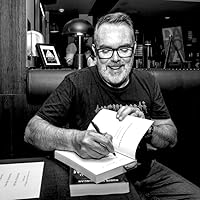
Michael Legat was born on 24 March 1923 in London, England, UK. He began writing at a very early age. He devoted his career to publishing and also wrote a book for authors. After a long and successful career as Editorial Director of Corgi Books and later of Cassell during 35 years, in 1978 he decided to leave the trade and take up writing full time. In 1980 his first novel, Mario's Vineyard was published and this was followed by a series of other novels and highly-acclaimed how-to books for writers, that its sales currently stand at over 200,000 copies.
Michael Legat remaid heavily involved in the publishing industry, has served on various committees, was the president of two writers' circles and was a associate vice-presidents of the Romantic Novelists' Association.
Michael passed away on 15 August 2011 in Sussex, England.
Was going to throw this out but ended up reading it again. Now while the contact information is out of date the parts on how to write are still useful.
I'm fond of this book. Now fond isn't a word I often use about writing books, but for this one I will. The reason being that many years ago when I was in my early twenties my mother bought it for me for Christmas. Even if it wasn't a good book it would hold sentimental value for me for that reason.
But it is a good book. For years this book went everywhere I might have occassion to write with me. It covers everything from planning to writing to grammar on the one hand and everything from non-fiction to short stories to novels and screenplays on the other. It's a good general primer, and one of those books that should probably be on every writer's bookshelf. The fact it was first published in 1986 but is still in print in 2009 is testament to its strength, however it also dates it a bit at times. For example in the section on preparing a typescript he talks about using a fresh typewriter ribbon, not a problem that comes up much in the 21st Century. Still that's a minor matter and the rest of his advice is as sage today as it was in the 1980s.
A very useful introduction for the beginner, but also full of valuable advice for the continuing aspirational writer (it seems to me). While some of the information and recommendations are a little dated (the book was first published in 1986, long before we all 'moved online'), the vast majority remains just as valid, if not even more so, then when this guide was penned over 35 years ago. This is amply evidenced by its many, many reprints.
My favourite aspect is the clear, direct style, which never wallows in unnecessary exposition, but gives the important facts straight, with calm authority, then moves on. Well worth reading for all of us who are seeking to develop the craft, and keeping on the shelf for those moments when we lose sight of the way ahead.
Though much of this advice is now outdated, the tips for the writing still hold true. There is a lot in here which, if you've read other 'How to be a Good Writer' type books, will seem overly familiar. However, as a simple, easy to follow guide, it's really worth reading. Not bad for 30p from Scope :)
A little outdated (we no longer have to worry about typewriters, ribbons and carbons) but the tips and advice for the most part are well worth noting. All in all a useful guide for me at least who just writes for pleasure.
A nicely written book, with lots of useful information. It is nicely laid out and does not over complicate things. Simple and straight forward, with some nice quotes and references to other useful titles.
Although out of date now, I thought I had purchased the latest edition, it will be useful for all those wanting to publish their writing to check out the new laws and submission methods, as well as check out ebook publishing, self publishing and the print on demand services offered by some of the major book sellers.
This book, although written some time ago, 80% of the tips still hold up until today. It covers everything you need to know about writing, told in simplicity. You may find how to write a novel, short story, poems, articles, short stories, and many more in this book. There are some outdated parts related to manuscripts written via a typewriter that can be neglected.
Overall, it is something that you can comfortably rest on a shelf and pick up at any time whenever you have doubts as a writer.