Ostrogorsky was born the son of a secondary school principal and a writer on pedagogical subjects.
He completed his secondary education in a St. Petersburg classical gymnasium and thus acquired knowledge of Greek early in life. He began his university studies in Heidelberg, Germany (1921), where he devoted himself initially to philosophy, economics, and sociology, though he also took classes in classical archeology. His teachers included Karl Jaspers, Heinrich Rickert, Alfred Weber and Ludwig Curtius. His interest in history, especially Byzantine history, was awakened by a young Dozent by the name of Percy Ernst Schramm. After studying various aspects of Byzantinology in Paris (1924–1925), Ostrogorsky received his doctorate from the University of Heidelberg (1925) with a dissertation in which he combined his interests in economics and Byzantine history. He then taught as Privatdozent in Breslau from 1928 and moved to Belgrade in 1933. Ostrogorsky taught at the University of Belgrade's Faculty of Philosophy, where he was the Chair for Byzantinology.
Ostrogorsky made the Kingdom of Yugoslavia his permanent home and taught at Belgrade for 40 years until his retirement in 1973, leaving the Chair for Byzantinology to Božidar Ferjančić. He was made a corresponding Member of the Serbian Academy of Sciences and Arts in 1946 and a Regular Member two years later. An Institute of Byzantinology was created within the Academy in 1948 with himself as director, a post he held until his death. He was chief editor of the Institute's house organ, the Zbornik Radova Vizantološkog Instituta, through its 16th volume which appeared in 1975. He also supervised the monograph series of the Institute of which the choice items were his own study Pronija (1951) and the multivolume collection of Byzantine Sources for the History of the Nations of Yugoslavia.
Ostrogorsky repaid in more than one way the hospitality he met with in his new country; he created a new generation of Yugoslav Byzantinists, broadened the horizons of Yugoslav historians by the example of his personal research, and provided for them closer contacts with the world scholarly community. Under his guidance the Belgrade Institute became, along with Munich, Paris, and Dumbarton Oaks, a leading center of research in the field of Byzantinology. Ostrogorsky remained faithful to Belgrade to the very end, although over the years suggestions were made that he take up residence in an American or Soviet center of Byzantine studies.
His best known work was the standard History of the Byzantine State (German: Geschichte des byzantinischen Staates), a work which saw 3 German editions (1940, 1952, 1963) and 2 English editions (1957, 1968) and translations into more than 10 other languages.
Edward Gibbon, undisputed world heavyweight champion of the lofty put-down, wasn't a fan of the Byzantine Empire.
The division of the Roman world between the sons of Theodosius marks the final establishment of the Empire of the east, which, from the reign of Arcadius to the taking of Constantinople by the Turks subsisted 1058 years in a state of premature and permanent decay.
The subjects of the Byzantine empire, who assume and dishonour the names both of Greeks and Romans, present a dead uniformity of abject vices, which are neither softened by the weakness of humanity nor animated by the vigour of memorable crimes.
That's quite harsh.
THE THOUSAND YEAR DWINDLE
The Byzantine Empire was a thousand year dwindle. In the beginning, it was the Eastern half of the Roman Empire - the orange bit here:
But then, in the 7th century, the Islamic whirlwind erupted out of Arabia and snapped off all the territories south of what we think of as Turkey. Then in the 9th century the actual Turks came along from out of - er – Central Asia I think (where everyone came from, Huns, Golden Hordes, Russians, Bulgars, I assume there's a gigantic fierce-people-making tree somewhere in the Gobi Desert) - and they ate the eastern part of what they shortly turned into the Ottoman Empire.
GREEKS AREN'T GREEK, SAYS PROF
Anyway - ETHNIC NOTE – what was Greek about the Byzantines?
In the 1820s when Europe was going Greek crazy and Byron was No 1 on the Billboard Hot 100 Poet Chart and went a-soldiering and caught his cold and died, as the plucky itty bitty submerged nation Greece tried to wrench its independence back from the Ottoman Empire, a dissident voice was heard from Germany. It belonged to a historian called Jakob Fallmerayer who declared
The race of the Hellenes has been wiped out in Europe. Physical beauty, intellectual brilliance, innate harmony and simplicity, art, competition, city, village, the splendour of column and temple — indeed, even the name has disappeared from the surface of the Greek continent.... Not the slightest drop of undiluted Hellenic blood flows in the veins of the Christian population of present-day Greece
He thought modern Greeks were slavs or Albanians. Unfortunately for this theory, it was taken up by the Nazis, so that's kind of the end of that. A little googling tells us that some modern Macedonians think the Byzantines were ... hmmm... Macedonian. It's a murky question and another example of how people like to pigeonhole people into neat ethnic boxes into which they never fit.
KILLED BY CHRISTIANS
But back to the story. So in the Middle Ages Byzantium was thought of as an island of Christianity in a sea of Islam. But look what happened when the Crusades spewed their cruelty and bilious religious mania forth from France and Germany. At the time The Byzantines were trying to keep afloat in a bewilderingly complex political situation which refused to simplify for about 300 years – right there on the borders, there was Bulgaria (a new nation), the Sultanate of Rum, Hungary (a new nation), Armenia, the County of Edessa, the Principality of Antioch, the Seljuk Empire, Georgia and on and on. Byzantium was geeting squeeeeezed smaller every year.
Then its brother Christians killed it! This was the Fourth Crusade, in 1204. On their way to more infidel-bashing in the Holy Land, the Crusader Army suddenly detoured towards Constantinople and launched a full assault.
The sack of Constantinople is unparalleled in history… for three days the ghastly scenes of pillage and bloodshed continued till the huge and beautiful city was a shambles.
SEEN WITH MY VERY OWN EYES
I visited Venice some years ago. I admired a set of bronze horses on the facade of the Basilica di San Marco, and other carved animals, lion heads and so on. Very impressive. Then later I found out these were all actual booty taken by the Crusaders from Constantinople in 1204 and given to the Venetian paymasters. And there they still are.
What's that? Why did Christians butcher fellow Christians? Well, it's complicated. Interesting , but mournful. Anyway, the empire rose from its grave a second time and zombied forward for another few centuries on a tiny patch of ground, a city state calling itself an empire, until 1453, when the Sultan said enough was enough. It's a weird story. Byzantium – the shapeshifting missing jigsaw piece of medieval history.
I read this some years ago and thought it a masterpiece of that old fashioned thing, narrative history. Recommended for fogies young and old.
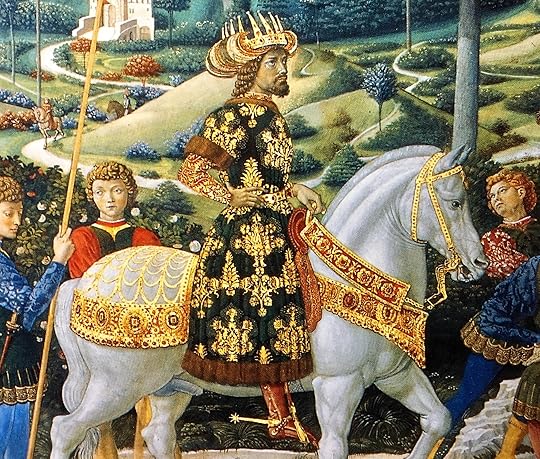
Ренесансовите фрески в Капелата на Медичите поднасят една изненада: портрет на предпоследния византийски император Йоан VIII Палеолог. Съдбата на последните неколцина византийски императори е повече от нерадостна: последният пада в бой с турците през 1453 г. върху руините на завладения град, за да не бъде заловен жив; предходните двама отдават живота си в търсене на невъзможното спасение на своя град, който е единствената останка, до която се е свила някога могъщата империя. Те шестват из християнския запад с години, готови почти на всичко, включително на отказ от независимост на църквата си. Но за помощ е твърде късно - армията на полския крал Владислав Варненчик среща края си край Варна през 1444 г. и възвестява погребалния звън за последния наследник на Рим, пазил вярно над 1100 години портите на Европа от изток.
——— Цялата история на Византия (която никога не е наричала себе си така, а Източна Римска Империя) е люшкане между външни заплахи за унищожение от всички посоки на света, и вътрешни религиозни, социални и икономически катаклизми. Възникнала в резултат на катаклизъм, тя съществува, преодолявайки с нечовешка енергия всеки следващ катаклизъм, за да бъде погребана под последния.
Байрон описва Византия като сплав от римско тяло, гръцки ум и източно-мистична душа. Това творение на римското право, християнската ортодоксия и неусетно вплелите се цивилизационни останки на класическата гръцка и римска античност, е удивително съвременно в уроците си, и преодолява всяка катастрофа (освен последната) с удивителна издържливост.
Когато рационализмът на Рим се сменя с религиозния възход на християнството, Византия е тази, която го шлифова и институционализира. Римският папа векове наред е подчинен на византийския император и патриарх. Части на Италия са под византийски контрол дори след разграбванвто на Рим. Юстиниан I почти успява да възроди старата римска империя и построява най-бляскавата църква в света - Света София, като кодифицира в по-модерна версия старото римско право. Ираклий и потомците му подемат решително усилие за прочистване на християнството от суеверия и превръщането му в едно предимно вътрешно изживяване, забраняващо олицетворяването и бъркането му с изображения като иконите. Векове преди реформацията на запад. Но сблъсъкът между светска и религиозна власт завършва с поражение за първата. За разлика от Рим и Запада обаче върховната власт във Византия остава неизменно светската. Византия удържа приливните вълни на нивовъзникналия и войнстващ ислям, които неколкократно се разбиват в стените на Константинопол. Но победа няма, има само оцеляване - Северна Африка и Сирия са завинаги изгубени за империята. Балканите също - от колонизацията на славяни и българи. Както и Италия. Залезът започва да се спуска окончателно в мига, в който империята се отказва от защитните си механизми. Търговията е поета от новоизгряващите венецианци и генуезци, а византийският флот, владял Средиземноморието, изчезва, за да бъде заменен - срещу заплащане и отказ от суверенитет - от венецианския флот.
Истинският край на империята не идва от изток и селджукските турци, а от запад, когато през 1204 г. Четвъртият кръстоносен поход разграбва и оплячкосва Константинопол. Впоследствие Византия е разкъсана на части, някои от които поделени между Венецианската република (която се държи като войнстващ търговски концерн) и част от кръстоносците. Империята никога не се съвзема от този удар и последвалото е бавна агония, която обрича също България и Сърбия. Последните две държави изобщо не схващат картинката, за разлика от умния хан Тервел през 8 век, който отива да отбранява Константинопол срещу арабите. Самите Венеция и Генуа, алчно вкопчени в провалянето на търговския си конкурент, заслужено обричат и собственото си бъдеще с късогледството си.
Самите византийци никак не са невинни - те се разпределят на властващи кланове, всеки от който граби трон, земи и данъци до дупка. Тези мафиотски кланове предпочитат да обрекат последния си шанс да прогонят надигащата се турска заплаха в битката при Манцикерт, отколкото да сформират поне временна обща лига срещу опасността. Резултатите са видими.
——— Много може да се разсъждава върху Византия. Нейната история е удивително преплетена с нашата - България е първата независима държава, която цъфва в задния двор на империята и отказва да се разкара оттам, като на моменти сама храни амбиции за Константинопол. И е също толкова късогледа за големите заплахи, вкопчена в дребнави боричкания.
У нас има добра византоложка и османистка школа, най-малко поради историческата и географската близост. Западняците на свой ред пренебрегват Византия или като Едуард Гибън - открито я презират, без ни най-малко да я разбират. Други като Кенет Кларк стигат дотам в невежото си презрение, че дори (в неговата книга за цивилизацията) я считат за ненужна бележка под линия, която нямала нищо общо с Европа и и била по-чужда даже от исляма (?!). Тези високомерни сноби обаче задават дълго време тона в историческото възприятие, и тяхното манипулативно, пропагандно опростяване ни лишава от ценно познание.
Мутафчиев, Острогорски и Норуич са представители на обратното течение. Без навирен нос и гръмовно громене, те възкресяват над 1000 изгубени години, и то само повърхностно, без задълбаване.
Лекциите на Мутафчиев са ценни с погледа си към иконоборството. Завършени през 1943 г., малко преди смъртта на професора, те са исторически документ сами по себе си. На светския поглед от първата половина на 20 век, но и на незабравения гняв от съюзническата и първата световна войни. Мутафчиев се впуска в излишно громене и морализаторстване в доста моменти, а е и откровен женомразец. Но е и ерудиран п��знавач, който си знае работата и успява в други моменти да е доста проницателен и аналитичен, правещ косвени паралели с новото време. Лекциите приключват с 1204 г.
Острогорски като че ли е по-премерен. Но това в само привидно. Писал през 60-те, у него дреме онази мъглява руска православна мистика, неотървала се от бляна си за Третия Рим. Острогорски замита под килима всичко иконоборско или сектантско, което не съответства на официалната (днешна) религиозна доктрина. Просто избягва да пояснява някои моменти - избира премълчаването. Не че обемът му позволява да се шири, но предпочитанията са видни. Ужасяващо неадекватен на моменти е родният превод. Не знам от коя година е, но “Прозорец” са били жестоко немарливи в редакцията не просто на имена и транслитерации, а на значение на думите! Има цели изречения без никакъв ясен смисъл просто защото преводачката не е имала представа от материята и си е измисляла значения.
Норуич (тук , тук и тук ) е най-балансиран, може би защото е по-съвременен. Той също тълкува и дава оценки, но доста по-умерено, и някак не така яростно като Мутафчиев или подмолно като Острогорски. Недостатъкът при Норуич е, че той често се увлича в западния контекст, но не е прекалено. И уви, подобно на горните двама, не намира време за културата и изкуството.
——— Историята е сплав от несъвместимости. Не можеш да познаваш родната история без контекста. В историята рядко има добри и лоши. И историята е сбор от нишки във всички географски посоки, преминаващи през всички епохи. Изолация няма. Но пък има много липси, изгорели в пожарите, и умишлена пропаганда, предназначена както за онова отминало време, така и за бъдещите читатели. Оруеловите закони на “1984” са били прекрасно познати още през 3 в. от н.е., когато започва този конкретен отрязък. Така че се иска четене с разбиране и мислене. Но най-вече четене.
Ολοκληρωμένη και πολύ καλογραμμένη Ιστορία του Βυζαντίου, μιας εποχής που μας έχει διαμορφώσει και από την οποία θα μπορούσαμε να αντλούμε στοιχεία εθνικής ταυτότητας. Αντί αυτού το συκοφαντούμε και το απορίπτουμε ως σκοταδιστικό.
Πολύ πλούσια ιστορία και πολιτισμός, με τα πάνω του και τα κάτω του, όπως κάθε αυτοκρατορία. Θα έπρεπε να απασχολεί κάθε Ελληνα που ενδιαφέρεται για την εθνική του ταυτότητα και την ιστορική της συνέχεια και πορεία.
Για όσους ενδιαφέρονται, η ιστορία του Οστρογκόρσκυ είναι ίσως το καλύτερο ανάγνωσμα και το πιο εκτενές και αναλυτικό επι του θέματος.
Che dire? Monumentale? certamente non bello; faticoso, a tratti "insopportabile", quando seguiamo Ostrogorsky e ci perdiamo dietro le bizantinistiche vicende politiche, meandri di corsi e ricorsi, distruzioni e ricostruzioni, splendori e terribili cadute. Condensare più di mille anni di storia in poco più di cinquecento pagine di sicuro richiede gran talento e profonda conoscenza. Sì, è una grande opera storica e anche se ha più di ottanta anni resta sempre fresca e ci restituisce una grandiosa sintesi di quella grande civiltà che ancora permea di sè l'Europa orientale...
Very metal. Comprehensive, sober scholarship. Includes survey of documentary evidence underlying each section. Paperback is missing all of the maps in the hardback. Perfect otherwise.
Runs from Constantine the Great through the conquest of the City of Men's Desires.
Title is accurate, as it is primarily a political history in the standard manner, with attention to major personalities, institutions, and processes.
The must read book of Byzantine history. This is not a book for specific interests, for example Runciman's 'The Fall of Constantinople 1453' gives a much more detailed and emotive account of the final years. Ostrogorsky deals with the hard facts, painstakingly researched, and although this may not appeal to some, his work is as wholly comprehensive as you can expect from a book covering a thousand or so years of history. This history, as an aside, which is sadly not common knowledge.
This does not, however, mean that Ostrogorsky's writing is unemotive. It is almost an historical jeremiad; the facts speak for themselves, but it is also filled with human perceptive, insight, and empathy. From 1204 onwards it can be argued that the empire's tale is one of an inevitable destruction pathetically prolonged by internal struggles, and vain attempts at former glory. However, whilst his writing alludes to the fall more and more, there remains a frustration, and the speculations as if you are watching a film whose ending you know: the hero dies, but you know how they could have been saved. It is almost painful to read as you, alongside Ostrogorsky himself, know what is coming.
It is hard to be unmoved by a great empire, a great culture, torn apart by civil war, religious schism and conflict. An empire Reduced from power to humiliating vassalage. From might, to final destruction. Greed silently permeates the whole history as it does in any empire, but this does not overshadow its greatness. Its lasting legacy is partly responsible for the renaissance; its vast learning (although partly eradicated), its laws, its culture, are instrumental to today's society.
Ostrogorsky has given the facts, yet it can be both scholarly and emotive. This is what I expect from such an expansive work about such an expansive subject, and for this reason it is one of the best 'history' books I have ever read, wholly successful in its aim. 'The History of the Byzantine State' is what it is. It is a thousand or so years of an empires rise and fall, from the administrative errors to the victories and failings of great people. You take from it what you will.
Anni '80. A scuola si studiava l'Impero Bizantino in relazione alla storia romana. Dopo la caduta dell'Impero di Occidente, giusto una spruzzata di Giustiniano, i domini bizantini in Italia fino al X sec. e poi nulla piú. Dopodiché ti trovavi di colpo un Oriente completamente musulmano in mano agli ottomani. Insomma poche informazioni e piuttosto nebulose che creavano un enorme buco nero riguardo alla storia dei territori in questione. 2013. Mi viene la sagace idea di visitare, come viaggio estivo, il mar Nero e di compiere una circumnavigazione via terra dello stesso partendo da Istanbul arrivando a Sebastopoli (per chiuder il cerchio tramite traghetto Sebastopoli-Istanbul). Apriti cielo: prima é scoppiata la rivolta anti Erdogan in Turchia e poi, ultimamente, i complicati eventi che hanno portato all'annessione dell'Ucraina nei possedimenti russi. Giuro che le prossime vacanze le pianifico ad Arcore. Per ora il viaggio in Asia Minore e Mar Nero é solamente rimandato. Nei vent'anni e passa tra i miei primi studi scolastici e l'intenzione di visitare Istanbul, il buco nero creato dei primi ha accresciuto la mia curiositá nei confronti della seconda e in generale di quella zona di confine politico, ideologico e religioso tra Oriente ed Occidente. Non nascondo che ho navigato tra le pagine di Wikipedia per saperne di piú, cosí come mi sono sciroppato diversi documentari (a proposito molto bello questo prodotto da BBC). Il che mi ha dato un sapere nozionistico e piuttosto disordinato. Al che mi son detto urge dare una certa sistematicitá. Indi per cui ho acquistato in bella coppia (ed in bella copia) due libri. Uno é il qui presente, l'altro é "L'impero Ottomano" di Faroqhi. Entrambi sono considerati i volumi degli autori di riferimento per le diverse epoche (che se le cose dobbiamo farle facciamole bene). Difatti, quella di Ostrogorsky (russo trapiantato in Serbia) é un'imponente opera di ricostruzione della storia dell'Impero Bizantino. O meglio, piú correttamente secondo il titolo originale, della storia dello stato bizantino. Ostrogorsky si sofferma molto sulla composizione e sull'organizzazione statuale cosí come sui singoli personaggi e sui signoli eventi storici, dimostrando come essi siano strettamente legati tra di loro. Il sottotesto, difatti, é che l'ascesa e la decadenza dell'Impero siano direttamente correlabili alla capacitá organizzativa della macchina statale da parte dei suoi imperatori (detto in altre parole, ció che ammazzó Bisanzio fu il passaggio al sistema feudale con la formazione di grossi proprietari latifondisti). Restano quindi sul fondo della scena, gli usi ed i costumi delle varie epoche con l'ovvia eccezione della religione. Leggendo il corposo libro ci si rende conto come la Chiesa Bizantina, grande protagonista della storia dell'Impero, in antitesi a quella Romana, abbia subito mutevoli e cavillose querelle dal retrogusto squisitamente teologico e come queste abbiano influenzato il governo dell'Impero (l'eresia ariana, la crisi iconoclasta, l'eresia dei meletili e via dicendo). Il tragitto a cavallo nei secoli é di per sé impressionante per la cura ed il dettaglio con la quale l'autore assolve al suo compito. Le mappe fornite in questa edizioni sono utilissime (anche perché moltissimi riferimenti sono a territori dei quali confini avevo una vaga idea). La forma discorsiva non lo approssima ad un romanzo ma lo distanzia parecchio da un manuale, rendendo la lettura molto piacevole. Ma soprattutto, cosa piú importante, riesce benissimo a colmare molto di quel "buco nero" di cui parlavo, chiarendomi bene molti eventi storici ed offrendomi molte nozioni che non andavo neanche cercando (la storia dell'Impero Bizantino é legata a doppio filo a quella dei popoli slavi dei Balcani, altra nebulosa difficile da dipanare con il solo sapere scolastico). Il che mi aiuterá a sentirmi meno disorientato quando mi aggireró nei pressi di Santa Sofia.
Byzantium! It has always has had a ring to it! I suppose it has much to do with the romance of 'lost' civilizations. The history is far from romantic however but never (well, rarely) boring. I'd always mean to read Gibbon's famous 'Decline and Fall' but after reading more about that work I am not so sure. Gibbon was apparently violently anti-Byzantine and not especially well informed on its history as one reviewer of this book noted.
Anyway, I picked this up at the library meaning to cherry-pick the sections on Byzantine involvement in Sicily which were not insubstantial. But obviously fitting an 1100 year narrative into less than 600 pages there was a need to shall we say, consolidate events. For instance, the Sicilian uprising against Charles of Anjou, aka as the 'Sicilian Vespers' in 1282 was covered in less than a page. I have recently ordered Steven Runciman's 1958 account of those events that runs 358 pages. The theological debates alone could be an entire book! Anyway, the Ostrogorsky narrative was so compelling from the start that I ended up reading the entire thing in 4 or 5 days. The long, slow and pitiful decline of the Empire ended on May 29, 1453 but myriad decisions in then global centers of power ensured the result. So many interesting parallels exist between our world today and events throughout the history of that long-past Empire. Europeans would do well to study that history closely, as their own globalist leaders furiously import as fast as possible an inimical culture into their nation-states.
Overall, this was a brilliant achievement--highly readable, and thoroughly referenced. The beginning of each chapter had up to several pages of discussion on sources and footnotes abound. Incredibly useful tables at the end list all the Emperors (with family trees), the Patriarchs of the Byzantine Church, the Popes (and Anti Popes!) and the rulers of Bulgarian, Serbian and Muslim empires contesting the Empire at every turn. I will also note the absolutely superb cartographic effort for this hardcover edition (1969) for which Mr. Vincent Kotschar (Columbia University Graduate School of Geography) is duly recognized. They cover 10+ pages and end pages in full color and brilliantly informative! I really want my own copy of this book! An unquestioned 5 stars.
C'è un motivo se è considerato ancora un testo classico, nonostante alcune precisioni e rivisitazioni. Un testo che riesce a raccontare una storia in modo preciso e coerente senza annoiare è una merce rara, un teso di sintesi con queste caratteristiche ancora di più.
Impressionante il lavoro svolto per redarre questo saggio, una marea di fonti consultate. Decisamente un lavoro di tipo accademico, consigliato quindi per chi davvero vuole studiare questi temi probabilmente.
Molto interessante. Per quanto può essere interessante l'aggrovigliata storia millenaria dell'Impero Romano d'Oriente, sospesa fra momenti di grandezza imperiale (nel vero senso della parole) e crisi infinite, incomprensibili e infinite dispute religiose e pragmatica amministrazione del territorio. Pur seguendo vie del tutto autonome, anche l'Impero Bizantino si andò medievalizzando andando ad assumere forme sempre più simili al sistema feudale dell'Occidente, perdendo in questo la sua forza (militare - basata su eserciti di contadini-soldati che saranno tutti assorbiti dai grandi latifondi feudali - e politica). L'abbandono del sistema amministrativo dei temi , innovazione che permise all'Impero spossato di sopravvivere alla tremenda invasione arabo-persiano-avara del VII secolo e di superare l'età tardo antica, fu un altro dei motivi di un declino che, ignorandolo, pensavo fosse stato assai lento e che invece fu assai rapido (e molto posticipato nel tempo). Il libro è scritto in maniera esemplare, ci si annoia relativamente e fornisce una visione ampia su ascesa e caduta dell'ultimo baluardo della cultura classica nel Mediterraneo, in epoche in cui tutta l'Europa sprofondava nell'immobilismo e nella miseria dell'Alto Medioevo. Ecco, se si cercano informazioni sulla cultura materiale bizantina (arte, architettura, letteratura, ecc...), questo libro non fa al caso vostro. Se è la visione d'insieme che cercate, invece, è assolutamente consigliabile. Ovviamente è un saggio di storia (coi controcazzi): dedicato insomma a chi ha vero e profondo interesse per l'argomento.
Amazingly engrossing book that covers the entire history of the Eastern Roman/Byzantine Empire, from its founding to its fall to the Turks roughly a thousand years later.
After finishing this book, I know infinitely more than I used to before, and it definitely made me want to read up more on specific eras and emperors. It's a downer knowing what would eventually happen in the end. After reading so much about its struggles for survival, and some times the years of splendor and might it succeeded in having. No matter how many centuries and situations they went through, they always saw themselves as romans, till the bitter end.
La storia dell'impero bizantino (o dello Stato bizantino, come la traduzione letterale del titolo vorrebbe) è uno di quegli argomenti che nei tradizionali programmi scolastici delle scuole superiori viene largamente bypassato.
L'impero romano (d'occidente) cade, e una coltre di fumo cade anche sulla sua controparte orientale, per riaffiorare sporadicamente a galla di tanto in tanto (l'iconoclastia, lo scisma religioso, la curiosa destinazione della quarta crociata, boom Maometto II è arrivato, pikachu surprised face).
Eppure, eppure, i legami, i confronti, gli interessi e gli scontri tra l'impero e l'occidente (e con l'Italia in particolare) sono continui, complessi e decisivi per comprendere prese di posizioni e scelte in questi lunghi mille anni di storia.
Seguire Ostrogorsky da profana non è impossibile, ma richiede indubbiamente concentrazione e pazienza (e ci mancherebbe, direte). L'esposizione di George (questa era per palati fini, Marc) Ostrogorsky è talmente chiara e scorrevole da rendere fattibile seguire tali complesse vicende anche per chi è largamente a digiuno di basi di storia bizantina.
trudno mi ją ocenić wyżej mimo że czytanie było świetną zabawą (mam ze sobą problemy) bo jednak jest mocno przestarzała w badaniach i wnioskach, a autor czasem subtelnie rzuca sugestie za którą religią nie przepada. trzeba mu przyznać że naprawdę próbuje zrobić to w sposób podprogowy ale przede mną nic się nie ukryje panie ostrogorski
This is an re-read of an old favourite, which probably what accounts for my favourable review. This is the book which got me into Byzantine studies, so I have a soft spot for it. It is an excellent overview of both the politics, but also the culture of the Byzantines from the founding of Constantinople to the fall of Constantinople in 1453. It is comprehensive and immensely erudite. I started calling it the 'Big Book of Byzantines', so don't expect a short book, but it is one that still keeps me riveted.
That said, before any real Byzantinist jumps on me, it is dated. Ostrogorski's take on the themes and the pronoiars have largely been dismissed. And those aren't the only areas that this book has been challenged. In some ways, for my generation of scholars and after, it is the book in Byzantine Studies that people react to- both favourably or unfavourably. That means that there is a lot of things that have rightly been challenged. No scholar reaches perfection and, so if a book reaches iconic status as this one did in the 60s and 70s, someone will come along to play the role of iconoclast. And that is to the good here.
Still, this is still a good book to start with if you are wanting an introduction to Byzantine Studies. It is comprehensive, through in its understanding of its sources and readable. Just take the opinions, as with any scholarly book, with a grain or a hundred grains of salt.
The Great Russian Historian George Ostrogorsky's "History of the Byzantine State" is one of the best history books about the Byzantine history since 425 to 1453. Professor Ostrogorsky's monumental history of the Byzantine contain all the sides of foundation, development and crisis ages of Byzantine history. Ostrogorsky explains the biographies of Byzantine rulers, leaders, the important figures in "History of the Byzantine State" with their effects with the Byzantine society in their ages. How did Constantine the Great founded the Byzantine in 425? Since the beginning of Byzantine history what did change, how, what did not change, why, Professor Ostrogorsky writes in his "History of the Byzantine State", Ostrogorsky tried to use all the documents about the Byzantine aristocracy, bureucracy, peasantry, the people of Byzantine cities, Byzantine religious class, Byzantine landowner class, Byzantine artists, Byzantine scientists, Byzantine warrior class, Byzantine society generally; Professor Ostrogorsky's "History of the Byzantine State" is a model-work for studying on the Byzantine history if the readers want to understand the story of thousand years of Byzantines.
I bought this book a few years ago when I was documenting for a roleplay game set in the years before the First Crusade. I am only an amateur enthusiast of history, so my initial knowledge about the intricacies of the Byzantine Empire were very superficial. This book has served as an introduction to this period of history, and as a source of organized and moderately deep information. As well as a guide for further study. Even to this day is my reference book on the Eastern Empire. Its comprehensive chronological treatment and its attempt to shake off the stereotypes of classical historiography on this period make it particularly revolutionary for the time it was written.
One of the best books I read in a long time, strongly recommended to anyone who wants to acquire a profound knowledge of this great Empire, its history and its administrative system and culture as well. Perfect for getting in touch with some less known aspects of East Roman Empire and also provides a basis for more thorough researsch for those striving for more. Exceptionally well written, by non-fiction standards.
Упамтићемо речи мог брата Јеронима Волфа који забија први ексер (али, срећом, не и последњи буахахахахаха). Говорио је да су византијски цареви беспослени и да је Византија "криминално људско ђубре". Уз то, нећу пропустити прилику да поменем моју браћу просветитеље, нешто милостивијих од Волфа, мада и то је упитно.
Наиме, Волтер је, под утицајем Хегела, сматрао да је Византија жалостан период после велике и славне римске прошлости. Са друге стране, господин Монтескје није штедео на увредама – држи да је историја Визан��ије ништа друго до СПЛЕТ ПРЕВРАТА, УСТАНАКА И НАСТРАНОСТИ.
Моја маленкост се дрско усуђује да предложи будућим издавачима ове прецењене и научно превазиђене синтезе следеће – неопходно је испред сваког поглавља ставити лого шпанских сапуница „Televisa presenta" ( док на крају не постане турска сапуница). Добар човек не лаже ни себе ни друге. 🙃
ЗБОГОМ, СРЕДЊОВЕКОВНА ГРЧКА ЦИГАНИЈО! Моја крв и зној те више неће заливати. 🚀
П. С. Као замену за Остригорског, свим љубитељима византијске историје и цивилизације препоручујем „Историју Византијског царства" најплоднијег и најсвестранијег руског византолога, Успенског. У делокруг његових интересовања улазили су словенско-руски односи, културна историја и економске теме, попут система пронија. Учествовао је у оснивању Руског археолошког института у Цариграду и, с тим у вези, био покретач другог руског научног часописа „Известия Русского Археологического Института в Константинополе”.👩🏻🏫
Ottimo libro per chi vuole un racconto dettagliato e conciso della storia dell’Impero Romano d’Oriente durante il medioevo.
Il libro nonostante sia un po’ datato rimane un ottimo testo per farsi un’idea di cosa sia avvenuto all’impero romano durante il medioevo. Ci si focalizza poco sulle questioni di vita comune e molto sulle vicende politiche e militari. L’autore è preciso ed offre un vasto spaccato delle fonti a disposizione.
L’unico rischio è di perdersi un po’ tra i nomi, Soprattutto verso la fine, ma l’autore riesce sempre a far trasparire il messaggio di fondo.
In conclusione un ottimo punto di partenza che invoglia ad approfondire i vari periodo e i temi (pun inteded) trattati con ulteriore letture.
I only read up until page 200, out of the 500 or so pages. I have not finished it at the time of writing this because I have finished reading the time period that I wished to explore. However, it was intriguing and captivating, and effectively tells the story of a Byzantine state that was struggling to survive not only invasions but its internal theological debates. Something to note is that Ostrogorsky is from Yugoslavia and a communist from the 1940's, so his word choice can be quite interesting when you take into account his background. He also happens to be a raging sexist. So keep that in mind when reading his historical accounts.
Една от най-добре написаните книги по политическа история на Византия и си заслужава да се прочете. Единственият проблем е, че е писана по съветско време и е трудно да се разбере дали 'преиначаването' и 'замитането' на дадени факти е резултат от идеологическа намеса или просто липса на знания към тогавашния момент.
Well researched and put together. Despite knowing the conclusion long in advance, I felt stressed by all the highs and lows Byzantium experiences over it's 1200 year history. The story of Byzantium is one of great ambitions clashing with harsh realities and human nature.
Professor George Ostrogorsky's master work on Byzantium that is way underrated in most Western universities, but it is common textbook in my university. Very coherently written with nice little trivia.