It’s 1933, and the political landscape of Europe is darkening.
Eric Campbell, the man who would be Australia’s Führer, is on a fascist tour of the Continent, meeting dictators over cocktails and seeking allegiances in a common cause. Yet the Australian way of life is not undefended. Old enemies have united to undermine Campbell’s ambitions. The clandestine armies of the Establishment have once again mobilised to thwart any friendship with the Third Reich.
But when their man in Munich is killed, desperate measures are necessary.
Now Rowland Sinclair must travel to Germany to defend Australian democracy from the relentless march of Fascism. Amidst the goosestepping euphoria of a rising Nazi movement, Rowland encounters those who will change the course of history. In a world of spies, murderers and despotic madmen, he can trust no-one but an artist, a poet and a brazen sculptress.
Plots thicken, loyalties are tested and bedfellows become strange indeed.
Once upon a time, Sulari Gentill was a corporate lawyer serving as a director on public boards, with only a vague disquiet that there was something else she was meant to do. That feeling did not go away until she began to write. And so Sulari became the author of the Rowland Sinclair Mysteries: thus far, ten historical crime novels chronicling the life and adventures of her 1930s Australian gentleman artist, the Hero Trilogy, based on the myths and epics of the ancient world, and the Ned Kelly Award winning Crossing the Lines (published in the US as After She Wrote Hime). In 2014 she collaborated with National Gallery of Victoria to write a short story which was produced in audio to feature in the Fashion Detective Exhibition, and thereafter published by the NGV. IN 2019 Sulari was part of a 4-member delegation of Australian crime writers sponsored by the Australia Council to tour the US as ambassadors of Australian Crime Writing.
Sulari lives with her husband, Michael, and their boys, Edmund and Atticus, on a small farm in Batlow where she grows French Black Truffles and refers to her writing as “work” so that no one will suggest she get a real job.
THE WOMAN IN THE LIBRARY, Sulari’s latest novel will be released on 7 June 2022.
When you read Kerry Greenwood’s Phryne Fisher mysteries, do you wish they were twice as long? Do you like your historical fiction light, reflecting 21st century values, and your protagonist to be surrounded by a core of tight-knit, loyal, diverse friends who bicker like kind siblings? If, yes, Paving the New Road is likely to be a highly satisfying read for you, and her Rowland Sinclair mystery series, of which Paving is the fourth entrant, may be your dream series.
In Paving the New Road, it is 1933. Hitler is consolidating power in Germany. Trade unionists, communists, non-traditional artists were being sent to Dachau and other camps for “re-education”. Australia’s fascist politician, Eric Campbell, is gaining power and on an extended visit to Munich. Competing political interests concerned about the potential spread of Naziism to Australia ask Sinclair, a comfortably wealthy, fluent-in-German, artist and brother of yet another politician, to go to Munich as an amateur spy and impede Campbell’s ability to connect with Hitler and his insiders. Sinclair insists that his cadre of friends, including a Communist artist and Jewish poet, come along on his spy mission. The powers that be agree. I didn’t recover from this early plot point, but many historical fiction fans would accept it and move on and they will enjoy the ride immensely, I predict.
Soon, as in – almost immediately – upon the Aussie team’s arrival in Munich, they encounter Eva Braun. She is a prominent character throughout the novel. I found the team’s routine encounters with Braun to be both unnerving and distracting, and since none of them advanced the plot but seemed to suck the oxygen out of chapters where they occurred, I wondered why the author included them, or why they weren’t ultimately edited out, but other readers might find them fascinating. Also encountered along the way are Albert Goring (brother of Hermann), the good Goring, as it were. I understand that the incorporation of famous real characters is typical of the Rowland Sinclair mysteries. One challenge for me was that I wasn’t certain what was factually correct, who was a real historical figure and whether they acted as they acted in this novel, and what was fiction. I would have loved for Paving to include an author’s note addressing the fact vs. fiction issue. With no indications, I had to assume that all was fiction or required independent verification, and spent a fair amount of time searching Internet sources to determine basic historical details.
There’s a mystery here, who killed X, but where the novel really shines is in the period detail about 1933 Germany and Australia, particularly the quoted newspaper articles and other media that start each chapter. For a reader like me who doesn’t have a deep knowledge of German or Australian history between the world wars, those details gave rise to enlightening side research projects. For a reader with a solid command of the history, this novel might annoy more than satisfy.
Paving the New Road’s greatest strength is Gentill’s light touch. This novel is a thinking historical-fiction lover’s beach read. I’m not the ideal target, and prefer my historical fiction and spy novels grittier, and had difficulty suspending disbelief for the several hundred pages of amateur-spydom to accept the fact that the protagonist lived to show up in books 5 – 8 of the series. I also wasn’t entirely comfortable with applying such a light touch to the SA and its activities. If Paving were my style, though? It showcases a protagonist with a heart of gold, demonstrates its Phrynne-Fisher humor throughout and Gentill manages to introduce, corral and resolve a large cast of characters and bring the story to its conclusion with the expertise of a seasoned and prolific pro. For the majority of historical fiction readers, I suspect it's a win.
Thanks to Net Galley and the publisher for providing a review copy.
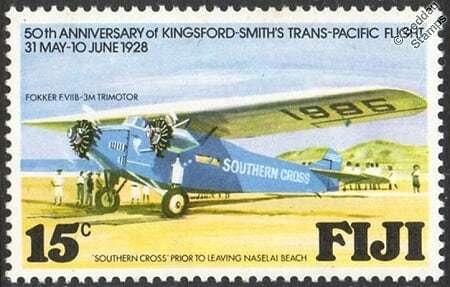
5★ “Each of the three engines gunned in turn. The laminated plywood of the Southern Cross’ body shook as the noise rose in a bone-rattling crescendo. Edna looked a little alarmed. Rowland handed her the large bag of chocolates they had picked up from Mark Foy’s the day before. Edna feared nothing, but occasionally she required sweets.”
Excitement, danger, humour, affection, history. The Rowland Sinclair historical mystery series has it all. Here we find Rowland and his friends on board Sir Charles Kingsford Smith’s famous Southern Cross, bound for Germany.
“The Southern Cross waited before them on the runway. The Fokker F.VII had appeared so often in the newspapers that the cigar-shaped fuselage and massive wingspan were familiar to most Australians, but newsprint failed to show the true blue and white paint work. In colour, the celebrated plane seemed to be a part of the nation’s standard, a flagship of Australian identity and pride.”
It’s 1933, the Fascists are rising to power in Europe, and someone needs to go to Germany to look into the drowning of an Australian grazier and to keep an eye on an Australian right-winger who has plans to bring Fascism to Australia. You don’t have to be a history buff to enjoy these, but it’s even better if you do know who some of the real people are.
This is a spy story, with aliases, fake passports, costumes, the works. Rowland is the younger son of a wealthy old Sydney family, but he’s a painter, not a respectable grazier like his elder brother. He lives in the family’s Sydney mansion and shares it with three artist friends, a painter, a poet, and a sculptress, as Edna is often referred to. Various others come and go, but the action in this adventure takes place mostly in and around Munich.
Rowland loves planes and actually owns one but hasn’t learned to fly yet. For him, this 14-day flying trip to Germany is a thrill. Edna, Milt, and Clive are understandably nervous, especially Milt, who is Jewish. When you meet the dashing Kingsford Smith, who’s a national hero, it’s easy to see why anyone might be nervous. Today we would say he’s a bit of a laid-back dare-devil. Hardly confidence-inspiring.
An early stop is the famous Raffles Long Bar in Singapore where they are met by the Australian Royal High Commissioner and mix with Somerset Maugham’s crowd.
“Maugham smiled, exhaling perfect rings of smoke. ‘In 1917 I was sent to Russia to prevent the Bolshevik Revolution … though regrettably my efforts didn’t meet with success. Regardless, this sort of work is best done by gentlemen.’
‘Because spying ought to be done politely?’ Rowland ventured, amused.
‘Because it ought to be done dispassionately … and there is nothing as devoid of passion as the English gentleman.’
Our spies mix believably with real people. As usual, each chapter is introduced with a news clipping or announcement from the era which applies to that part of the story. I’ve never noticed a false note, not that I’m any expert. The language, the clothing, drink, politics, cars, planes (!) all seem accurate, as well as the historical events, making this an enjoyable way to soak up some history.
“‘We’re helping this chap escape, then?’ Clyde asked.
‘So it seems.’
‘Good show.’”
Good show indeed! No reservations about giving a full five stars – love it!
This is turning into a really excellent series. Partly I suppose because the main characters are so much fun but also because the author seems to be going from strength to strength.
Paving the New Road takes the reader to Germany in 1933. Not a nice time and place to be. Rowland Sinclair is there on a mission for his country and of course his three best buddies refuse to be left behind in Australia. While they are there they meet several soon to be famous people including Eva Braun and Nancy Wake.
Sulari Gentill always researches her history really well and one of the best parts of this book for me was the plane journey from Australia to Europe. The pilot was of course Kingsford Smith and the journey took six days. They land in Darwin and Singapore (where they spend the night at Raffles) and other places too. They sit in garden chairs bolted to the floor of the plane. Amazing.
There is danger and drama in this book and some very exciting moments. I thought it was all very well done indeed and I am already looking forward to the next one.
In this fourth instalment of this engaging historical mystery series, Rowly Sinclair is sent to Germany in 1933 to see what he can do to derail the visit of Eric Campbell, the Fascist leader of Australia's New Guard. I have to say the premise that Rowly was going in his brother's place (rather than someone experienced in spycraft) and being able to take his three artistic, bohemian friends into Nazi Germany seemed a bit implausible (and dangerous), but after accepting that was the case, I enjoyed the scrapes and skirmishes they got into.
For me the strength of this series is in the author's historical research and the details she provides. The description of the group's six day flight with Kingsford-Smith in his aircraft, Southern Cross, (sitting in bolted down wicker lawn chairs) was fascinating. Once in Germany, Gentill manages to introduce Rowly and his gang to a number of famous characters, including Nancy Wake, Unity Mitford, Eva Braun and Albert Göring, who was anti-Nazism and used his brother Herman to help many Jews and others escape Germany. As well as trying to prevent Campbell meeting with key Nazi personnel, Rowly has also been asked to look into the sudden death of the spy sent in before him. Maintaining their cover as art dealers buying art, Rowly and the group manage to maintain a fun loving front and enjoy the local social life while carrying out their mission, but then must try to escape Germany while being hunted by the Stormtroopers. This is a fun, well written historical mystery series, as long as you don't take the plot details too seriously. Hopefully, Rowly will be back home in his own environment in the next episode.
Rowland Sinclair and his friends, Milton, Clyde and Edna accompanied Kingsford Smith in the hop across the continents in their first plane ride as they headed for Munich where Rowland was to perform his duty as a spy. It was 1933 and Australian, Eric Campbell was planning on meeting Hitler and bringing the Fuhrer’s dictatorship to Australia. Rowly’s task was to stop Campbell from attending any important meetings.
The dangers were immense, and for awhile the four friends thought it was all a bit of a lark. Until it no longer was. Under the guise of artists, with papers attesting to their positions, they met up with murderers, despots and madmen – but still Rowly persisted. He was determined to do the job he was tasked with. Would they succeed? And would they escape with their lives in such a volatile landscape?
Paving the New Road is the 4th in the Rowland Sinclair series by Aussie author Sulari Gentill, and I thoroughly enjoyed it, as I have the first three. It was filled with fascinating facts and blended with believable fiction. Along the way, Rowly and his friends met up with Albert Goering, (brother to Hermann Goering who was known as the good brother who helped Jews and dissidents survive in Germany in WW2); William Somerset Maugham, (British playwright, novelist and short story writer); Nancy Wake, (the White Mouse who was a secret agent during WW2) among others. An intriguing, well-written and researched episode, I’m very much looking forward to #5, Gentlemen Formerly Dressed. Highly recommended.
Paving The New Road is the fourth book in the Rowland Sinclair series by award-winning Australian author, Sulari Gentill. While gentleman artist, Rowland Sinclair has no love of fascists, it’s the idea of his brother Wilfred risking his life in Germany that sees him agreeing to go there in his stead. And how better to arrive quickly for this urgent mission than to fly?
It’s 1933, and New Guard leader, Colonel Eric Campbell is touring Europe drumming up support for a fascist-led take-over of NSW. For Rowly and co, liaison with an Old Guard infiltrator close to Campbell and sabotage of Campbell’s intended interactions are the order of the day. Rowland and his quirky friends hit upon the perfect cover for their journey to Munich: they are art dealers on a buying trip.
In addition to their interference with Campbell’s agenda, Rowly has been asked to look into the accidental(?) drowning of the previous liaison person. Despite the very sub-standard police investigation, he soon realises that, whatever they might learn about the death, the political climate will not allow any official redress.
During this gripping instalment, Rowly switches between at least six different personas as the need arises, while Milt comes up with a clever and quite audacious trick for one phase of their mission, Clyde keeps his usual steady countenance and, as usual, Edna charms all the men she meets, whether posing as an art dealer, a new wife or a prostitute.
Gentill includes plenty in interesting historical detail, gives several famous (and infamous) figures cameos (and some, important roles), and manages to include a number of tense encounters with fanatical fascists and desperate communists; an emergency desert landing; a stay at the Raffles Hotel in Singapore; a trip on the Orient Express; a book burning; and escapees from Dachau. Milt takes great delight in liberally spending money on outrageous artworks, especially when he discovers who's paying.
Quotes from press articles and books of the time that preface the chapters cleverly serve the purpose of providing information germane to the text that follows. As always, Gentill flawlessly captures the era. Once again, an exceptional dose of historical crime fiction. Readers who enjoy it will be pleased to know they can look forward to a further six (at least) instalments of this award-winning, addictive series, beginning with Gentlemen Formerly Dressed.
Paving The New Road is the fourth book in the Rowland Sinclair series by award-winning Australian author, Sulari Gentill. The audio version is narrated by Rupert Degas. While gentleman artist, Rowland Sinclair has no love of fascists, it’s the idea of his brother Wilfred risking his life in Germany that sees him agreeing to go there in his stead. And how better to arrive quickly for this urgent mission than to fly?
It’s 1933, and New Guard leader, Colonel Eric Campbell is touring Europe drumming up support for a fascist-led take-over of NSW. For Rowly and co, liaison with an Old Guard infiltrator close to Campbell and sabotage of Campbell’s intended interactions are the order of the day. Rowland and his quirky friends hit upon the perfect cover for their journey to Munich: they are art dealers on a buying trip.
In addition to their interference with Campbell’s agenda, Rowly has been asked to look into the accidental(?) drowning of the previous liaison person. Despite the very sub-standard police investigation, he soon realises that, whatever they might learn about the death, the political climate will not allow any official redress.
During this gripping instalment, Rowly switches between at least six different personas as the need arises, while Milt comes up with a clever and quite audacious trick for one phase of their mission, Clyde keeps his usual steady countenance and, as usual, Edna charms all the men she meets, whether posing as an art dealer, a new wife or a prostitute.
Gentill includes plenty in interesting historical detail, gives several famous (and infamous) figures cameos (and some, important roles), and manages to include a number of tense encounters with fanatical fascists and desperate communists; an emergency desert landing; a stay at the Raffles Hotel in Singapore; a trip on the Orient Express; a book burning; and escapees from Dachau. Milt takes great delight in liberally spending money on outrageous artworks, especially when he discovers who's paying.
Quotes from press articles and books of the time that preface the chapters cleverly serve the purpose of providing information germane to the text that follows. As always, Gentill flawlessly captures the era. Once again, an exceptional dose of historical crime fiction. Readers who enjoy it will be pleased to know they can look forward to a further six (at least) instalments of this award-winning, addictive series, beginning with Gentlemen Formerly Dressed.
I wasn't convinced about this book when I first started reading it. Not my sort of mystery novel - I generally prefer procedurals and this was more feathers and 'tally ho old chaps' with an improbably upper-class bohemian hero. However, it won me over by its charm and the fact that it was immensely readable. Set in the 1930s, i also really liked the way the author blended fictional characters with historical figures such as Kingsford Smith, Nancy Wake, etc. A great local-ish author to boot (i think Canberra can claim the Snowy Mountains....).
The bohemian group of Rowland Sinclair and friends are sent to Germany (1933) to thwart the visit of Eric Campbell of the New Guard. As usual there are a number of famous real characters; this time it includes Sir Charles Kingsford-Smith, Hugo Boss outfitter to the Nazis, Albert Goring (the good brother), Nancy Wake (Australia's favourite spy) and a young, beautiful Eva Braun. The mystery in these series come second to the environment and times being written about.
Rated 5 stars. Another fantastic, well-written episode in the Rowland Sinclair historical mystery series. This one takes place in early 1930's Germany. There is a murder to solve but the main emphasis is on the chilling rise of Hitler. As usual wonderful dialogue and believable characters with a touch of espionage. Rowland, Edna, Milton and Clyde are thrust into numerous dangerous and disturbing situations which gives the reader the perception of how scary this historical time was for those who did not fit into the Nazi ideology. Definitely not a cozy read. Best to read this series in order.
Book 4 in the Rowland Sinclair mystery series, Australian but in this one the gang travels to Munich to prevent a meeting between Campbell Australia’s foremost fascist and Göring. It was a bit of a slower tale, I was in particular impressed that she knew about Göring‘s brother, who actively worked against the Reich but it never got acknowledged really. Eva Braun, Unity Mitford etc all feature and Unity was well scary and freakily as crazy as I always imagined her to be. The Book is also scary because we see so much of the repeated rethoric now. Never thought a cosy mystery would terrify me quite so much. And it made me so homesick for Munich. It made me remember how much I loved living there...
Rowland Sinclair and his fabulous friends find themselves in Germany trying to disrupt Eric Campell's moves to ingratiate himself with Hitler and his regime. Of course the story becomes complex. The list of characters we run into are again a Who's Who of that era. Charles Kingsford Smith flies them to the continent. They are helped by Nancy Wake. They buy Miro sculptures and others of a similar ilk. Rowly runs into serious trouble. (I learnt that Hugo Boss designed the Nazi uniforms.) other mad and wild journey that leaves wanting more!
This is an absolutely smashing addition to the Rowland Sinclair series. Perhaps not my favourite, but for what it's done for the plot, the characters, the places it went (the level of violence it heightened things to, and with that the level of suspense) it has made for one of the most brilliant novels in the series. It just did so much, and did it awfully well.
During the 1930s, it was possible to imagine several countries allying with Germany. In the United States, many Republicans supported the Nazis. In the United Kingdom, there was active support. It is possible if Edward III had not been forced to abdicate, he would have pushed toward an alliance with Germany and in exile, the Duke and Duchess were Nazi sympathizers. The same threat was rising in Australia and Australian politician Eric Campbell wanted to bring fascism to Australia, arguing that democracy had failed.
Campbell went to Germany seeking support and alliances. This is real history, but in Paving the New Road, the fictional Rowland Sinclair and his friends Edna, Milton, and Clyde fly to Germany to foil his plans, replacing a man who drowned while swimming–though Rowlie comes to suspect that he may have been murdered. Their mission is to foil Campbell’s attempts to meet with high-ranking Nazis. They operate less like spies, though, and more like Merry Pranksters.
I like the series characters in these Rowland Sinclair mysteries by Sulari Gentill. I wish the plot was as fully realized as the characters are. The plot was thin gruel and, despite moments of jeopardy, felt more like a lark than a serious effort. They had altogether too much fun fighting the Nazis.
I don’t want to create the impression that Gentill makes light of or diminishes the evils of Nazism. I just think that their success relied on pranks, not so much espionage or investigation. It is also at the beginning of the Reich, where all its evil is not yet manifest, is just beginning to take form. The anti-semitism is present, there are concentration camps, but the Final Solution is not yet in place.
The mystery of his predecessor’s murder is solved by revelation, though suspicions had formed. Also, as in A Decline in Prophets, a photo served as the crucial clue to the solution. I’ve read two books by Gentill and a photo has revealed critical information twice which would be cool if Rowlie were a photographer. I hope the next Rowlie Sinclair mystery is one where he figures things out without seeing a single photo.
And yes, even though I thought this book needs a strong plot, I am looking forward to the next in the series, because I like Rowlie, Edna, Milton, and Clyde and hope to visit with them soon.
I received an e-galley of Paving the New Road from the publisher through NetGalley.
Paving the New Road at Poisoned Pen Press Sulari Gentill author site
Just as Rowland, Edna, Clyde and Milton settle back into Sydney life, Wilfred's friend goes missing in Germany. Off go our intrepid quartet into the beginnings of Hitler's rise to power. Their task - find out what happened to this gentleman and stop Eric Campbell, the man who would be Australia's Fuhrer, from bringing Nazism back to Australia. Rowland and his friends enter the fray with their usual flair and manage to sidestep running into Mr Campbell, before getting themselves into a terrible bind. However will they escape their fate? In the only way they know how - stylishly.
I do really enjoy these books. The main character is Rowland Sinclair, a wealthy gentleman of the 1930s. He usually gets mixed up in crime trying to solve a murder, and this one took him spying in Germany during the run-up to the second world war. As ever, the books feature characters he and his friends meet, who you can google and see that they were real people. I love this element of the book and the newspaper clippings at the front of each chapter from the time. They blend fiction and historical fact really well and add to the immersiveness of the book.
Because of the subject of the book and the setting in Germany at that time, it was a harder read than usual, but still a good story with twists and even an ‘oh wow’ at the very end, which I wasn’t expecting. I look forward to the next one already.
2021 bk 91: Gentill has done it again - delivered a well written, tightly plotted mystery novel that holds ones attention from the beginning to end. Her characters could easily step out of the book into life because they are so well rounded. This novel finds Rowly and his group of friends in Germany to foil Eric Campbell (again), search out the cause of an agent's death, and on the side purchase art for Australia. Well written and one I will read again.
The best book from the series yet! Fantastic mixture of fiction and real facts. You know a book is worth reading when publishing the highlights of the book on FB you get banned from publishing in all groups and live appearance for 30 days. Would be interesting to any mystery lover or history buff! Highly recommend! The parallel between 1933 and now is uncanny!
After ending my crime-free reading month with Anna Funder's All That I Am, Sulari Gentill's latest Rowland Sinclair novel, Paving the New Road, set in the same era, was the perfect segue back into crime fiction.
The year is 1933 and Hitler's Nazi government is consolidating its hold on power, imprisoning socialists, trade unionists and avante garde artists who work is considered 'degenerate'. Public book burnings are held to purge the shelves of 'un-German' works by Marxists, pacifists, Jews and other progressive intellectuals. Handshaking is banned and German officials required by law to greet each other with a raised right hand.
Eric Campbell, leader of Australia's über-conservative New Guard, has chosen this moment to go on tour in Italy, Germany and Poland with a view to importing European fascism to Australia.
Meanwhile, the conservative but respectable Old Guard has a man in Campbell's party 'a little like a spy', as Senator Charles Hardy puts it ('A lot like a spy, I'd say,' counters Rowland), called Blanshard who together with a second man, Bothwell, based in Munich, is charged with derailing Campbell's plans. When Bothwell drowns, the Old Guard -- though disapproving of his bohemian lifestyle -- ask Rowland to take Bothwell's place, because he speaks German like a native and 'the Sinclairs have always been true to King and Country'.
In what would be a stretch for anyone else, Rowland secures Senator Hardy's agreement for his entourage of Edna, Milton and Clyde to travel with him to Munich where they are to pose as art dealers, make contact with Blanshard, and help sabotage Campbell's objectives.
'Desperate times, strange bedfellows,' as Hardy puts it.
It's a risky gambit, sending a bon vivant like Rowland Sinclair and his bohemian band to Munich in 1933. But it's precisely the contrast between their erstwhile carefree way of life and what they experience in Germany that makes it work. Gentill captures their personal anguish as avante garde artists, writers, Communists and in Milton's case a Jew in response to the Nazis' persecution of all they hold dear and arguably have taken for granted up to now.
The flippancy in the characters that I sometimes found annoying in the earlier novels disappears in Paving the New Road. And though I wouldn't wish the terrible things that happen to Rowland on anyone, I welcome the transformation of the 'determinedly disinterested' gentleman artist into someone with an active interest in international politics.
As with previous novels in the series, Gentill's fictional characters rub shoulders with historical figures, and while I found this distracting at times, I also appreciated the insights this provided: I didn't know, for example, that Hermann Göring had a younger brother who remained a committed anti-Nazi.
Besides, Rowland's encounter with W Sommerset Maugham during a layover at Raffles Hotel in Singapore delivers one of my favourite exchanges in the novel:
"This sort of [espionage] work is best done by gentlemen."
"Because spying ought to be done politely?" Rowland ventured, amused.
"Because it ought to be done dispassionately... and there is nothing as devoid of passion as the English gentleman."
Gentill has been described as "amazingly prolific", this fourth novel in the Rowland Sinclair series released within two years of the first. In a post on the Murderati blog, David Corbett suggests, 'Writers who do work at the faster clip are often known more for their entire output than a single book' and cites Dennis Lehane's reason for wrapping up his own series as, "Have you every heard anyone say ‘The seventeenth book in the series was my favorite’?"
Whether Gentill becomes known more for her entire output than a single book remains to be seen. But I wouldn't put it past (full disclosure alert) my friend Sulari if the seventeenth book turns out to be my favourite. For now, Paving the New Road earns that guernsey.
Engaging, enlightening and downright entertaining, Paving the New Road published by Pantera Press is released 1 August 2012.
The reader of my reviews will know I've become a bit of a fan of the Rowland Sinclair series (which is quite surprising for somebody who normally prefers to lurk deep on the dark side), so PAVING THE NEW ROAD was a welcome arrival. Basing the story in 1933, sending Sinclair and his companions to Germany all sounded rather interesting. Although I will confess that one of my pet peeves - the inclusion of high profile real-life figures in fiction - made me somewhat nervous. Having said that, if you're going to include a real-life figure, then why not somebody famous for being around somebody really famous (as opposed to the really famous person themselves)... If that seems to be ridiculously coy, then my apologies, but sometimes avoiding spoilers in reviews requires Herculean effort.
Given this is now the 4th Sinclair book, I'll leave out mentioning who Rowland Sinclair and his group of companions are and how they came to be. As with all of the series, you could read them on their own, but you really would be better off to go back to the start if you need to, as the background to these characters is part of their attraction.
This book, in particular, is littered with real-life references that are very recognisable. From Charles Kingsford-Smith providing transport for Sinclair's group to Europe, Adolph Hitler (although he's more referred to, as opposed to incorporated into the story), through Eric Campbell himself (who I was somewhat surprised to find died as recently as 1970 in Canberra), there's a smattering of other names throughout the book that are instantly going to give this story some very firm grounding in a time, and a society, that had such a massive impact on the rest of the world in the years that followed.
There is quite a leap of allegiance in this book as Sinclair reluctantly heads to Germany on a commission from old enemies, although the leap is nicely explained, and given some lovely light touches as Sinclair's friends, masquerading as art dealers, manage to take their revenge with some rather eccentric purchases. What's also very well done is the weaving together of Sinclair's role in Germany - essentially as that of spy - with the solving of the death of the man in whose footsteps he is following. Granted the spying aspects of the plot take up a lot more time than the investigation, but that wasn't in any way unsatisfying or annoying. There's also a very strong sense of the place - 1933 Germany is a worrying place to be in this book - the build up of Nazi fanaticism is stark and frightening, not just because we read about it knowing the ultimate outcome.
Part of the attraction of this series is the combination of historical facts, with a great ongoing cast of characters, all handled with great aplomb by a master storyteller. Who must be good at what she does - littered with references to dresses and clothes, incorporating a pet peeve of this reader, and a combined spy thriller and crime investigation - and I still thoroughly enjoyed PAVING THE NEW ROAD.
This series heads into dark territory as Rowland Sinclair and his three best friends (Milt the poet, Clyde the painter and Edna the sculptress) head to Munich, Germany in 1933. The blurb gives a good idea of the set-up, so I won't bother recapping that. Of course our group tackles the job with their usual flair. They are posing as Australian art dealers and the art they decide to acquire to support their cover story is all very, very modern. Milt, especially, is having a grand time; their contact in Munich, Alastair Blanshard, is not amused. Milt's art choices form the only light moments in the story. The author does a great job evoking the disgust and dismay felt by Rowland and his friends. I don't know how accurately the author portrayed Unity Mitford but she was one of the scariest people in the book. The book burning scene was well done, as was the plaza scrubbing incident. Rowland et al are intent on figuring out what happened to Peter Bothwell, in addition to doing their 'official' job of disrupting Eric Campbell's goal of German endorsement of his fascist party. Their efforts to solve that mystery place them in unexpected danger. The two strands of the story come together in a very dramatic climax. Well done! Once again, the newspaper clippings and book quotes that head each chapter are fascinating in their own right as well as giving hints towards the action in their respective chapters. I had a great time and look forward to the next book.
This title has sat in my TBR shelves for far too long. In it the author cleverly reminds of what is happening in the world in 1933: Germany rapidly heading into fascism; that there are those who would like to see Australia heading the same way. When Rowland Sinclair agrees to go to Germany instead of his brother Wilfred, Rowland's bohemian friends decide to accompany him. And how else to get there quickly other than in Kingsford-Smith's Southern Cross?
I loved the way some now famous names came to life in this story including Kingsford-Smith, Eva Braun, Hermann Goering and Nancy Wake, just to name a few.
Although the action of the story really is improbable, it makes a captivating tale, and excellent reading.
Book number four and I have enjoyed this one as much as the first three. A little better perhaps. There is so much to research throughout the book as it loosely uses fact around the fiction and each book has a few genuine characters that invite further reading. The timeline is interesting and has kept me thinking and referring back to my old books on the pre war period in Germany. A great story apart from all of that and Rowland and his mates are now a part of the family in my head and I look forward to meeting them again each time I open the pages.
Book 4, The stakes go up as Rowland travels to Germany
Rowland is maneuvered into traveling to Germany as a spy for the Old Guard. Extreme danger follows as he steers between Nazis, spies, news reporters, communists, artists and radicals in general. His loyal friends go with him, and their support brings him home in almost one piece.
The atmosphere in Germany is ominous, and the book gives a look into the anxiety of this period. Very well researched and written. Might as well get the entire series, you'll want to keep reading. I'm going for the next book now.
Miles and his companions are dragooned into going to Nazi Germany to try to stop their own home-grown Aussie fascist leader from gaining any credibility from his association and interaction there. It's sort of like watching Forest Gump as you bump into famous person after famous person. Miles and his bohemian friends find themselves in a series of very nasty situations as they try to accomplish the disruption and also investigate the murder of the agent whose place Miles was taking. Pleasant read.
Why has no-one introduced me to Rowland Sinclair before? This was a random selection from the library and I loved it. I enjoyed the history, the Australian connection, the banter....an really easy book to read with a credible crime plot. now to go back and find book #1.
This is an enjoyable read. I now know the main characters well, although I wish the two main ones would just get together! The historical background the real people are also fascinating.