Jump to ratings and reviews
Rate this book

The Price of Everything: The true cost of living

Rate this book
Why is a life saved from a terrorist attack worth two saved from a natural disaster Why are women more valuable than ever Why do Americans tip when Europeans don't And how can orange juice be used to predict the weatherThe Price of Everything starts with a simple behind every decision we make lies a price, whether we're buying a cup of coffee, taking a new job, or deciding to become a parent. Prices are the invisible thread that connect and explain our society, culture, economy, successes and failures.Revealing connections that are ingenious and unexpected, Eduardo Porter shows just how fundamental the price of things, work, happiness, faith, family and the future is - both to our everyday lives and to civilisation as we know it.

296 pages, Paperback

First published March 7, 1995

145 people are currently reading
2048 people want to read

About the author

Eduardo Porter

6 books33 followers
Eduardo Porter writes about business, economics, and many other matters as a member of the New York Times editorial board. He has also worked as a journalist in Mexico City, Tokyo, London, São Paulo, and Los Angeles. He was the editor of the Brazilian edition of América Economía and covered the Hispanic population of the United States for The Wall Street Journal. He lives in New York.

Ratings & Reviews

What do you think?
Rate this book

Friends & Following

Create a free account to discover what your friends think of this book!

Community Reviews

5 stars
212 (12%)
4 stars
515 (31%)
3 stars
640 (38%)
2 stars
235 (14%)
1 star
53 (3%)
Displaying 1 - 30 of 249 reviews
Profile Image for Melki.
7,291 reviews2,611 followers
September 21, 2015
Put on yer thinkin' caps!

description

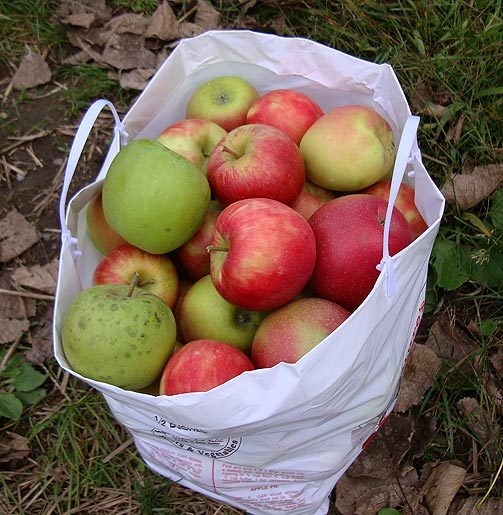
A bag containing 13 apples costs six dollars.
My family of four eats one apple a piece each day.
You can do the math, but I'm convinced it would be cheaper to put heroin in everyone's lunch box.

Porter's book offers up a fascinating account of why everything seems to cost so damned much.

...prices nudge us to take one course of action or another. In a way, this is obvious: every decision amounts to a choice among options to which we assign different values. But identifying these prices allows us to understand more fully our decisions. They can be measured in money, cash, or credit. But costs and benefits can also be set in love, toil, or time. Our most important currency is, in fact, opportunity. The cost of taking any action or embracing any path consists of the alternatives that were available to us at the time. The price of a five-dollar slice of pizza is all the other things we could have done with the five dollars. The price of marriage includes all the things we would have done had we remained single. One day we succumb to the allure of love and companionship. Years later we wonder what happened to the freedom we traded away at the altar.

Economists call this the "opportunity cost." By evaluating opportunity costs, we organize our lives.


The book is full of riveting facts about every aspect of our financial lives. And if you think life is unfair, try dying. Did you know that family members of 9/11 victims were not compensated equally for the loss of their loved ones?

...victims' value in death reflected the inequality they experienced while alive. Bankers were deemed to be worth more than janitors... The women who worked and died in the World Trade Center and the Pentagon earned, on average, less than the men. That implied that their value in death ... was also lower. The average compensation to their families amounted to about 37 percent less, on average, than men's. The fund ultimately paid about $2 million, on average, to the kin of 2,880 victims who died in the attacks. But each of the families of the eight victims who earned more than $4 million a year got $6.4 million, while the cheapest victim was valued at $250,000.

The author keeps things interesting by using pop culture examples to demonstrate his theories:

- Did you know Coca-Cola once hatched a fiendish plot for a vending machine programmed to charge more for an ice-cold Coke on a hot day?

- Radiohead's 2007 experiment to allow fans to pay whatever they wished for their In Rainbows album turned out to be a huge money maker for the band, even though six out of ten fans paid nothing.

All in all, this was an engrossing book. It frequently angried up my blood, and made me rant and rave, but I learned a lot. It also helped me better explain to the kids why even though the internet says a Magic: The Gathering card is worth $75.00, it is only worth that amount if they can find someone willing to pay $75.00 for a piece of coated paper.

Oh, and about those apples . . .

My grocer has decided to leap aboard the Eat Local bandwagon. Now all bags of apples are labeled with the name of the orchard where they were grown. If you thought they'd pass the shipping savings on to the consumer, you are wrong. They raised the price by a dollar.

(Shakes fist, sighs . . . puts apples in cart.)
Profile Image for Paul.
2,798 reviews20 followers
July 30, 2020
This poetry collection only actually collects two poems and half of them are prose.

Wait, I’ll try that again.

This book collects two long, narrative poems: ‘Line of Desire’ and ‘Joe Soap’. Both of these poems also contains sections of prose.

That’s better.

I really enjoyed this one. I’ve not read anything quite like it before and found it very creative. The only reason I’m not giving it five stars is because I also found both poems slightly frustrating. I’d’ve liked Motion to work these up further, to the point where they were long enough to support a book each. Nit-picky, perhaps, and more than likely slightly unrealistic but, hey, I’ve never claimed to be a fair judge.

The following is an excerpt from Lines of Desire chapter two: Money Singing. I don’t know how much you’ll get out of such a short excerpt, but it was one of my favourite passages within the larger context:

The roof over our heads
weighs so disastrously much
when it falls it will crush us all in our beds.

The world wants me to know
our children could reach up
and stave off this weight from us sheltering below.

Our children are asleep;
they have no idea
how fast this weight might drive us into the earth or how deep.

Our live are our own.
Fall, roof, fall,
if that’s what it takes to show me where I am most at home.
Profile Image for D.
471 reviews12 followers
February 21, 2011
There are a lot of intriguing concepts in The Price of Everything, but I was bothered throughout by logic that seemed sloppy. But on the other hand, I mistrust my judgement a little bit because I had a vehement, irrational, negative emotional reaction to some of the book's content.

Porter's key concept is that you can examine any decision in cost/benefit terms, and you can almost always find a way to quantify the cost and benefit in monetary terms (whether it's explicitly transactional or not). For instance, here's how Porter analyzes why the 55-mph national speed limit didn't work: A 70 mile trip takes 16 minutes more at 55mph than at 70mph. At $4.30/hr (the average wage of "production workers in 1974"), that represents $1.15. At the time gas cost $0.53/gal, so to break even, the average driver would have needed to save 2.17 gallons for every 70 mile trip -- substantially more than the fuel efficiency of 1974 cars would provide.

Porter doesn't suggest that most production workers worked out this equation and made a rational, informed decision to disobey the speed limit -- I infer that he thinks people made gut-decisions perhaps based on a subconscious sense of time-value lost at lower speeds. But I would argue (albeit without stacks of research to back me up, whereas Porter's book is meticulously footnoted) that the psychological dimension was significant outside of economics; the 55-mph limit was an assault on macho cowboy car culture. (Consider: if economics were that much of a factor in velocity determinations, you'd see a lot fewer jack-rabbit start and sudden stops with current fuel prices, especially in sub/urban commuting, where it avails the driver almost nothing.)

Porter's framing of the problem also ignores that travel at 70mph for sustained periods of time is a comparative rarity for most drivers. (With long-haul trucking one notable exception, and, other than cowboy culture, one reason always advanced for the trucker/cop cb/radar conflicts of the mid-late seventies was that the truckers' work schedules required violating posted speed limits.)

Porter also ignores other factors which might reasonably be considered part of the valuation: reduced loss of life, reduced emissions, reduced engine wear, et cetera. (Although I think it's fair to assert that many drivers would likely ignore these factors as well.)

Although Porter's analysis of what to do about greenhouse emissions ultimately concludes that given the uncertainty of the models, voters might as well follow their guts, his analysis of the issue omits a very important factor. (It's also quite different from traditional risk valuations.) He suggests thinking of the problem as balancing lives positively impacted now and in the future, the economic cost of curbing emissions now and in the future, and the potential impact of climate change on the economy. (I infer that he doesn't discount "there is no more economy" as an outcome, but thinks it fairly unlikely.) It's easy to tweak the model to suggest taking only limited action in the short, in effect "investing" funds needed to address the problem in the future: spending money on policies that promote economic development so there are increased financial resources to address global warming later on. But he ignores the opportunity cost of not taking action now. I think of it as the "toothache problem" -- the longer you put off the dentist visit, the bigger the bill is likely to be.

However, I should probably admit that phrases like, "the standard family deal, in which women exchanged the service of their uterus, child care, and household chores for their husband's wage," get me spoiling for an intellectual tussle with their author, irrespective of how historically accurate they might be and what the author's personal attitudes are. And if I sometimes found the book infuriating, it certainly challenged some of my attitudes and preconceptions, and made me think.

Aside: Porter is kinda in the Chicken Little camp as far as the future of paying for intellectual content goes, and seems to think more/stronger DRM may be part of a solution. So maybe this is relevant, not just petty: A glowing review called The Price of Everything to my attention, and if it had been priced like other e-books I've bought recently, I probably would've bought it on the spot. These days my determination of whether and how to read a book includes among other factors, the cost of physical storage, the ease of library access, my estimate of re-read/reference value, and whether an electronic version is DRM-encumbered. Half-again the maximum price I typically pay for DRM-trapped content? Not a winning strategy for publishers who want revenue from me.
Profile Image for Erin.
1,937 reviews1 follower
December 22, 2010
This book read like a B level high school report...how can this man be a professional journalist??? Affirmative action at it's finest, apparently. This book was littered with misinformation and bias,which was explained when you read his sources. Within the first 30 pages, I came upon multiple untrue statements, including (and none too surprising) complete misinformation about the cost of illegal aliens as supplied by pro-Hispanic groups. Unless you want a fairy tale, avoid this book at all costs. What could have been an entertaining concept was so poorly thought out, I cringed.
Profile Image for Barbara.
108 reviews
February 1, 2011
This is a fantastic book with more information than you could possibly imagine. The title of this book -- The Price of Everything -- is no exaggeration at all. Eduardo Porter definitely covers the price of pretty much everything in this exhaustive book -- not just the prices, but the values as well, of a cup of coffee, trash, crossing borders, the price and value of marriage, women, men, baby girls, baby boys, sperm, eggs, the price of happiness, the price of the future, even the price and value of things that are free. And Mr. Porter backs up everything he writes in his book, giving us detailed information regarding the place and time period of the research, along with tons of fascinating statistics.

Mr. Porter takes us all over the world, comparing values and costs in so many places including Southern Ethiopia, Quebec, Sweden, Bolivia, London, Guyana, Beijing, South Korea, Paris, Berlin, Bangladesh, Bhutan, West Bengal, The United States, and many other places across so many different time periods.

In the first chapter, "The Price of Things," Mr. Porter starts out by sharing the price that he pays for a cup of coffee and how he put his own personal value on the price that he pays for coffee. I like the fact that the author shares this information with us. For me personally, I like to know an author's feelings and opinions on subjects that are discussed, and although I thoroughly enjoyed this book, I believe I would have enjoyed it even more if Mr. Porter had put himself into more of the examples he shared with us. But again, that's my personal opinion. I am quite sure that many people would love all of the incredibly detailed and researched information in this book, with or without the author showing his presence in all of the examples.

Some people might be able to read this book from cover to cover in one shot and absorb all of the information, but I read it slowly and a little at a time because there is SO MUCH important and interesting information that I really want to absorb. Eduardo Porter really knows his stuff, and the information in here is just fantastic.

This is a book that I will not be giving away -- l will hang on to this book because I know I will want to go back and reread different chapters. It's an incredible reference book and just a great book to have.

I would recommend this to everyone. After all, it is a book about money and the price of just about everything, so who can't relate to that??

I entered the First Reads contest for this book, so thank you to Portfolio/Penguin and Maureen, who listed this book as a First Reads giveaway, and thank you to Eduardo Porter for writing such an interesting book. AND, of course thank you to Goodreads for these fantastic First Reads contests and for somehow always knowing exactly which books I will love!!!
Profile Image for Maria.
224 reviews
June 29, 2011
Some parts were insightful & had a good flow. Others felt very sanctimonious & seemed to be written to confirm the author's world view & political musings. Was hoping author would have credentials on a doctorate, or even a masters level (i.e, one or more degrees in psychology, economics, sociology, political science, etc), but none were apparent.
Profile Image for John Martindale.
891 reviews105 followers
March 27, 2016
There was definitely some interesting parts throughout, but Porter's leftist, secular and Keynesian bias colored much, he is as clearly engrossed and blinded by his worldview as the most fundamentalist evangelical is in their own, and just as credulous and given to faith in the stories, myths and spin of his tribe, as the most sanctimonious baptist is with his congregation. Of course, the author does all of this while priding himself in being objective and rational. I suppose I shouldn't let it get to me so.
The book would have likely have gotten another start or two, if not for the prolonged section of global warming, how we must take drastic actions now or else all of the most resent apocalyptic prophesies will absolutely come to past, all the while he makes no mention to how the scientist previous predictions of doom, simply didn't happen, so they have to just keep pushing back the date into the future. It is like the people saying Jesus was coming back in 1988 and when it didn't happen, they said it is 1989, and somehow the loons kept getting a large following of folks willing to quit jobs and wait for the rapture. The author has drunk the kool-aid, he is one of the faithful in the new ever growing religion of environmentalism.
I was largely put off by his sharing the causes housing bubble which were of course the evils and abject failure of the free-market which needs to be scrapped for more governmental intrusion and control. Oh it all just galls me, in so many ways it was government through and through that set the ground work (Jimmy Carter) and later poured fuel upon the fire of the problem (Clinton who enforced Carters good intentions and democratic senators who were financially in bed with Freddie and Fanny). It is like we have a Doctor who is force fed poison to a patient and when the patient grews deathly ill, it was claimed, this is absolute proof that the immune system doesn't work and is completely worthless, and the doctor is praised as the savior who must forge a new way, engineering an artificial immune system.
Profile Image for Julie.
140 reviews
January 10, 2011
Won this in a First Reads Giveaway. The book has a very interesting premise that made me very curious to see what the author would do with it: every choice we make is shaped by the prices of the options laid out before us--what we assess to be their relative cost--measured up against their benefits (p. 3). Of course, he really couldn't discuss the price of everything , but he is to be commended for trying. He covers not only the price of things (goods and services), but also the prices of life, happiness, women, work, free, culture, faith, and the future. Some people may say that the author is biased in his presentation. Well, yes. If you think about it, when your goal is to write a book on the price of everything , you can't really include everything, so you have to make choices, and, yes, those choices will be based on and reflect your personal biases. So, if you, as a reader, hold the bias that global warming isn't real or that illegal immigrants offer nothing of value to this country, for example, you will have difficulty approaching this book with an open mind. In the interest of full disclosure, I have my own biases, and many--though not all--of them overlap with the author's.

Overall, I think Porter does a good job of exploring most of his topics. He gives one a lot to think about, and it is interesting. However, his writing is sometimes disorganized (often, I wasn't sure where he was going or how he got where he was), though I'm not sure how much of that can be attributed to his skill as a writer and how much any writer would have had the same difficulty in writing with coherence about, well, everything. Finally, I found much of the book to be a bit depressing (of course, I did not factor this into my rating, as I chose to read about the subject). So often, especially toward the end of the book, I found myself cringing at the reality presented--not because I didn't agree with the it, but because I did.


Profile Image for Holly Cline.
169 reviews25 followers
December 18, 2010
As a nerd of the econ major variety, I was highly anticipating the arrival of this book once I'd won it through First Reads. Luckily for me, the book didn't disappoint.

Books of this type tend to go wrong in one of 2 ways: 1) The "facts" are simply not true, and the book serves to sell rather than to actually provide real information. Or 2) An intelligent economist writes a factual yet way too dense for the common public text. This book did a great job of falling into neither of those traps. It had legitimate facts & some economic theory explained correctly (not bent to mean what the author WANTS it to mean - you'll find that in any newspaper these days). But what I found the most impressive was just how accessible Eduardo Porter made the material. You do NOT need to be an econ major to understand this book. And if you ARE that interested in the more analytical details of topics referenced, there is a detailed section in the back of the book noting original sources and where you can find them.

This book never promises answers to the world's problems, but it sheds a light on why a few of them might be occurring. It presents an interesting view of the motivations behind actions of people from different cultures and parts of the world. Bottom line: don't let the base premise scare you off this book if you're not a nerd like me. There's a lot here to appreciate, even if prices and economics aren't topics you'd normally read about.
Profile Image for Sbuchler.
458 reviews27 followers
March 12, 2014
Genre: Pop-Economics

I'm not sure what I think of this book... it was all over the map in what it discussed and what it tried to cover... and my initial reaction to many of the initial statements was -- "but modern business psychology has proven that people don't behave like that" (e.g. as the ultimate rational actors that classical economics seems to think we all are...)

I thought the question it purported to try to answer, why we pay what we do was interesting, but that I didn't really feel that the book answered it to my satisfaction. That may be more a limitation in the book's view to a more classical economic theory versus my desire to incorporate the psych studies on decision making and choice discussed in The Honest Truth About Dishonesty by Dan Ariely, Nudge by Richard Thaler and Sidetracked by Francesca Gino. Plus, the book flits from topic to topic without actually getting a cohesive vision from them. There were a number of interesting ideas/different perspectives to think about... but not really what I was looking for or expecting out of the book.
Profile Image for Ted.
446 reviews6 followers
February 7, 2011
Behavioral economics and evolutionary psychology explain why we pay what we pay for things.

Unfortunately this book is rather a collection of facts, stories and studies (many of which students of behavioral economics are likely to have heard before) than a coherent, or revelatory narrative.

The author shows us that humans are, in category after category, largely, not "rational actors". He shows that prices are in fact relative and the fairly obvious observation that pricing is emotionally and even unconsciously driven.

There were interesting nuggets like, "A study at NYU found that the right left happiness gap (where right wing people reported more happiness than left wing voters) increases with deepening income inequality. This suggests people on the right are better at rationalizing income inequality and feel less guilty about it."

But, overall I longed for someone to explain it to me, more than tell it to me. This may be because the author is a journalist unlike a scientist, such as Aireley or Kahnenen.
21 reviews1 follower
December 17, 2010
A fascinating look at how we place value and why. The book opens by looking at the price of trash. We will pay people to remove it and pay large amounts not to live near it, but, on the other hand, their are those who will pay large amounts FOR our trash. The price of women, happiness, faith, work and many others lead you to look at things with new eyes. The book is clever and wise, full of fun nuggets and tidbits of information that will stay with you long after you close it's covers. For example, one of the reasons it is hard to get political action to prevent global warming in the US is because we have a large, voting elderly population. Since clearly they will be gone before any drastic warming can occur, they just don't place much importance on the issue the way that the smaller, non-voting youth population does. Highly recommended, you will love learning from this author!
42 reviews
March 7, 2025
Porter uses a variety of pop science, historic, and economic studies to underscore the concepts of value and relative value baked into prices.
His book shows how price and value are relative, shaped by social and psychological contexts. How money sometimes interferes with the intrinsic value of things - eg being paid to do something may demotivate someone from doing something, because it somehow crowds out the nontangible values related to the action.
The book also discusses the institutions and politics related to price and setting prices, such as in the case of saving lives in industrialized nations vs LDCs, and the dubious moral grounds that lays on. Bc industrialized nations’ citizens are likely to yield more economic value in the country context they live in, saving their life costs (and could yield) more: but these kinds of calculations reveal some of the underlying problems with setting an economic value to intangibles based on capital/money.
Relatedly, it becomes difficult to bake in the relative values of other intangibles into cost: how do people value their time differently? Or marginally - e.g., the cost of one hour vs the cost of adding one hour to already “paying” 36 hours?

The book is easy to read and provides nuggets of wisdom to reflect on. For people who have read a lot of behavioral econ, it likely won’t give you much new information, but it’s a pleasant review/synthesis.
Profile Image for Emily.
390 reviews10 followers
December 27, 2018
A fascinating change of pace. True to the title, Porter suggests that everything (love, faith, the future) can and should be viewed as a series of economic tradeoffs.

It’s not a perfect book. Some chapters read more like a highlight reel of tidbits supporting Porter’s beliefs than a coherent analysis. I highlighted several parts that were news to me, but the bulk didn’t seem overly groundbreaking. Maybe it was at time of publication.

Porter is up front with his perspectives (religion is for suckers, Keynes literally “saved the world”), and I enjoyed the book as an intellectual exercise more than an exact proof. Granted, I’m not qualified to evaluate most of the claims he made—I slept through my undergrad Econ class, and my natural bent is to assume people are motivated by rainbows and unicorns rather than cold, hard cash.
Profile Image for Chris.
792 reviews10 followers
February 5, 2024
I listened to the audiobook and it’s pretty good and now about 13 years old.

This book explores and discusses prices for many things from the price of commodities to labor to religion to the cost of children and much more too.

This is a good book that I can recommend.
Profile Image for Fabiola.
140 reviews
June 30, 2025
Me pareció un buen libro de cultura popular, dándome centenares de datos curiosos sobre la economía de consumo y algo de behavioral economics. Sin embargo, creo que empecé a leerlo bajo la premisa de su subtítulo de "finding method in the madres of what things cost", el cual me había hecho anticipar un libro sobre metodología de pricing, y no es nada un libro sobre eso, lo cual ultimadamente me parece algo decepcionante (es decir, leer un libro que no trata sobre lo que creías que trataba).
Profile Image for Aika.
40 reviews
January 19, 2012
The Price of Everything: Solving the Mystery of Why we Pay What We Do written by Eduardo Porter is a book about the fundamentals of what Americans spend their money on. In this book, Porter shows the world of over spenders, as well as those who are considered “cheap”. Porter talks a lot about how people spend so much money for a cup of coffee at Starbucks that is the same as the coffee on the corner deli but for a lot less. He also talks about illegal immigrants and how people would rather pay them the minimal wage, than pay someone who actually knows how to do the job for more money. Porter talks more on some topics than others, for example, taxes, politicians, or the word free. Yet in this book, in a way, he mocks how some people never understand how to manage their money because of greed, and being deprived.
I don’t typically read non-fiction, especially a book about how not to spend your money. Although this topic was both interesting and not, it gave me a good perspective. Typically, I would rather read a sci-fi or fantasy book, because they have action, and it is all made up. Rather here, this is all true, and in this book it made it all clear how people acted all around you. I actually liked this book; it was one of my favorite non-fiction books I have read in awhile. This book both taught me new tips, and also told me what not to do, (in a way like a how to book). Overall, this book excited me even though it is non-fiction and is full of facts.
This book has taught me how to spend money. It taught me that it is better if you also give, and not just receive. If there is a blood bank and you have to pay ten dollars, than do it, because it is for people that need it. Also, don’t over spend your money, you will be broke and the only person you can blame is yourself. I believe that I can use the knowledge in this book, to help me further down in life, and I would recommend this book to anyone.
Profile Image for Mark.
541 reviews30 followers
December 17, 2010
Quite possibly the most thought-provoking book I've read in 2010, and I've read a lot of books this year. Eduardo Porter explores the big decisions that we make throughout our lives through the lens of "price". Ostensibly, this Freakonomics-ish, Predictably Irrational-ish book is yet another in the series of tomes exploring unexpected consumer behavior, but it's really much more than that. Where the earlier books focused on micro-behavior governing smaller buying decisions, this book tends toward the epic. In looking at how we price a life, for example, Porter really explores how we value our own lives and what one more year means and why people resist change when it comes to medical care. In looking at how we price happiness, Porter really explores the decisions we make regarding work-life balance. In looking at how we "price" women, Porter is really exploring the sociology of production and its attendant impact on things like reproductive freedom. At their core, all are big, ethical themes.

Net net, this isn't just a book about price or economics or cost-benefit analysis. This is really a book about the philosophy of choice and what our big decisions say about us as a people. Truly an eye-opening read.

I received a complimentary, advance copy of this book through the Goodreads First Reads program.
Profile Image for John Hibbs.
114 reviews5 followers
June 6, 2011
A few pages in I feared I was reading another freakanomics-gladwell rip; a mention of a study on tips received by lap-dancers (apparently, they receive more during menstrual peak) and other such cute anecdotes which lead to the conclusion that human beings really are helpless creatures doomed to success or failure by biology.

Fortunately Porter progresses from this worn-out method. We can quickly accept that there's many intangibles behind the price of something, but it's difficult to appreciate how prices can affect our beliefs and reflect our core values.

Barely any of us find ourselves in situations where we need to analyze the costs and benefits of fatality prevention or environmental preservation, and have the luxury to make statements such as 'life is priceless' or 'we should do everything to prevent harm to the environment,' ignoring the flip-sides to our absolute ideals.

Out of the dilemma of global warming, as Porter explains, many ways of pricing the environment has emerged, and it's really incredible to learn that government agencies around the world have their own exact figures on the value of life. It's also logical, as we can imagine its need as a benchmark to compare the effectiveness of life-saving investments.

Things get existentially mind-boggling from here, but Porter is up to the challenge, showing enough broad-mindedness to offer perspectives that brush on economics, psychology, and philosophy.
By the last page I'd known I'd taken in enough wisdom to mull over for years. Well worth your time.
Profile Image for Sterlingcindysu.
1,661 reviews78 followers
December 23, 2015
This was one book that I enjoyed the details and examples more than the big picture...in fact, I don't really know what Porter's big picture was. He tries to explain the "price" of abstract things such as freedom, religion, even being a woman. For that last chapter, I now understand the difference of a bridal price and dowry and why polygamy was a good idea until education became important than the number of surviving children a family had. He doesn't go into the costs of free drinks women get during happy hour though.

In the chapter of The Price of Work he explains why slavery today would be more expensive than paying employees...so morals aside, there is plenty of food for though here. I skimmed most of the religion chapter.

But let's bottom line it--supply and demand. Then you get into personal preferences (such as helping a small local business succeed) and the time-value-cost triangle.

An article on Yahoo said that the $10 Christmas gift is coming back. People aren't afraid of looking like cheapskates and admitting they can't spend money like water during the holidays. Tiny houses are getting popular and all of the baby boomers are downsizing...I wonder if in the near future books on the "price of unloading" will be popular. But just material goods! We all know the cost of "unloading" a spouse is expensive!


Profile Image for Sara.
1,170 reviews
August 6, 2014
In this unique take on economics, finance, valuation, culture, and society, Eduardo Porter addresses the curious costs that are innate in life, and how people manipulate them. With chapters addressing everything from “stuff” to life, happiness, work, and the future, he examines monetary costs as well as the expectations that surround expensive and cheap goods and services. In the introduction, Porter notes that both the rich and poor evaluate the costs and benefits of their choices, and the prices that they determine (in monetary cost, time, resources, etc.) speaks a great deal about their values and situation in life.

This book addresses a variety of social and cultural issues, and puts them together in a way that will hopefully make you pause and consider for a moment the costs of the small and big things in everyday life. I know as I was reading it, there were several spots where I stopped and said, “Hey, listen to this!” This is a highly readable and provoking read; however, although there are citations in the endnotes, there is not a recommended reading list or bibliography addressing each particular chapter, which would be useful for those wanting to examine some of the issues in depth.
288 reviews2 followers
October 23, 2018
This was a good book to listen to in the background. I'm not an economist but the author covered 2 or 3 interesting areas in which "price" isn't obvious, like the value of women & participation in a religion. In the 7 yrs. since it was written much has changed, of course, but it offers a historical background.
Profile Image for Libby.
290 reviews44 followers
June 20, 2011
This is a fascinating and thought provoking work. It explores the mystery of why we pay $3.39 for a mocha latte from a coffee shop when we could get it for $1.19 from the deli down the street. It demonstrates that we gripe to heaven about the price of produce and then nag our Congress to be rid of the immigrants who pick it so cheaply. The author points out that behind every choice we make, from buying a latte to joining a church, has costs and rewards, in other words, a price. All of our concepts, life, happiness, material goods, even the future have costs. What will we pay for our choices? What forces are at work to set the prices we are to pay? The author discourses on these ideas with wit and charm, explaining some very complex notions in an assessable and easy fashion. I'm not simply saying this is a good book and you might like to read it. I'm urging you to read it because it is VITALLY IMPORTANT to know the price of our choices and why we pay for them.
3 reviews1 follower
December 16, 2010
I love economics and mostly enjoyed this book. Some sections I think have a broad appeal such as the section on The Price of Women and The Price of Free. The last section on The Price of Future was definitely the weakest and he left me with more questions than anything else. When he talks about the mortgage crisis, I think he missed a big chance to tie this in to The Price of Free. After all, many people took these mortgages because they saw people like the author who made big money owning a home for a short time. Also no mention of how FANNIE and FREDDIE tied to the crisis in was a serious omission to me. Over all if you have an interest in why people do things economically, there is a lot to like here.

I won this book through the Goodreads First Reads program and my review is based on an advance uncorrected proof
Profile Image for Alice.
762 reviews23 followers
December 21, 2010
Thanks to Giveaways for this book!

This is a good book for explaining basic economic theory using real-life examples. It falls into the category that I've noticed lately - books that teach school subjects in a more interesting way, without the huge expense of college. I wouldn't want to take an economics course - but I enjoyed reading this book.

My only complaint is that the author seems to believe in the current theory of people as consumers. Everything in the world is just economics. You can see this from the chapter titles: The Price of Happiness, The Price of Women (but not Men, of course), The Price of Faith, etc. However, reading this book really made me realize the logical disconnect needed for this world view. Things that don't fit the model (faith and culture especially), are conveniently fit into it anyway. With a really big shoehorn.
Profile Image for Sanjay.
16 reviews
January 13, 2011
I got this book through the First Reads program.

I was attracted to the idea of pop-economics book written since the latest recession. I enjoyed his first chapter, "The Price of Things" where he analyzes, among other things, the price of his daily coffee routine and his willingness to pay for it.

However, he lost my interest for much of the middle of the book. It wasn't the I disagreed with the ideas he was promoting (in fact I agreed with many of them). Mostly it was the inconsistent manner in which he portrayed his statistics that bothered me. The page number escapes me now, but I remember a sentence where he compared something with 60 percent approval to something that two-thirds of people approve of.

He finally won me back over in his final two chapters, "The Price of the Future" and "When Prices Fail" where he presents his arguments passionately and cogently.
83 reviews9 followers
February 11, 2012
I expected this to be another Freakonomisque type of research into the price formation. After all, the book subtitle promises to solve the mystery of WHY we pay what we do. Instead, this is more a broad overview of pricing metrics, with only somewhat interesting insights, like the average amount of dowries going down in some parts of India due to over-supply of males. Rest of the chapters are mainly broad overviews of existing markets (like hey, did you know, that there's a global market for CO2 emissions, and island nations are willing to pay top dollar to stop the rest of us from melting the ice caps?)
Profile Image for Matt.
3 reviews1 follower
March 31, 2013
This book is dense with information. It is organized into chapters on the price of freedom, the price of religion, the price of women, and others. I found most chapters interesting at first, although my interest level begin to diminish as the author beats his theme into the ground. He tries to compact so many facts into the book that it feels like a textbook from an upper level college course in economics. It could be cut to about half its length and still get its point across. There were a few conclusions the author made that I did not agree with but overall the insights made are worth reading about--if you don't mind wading through the more verbose sections.
20 reviews
January 6, 2011
This was an excellent book. I really enjoyed reading it. The author took a very interesting look at prices (not just monetary prices) people pay for things and the possible reasons why. The author was able to make some intriguing connections between things that you don't normally think of as relating to each other and in all the book had a lot of good information I had not considered before. I would definitely recommend this book.
Profile Image for Patty.
738 reviews12 followers
January 5, 2011
An excellent read... both informative and engaging. This would be a good supplemental reading for students as it illustrates many economic theories using real world examples. Yet it is not a dry, academic tome, but a fun and thoughtful book. Highly recommended!
Displaying 1 - 30 of 249 reviews

Can't find what you're looking for?

Get help and learn more about the design.