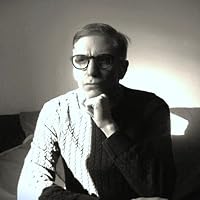
Jean Genet was a French novelist, playwright, poet, essayist, and political activist. In his early life he was a vagabond and petty criminal, but he later became a writer and playwright. His work, much of it considered scandalous when it first appeared, is now placed among the classics of modern literature and has been translated and performed throughout the world.
A pink avalanche has died between our bedsheets. This muscular rose, this opera chandelier, Fallen from sleep, black with cries and with ferns That a shepherd's hand installs around us, This rose is waking up! Under the shrouds of mourning that the story spreads! Sounding clarions in the sky aswarm with bees Soothe the knitted eyebrows of my boxer. Lock up the knotted body of the sweating rose. Let him sleep more. I want to wrap him up So that we'll know we're cruel robbers of the cradle And so that on waking, my death, pretentiously mourned By these twisted snakes, by this frightened snow, Will be stranger and dimmer, among the flowers O voice of forged gold, hard, quarrelsome kid, May your tears on my fingers freely flow From your eyes plucked out by a chicken's beak That in a dream pecked at, here the eyes, there Seeds already prepared By that light-fingered hand open to my thief.
Genet è quell'autore che scompagina tutte le agende da maniaci del controllo. È generatore di caos vitale.
Questa è una raccolta di sei ballate o poemi scritti negli anni Quaranta ed è una formidabile bussola nella quale trovano posto i temi e i personaggi delle altre sue opere che qui assurgono per contrasto, grazie all'uso dei versi, a veri e propri archetipi: con la poesia Genet riesce a proiettare la sua esperienza di vita, materia viva di tutta la sua produzione, oltre il carattere autobiografico. Il ladro, la galera, la violenza, la condanna a morte, la ghigliottina, la pederastia, il viaggio, i guappi, il mare esistono e sono i temi sordidi e vivi. Talmente vivi da meritare la nobiltà poetica e, per essa, arrivare fino agli alti cori angelici.
Genet ci fa fare un bagno nel fango e poi ci innalza. Per concludere che alla fine è meglio tornare al fango.
La poesia di Genet sovverte le leggi civili e religiose, è un ascensore per i dannati dagli esseri umani, e li conduce dall'Inferno direttamente al Paradiso intrecciando argot e metro classicheggiante, riuscendo così nell'impresa paradossale di essere lirico senza peccare di lirismo.
Se siete maniaci del controllo di cui alla prima riga di questo commento e volete guarire, allora fatevi un regalo e leggete queste sei ballate con testo originale a fronte, tradotte da Giancarlo Pavanello.
Your naked arms are going to whinny tearing my night to pieces p. 5
The prision is a pointless school for dying p. 25
...From the branches of a young tree barely attached / Other flowers I've stolen which ran laughing / Feet on my lawn and my recumbent shade / And splashing me with water these roses bathing there.(Stalks stiffen up corollas by the handsfull / Corollas are feathery and members of lead) There sounds a fatal air to their lively caresses / With water spurted to the blows of sharp heels. / Hot flowers who go out toward the evening of alleys / I am alone enclosed in a damp flag / From those humid folds of these cruel flames / Lovely flowers which of you could disentangle me?... p. 75
But take off your shoes before treading me. p. 93
You stubborn shoulder has rejected my hand: It dies desolate on my docile wrist:... p. 99
My patience is a medal for your lapel. p. 109
Thus I'm left alone, forgotten by him who sleeps in my arms. The sea is calm. I don't dare budge. His presence would be more terrible than his voyage outside me. Maybe he would vomit on my chest. And what could I do about it? Sort out his vomit? To look there among the wine, the food, the bile, these violets and these roses which there dilute and untie the threads of blood?... p. 127
La impronta violenta y homoerótica en Genet es tan explícita que entrar en detalle sobre ella en su poesía o prosa es una redundancia penosa, sus presencia es obvia y no hay que acudir a mayores elucubraciones para desentrañar lo que allí está, nunca mejor dicho, de bulto. Por otra parte, y el mérito se lo doy al energúmeno que definió a la poesía de Lorca como "más sensible que inteligible", mutatis mutandi, sucede lo mismo con Genet, sustituyendo la delicadeza lorquiana, por la desgarrada violencia de el autor de este poemario (violencia que, aunque de cepa muydistinta, Lorca volcaría, inequívocamente en su teatro). El catálogo de sentimientos y emociones de Genet es siempre el mismo (la muerte, el deseo, los impulsos primarios, el rencor, la traición) y tiene como caldo de cultivo (además del prontuario del autor) o como puesta en escena la colonia penitenciaria y sus intersticios, con la propención del autor de embellecer más que subvertir, lo tierno y lo bello por lo execrable y lo grotesco (cosa que, para un impresionable en su día como yo, encontré muy novedosa, producto sobre todo por mi total desconocimiento de la novela picaresca española y de la obra de Cervantes, éstas últimas que no adolecen del preciosismo esperpéntico de la obra de Genet).
Demasiado caleidoscopico para mi gusto. No negaré que la yuxtaposición tanto de imágenes como de sentimientos realzan el estilo surreal del autor, pero es complicado leerlo en el sentido de que incluso parece que son diferentes voces las que hablan en un sólo poema, o bien pueden ser diferentes tiempo que hablan en una sola voz. Sea como sea, cada poema amerita una larga y profunda lectura para sacar algo en claro, y eso es simplemente maravilloso. Destacó por encima de todo "El condenado a muerte". Un poema de una belleza, erotismo y brutalidad unida tan impactante que sólo puedo impactarme ante tanta sangre, belleza y falta de pudor.
Il mio canto non è truccato. Esito spesso Perché cerco lontano sotto le terre profonde Riportando sempre le stesse sonde I pezzi di un tesoro sepolto vivo Dagli inizi del mondo. #quote
It would seem that this is the first translation of Genet's poetry, and while the attempt is delightfully absurdist at times, looking at the French shows how much is lost in the translation. I checked out a few of Mark Spitzer's translations of the same poems (which can be found on his website.) Spitzer's translations restored much of the flow to these poems, and provided me with a whole new sense of comprehension of the poems. I would recommend that rather than read this one, check out Spitzer's translations of Genet.
A defensa de Genet, la calificación puesta no es porque sea mala su obra, sino por la mala calidad de la edición y presumiblemente de la traducción —el único par de notas del traductor no podía no estar en desacuerdo.
The poems in the Genet collection "Treasures of the Night" will shock and offend those unprepared to accept love's alternative practitioners. Genet would like that....