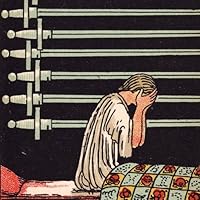
John Fuller's first novel opens with the arrival of church agent Vane on a remote Welsh island where he is to investigate the disappearance of pilgrims visiting its sacred well. While Vane looks for clues and corpses the local Abbot seaches for the location of the soul. Magical and poetic, Flying to Nowhere awakens our secret hopes and fears and our need to believe in miracles.
The Publisher Says: Flying to Nowhere is a modern Gothic novel with spiritual overtones that open out a set of classic novelistic quests. Set on a remote Welsh island during the Middle Ages, the tale is woven around two main characters—Vane, an emissary sent by the Bishop to investigate the disappearance of a number of pilgrims to the island's miraculous well; and the abbot, who dissects cadavers in a desperate attempt to find the human soul. In language that oscillates between graphic and lyrical extremes, John Fuller relates the intricate thematic parallels of their quests which remain unresolved even at the end. Flying to Nowhere, in which the existence of absolute truth is openly challenged, asks unanswerable questions, and encourages provocative speculation.
My Review: Fuller's modern Gothic novel(la, it's so short) is an incantation to Kalliope, a hymn to gods hanging on to existence and power just barely because of hymn-singers like this doing their blessed work.
I loved the idea of a book that juxtaposes ancient and modern journeys (sea and dissection). I felt, as each part of the book wavered into focus, the little shiver of anticipatory longing.
A beautiful word-bath. A pleasure to read. A toe-curling literary satisfaction.
The sky is ablaze with chilly sunshine and the leaves swirl down - today is just like P B Bear's windy day :
and it puts you in the mood for rereading a few novels from a long long time ago, which I never do. The first was Wise Blood - still crazy after all these years - and the second was Flying to Nowhere, all of 88 pages long - is it really a novel? Is there such a thing as the world's tallest dwarf, or are there some questions best left unanswered?
This reread was just as baffling and just as stuffed full of barmey religious people as Flannery O'Connor but John Fuller, being one of those poets, decorates every sentence as madly as they decorate all the cakes on the Great British Bake-Off. He tells a tale of a crazed abbott conducting vivisection on hapless pilgrims on a remote (is there any other type) Welsh island so the Bishop sends his top guy to investigate but he falls down a drain. Pretty weird.
Onward to the third reread, Morality Play which is yet more religious stuff.... I am seeing a pattern here.
What’s that? A Booker Prize winner that comes in under 700 pages? You mean the author didn’t just create an unwieldy tome in the hope that the judges wouldn’t get through all the shortlist let alone the longlist and so win by default? In 1979 Offshore won with a brief 140 pages but Fuller is unlikely to be bettered for his effort which won 4 years later with a miniscule 89. I had never heard of Fuller or this book but it is a sadly overlooked gem – a mix of The Name of the Rose, The Wicker Man and Cadfael. Set in the Middle Ages the opening reminded me of the memorable scene in Oscar and Lucinda where the missionary is sailing an unwieldy glass church on a raft down an Australian river, though in this case it’s a horse on a row boat making its way to a remote Welsh island. This is a tale of missing pilgrims, secretive monks and an outsider looking for the truth. To say much more about such a short book would be to give away too much so instead I encourage you to read it and enjoy the beautiful poetic prose that, like poetry, does not have an extraneous word. “We can see you flying away. Where are you flying to?” “I’m flying to nowhere. I’m just becoming myself.”
Gothic garbage. If The Name of the Rose were a bucket of shit, it would look a bit like this.
Promising start, and a spectacular opening scene - but it loses its way badly in the second half, with confusion and obfuscation abundant. Pity because the first half was so good - and that opening scene (Vane’s horse jumping off the boat only to be dashed to death among the rocks) among the more memorable in modern fiction.
The end was proper twatty though. Pseuds’ Corner stuff. Booker nominees don’t usually vanish from sight so completely, but it makes sense now why I’ve never heard this book mentioned, ever.
Incredibly fucking frustrating. A Gothic horror novella woefully marketed as a medieval murder mystery. There's no suspense. There's no investigation, no clues, no crime, just a succession of surreal, grotesque vignettes. John Fuller masterfully creates this viscerate landscape where warm damp things grow in the dark, mysterious rank liquids leak from the walls, arterial staircases wind endlessly from room to infernal room, rotten flesh bobs and bloats and writhes in bottomless wells and on wave-tossed cliffs.... all of which is no substitute for character development or a plot. A real plot. Is that so hard?
This book is rather different from most stories I've read.
Flying to Nowhere is set on a Welsh island where there's a monastery, a farm, and a well that attracts pilgrims eager to take its waters. The odd thing is almost all the pilgrims fail to return home and no bodies are ever found, so what's happening?
The bishop whose diocese contains the monastery sends an emissary called Vane to find out. The abbot appears to be mad and takes great pleasure in dissecting bodies in an attempt to discover the seat of a person's soul. Vane finds a channel leading to the monastery from the well only to drown in a deep pool of bodies under the abbot's residence.
Other characters in the book also rot away emphasizing that the body is insufficient for a person's needs and that we should be able to escape from it. Do we have a soul?
The New York Times Book Review called John Fuller's Flying to Nowhere "As rich and exciting as The Name of the Rose, but deeper and more disturbing." I call it one weird little book. The blurb on the back makes it sound like a mystery. Set at an isolated monastery on an island off the coast of Wales, it follows Vane, an emissary from the bishop, who has been sent to investigate the disappearance of over twenty pilgrims who never returned from a visit to the island's miraculous well. The Abbot seems remarkably unconcerned that pilgrims have vanished. And, in fact, seems rather vague about whether any pilgrims ever arrived at all. He doesn't really bother himself with that, you know. He's too busy dissecting any cadavers that happen to come his way in an all-out search for the body's seat of the human soul. Has the Abbot been knocking off pilgrims in his quest for knowledge?
You got me.
Can't say we really get an answer to that. Or to much of anything. Let's just say that William of Baskerville (from Name of the Rose) the emissary Vane ain't. His method of investigation is hard to follow and his interviews with various members of the monastery are thoroughly unsatisfactory. Everyone from the Abbot to the novices either refuse to answer or give answers that make very little sense and he doesn't really follow up on that. As detective fiction of any sort, the book is a dismal failure and not even close to being in Eco's league. Fuller seems much more interested in the mystery of the human soul and investigating the boundaries between body and soul and between life and death than telling us what really happened to those pilgrims. Oh, we do get an answer of sorts--but not one that tells us who or what was responsible. The book is much more mystical than mysterious. But the questions it poses aren't asked in a satisfactory or compelling manner. There are no interesting or sympathetic characters to root for--the most sympathetic character is Vane's horse--and he doesn't last past the first few pages. That's not a spoiler...trust me.
Over all, a disappointing book and definitely not what I expected when I read the words "a vastly entertaining murder mystery" on the back. ★ --maybe.
First posted on my blog My Reader's Block. Please request permission before reposting. Thanks.
This is one of the worst books I’ve read in recent memory. The language was poetic to the point of feeling forced, and the jumbled plot and characters made it extremely hard to read. At least it was a short one.
Weird. Another “WTF did I just read?” experience. Dark, gothic, macabre, ambiguous, dreamlike/nightmarish and disorienting. It has a sort of storyline, and a vivid sense of place and time, but it feels like everything that happens is symbolic. What is it about? I guess it’s about the futility of trying to understand the soul as opposed to the body. You can tell that the author is a poet; it’s all brilliant imagery and metaphor. It’s also a really short book - only 89 pages. I don’t even know if I liked or disliked it - it’s just odd.
Very odd; very peculiar. So dense with lyrical language it takes real effort to make it through the (fairly simple) plot, and while I appreciate the book's ruminations on life, death, and the separation of flesh and spirit I have trouble with any written work that sacrifices story for experimentation in how that story is told.
I can't even begin to say I understood everything in this book. I'm not even sure one is supposed to. It was a beautiful and interesting story though. I highly recommend it, and if you do pick it up - don't look up much about it before you spend a couple hours curled up with it and a warm mug of tea.
This is a sad strange little book. Don't recall where or why I got it, but it was 97 pages and I'm racing to meet my goal for the year. It is compelling reading, but kinda unsatisfying in the end. Lots of plot. OK writing for the most part, but loose ends aren't tied up and there is little purpose in the book. Not a ton of character development. Compelling reading while you're reading but I don't really recommend.
In this mystical short novel, pilgrims disappear after visiting the sacred well on a remote Welsh island. One of the main characters, the church agent Vane, investigates their disappearances. The writing is beautiful and poetic, almost cryptic even. I'm still figuring out the Saint and bird allegory. Still, a great read for a dark and rainy night.
"What is the temptation that every monk must put behind him? It is the temptation to forget that he is dust. It is the temptation to fly." p.86
I have been drawn to this book ever since I read it for the first time some forty years ago. On re-reading it does not improve but it does not lose its magic either. What is Fuller trying to say? Why did he write it? Certainly not a book to forget but the main mystery remains unsolved, I feel. I'm left troubled but the prose and the atmosphere is so good and the horse magnificent.
I have a sentimental attachment to this book and have read it many times, usually in the middle of the night when I'm sick or can't sleep. It is a dark and broody tale, a poetic meditation on the soul in the form of a gothic mystery. There is a little of the conventional mystery here, but not much. Its main concern is with the soul, both as spirit and as life-principle, and with the transformation of life, which is to say, death.
John Fuller's Booker-shortlisted Flying To Nowhere (1983) is such an odd, charming little novel - or perhaps more accurately novella, since it's 105 pages long and quite large of print - that it almost seems a shame to say too much about it. It centres on a remote Welsh island, home to a community of monks, a bunch of women farmers, and a sacred well that attracts pilgrims on account of its supposed healing properties. When the healing miracles mysteriously dry up - to the extent that pilgrims increasingly seem not to be returning from the island at all, let alone going home cured - an ecclesiastical agent from the mainland named Vane is sent to investigate. He arrives "standing with one foot on the prow, like a clerk who supposes he is required to be a hero", and that's about the last time anything makes much sense.
Fuller is a poet, I gather, and that comes through in his novel's vivid imagery and gnomic dialogue; in many ways, Flying to Nowhere is less a story than a series of striking tableaux with captions. When the horse accompanying Vane on his boat panics during the landing, and ends up fatally injured on the treacherous coast, the episode is described through the almost inhumanly detached point-of-view of a young, rather pretentious and over-serious novice:
The hooves struggled to keep the body upright, but one leg was already broken from the jump and as the horse heaved, sank and scrambled among the slippery rocks other bones failed him. For a moment it seemed as if the glistening torso might try to move by itself in a series of wriggles and lunges, dragging with it the bunched and useless withers and fetlocks. One rear leg was flattened at an unusual angle from the knee; the other seemed caught between two rocks.
The passage seems set on dismembering the horse before it is even dead; while "horse" as a whole creature gets three verbs attached to it in quick-fire succession, most of the struggles and the suffering here are anatomised as the provinces of individual body parts (all carefully specified): hooves, torso, legs, bones, withers, fetlocks. The detachment of "unusual angle" and "seemed" is so lacking in apparent empathy that it borders on callous.
This is not a young man unaware of the physical. A few pages earlier, we are told of the novices' struggles with their monastic clothing ("The garments of meditation are not designed for the pace of prologue; they walked swiftly, though without urgency. At each step their garments were caught between their legs, tugging and chafing their calves"), and of our novice in particular reflecting on what he sees around him from within "the stifling privacy of his cowl". How stifling the enforced privacy of the monastery proves to be is one of the things the book explores; our novice is not unaware of the physical, but he is terrified of it, and utterly determined to ignore it at all costs.
Ranged against the self-denying, idealistic novices are the women of the island, who are practical and earthy to a - rather cliched, it must be said - fault. When we first meet them, they are engaged in hard physical labour in the fields the novices are walking through; their sweat is lovingly described. Later, one young woman is described as (in the semi-seclusion of her bed in a communal women's dormitory),
holding the flowers of her breasts and filling them in her mind like filling cupped hands with the heaviness of spring water, trickling cool through the fingers.
The imagery is arresting; I like the water's unexpected "heaviness", though not so much the flower-boobs, not least because how exactly do you "fill" a flower in a way that makes any enlightening metaphorical sense when applied to breasts? But it does feed in a wider, rather trying dichotomy of Earth-Mother-women set in contrast to airy-intellectual-men. The women, we're told, enjoy "cheerful shared activity" on account of "the female response to the seasons and to what fittingly belonged to them. It was an absolute virtue of the sex, tested and proved in the full round of life", because women are so natural! and earthy! and in naturally in touch with naturey earthy things while the men think Really Deep Thoughts! Pedestalling half of humanity isn't much of an improvement over pillorying them, since the end effect is still a dehumanising denial of individuality, and while it might be argued that all this is an extension of the novel's themes about life, body, and spirit - and that it therefore is a deliberate expression of the male characters' rather aetiolated emotional development - the narrative tends to reinforce the view rather than challenge it.
But this is one area where the novel's brevity, and its opacity, work to its advantage; I was absorbed enough over the short page-count to keep the eye-rolling to a minimum, and be puzzled at what exactly Fuller is getting at. A couple of female characters have some wonderfully elliptical things to say, as in this dormitory conversation:
"Are you crumbling away too, Gweno?" "No, no. It's leaving me pure and new and now I've died and got wings and I'm flying away. Can't you see?" Her fingers moved in the moonlight, and their shadows moved in the rafters. "Yes," came several voices. "We can see you flying away. Where are you flying to?" "I'm flying to nowhere. I'm just becoming myself."
This exchange seems to suggest a combination of bodily and extra-bodily experience, something echoed elsewhere in one character's distinctly un-monastic musing that sex can be transcendant ("Remember that spending with women is a struggle from roots, an attempt to fly"), and in the central debate between Vane and the Abbot about miracles and the well. To call it a 'debate' is to overstate the case somewhat; the two men fence warily at intervals, and mostly manage to talk past rather than to each other. This is about as direct as it gets:
"I cannot arrange cures. Cures are not for sale." "Are you saying that there are no cures?" asked Vane. "Perhaps there have been cures, but I do not know in every case what has caused them."
"Dry and energetic" Vane wants straight answers and obedience, and the well back online; the distracted, doubting Abbot (unconvinced, as seen just above, by the well's miraculous properties) is busy secretly dissecting corpses to see if he can find "the private chamber of the spirit", and imagining the books on whose knowledge he has based so much of his identity dissolving back into their constitutent parts:
Could leather be cured of its curing? [...] He would lose first those books bound in vellum, for the bindings would turn back to stomachs and digest the contents. Or the shelves would grow into a hedge and keep out the hand that reached for knowledge.
More earthiness. Amid an increasingly (g)lowering atmosphere, as the investigation seems to hint more and more at foul play, Vane finds himself starting at shadows and wondering who he can trust. Having demanded a meal of meat, his doubts soon make him rue what he asked for:
a plate of meat produced in sly triumph [...] It was dark, sweet meat, three slices of it in a wooden dish, and Vane had wolfed it down as if he had not eaten for a fortnight. Now it lay uneasily on his stomach, like an animal twitching in a nightmare.
Hmmm... no one seems to be reading John Fuller. Now's your chance to change that. This book is a series of dreamy, impressionistic vignettes which depict facets of life for young girls in a convent. Like many of the best authors, Fuller is a poet, and this book has an enchanted lyrical quality in its texture. The writing is sensual, and much better than most. I value the surface texture in art, an aspect which is much more important than the conceptual nature of a piece. So, I wish more novelists paid attention to the music of their writing. This, however, is a beautiful book.
Short book about the dynamics between a protective abbot on an island and the self-indulged emissary with the bishopric mandate to investigate the disappearance of 20-odd pilgrims. The abbot is not only tasked with the running of the monastery, but is secretly also preoccupied with a search for the origins of the human soul by dissecting human cadavers. It is suggested that an ulterior motive is the discovery of the clue to eternal life as well as saving souls from catharism, but this is not delved into further. What seems morbid to us is very befitting for an epoch in which alchemy was still a respectable profession.
The cover illustration suggests the story takes place in the 16th century, and certainly after the invention of the printing press mid-15th century. The abbey on the island is described as grimy and in decay, contrary to the surroundings, including the farm, which are full of life. The well with alleged healing properties is even mentioned by name, Saint LLeudadd, which would place the novel around Gwynedd in northern Wales, possibly even Bardsey Island. The story is so thick with similes, metaphors and allegories that the plot, including descriptions of places and persons, seems crowded out. Every sentence is written as if it is supposed to have a deeper meaning. For example, a frequent motif is house or edifice, which presumably stands for religion or belief system.
It is probably not a coincidence that Vane is pronounced as 'vain', since he has developed a superiority-complex.
The abbot remains aloof, not just to deflect any suspicion on his character, but also to prevent the closure of his monastery that would provide the necessary income through the sale of pilgrim merchandise.
The few likeable fellows in the story are Geoffrey, Vane's helper, as well as the novices who seem to be of a placid nature and toil away at meditations. Together with the farm hands, a mix of males and females, these complement the antagony between the two main characters well. The person to openly ask ontological and epistemological questions is the older female farm proprietor. Strangely, the trivial link between her questions and the secret quest from the abbot is not established and instead the author resorts to plastering the omission over with yet another uncalled-for metaphor (Ch XIII). I find this perplexing and am openly wondering whether the author understands his own story. What could have been an enthralling foray into medieval philosophical disputes appears instead rather abruptly revoked from the story. Does this perhaps provide an additional and inadvertent meaning to the title of the book?
Oddity: the abbot had to ascend 3087 steps to reach his room, which would (at a rate of on average 14 steps per floor) mean that the distance covered is well over 200 floors. Quite a feat from an architectural perspective.
And this is not the only one. The occasional reference to christian, saracen and pagan wisdoms, and subsequently forged into metaphors, is incredulous to the point of overbearing.
I am enthralled and mystified by this strange little book. I had never heard of the title or of its author before I found it one the shelf at one of my favourite used bookstores and felt compelled to pick it up and then to buy it. The terrible 80s Penguin cover, the comparisons to Eco's Name of the Rose, and the short length all persuaded me, somehow. . What a strange strange strange strange strange book. Beautifully written - Fuller is better known as a poet, and the language is lovely and dense and the book is full of clearly-drawn, immersive images. . The plot is very loose. A bishop's emissary is sent to investigate the disappearance of pilgrims to a holy well on an island off the coast of Wales. The abbot of the monastery there is resentful of the investigation, as he is harbouring secrets of his own. These are the primary motives and conflicts and mysteries that serve as the spine of the novel, but its real flesh is in the many little set pieces and side episodes concerning minor characters, such as Geoffrey, the emissaries assistant, and Tetty, a farm girl, who find companionship in each other amid the strange happenings on the island. . In his bio on the Poetry Foundation website, Fuller is quoted saying, "a good poem takes some irresolvable complication, worries it to death like a dog with a bone, and leaves it still unresolved. The pleasure of the poem lies entirely in the worrying, the verbal growling and play. Life itself stubbornly remains entirely like a bone." So, Flying to Nowhere is a poetic, philosophical novel, one concerned with worrying irresolvable complications and leaving them unresolved.
I love slim historical novels so hearing of this Booker nominated novella from 1983 was so exciting. It began with a very vivid scene of a thrashing horse on a raft, and a witty exchange between an abbott and an inspector. But it shifts and shifts POV, features several deaths in a short span of pages, til finally the young page of the inspector and a local cow girl become the heroes. It was not always clear reading- Mr Fuller is a poet and was apparently a publishing rogue running a small press out of his garage. I didn’t get the thrusts of abstract thought at the end, and it didn’t matter as it was very clear in its picture of life at an isolated religious shrine: local pride in the saint struck spring, a blurring of lines between the local folk and the monastery, things slipping gently into the pagan. I think if Mr Fuller had just put a sliver more interest in plot, he wouldn’t have had to just kill off so many people. Likeable little triffle all the same, as the title suggests.
A slight and dreamlike, sometimes nightmarish, allegorical novella. Given more adulation than it probably warrants though it's a vivid read. It's compared by many to Eco's The Name of the Rose (which I coincidentally also happened to read not long before) only for broad plot similarities but in no other way. The end was not a revelation but I did enjoy the depths to which the ecclesiastical investigator probed. I wouldn't call this an easy read despite its brevity. There aren't the bewildering array of references and quantity of foreign language quotes found in Eco yet it does require an open eye of the mind to flow along with the poetic style of Fuller's writing. I will always remember certain images from this book: Vane's horse upon arrival to the island, a monk's later interaction with the same horse, the bishop's library slowly come to life, what happens to Vane.
A strange tale bordering on horror, similar in feel to The Wicker Man. A man named Vane has been sent to an isolated island to investigate the disappearance of pilgrims, all of whom sought the waters of a sacred well. Vane's visit to the island goes horribly amiss from the very beginning, and a tragedy ensues when attempting to put the boat to safe harbour. Immediately the tone is set, and the story only continues to become more strange and disturbing with every new encounter.
Featuring strong themes of death, nature (in particular regard to the cycle of death, decay and renewal), religion, sexuality and spirituality. A tale of heaven and earth and where the spirit resides.
Zeer poëtische taal, het verhaal rolt als een film voor je ogen. Het boekje begint boeiend en spannend, maar halfweg zakt het als een pudding in elkaar. Zijn de duizenden traptreden een metafoor voor het gekke brein van de abt? Niemand schijnt het eiland te kunnen verlaten, gevangen in de spinsels van een ander? Goed om eens te lezen als ontspanning, maar vergelijking met De Naam van de Roos, zoals op de kaft wordt aangeprezen, is schromelijk overdreven. Ja, een vertelling...
The real fireworks here are the writing: poetic, dreamy and at times really phenomenal. A beautiful feel-good field trip to medieval Wales is only very slightly brought down by my only small criticism: the novel attempts to turn into a horror mystery by the end, and I really wish it hadn't. The horror doesn't quite fit the author's style and lofty philosophical ideas. Everything else here is nigh on perfect though, so let's just pretend the ending doesn't happen.
The writing was okay a bit different, some good poetic metaphors. The gothic contrast of soul and body(Earth) nature was sometimes interesting. The plot, suspense and conclusions could have been much better. I was hoping that Fuller would've brought the characters and the overall story together more.
A mysterious, atmospheric novella set on a fairly inaccessible Welsh island with monastery, farm and miracle well. Vane, the Bishop’s emissary lands on the island to investigate why pilgrims to the island go missing. This is John Fuller’s first novel.
Beautifully written, intriguing and challenging. Absolutely loved this. The descriptive passages are so vivid and the existential questions that arise have stayed with me. Dreamlike. Not a murder mystery though so not recommended if that's what you are after.
I don't know if this is meant to be read like a folk horror movie, but that's the aftertaste it left me. It is the kind of book that answers a lot of questions, but then pulls back when you want to know anything. Let's see if the nightmares come.